Solvay Porter's Five Forces Analysis

A Must-Have Tool for Decision-Makers
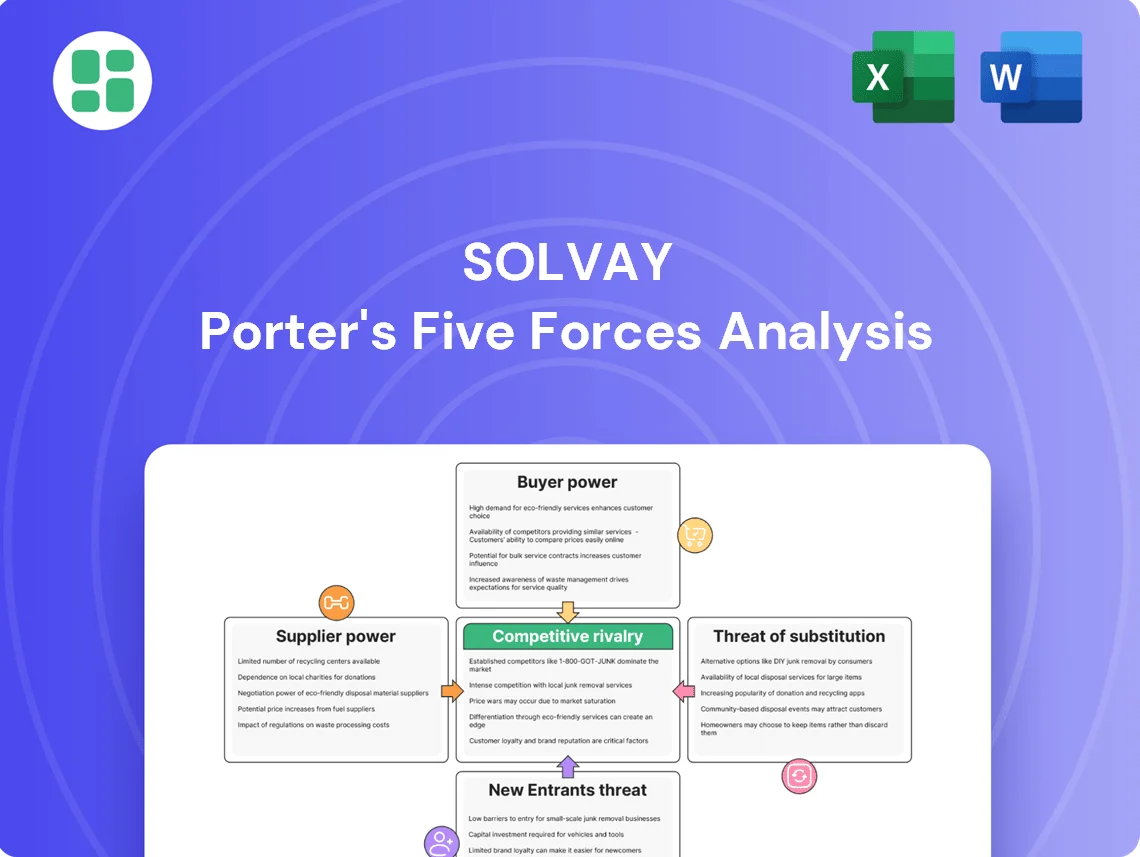
Understanding the competitive landscape for Solvay through Porter's Five Forces reveals crucial insights into industry attractiveness and strategic positioning. This analysis highlights how buyer power, supplier leverage, threat of new entrants, threat of substitutes, and competitive rivalry collectively shape Solvay's market dynamics.
The complete report reveals the real forces shaping Solvay’s industry—from supplier influence to threat of new entrants. Gain actionable insights to drive smarter decision-making.
Suppliers Bargaining Power

Supplier Concentration and Uniqueness of Inputs
Solvay's reliance on specialized raw materials can give suppliers significant leverage, especially when those materials are unique or sourced from a limited number of providers. For example, Solvay's partnership with Cyclic Materials to secure recycled mixed rare earth oxide for high-demand applications like electric vehicle magnets underscores the critical nature of these specific inputs. This dependence on a few suppliers for essential components directly impacts Solvay's ability to negotiate favorable terms.
Switching Costs for Solvay
Solvay faces significant supplier bargaining power due to the high switching costs associated with its specialty chemical formulations and advanced materials. These costs can include extensive research and development, rigorous re-qualification processes for new materials, and the need for significant production line adjustments, making it difficult and expensive to change suppliers.
The specialized nature of many of Solvay's key inputs, often proprietary or requiring deep technical expertise, further amplifies the power of its suppliers. This is particularly true for ingredients that are critical to maintaining Solvay's stringent quality control and process innovation standards, as any disruption or compromise in these areas can have substantial negative impacts.

Availability of Substitutes for Inputs
The availability of substitutes for Solvay's inputs significantly influences supplier bargaining power. While Solvay aims for sustainable sourcing, the ease of substituting raw materials differs across its product lines. For example, the company's focus on circular supply chains for materials like rare earths, through recycling initiatives, seeks to mitigate dependence on primary extraction, thereby potentially weakening supplier leverage in those specific segments.

Supplier's Forward Integration Threat
The threat of suppliers engaging in forward integration into Solvay's advanced materials and specialty chemicals sectors is generally low. This is primarily due to the substantial capital investment, extensive research and development capabilities, and specialized market knowledge necessary to compete effectively in these niche areas. For instance, developing and commercializing advanced polymers or high-performance composites requires years of dedicated R&D and significant financial backing, which many raw material suppliers may not possess or be willing to commit.
However, a caveat exists. Large, diversified chemical conglomerates that also supply basic or intermediate chemicals to Solvay could potentially leverage their existing infrastructure and market presence to expand into competing product lines. If such a supplier already possesses the technological know-how and has identified a strategic advantage, they might choose to move up the value chain. For example, a major petrochemical producer supplying basic feedstocks might decide to invest in downstream processing to produce specialty resins that directly compete with Solvay's offerings, especially if they see an opportunity to capture higher margins.
While specific instances of major raw material suppliers forward integrating directly into Solvay's core advanced materials business are not widely publicized, the potential remains a strategic consideration. The chemical industry saw significant consolidation and strategic realignments in recent years. For example, in 2023, major players continued to divest non-core assets and focus on higher-value specialty segments, indicating a strategic shift that could, in theory, encourage some players to explore adjacent markets where they already have a feedstock advantage.
- Limited Forward Integration: Suppliers typically lack the specialized R&D and market access needed to directly compete in Solvay's advanced materials segments.
- Potential for Diversified Competitors: Large, diversified chemical companies supplying raw materials might integrate forward if they possess the necessary capabilities and see a market opportunity.
- Capital and Expertise Barriers: Entering Solvay's high-value chemical markets requires substantial investment in technology and market understanding, deterring many suppliers.
- Industry Trends: Ongoing consolidation and focus on specialty chemicals within the broader industry could, in some cases, incentivize suppliers to explore upstream integration into higher-margin products.
Importance of Supplier's Input to Solvay's Cost Structure
The bargaining power of suppliers is a critical factor for Solvay, a major player in the chemical industry. The cost of raw materials and energy represents a substantial portion of its overall expenses. For instance, in 2024, the chemical sector experienced significant price volatility for key inputs like natural gas and petrochemical feedstocks, directly impacting manufacturers' margins.
Solvay's profitability is directly tied to its ability to manage these input costs. Given the global economic uncertainties and geopolitical events that influenced commodity prices throughout 2024 and into 2025, suppliers can exert considerable leverage. This necessitates Solvay to implement robust cost-saving strategies and secure stable supply agreements.
- Significant Cost Component: Raw materials and energy can account for 40-60% of a chemical company's cost of goods sold.
- 2024 Input Price Volatility: Energy prices saw fluctuations of over 20% in certain regions during 2024, impacting production costs.
- Supplier Concentration: In specialized chemical inputs, a few dominant suppliers can significantly increase their bargaining power.
- Impact on Margins: A 5% increase in raw material costs can reduce a chemical company's operating margin by 1-3 percentage points.
Suppliers' Grip: Specialized Inputs & Volatile Costs
Solvay's suppliers hold considerable sway due to the specialized nature of many of its raw materials and the high costs associated with switching providers. This leverage is amplified when inputs are unique or sourced from a limited number of entities, directly impacting Solvay's ability to negotiate favorable terms and maintain consistent profit margins.
The chemical industry, including Solvay's segments, experienced notable input price volatility in 2024. For example, key petrochemical feedstocks and energy prices saw significant fluctuations, with some energy commodities experiencing over 20% price swings in various regions. This environment allows suppliers to exert greater influence over pricing and contract terms.
Solvay's dependence on specific, often proprietary, materials for its advanced products means that disruptions or unfavorable terms from a few key suppliers can have a disproportionate impact on its operations and innovation pipeline.
| Factor | Impact on Solvay | 2024 Data/Trend |
|---|---|---|
| Specialized Inputs | High supplier bargaining power | Critical for advanced materials like rare earths for EV magnets. |
| Switching Costs | Limits Solvay's ability to change suppliers | Includes R&D, re-qualification, and production line adjustments. |
| Input Cost Volatility | Affects Solvay's margins | Energy prices saw >20% fluctuations in some markets during 2024. |
| Supplier Concentration | Increases supplier leverage | Dominant suppliers for niche chemicals can dictate terms. |
What is included in the product
 Detailed Word Document
Analyzes the five competitive forces shaping Solvay's industry: new entrants, buyer power, supplier power, substitutes, and rivalry among existing competitors.

 Customizable Excel Spreadsheet
Quickly identify and prioritize competitive threats with a visually intuitive breakdown of each force, enabling targeted strategic responses.
Customers Bargaining Power

Customer Concentration and Volume
Solvay's diverse customer base across sectors like automotive, aerospace, electronics, healthcare, and consumer goods generally limits individual customer power due to a broad distribution of sales. For instance, in 2023, Solvay reported that no single customer accounted for more than 10% of its total sales, indicating a healthy diffusion of demand.
However, the significant volume purchased by major global original equipment manufacturers (OEMs) within these industries can still provide them with considerable bargaining leverage. These large clients often negotiate favorable terms due to their substantial order sizes and the potential impact of losing their business.
Customer's Switching Costs
Solvay's high-performance polymers and specialty chemicals are often deeply integrated into sophisticated customer applications. This integration, coupled with custom formulations and stringent performance specifications, creates significant barriers for customers looking to switch suppliers. The extensive qualification processes alone can be a major deterrent, making it costly and time-consuming to adopt alternatives.

Availability of Substitute Products for Customers
The availability of substitute products significantly impacts Solvay's bargaining power with its customers. If customers can find alternative materials or chemical solutions that offer comparable performance, perhaps at a more attractive price point or with greater ease of access, they have more leverage. For instance, in the automotive sector, while Solvay's advanced polymers offer lightweighting and durability, a customer might explore different metal alloys or composite materials if the cost-benefit analysis favors the alternatives.

Customer's Backward Integration Threat
The threat of customers backward integrating into producing Solvay's advanced materials is generally low. Industries such as automotive and electronics, while significant consumers, typically lack the specialized chemical manufacturing expertise and substantial capital investment needed to replicate Solvay's complex production processes. This barrier significantly limits their ability to become their own suppliers of these specialty chemicals.
Consequently, Solvay's position as a specialized supplier remains strong. For instance, in 2024, the high R&D expenditure required for advanced materials, often exceeding hundreds of millions of dollars for new product lines, acts as a substantial deterrent to potential customer integration. Solvay's continued investment in innovation, with a reported 2024 R&D budget of €450 million, further solidifies this advantage.
- Limited Expertise: Customers generally do not possess the intricate knowledge of chemical synthesis and processing required for specialty chemicals.
- High Capital Requirements: Establishing chemical manufacturing facilities involves immense upfront capital, often in the billions of dollars for advanced materials.
- Economies of Scale: Solvay benefits from economies of scale in production that are difficult for individual customers to match.
- Focus on Core Competencies: Customers in target industries prefer to focus on their core competencies, such as vehicle design or electronic device manufacturing, rather than venturing into chemical production.
Price Sensitivity of Customers
Solvay's customers exhibit varying degrees of price sensitivity. This sensitivity is directly linked to how crucial Solvay's products are for the customer's final offering and the ease with which they can find substitute products. For instance, in the commodity chemical markets, where products are largely undifferentiated, customers are often highly attuned to price fluctuations.
Conversely, customers utilizing Solvay's specialty chemicals in high-performance applications frequently place a greater emphasis on product quality, consistent performance, and robust technical assistance. In these segments, minor price variations are often secondary to the assurance of reliability and specialized support that Solvay provides. This distinction highlights a key dynamic in Solvay's customer relationships.
- Price Sensitivity Varies: Customers are more sensitive to price when Solvay's products are easily substitutable or are commodity items.
- Performance Over Price: In high-value applications, customers prioritize product performance, reliability, and technical support, making them less price-sensitive.
- Market Segmentation Matters: Solvay's pricing strategy must account for the differing needs and priorities across its diverse customer base.
Customer Power: Solvay's Strategic Balance
While Solvay's broad customer base generally dilutes individual power, large-volume original equipment manufacturers (OEMs) still wield significant influence due to their substantial orders. This leverage allows them to negotiate favorable terms, impacting Solvay's pricing and contract conditions.
The deep integration of Solvay's specialty chemicals into customer applications, coupled with high switching costs and qualification processes, significantly limits customer bargaining power. Customers face substantial financial and operational hurdles when attempting to switch suppliers, reinforcing Solvay's strong market position.
Solvay's customers demonstrate varied price sensitivity, with higher sensitivity in commodity markets and lower sensitivity for specialty chemicals where performance and reliability are paramount. This segmentation allows Solvay to tailor its pricing strategies based on the value and substitutability of its offerings.
Same Document Delivered
Solvay Porter's Five Forces Analysis
This preview provides a comprehensive Solvay Porter's Five Forces analysis, detailing the competitive landscape of the chemical industry. The document you see here is the exact, fully formatted analysis you will receive immediately after purchase, ensuring transparency and immediate usability for your strategic planning.

Product Information
Product Information
Shipping & Returns
Shipping & Returns
Solvay Porter's Five Forces Analysis
Solvay Porter's Five Forces Analysis
A Must-Have Tool for Decision-Makers
Understanding the competitive landscape for Solvay through Porter's Five Forces reveals crucial insights into industry attractiveness and strategic positioning. This analysis highlights how buyer power, supplier leverage, threat of new entrants, threat of substitutes, and competitive rivalry collectively shape Solvay's market dynamics.
The complete report reveals the real forces shaping Solvay’s industry—from supplier influence to threat of new entrants. Gain actionable insights to drive smarter decision-making.
Suppliers Bargaining Power
Supplier Concentration and Uniqueness of Inputs
Solvay's reliance on specialized raw materials can give suppliers significant leverage, especially when those materials are unique or sourced from a limited number of providers. For example, Solvay's partnership with Cyclic Materials to secure recycled mixed rare earth oxide for high-demand applications like electric vehicle magnets underscores the critical nature of these specific inputs. This dependence on a few suppliers for essential components directly impacts Solvay's ability to negotiate favorable terms.
Switching Costs for Solvay
Solvay faces significant supplier bargaining power due to the high switching costs associated with its specialty chemical formulations and advanced materials. These costs can include extensive research and development, rigorous re-qualification processes for new materials, and the need for significant production line adjustments, making it difficult and expensive to change suppliers.
The specialized nature of many of Solvay's key inputs, often proprietary or requiring deep technical expertise, further amplifies the power of its suppliers. This is particularly true for ingredients that are critical to maintaining Solvay's stringent quality control and process innovation standards, as any disruption or compromise in these areas can have substantial negative impacts.
Availability of Substitutes for Inputs
The availability of substitutes for Solvay's inputs significantly influences supplier bargaining power. While Solvay aims for sustainable sourcing, the ease of substituting raw materials differs across its product lines. For example, the company's focus on circular supply chains for materials like rare earths, through recycling initiatives, seeks to mitigate dependence on primary extraction, thereby potentially weakening supplier leverage in those specific segments.
Supplier's Forward Integration Threat
The threat of suppliers engaging in forward integration into Solvay's advanced materials and specialty chemicals sectors is generally low. This is primarily due to the substantial capital investment, extensive research and development capabilities, and specialized market knowledge necessary to compete effectively in these niche areas. For instance, developing and commercializing advanced polymers or high-performance composites requires years of dedicated R&D and significant financial backing, which many raw material suppliers may not possess or be willing to commit.
However, a caveat exists. Large, diversified chemical conglomerates that also supply basic or intermediate chemicals to Solvay could potentially leverage their existing infrastructure and market presence to expand into competing product lines. If such a supplier already possesses the technological know-how and has identified a strategic advantage, they might choose to move up the value chain. For example, a major petrochemical producer supplying basic feedstocks might decide to invest in downstream processing to produce specialty resins that directly compete with Solvay's offerings, especially if they see an opportunity to capture higher margins.
While specific instances of major raw material suppliers forward integrating directly into Solvay's core advanced materials business are not widely publicized, the potential remains a strategic consideration. The chemical industry saw significant consolidation and strategic realignments in recent years. For example, in 2023, major players continued to divest non-core assets and focus on higher-value specialty segments, indicating a strategic shift that could, in theory, encourage some players to explore adjacent markets where they already have a feedstock advantage.
- Limited Forward Integration: Suppliers typically lack the specialized R&D and market access needed to directly compete in Solvay's advanced materials segments.
- Potential for Diversified Competitors: Large, diversified chemical companies supplying raw materials might integrate forward if they possess the necessary capabilities and see a market opportunity.
- Capital and Expertise Barriers: Entering Solvay's high-value chemical markets requires substantial investment in technology and market understanding, deterring many suppliers.
- Industry Trends: Ongoing consolidation and focus on specialty chemicals within the broader industry could, in some cases, incentivize suppliers to explore upstream integration into higher-margin products.
Importance of Supplier's Input to Solvay's Cost Structure
The bargaining power of suppliers is a critical factor for Solvay, a major player in the chemical industry. The cost of raw materials and energy represents a substantial portion of its overall expenses. For instance, in 2024, the chemical sector experienced significant price volatility for key inputs like natural gas and petrochemical feedstocks, directly impacting manufacturers' margins.
Solvay's profitability is directly tied to its ability to manage these input costs. Given the global economic uncertainties and geopolitical events that influenced commodity prices throughout 2024 and into 2025, suppliers can exert considerable leverage. This necessitates Solvay to implement robust cost-saving strategies and secure stable supply agreements.
- Significant Cost Component: Raw materials and energy can account for 40-60% of a chemical company's cost of goods sold.
- 2024 Input Price Volatility: Energy prices saw fluctuations of over 20% in certain regions during 2024, impacting production costs.
- Supplier Concentration: In specialized chemical inputs, a few dominant suppliers can significantly increase their bargaining power.
- Impact on Margins: A 5% increase in raw material costs can reduce a chemical company's operating margin by 1-3 percentage points.
Suppliers' Grip: Specialized Inputs & Volatile Costs
Solvay's suppliers hold considerable sway due to the specialized nature of many of its raw materials and the high costs associated with switching providers. This leverage is amplified when inputs are unique or sourced from a limited number of entities, directly impacting Solvay's ability to negotiate favorable terms and maintain consistent profit margins.
The chemical industry, including Solvay's segments, experienced notable input price volatility in 2024. For example, key petrochemical feedstocks and energy prices saw significant fluctuations, with some energy commodities experiencing over 20% price swings in various regions. This environment allows suppliers to exert greater influence over pricing and contract terms.
Solvay's dependence on specific, often proprietary, materials for its advanced products means that disruptions or unfavorable terms from a few key suppliers can have a disproportionate impact on its operations and innovation pipeline.
| Factor | Impact on Solvay | 2024 Data/Trend |
|---|---|---|
| Specialized Inputs | High supplier bargaining power | Critical for advanced materials like rare earths for EV magnets. |
| Switching Costs | Limits Solvay's ability to change suppliers | Includes R&D, re-qualification, and production line adjustments. |
| Input Cost Volatility | Affects Solvay's margins | Energy prices saw >20% fluctuations in some markets during 2024. |
| Supplier Concentration | Increases supplier leverage | Dominant suppliers for niche chemicals can dictate terms. |
What is included in the product
Detailed Word Document
Analyzes the five competitive forces shaping Solvay's industry: new entrants, buyer power, supplier power, substitutes, and rivalry among existing competitors.
Customizable Excel Spreadsheet
Quickly identify and prioritize competitive threats with a visually intuitive breakdown of each force, enabling targeted strategic responses.
Customers Bargaining Power
Customer Concentration and Volume
Solvay's diverse customer base across sectors like automotive, aerospace, electronics, healthcare, and consumer goods generally limits individual customer power due to a broad distribution of sales. For instance, in 2023, Solvay reported that no single customer accounted for more than 10% of its total sales, indicating a healthy diffusion of demand.
However, the significant volume purchased by major global original equipment manufacturers (OEMs) within these industries can still provide them with considerable bargaining leverage. These large clients often negotiate favorable terms due to their substantial order sizes and the potential impact of losing their business.
Customer's Switching Costs
Solvay's high-performance polymers and specialty chemicals are often deeply integrated into sophisticated customer applications. This integration, coupled with custom formulations and stringent performance specifications, creates significant barriers for customers looking to switch suppliers. The extensive qualification processes alone can be a major deterrent, making it costly and time-consuming to adopt alternatives.
Availability of Substitute Products for Customers
The availability of substitute products significantly impacts Solvay's bargaining power with its customers. If customers can find alternative materials or chemical solutions that offer comparable performance, perhaps at a more attractive price point or with greater ease of access, they have more leverage. For instance, in the automotive sector, while Solvay's advanced polymers offer lightweighting and durability, a customer might explore different metal alloys or composite materials if the cost-benefit analysis favors the alternatives.
Customer's Backward Integration Threat
The threat of customers backward integrating into producing Solvay's advanced materials is generally low. Industries such as automotive and electronics, while significant consumers, typically lack the specialized chemical manufacturing expertise and substantial capital investment needed to replicate Solvay's complex production processes. This barrier significantly limits their ability to become their own suppliers of these specialty chemicals.
Consequently, Solvay's position as a specialized supplier remains strong. For instance, in 2024, the high R&D expenditure required for advanced materials, often exceeding hundreds of millions of dollars for new product lines, acts as a substantial deterrent to potential customer integration. Solvay's continued investment in innovation, with a reported 2024 R&D budget of €450 million, further solidifies this advantage.
- Limited Expertise: Customers generally do not possess the intricate knowledge of chemical synthesis and processing required for specialty chemicals.
- High Capital Requirements: Establishing chemical manufacturing facilities involves immense upfront capital, often in the billions of dollars for advanced materials.
- Economies of Scale: Solvay benefits from economies of scale in production that are difficult for individual customers to match.
- Focus on Core Competencies: Customers in target industries prefer to focus on their core competencies, such as vehicle design or electronic device manufacturing, rather than venturing into chemical production.
Price Sensitivity of Customers
Solvay's customers exhibit varying degrees of price sensitivity. This sensitivity is directly linked to how crucial Solvay's products are for the customer's final offering and the ease with which they can find substitute products. For instance, in the commodity chemical markets, where products are largely undifferentiated, customers are often highly attuned to price fluctuations.
Conversely, customers utilizing Solvay's specialty chemicals in high-performance applications frequently place a greater emphasis on product quality, consistent performance, and robust technical assistance. In these segments, minor price variations are often secondary to the assurance of reliability and specialized support that Solvay provides. This distinction highlights a key dynamic in Solvay's customer relationships.
- Price Sensitivity Varies: Customers are more sensitive to price when Solvay's products are easily substitutable or are commodity items.
- Performance Over Price: In high-value applications, customers prioritize product performance, reliability, and technical support, making them less price-sensitive.
- Market Segmentation Matters: Solvay's pricing strategy must account for the differing needs and priorities across its diverse customer base.
Customer Power: Solvay's Strategic Balance
While Solvay's broad customer base generally dilutes individual power, large-volume original equipment manufacturers (OEMs) still wield significant influence due to their substantial orders. This leverage allows them to negotiate favorable terms, impacting Solvay's pricing and contract conditions.
The deep integration of Solvay's specialty chemicals into customer applications, coupled with high switching costs and qualification processes, significantly limits customer bargaining power. Customers face substantial financial and operational hurdles when attempting to switch suppliers, reinforcing Solvay's strong market position.
Solvay's customers demonstrate varied price sensitivity, with higher sensitivity in commodity markets and lower sensitivity for specialty chemicals where performance and reliability are paramount. This segmentation allows Solvay to tailor its pricing strategies based on the value and substitutability of its offerings.
Same Document Delivered
Solvay Porter's Five Forces Analysis
This preview provides a comprehensive Solvay Porter's Five Forces analysis, detailing the competitive landscape of the chemical industry. The document you see here is the exact, fully formatted analysis you will receive immediately after purchase, ensuring transparency and immediate usability for your strategic planning.
Original: $10.00
-65%$10.00
$3.50Product Information
Product Information
Shipping & Returns
Shipping & Returns
Description
A Must-Have Tool for Decision-Makers
Understanding the competitive landscape for Solvay through Porter's Five Forces reveals crucial insights into industry attractiveness and strategic positioning. This analysis highlights how buyer power, supplier leverage, threat of new entrants, threat of substitutes, and competitive rivalry collectively shape Solvay's market dynamics.
The complete report reveals the real forces shaping Solvay’s industry—from supplier influence to threat of new entrants. Gain actionable insights to drive smarter decision-making.
Suppliers Bargaining Power
Supplier Concentration and Uniqueness of Inputs
Solvay's reliance on specialized raw materials can give suppliers significant leverage, especially when those materials are unique or sourced from a limited number of providers. For example, Solvay's partnership with Cyclic Materials to secure recycled mixed rare earth oxide for high-demand applications like electric vehicle magnets underscores the critical nature of these specific inputs. This dependence on a few suppliers for essential components directly impacts Solvay's ability to negotiate favorable terms.
Switching Costs for Solvay
Solvay faces significant supplier bargaining power due to the high switching costs associated with its specialty chemical formulations and advanced materials. These costs can include extensive research and development, rigorous re-qualification processes for new materials, and the need for significant production line adjustments, making it difficult and expensive to change suppliers.
The specialized nature of many of Solvay's key inputs, often proprietary or requiring deep technical expertise, further amplifies the power of its suppliers. This is particularly true for ingredients that are critical to maintaining Solvay's stringent quality control and process innovation standards, as any disruption or compromise in these areas can have substantial negative impacts.
Availability of Substitutes for Inputs
The availability of substitutes for Solvay's inputs significantly influences supplier bargaining power. While Solvay aims for sustainable sourcing, the ease of substituting raw materials differs across its product lines. For example, the company's focus on circular supply chains for materials like rare earths, through recycling initiatives, seeks to mitigate dependence on primary extraction, thereby potentially weakening supplier leverage in those specific segments.
Supplier's Forward Integration Threat
The threat of suppliers engaging in forward integration into Solvay's advanced materials and specialty chemicals sectors is generally low. This is primarily due to the substantial capital investment, extensive research and development capabilities, and specialized market knowledge necessary to compete effectively in these niche areas. For instance, developing and commercializing advanced polymers or high-performance composites requires years of dedicated R&D and significant financial backing, which many raw material suppliers may not possess or be willing to commit.
However, a caveat exists. Large, diversified chemical conglomerates that also supply basic or intermediate chemicals to Solvay could potentially leverage their existing infrastructure and market presence to expand into competing product lines. If such a supplier already possesses the technological know-how and has identified a strategic advantage, they might choose to move up the value chain. For example, a major petrochemical producer supplying basic feedstocks might decide to invest in downstream processing to produce specialty resins that directly compete with Solvay's offerings, especially if they see an opportunity to capture higher margins.
While specific instances of major raw material suppliers forward integrating directly into Solvay's core advanced materials business are not widely publicized, the potential remains a strategic consideration. The chemical industry saw significant consolidation and strategic realignments in recent years. For example, in 2023, major players continued to divest non-core assets and focus on higher-value specialty segments, indicating a strategic shift that could, in theory, encourage some players to explore adjacent markets where they already have a feedstock advantage.
- Limited Forward Integration: Suppliers typically lack the specialized R&D and market access needed to directly compete in Solvay's advanced materials segments.
- Potential for Diversified Competitors: Large, diversified chemical companies supplying raw materials might integrate forward if they possess the necessary capabilities and see a market opportunity.
- Capital and Expertise Barriers: Entering Solvay's high-value chemical markets requires substantial investment in technology and market understanding, deterring many suppliers.
- Industry Trends: Ongoing consolidation and focus on specialty chemicals within the broader industry could, in some cases, incentivize suppliers to explore upstream integration into higher-margin products.
Importance of Supplier's Input to Solvay's Cost Structure
The bargaining power of suppliers is a critical factor for Solvay, a major player in the chemical industry. The cost of raw materials and energy represents a substantial portion of its overall expenses. For instance, in 2024, the chemical sector experienced significant price volatility for key inputs like natural gas and petrochemical feedstocks, directly impacting manufacturers' margins.
Solvay's profitability is directly tied to its ability to manage these input costs. Given the global economic uncertainties and geopolitical events that influenced commodity prices throughout 2024 and into 2025, suppliers can exert considerable leverage. This necessitates Solvay to implement robust cost-saving strategies and secure stable supply agreements.
- Significant Cost Component: Raw materials and energy can account for 40-60% of a chemical company's cost of goods sold.
- 2024 Input Price Volatility: Energy prices saw fluctuations of over 20% in certain regions during 2024, impacting production costs.
- Supplier Concentration: In specialized chemical inputs, a few dominant suppliers can significantly increase their bargaining power.
- Impact on Margins: A 5% increase in raw material costs can reduce a chemical company's operating margin by 1-3 percentage points.
Suppliers' Grip: Specialized Inputs & Volatile Costs
Solvay's suppliers hold considerable sway due to the specialized nature of many of its raw materials and the high costs associated with switching providers. This leverage is amplified when inputs are unique or sourced from a limited number of entities, directly impacting Solvay's ability to negotiate favorable terms and maintain consistent profit margins.
The chemical industry, including Solvay's segments, experienced notable input price volatility in 2024. For example, key petrochemical feedstocks and energy prices saw significant fluctuations, with some energy commodities experiencing over 20% price swings in various regions. This environment allows suppliers to exert greater influence over pricing and contract terms.
Solvay's dependence on specific, often proprietary, materials for its advanced products means that disruptions or unfavorable terms from a few key suppliers can have a disproportionate impact on its operations and innovation pipeline.
| Factor | Impact on Solvay | 2024 Data/Trend |
|---|---|---|
| Specialized Inputs | High supplier bargaining power | Critical for advanced materials like rare earths for EV magnets. |
| Switching Costs | Limits Solvay's ability to change suppliers | Includes R&D, re-qualification, and production line adjustments. |
| Input Cost Volatility | Affects Solvay's margins | Energy prices saw >20% fluctuations in some markets during 2024. |
| Supplier Concentration | Increases supplier leverage | Dominant suppliers for niche chemicals can dictate terms. |
What is included in the product
Detailed Word Document
Analyzes the five competitive forces shaping Solvay's industry: new entrants, buyer power, supplier power, substitutes, and rivalry among existing competitors.
Customizable Excel Spreadsheet
Quickly identify and prioritize competitive threats with a visually intuitive breakdown of each force, enabling targeted strategic responses.
Customers Bargaining Power
Customer Concentration and Volume
Solvay's diverse customer base across sectors like automotive, aerospace, electronics, healthcare, and consumer goods generally limits individual customer power due to a broad distribution of sales. For instance, in 2023, Solvay reported that no single customer accounted for more than 10% of its total sales, indicating a healthy diffusion of demand.
However, the significant volume purchased by major global original equipment manufacturers (OEMs) within these industries can still provide them with considerable bargaining leverage. These large clients often negotiate favorable terms due to their substantial order sizes and the potential impact of losing their business.
Customer's Switching Costs
Solvay's high-performance polymers and specialty chemicals are often deeply integrated into sophisticated customer applications. This integration, coupled with custom formulations and stringent performance specifications, creates significant barriers for customers looking to switch suppliers. The extensive qualification processes alone can be a major deterrent, making it costly and time-consuming to adopt alternatives.
Availability of Substitute Products for Customers
The availability of substitute products significantly impacts Solvay's bargaining power with its customers. If customers can find alternative materials or chemical solutions that offer comparable performance, perhaps at a more attractive price point or with greater ease of access, they have more leverage. For instance, in the automotive sector, while Solvay's advanced polymers offer lightweighting and durability, a customer might explore different metal alloys or composite materials if the cost-benefit analysis favors the alternatives.
Customer's Backward Integration Threat
The threat of customers backward integrating into producing Solvay's advanced materials is generally low. Industries such as automotive and electronics, while significant consumers, typically lack the specialized chemical manufacturing expertise and substantial capital investment needed to replicate Solvay's complex production processes. This barrier significantly limits their ability to become their own suppliers of these specialty chemicals.
Consequently, Solvay's position as a specialized supplier remains strong. For instance, in 2024, the high R&D expenditure required for advanced materials, often exceeding hundreds of millions of dollars for new product lines, acts as a substantial deterrent to potential customer integration. Solvay's continued investment in innovation, with a reported 2024 R&D budget of €450 million, further solidifies this advantage.
- Limited Expertise: Customers generally do not possess the intricate knowledge of chemical synthesis and processing required for specialty chemicals.
- High Capital Requirements: Establishing chemical manufacturing facilities involves immense upfront capital, often in the billions of dollars for advanced materials.
- Economies of Scale: Solvay benefits from economies of scale in production that are difficult for individual customers to match.
- Focus on Core Competencies: Customers in target industries prefer to focus on their core competencies, such as vehicle design or electronic device manufacturing, rather than venturing into chemical production.
Price Sensitivity of Customers
Solvay's customers exhibit varying degrees of price sensitivity. This sensitivity is directly linked to how crucial Solvay's products are for the customer's final offering and the ease with which they can find substitute products. For instance, in the commodity chemical markets, where products are largely undifferentiated, customers are often highly attuned to price fluctuations.
Conversely, customers utilizing Solvay's specialty chemicals in high-performance applications frequently place a greater emphasis on product quality, consistent performance, and robust technical assistance. In these segments, minor price variations are often secondary to the assurance of reliability and specialized support that Solvay provides. This distinction highlights a key dynamic in Solvay's customer relationships.
- Price Sensitivity Varies: Customers are more sensitive to price when Solvay's products are easily substitutable or are commodity items.
- Performance Over Price: In high-value applications, customers prioritize product performance, reliability, and technical support, making them less price-sensitive.
- Market Segmentation Matters: Solvay's pricing strategy must account for the differing needs and priorities across its diverse customer base.
Customer Power: Solvay's Strategic Balance
While Solvay's broad customer base generally dilutes individual power, large-volume original equipment manufacturers (OEMs) still wield significant influence due to their substantial orders. This leverage allows them to negotiate favorable terms, impacting Solvay's pricing and contract conditions.
The deep integration of Solvay's specialty chemicals into customer applications, coupled with high switching costs and qualification processes, significantly limits customer bargaining power. Customers face substantial financial and operational hurdles when attempting to switch suppliers, reinforcing Solvay's strong market position.
Solvay's customers demonstrate varied price sensitivity, with higher sensitivity in commodity markets and lower sensitivity for specialty chemicals where performance and reliability are paramount. This segmentation allows Solvay to tailor its pricing strategies based on the value and substitutability of its offerings.
Same Document Delivered
Solvay Porter's Five Forces Analysis
This preview provides a comprehensive Solvay Porter's Five Forces analysis, detailing the competitive landscape of the chemical industry. The document you see here is the exact, fully formatted analysis you will receive immediately after purchase, ensuring transparency and immediate usability for your strategic planning.