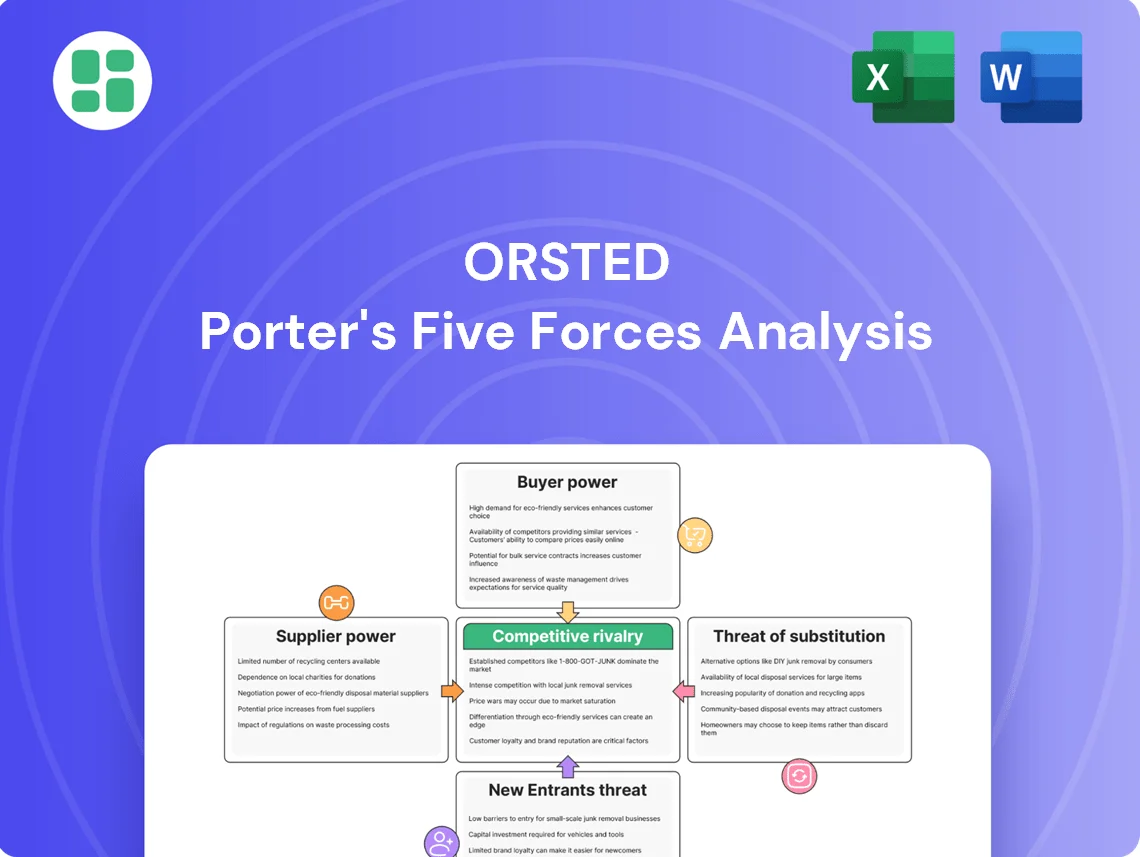
Orsted Porter's Five Forces Analysis

Don't Miss the Bigger Picture
Orsted's position in the renewable energy sector is shaped by intense competition and evolving market dynamics. Understanding the bargaining power of buyers and the threat of new entrants is crucial for navigating this landscape effectively.
This brief snapshot only scratches the surface. Unlock the full Porter's Five Forces Analysis to explore Orsted’s competitive dynamics, market pressures, and strategic advantages in detail.
Suppliers Bargaining Power

Concentrated Supply Chain for Key Components
The offshore wind sector, including companies like Ørsted, faces a concentrated supply chain for essential components such as massive wind turbines, specialized foundations, and dedicated installation vessels. This limited pool of highly specialized suppliers grants them considerable bargaining power, especially when it comes to cutting-edge or bespoke technological solutions.
Ørsted's experiences in 2023 and early 2024, including project cancellations and significant delays for projects like Ocean Wind 1 and Sunrise Wind, underscore this vulnerability. These setbacks were partly attributed to critical shortages of installation vessels and broader supply chain disruptions, demonstrating the direct impact of supplier leverage on project execution and financial performance.
Increasing Input Costs and Inflationary Pressures
Suppliers are experiencing significant cost increases across raw materials, energy, and labor. These rising expenses are directly passed on to companies like Ørsted, impacting the overall cost of developing renewable energy projects. For instance, in 2024, global inflation rates, while moderating from previous highs, continued to exert pressure on supply chains, with energy prices remaining volatile.
The heightened inflationary environment, coupled with elevated interest rates throughout 2024, has created a challenging landscape for project financing and viability. This economic backdrop has forced developers to renegotiate existing contracts or, in some cases, cancel projects altogether due to escalating costs and reduced profitability, directly affecting Ørsted's project pipeline and execution.

Specialized Technology and Expertise
Many suppliers in the offshore wind sector hold crucial intellectual property and possess highly specialized manufacturing skills honed over years of experience. This unique expertise, often tied to proprietary technology for turbines or foundation construction, makes it difficult for Ørsted to find readily available alternatives. For instance, companies like Siemens Gamesa and Vestas are leaders in turbine technology, and their specialized designs and manufacturing processes create high switching costs for Ørsted.

Ørsted's Demand for 100% Renewable Electricity from Suppliers
Ørsted's ambitious goal for all its suppliers to exclusively use renewable electricity by 2025 significantly influences supplier bargaining power. This directive, while environmentally conscious, can impose additional operational costs on suppliers who may need to invest in renewable energy sources or purchase renewable energy certificates. Consequently, suppliers might pass these increased compliance costs onto Ørsted through higher prices, thereby strengthening their negotiating position.
The push for 100% renewable electricity from suppliers introduces a new layer of complexity and potential expense. Suppliers facing these requirements might see this as an opportunity to negotiate more favorable terms or higher prices for their goods and services. This is particularly true for suppliers whose current energy mix is heavily reliant on non-renewable sources, as the transition could represent a substantial investment.
- Supplier Cost Increase: Suppliers may need to invest in renewable energy infrastructure or purchase renewable energy credits, potentially raising their operational costs by an estimated 5-15% depending on their current energy sourcing.
- Pricing Power: This added cost burden can empower suppliers to increase their prices for products and services provided to Ørsted, as they seek to recoup these new expenses.
- Market Concentration: If only a limited number of suppliers can meet this stringent renewable energy requirement, their bargaining power is further amplified due to reduced competition.
- Strategic Partnerships: Ørsted's demand might foster closer partnerships with suppliers willing and able to meet the renewable energy criteria, potentially leading to long-term supply agreements with negotiated pricing.
Global Supply Chain Bottlenecks and Geopolitical Risks
The global renewable energy supply chain has faced significant bottlenecks, especially for crucial components like wind turbine blades and specialized installation vessels. This scarcity, exacerbated by increased demand and logistical challenges, has empowered suppliers by allowing them to dictate terms and pricing, contributing to project delays and cost overruns. For instance, in 2023, the average lead time for offshore wind components extended significantly, impacting project timelines.
Geopolitical shifts and trade policies further amplify supplier bargaining power. Tariffs and regional manufacturing incentives can create dependencies on specific suppliers or regions, giving them leverage. For example, the ongoing trade tensions between major manufacturing hubs have led to price increases for key raw materials used in solar panels and batteries, directly benefiting suppliers in those regions.
- Component Scarcity: Increased demand for offshore wind turbines and batteries has led to extended lead times for critical components, such as specialized vessels and rare earth magnets, granting suppliers greater pricing power.
- Geopolitical Influence: Trade tariffs and regional manufacturing policies create supply chain vulnerabilities, allowing suppliers in favored regions to command higher prices and more favorable contract terms.
- Rising Input Costs: Fluctuations in raw material prices, influenced by global events, directly impact the cost of renewable energy components, strengthening the position of suppliers who control these inputs.
Supplier Power Reshapes Offshore Wind Economics
Suppliers in the offshore wind sector, including those providing turbines and foundations, wield significant bargaining power due to market concentration and specialized expertise. This leverage was evident in 2023 and early 2024 as companies like Ørsted faced project delays and cancellations, such as Ocean Wind 1, partly due to critical shortages of installation vessels and broader supply chain disruptions.
Rising global inflation in 2024 continued to increase suppliers' costs for raw materials, energy, and labor, which were passed on to developers. Furthermore, Ørsted's requirement for suppliers to use 100% renewable electricity by 2025 may add compliance costs, potentially increasing prices by an estimated 5-15% for some suppliers, further strengthening their negotiating position if few can meet the criteria.
Component scarcity, such as for specialized vessels and rare earth magnets, has led to extended lead times, granting suppliers greater pricing power. Geopolitical factors, including trade tariffs, also create supply chain vulnerabilities, allowing suppliers in favored regions to command higher prices and more favorable terms, impacting the overall cost of renewable energy projects.
What is included in the product
 Detailed Word Document
This analysis unpacks the competitive forces shaping Orsted's renewable energy sector, examining the threat of new entrants, the bargaining power of buyers and suppliers, the intensity of rivalry, and the impact of substitutes.

 Customizable Excel Spreadsheet
Effortlessly identify and mitigate competitive threats with a dynamic visualization of Orsted's market landscape.
Customers Bargaining Power

Long-Term Power Purchase Agreements (PPAs)
Ørsted's utility-scale projects often secure customers like large corporations, utilities, and governments through long-term Power Purchase Agreements (PPAs). These PPAs offer price stability, but the initial negotiation heavily favors these substantial off-takers due to the sheer volume and lengthy commitment involved.
In 2023, Ørsted reported a significant portion of its revenue came from long-term PPAs, underscoring the importance of these customer relationships. For instance, securing a multi-gigawatt wind farm PPA with a major industrial player can represent billions of dollars in guaranteed revenue, giving that customer considerable leverage in setting terms.
Government Policies and Auction Mechanisms
Governments, particularly in their role as regulators and often as significant purchasers of renewable energy, wield considerable influence over Ørsted through policy decisions and auction frameworks. These governmental actions directly shape pricing dynamics and overall demand for renewable energy projects. For instance, many of Ørsted's revenue streams are intrinsically linked to these policy environments, where competitive auction processes are common. These auctions, designed to procure renewable energy at the lowest cost, can intensify competition and consequently drive down the prices that customers, often utilities or government entities, are willing to pay, thereby increasing the bargaining power of these customers.

Large Corporate Offtakers' Sustainability Goals
Many of Ørsted's major corporate clients, such as TSMC, are actively pursuing ambitious sustainability objectives, including RE100 commitments and net-zero targets. This commitment fuels a robust demand for renewable energy solutions, a key driver for Ørsted's business.
However, these large corporate offtakers are discerning and informed buyers. Their significant purchasing power, coupled with their strong commitment to green energy, allows them to negotiate for more advantageous contract terms and pricing, thereby increasing their bargaining power.

Diversification of Energy Sources for Customers
Customers, particularly large industrial and commercial users, benefit from a diverse energy landscape. They can often choose from multiple suppliers or even generate their own power, reducing their reliance on any single provider like Ørsted.
This ability to switch or self-supply significantly boosts their bargaining leverage. For instance, in 2024, the increasing accessibility of distributed solar and battery storage solutions has provided many businesses with viable alternatives to traditional grid-supplied electricity, directly impacting the power dynamics with energy companies.
- Increased Supplier Options: Businesses can compare pricing and terms from numerous energy providers, including those specializing in renewables.
- Self-Generation Capabilities: On-site solar, wind, or combined heat and power (CHP) systems offer customers a degree of energy independence.
- Technological Advancements: Innovations in energy storage and smart grid technology empower customers to manage their consumption and procurement more effectively.
- Market Liberalization: Many regions have deregulated energy markets, allowing customers greater freedom to select their preferred energy source and supplier.
Price Sensitivity in Competitive Energy Markets
Customers in the energy sector, even those favoring green alternatives, are keenly aware of pricing. This is particularly true in deregulated markets where direct comparisons between renewable and conventional energy sources are readily available. For instance, in 2024, many European countries continued to see significant price competition in their electricity markets, influencing customer choices.
Economic headwinds, such as the elevated interest rates experienced through much of 2023 and into 2024, amplify this price sensitivity. Consumers and businesses alike become more focused on cost-effectiveness, actively seeking providers that offer the most competitive rates. This trend directly impacts Ørsted's ability to command premium pricing for its renewable energy solutions.
- Customers remain price-sensitive, especially when comparing renewable energy to traditional sources.
- Deregulated energy markets intensify this price sensitivity.
- Rising interest rates in 2023-2024 have made customers more cost-conscious.
- Ørsted faces pressure to offer cost-effective solutions to retain and attract customers.
Empowered Customers: Redefining Energy Purchase Agreements
The bargaining power of Ørsted's customers is significant, particularly for large industrial and corporate clients who often engage in long-term Power Purchase Agreements (PPAs). These customers, driven by sustainability goals and substantial energy needs, can negotiate favorable terms due to their purchasing volume and commitment. For example, securing a multi-gigawatt PPA in 2023 represented billions in guaranteed revenue, giving the customer considerable leverage.
Governments also exert influence through policy and auction frameworks, which shape pricing. In 2024, competitive auction processes common in many regions drive down prices, increasing customer bargaining power. Furthermore, the increasing availability of distributed solar and battery storage in 2024 provides businesses with alternatives, enhancing their ability to switch or self-supply, thereby boosting their leverage.
| Customer Type | Leverage Factors | Impact on Ørsted |
|---|---|---|
| Large Corporations (e.g., TSMC) | High volume PPAs, sustainability commitments (RE100), significant purchasing power | Ability to negotiate favorable pricing and contract terms |
| Governments/Utilities | Policy influence, regulatory frameworks, competitive auction processes | Drives down PPA prices, shapes market demand |
| General Businesses | Increasing availability of distributed generation (solar, storage), market liberalization | Reduced reliance on single suppliers, increased switching power |
Full Version Awaits
Orsted Porter's Five Forces Analysis
This preview displays the complete Orsted Porter's Five Forces Analysis, offering a detailed examination of the competitive landscape for the company. The document you see here is precisely the same professionally formatted analysis that will be available for immediate download upon purchase, ensuring no discrepancies or missing information.

Product Information
Product Information
Shipping & Returns
Shipping & Returns
Orsted Porter's Five Forces Analysis
Orsted Porter's Five Forces Analysis
Don't Miss the Bigger Picture
Orsted's position in the renewable energy sector is shaped by intense competition and evolving market dynamics. Understanding the bargaining power of buyers and the threat of new entrants is crucial for navigating this landscape effectively.
This brief snapshot only scratches the surface. Unlock the full Porter's Five Forces Analysis to explore Orsted’s competitive dynamics, market pressures, and strategic advantages in detail.
Suppliers Bargaining Power
Concentrated Supply Chain for Key Components
The offshore wind sector, including companies like Ørsted, faces a concentrated supply chain for essential components such as massive wind turbines, specialized foundations, and dedicated installation vessels. This limited pool of highly specialized suppliers grants them considerable bargaining power, especially when it comes to cutting-edge or bespoke technological solutions.
Ørsted's experiences in 2023 and early 2024, including project cancellations and significant delays for projects like Ocean Wind 1 and Sunrise Wind, underscore this vulnerability. These setbacks were partly attributed to critical shortages of installation vessels and broader supply chain disruptions, demonstrating the direct impact of supplier leverage on project execution and financial performance.
Increasing Input Costs and Inflationary Pressures
Suppliers are experiencing significant cost increases across raw materials, energy, and labor. These rising expenses are directly passed on to companies like Ørsted, impacting the overall cost of developing renewable energy projects. For instance, in 2024, global inflation rates, while moderating from previous highs, continued to exert pressure on supply chains, with energy prices remaining volatile.
The heightened inflationary environment, coupled with elevated interest rates throughout 2024, has created a challenging landscape for project financing and viability. This economic backdrop has forced developers to renegotiate existing contracts or, in some cases, cancel projects altogether due to escalating costs and reduced profitability, directly affecting Ørsted's project pipeline and execution.
Specialized Technology and Expertise
Many suppliers in the offshore wind sector hold crucial intellectual property and possess highly specialized manufacturing skills honed over years of experience. This unique expertise, often tied to proprietary technology for turbines or foundation construction, makes it difficult for Ørsted to find readily available alternatives. For instance, companies like Siemens Gamesa and Vestas are leaders in turbine technology, and their specialized designs and manufacturing processes create high switching costs for Ørsted.
Ørsted's Demand for 100% Renewable Electricity from Suppliers
Ørsted's ambitious goal for all its suppliers to exclusively use renewable electricity by 2025 significantly influences supplier bargaining power. This directive, while environmentally conscious, can impose additional operational costs on suppliers who may need to invest in renewable energy sources or purchase renewable energy certificates. Consequently, suppliers might pass these increased compliance costs onto Ørsted through higher prices, thereby strengthening their negotiating position.
The push for 100% renewable electricity from suppliers introduces a new layer of complexity and potential expense. Suppliers facing these requirements might see this as an opportunity to negotiate more favorable terms or higher prices for their goods and services. This is particularly true for suppliers whose current energy mix is heavily reliant on non-renewable sources, as the transition could represent a substantial investment.
- Supplier Cost Increase: Suppliers may need to invest in renewable energy infrastructure or purchase renewable energy credits, potentially raising their operational costs by an estimated 5-15% depending on their current energy sourcing.
- Pricing Power: This added cost burden can empower suppliers to increase their prices for products and services provided to Ørsted, as they seek to recoup these new expenses.
- Market Concentration: If only a limited number of suppliers can meet this stringent renewable energy requirement, their bargaining power is further amplified due to reduced competition.
- Strategic Partnerships: Ørsted's demand might foster closer partnerships with suppliers willing and able to meet the renewable energy criteria, potentially leading to long-term supply agreements with negotiated pricing.
Global Supply Chain Bottlenecks and Geopolitical Risks
The global renewable energy supply chain has faced significant bottlenecks, especially for crucial components like wind turbine blades and specialized installation vessels. This scarcity, exacerbated by increased demand and logistical challenges, has empowered suppliers by allowing them to dictate terms and pricing, contributing to project delays and cost overruns. For instance, in 2023, the average lead time for offshore wind components extended significantly, impacting project timelines.
Geopolitical shifts and trade policies further amplify supplier bargaining power. Tariffs and regional manufacturing incentives can create dependencies on specific suppliers or regions, giving them leverage. For example, the ongoing trade tensions between major manufacturing hubs have led to price increases for key raw materials used in solar panels and batteries, directly benefiting suppliers in those regions.
- Component Scarcity: Increased demand for offshore wind turbines and batteries has led to extended lead times for critical components, such as specialized vessels and rare earth magnets, granting suppliers greater pricing power.
- Geopolitical Influence: Trade tariffs and regional manufacturing policies create supply chain vulnerabilities, allowing suppliers in favored regions to command higher prices and more favorable contract terms.
- Rising Input Costs: Fluctuations in raw material prices, influenced by global events, directly impact the cost of renewable energy components, strengthening the position of suppliers who control these inputs.
Supplier Power Reshapes Offshore Wind Economics
Suppliers in the offshore wind sector, including those providing turbines and foundations, wield significant bargaining power due to market concentration and specialized expertise. This leverage was evident in 2023 and early 2024 as companies like Ørsted faced project delays and cancellations, such as Ocean Wind 1, partly due to critical shortages of installation vessels and broader supply chain disruptions.
Rising global inflation in 2024 continued to increase suppliers' costs for raw materials, energy, and labor, which were passed on to developers. Furthermore, Ørsted's requirement for suppliers to use 100% renewable electricity by 2025 may add compliance costs, potentially increasing prices by an estimated 5-15% for some suppliers, further strengthening their negotiating position if few can meet the criteria.
Component scarcity, such as for specialized vessels and rare earth magnets, has led to extended lead times, granting suppliers greater pricing power. Geopolitical factors, including trade tariffs, also create supply chain vulnerabilities, allowing suppliers in favored regions to command higher prices and more favorable terms, impacting the overall cost of renewable energy projects.
What is included in the product
Detailed Word Document
This analysis unpacks the competitive forces shaping Orsted's renewable energy sector, examining the threat of new entrants, the bargaining power of buyers and suppliers, the intensity of rivalry, and the impact of substitutes.
Customizable Excel Spreadsheet
Effortlessly identify and mitigate competitive threats with a dynamic visualization of Orsted's market landscape.
Customers Bargaining Power
Long-Term Power Purchase Agreements (PPAs)
Ørsted's utility-scale projects often secure customers like large corporations, utilities, and governments through long-term Power Purchase Agreements (PPAs). These PPAs offer price stability, but the initial negotiation heavily favors these substantial off-takers due to the sheer volume and lengthy commitment involved.
In 2023, Ørsted reported a significant portion of its revenue came from long-term PPAs, underscoring the importance of these customer relationships. For instance, securing a multi-gigawatt wind farm PPA with a major industrial player can represent billions of dollars in guaranteed revenue, giving that customer considerable leverage in setting terms.
Government Policies and Auction Mechanisms
Governments, particularly in their role as regulators and often as significant purchasers of renewable energy, wield considerable influence over Ørsted through policy decisions and auction frameworks. These governmental actions directly shape pricing dynamics and overall demand for renewable energy projects. For instance, many of Ørsted's revenue streams are intrinsically linked to these policy environments, where competitive auction processes are common. These auctions, designed to procure renewable energy at the lowest cost, can intensify competition and consequently drive down the prices that customers, often utilities or government entities, are willing to pay, thereby increasing the bargaining power of these customers.
Large Corporate Offtakers' Sustainability Goals
Many of Ørsted's major corporate clients, such as TSMC, are actively pursuing ambitious sustainability objectives, including RE100 commitments and net-zero targets. This commitment fuels a robust demand for renewable energy solutions, a key driver for Ørsted's business.
However, these large corporate offtakers are discerning and informed buyers. Their significant purchasing power, coupled with their strong commitment to green energy, allows them to negotiate for more advantageous contract terms and pricing, thereby increasing their bargaining power.
Diversification of Energy Sources for Customers
Customers, particularly large industrial and commercial users, benefit from a diverse energy landscape. They can often choose from multiple suppliers or even generate their own power, reducing their reliance on any single provider like Ørsted.
This ability to switch or self-supply significantly boosts their bargaining leverage. For instance, in 2024, the increasing accessibility of distributed solar and battery storage solutions has provided many businesses with viable alternatives to traditional grid-supplied electricity, directly impacting the power dynamics with energy companies.
- Increased Supplier Options: Businesses can compare pricing and terms from numerous energy providers, including those specializing in renewables.
- Self-Generation Capabilities: On-site solar, wind, or combined heat and power (CHP) systems offer customers a degree of energy independence.
- Technological Advancements: Innovations in energy storage and smart grid technology empower customers to manage their consumption and procurement more effectively.
- Market Liberalization: Many regions have deregulated energy markets, allowing customers greater freedom to select their preferred energy source and supplier.
Price Sensitivity in Competitive Energy Markets
Customers in the energy sector, even those favoring green alternatives, are keenly aware of pricing. This is particularly true in deregulated markets where direct comparisons between renewable and conventional energy sources are readily available. For instance, in 2024, many European countries continued to see significant price competition in their electricity markets, influencing customer choices.
Economic headwinds, such as the elevated interest rates experienced through much of 2023 and into 2024, amplify this price sensitivity. Consumers and businesses alike become more focused on cost-effectiveness, actively seeking providers that offer the most competitive rates. This trend directly impacts Ørsted's ability to command premium pricing for its renewable energy solutions.
- Customers remain price-sensitive, especially when comparing renewable energy to traditional sources.
- Deregulated energy markets intensify this price sensitivity.
- Rising interest rates in 2023-2024 have made customers more cost-conscious.
- Ørsted faces pressure to offer cost-effective solutions to retain and attract customers.
Empowered Customers: Redefining Energy Purchase Agreements
The bargaining power of Ørsted's customers is significant, particularly for large industrial and corporate clients who often engage in long-term Power Purchase Agreements (PPAs). These customers, driven by sustainability goals and substantial energy needs, can negotiate favorable terms due to their purchasing volume and commitment. For example, securing a multi-gigawatt PPA in 2023 represented billions in guaranteed revenue, giving the customer considerable leverage.
Governments also exert influence through policy and auction frameworks, which shape pricing. In 2024, competitive auction processes common in many regions drive down prices, increasing customer bargaining power. Furthermore, the increasing availability of distributed solar and battery storage in 2024 provides businesses with alternatives, enhancing their ability to switch or self-supply, thereby boosting their leverage.
| Customer Type | Leverage Factors | Impact on Ørsted |
|---|---|---|
| Large Corporations (e.g., TSMC) | High volume PPAs, sustainability commitments (RE100), significant purchasing power | Ability to negotiate favorable pricing and contract terms |
| Governments/Utilities | Policy influence, regulatory frameworks, competitive auction processes | Drives down PPA prices, shapes market demand |
| General Businesses | Increasing availability of distributed generation (solar, storage), market liberalization | Reduced reliance on single suppliers, increased switching power |
Full Version Awaits
Orsted Porter's Five Forces Analysis
This preview displays the complete Orsted Porter's Five Forces Analysis, offering a detailed examination of the competitive landscape for the company. The document you see here is precisely the same professionally formatted analysis that will be available for immediate download upon purchase, ensuring no discrepancies or missing information.
Product Information
Product Information
Shipping & Returns
Shipping & Returns
Description
Don't Miss the Bigger Picture
Orsted's position in the renewable energy sector is shaped by intense competition and evolving market dynamics. Understanding the bargaining power of buyers and the threat of new entrants is crucial for navigating this landscape effectively.
This brief snapshot only scratches the surface. Unlock the full Porter's Five Forces Analysis to explore Orsted’s competitive dynamics, market pressures, and strategic advantages in detail.
Suppliers Bargaining Power
Concentrated Supply Chain for Key Components
The offshore wind sector, including companies like Ørsted, faces a concentrated supply chain for essential components such as massive wind turbines, specialized foundations, and dedicated installation vessels. This limited pool of highly specialized suppliers grants them considerable bargaining power, especially when it comes to cutting-edge or bespoke technological solutions.
Ørsted's experiences in 2023 and early 2024, including project cancellations and significant delays for projects like Ocean Wind 1 and Sunrise Wind, underscore this vulnerability. These setbacks were partly attributed to critical shortages of installation vessels and broader supply chain disruptions, demonstrating the direct impact of supplier leverage on project execution and financial performance.
Increasing Input Costs and Inflationary Pressures
Suppliers are experiencing significant cost increases across raw materials, energy, and labor. These rising expenses are directly passed on to companies like Ørsted, impacting the overall cost of developing renewable energy projects. For instance, in 2024, global inflation rates, while moderating from previous highs, continued to exert pressure on supply chains, with energy prices remaining volatile.
The heightened inflationary environment, coupled with elevated interest rates throughout 2024, has created a challenging landscape for project financing and viability. This economic backdrop has forced developers to renegotiate existing contracts or, in some cases, cancel projects altogether due to escalating costs and reduced profitability, directly affecting Ørsted's project pipeline and execution.
Specialized Technology and Expertise
Many suppliers in the offshore wind sector hold crucial intellectual property and possess highly specialized manufacturing skills honed over years of experience. This unique expertise, often tied to proprietary technology for turbines or foundation construction, makes it difficult for Ørsted to find readily available alternatives. For instance, companies like Siemens Gamesa and Vestas are leaders in turbine technology, and their specialized designs and manufacturing processes create high switching costs for Ørsted.
Ørsted's Demand for 100% Renewable Electricity from Suppliers
Ørsted's ambitious goal for all its suppliers to exclusively use renewable electricity by 2025 significantly influences supplier bargaining power. This directive, while environmentally conscious, can impose additional operational costs on suppliers who may need to invest in renewable energy sources or purchase renewable energy certificates. Consequently, suppliers might pass these increased compliance costs onto Ørsted through higher prices, thereby strengthening their negotiating position.
The push for 100% renewable electricity from suppliers introduces a new layer of complexity and potential expense. Suppliers facing these requirements might see this as an opportunity to negotiate more favorable terms or higher prices for their goods and services. This is particularly true for suppliers whose current energy mix is heavily reliant on non-renewable sources, as the transition could represent a substantial investment.
- Supplier Cost Increase: Suppliers may need to invest in renewable energy infrastructure or purchase renewable energy credits, potentially raising their operational costs by an estimated 5-15% depending on their current energy sourcing.
- Pricing Power: This added cost burden can empower suppliers to increase their prices for products and services provided to Ørsted, as they seek to recoup these new expenses.
- Market Concentration: If only a limited number of suppliers can meet this stringent renewable energy requirement, their bargaining power is further amplified due to reduced competition.
- Strategic Partnerships: Ørsted's demand might foster closer partnerships with suppliers willing and able to meet the renewable energy criteria, potentially leading to long-term supply agreements with negotiated pricing.
Global Supply Chain Bottlenecks and Geopolitical Risks
The global renewable energy supply chain has faced significant bottlenecks, especially for crucial components like wind turbine blades and specialized installation vessels. This scarcity, exacerbated by increased demand and logistical challenges, has empowered suppliers by allowing them to dictate terms and pricing, contributing to project delays and cost overruns. For instance, in 2023, the average lead time for offshore wind components extended significantly, impacting project timelines.
Geopolitical shifts and trade policies further amplify supplier bargaining power. Tariffs and regional manufacturing incentives can create dependencies on specific suppliers or regions, giving them leverage. For example, the ongoing trade tensions between major manufacturing hubs have led to price increases for key raw materials used in solar panels and batteries, directly benefiting suppliers in those regions.
- Component Scarcity: Increased demand for offshore wind turbines and batteries has led to extended lead times for critical components, such as specialized vessels and rare earth magnets, granting suppliers greater pricing power.
- Geopolitical Influence: Trade tariffs and regional manufacturing policies create supply chain vulnerabilities, allowing suppliers in favored regions to command higher prices and more favorable contract terms.
- Rising Input Costs: Fluctuations in raw material prices, influenced by global events, directly impact the cost of renewable energy components, strengthening the position of suppliers who control these inputs.
Supplier Power Reshapes Offshore Wind Economics
Suppliers in the offshore wind sector, including those providing turbines and foundations, wield significant bargaining power due to market concentration and specialized expertise. This leverage was evident in 2023 and early 2024 as companies like Ørsted faced project delays and cancellations, such as Ocean Wind 1, partly due to critical shortages of installation vessels and broader supply chain disruptions.
Rising global inflation in 2024 continued to increase suppliers' costs for raw materials, energy, and labor, which were passed on to developers. Furthermore, Ørsted's requirement for suppliers to use 100% renewable electricity by 2025 may add compliance costs, potentially increasing prices by an estimated 5-15% for some suppliers, further strengthening their negotiating position if few can meet the criteria.
Component scarcity, such as for specialized vessels and rare earth magnets, has led to extended lead times, granting suppliers greater pricing power. Geopolitical factors, including trade tariffs, also create supply chain vulnerabilities, allowing suppliers in favored regions to command higher prices and more favorable terms, impacting the overall cost of renewable energy projects.
What is included in the product
Detailed Word Document
This analysis unpacks the competitive forces shaping Orsted's renewable energy sector, examining the threat of new entrants, the bargaining power of buyers and suppliers, the intensity of rivalry, and the impact of substitutes.
Customizable Excel Spreadsheet
Effortlessly identify and mitigate competitive threats with a dynamic visualization of Orsted's market landscape.
Customers Bargaining Power
Long-Term Power Purchase Agreements (PPAs)
Ørsted's utility-scale projects often secure customers like large corporations, utilities, and governments through long-term Power Purchase Agreements (PPAs). These PPAs offer price stability, but the initial negotiation heavily favors these substantial off-takers due to the sheer volume and lengthy commitment involved.
In 2023, Ørsted reported a significant portion of its revenue came from long-term PPAs, underscoring the importance of these customer relationships. For instance, securing a multi-gigawatt wind farm PPA with a major industrial player can represent billions of dollars in guaranteed revenue, giving that customer considerable leverage in setting terms.
Government Policies and Auction Mechanisms
Governments, particularly in their role as regulators and often as significant purchasers of renewable energy, wield considerable influence over Ørsted through policy decisions and auction frameworks. These governmental actions directly shape pricing dynamics and overall demand for renewable energy projects. For instance, many of Ørsted's revenue streams are intrinsically linked to these policy environments, where competitive auction processes are common. These auctions, designed to procure renewable energy at the lowest cost, can intensify competition and consequently drive down the prices that customers, often utilities or government entities, are willing to pay, thereby increasing the bargaining power of these customers.
Large Corporate Offtakers' Sustainability Goals
Many of Ørsted's major corporate clients, such as TSMC, are actively pursuing ambitious sustainability objectives, including RE100 commitments and net-zero targets. This commitment fuels a robust demand for renewable energy solutions, a key driver for Ørsted's business.
However, these large corporate offtakers are discerning and informed buyers. Their significant purchasing power, coupled with their strong commitment to green energy, allows them to negotiate for more advantageous contract terms and pricing, thereby increasing their bargaining power.
Diversification of Energy Sources for Customers
Customers, particularly large industrial and commercial users, benefit from a diverse energy landscape. They can often choose from multiple suppliers or even generate their own power, reducing their reliance on any single provider like Ørsted.
This ability to switch or self-supply significantly boosts their bargaining leverage. For instance, in 2024, the increasing accessibility of distributed solar and battery storage solutions has provided many businesses with viable alternatives to traditional grid-supplied electricity, directly impacting the power dynamics with energy companies.
- Increased Supplier Options: Businesses can compare pricing and terms from numerous energy providers, including those specializing in renewables.
- Self-Generation Capabilities: On-site solar, wind, or combined heat and power (CHP) systems offer customers a degree of energy independence.
- Technological Advancements: Innovations in energy storage and smart grid technology empower customers to manage their consumption and procurement more effectively.
- Market Liberalization: Many regions have deregulated energy markets, allowing customers greater freedom to select their preferred energy source and supplier.
Price Sensitivity in Competitive Energy Markets
Customers in the energy sector, even those favoring green alternatives, are keenly aware of pricing. This is particularly true in deregulated markets where direct comparisons between renewable and conventional energy sources are readily available. For instance, in 2024, many European countries continued to see significant price competition in their electricity markets, influencing customer choices.
Economic headwinds, such as the elevated interest rates experienced through much of 2023 and into 2024, amplify this price sensitivity. Consumers and businesses alike become more focused on cost-effectiveness, actively seeking providers that offer the most competitive rates. This trend directly impacts Ørsted's ability to command premium pricing for its renewable energy solutions.
- Customers remain price-sensitive, especially when comparing renewable energy to traditional sources.
- Deregulated energy markets intensify this price sensitivity.
- Rising interest rates in 2023-2024 have made customers more cost-conscious.
- Ørsted faces pressure to offer cost-effective solutions to retain and attract customers.
Empowered Customers: Redefining Energy Purchase Agreements
The bargaining power of Ørsted's customers is significant, particularly for large industrial and corporate clients who often engage in long-term Power Purchase Agreements (PPAs). These customers, driven by sustainability goals and substantial energy needs, can negotiate favorable terms due to their purchasing volume and commitment. For example, securing a multi-gigawatt PPA in 2023 represented billions in guaranteed revenue, giving the customer considerable leverage.
Governments also exert influence through policy and auction frameworks, which shape pricing. In 2024, competitive auction processes common in many regions drive down prices, increasing customer bargaining power. Furthermore, the increasing availability of distributed solar and battery storage in 2024 provides businesses with alternatives, enhancing their ability to switch or self-supply, thereby boosting their leverage.
| Customer Type | Leverage Factors | Impact on Ørsted |
|---|---|---|
| Large Corporations (e.g., TSMC) | High volume PPAs, sustainability commitments (RE100), significant purchasing power | Ability to negotiate favorable pricing and contract terms |
| Governments/Utilities | Policy influence, regulatory frameworks, competitive auction processes | Drives down PPA prices, shapes market demand |
| General Businesses | Increasing availability of distributed generation (solar, storage), market liberalization | Reduced reliance on single suppliers, increased switching power |
Full Version Awaits
Orsted Porter's Five Forces Analysis
This preview displays the complete Orsted Porter's Five Forces Analysis, offering a detailed examination of the competitive landscape for the company. The document you see here is precisely the same professionally formatted analysis that will be available for immediate download upon purchase, ensuring no discrepancies or missing information.