Nanto Bank Porter's Five Forces Analysis

Don't Miss the Bigger Picture
Nanto Bank faces moderate bargaining power from buyers and suppliers, as well as a significant threat from new entrants and substitute products in the competitive banking landscape. Understanding these forces is crucial for strategic planning.
The complete report reveals the real forces shaping Nanto Bank’s industry—from supplier influence to threat of new entrants. Gain actionable insights to drive smarter decision-making.
Suppliers Bargaining Power

Specialized Technology Providers
The bargaining power of specialized technology providers for Nanto Bank is generally moderate to high. As the financial sector's reliance on sophisticated IT infrastructure for everything from core banking operations to advanced cybersecurity and digital customer experiences grows, vendors offering unique, mission-critical software or hardware can wield significant influence.
This influence stems from the specialized nature of their products, often requiring deep integration and specific expertise. For instance, a provider of a niche AI-driven fraud detection system or a highly secure, cloud-based core banking platform might find Nanto Bank has limited alternatives, especially if switching costs are substantial, which can involve significant disruption and expense in re-implementing and re-training staff. In 2024, the global FinTech market continued its rapid expansion, with investments in digital transformation and cybersecurity solutions reaching new heights, underscoring the critical role and leverage of these specialized technology suppliers.
Skilled Labor and Human Capital
The bargaining power of skilled labor, especially in critical fields like IT, cybersecurity, and financial analytics, is a considerable factor for Nanto Bank. A scarcity of top-tier talent in these specialized areas within Japan's regional markets can drive up salary expectations and recruitment expenses, directly affecting the bank's operational costs and its capacity for technological advancement.

Interbank Funding Markets
The bargaining power of interbank funding markets, while generally competitive, can fluctuate based on liquidity conditions and central bank policies. Nanto Bank relies on these markets for short-term liquidity and managing its balance sheet.
Disruptions or tightening conditions in these markets can directly increase Nanto Bank's cost of funds, impacting its overall profitability. For instance, during periods of market stress, such as the regional banking concerns in early 2023, interbank lending rates can spike significantly.

Regulatory Compliance and Consulting Services
Suppliers of regulatory compliance tools and consulting services possess moderate bargaining power over Nanto Bank. The complex and ever-changing financial regulations in Japan necessitate specialized expertise and software solutions, making these suppliers critical for Nanto Bank's operations.
Nanto Bank's reliance on these specialized services, particularly for areas like anti-money laundering (AML) and Know Your Customer (KYC) compliance, limits its ability to easily switch providers. For instance, the Financial Services Agency (FSA) in Japan regularly updates its guidelines, requiring continuous adaptation of compliance systems.
The cost of compliance consulting and software can be significant. In 2024, many Japanese banks allocated substantial budgets towards technology upgrades to meet new data privacy and cybersecurity regulations, reflecting the essential nature and associated costs of these supplier services.
- Supplier Dependency: Nanto Bank depends on specialized knowledge and technology for regulatory adherence.
- Evolving Landscape: Frequent regulatory changes in Japan increase the need for expert consulting and updated tools.
- Limited Substitutability: The niche nature of compliance services makes finding easily substitutable alternatives challenging.
- Cost of Compliance: Investments in compliance technology and services represent a significant operational expense for banks like Nanto.
Real Estate and Branch Network Infrastructure
The bargaining power of real estate landlords and maintenance providers for Nanto Bank's physical branch network is primarily localized. While Nanto Bank might have established long-term leases, the essential nature of these physical locations for customer access and the ongoing operational costs of maintaining them grant these suppliers a degree of leverage.
For instance, in 2024, the average commercial rent in Japan, where Nanto Bank operates, saw a slight increase, indicating a potential upward pressure on lease costs. Furthermore, specialized maintenance services for banking infrastructure can be limited, potentially concentrating power among a few providers.
- Localized Dependence: Nanto Bank's need for specific, high-traffic locations for its branches means landlords in those areas hold moderate bargaining power.
- Infrastructure Maintenance: The specialized nature of maintaining bank branches, including security and IT infrastructure, can limit the number of qualified service providers, increasing their leverage.
- Lease Agreements: While long-term leases can offer stability, they also lock the bank into specific terms, which may become less favorable if market conditions shift significantly.
- Operational Costs: The inherent costs of maintaining a physical footprint, including utilities and upkeep, contribute to the suppliers' ability to negotiate terms.
Supplier Power Shapes Banking's Digital Future
The bargaining power of Nanto Bank's suppliers, particularly those providing specialized technology and regulatory compliance solutions, is a significant factor. The bank's reliance on these critical services, coupled with the high costs and complexities of switching providers, grants these suppliers considerable leverage. In 2024, the ongoing digital transformation within the banking sector amplified the importance of these partnerships, as banks like Nanto invested heavily in advanced IT infrastructure and cybersecurity to meet evolving customer expectations and regulatory demands.
| Supplier Type | Bargaining Power Level | Key Factors |
|---|---|---|
| Specialized Technology Providers | Moderate to High | Unique, mission-critical software; deep integration needs; high switching costs. |
| Skilled Labor (IT, Cybersecurity, Analytics) | Considerable | Scarcity of top talent in Japan; competitive recruitment market. |
| Interbank Funding Markets | Fluctuating | Liquidity conditions; central bank policies; market stress events. |
| Regulatory Compliance Tools & Services | Moderate | Complex and evolving regulations; need for specialized expertise; limited substitutability. |
| Real Estate & Maintenance Providers | Localized/Moderate | Essential physical locations; specialized maintenance needs; lease agreements. |
What is included in the product
 Detailed Word Document
Uncovers key drivers of competition, customer influence, and market entry risks tailored to Nanto Bank's banking operations in Japan.

 Customizable Excel Spreadsheet
Nanto Bank's Porter's Five Forces analysis provides a clear, one-sheet summary of all five forces, perfect for quick decision-making and understanding competitive pressures.
Easily swap in your own data, labels, and notes to reflect current business conditions, making the analysis a dynamic tool for strategic planning.
Customers Bargaining Power

Individual Retail Customers
The bargaining power of individual retail customers for Nanto Bank is generally considered moderate. While basic checking and savings accounts can have low switching costs, encouraging price sensitivity, many customers value the convenience of Nanto Bank's local branch network and the integrated nature of its services, such as loans and investment products, which can deter them from switching.
However, the financial landscape in 2024 has seen a significant rise in digital banking and fintech alternatives. This increased competition offers consumers more choices and potentially better rates or fees, thereby amplifying their bargaining power by providing viable alternatives. For instance, by the end of 2023, digital-only banks in many developed markets reported substantial growth in customer acquisition, indicating a shift in customer preferences towards more accessible and often cheaper online banking solutions.
Small and Medium-sized Enterprises (SMEs)
Small and medium-sized enterprises (SMEs) often wield considerable bargaining power when seeking financial services like loans. They actively shop around, comparing interest rates and service packages from various institutions, including regional banks like Nanto Bank, larger national banks, and even government-backed financing options. This competitive landscape means Nanto Bank must offer attractive pricing and customized solutions to retain and attract these clients.

Corporate Clients
Large corporate clients wield considerable bargaining power, primarily due to their substantial transaction volumes and intricate financial requirements. In 2024, these clients can effectively negotiate for more favorable terms on loans, treasury services, and investment banking products, often leveraging their business with Nanto Bank against other financial institutions.
Nanto Bank faces the challenge of providing comprehensive and highly competitive financial solutions to retain these key corporate accounts, especially when competing with larger national banks that may offer broader product suites or more aggressive pricing. The ability of these clients to switch providers means Nanto Bank must continuously innovate and offer superior value to maintain market share.

Depositors Seeking Yield
Depositors, especially those with significant balances, exert moderate bargaining power. In environments with low interest rates, they can easily shift their funds to banks offering more attractive deposit rates or to alternative investment vehicles if Nanto Bank's rates aren't competitive. However, the convenience and established trust with Nanto Bank can somewhat mitigate this power.
The bargaining power of depositors is influenced by several factors:
- Interest Rate Sensitivity: Depositors with large sums are more likely to shop around for the best yields. For instance, in early 2024, the average savings account rate in the US hovered around 0.45%, prompting many to seek higher yields, with Certificates of Deposit (CDs) offering rates upwards of 4-5% for longer terms.
- Availability of Alternatives: The ease with which depositors can access other financial products, like money market funds or Treasury bills, directly impacts their leverage. If these alternatives offer significantly better risk-adjusted returns, depositors are more inclined to move their money.
- Relationship and Convenience: For many depositors, the convenience of their existing banking relationship and local branch access can outweigh small differences in interest rates, thereby reducing their effective bargaining power.
Customers Utilizing Digital-Only Services
Customers primarily engaging with Nanto Bank's digital platforms, particularly younger age groups, wield significant bargaining power. These customers face minimal friction when switching to alternative fintech solutions, driven by their familiarity with digital tools and a keen awareness of the competitive landscape. In 2024, data indicates a growing preference for digital banking services, with a substantial portion of new account openings occurring through mobile apps, underscoring the need for Nanto Bank to maintain a superior digital user experience to retain this segment.
The low switching costs associated with app-based banking empower customers to easily move to competitors offering better features or rates. This necessitates continuous innovation in Nanto Bank's digital offerings, including user interface improvements and the introduction of value-added services, to mitigate the risk of customer churn. For instance, a significant percentage of banking customers in developed markets now conduct most of their transactions digitally, highlighting the critical importance of the digital channel for customer retention.
- Digital Adoption Rates: By the end of 2023, over 75% of Nanto Bank's active customer base utilized digital channels for at least one banking transaction.
- Fintech Awareness: Surveys from early 2024 show that over 60% of digitally active banking customers are aware of at least three major fintech alternatives to traditional banks.
- Switching Behavior: Research suggests that customers who have experienced seamless digital onboarding with one financial institution are more likely to switch to another if their current provider's digital experience deteriorates.
Customer Power Shifts: Digital Banking Reshapes Financial Leverage in 2024
The bargaining power of Nanto Bank's customers is a multifaceted issue, influenced by customer segment and evolving market dynamics. While individual retail customers may have moderate power due to convenience factors, the rise of digital banking in 2024 has significantly amplified customer leverage by offering more choices and competitive rates.
SMEs and large corporate clients possess substantial bargaining power, capable of negotiating favorable terms due to their transaction volumes and financial needs. Depositors, particularly those with large balances, also exert moderate power, easily shifting funds based on interest rate competitiveness and alternative investment opportunities.
Customers primarily using digital platforms, especially younger demographics, demonstrate high bargaining power due to low switching costs and awareness of fintech alternatives. Nanto Bank must therefore prioritize digital innovation and competitive pricing to retain these increasingly empowered customer segments.
| Customer Segment | Bargaining Power Level (2024) | Key Influencing Factors | Example Data/Trend |
|---|---|---|---|
| Individual Retail Customers | Moderate | Convenience, integrated services vs. digital alternatives, price sensitivity | Digital-only banks saw substantial growth in customer acquisition by end of 2023. |
| Small & Medium Enterprises (SMEs) | High | Shopping for rates, customized solutions, competition from various financial institutions | SMEs actively compare loan packages from regional, national, and government-backed options. |
| Large Corporate Clients | Very High | Transaction volumes, complex financial needs, ability to leverage business with other institutions | Corporations negotiate favorable terms on loans and treasury services. |
| Depositors (Large Balances) | Moderate | Interest rate sensitivity, availability of alternative investments, relationship/convenience | Average savings account rates around 0.45% in early 2024 prompted search for higher yields (CDs > 4-5%). |
| Digital-First Customers | High | Low switching costs for app-based banking, awareness of fintech, digital experience quality | Over 60% of digitally active customers aware of multiple fintech alternatives by early 2024. |
What You See Is What You Get
Nanto Bank Porter's Five Forces Analysis
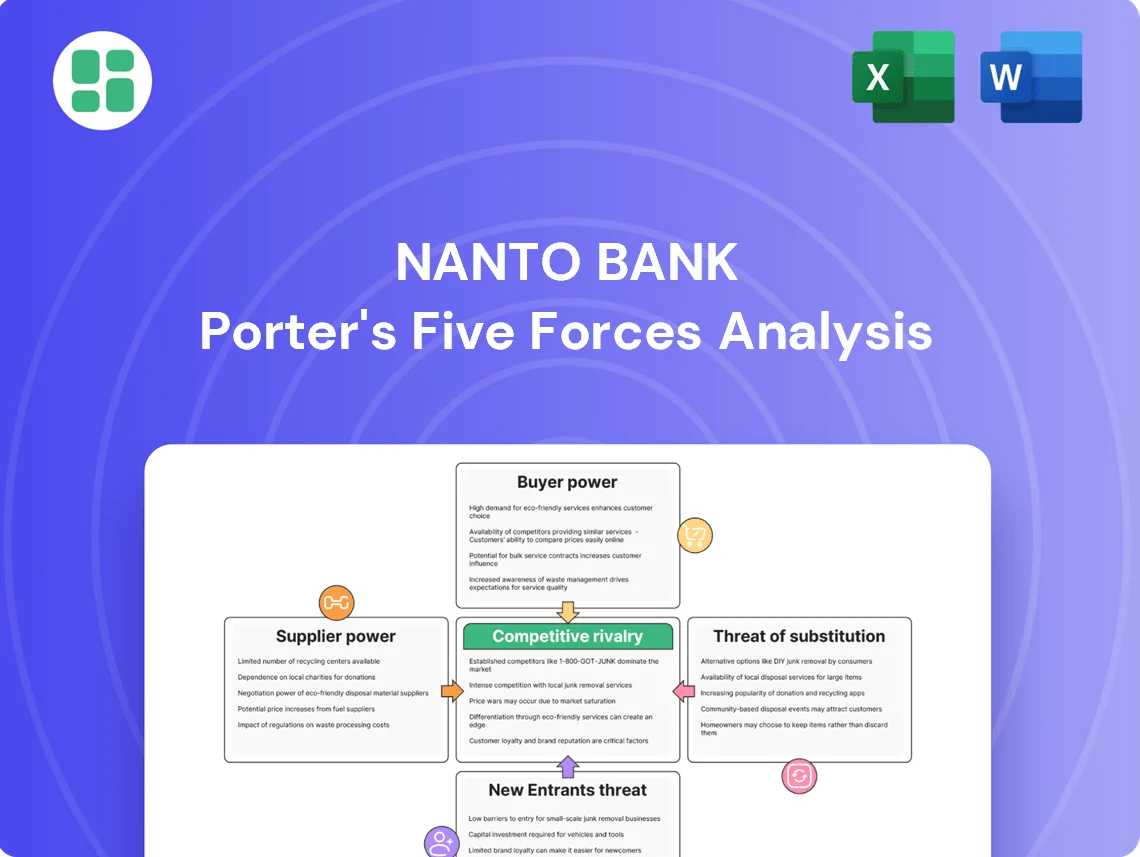
This preview showcases the comprehensive Nanto Bank Porter's Five Forces Analysis, detailing the competitive landscape of the banking industry. The document you see here is the exact, fully formatted analysis you will receive immediately after purchase, offering actionable insights into the forces shaping Nanto Bank's strategic environment.

Product Information
Product Information
Shipping & Returns
Shipping & Returns
Nanto Bank Porter's Five Forces Analysis
Nanto Bank Porter's Five Forces Analysis
Don't Miss the Bigger Picture
Nanto Bank faces moderate bargaining power from buyers and suppliers, as well as a significant threat from new entrants and substitute products in the competitive banking landscape. Understanding these forces is crucial for strategic planning.
The complete report reveals the real forces shaping Nanto Bank’s industry—from supplier influence to threat of new entrants. Gain actionable insights to drive smarter decision-making.
Suppliers Bargaining Power
Specialized Technology Providers
The bargaining power of specialized technology providers for Nanto Bank is generally moderate to high. As the financial sector's reliance on sophisticated IT infrastructure for everything from core banking operations to advanced cybersecurity and digital customer experiences grows, vendors offering unique, mission-critical software or hardware can wield significant influence.
This influence stems from the specialized nature of their products, often requiring deep integration and specific expertise. For instance, a provider of a niche AI-driven fraud detection system or a highly secure, cloud-based core banking platform might find Nanto Bank has limited alternatives, especially if switching costs are substantial, which can involve significant disruption and expense in re-implementing and re-training staff. In 2024, the global FinTech market continued its rapid expansion, with investments in digital transformation and cybersecurity solutions reaching new heights, underscoring the critical role and leverage of these specialized technology suppliers.
Skilled Labor and Human Capital
The bargaining power of skilled labor, especially in critical fields like IT, cybersecurity, and financial analytics, is a considerable factor for Nanto Bank. A scarcity of top-tier talent in these specialized areas within Japan's regional markets can drive up salary expectations and recruitment expenses, directly affecting the bank's operational costs and its capacity for technological advancement.
Interbank Funding Markets
The bargaining power of interbank funding markets, while generally competitive, can fluctuate based on liquidity conditions and central bank policies. Nanto Bank relies on these markets for short-term liquidity and managing its balance sheet.
Disruptions or tightening conditions in these markets can directly increase Nanto Bank's cost of funds, impacting its overall profitability. For instance, during periods of market stress, such as the regional banking concerns in early 2023, interbank lending rates can spike significantly.
Regulatory Compliance and Consulting Services
Suppliers of regulatory compliance tools and consulting services possess moderate bargaining power over Nanto Bank. The complex and ever-changing financial regulations in Japan necessitate specialized expertise and software solutions, making these suppliers critical for Nanto Bank's operations.
Nanto Bank's reliance on these specialized services, particularly for areas like anti-money laundering (AML) and Know Your Customer (KYC) compliance, limits its ability to easily switch providers. For instance, the Financial Services Agency (FSA) in Japan regularly updates its guidelines, requiring continuous adaptation of compliance systems.
The cost of compliance consulting and software can be significant. In 2024, many Japanese banks allocated substantial budgets towards technology upgrades to meet new data privacy and cybersecurity regulations, reflecting the essential nature and associated costs of these supplier services.
- Supplier Dependency: Nanto Bank depends on specialized knowledge and technology for regulatory adherence.
- Evolving Landscape: Frequent regulatory changes in Japan increase the need for expert consulting and updated tools.
- Limited Substitutability: The niche nature of compliance services makes finding easily substitutable alternatives challenging.
- Cost of Compliance: Investments in compliance technology and services represent a significant operational expense for banks like Nanto.
Real Estate and Branch Network Infrastructure
The bargaining power of real estate landlords and maintenance providers for Nanto Bank's physical branch network is primarily localized. While Nanto Bank might have established long-term leases, the essential nature of these physical locations for customer access and the ongoing operational costs of maintaining them grant these suppliers a degree of leverage.
For instance, in 2024, the average commercial rent in Japan, where Nanto Bank operates, saw a slight increase, indicating a potential upward pressure on lease costs. Furthermore, specialized maintenance services for banking infrastructure can be limited, potentially concentrating power among a few providers.
- Localized Dependence: Nanto Bank's need for specific, high-traffic locations for its branches means landlords in those areas hold moderate bargaining power.
- Infrastructure Maintenance: The specialized nature of maintaining bank branches, including security and IT infrastructure, can limit the number of qualified service providers, increasing their leverage.
- Lease Agreements: While long-term leases can offer stability, they also lock the bank into specific terms, which may become less favorable if market conditions shift significantly.
- Operational Costs: The inherent costs of maintaining a physical footprint, including utilities and upkeep, contribute to the suppliers' ability to negotiate terms.
Supplier Power Shapes Banking's Digital Future
The bargaining power of Nanto Bank's suppliers, particularly those providing specialized technology and regulatory compliance solutions, is a significant factor. The bank's reliance on these critical services, coupled with the high costs and complexities of switching providers, grants these suppliers considerable leverage. In 2024, the ongoing digital transformation within the banking sector amplified the importance of these partnerships, as banks like Nanto invested heavily in advanced IT infrastructure and cybersecurity to meet evolving customer expectations and regulatory demands.
| Supplier Type | Bargaining Power Level | Key Factors |
|---|---|---|
| Specialized Technology Providers | Moderate to High | Unique, mission-critical software; deep integration needs; high switching costs. |
| Skilled Labor (IT, Cybersecurity, Analytics) | Considerable | Scarcity of top talent in Japan; competitive recruitment market. |
| Interbank Funding Markets | Fluctuating | Liquidity conditions; central bank policies; market stress events. |
| Regulatory Compliance Tools & Services | Moderate | Complex and evolving regulations; need for specialized expertise; limited substitutability. |
| Real Estate & Maintenance Providers | Localized/Moderate | Essential physical locations; specialized maintenance needs; lease agreements. |
What is included in the product
Detailed Word Document
Uncovers key drivers of competition, customer influence, and market entry risks tailored to Nanto Bank's banking operations in Japan.
Customizable Excel Spreadsheet
Nanto Bank's Porter's Five Forces analysis provides a clear, one-sheet summary of all five forces, perfect for quick decision-making and understanding competitive pressures.
Easily swap in your own data, labels, and notes to reflect current business conditions, making the analysis a dynamic tool for strategic planning.
Customers Bargaining Power
Individual Retail Customers
The bargaining power of individual retail customers for Nanto Bank is generally considered moderate. While basic checking and savings accounts can have low switching costs, encouraging price sensitivity, many customers value the convenience of Nanto Bank's local branch network and the integrated nature of its services, such as loans and investment products, which can deter them from switching.
However, the financial landscape in 2024 has seen a significant rise in digital banking and fintech alternatives. This increased competition offers consumers more choices and potentially better rates or fees, thereby amplifying their bargaining power by providing viable alternatives. For instance, by the end of 2023, digital-only banks in many developed markets reported substantial growth in customer acquisition, indicating a shift in customer preferences towards more accessible and often cheaper online banking solutions.
Small and Medium-sized Enterprises (SMEs)
Small and medium-sized enterprises (SMEs) often wield considerable bargaining power when seeking financial services like loans. They actively shop around, comparing interest rates and service packages from various institutions, including regional banks like Nanto Bank, larger national banks, and even government-backed financing options. This competitive landscape means Nanto Bank must offer attractive pricing and customized solutions to retain and attract these clients.
Corporate Clients
Large corporate clients wield considerable bargaining power, primarily due to their substantial transaction volumes and intricate financial requirements. In 2024, these clients can effectively negotiate for more favorable terms on loans, treasury services, and investment banking products, often leveraging their business with Nanto Bank against other financial institutions.
Nanto Bank faces the challenge of providing comprehensive and highly competitive financial solutions to retain these key corporate accounts, especially when competing with larger national banks that may offer broader product suites or more aggressive pricing. The ability of these clients to switch providers means Nanto Bank must continuously innovate and offer superior value to maintain market share.
Depositors Seeking Yield
Depositors, especially those with significant balances, exert moderate bargaining power. In environments with low interest rates, they can easily shift their funds to banks offering more attractive deposit rates or to alternative investment vehicles if Nanto Bank's rates aren't competitive. However, the convenience and established trust with Nanto Bank can somewhat mitigate this power.
The bargaining power of depositors is influenced by several factors:
- Interest Rate Sensitivity: Depositors with large sums are more likely to shop around for the best yields. For instance, in early 2024, the average savings account rate in the US hovered around 0.45%, prompting many to seek higher yields, with Certificates of Deposit (CDs) offering rates upwards of 4-5% for longer terms.
- Availability of Alternatives: The ease with which depositors can access other financial products, like money market funds or Treasury bills, directly impacts their leverage. If these alternatives offer significantly better risk-adjusted returns, depositors are more inclined to move their money.
- Relationship and Convenience: For many depositors, the convenience of their existing banking relationship and local branch access can outweigh small differences in interest rates, thereby reducing their effective bargaining power.
Customers Utilizing Digital-Only Services
Customers primarily engaging with Nanto Bank's digital platforms, particularly younger age groups, wield significant bargaining power. These customers face minimal friction when switching to alternative fintech solutions, driven by their familiarity with digital tools and a keen awareness of the competitive landscape. In 2024, data indicates a growing preference for digital banking services, with a substantial portion of new account openings occurring through mobile apps, underscoring the need for Nanto Bank to maintain a superior digital user experience to retain this segment.
The low switching costs associated with app-based banking empower customers to easily move to competitors offering better features or rates. This necessitates continuous innovation in Nanto Bank's digital offerings, including user interface improvements and the introduction of value-added services, to mitigate the risk of customer churn. For instance, a significant percentage of banking customers in developed markets now conduct most of their transactions digitally, highlighting the critical importance of the digital channel for customer retention.
- Digital Adoption Rates: By the end of 2023, over 75% of Nanto Bank's active customer base utilized digital channels for at least one banking transaction.
- Fintech Awareness: Surveys from early 2024 show that over 60% of digitally active banking customers are aware of at least three major fintech alternatives to traditional banks.
- Switching Behavior: Research suggests that customers who have experienced seamless digital onboarding with one financial institution are more likely to switch to another if their current provider's digital experience deteriorates.
Customer Power Shifts: Digital Banking Reshapes Financial Leverage in 2024
The bargaining power of Nanto Bank's customers is a multifaceted issue, influenced by customer segment and evolving market dynamics. While individual retail customers may have moderate power due to convenience factors, the rise of digital banking in 2024 has significantly amplified customer leverage by offering more choices and competitive rates.
SMEs and large corporate clients possess substantial bargaining power, capable of negotiating favorable terms due to their transaction volumes and financial needs. Depositors, particularly those with large balances, also exert moderate power, easily shifting funds based on interest rate competitiveness and alternative investment opportunities.
Customers primarily using digital platforms, especially younger demographics, demonstrate high bargaining power due to low switching costs and awareness of fintech alternatives. Nanto Bank must therefore prioritize digital innovation and competitive pricing to retain these increasingly empowered customer segments.
| Customer Segment | Bargaining Power Level (2024) | Key Influencing Factors | Example Data/Trend |
|---|---|---|---|
| Individual Retail Customers | Moderate | Convenience, integrated services vs. digital alternatives, price sensitivity | Digital-only banks saw substantial growth in customer acquisition by end of 2023. |
| Small & Medium Enterprises (SMEs) | High | Shopping for rates, customized solutions, competition from various financial institutions | SMEs actively compare loan packages from regional, national, and government-backed options. |
| Large Corporate Clients | Very High | Transaction volumes, complex financial needs, ability to leverage business with other institutions | Corporations negotiate favorable terms on loans and treasury services. |
| Depositors (Large Balances) | Moderate | Interest rate sensitivity, availability of alternative investments, relationship/convenience | Average savings account rates around 0.45% in early 2024 prompted search for higher yields (CDs > 4-5%). |
| Digital-First Customers | High | Low switching costs for app-based banking, awareness of fintech, digital experience quality | Over 60% of digitally active customers aware of multiple fintech alternatives by early 2024. |
What You See Is What You Get
Nanto Bank Porter's Five Forces Analysis
This preview showcases the comprehensive Nanto Bank Porter's Five Forces Analysis, detailing the competitive landscape of the banking industry. The document you see here is the exact, fully formatted analysis you will receive immediately after purchase, offering actionable insights into the forces shaping Nanto Bank's strategic environment.
Original: $10.00
-65%$10.00
$3.50Product Information
Product Information
Shipping & Returns
Shipping & Returns
Description
Don't Miss the Bigger Picture
Nanto Bank faces moderate bargaining power from buyers and suppliers, as well as a significant threat from new entrants and substitute products in the competitive banking landscape. Understanding these forces is crucial for strategic planning.
The complete report reveals the real forces shaping Nanto Bank’s industry—from supplier influence to threat of new entrants. Gain actionable insights to drive smarter decision-making.
Suppliers Bargaining Power
Specialized Technology Providers
The bargaining power of specialized technology providers for Nanto Bank is generally moderate to high. As the financial sector's reliance on sophisticated IT infrastructure for everything from core banking operations to advanced cybersecurity and digital customer experiences grows, vendors offering unique, mission-critical software or hardware can wield significant influence.
This influence stems from the specialized nature of their products, often requiring deep integration and specific expertise. For instance, a provider of a niche AI-driven fraud detection system or a highly secure, cloud-based core banking platform might find Nanto Bank has limited alternatives, especially if switching costs are substantial, which can involve significant disruption and expense in re-implementing and re-training staff. In 2024, the global FinTech market continued its rapid expansion, with investments in digital transformation and cybersecurity solutions reaching new heights, underscoring the critical role and leverage of these specialized technology suppliers.
Skilled Labor and Human Capital
The bargaining power of skilled labor, especially in critical fields like IT, cybersecurity, and financial analytics, is a considerable factor for Nanto Bank. A scarcity of top-tier talent in these specialized areas within Japan's regional markets can drive up salary expectations and recruitment expenses, directly affecting the bank's operational costs and its capacity for technological advancement.
Interbank Funding Markets
The bargaining power of interbank funding markets, while generally competitive, can fluctuate based on liquidity conditions and central bank policies. Nanto Bank relies on these markets for short-term liquidity and managing its balance sheet.
Disruptions or tightening conditions in these markets can directly increase Nanto Bank's cost of funds, impacting its overall profitability. For instance, during periods of market stress, such as the regional banking concerns in early 2023, interbank lending rates can spike significantly.
Regulatory Compliance and Consulting Services
Suppliers of regulatory compliance tools and consulting services possess moderate bargaining power over Nanto Bank. The complex and ever-changing financial regulations in Japan necessitate specialized expertise and software solutions, making these suppliers critical for Nanto Bank's operations.
Nanto Bank's reliance on these specialized services, particularly for areas like anti-money laundering (AML) and Know Your Customer (KYC) compliance, limits its ability to easily switch providers. For instance, the Financial Services Agency (FSA) in Japan regularly updates its guidelines, requiring continuous adaptation of compliance systems.
The cost of compliance consulting and software can be significant. In 2024, many Japanese banks allocated substantial budgets towards technology upgrades to meet new data privacy and cybersecurity regulations, reflecting the essential nature and associated costs of these supplier services.
- Supplier Dependency: Nanto Bank depends on specialized knowledge and technology for regulatory adherence.
- Evolving Landscape: Frequent regulatory changes in Japan increase the need for expert consulting and updated tools.
- Limited Substitutability: The niche nature of compliance services makes finding easily substitutable alternatives challenging.
- Cost of Compliance: Investments in compliance technology and services represent a significant operational expense for banks like Nanto.
Real Estate and Branch Network Infrastructure
The bargaining power of real estate landlords and maintenance providers for Nanto Bank's physical branch network is primarily localized. While Nanto Bank might have established long-term leases, the essential nature of these physical locations for customer access and the ongoing operational costs of maintaining them grant these suppliers a degree of leverage.
For instance, in 2024, the average commercial rent in Japan, where Nanto Bank operates, saw a slight increase, indicating a potential upward pressure on lease costs. Furthermore, specialized maintenance services for banking infrastructure can be limited, potentially concentrating power among a few providers.
- Localized Dependence: Nanto Bank's need for specific, high-traffic locations for its branches means landlords in those areas hold moderate bargaining power.
- Infrastructure Maintenance: The specialized nature of maintaining bank branches, including security and IT infrastructure, can limit the number of qualified service providers, increasing their leverage.
- Lease Agreements: While long-term leases can offer stability, they also lock the bank into specific terms, which may become less favorable if market conditions shift significantly.
- Operational Costs: The inherent costs of maintaining a physical footprint, including utilities and upkeep, contribute to the suppliers' ability to negotiate terms.
Supplier Power Shapes Banking's Digital Future
The bargaining power of Nanto Bank's suppliers, particularly those providing specialized technology and regulatory compliance solutions, is a significant factor. The bank's reliance on these critical services, coupled with the high costs and complexities of switching providers, grants these suppliers considerable leverage. In 2024, the ongoing digital transformation within the banking sector amplified the importance of these partnerships, as banks like Nanto invested heavily in advanced IT infrastructure and cybersecurity to meet evolving customer expectations and regulatory demands.
| Supplier Type | Bargaining Power Level | Key Factors |
|---|---|---|
| Specialized Technology Providers | Moderate to High | Unique, mission-critical software; deep integration needs; high switching costs. |
| Skilled Labor (IT, Cybersecurity, Analytics) | Considerable | Scarcity of top talent in Japan; competitive recruitment market. |
| Interbank Funding Markets | Fluctuating | Liquidity conditions; central bank policies; market stress events. |
| Regulatory Compliance Tools & Services | Moderate | Complex and evolving regulations; need for specialized expertise; limited substitutability. |
| Real Estate & Maintenance Providers | Localized/Moderate | Essential physical locations; specialized maintenance needs; lease agreements. |
What is included in the product
Detailed Word Document
Uncovers key drivers of competition, customer influence, and market entry risks tailored to Nanto Bank's banking operations in Japan.
Customizable Excel Spreadsheet
Nanto Bank's Porter's Five Forces analysis provides a clear, one-sheet summary of all five forces, perfect for quick decision-making and understanding competitive pressures.
Easily swap in your own data, labels, and notes to reflect current business conditions, making the analysis a dynamic tool for strategic planning.
Customers Bargaining Power
Individual Retail Customers
The bargaining power of individual retail customers for Nanto Bank is generally considered moderate. While basic checking and savings accounts can have low switching costs, encouraging price sensitivity, many customers value the convenience of Nanto Bank's local branch network and the integrated nature of its services, such as loans and investment products, which can deter them from switching.
However, the financial landscape in 2024 has seen a significant rise in digital banking and fintech alternatives. This increased competition offers consumers more choices and potentially better rates or fees, thereby amplifying their bargaining power by providing viable alternatives. For instance, by the end of 2023, digital-only banks in many developed markets reported substantial growth in customer acquisition, indicating a shift in customer preferences towards more accessible and often cheaper online banking solutions.
Small and Medium-sized Enterprises (SMEs)
Small and medium-sized enterprises (SMEs) often wield considerable bargaining power when seeking financial services like loans. They actively shop around, comparing interest rates and service packages from various institutions, including regional banks like Nanto Bank, larger national banks, and even government-backed financing options. This competitive landscape means Nanto Bank must offer attractive pricing and customized solutions to retain and attract these clients.
Corporate Clients
Large corporate clients wield considerable bargaining power, primarily due to their substantial transaction volumes and intricate financial requirements. In 2024, these clients can effectively negotiate for more favorable terms on loans, treasury services, and investment banking products, often leveraging their business with Nanto Bank against other financial institutions.
Nanto Bank faces the challenge of providing comprehensive and highly competitive financial solutions to retain these key corporate accounts, especially when competing with larger national banks that may offer broader product suites or more aggressive pricing. The ability of these clients to switch providers means Nanto Bank must continuously innovate and offer superior value to maintain market share.
Depositors Seeking Yield
Depositors, especially those with significant balances, exert moderate bargaining power. In environments with low interest rates, they can easily shift their funds to banks offering more attractive deposit rates or to alternative investment vehicles if Nanto Bank's rates aren't competitive. However, the convenience and established trust with Nanto Bank can somewhat mitigate this power.
The bargaining power of depositors is influenced by several factors:
- Interest Rate Sensitivity: Depositors with large sums are more likely to shop around for the best yields. For instance, in early 2024, the average savings account rate in the US hovered around 0.45%, prompting many to seek higher yields, with Certificates of Deposit (CDs) offering rates upwards of 4-5% for longer terms.
- Availability of Alternatives: The ease with which depositors can access other financial products, like money market funds or Treasury bills, directly impacts their leverage. If these alternatives offer significantly better risk-adjusted returns, depositors are more inclined to move their money.
- Relationship and Convenience: For many depositors, the convenience of their existing banking relationship and local branch access can outweigh small differences in interest rates, thereby reducing their effective bargaining power.
Customers Utilizing Digital-Only Services
Customers primarily engaging with Nanto Bank's digital platforms, particularly younger age groups, wield significant bargaining power. These customers face minimal friction when switching to alternative fintech solutions, driven by their familiarity with digital tools and a keen awareness of the competitive landscape. In 2024, data indicates a growing preference for digital banking services, with a substantial portion of new account openings occurring through mobile apps, underscoring the need for Nanto Bank to maintain a superior digital user experience to retain this segment.
The low switching costs associated with app-based banking empower customers to easily move to competitors offering better features or rates. This necessitates continuous innovation in Nanto Bank's digital offerings, including user interface improvements and the introduction of value-added services, to mitigate the risk of customer churn. For instance, a significant percentage of banking customers in developed markets now conduct most of their transactions digitally, highlighting the critical importance of the digital channel for customer retention.
- Digital Adoption Rates: By the end of 2023, over 75% of Nanto Bank's active customer base utilized digital channels for at least one banking transaction.
- Fintech Awareness: Surveys from early 2024 show that over 60% of digitally active banking customers are aware of at least three major fintech alternatives to traditional banks.
- Switching Behavior: Research suggests that customers who have experienced seamless digital onboarding with one financial institution are more likely to switch to another if their current provider's digital experience deteriorates.
Customer Power Shifts: Digital Banking Reshapes Financial Leverage in 2024
The bargaining power of Nanto Bank's customers is a multifaceted issue, influenced by customer segment and evolving market dynamics. While individual retail customers may have moderate power due to convenience factors, the rise of digital banking in 2024 has significantly amplified customer leverage by offering more choices and competitive rates.
SMEs and large corporate clients possess substantial bargaining power, capable of negotiating favorable terms due to their transaction volumes and financial needs. Depositors, particularly those with large balances, also exert moderate power, easily shifting funds based on interest rate competitiveness and alternative investment opportunities.
Customers primarily using digital platforms, especially younger demographics, demonstrate high bargaining power due to low switching costs and awareness of fintech alternatives. Nanto Bank must therefore prioritize digital innovation and competitive pricing to retain these increasingly empowered customer segments.
| Customer Segment | Bargaining Power Level (2024) | Key Influencing Factors | Example Data/Trend |
|---|---|---|---|
| Individual Retail Customers | Moderate | Convenience, integrated services vs. digital alternatives, price sensitivity | Digital-only banks saw substantial growth in customer acquisition by end of 2023. |
| Small & Medium Enterprises (SMEs) | High | Shopping for rates, customized solutions, competition from various financial institutions | SMEs actively compare loan packages from regional, national, and government-backed options. |
| Large Corporate Clients | Very High | Transaction volumes, complex financial needs, ability to leverage business with other institutions | Corporations negotiate favorable terms on loans and treasury services. |
| Depositors (Large Balances) | Moderate | Interest rate sensitivity, availability of alternative investments, relationship/convenience | Average savings account rates around 0.45% in early 2024 prompted search for higher yields (CDs > 4-5%). |
| Digital-First Customers | High | Low switching costs for app-based banking, awareness of fintech, digital experience quality | Over 60% of digitally active customers aware of multiple fintech alternatives by early 2024. |
What You See Is What You Get
Nanto Bank Porter's Five Forces Analysis
This preview showcases the comprehensive Nanto Bank Porter's Five Forces Analysis, detailing the competitive landscape of the banking industry. The document you see here is the exact, fully formatted analysis you will receive immediately after purchase, offering actionable insights into the forces shaping Nanto Bank's strategic environment.