Life Care Centers of America Porter's Five Forces Analysis

Go Beyond the Preview—Access the Full Strategic Report
Life Care Centers of America operates within a highly regulated and competitive long-term care sector, where buyer power from patients and their families is significant, and the threat of substitutes, such as home healthcare, is ever-present. Understanding the intensity of these forces is crucial for strategic planning.
The complete report reveals the real forces shaping Life Care Centers of America’s industry—from supplier influence to threat of new entrants. Gain actionable insights to drive smarter decision-making.
Suppliers Bargaining Power

Concentration of Key Suppliers
The healthcare sector, including organizations like Life Care Centers of America, depends heavily on specialized suppliers for critical items such as pharmaceuticals, advanced medical equipment, and cutting-edge technology. When a small number of major suppliers control these essential markets, they gain considerable leverage. This allows them to influence pricing and contract terms, potentially increasing costs for Life Care Centers of America.
This concentration of power is especially pronounced when dealing with proprietary medical devices or crucial medications where viable substitutes are scarce. For instance, in 2024, the pharmaceutical industry saw continued consolidation, with major drug manufacturers holding significant market share for patented treatments, thereby strengthening their bargaining position with healthcare providers.
Availability of Substitute Inputs
The bargaining power of suppliers for Life Care Centers of America is significantly influenced by the availability of substitute inputs. When Life Care Centers has a wide array of choices for essential goods and services, such as office supplies or food vendors, their ability to negotiate favorable terms increases. For example, if multiple companies offer comparable janitorial services, Life Care Centers can readily switch providers, diminishing the leverage of any single supplier.
However, the situation changes dramatically for specialized inputs. In the healthcare sector, the availability of highly skilled labor, like registered nurses and physical therapists, is often limited. As of early 2024, reports indicate persistent shortages in these critical roles across the United States, with some regions experiencing vacancy rates exceeding 15% for nursing positions. This scarcity elevates the bargaining power of these specialized labor markets, as Life Care Centers must compete to attract and retain qualified staff, often leading to higher wage demands and increased operational costs.

Switching Costs for Life Care Centers of America
Life Care Centers of America likely faces significant switching costs when changing suppliers for critical systems like electronic health records (EHRs) or specialized medical equipment. These costs can include the expense of new hardware, software implementation, extensive staff retraining, and the complex process of migrating patient data. For instance, a study by HIMSS Analytics in 2024 indicated that the average cost to implement a new EHR system can range from $50,000 to $1 million or more, depending on the facility's size and complexity.
These substantial upfront investments and the potential for disruption to patient care during a transition directly empower suppliers. The difficulty and expense involved in switching make it harder for Life Care Centers of America to negotiate better terms or find alternative providers, thus solidifying the supplier's bargaining position.

Threat of Forward Integration by Suppliers
Suppliers to Life Care Centers of America might consider forward integration by directly offering care services, thereby becoming competitors. For instance, a major staffing agency could potentially expand into providing management or even direct patient care, leveraging their existing infrastructure and expertise.
While this threat is typically low, particularly for suppliers of physical goods, it could manifest in specialized service areas. Pharmaceutical companies or large medical equipment providers, for example, might explore offering bundled management solutions or direct support services.
In 2024, the healthcare staffing market saw continued growth, with agencies actively seeking to diversify their service offerings. Some reports indicated a slight increase in staffing firms exploring ancillary services beyond just providing personnel.
- Forward Integration Threat: Suppliers may enter direct care services.
- Example: Staffing agencies could offer management or direct patient care.
- Niche Potential: Threat is low but possible in specialized areas.
- Market Context: Healthcare staffing market growth in 2024 shows diversification trends.
Importance of the Supplier's Input to the Company's Business
The quality and availability of essential inputs, particularly a skilled and stable healthcare workforce, are paramount to Life Care Centers of America's ability to deliver consistent, high-quality care. Without adequate staffing, the core business of providing long-term care and rehabilitation services is directly compromised.
The persistent nursing and caregiver shortages across the United States significantly bolster the bargaining power of healthcare professionals and staffing agencies. For instance, in 2024, the U.S. Bureau of Labor Statistics projected a need for an additional 1.1 million registered nurses by 2031, highlighting the scarcity of qualified personnel.
- Critical Workforce Shortages: The demand for nurses and caregivers consistently outstrips supply.
- Increased Labor Costs: Scarcity drives up wages and benefits, impacting operational expenses.
- Reliance on Staffing Agencies: Companies often turn to agencies, which can command higher rates due to their ability to source temporary staff.
- Impact on Service Quality: Understaffing can lead to reduced patient-to-staff ratios, affecting care delivery and regulatory compliance.
Elevated Supplier Bargaining Power in Healthcare
The bargaining power of suppliers for Life Care Centers of America is elevated by the critical nature of specialized inputs and the limited availability of substitutes. For example, the scarcity of highly skilled healthcare professionals, such as registered nurses, significantly strengthens their negotiating position, as evidenced by persistent shortages reported throughout 2024 across the U.S.
High switching costs associated with essential systems like electronic health records further empower suppliers, as Life Care Centers faces substantial financial and operational hurdles when changing providers. The average cost to implement new EHR systems in 2024 ranged from $50,000 to over $1 million, underscoring this challenge.
The concentration of power among a few key suppliers for critical medical equipment and pharmaceuticals also allows them to dictate terms. This is amplified when these suppliers control proprietary products with few viable alternatives, as seen in the continued consolidation within the pharmaceutical industry in 2024.
| Factor | Impact on Life Care Centers of America | 2024 Data/Example |
|---|---|---|
| Supplier Concentration | Higher leverage for fewer suppliers | Continued consolidation in pharmaceuticals |
| Availability of Substitutes | Limited substitutes increase supplier power | Scarcity of specialized medical equipment |
| Switching Costs | High costs empower existing suppliers | EHR implementation costs: $50k - $1M+ |
| Labor Scarcity | Elevates bargaining power of skilled labor | Projected RN need: 1.1 million by 2031 |
What is included in the product
 Detailed Word Document
This analysis dissects the competitive forces impacting Life Care Centers of America, evaluating the intensity of rivalry, buyer and supplier power, the threat of new entrants, and the availability of substitutes within the post-acute care sector.

 Customizable Excel Spreadsheet
Visualize competitive intensity across all five forces—instantly identifying threats and opportunities for Life Care Centers of America.
Customers Bargaining Power

Concentration of Customers and Payer Mix
Life Care Centers of America deals with a diverse customer base, including individual residents and their families. However, a substantial portion of their income is derived from large institutional payers such as Medicare and Medicaid.
These government programs, alongside major private insurance providers, act as highly concentrated buyers. Their sheer volume of business and significant regulatory sway grant them considerable bargaining power over Life Care Centers of America.
In 2024, government programs like Medicare and Medicaid continued to be dominant payers in the long-term care sector, often dictating reimbursement rates and service requirements, which directly impacts the bargaining power of these institutional customers.
Customer Price Sensitivity
Patients and their families often face significant out-of-pocket expenses for long-term care, making them highly sensitive to pricing, especially when insurance coverage is limited. This sensitivity is amplified by the increasing availability of online tools that allow for easy comparison of facility quality and costs, compelling providers like Life Care Centers of America to maintain competitive pricing structures.

Availability of Customer Information
Customers today have unprecedented access to information. Resources like U.S. News & World Report rankings and the Centers for Medicare & Medicaid Services (CMS) Nursing Home Compare tool provide detailed insights into quality of care, staffing ratios, and resident satisfaction for facilities like Life Care Centers of America. This transparency directly empowers consumers, giving them more leverage when choosing a healthcare provider.

Switching Costs for Customers
Switching between long-term care facilities presents considerable financial and logistical hurdles for residents and their families. These can include the costs associated with moving, potential disruption to care plans, and the emotional toll of adapting to a new environment. For instance, a resident might need to pay for movers, transfer medical records, and potentially face new admission fees.
Despite these barriers, the bargaining power of customers can increase if Life Care Centers of America fails to meet their expectations for quality of care, amenities, or overall living experience. The paramount need for good health and a comfortable environment can motivate families to absorb switching costs if they perceive a significantly better alternative. This inherent desire for improved care provides a degree of leverage for residents seeking higher standards.
- Financial Costs: Moving expenses, potential loss of deposits, and new admission fees can range from hundreds to thousands of dollars.
- Logistical Challenges: Transferring medical records, coordinating care transitions, and physically moving belongings require significant time and effort.
- Emotional Impact: Residents often experience anxiety and stress when relocating, impacting their well-being and potentially their perception of the facility's value.
- Quality as a Driver: A perceived deficiency in care quality or resident satisfaction can override financial and emotional switching costs, empowering customers to seek better options.
Threat of Backward Integration by Customers
While individual patients typically cannot provide their own care facilities, larger entities like major health systems or integrated payer-provider organizations possess the capability to establish their own post-acute care networks. This strategic move could diminish their dependence on external providers such as Life Care Centers of America, thereby consolidating power within these larger organizations. For instance, in 2024, many large hospital systems have been actively expanding their continuum of care services, including skilled nursing facilities and home health, to capture more revenue and control patient flow. This trend directly impacts independent providers by creating a more competitive landscape where customers can potentially become competitors.
This threat of backward integration is significantly more pronounced for substantial healthcare systems rather than for individual families seeking care. Large payers, for example, can leverage their financial resources and existing patient populations to build or acquire the necessary infrastructure for post-acute care. In 2023, the US healthcare industry saw continued consolidation, with major insurers increasingly investing in or partnering with providers to create integrated delivery networks, a move that inherently strengthens their bargaining power against standalone facilities.
The potential for large healthcare purchasers to develop in-house post-acute care capabilities poses a direct challenge to the bargaining power of customers. By creating their own networks, these powerful entities can reduce the need for external services, thereby influencing pricing and contract terms with independent providers. Data from 2024 indicates a growing trend of vertical integration within healthcare, where hospitals and insurers are acquiring or developing post-acute care services to manage patient outcomes and costs more effectively.
- Customer Integration: Large health systems and payer-provider organizations can integrate backward by developing their own post-acute care facilities.
- Reduced Reliance: This integration lessens their dependence on independent providers like Life Care Centers of America.
- Shifting Power: The ability of customers to provide their own services shifts bargaining power away from the service provider.
- Market Trend: In 2024, continued consolidation and vertical integration in healthcare highlight this growing threat for independent post-acute care providers.
Customer Power Shapes Post-Acute Care Revenue
The bargaining power of customers for Life Care Centers of America is significant, primarily driven by institutional payers like Medicare and Medicaid. These large entities dictate reimbursement rates, directly influencing Life Care Centers' revenue. Individual patients and families, while facing switching costs, are highly price-sensitive and increasingly informed, leveraging online resources to compare facilities.
The threat of backward integration by large healthcare systems and payers further amplifies customer bargaining power. In 2024, many hospital systems expanded their post-acute care services, reducing reliance on external providers and consolidating their influence over pricing and contract terms.
| Customer Segment | Bargaining Power Drivers | Impact on Life Care Centers of America |
|---|---|---|
| Institutional Payers (Medicare, Medicaid, Private Insurers) | Concentrated buyer volume, regulatory influence, reimbursement rate setting | Significant pressure on pricing and service terms; direct revenue impact |
| Individual Residents & Families | Price sensitivity, access to comparative information (CMS Nursing Home Compare, U.S. News), desire for quality care | Need for competitive pricing and high-quality service delivery to attract and retain residents |
| Large Healthcare Systems & Payers | Potential for backward integration (developing own post-acute care), reduced dependence on external providers | Increased competition, potential loss of business, diminished pricing leverage |
Preview Before You Purchase
Life Care Centers of America Porter's Five Forces Analysis
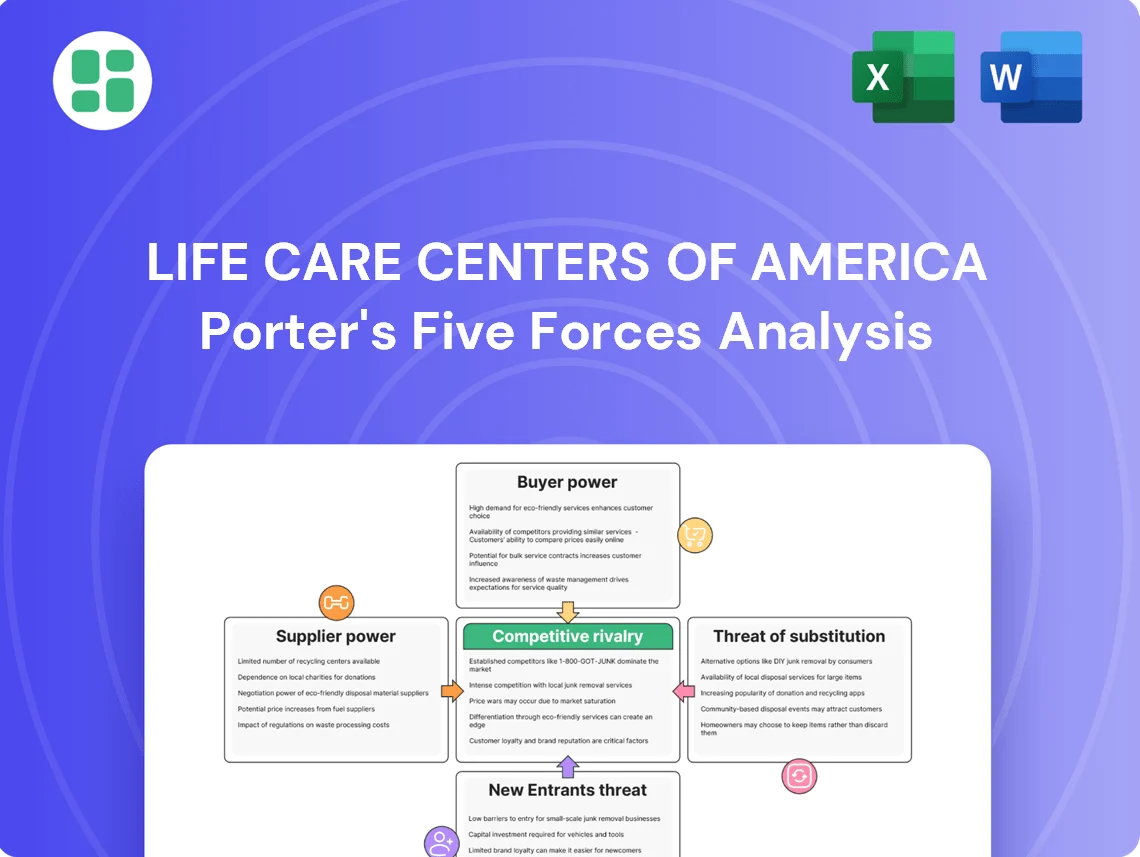
This preview shows the exact document you'll receive immediately after purchase—no surprises, no placeholders. It details Life Care Centers of America's Porter's Five Forces Analysis, covering the intensity of rivalry, the threat of new entrants, the bargaining power of buyers, the bargaining power of suppliers, and the threat of substitute products or services within the healthcare industry.

Product Information
Product Information
Shipping & Returns
Shipping & Returns
Life Care Centers of America Porter's Five Forces Analysis
Life Care Centers of America Porter's Five Forces Analysis
Go Beyond the Preview—Access the Full Strategic Report
Life Care Centers of America operates within a highly regulated and competitive long-term care sector, where buyer power from patients and their families is significant, and the threat of substitutes, such as home healthcare, is ever-present. Understanding the intensity of these forces is crucial for strategic planning.
The complete report reveals the real forces shaping Life Care Centers of America’s industry—from supplier influence to threat of new entrants. Gain actionable insights to drive smarter decision-making.
Suppliers Bargaining Power
Concentration of Key Suppliers
The healthcare sector, including organizations like Life Care Centers of America, depends heavily on specialized suppliers for critical items such as pharmaceuticals, advanced medical equipment, and cutting-edge technology. When a small number of major suppliers control these essential markets, they gain considerable leverage. This allows them to influence pricing and contract terms, potentially increasing costs for Life Care Centers of America.
This concentration of power is especially pronounced when dealing with proprietary medical devices or crucial medications where viable substitutes are scarce. For instance, in 2024, the pharmaceutical industry saw continued consolidation, with major drug manufacturers holding significant market share for patented treatments, thereby strengthening their bargaining position with healthcare providers.
Availability of Substitute Inputs
The bargaining power of suppliers for Life Care Centers of America is significantly influenced by the availability of substitute inputs. When Life Care Centers has a wide array of choices for essential goods and services, such as office supplies or food vendors, their ability to negotiate favorable terms increases. For example, if multiple companies offer comparable janitorial services, Life Care Centers can readily switch providers, diminishing the leverage of any single supplier.
However, the situation changes dramatically for specialized inputs. In the healthcare sector, the availability of highly skilled labor, like registered nurses and physical therapists, is often limited. As of early 2024, reports indicate persistent shortages in these critical roles across the United States, with some regions experiencing vacancy rates exceeding 15% for nursing positions. This scarcity elevates the bargaining power of these specialized labor markets, as Life Care Centers must compete to attract and retain qualified staff, often leading to higher wage demands and increased operational costs.
Switching Costs for Life Care Centers of America
Life Care Centers of America likely faces significant switching costs when changing suppliers for critical systems like electronic health records (EHRs) or specialized medical equipment. These costs can include the expense of new hardware, software implementation, extensive staff retraining, and the complex process of migrating patient data. For instance, a study by HIMSS Analytics in 2024 indicated that the average cost to implement a new EHR system can range from $50,000 to $1 million or more, depending on the facility's size and complexity.
These substantial upfront investments and the potential for disruption to patient care during a transition directly empower suppliers. The difficulty and expense involved in switching make it harder for Life Care Centers of America to negotiate better terms or find alternative providers, thus solidifying the supplier's bargaining position.
Threat of Forward Integration by Suppliers
Suppliers to Life Care Centers of America might consider forward integration by directly offering care services, thereby becoming competitors. For instance, a major staffing agency could potentially expand into providing management or even direct patient care, leveraging their existing infrastructure and expertise.
While this threat is typically low, particularly for suppliers of physical goods, it could manifest in specialized service areas. Pharmaceutical companies or large medical equipment providers, for example, might explore offering bundled management solutions or direct support services.
In 2024, the healthcare staffing market saw continued growth, with agencies actively seeking to diversify their service offerings. Some reports indicated a slight increase in staffing firms exploring ancillary services beyond just providing personnel.
- Forward Integration Threat: Suppliers may enter direct care services.
- Example: Staffing agencies could offer management or direct patient care.
- Niche Potential: Threat is low but possible in specialized areas.
- Market Context: Healthcare staffing market growth in 2024 shows diversification trends.
Importance of the Supplier's Input to the Company's Business
The quality and availability of essential inputs, particularly a skilled and stable healthcare workforce, are paramount to Life Care Centers of America's ability to deliver consistent, high-quality care. Without adequate staffing, the core business of providing long-term care and rehabilitation services is directly compromised.
The persistent nursing and caregiver shortages across the United States significantly bolster the bargaining power of healthcare professionals and staffing agencies. For instance, in 2024, the U.S. Bureau of Labor Statistics projected a need for an additional 1.1 million registered nurses by 2031, highlighting the scarcity of qualified personnel.
- Critical Workforce Shortages: The demand for nurses and caregivers consistently outstrips supply.
- Increased Labor Costs: Scarcity drives up wages and benefits, impacting operational expenses.
- Reliance on Staffing Agencies: Companies often turn to agencies, which can command higher rates due to their ability to source temporary staff.
- Impact on Service Quality: Understaffing can lead to reduced patient-to-staff ratios, affecting care delivery and regulatory compliance.
Elevated Supplier Bargaining Power in Healthcare
The bargaining power of suppliers for Life Care Centers of America is elevated by the critical nature of specialized inputs and the limited availability of substitutes. For example, the scarcity of highly skilled healthcare professionals, such as registered nurses, significantly strengthens their negotiating position, as evidenced by persistent shortages reported throughout 2024 across the U.S.
High switching costs associated with essential systems like electronic health records further empower suppliers, as Life Care Centers faces substantial financial and operational hurdles when changing providers. The average cost to implement new EHR systems in 2024 ranged from $50,000 to over $1 million, underscoring this challenge.
The concentration of power among a few key suppliers for critical medical equipment and pharmaceuticals also allows them to dictate terms. This is amplified when these suppliers control proprietary products with few viable alternatives, as seen in the continued consolidation within the pharmaceutical industry in 2024.
| Factor | Impact on Life Care Centers of America | 2024 Data/Example |
|---|---|---|
| Supplier Concentration | Higher leverage for fewer suppliers | Continued consolidation in pharmaceuticals |
| Availability of Substitutes | Limited substitutes increase supplier power | Scarcity of specialized medical equipment |
| Switching Costs | High costs empower existing suppliers | EHR implementation costs: $50k - $1M+ |
| Labor Scarcity | Elevates bargaining power of skilled labor | Projected RN need: 1.1 million by 2031 |
What is included in the product
Detailed Word Document
This analysis dissects the competitive forces impacting Life Care Centers of America, evaluating the intensity of rivalry, buyer and supplier power, the threat of new entrants, and the availability of substitutes within the post-acute care sector.
Customizable Excel Spreadsheet
Visualize competitive intensity across all five forces—instantly identifying threats and opportunities for Life Care Centers of America.
Customers Bargaining Power
Concentration of Customers and Payer Mix
Life Care Centers of America deals with a diverse customer base, including individual residents and their families. However, a substantial portion of their income is derived from large institutional payers such as Medicare and Medicaid.
These government programs, alongside major private insurance providers, act as highly concentrated buyers. Their sheer volume of business and significant regulatory sway grant them considerable bargaining power over Life Care Centers of America.
In 2024, government programs like Medicare and Medicaid continued to be dominant payers in the long-term care sector, often dictating reimbursement rates and service requirements, which directly impacts the bargaining power of these institutional customers.
Customer Price Sensitivity
Patients and their families often face significant out-of-pocket expenses for long-term care, making them highly sensitive to pricing, especially when insurance coverage is limited. This sensitivity is amplified by the increasing availability of online tools that allow for easy comparison of facility quality and costs, compelling providers like Life Care Centers of America to maintain competitive pricing structures.
Availability of Customer Information
Customers today have unprecedented access to information. Resources like U.S. News & World Report rankings and the Centers for Medicare & Medicaid Services (CMS) Nursing Home Compare tool provide detailed insights into quality of care, staffing ratios, and resident satisfaction for facilities like Life Care Centers of America. This transparency directly empowers consumers, giving them more leverage when choosing a healthcare provider.
Switching Costs for Customers
Switching between long-term care facilities presents considerable financial and logistical hurdles for residents and their families. These can include the costs associated with moving, potential disruption to care plans, and the emotional toll of adapting to a new environment. For instance, a resident might need to pay for movers, transfer medical records, and potentially face new admission fees.
Despite these barriers, the bargaining power of customers can increase if Life Care Centers of America fails to meet their expectations for quality of care, amenities, or overall living experience. The paramount need for good health and a comfortable environment can motivate families to absorb switching costs if they perceive a significantly better alternative. This inherent desire for improved care provides a degree of leverage for residents seeking higher standards.
- Financial Costs: Moving expenses, potential loss of deposits, and new admission fees can range from hundreds to thousands of dollars.
- Logistical Challenges: Transferring medical records, coordinating care transitions, and physically moving belongings require significant time and effort.
- Emotional Impact: Residents often experience anxiety and stress when relocating, impacting their well-being and potentially their perception of the facility's value.
- Quality as a Driver: A perceived deficiency in care quality or resident satisfaction can override financial and emotional switching costs, empowering customers to seek better options.
Threat of Backward Integration by Customers
While individual patients typically cannot provide their own care facilities, larger entities like major health systems or integrated payer-provider organizations possess the capability to establish their own post-acute care networks. This strategic move could diminish their dependence on external providers such as Life Care Centers of America, thereby consolidating power within these larger organizations. For instance, in 2024, many large hospital systems have been actively expanding their continuum of care services, including skilled nursing facilities and home health, to capture more revenue and control patient flow. This trend directly impacts independent providers by creating a more competitive landscape where customers can potentially become competitors.
This threat of backward integration is significantly more pronounced for substantial healthcare systems rather than for individual families seeking care. Large payers, for example, can leverage their financial resources and existing patient populations to build or acquire the necessary infrastructure for post-acute care. In 2023, the US healthcare industry saw continued consolidation, with major insurers increasingly investing in or partnering with providers to create integrated delivery networks, a move that inherently strengthens their bargaining power against standalone facilities.
The potential for large healthcare purchasers to develop in-house post-acute care capabilities poses a direct challenge to the bargaining power of customers. By creating their own networks, these powerful entities can reduce the need for external services, thereby influencing pricing and contract terms with independent providers. Data from 2024 indicates a growing trend of vertical integration within healthcare, where hospitals and insurers are acquiring or developing post-acute care services to manage patient outcomes and costs more effectively.
- Customer Integration: Large health systems and payer-provider organizations can integrate backward by developing their own post-acute care facilities.
- Reduced Reliance: This integration lessens their dependence on independent providers like Life Care Centers of America.
- Shifting Power: The ability of customers to provide their own services shifts bargaining power away from the service provider.
- Market Trend: In 2024, continued consolidation and vertical integration in healthcare highlight this growing threat for independent post-acute care providers.
Customer Power Shapes Post-Acute Care Revenue
The bargaining power of customers for Life Care Centers of America is significant, primarily driven by institutional payers like Medicare and Medicaid. These large entities dictate reimbursement rates, directly influencing Life Care Centers' revenue. Individual patients and families, while facing switching costs, are highly price-sensitive and increasingly informed, leveraging online resources to compare facilities.
The threat of backward integration by large healthcare systems and payers further amplifies customer bargaining power. In 2024, many hospital systems expanded their post-acute care services, reducing reliance on external providers and consolidating their influence over pricing and contract terms.
| Customer Segment | Bargaining Power Drivers | Impact on Life Care Centers of America |
|---|---|---|
| Institutional Payers (Medicare, Medicaid, Private Insurers) | Concentrated buyer volume, regulatory influence, reimbursement rate setting | Significant pressure on pricing and service terms; direct revenue impact |
| Individual Residents & Families | Price sensitivity, access to comparative information (CMS Nursing Home Compare, U.S. News), desire for quality care | Need for competitive pricing and high-quality service delivery to attract and retain residents |
| Large Healthcare Systems & Payers | Potential for backward integration (developing own post-acute care), reduced dependence on external providers | Increased competition, potential loss of business, diminished pricing leverage |
Preview Before You Purchase
Life Care Centers of America Porter's Five Forces Analysis
This preview shows the exact document you'll receive immediately after purchase—no surprises, no placeholders. It details Life Care Centers of America's Porter's Five Forces Analysis, covering the intensity of rivalry, the threat of new entrants, the bargaining power of buyers, the bargaining power of suppliers, and the threat of substitute products or services within the healthcare industry.
Original: $10.00
-65%$10.00
$3.50Product Information
Product Information
Shipping & Returns
Shipping & Returns
Description
Go Beyond the Preview—Access the Full Strategic Report
Life Care Centers of America operates within a highly regulated and competitive long-term care sector, where buyer power from patients and their families is significant, and the threat of substitutes, such as home healthcare, is ever-present. Understanding the intensity of these forces is crucial for strategic planning.
The complete report reveals the real forces shaping Life Care Centers of America’s industry—from supplier influence to threat of new entrants. Gain actionable insights to drive smarter decision-making.
Suppliers Bargaining Power
Concentration of Key Suppliers
The healthcare sector, including organizations like Life Care Centers of America, depends heavily on specialized suppliers for critical items such as pharmaceuticals, advanced medical equipment, and cutting-edge technology. When a small number of major suppliers control these essential markets, they gain considerable leverage. This allows them to influence pricing and contract terms, potentially increasing costs for Life Care Centers of America.
This concentration of power is especially pronounced when dealing with proprietary medical devices or crucial medications where viable substitutes are scarce. For instance, in 2024, the pharmaceutical industry saw continued consolidation, with major drug manufacturers holding significant market share for patented treatments, thereby strengthening their bargaining position with healthcare providers.
Availability of Substitute Inputs
The bargaining power of suppliers for Life Care Centers of America is significantly influenced by the availability of substitute inputs. When Life Care Centers has a wide array of choices for essential goods and services, such as office supplies or food vendors, their ability to negotiate favorable terms increases. For example, if multiple companies offer comparable janitorial services, Life Care Centers can readily switch providers, diminishing the leverage of any single supplier.
However, the situation changes dramatically for specialized inputs. In the healthcare sector, the availability of highly skilled labor, like registered nurses and physical therapists, is often limited. As of early 2024, reports indicate persistent shortages in these critical roles across the United States, with some regions experiencing vacancy rates exceeding 15% for nursing positions. This scarcity elevates the bargaining power of these specialized labor markets, as Life Care Centers must compete to attract and retain qualified staff, often leading to higher wage demands and increased operational costs.
Switching Costs for Life Care Centers of America
Life Care Centers of America likely faces significant switching costs when changing suppliers for critical systems like electronic health records (EHRs) or specialized medical equipment. These costs can include the expense of new hardware, software implementation, extensive staff retraining, and the complex process of migrating patient data. For instance, a study by HIMSS Analytics in 2024 indicated that the average cost to implement a new EHR system can range from $50,000 to $1 million or more, depending on the facility's size and complexity.
These substantial upfront investments and the potential for disruption to patient care during a transition directly empower suppliers. The difficulty and expense involved in switching make it harder for Life Care Centers of America to negotiate better terms or find alternative providers, thus solidifying the supplier's bargaining position.
Threat of Forward Integration by Suppliers
Suppliers to Life Care Centers of America might consider forward integration by directly offering care services, thereby becoming competitors. For instance, a major staffing agency could potentially expand into providing management or even direct patient care, leveraging their existing infrastructure and expertise.
While this threat is typically low, particularly for suppliers of physical goods, it could manifest in specialized service areas. Pharmaceutical companies or large medical equipment providers, for example, might explore offering bundled management solutions or direct support services.
In 2024, the healthcare staffing market saw continued growth, with agencies actively seeking to diversify their service offerings. Some reports indicated a slight increase in staffing firms exploring ancillary services beyond just providing personnel.
- Forward Integration Threat: Suppliers may enter direct care services.
- Example: Staffing agencies could offer management or direct patient care.
- Niche Potential: Threat is low but possible in specialized areas.
- Market Context: Healthcare staffing market growth in 2024 shows diversification trends.
Importance of the Supplier's Input to the Company's Business
The quality and availability of essential inputs, particularly a skilled and stable healthcare workforce, are paramount to Life Care Centers of America's ability to deliver consistent, high-quality care. Without adequate staffing, the core business of providing long-term care and rehabilitation services is directly compromised.
The persistent nursing and caregiver shortages across the United States significantly bolster the bargaining power of healthcare professionals and staffing agencies. For instance, in 2024, the U.S. Bureau of Labor Statistics projected a need for an additional 1.1 million registered nurses by 2031, highlighting the scarcity of qualified personnel.
- Critical Workforce Shortages: The demand for nurses and caregivers consistently outstrips supply.
- Increased Labor Costs: Scarcity drives up wages and benefits, impacting operational expenses.
- Reliance on Staffing Agencies: Companies often turn to agencies, which can command higher rates due to their ability to source temporary staff.
- Impact on Service Quality: Understaffing can lead to reduced patient-to-staff ratios, affecting care delivery and regulatory compliance.
Elevated Supplier Bargaining Power in Healthcare
The bargaining power of suppliers for Life Care Centers of America is elevated by the critical nature of specialized inputs and the limited availability of substitutes. For example, the scarcity of highly skilled healthcare professionals, such as registered nurses, significantly strengthens their negotiating position, as evidenced by persistent shortages reported throughout 2024 across the U.S.
High switching costs associated with essential systems like electronic health records further empower suppliers, as Life Care Centers faces substantial financial and operational hurdles when changing providers. The average cost to implement new EHR systems in 2024 ranged from $50,000 to over $1 million, underscoring this challenge.
The concentration of power among a few key suppliers for critical medical equipment and pharmaceuticals also allows them to dictate terms. This is amplified when these suppliers control proprietary products with few viable alternatives, as seen in the continued consolidation within the pharmaceutical industry in 2024.
| Factor | Impact on Life Care Centers of America | 2024 Data/Example |
|---|---|---|
| Supplier Concentration | Higher leverage for fewer suppliers | Continued consolidation in pharmaceuticals |
| Availability of Substitutes | Limited substitutes increase supplier power | Scarcity of specialized medical equipment |
| Switching Costs | High costs empower existing suppliers | EHR implementation costs: $50k - $1M+ |
| Labor Scarcity | Elevates bargaining power of skilled labor | Projected RN need: 1.1 million by 2031 |
What is included in the product
Detailed Word Document
This analysis dissects the competitive forces impacting Life Care Centers of America, evaluating the intensity of rivalry, buyer and supplier power, the threat of new entrants, and the availability of substitutes within the post-acute care sector.
Customizable Excel Spreadsheet
Visualize competitive intensity across all five forces—instantly identifying threats and opportunities for Life Care Centers of America.
Customers Bargaining Power
Concentration of Customers and Payer Mix
Life Care Centers of America deals with a diverse customer base, including individual residents and their families. However, a substantial portion of their income is derived from large institutional payers such as Medicare and Medicaid.
These government programs, alongside major private insurance providers, act as highly concentrated buyers. Their sheer volume of business and significant regulatory sway grant them considerable bargaining power over Life Care Centers of America.
In 2024, government programs like Medicare and Medicaid continued to be dominant payers in the long-term care sector, often dictating reimbursement rates and service requirements, which directly impacts the bargaining power of these institutional customers.
Customer Price Sensitivity
Patients and their families often face significant out-of-pocket expenses for long-term care, making them highly sensitive to pricing, especially when insurance coverage is limited. This sensitivity is amplified by the increasing availability of online tools that allow for easy comparison of facility quality and costs, compelling providers like Life Care Centers of America to maintain competitive pricing structures.
Availability of Customer Information
Customers today have unprecedented access to information. Resources like U.S. News & World Report rankings and the Centers for Medicare & Medicaid Services (CMS) Nursing Home Compare tool provide detailed insights into quality of care, staffing ratios, and resident satisfaction for facilities like Life Care Centers of America. This transparency directly empowers consumers, giving them more leverage when choosing a healthcare provider.
Switching Costs for Customers
Switching between long-term care facilities presents considerable financial and logistical hurdles for residents and their families. These can include the costs associated with moving, potential disruption to care plans, and the emotional toll of adapting to a new environment. For instance, a resident might need to pay for movers, transfer medical records, and potentially face new admission fees.
Despite these barriers, the bargaining power of customers can increase if Life Care Centers of America fails to meet their expectations for quality of care, amenities, or overall living experience. The paramount need for good health and a comfortable environment can motivate families to absorb switching costs if they perceive a significantly better alternative. This inherent desire for improved care provides a degree of leverage for residents seeking higher standards.
- Financial Costs: Moving expenses, potential loss of deposits, and new admission fees can range from hundreds to thousands of dollars.
- Logistical Challenges: Transferring medical records, coordinating care transitions, and physically moving belongings require significant time and effort.
- Emotional Impact: Residents often experience anxiety and stress when relocating, impacting their well-being and potentially their perception of the facility's value.
- Quality as a Driver: A perceived deficiency in care quality or resident satisfaction can override financial and emotional switching costs, empowering customers to seek better options.
Threat of Backward Integration by Customers
While individual patients typically cannot provide their own care facilities, larger entities like major health systems or integrated payer-provider organizations possess the capability to establish their own post-acute care networks. This strategic move could diminish their dependence on external providers such as Life Care Centers of America, thereby consolidating power within these larger organizations. For instance, in 2024, many large hospital systems have been actively expanding their continuum of care services, including skilled nursing facilities and home health, to capture more revenue and control patient flow. This trend directly impacts independent providers by creating a more competitive landscape where customers can potentially become competitors.
This threat of backward integration is significantly more pronounced for substantial healthcare systems rather than for individual families seeking care. Large payers, for example, can leverage their financial resources and existing patient populations to build or acquire the necessary infrastructure for post-acute care. In 2023, the US healthcare industry saw continued consolidation, with major insurers increasingly investing in or partnering with providers to create integrated delivery networks, a move that inherently strengthens their bargaining power against standalone facilities.
The potential for large healthcare purchasers to develop in-house post-acute care capabilities poses a direct challenge to the bargaining power of customers. By creating their own networks, these powerful entities can reduce the need for external services, thereby influencing pricing and contract terms with independent providers. Data from 2024 indicates a growing trend of vertical integration within healthcare, where hospitals and insurers are acquiring or developing post-acute care services to manage patient outcomes and costs more effectively.
- Customer Integration: Large health systems and payer-provider organizations can integrate backward by developing their own post-acute care facilities.
- Reduced Reliance: This integration lessens their dependence on independent providers like Life Care Centers of America.
- Shifting Power: The ability of customers to provide their own services shifts bargaining power away from the service provider.
- Market Trend: In 2024, continued consolidation and vertical integration in healthcare highlight this growing threat for independent post-acute care providers.
Customer Power Shapes Post-Acute Care Revenue
The bargaining power of customers for Life Care Centers of America is significant, primarily driven by institutional payers like Medicare and Medicaid. These large entities dictate reimbursement rates, directly influencing Life Care Centers' revenue. Individual patients and families, while facing switching costs, are highly price-sensitive and increasingly informed, leveraging online resources to compare facilities.
The threat of backward integration by large healthcare systems and payers further amplifies customer bargaining power. In 2024, many hospital systems expanded their post-acute care services, reducing reliance on external providers and consolidating their influence over pricing and contract terms.
| Customer Segment | Bargaining Power Drivers | Impact on Life Care Centers of America |
|---|---|---|
| Institutional Payers (Medicare, Medicaid, Private Insurers) | Concentrated buyer volume, regulatory influence, reimbursement rate setting | Significant pressure on pricing and service terms; direct revenue impact |
| Individual Residents & Families | Price sensitivity, access to comparative information (CMS Nursing Home Compare, U.S. News), desire for quality care | Need for competitive pricing and high-quality service delivery to attract and retain residents |
| Large Healthcare Systems & Payers | Potential for backward integration (developing own post-acute care), reduced dependence on external providers | Increased competition, potential loss of business, diminished pricing leverage |
Preview Before You Purchase
Life Care Centers of America Porter's Five Forces Analysis
This preview shows the exact document you'll receive immediately after purchase—no surprises, no placeholders. It details Life Care Centers of America's Porter's Five Forces Analysis, covering the intensity of rivalry, the threat of new entrants, the bargaining power of buyers, the bargaining power of suppliers, and the threat of substitute products or services within the healthcare industry.