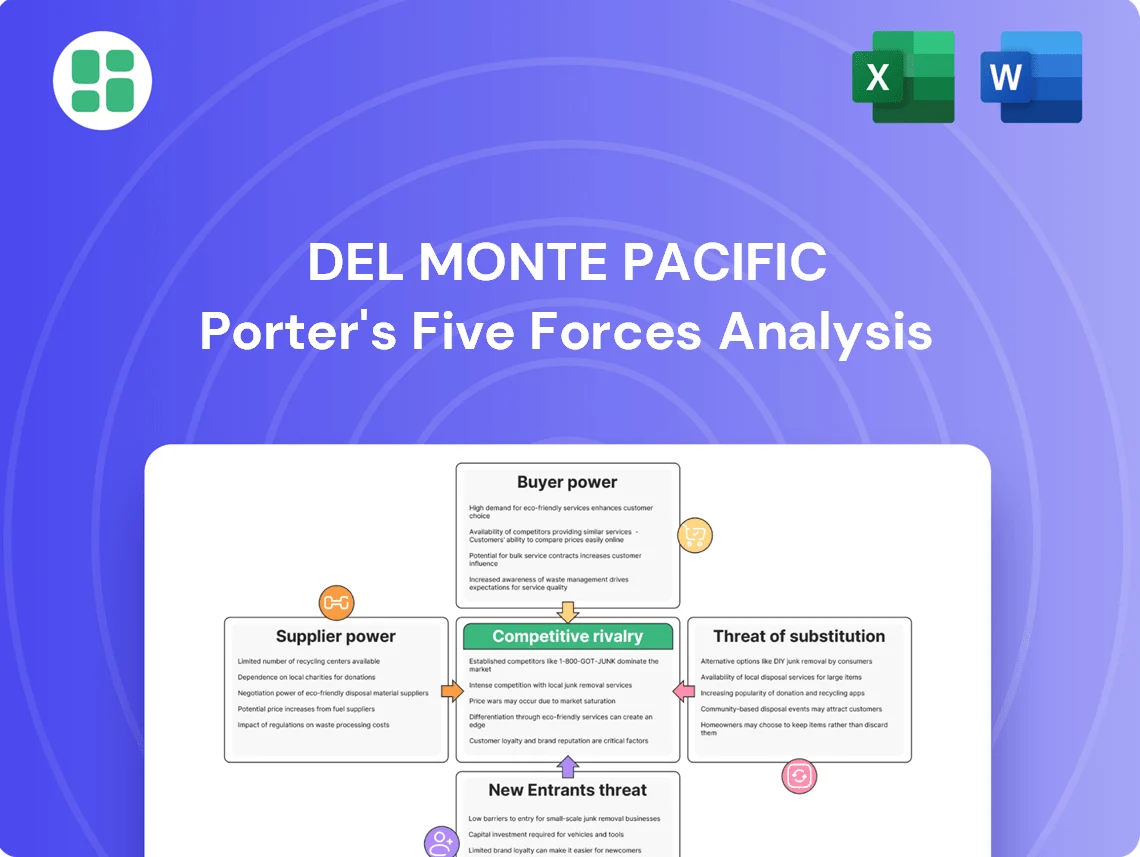
Del Monte Pacific Porter's Five Forces Analysis

From Overview to Strategy Blueprint
Del Monte Pacific faces moderate buyer power, as consumers have many food choices, but brand loyalty and product differentiation can mitigate this. The threat of new entrants is also a significant factor, requiring continuous innovation and efficient operations to maintain market share.
The complete report reveals the real forces shaping Del Monte Pacific’s industry—from supplier influence to threat of new entrants. Gain actionable insights to drive smarter decision-making.
Suppliers Bargaining Power

Supplier Power 1
The availability of key raw materials, such as pineapples and other fruits and vegetables, is heavily influenced by agricultural yields and weather patterns. This directly impacts the bargaining power of Del Monte Pacific's suppliers. For instance, climate change or natural disasters can lead to supply fluctuations, thereby strengthening supplier leverage.
Del Monte Pacific has recently faced challenges stemming from reduced pineapple supply in Asia, coupled with increased costs in its U.S. operations. These situations underscore the company's vulnerability to supply-side disruptions and the resulting impact on supplier power.
Supplier Power 2
The concentration of suppliers for key ingredients or packaging materials significantly impacts their leverage. When critical inputs are sourced from a limited number of large providers, these suppliers are better positioned to dictate higher prices. For instance, if only a handful of companies produce specialized aseptic packaging vital for Del Monte's shelf-stable products, their bargaining power is substantial.
Del Monte Pacific's strategic focus on enhancing productivity and minimizing waste for processed pineapple variety C74, as highlighted in their operational reports, demonstrates a proactive approach to managing these supply-side cost pressures. By optimizing internal processes for specific product lines, they aim to reduce their reliance on potentially high-cost inputs or negotiate more favorable terms.

Supplier Power 3
Del Monte Pacific faces moderate supplier power, influenced by the switching costs associated with changing its raw material and packaging providers. High switching costs, perhaps due to specialized sourcing or integrated supply chain technologies, would grant suppliers greater leverage. While Del Monte Pacific's 2024 sustainability initiatives focus on operational efficiencies, these efforts may not immediately translate into significantly lower switching costs for all supplier relationships.

Supplier Power 4
The bargaining power of suppliers for Del Monte Pacific is influenced by the uniqueness and differentiation of the raw materials they provide. When suppliers offer proprietary fruit varieties or specialized processing ingredients, they gain more leverage compared to those supplying common commodity goods. Del Monte Pacific's strategic investment in specific pineapple varieties, such as C74, highlights a reliance on particular inputs that can bolster supplier influence.
This reliance can translate into higher input costs or less favorable terms for Del Monte Pacific. For example, if a key supplier of a specialized ingredient faces production issues, it could significantly disrupt Del Monte's operations and necessitate paying a premium to secure supply. The company's efforts to diversify sourcing and develop in-house capabilities are crucial for mitigating this supplier power.
- Supplier Differentiation: Unique or proprietary inputs, like specific pineapple varieties, increase supplier leverage.
- Input Reliance: Del Monte Pacific's investment in varieties like C74 demonstrates dependence on specialized suppliers.
- Cost Implications: Differentiated inputs can lead to higher raw material costs for Del Monte Pacific.
- Mitigation Strategies: Diversifying sourcing and developing internal capabilities are key to reducing supplier power.
Supplier Power 5
Del Monte Pacific's bargaining power with its suppliers is influenced by its ability to integrate backward and control raw material sources. For instance, its significant pineapple plantations provide a degree of control over a key input.
However, if suppliers possess the capability to forward integrate into food processing, their bargaining power would be amplified, potentially impacting Del Monte's margins. The company's reliance on specific agricultural inputs and the concentration of its suppliers are critical factors in assessing this power dynamic.
- Backward Integration: Del Monte's ownership of extensive pineapple plantations directly mitigates supplier power by securing a significant portion of its raw material needs.
- Supplier Forward Integration Risk: The potential for suppliers to move into processing could shift leverage towards them, increasing costs for Del Monte.
- Scale of Operations: Del Monte's large-scale procurement can provide some leverage, but this is balanced by the specialized nature of agricultural inputs.
- Industry Concentration: The number and size of suppliers for key ingredients like fruits and vegetables play a crucial role in determining supplier bargaining power.
Supplier Power Impacts Key Agricultural Input Costs
Del Monte Pacific faces moderate supplier power, primarily due to the specialized nature of its key inputs like pineapples and aseptic packaging. While the company's scale offers some leverage, supplier differentiation and the potential for forward integration by suppliers can increase input costs. For example, in 2024, the company noted continued cost pressures on certain agricultural inputs, highlighting the ongoing influence of suppliers.
| Factor | Impact on Del Monte Pacific | 2024 Relevance |
|---|---|---|
| Supplier Differentiation | Higher leverage for suppliers offering unique inputs (e.g., specific pineapple varieties). | Del Monte's investment in C74 variety indicates reliance on specialized inputs. |
| Input Reliance & Concentration | Vulnerability to supply disruptions and price increases from limited suppliers. | Reported reduced pineapple supply in Asia in 2024 impacted operations. |
| Switching Costs | Moderate to high switching costs can empower suppliers. | Sustainability initiatives in 2024 focused on efficiency, not necessarily reducing supplier switching costs. |
| Backward/Forward Integration | Del Monte's plantations mitigate supplier power; supplier forward integration poses a risk. | The company's plantation scale provides some control, but reliance on external suppliers remains. |
What is included in the product
 Detailed Word Document
Del Monte Pacific's Porter's Five Forces analysis reveals the intense competitive rivalry, significant buyer power, and moderate threat of substitutes within the global food and beverage industry.

 Customizable Excel Spreadsheet
Instantly identify and address competitive threats with a visual breakdown of Del Monte Pacific's Porter's Five Forces, enabling proactive strategic adjustments.
Customers Bargaining Power

Buyer Power 1
Large retail chains and supermarkets hold considerable sway over Del Monte Pacific due to their substantial purchasing volumes. These powerful buyers can dictate terms, pushing for lower prices and preferential treatment, which directly affects Del Monte's profitability. For instance, Del Monte's focus on securing holiday merchandising with major customers underscores the importance of appeasing these key distributors.
Buyer Power 2
Del Monte Pacific faces significant buyer power due to the price sensitivity of consumers, especially for staple goods like canned fruits and vegetables. In 2024, the average consumer's disposable income has been a key factor, making them more inclined to seek out value. This sensitivity means customers can easily switch to cheaper brands or private labels if Del Monte's pricing is perceived as too high.
The increasing prevalence of private label brands across the food and beverage sector amplifies this buyer power. Retailers are actively promoting their own brands, often at lower price points, directly challenging established names like Del Monte. This trend was evident in 2024, with private label market share in many grocery categories showing continued growth, putting pressure on manufacturers to justify their premium pricing.

Buyer Power 3
The bargaining power of customers for Del Monte Pacific is significant, driven by the wide availability of alternative products and brands. In 2024, the packaged food and beverage industry, where Del Monte operates, is characterized by intense competition, allowing consumers to readily switch between offerings. This high degree of substitutability means customers can exert considerable pressure on pricing and product features.
Del Monte Pacific faces this challenge across its key segments, including canned fruits, vegetables, juices, and condiments. For instance, in the canned fruit market, consumers have numerous choices from both global brands and local producers, making it easier to substitute Del Monte products if price or quality expectations are not met. This dynamic is a constant consideration in the company's strategic planning.
To mitigate this customer power, Del Monte Pacific is actively focusing on product differentiation and brand building. Initiatives such as introducing innovative product lines, like premium fruit cups or healthier beverage options, and robust marketing campaigns aim to foster brand loyalty and reduce price sensitivity. These efforts are crucial for maintaining market share and profitability in a competitive landscape.

Buyer Power 4
Buyer power is a significant factor for Del Monte Pacific, as informed consumers can exert considerable pressure. Increased customer knowledge about ingredients, health benefits, and sustainability practices directly enhances their ability to negotiate or switch brands. For instance, in 2024, consumer surveys indicated a strong preference for transparency, with over 70% of respondents stating they actively seek information on food sourcing and production methods before purchasing.
The growing demand for healthier, organic, and sustainably produced food options empowers consumers to influence Del Monte Pacific's strategic decisions. This trend is particularly evident in the canned fruit and vegetable market. In 2023, the global market for organic produce reached an estimated $120 billion, signaling a clear consumer shift that companies like Del Monte Pacific must address. Their focus on nutritious, high-quality products and commitment to sustainability, including efforts to reduce plastic packaging, directly aligns with these evolving consumer preferences, thereby shaping their product development and marketing strategies.
Del Monte Pacific's strategic alignment with these consumer demands can mitigate some of the buyer power. By offering products that meet the criteria for health and sustainability, the company can foster brand loyalty and reduce the likelihood of customers switching based solely on price or availability. This proactive approach is crucial in a market where consumer awareness is at an all-time high.
Key aspects influencing buyer power for Del Monte Pacific include:
- Informed Consumers: Access to detailed product information, including nutritional content and sourcing, empowers buyers.
- Health and Sustainability Trends: Growing demand for organic, natural, and ethically produced goods increases consumer leverage.
- Brand Loyalty: Del Monte Pacific's efforts in product quality and sustainability can build loyalty, reducing price sensitivity.
- Market Availability: The presence of numerous alternative brands offering similar products can amplify buyer power if Del Monte Pacific's offerings are not sufficiently differentiated.
Buyer Power 5
The bargaining power of Del Monte Pacific's customers varies significantly based on their size and purchasing volume. Individual consumers, making up a vast but fragmented customer base, possess minimal leverage. However, large distributors and institutional buyers, such as major supermarket chains or foodservice operators, can exert considerable influence due to their substantial order sizes.
Del Monte Pacific's strategic focus on expanding its foodservice channel underscores the increasing importance of these larger, more powerful customer segments. For instance, in the fiscal year 2023, Del Monte Pacific reported that its consumer products segment, which includes retail sales, generated the majority of its revenue, but the foodservice sector is a key area for growth and potential for concentrated buyer power.
- Individual consumers have low bargaining power due to their small purchase volumes.
- Large distributors and institutional buyers (e.g., foodservice) can exert significant pressure due to their scale.
- Del Monte Pacific's growth in the foodservice channel highlights the strategic importance of managing relationships with these major customers.
Buyer Power & Price Sensitivity: The Profit Squeeze
Del Monte Pacific's customers, particularly large retail chains, wield significant bargaining power. Their ability to demand lower prices and favorable terms is amplified by the sheer volume they purchase. In 2024, the continued growth of private label brands further empowers these buyers, as they can readily offer their own cheaper alternatives, directly challenging Del Monte's market position and profitability.
The price sensitivity of consumers in 2024, influenced by economic conditions, means that Del Monte Pacific must remain competitive. Customers can easily switch to more affordable brands or private labels if Del Monte's pricing is perceived as too high, especially for staple goods. This dynamic necessitates a careful balance between maintaining margins and offering value to the end consumer.
| Customer Segment | Bargaining Power Factor | Impact on Del Monte Pacific |
|---|---|---|
| Large Retail Chains | High volume purchases, private label promotion | Pressure on pricing, demand for favorable terms |
| Institutional Buyers (Foodservice) | Significant order sizes, long-term contracts | Influences product specifications and delivery schedules |
| Individual Consumers | Price sensitivity, availability of substitutes | Requires competitive pricing and product differentiation |
Same Document Delivered
Del Monte Pacific Porter's Five Forces Analysis
This preview shows the exact document you'll receive immediately after purchase—no surprises, no placeholders. Del Monte Pacific's Porter's Five Forces analysis details the intense competition within the global food and beverage industry, highlighting how established brands and private labels exert significant bargaining power over the company. The document also thoroughly examines the threat of new entrants, the availability of substitutes, and the bargaining power of buyers, providing a comprehensive strategic overview.

Product Information
Product Information
Shipping & Returns
Shipping & Returns
Del Monte Pacific Porter's Five Forces Analysis
Del Monte Pacific Porter's Five Forces Analysis
From Overview to Strategy Blueprint
Del Monte Pacific faces moderate buyer power, as consumers have many food choices, but brand loyalty and product differentiation can mitigate this. The threat of new entrants is also a significant factor, requiring continuous innovation and efficient operations to maintain market share.
The complete report reveals the real forces shaping Del Monte Pacific’s industry—from supplier influence to threat of new entrants. Gain actionable insights to drive smarter decision-making.
Suppliers Bargaining Power
Supplier Power 1
The availability of key raw materials, such as pineapples and other fruits and vegetables, is heavily influenced by agricultural yields and weather patterns. This directly impacts the bargaining power of Del Monte Pacific's suppliers. For instance, climate change or natural disasters can lead to supply fluctuations, thereby strengthening supplier leverage.
Del Monte Pacific has recently faced challenges stemming from reduced pineapple supply in Asia, coupled with increased costs in its U.S. operations. These situations underscore the company's vulnerability to supply-side disruptions and the resulting impact on supplier power.
Supplier Power 2
The concentration of suppliers for key ingredients or packaging materials significantly impacts their leverage. When critical inputs are sourced from a limited number of large providers, these suppliers are better positioned to dictate higher prices. For instance, if only a handful of companies produce specialized aseptic packaging vital for Del Monte's shelf-stable products, their bargaining power is substantial.
Del Monte Pacific's strategic focus on enhancing productivity and minimizing waste for processed pineapple variety C74, as highlighted in their operational reports, demonstrates a proactive approach to managing these supply-side cost pressures. By optimizing internal processes for specific product lines, they aim to reduce their reliance on potentially high-cost inputs or negotiate more favorable terms.
Supplier Power 3
Del Monte Pacific faces moderate supplier power, influenced by the switching costs associated with changing its raw material and packaging providers. High switching costs, perhaps due to specialized sourcing or integrated supply chain technologies, would grant suppliers greater leverage. While Del Monte Pacific's 2024 sustainability initiatives focus on operational efficiencies, these efforts may not immediately translate into significantly lower switching costs for all supplier relationships.
Supplier Power 4
The bargaining power of suppliers for Del Monte Pacific is influenced by the uniqueness and differentiation of the raw materials they provide. When suppliers offer proprietary fruit varieties or specialized processing ingredients, they gain more leverage compared to those supplying common commodity goods. Del Monte Pacific's strategic investment in specific pineapple varieties, such as C74, highlights a reliance on particular inputs that can bolster supplier influence.
This reliance can translate into higher input costs or less favorable terms for Del Monte Pacific. For example, if a key supplier of a specialized ingredient faces production issues, it could significantly disrupt Del Monte's operations and necessitate paying a premium to secure supply. The company's efforts to diversify sourcing and develop in-house capabilities are crucial for mitigating this supplier power.
- Supplier Differentiation: Unique or proprietary inputs, like specific pineapple varieties, increase supplier leverage.
- Input Reliance: Del Monte Pacific's investment in varieties like C74 demonstrates dependence on specialized suppliers.
- Cost Implications: Differentiated inputs can lead to higher raw material costs for Del Monte Pacific.
- Mitigation Strategies: Diversifying sourcing and developing internal capabilities are key to reducing supplier power.
Supplier Power 5
Del Monte Pacific's bargaining power with its suppliers is influenced by its ability to integrate backward and control raw material sources. For instance, its significant pineapple plantations provide a degree of control over a key input.
However, if suppliers possess the capability to forward integrate into food processing, their bargaining power would be amplified, potentially impacting Del Monte's margins. The company's reliance on specific agricultural inputs and the concentration of its suppliers are critical factors in assessing this power dynamic.
- Backward Integration: Del Monte's ownership of extensive pineapple plantations directly mitigates supplier power by securing a significant portion of its raw material needs.
- Supplier Forward Integration Risk: The potential for suppliers to move into processing could shift leverage towards them, increasing costs for Del Monte.
- Scale of Operations: Del Monte's large-scale procurement can provide some leverage, but this is balanced by the specialized nature of agricultural inputs.
- Industry Concentration: The number and size of suppliers for key ingredients like fruits and vegetables play a crucial role in determining supplier bargaining power.
Supplier Power Impacts Key Agricultural Input Costs
Del Monte Pacific faces moderate supplier power, primarily due to the specialized nature of its key inputs like pineapples and aseptic packaging. While the company's scale offers some leverage, supplier differentiation and the potential for forward integration by suppliers can increase input costs. For example, in 2024, the company noted continued cost pressures on certain agricultural inputs, highlighting the ongoing influence of suppliers.
| Factor | Impact on Del Monte Pacific | 2024 Relevance |
|---|---|---|
| Supplier Differentiation | Higher leverage for suppliers offering unique inputs (e.g., specific pineapple varieties). | Del Monte's investment in C74 variety indicates reliance on specialized inputs. |
| Input Reliance & Concentration | Vulnerability to supply disruptions and price increases from limited suppliers. | Reported reduced pineapple supply in Asia in 2024 impacted operations. |
| Switching Costs | Moderate to high switching costs can empower suppliers. | Sustainability initiatives in 2024 focused on efficiency, not necessarily reducing supplier switching costs. |
| Backward/Forward Integration | Del Monte's plantations mitigate supplier power; supplier forward integration poses a risk. | The company's plantation scale provides some control, but reliance on external suppliers remains. |
What is included in the product
Detailed Word Document
Del Monte Pacific's Porter's Five Forces analysis reveals the intense competitive rivalry, significant buyer power, and moderate threat of substitutes within the global food and beverage industry.
Customizable Excel Spreadsheet
Instantly identify and address competitive threats with a visual breakdown of Del Monte Pacific's Porter's Five Forces, enabling proactive strategic adjustments.
Customers Bargaining Power
Buyer Power 1
Large retail chains and supermarkets hold considerable sway over Del Monte Pacific due to their substantial purchasing volumes. These powerful buyers can dictate terms, pushing for lower prices and preferential treatment, which directly affects Del Monte's profitability. For instance, Del Monte's focus on securing holiday merchandising with major customers underscores the importance of appeasing these key distributors.
Buyer Power 2
Del Monte Pacific faces significant buyer power due to the price sensitivity of consumers, especially for staple goods like canned fruits and vegetables. In 2024, the average consumer's disposable income has been a key factor, making them more inclined to seek out value. This sensitivity means customers can easily switch to cheaper brands or private labels if Del Monte's pricing is perceived as too high.
The increasing prevalence of private label brands across the food and beverage sector amplifies this buyer power. Retailers are actively promoting their own brands, often at lower price points, directly challenging established names like Del Monte. This trend was evident in 2024, with private label market share in many grocery categories showing continued growth, putting pressure on manufacturers to justify their premium pricing.
Buyer Power 3
The bargaining power of customers for Del Monte Pacific is significant, driven by the wide availability of alternative products and brands. In 2024, the packaged food and beverage industry, where Del Monte operates, is characterized by intense competition, allowing consumers to readily switch between offerings. This high degree of substitutability means customers can exert considerable pressure on pricing and product features.
Del Monte Pacific faces this challenge across its key segments, including canned fruits, vegetables, juices, and condiments. For instance, in the canned fruit market, consumers have numerous choices from both global brands and local producers, making it easier to substitute Del Monte products if price or quality expectations are not met. This dynamic is a constant consideration in the company's strategic planning.
To mitigate this customer power, Del Monte Pacific is actively focusing on product differentiation and brand building. Initiatives such as introducing innovative product lines, like premium fruit cups or healthier beverage options, and robust marketing campaigns aim to foster brand loyalty and reduce price sensitivity. These efforts are crucial for maintaining market share and profitability in a competitive landscape.
Buyer Power 4
Buyer power is a significant factor for Del Monte Pacific, as informed consumers can exert considerable pressure. Increased customer knowledge about ingredients, health benefits, and sustainability practices directly enhances their ability to negotiate or switch brands. For instance, in 2024, consumer surveys indicated a strong preference for transparency, with over 70% of respondents stating they actively seek information on food sourcing and production methods before purchasing.
The growing demand for healthier, organic, and sustainably produced food options empowers consumers to influence Del Monte Pacific's strategic decisions. This trend is particularly evident in the canned fruit and vegetable market. In 2023, the global market for organic produce reached an estimated $120 billion, signaling a clear consumer shift that companies like Del Monte Pacific must address. Their focus on nutritious, high-quality products and commitment to sustainability, including efforts to reduce plastic packaging, directly aligns with these evolving consumer preferences, thereby shaping their product development and marketing strategies.
Del Monte Pacific's strategic alignment with these consumer demands can mitigate some of the buyer power. By offering products that meet the criteria for health and sustainability, the company can foster brand loyalty and reduce the likelihood of customers switching based solely on price or availability. This proactive approach is crucial in a market where consumer awareness is at an all-time high.
Key aspects influencing buyer power for Del Monte Pacific include:
- Informed Consumers: Access to detailed product information, including nutritional content and sourcing, empowers buyers.
- Health and Sustainability Trends: Growing demand for organic, natural, and ethically produced goods increases consumer leverage.
- Brand Loyalty: Del Monte Pacific's efforts in product quality and sustainability can build loyalty, reducing price sensitivity.
- Market Availability: The presence of numerous alternative brands offering similar products can amplify buyer power if Del Monte Pacific's offerings are not sufficiently differentiated.
Buyer Power 5
The bargaining power of Del Monte Pacific's customers varies significantly based on their size and purchasing volume. Individual consumers, making up a vast but fragmented customer base, possess minimal leverage. However, large distributors and institutional buyers, such as major supermarket chains or foodservice operators, can exert considerable influence due to their substantial order sizes.
Del Monte Pacific's strategic focus on expanding its foodservice channel underscores the increasing importance of these larger, more powerful customer segments. For instance, in the fiscal year 2023, Del Monte Pacific reported that its consumer products segment, which includes retail sales, generated the majority of its revenue, but the foodservice sector is a key area for growth and potential for concentrated buyer power.
- Individual consumers have low bargaining power due to their small purchase volumes.
- Large distributors and institutional buyers (e.g., foodservice) can exert significant pressure due to their scale.
- Del Monte Pacific's growth in the foodservice channel highlights the strategic importance of managing relationships with these major customers.
Buyer Power & Price Sensitivity: The Profit Squeeze
Del Monte Pacific's customers, particularly large retail chains, wield significant bargaining power. Their ability to demand lower prices and favorable terms is amplified by the sheer volume they purchase. In 2024, the continued growth of private label brands further empowers these buyers, as they can readily offer their own cheaper alternatives, directly challenging Del Monte's market position and profitability.
The price sensitivity of consumers in 2024, influenced by economic conditions, means that Del Monte Pacific must remain competitive. Customers can easily switch to more affordable brands or private labels if Del Monte's pricing is perceived as too high, especially for staple goods. This dynamic necessitates a careful balance between maintaining margins and offering value to the end consumer.
| Customer Segment | Bargaining Power Factor | Impact on Del Monte Pacific |
|---|---|---|
| Large Retail Chains | High volume purchases, private label promotion | Pressure on pricing, demand for favorable terms |
| Institutional Buyers (Foodservice) | Significant order sizes, long-term contracts | Influences product specifications and delivery schedules |
| Individual Consumers | Price sensitivity, availability of substitutes | Requires competitive pricing and product differentiation |
Same Document Delivered
Del Monte Pacific Porter's Five Forces Analysis
This preview shows the exact document you'll receive immediately after purchase—no surprises, no placeholders. Del Monte Pacific's Porter's Five Forces analysis details the intense competition within the global food and beverage industry, highlighting how established brands and private labels exert significant bargaining power over the company. The document also thoroughly examines the threat of new entrants, the availability of substitutes, and the bargaining power of buyers, providing a comprehensive strategic overview.
Product Information
Product Information
Shipping & Returns
Shipping & Returns
Description
From Overview to Strategy Blueprint
Del Monte Pacific faces moderate buyer power, as consumers have many food choices, but brand loyalty and product differentiation can mitigate this. The threat of new entrants is also a significant factor, requiring continuous innovation and efficient operations to maintain market share.
The complete report reveals the real forces shaping Del Monte Pacific’s industry—from supplier influence to threat of new entrants. Gain actionable insights to drive smarter decision-making.
Suppliers Bargaining Power
Supplier Power 1
The availability of key raw materials, such as pineapples and other fruits and vegetables, is heavily influenced by agricultural yields and weather patterns. This directly impacts the bargaining power of Del Monte Pacific's suppliers. For instance, climate change or natural disasters can lead to supply fluctuations, thereby strengthening supplier leverage.
Del Monte Pacific has recently faced challenges stemming from reduced pineapple supply in Asia, coupled with increased costs in its U.S. operations. These situations underscore the company's vulnerability to supply-side disruptions and the resulting impact on supplier power.
Supplier Power 2
The concentration of suppliers for key ingredients or packaging materials significantly impacts their leverage. When critical inputs are sourced from a limited number of large providers, these suppliers are better positioned to dictate higher prices. For instance, if only a handful of companies produce specialized aseptic packaging vital for Del Monte's shelf-stable products, their bargaining power is substantial.
Del Monte Pacific's strategic focus on enhancing productivity and minimizing waste for processed pineapple variety C74, as highlighted in their operational reports, demonstrates a proactive approach to managing these supply-side cost pressures. By optimizing internal processes for specific product lines, they aim to reduce their reliance on potentially high-cost inputs or negotiate more favorable terms.
Supplier Power 3
Del Monte Pacific faces moderate supplier power, influenced by the switching costs associated with changing its raw material and packaging providers. High switching costs, perhaps due to specialized sourcing or integrated supply chain technologies, would grant suppliers greater leverage. While Del Monte Pacific's 2024 sustainability initiatives focus on operational efficiencies, these efforts may not immediately translate into significantly lower switching costs for all supplier relationships.
Supplier Power 4
The bargaining power of suppliers for Del Monte Pacific is influenced by the uniqueness and differentiation of the raw materials they provide. When suppliers offer proprietary fruit varieties or specialized processing ingredients, they gain more leverage compared to those supplying common commodity goods. Del Monte Pacific's strategic investment in specific pineapple varieties, such as C74, highlights a reliance on particular inputs that can bolster supplier influence.
This reliance can translate into higher input costs or less favorable terms for Del Monte Pacific. For example, if a key supplier of a specialized ingredient faces production issues, it could significantly disrupt Del Monte's operations and necessitate paying a premium to secure supply. The company's efforts to diversify sourcing and develop in-house capabilities are crucial for mitigating this supplier power.
- Supplier Differentiation: Unique or proprietary inputs, like specific pineapple varieties, increase supplier leverage.
- Input Reliance: Del Monte Pacific's investment in varieties like C74 demonstrates dependence on specialized suppliers.
- Cost Implications: Differentiated inputs can lead to higher raw material costs for Del Monte Pacific.
- Mitigation Strategies: Diversifying sourcing and developing internal capabilities are key to reducing supplier power.
Supplier Power 5
Del Monte Pacific's bargaining power with its suppliers is influenced by its ability to integrate backward and control raw material sources. For instance, its significant pineapple plantations provide a degree of control over a key input.
However, if suppliers possess the capability to forward integrate into food processing, their bargaining power would be amplified, potentially impacting Del Monte's margins. The company's reliance on specific agricultural inputs and the concentration of its suppliers are critical factors in assessing this power dynamic.
- Backward Integration: Del Monte's ownership of extensive pineapple plantations directly mitigates supplier power by securing a significant portion of its raw material needs.
- Supplier Forward Integration Risk: The potential for suppliers to move into processing could shift leverage towards them, increasing costs for Del Monte.
- Scale of Operations: Del Monte's large-scale procurement can provide some leverage, but this is balanced by the specialized nature of agricultural inputs.
- Industry Concentration: The number and size of suppliers for key ingredients like fruits and vegetables play a crucial role in determining supplier bargaining power.
Supplier Power Impacts Key Agricultural Input Costs
Del Monte Pacific faces moderate supplier power, primarily due to the specialized nature of its key inputs like pineapples and aseptic packaging. While the company's scale offers some leverage, supplier differentiation and the potential for forward integration by suppliers can increase input costs. For example, in 2024, the company noted continued cost pressures on certain agricultural inputs, highlighting the ongoing influence of suppliers.
| Factor | Impact on Del Monte Pacific | 2024 Relevance |
|---|---|---|
| Supplier Differentiation | Higher leverage for suppliers offering unique inputs (e.g., specific pineapple varieties). | Del Monte's investment in C74 variety indicates reliance on specialized inputs. |
| Input Reliance & Concentration | Vulnerability to supply disruptions and price increases from limited suppliers. | Reported reduced pineapple supply in Asia in 2024 impacted operations. |
| Switching Costs | Moderate to high switching costs can empower suppliers. | Sustainability initiatives in 2024 focused on efficiency, not necessarily reducing supplier switching costs. |
| Backward/Forward Integration | Del Monte's plantations mitigate supplier power; supplier forward integration poses a risk. | The company's plantation scale provides some control, but reliance on external suppliers remains. |
What is included in the product
Detailed Word Document
Del Monte Pacific's Porter's Five Forces analysis reveals the intense competitive rivalry, significant buyer power, and moderate threat of substitutes within the global food and beverage industry.
Customizable Excel Spreadsheet
Instantly identify and address competitive threats with a visual breakdown of Del Monte Pacific's Porter's Five Forces, enabling proactive strategic adjustments.
Customers Bargaining Power
Buyer Power 1
Large retail chains and supermarkets hold considerable sway over Del Monte Pacific due to their substantial purchasing volumes. These powerful buyers can dictate terms, pushing for lower prices and preferential treatment, which directly affects Del Monte's profitability. For instance, Del Monte's focus on securing holiday merchandising with major customers underscores the importance of appeasing these key distributors.
Buyer Power 2
Del Monte Pacific faces significant buyer power due to the price sensitivity of consumers, especially for staple goods like canned fruits and vegetables. In 2024, the average consumer's disposable income has been a key factor, making them more inclined to seek out value. This sensitivity means customers can easily switch to cheaper brands or private labels if Del Monte's pricing is perceived as too high.
The increasing prevalence of private label brands across the food and beverage sector amplifies this buyer power. Retailers are actively promoting their own brands, often at lower price points, directly challenging established names like Del Monte. This trend was evident in 2024, with private label market share in many grocery categories showing continued growth, putting pressure on manufacturers to justify their premium pricing.
Buyer Power 3
The bargaining power of customers for Del Monte Pacific is significant, driven by the wide availability of alternative products and brands. In 2024, the packaged food and beverage industry, where Del Monte operates, is characterized by intense competition, allowing consumers to readily switch between offerings. This high degree of substitutability means customers can exert considerable pressure on pricing and product features.
Del Monte Pacific faces this challenge across its key segments, including canned fruits, vegetables, juices, and condiments. For instance, in the canned fruit market, consumers have numerous choices from both global brands and local producers, making it easier to substitute Del Monte products if price or quality expectations are not met. This dynamic is a constant consideration in the company's strategic planning.
To mitigate this customer power, Del Monte Pacific is actively focusing on product differentiation and brand building. Initiatives such as introducing innovative product lines, like premium fruit cups or healthier beverage options, and robust marketing campaigns aim to foster brand loyalty and reduce price sensitivity. These efforts are crucial for maintaining market share and profitability in a competitive landscape.
Buyer Power 4
Buyer power is a significant factor for Del Monte Pacific, as informed consumers can exert considerable pressure. Increased customer knowledge about ingredients, health benefits, and sustainability practices directly enhances their ability to negotiate or switch brands. For instance, in 2024, consumer surveys indicated a strong preference for transparency, with over 70% of respondents stating they actively seek information on food sourcing and production methods before purchasing.
The growing demand for healthier, organic, and sustainably produced food options empowers consumers to influence Del Monte Pacific's strategic decisions. This trend is particularly evident in the canned fruit and vegetable market. In 2023, the global market for organic produce reached an estimated $120 billion, signaling a clear consumer shift that companies like Del Monte Pacific must address. Their focus on nutritious, high-quality products and commitment to sustainability, including efforts to reduce plastic packaging, directly aligns with these evolving consumer preferences, thereby shaping their product development and marketing strategies.
Del Monte Pacific's strategic alignment with these consumer demands can mitigate some of the buyer power. By offering products that meet the criteria for health and sustainability, the company can foster brand loyalty and reduce the likelihood of customers switching based solely on price or availability. This proactive approach is crucial in a market where consumer awareness is at an all-time high.
Key aspects influencing buyer power for Del Monte Pacific include:
- Informed Consumers: Access to detailed product information, including nutritional content and sourcing, empowers buyers.
- Health and Sustainability Trends: Growing demand for organic, natural, and ethically produced goods increases consumer leverage.
- Brand Loyalty: Del Monte Pacific's efforts in product quality and sustainability can build loyalty, reducing price sensitivity.
- Market Availability: The presence of numerous alternative brands offering similar products can amplify buyer power if Del Monte Pacific's offerings are not sufficiently differentiated.
Buyer Power 5
The bargaining power of Del Monte Pacific's customers varies significantly based on their size and purchasing volume. Individual consumers, making up a vast but fragmented customer base, possess minimal leverage. However, large distributors and institutional buyers, such as major supermarket chains or foodservice operators, can exert considerable influence due to their substantial order sizes.
Del Monte Pacific's strategic focus on expanding its foodservice channel underscores the increasing importance of these larger, more powerful customer segments. For instance, in the fiscal year 2023, Del Monte Pacific reported that its consumer products segment, which includes retail sales, generated the majority of its revenue, but the foodservice sector is a key area for growth and potential for concentrated buyer power.
- Individual consumers have low bargaining power due to their small purchase volumes.
- Large distributors and institutional buyers (e.g., foodservice) can exert significant pressure due to their scale.
- Del Monte Pacific's growth in the foodservice channel highlights the strategic importance of managing relationships with these major customers.
Buyer Power & Price Sensitivity: The Profit Squeeze
Del Monte Pacific's customers, particularly large retail chains, wield significant bargaining power. Their ability to demand lower prices and favorable terms is amplified by the sheer volume they purchase. In 2024, the continued growth of private label brands further empowers these buyers, as they can readily offer their own cheaper alternatives, directly challenging Del Monte's market position and profitability.
The price sensitivity of consumers in 2024, influenced by economic conditions, means that Del Monte Pacific must remain competitive. Customers can easily switch to more affordable brands or private labels if Del Monte's pricing is perceived as too high, especially for staple goods. This dynamic necessitates a careful balance between maintaining margins and offering value to the end consumer.
| Customer Segment | Bargaining Power Factor | Impact on Del Monte Pacific |
|---|---|---|
| Large Retail Chains | High volume purchases, private label promotion | Pressure on pricing, demand for favorable terms |
| Institutional Buyers (Foodservice) | Significant order sizes, long-term contracts | Influences product specifications and delivery schedules |
| Individual Consumers | Price sensitivity, availability of substitutes | Requires competitive pricing and product differentiation |
Same Document Delivered
Del Monte Pacific Porter's Five Forces Analysis
This preview shows the exact document you'll receive immediately after purchase—no surprises, no placeholders. Del Monte Pacific's Porter's Five Forces analysis details the intense competition within the global food and beverage industry, highlighting how established brands and private labels exert significant bargaining power over the company. The document also thoroughly examines the threat of new entrants, the availability of substitutes, and the bargaining power of buyers, providing a comprehensive strategic overview.