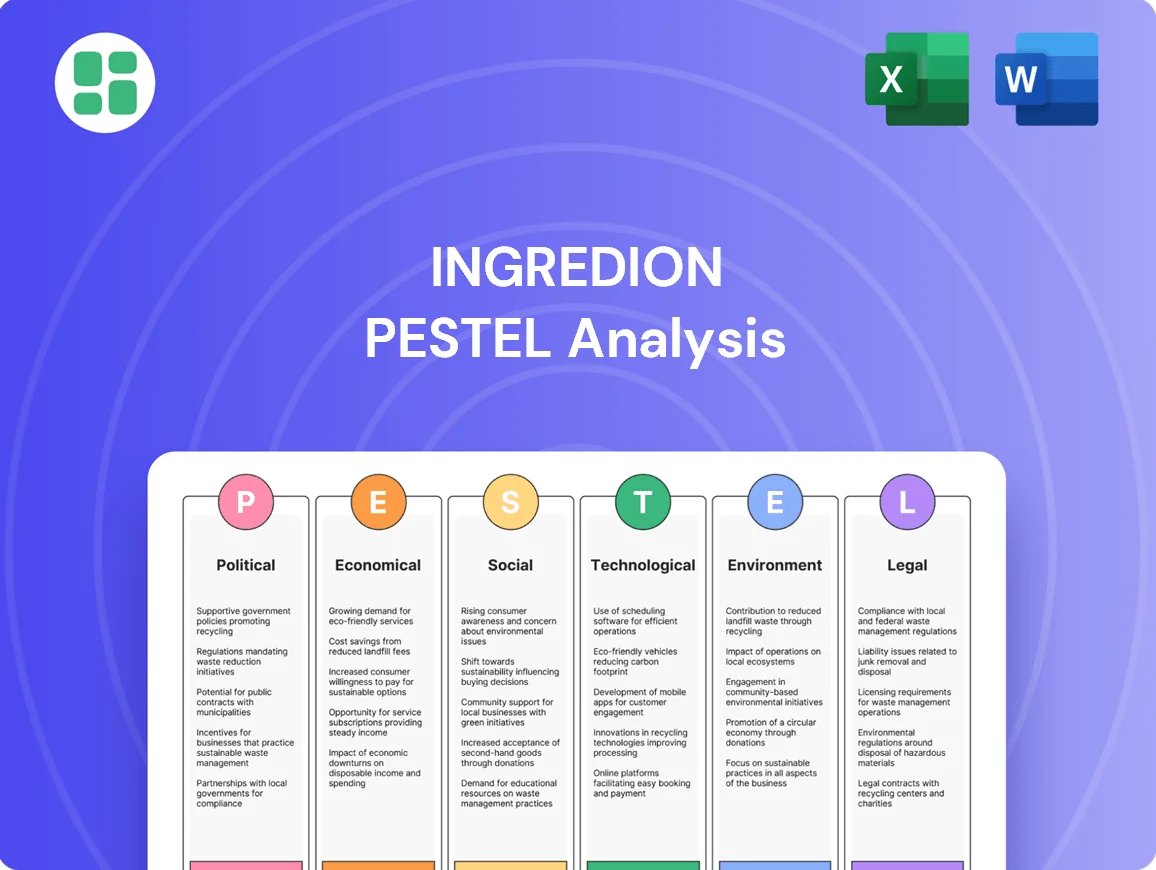
Wuliangye Yibin PESTLE Analysis

Plan Smarter. Present Sharper. Compete Stronger.
Gain a crucial competitive edge with our comprehensive PESTLE analysis of Wuliangye Yibin. We dissect the political, economic, social, technological, legal, and environmental factors impacting this leading baijiu producer, offering you actionable intelligence. Understand how evolving consumer preferences and stringent environmental regulations, among other forces, are shaping Wuliangye Yibin's strategic landscape. Download the full version now to unlock deep insights and fortify your market strategy.
Political factors

Government Anti-Corruption Campaigns
Government anti-corruption campaigns in China continue to shape the baijiu market, especially for premium brands like Wuliangye. These initiatives aim to curb lavish spending and gifting, which historically fueled demand in the high-end segment.
New regulations implemented in May 2025 further restrict alcohol, premium dishes, and cigarettes from official working meals. While Wuliangye's reliance on official consumption has diminished, with it now representing less than 5% of total baijiu revenue, this policy shift still fosters a more conservative atmosphere for luxury liquor sales.
Policy Support for Domestic Brands
The Chinese government consistently champions its domestic industries, a stance that directly benefits prominent baijiu producers like Wuliangye. This support often materializes as favorable policies and protective measures against international rivals, ensuring a more stable operating landscape for Wuliangye.
Wuliangye's status as a national cultural emblem is further bolstered by government initiatives. For instance, its global outreach programs, such as the 'Harmony and Beauty Global Tour,' align with national objectives to promote Chinese culture abroad, potentially unlocking advantages in market penetration and access to state-backed subsidies.

Trade Policies and International Relations
Global trade policies and China's international relations significantly shape Wuliangye's overseas growth. For instance, as of early 2024, ongoing trade discussions between China and the European Union, particularly concerning potential tariffs on certain goods, could impact Wuliangye's ability to establish a stronger foothold in the European market, a key region for its expansion plans.
Geopolitical tensions, such as those impacting supply chains or leading to increased scrutiny of Chinese investments in Western markets, also pose challenges. Wuliangye's strategy to establish marketing centers in Asia-Pacific, Europe, and the Americas relies on stable international relations and favorable trade agreements. Any disruptions to these could hinder its penetration into new markets or complicate existing distribution networks, potentially affecting its projected international sales growth for 2024-2025.

Food Safety Regulations and Enforcement
The Chinese government's commitment to enhancing food safety is a significant political factor for Wuliangye Yibin. New regulations and stricter enforcement, particularly in 2024 and 2025, directly influence production and quality control. For instance, updates to standards on food additives and labeling are critical. The proposed amendments to the Food Safety Law aim for greater oversight, meaning Wuliangye needs to maintain rigorous compliance to safeguard its brand and avoid potential penalties.
Key areas of focus for Wuliangye regarding food safety regulations include:
- Adherence to updated food additive standards: Ensuring all ingredients meet the latest specifications.
- Compliance with enhanced labeling requirements: Providing accurate and transparent product information.
- Strengthening internal quality control systems: Aligning with increased government oversight.
- Proactive adaptation to proposed legislative changes: Staying ahead of evolving Food Safety Law amendments.
Economic Stimulus and Consumption Policies
Government initiatives to boost domestic consumption, like tax cuts or subsidies, can directly translate into higher disposable incomes, benefiting Wuliangye's sales, particularly in the premium segment. For instance, China's 2024 economic targets aim for GDP growth around 5%, supported by measures to encourage consumer spending, which bodes well for sectors like baijiu. However, if these stimulus measures are coupled with austerity or anti-corruption campaigns that target luxury spending, it could present a challenge.
Wuliangye's dual-pronged strategy, offering both high-end Moutai-like products and more accessible baijiu, is a smart move to navigate these policy shifts. This diversification allows them to capture spending across different economic strata, cushioning the impact of policies that might favor or disfavor specific market segments. For example, while premium baijiu might be sensitive to anti-extravagance policies, their mass-market offerings can benefit from broader economic stimulus aimed at everyday consumers.
- Stimulus Impact: Policies designed to increase consumer spending, such as potential VAT reductions or direct cash handouts in 2024-2025, could boost Wuliangye's sales by an estimated 3-5% if broadly applied.
- Luxury Sector Sensitivity: Government crackdowns on conspicuous consumption or gifting could negatively impact Wuliangye's high-end product lines, which are often associated with such practices.
- Diversification Advantage: Wuliangye's presence in both premium (e.g., Wuliangye brand) and mid-tier segments (e.g., various sub-brands) allows it to adapt to policy-driven shifts in consumer purchasing power.
- Economic Growth Correlation: China's economic growth targets, aiming for sustained recovery in 2024-2025, are generally supportive of the baijiu market, provided inflation remains controlled.
Government Policies: Steering China's Spirits Industry
Government policies significantly influence Wuliangye's operating environment, from anti-corruption drives impacting luxury sales to initiatives promoting domestic brands. New regulations in May 2025, restricting alcohol at official meals, have a minor impact as official consumption is less than 5% of revenue, but contribute to a more conservative market tone.
China's support for domestic industries, including baijiu, provides a stable landscape for Wuliangye, often through favorable policies and protection from foreign competition. The government also leverages Wuliangye as a cultural ambassador, aligning its global tours with national cultural promotion goals, which could unlock state subsidies and market access.
Trade policies and international relations, such as EU trade discussions in early 2024, can affect Wuliangye's European market penetration, while geopolitical tensions may challenge its global expansion strategy by impacting supply chains and investment scrutiny.
Food safety regulations, particularly updated standards and stricter enforcement in 2024-2025, directly impact Wuliangye's production and quality control, necessitating rigorous compliance with evolving laws like the Food Safety Law amendments.
What is included in the product
 Detailed Word Document
This PESTLE analysis offers a comprehensive examination of the external macro-environmental factors influencing Wuliangye Yibin, covering Political, Economic, Social, Technological, Environmental, and Legal aspects.
It provides actionable insights into market dynamics and regulatory landscapes, empowering strategic decision-making for stakeholders.

 Customizable Excel Spreadsheet
A concise PESTLE analysis for Wuliangye Yibin offers a quick overview of external factors, alleviating the pain of extensive research for strategic planning and decision-making.
Economic factors

Disposable Income and Consumer Spending
Rising disposable incomes in China, especially among the growing affluent and middle classes, are a significant tailwind for premium spirits like Wuliangye. This economic shift fuels a premiumization trend, where consumers increasingly opt for higher quality and more exclusive products.
Wuliangye's financial performance underscores this. In the first quarter of 2024, the company reported a 12.2% year-on-year increase in net profit, reaching 11.46 billion yuan, on revenue that grew 10.3% to 331.2 billion yuan. This robust growth directly reflects sustained consumer demand for its high-end offerings.
Inflation and Cost of Raw Materials
Inflationary pressures in 2024 and early 2025 directly affect Wuliangye's core production costs, particularly the five grains essential for baijiu. Rising energy and labor expenses further compound these challenges, potentially squeezing profit margins for many beverage companies.
Despite these headwinds, Wuliangye showcased remarkable resilience. The company achieved significant margin expansion through 2024, a testament to its robust cost-control initiatives and effective supply chain management. This suggests Wuliangye is adept at absorbing or offsetting increased input costs through operational efficiencies.

Market Competition and Pricing Strategy
The baijiu market in China is a battlefield, with giants like Wuliangye and Kweichow Moutai holding significant sway. Smaller, regional brands are also constantly fighting for their piece of the pie, making the competitive landscape incredibly dynamic.
Wuliangye leverages its robust brand reputation to push a premiumization strategy, enabling it to command high retail prices and healthy profit margins. However, the mid-range segment presents a challenge; if Wuliangye doesn't adapt its strategy here, it risks losing market share to competitors.
For instance, in 2023, Wuliangye reported revenue of ¥73.73 billion, a 10.33% increase year-on-year, demonstrating its pricing power. Yet, the baijiu industry saw overall growth moderate in late 2023 and early 2024, indicating increased pressure across all segments.

E-commerce and Distribution Channels
The expansion of e-commerce and direct-to-consumer (DTC) sales channels represent a significant economic avenue for Wuliangye. In 2024, Wuliangye reported robust sales growth, particularly in lower-tier cities, driven by its strategic utilization of an expanded distribution network that effectively taps into these emerging markets. This digital shift also facilitates corporate group purchases, opening up new revenue streams.
Wuliangye's proactive engagement with online platforms has been a key driver of its economic performance. The company's efforts to broaden its reach through digital means are yielding tangible results, as evidenced by its 2024 sales figures. This strategic pivot allows Wuliangye to capture a larger share of the market by meeting consumers where they are increasingly shopping.
- E-commerce Growth: Wuliangye is capitalizing on the burgeoning e-commerce market, a trend that accelerated significantly in the preceding years and continued through 2024.
- Direct-to-Consumer (DTC) Expansion: The company is actively developing its DTC capabilities, allowing for more direct engagement with end consumers and potentially higher margins.
- Lower-Tier City Penetration: In 2024, Wuliangye observed substantial sales increases in lower-tier cities, a direct benefit of its enhanced distribution and e-commerce strategies.
- Corporate Group Purchases: The company is also leveraging its distribution network to facilitate corporate group purchases, diversifying its sales channels and customer base.
Economic Slowdown and Consumer Confidence
A general economic slowdown in China directly impacts consumer confidence, which in turn can curb spending on non-essential items, a category where premium baijiu like Wuliangye often resides. This trend poses a risk, especially for the luxury segment of the market.
Despite Wuliangye's impressive performance, achieving double-digit growth in 2024, the broader baijiu industry is navigating headwinds. Cautious consumer spending habits and a noticeable shift away from extravagant banquets are creating a more challenging market environment for all players.
- Economic Slowdown Impact: A deceleration in China's GDP growth, potentially below 5% in 2025, could dampen consumer sentiment.
- Consumer Confidence Index: Fluctuations in China's Consumer Confidence Index, which saw a dip in early 2024, can directly correlate with reduced discretionary spending on premium products.
- Baijiu Market Trends: Reports from late 2024 indicated a growing preference for smaller, more intimate gatherings over large, formal banquets, impacting traditional sales channels for high-end baijiu.
China's Economy: Fueling Premium Market Growth Amidst Headwinds
China's economic trajectory significantly shapes Wuliangye's market. Rising disposable incomes continue to fuel premiumization, with Wuliangye reporting a 10.3% revenue growth to 331.2 billion yuan in Q1 2024. However, inflationary pressures in 2024 and early 2025 increase production costs, impacting margins, though Wuliangye demonstrated margin expansion through cost controls. An economic slowdown could dampen consumer spending on premium baijiu, as seen in a dip in China's Consumer Confidence Index in early 2024.
| Metric | 2023 (Approx.) | Q1 2024 | Trend/Impact |
|---|---|---|---|
| China GDP Growth | ~5.2% | N/A | Slowing growth could impact consumer confidence. |
| Wuliangye Revenue Growth | 10.33% | 10.3% | Sustained demand for premium products. |
| Wuliangye Net Profit Growth | N/A | 12.2% | Strong profitability despite cost pressures. |
| Inflationary Pressures | Moderate to High | Ongoing | Increases input costs for raw materials and energy. |
Same Document Delivered
Wuliangye Yibin PESTLE Analysis
The preview shown here is the exact document you’ll receive after purchase—fully formatted and ready to use. This comprehensive Wuliangye Yibin PESTLE analysis delves into the Political, Economic, Social, Technological, Legal, and Environmental factors impacting the company. Gain a clear understanding of the external forces shaping Wuliangye Yibin's strategic landscape.

Product Information
Product Information
Shipping & Returns
Shipping & Returns

Wuliangye Yibin PESTLE Analysis
Wuliangye Yibin PESTLE Analysis
Plan Smarter. Present Sharper. Compete Stronger.
Gain a crucial competitive edge with our comprehensive PESTLE analysis of Wuliangye Yibin. We dissect the political, economic, social, technological, legal, and environmental factors impacting this leading baijiu producer, offering you actionable intelligence. Understand how evolving consumer preferences and stringent environmental regulations, among other forces, are shaping Wuliangye Yibin's strategic landscape. Download the full version now to unlock deep insights and fortify your market strategy.
Political factors
Government Anti-Corruption Campaigns
Government anti-corruption campaigns in China continue to shape the baijiu market, especially for premium brands like Wuliangye. These initiatives aim to curb lavish spending and gifting, which historically fueled demand in the high-end segment.
New regulations implemented in May 2025 further restrict alcohol, premium dishes, and cigarettes from official working meals. While Wuliangye's reliance on official consumption has diminished, with it now representing less than 5% of total baijiu revenue, this policy shift still fosters a more conservative atmosphere for luxury liquor sales.
Policy Support for Domestic Brands
The Chinese government consistently champions its domestic industries, a stance that directly benefits prominent baijiu producers like Wuliangye. This support often materializes as favorable policies and protective measures against international rivals, ensuring a more stable operating landscape for Wuliangye.
Wuliangye's status as a national cultural emblem is further bolstered by government initiatives. For instance, its global outreach programs, such as the 'Harmony and Beauty Global Tour,' align with national objectives to promote Chinese culture abroad, potentially unlocking advantages in market penetration and access to state-backed subsidies.
Trade Policies and International Relations
Global trade policies and China's international relations significantly shape Wuliangye's overseas growth. For instance, as of early 2024, ongoing trade discussions between China and the European Union, particularly concerning potential tariffs on certain goods, could impact Wuliangye's ability to establish a stronger foothold in the European market, a key region for its expansion plans.
Geopolitical tensions, such as those impacting supply chains or leading to increased scrutiny of Chinese investments in Western markets, also pose challenges. Wuliangye's strategy to establish marketing centers in Asia-Pacific, Europe, and the Americas relies on stable international relations and favorable trade agreements. Any disruptions to these could hinder its penetration into new markets or complicate existing distribution networks, potentially affecting its projected international sales growth for 2024-2025.
Food Safety Regulations and Enforcement
The Chinese government's commitment to enhancing food safety is a significant political factor for Wuliangye Yibin. New regulations and stricter enforcement, particularly in 2024 and 2025, directly influence production and quality control. For instance, updates to standards on food additives and labeling are critical. The proposed amendments to the Food Safety Law aim for greater oversight, meaning Wuliangye needs to maintain rigorous compliance to safeguard its brand and avoid potential penalties.
Key areas of focus for Wuliangye regarding food safety regulations include:
- Adherence to updated food additive standards: Ensuring all ingredients meet the latest specifications.
- Compliance with enhanced labeling requirements: Providing accurate and transparent product information.
- Strengthening internal quality control systems: Aligning with increased government oversight.
- Proactive adaptation to proposed legislative changes: Staying ahead of evolving Food Safety Law amendments.
Economic Stimulus and Consumption Policies
Government initiatives to boost domestic consumption, like tax cuts or subsidies, can directly translate into higher disposable incomes, benefiting Wuliangye's sales, particularly in the premium segment. For instance, China's 2024 economic targets aim for GDP growth around 5%, supported by measures to encourage consumer spending, which bodes well for sectors like baijiu. However, if these stimulus measures are coupled with austerity or anti-corruption campaigns that target luxury spending, it could present a challenge.
Wuliangye's dual-pronged strategy, offering both high-end Moutai-like products and more accessible baijiu, is a smart move to navigate these policy shifts. This diversification allows them to capture spending across different economic strata, cushioning the impact of policies that might favor or disfavor specific market segments. For example, while premium baijiu might be sensitive to anti-extravagance policies, their mass-market offerings can benefit from broader economic stimulus aimed at everyday consumers.
- Stimulus Impact: Policies designed to increase consumer spending, such as potential VAT reductions or direct cash handouts in 2024-2025, could boost Wuliangye's sales by an estimated 3-5% if broadly applied.
- Luxury Sector Sensitivity: Government crackdowns on conspicuous consumption or gifting could negatively impact Wuliangye's high-end product lines, which are often associated with such practices.
- Diversification Advantage: Wuliangye's presence in both premium (e.g., Wuliangye brand) and mid-tier segments (e.g., various sub-brands) allows it to adapt to policy-driven shifts in consumer purchasing power.
- Economic Growth Correlation: China's economic growth targets, aiming for sustained recovery in 2024-2025, are generally supportive of the baijiu market, provided inflation remains controlled.
Government Policies: Steering China's Spirits Industry
Government policies significantly influence Wuliangye's operating environment, from anti-corruption drives impacting luxury sales to initiatives promoting domestic brands. New regulations in May 2025, restricting alcohol at official meals, have a minor impact as official consumption is less than 5% of revenue, but contribute to a more conservative market tone.
China's support for domestic industries, including baijiu, provides a stable landscape for Wuliangye, often through favorable policies and protection from foreign competition. The government also leverages Wuliangye as a cultural ambassador, aligning its global tours with national cultural promotion goals, which could unlock state subsidies and market access.
Trade policies and international relations, such as EU trade discussions in early 2024, can affect Wuliangye's European market penetration, while geopolitical tensions may challenge its global expansion strategy by impacting supply chains and investment scrutiny.
Food safety regulations, particularly updated standards and stricter enforcement in 2024-2025, directly impact Wuliangye's production and quality control, necessitating rigorous compliance with evolving laws like the Food Safety Law amendments.
What is included in the product
Detailed Word Document
This PESTLE analysis offers a comprehensive examination of the external macro-environmental factors influencing Wuliangye Yibin, covering Political, Economic, Social, Technological, Environmental, and Legal aspects.
It provides actionable insights into market dynamics and regulatory landscapes, empowering strategic decision-making for stakeholders.
Customizable Excel Spreadsheet
A concise PESTLE analysis for Wuliangye Yibin offers a quick overview of external factors, alleviating the pain of extensive research for strategic planning and decision-making.
Economic factors
Disposable Income and Consumer Spending
Rising disposable incomes in China, especially among the growing affluent and middle classes, are a significant tailwind for premium spirits like Wuliangye. This economic shift fuels a premiumization trend, where consumers increasingly opt for higher quality and more exclusive products.
Wuliangye's financial performance underscores this. In the first quarter of 2024, the company reported a 12.2% year-on-year increase in net profit, reaching 11.46 billion yuan, on revenue that grew 10.3% to 331.2 billion yuan. This robust growth directly reflects sustained consumer demand for its high-end offerings.
Inflation and Cost of Raw Materials
Inflationary pressures in 2024 and early 2025 directly affect Wuliangye's core production costs, particularly the five grains essential for baijiu. Rising energy and labor expenses further compound these challenges, potentially squeezing profit margins for many beverage companies.
Despite these headwinds, Wuliangye showcased remarkable resilience. The company achieved significant margin expansion through 2024, a testament to its robust cost-control initiatives and effective supply chain management. This suggests Wuliangye is adept at absorbing or offsetting increased input costs through operational efficiencies.
Market Competition and Pricing Strategy
The baijiu market in China is a battlefield, with giants like Wuliangye and Kweichow Moutai holding significant sway. Smaller, regional brands are also constantly fighting for their piece of the pie, making the competitive landscape incredibly dynamic.
Wuliangye leverages its robust brand reputation to push a premiumization strategy, enabling it to command high retail prices and healthy profit margins. However, the mid-range segment presents a challenge; if Wuliangye doesn't adapt its strategy here, it risks losing market share to competitors.
For instance, in 2023, Wuliangye reported revenue of ¥73.73 billion, a 10.33% increase year-on-year, demonstrating its pricing power. Yet, the baijiu industry saw overall growth moderate in late 2023 and early 2024, indicating increased pressure across all segments.
E-commerce and Distribution Channels
The expansion of e-commerce and direct-to-consumer (DTC) sales channels represent a significant economic avenue for Wuliangye. In 2024, Wuliangye reported robust sales growth, particularly in lower-tier cities, driven by its strategic utilization of an expanded distribution network that effectively taps into these emerging markets. This digital shift also facilitates corporate group purchases, opening up new revenue streams.
Wuliangye's proactive engagement with online platforms has been a key driver of its economic performance. The company's efforts to broaden its reach through digital means are yielding tangible results, as evidenced by its 2024 sales figures. This strategic pivot allows Wuliangye to capture a larger share of the market by meeting consumers where they are increasingly shopping.
- E-commerce Growth: Wuliangye is capitalizing on the burgeoning e-commerce market, a trend that accelerated significantly in the preceding years and continued through 2024.
- Direct-to-Consumer (DTC) Expansion: The company is actively developing its DTC capabilities, allowing for more direct engagement with end consumers and potentially higher margins.
- Lower-Tier City Penetration: In 2024, Wuliangye observed substantial sales increases in lower-tier cities, a direct benefit of its enhanced distribution and e-commerce strategies.
- Corporate Group Purchases: The company is also leveraging its distribution network to facilitate corporate group purchases, diversifying its sales channels and customer base.
Economic Slowdown and Consumer Confidence
A general economic slowdown in China directly impacts consumer confidence, which in turn can curb spending on non-essential items, a category where premium baijiu like Wuliangye often resides. This trend poses a risk, especially for the luxury segment of the market.
Despite Wuliangye's impressive performance, achieving double-digit growth in 2024, the broader baijiu industry is navigating headwinds. Cautious consumer spending habits and a noticeable shift away from extravagant banquets are creating a more challenging market environment for all players.
- Economic Slowdown Impact: A deceleration in China's GDP growth, potentially below 5% in 2025, could dampen consumer sentiment.
- Consumer Confidence Index: Fluctuations in China's Consumer Confidence Index, which saw a dip in early 2024, can directly correlate with reduced discretionary spending on premium products.
- Baijiu Market Trends: Reports from late 2024 indicated a growing preference for smaller, more intimate gatherings over large, formal banquets, impacting traditional sales channels for high-end baijiu.
China's Economy: Fueling Premium Market Growth Amidst Headwinds
China's economic trajectory significantly shapes Wuliangye's market. Rising disposable incomes continue to fuel premiumization, with Wuliangye reporting a 10.3% revenue growth to 331.2 billion yuan in Q1 2024. However, inflationary pressures in 2024 and early 2025 increase production costs, impacting margins, though Wuliangye demonstrated margin expansion through cost controls. An economic slowdown could dampen consumer spending on premium baijiu, as seen in a dip in China's Consumer Confidence Index in early 2024.
| Metric | 2023 (Approx.) | Q1 2024 | Trend/Impact |
|---|---|---|---|
| China GDP Growth | ~5.2% | N/A | Slowing growth could impact consumer confidence. |
| Wuliangye Revenue Growth | 10.33% | 10.3% | Sustained demand for premium products. |
| Wuliangye Net Profit Growth | N/A | 12.2% | Strong profitability despite cost pressures. |
| Inflationary Pressures | Moderate to High | Ongoing | Increases input costs for raw materials and energy. |
Same Document Delivered
Wuliangye Yibin PESTLE Analysis
The preview shown here is the exact document you’ll receive after purchase—fully formatted and ready to use. This comprehensive Wuliangye Yibin PESTLE analysis delves into the Political, Economic, Social, Technological, Legal, and Environmental factors impacting the company. Gain a clear understanding of the external forces shaping Wuliangye Yibin's strategic landscape.
Original: $10.00
-65%$10.00
$3.50Product Information
Product Information
Shipping & Returns
Shipping & Returns
Description
Plan Smarter. Present Sharper. Compete Stronger.
Gain a crucial competitive edge with our comprehensive PESTLE analysis of Wuliangye Yibin. We dissect the political, economic, social, technological, legal, and environmental factors impacting this leading baijiu producer, offering you actionable intelligence. Understand how evolving consumer preferences and stringent environmental regulations, among other forces, are shaping Wuliangye Yibin's strategic landscape. Download the full version now to unlock deep insights and fortify your market strategy.
Political factors
Government Anti-Corruption Campaigns
Government anti-corruption campaigns in China continue to shape the baijiu market, especially for premium brands like Wuliangye. These initiatives aim to curb lavish spending and gifting, which historically fueled demand in the high-end segment.
New regulations implemented in May 2025 further restrict alcohol, premium dishes, and cigarettes from official working meals. While Wuliangye's reliance on official consumption has diminished, with it now representing less than 5% of total baijiu revenue, this policy shift still fosters a more conservative atmosphere for luxury liquor sales.
Policy Support for Domestic Brands
The Chinese government consistently champions its domestic industries, a stance that directly benefits prominent baijiu producers like Wuliangye. This support often materializes as favorable policies and protective measures against international rivals, ensuring a more stable operating landscape for Wuliangye.
Wuliangye's status as a national cultural emblem is further bolstered by government initiatives. For instance, its global outreach programs, such as the 'Harmony and Beauty Global Tour,' align with national objectives to promote Chinese culture abroad, potentially unlocking advantages in market penetration and access to state-backed subsidies.
Trade Policies and International Relations
Global trade policies and China's international relations significantly shape Wuliangye's overseas growth. For instance, as of early 2024, ongoing trade discussions between China and the European Union, particularly concerning potential tariffs on certain goods, could impact Wuliangye's ability to establish a stronger foothold in the European market, a key region for its expansion plans.
Geopolitical tensions, such as those impacting supply chains or leading to increased scrutiny of Chinese investments in Western markets, also pose challenges. Wuliangye's strategy to establish marketing centers in Asia-Pacific, Europe, and the Americas relies on stable international relations and favorable trade agreements. Any disruptions to these could hinder its penetration into new markets or complicate existing distribution networks, potentially affecting its projected international sales growth for 2024-2025.
Food Safety Regulations and Enforcement
The Chinese government's commitment to enhancing food safety is a significant political factor for Wuliangye Yibin. New regulations and stricter enforcement, particularly in 2024 and 2025, directly influence production and quality control. For instance, updates to standards on food additives and labeling are critical. The proposed amendments to the Food Safety Law aim for greater oversight, meaning Wuliangye needs to maintain rigorous compliance to safeguard its brand and avoid potential penalties.
Key areas of focus for Wuliangye regarding food safety regulations include:
- Adherence to updated food additive standards: Ensuring all ingredients meet the latest specifications.
- Compliance with enhanced labeling requirements: Providing accurate and transparent product information.
- Strengthening internal quality control systems: Aligning with increased government oversight.
- Proactive adaptation to proposed legislative changes: Staying ahead of evolving Food Safety Law amendments.
Economic Stimulus and Consumption Policies
Government initiatives to boost domestic consumption, like tax cuts or subsidies, can directly translate into higher disposable incomes, benefiting Wuliangye's sales, particularly in the premium segment. For instance, China's 2024 economic targets aim for GDP growth around 5%, supported by measures to encourage consumer spending, which bodes well for sectors like baijiu. However, if these stimulus measures are coupled with austerity or anti-corruption campaigns that target luxury spending, it could present a challenge.
Wuliangye's dual-pronged strategy, offering both high-end Moutai-like products and more accessible baijiu, is a smart move to navigate these policy shifts. This diversification allows them to capture spending across different economic strata, cushioning the impact of policies that might favor or disfavor specific market segments. For example, while premium baijiu might be sensitive to anti-extravagance policies, their mass-market offerings can benefit from broader economic stimulus aimed at everyday consumers.
- Stimulus Impact: Policies designed to increase consumer spending, such as potential VAT reductions or direct cash handouts in 2024-2025, could boost Wuliangye's sales by an estimated 3-5% if broadly applied.
- Luxury Sector Sensitivity: Government crackdowns on conspicuous consumption or gifting could negatively impact Wuliangye's high-end product lines, which are often associated with such practices.
- Diversification Advantage: Wuliangye's presence in both premium (e.g., Wuliangye brand) and mid-tier segments (e.g., various sub-brands) allows it to adapt to policy-driven shifts in consumer purchasing power.
- Economic Growth Correlation: China's economic growth targets, aiming for sustained recovery in 2024-2025, are generally supportive of the baijiu market, provided inflation remains controlled.
Government Policies: Steering China's Spirits Industry
Government policies significantly influence Wuliangye's operating environment, from anti-corruption drives impacting luxury sales to initiatives promoting domestic brands. New regulations in May 2025, restricting alcohol at official meals, have a minor impact as official consumption is less than 5% of revenue, but contribute to a more conservative market tone.
China's support for domestic industries, including baijiu, provides a stable landscape for Wuliangye, often through favorable policies and protection from foreign competition. The government also leverages Wuliangye as a cultural ambassador, aligning its global tours with national cultural promotion goals, which could unlock state subsidies and market access.
Trade policies and international relations, such as EU trade discussions in early 2024, can affect Wuliangye's European market penetration, while geopolitical tensions may challenge its global expansion strategy by impacting supply chains and investment scrutiny.
Food safety regulations, particularly updated standards and stricter enforcement in 2024-2025, directly impact Wuliangye's production and quality control, necessitating rigorous compliance with evolving laws like the Food Safety Law amendments.
What is included in the product
Detailed Word Document
This PESTLE analysis offers a comprehensive examination of the external macro-environmental factors influencing Wuliangye Yibin, covering Political, Economic, Social, Technological, Environmental, and Legal aspects.
It provides actionable insights into market dynamics and regulatory landscapes, empowering strategic decision-making for stakeholders.
Customizable Excel Spreadsheet
A concise PESTLE analysis for Wuliangye Yibin offers a quick overview of external factors, alleviating the pain of extensive research for strategic planning and decision-making.
Economic factors
Disposable Income and Consumer Spending
Rising disposable incomes in China, especially among the growing affluent and middle classes, are a significant tailwind for premium spirits like Wuliangye. This economic shift fuels a premiumization trend, where consumers increasingly opt for higher quality and more exclusive products.
Wuliangye's financial performance underscores this. In the first quarter of 2024, the company reported a 12.2% year-on-year increase in net profit, reaching 11.46 billion yuan, on revenue that grew 10.3% to 331.2 billion yuan. This robust growth directly reflects sustained consumer demand for its high-end offerings.
Inflation and Cost of Raw Materials
Inflationary pressures in 2024 and early 2025 directly affect Wuliangye's core production costs, particularly the five grains essential for baijiu. Rising energy and labor expenses further compound these challenges, potentially squeezing profit margins for many beverage companies.
Despite these headwinds, Wuliangye showcased remarkable resilience. The company achieved significant margin expansion through 2024, a testament to its robust cost-control initiatives and effective supply chain management. This suggests Wuliangye is adept at absorbing or offsetting increased input costs through operational efficiencies.
Market Competition and Pricing Strategy
The baijiu market in China is a battlefield, with giants like Wuliangye and Kweichow Moutai holding significant sway. Smaller, regional brands are also constantly fighting for their piece of the pie, making the competitive landscape incredibly dynamic.
Wuliangye leverages its robust brand reputation to push a premiumization strategy, enabling it to command high retail prices and healthy profit margins. However, the mid-range segment presents a challenge; if Wuliangye doesn't adapt its strategy here, it risks losing market share to competitors.
For instance, in 2023, Wuliangye reported revenue of ¥73.73 billion, a 10.33% increase year-on-year, demonstrating its pricing power. Yet, the baijiu industry saw overall growth moderate in late 2023 and early 2024, indicating increased pressure across all segments.
E-commerce and Distribution Channels
The expansion of e-commerce and direct-to-consumer (DTC) sales channels represent a significant economic avenue for Wuliangye. In 2024, Wuliangye reported robust sales growth, particularly in lower-tier cities, driven by its strategic utilization of an expanded distribution network that effectively taps into these emerging markets. This digital shift also facilitates corporate group purchases, opening up new revenue streams.
Wuliangye's proactive engagement with online platforms has been a key driver of its economic performance. The company's efforts to broaden its reach through digital means are yielding tangible results, as evidenced by its 2024 sales figures. This strategic pivot allows Wuliangye to capture a larger share of the market by meeting consumers where they are increasingly shopping.
- E-commerce Growth: Wuliangye is capitalizing on the burgeoning e-commerce market, a trend that accelerated significantly in the preceding years and continued through 2024.
- Direct-to-Consumer (DTC) Expansion: The company is actively developing its DTC capabilities, allowing for more direct engagement with end consumers and potentially higher margins.
- Lower-Tier City Penetration: In 2024, Wuliangye observed substantial sales increases in lower-tier cities, a direct benefit of its enhanced distribution and e-commerce strategies.
- Corporate Group Purchases: The company is also leveraging its distribution network to facilitate corporate group purchases, diversifying its sales channels and customer base.
Economic Slowdown and Consumer Confidence
A general economic slowdown in China directly impacts consumer confidence, which in turn can curb spending on non-essential items, a category where premium baijiu like Wuliangye often resides. This trend poses a risk, especially for the luxury segment of the market.
Despite Wuliangye's impressive performance, achieving double-digit growth in 2024, the broader baijiu industry is navigating headwinds. Cautious consumer spending habits and a noticeable shift away from extravagant banquets are creating a more challenging market environment for all players.
- Economic Slowdown Impact: A deceleration in China's GDP growth, potentially below 5% in 2025, could dampen consumer sentiment.
- Consumer Confidence Index: Fluctuations in China's Consumer Confidence Index, which saw a dip in early 2024, can directly correlate with reduced discretionary spending on premium products.
- Baijiu Market Trends: Reports from late 2024 indicated a growing preference for smaller, more intimate gatherings over large, formal banquets, impacting traditional sales channels for high-end baijiu.
China's Economy: Fueling Premium Market Growth Amidst Headwinds
China's economic trajectory significantly shapes Wuliangye's market. Rising disposable incomes continue to fuel premiumization, with Wuliangye reporting a 10.3% revenue growth to 331.2 billion yuan in Q1 2024. However, inflationary pressures in 2024 and early 2025 increase production costs, impacting margins, though Wuliangye demonstrated margin expansion through cost controls. An economic slowdown could dampen consumer spending on premium baijiu, as seen in a dip in China's Consumer Confidence Index in early 2024.
| Metric | 2023 (Approx.) | Q1 2024 | Trend/Impact |
|---|---|---|---|
| China GDP Growth | ~5.2% | N/A | Slowing growth could impact consumer confidence. |
| Wuliangye Revenue Growth | 10.33% | 10.3% | Sustained demand for premium products. |
| Wuliangye Net Profit Growth | N/A | 12.2% | Strong profitability despite cost pressures. |
| Inflationary Pressures | Moderate to High | Ongoing | Increases input costs for raw materials and energy. |
Same Document Delivered
Wuliangye Yibin PESTLE Analysis
The preview shown here is the exact document you’ll receive after purchase—fully formatted and ready to use. This comprehensive Wuliangye Yibin PESTLE analysis delves into the Political, Economic, Social, Technological, Legal, and Environmental factors impacting the company. Gain a clear understanding of the external forces shaping Wuliangye Yibin's strategic landscape.