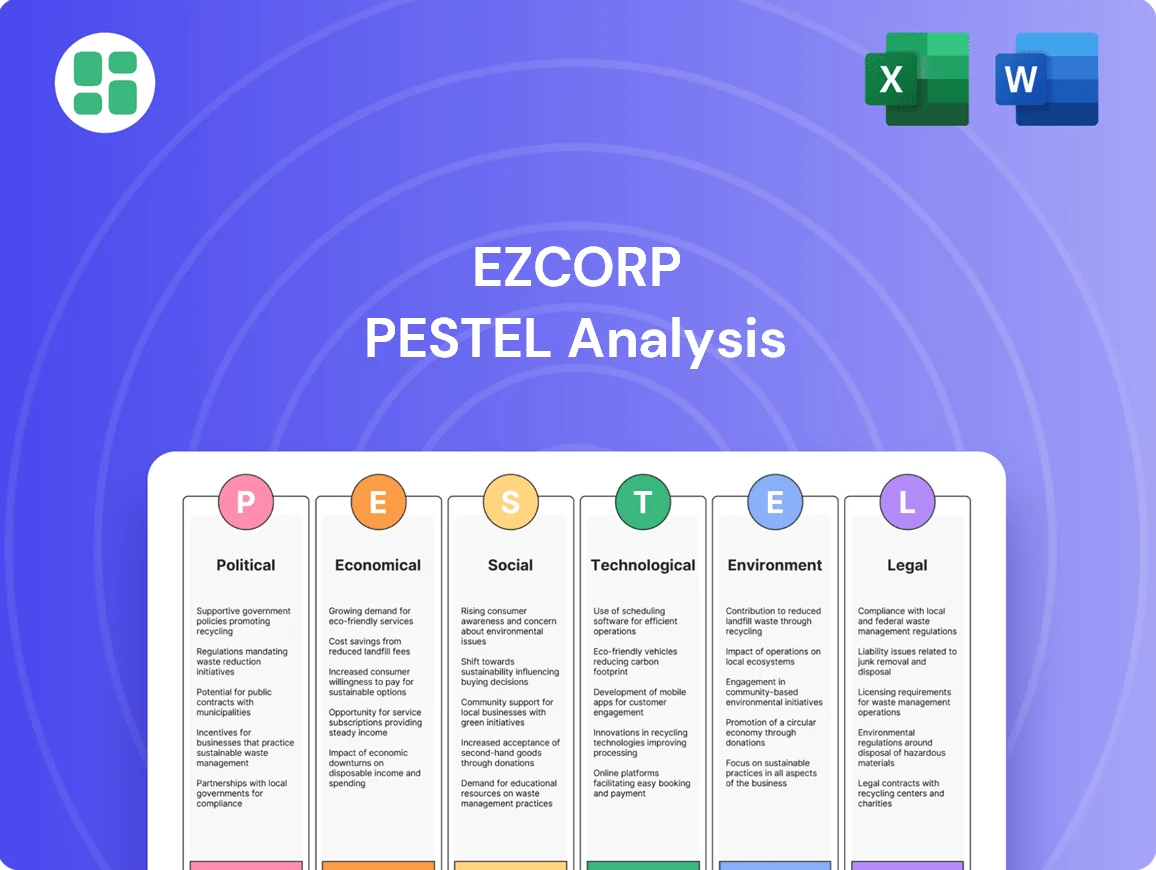
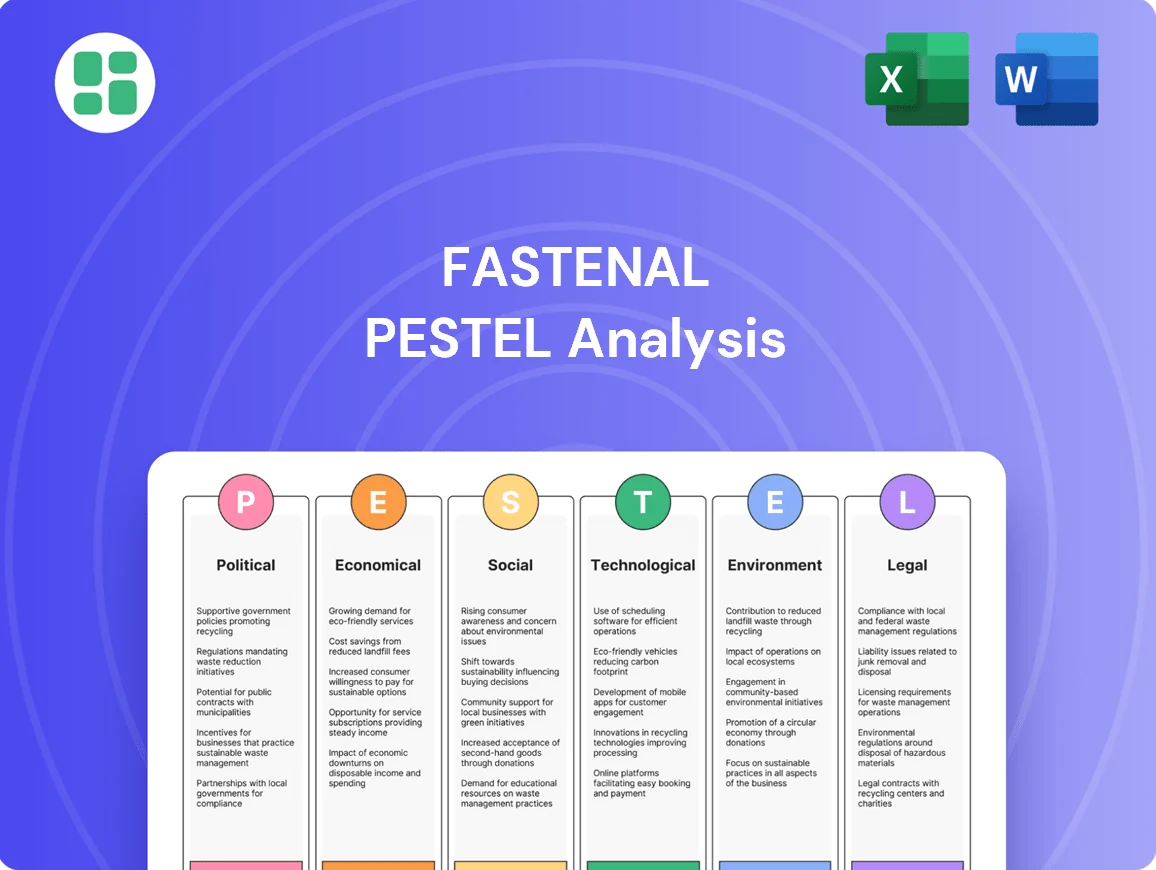
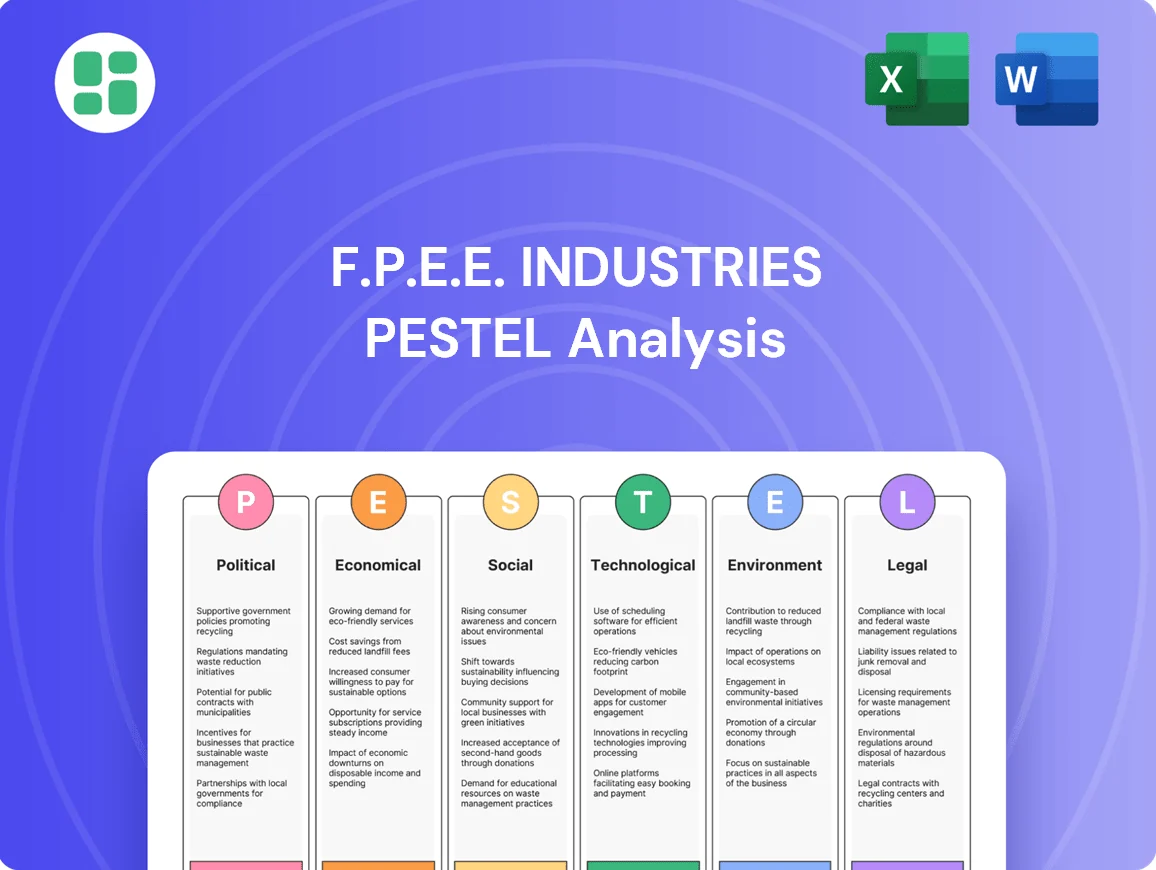
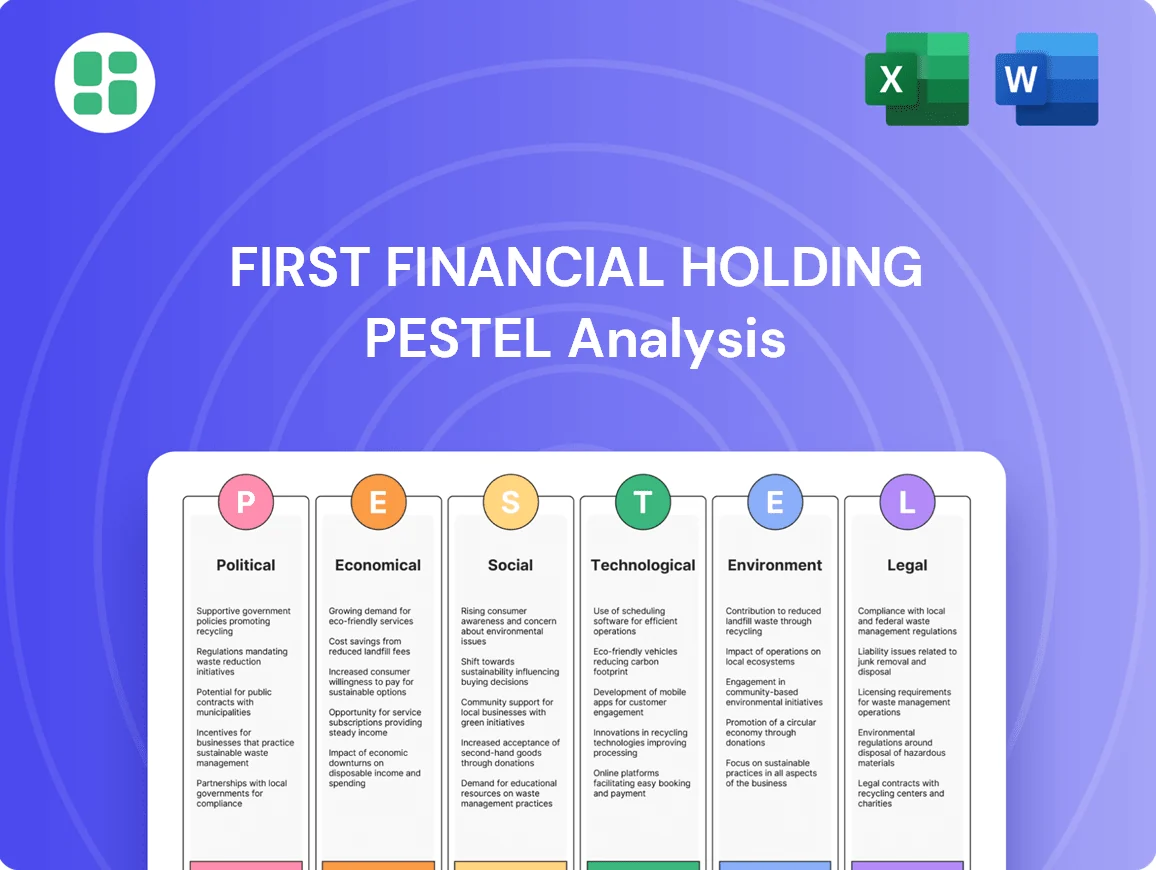
Huhtamaki PESTLE Analysis

Plan Smarter. Present Sharper. Compete Stronger.
Navigate the complex global landscape impacting Huhtamaki with our comprehensive PESTLE analysis. Understand the political, economic, social, technological, legal, and environmental forces shaping their operations and future growth. This expertly crafted report provides actionable intelligence to inform your strategic decisions and competitive positioning. Download the full version now and gain a critical market advantage.
Political factors

Government Regulations on Packaging Waste
The European Union's Packaging and Packaging Waste Regulation (PPWR) is a major political driver, pushing for greater circularity and higher recycled content in packaging across member states. This legislation sets ambitious, legally binding targets for recyclability and recycling rates, directly impacting companies like Huhtamaki.
Huhtamaki has publicly supported the PPWR, acknowledging its role in driving sustainable packaging innovation. The company's commitment to developing fully recyclable solutions aligns with the EU's environmental policy objectives.
In 2024, the EU continued to finalize the PPWR, with discussions focusing on specific implementation details and targets. For instance, the regulation aims for all packaging to be reusable or recyclable in an economically viable way by 2030.
Extended Producer Responsibility (EPR) Schemes
The U.S. is seeing a surge in Extended Producer Responsibility (EPR) laws for packaging, with states like California, Maine, and Colorado leading the charge. These regulations place the onus on manufacturers, including companies like Huhtamaki, to manage the end-of-life of their products. This shift is projected to significantly impact compliance costs, potentially adding millions annually for large packaging producers, and will require strategic adjustments in material sourcing and consumer engagement around recyclability.

Trade Policies and Geopolitical Stability
Global trade conditions and geopolitical tensions, like the ongoing conflict in the Middle East, directly affect Huhtamaki. These situations can disrupt supply chains, alter consumer spending, and restrict market access, creating significant uncertainties for the company. For instance, the company's 2024 annual report specifically mentioned how these conflicts impact global brands in various regions, highlighting the tangible financial risks involved.

Food Safety and Hygiene Regulations
Huhtamaki, as a global leader in sustainable food packaging solutions, navigates a complex web of food safety and hygiene regulations that differ significantly across jurisdictions. These regulations are paramount, setting rigorous standards for the materials used, manufacturing processes, and the overall integrity of packaging to safeguard consumer health. For instance, the European Union's Regulation (EC) No 1935/2004 on materials and articles intended to come into contact with food sets broad safety principles, while specific national laws like the U.S. Food, Drug, and Cosmetic Act (FD&C Act) provide detailed requirements. Huhtamaki's commitment to innovation is deeply intertwined with meeting these critical safety mandates, ensuring their packaging solutions maintain the highest levels of hygiene for food and beverages. In 2024, the global food packaging market, valued at approximately $290 billion, continues to see regulatory compliance as a key driver, with ongoing updates to chemical migration limits and sustainability reporting requirements impacting material choices and production oversight.
Key aspects of these regulations impacting Huhtamaki include:
- Material Safety: Ensuring all packaging components are free from harmful substances and do not leach chemicals into food, adhering to standards like those set by the FDA for food contact substances.
- Production Hygiene: Implementing strict Good Manufacturing Practices (GMPs) throughout the production chain to prevent contamination, a focus reinforced by increasing audits and certifications in 2024.
- Traceability: Maintaining robust systems for tracking raw materials and finished products, crucial for rapid response to any safety concerns, a capability becoming more critical with evolving supply chain transparency demands.
- Allergen Management: Providing clear and accurate labeling regarding potential allergens, a requirement that has seen increased scrutiny and stricter enforcement globally in recent years.
Government Incentives for Sustainable Practices
Government policies offering incentives, subsidies, or tax breaks for companies adopting sustainable manufacturing processes, renewable energy, or developing eco-friendly materials can significantly influence Huhtamaki's investment strategies. For instance, the EU's Green Deal, aiming for climate neutrality by 2050, includes substantial funding for circular economy initiatives and sustainable packaging research, directly benefiting companies like Huhtamaki investing in these areas. These policies encourage further research and development into recyclable, compostable, and reusable packaging solutions, aligning with market demands and regulatory pressures.
These incentives support Huhtamaki's ambition to be a leader in sustainable packaging by reducing the financial burden of adopting greener technologies. For example, many countries are offering tax credits for investments in renewable energy sources for manufacturing operations, which can lower Huhtamaki's operational costs and improve its environmental footprint. The company's commitment to increasing its use of recycled and renewable materials, as highlighted in its 2023 sustainability report, is directly supported by such governmental financial backing.
- EU Green Deal funding: The European Union's commitment to climate neutrality by 2050 provides significant financial support for sustainable innovation, including packaging.
- Tax credits for renewables: Many nations offer tax credits for adopting renewable energy in manufacturing, directly impacting operational costs for companies like Huhtamaki.
- R&D support: Government grants and subsidies are available for research into biodegradable, compostable, and recyclable packaging materials.
- Circular economy initiatives: Policies promoting the circular economy encourage investment in technologies that facilitate packaging reuse and recycling.
Global Forces Drive Packaging Innovation & Costs
Government policies, particularly in the EU with the Packaging and Packaging Waste Regulation (PPWR), are mandating higher recycled content and recyclability by 2030, directly influencing Huhtamaki's product development. The U.S. is also adopting Extended Producer Responsibility (EPR) laws, shifting end-of-life management costs to manufacturers, which is projected to add millions annually for large packaging firms. Geopolitical tensions, such as conflicts in the Middle East, create supply chain disruptions and market access issues, impacting global brands and their financial performance, as noted in Huhtamaki's 2024 annual report.
Government incentives, like the EU's Green Deal funding for circular economy initiatives, directly support Huhtamaki's investments in sustainable packaging research and development. Tax credits for renewable energy adoption in manufacturing further lower operational costs and improve environmental footprints. These financial supports are crucial for companies like Huhtamaki to meet increasing regulatory demands and market expectations for eco-friendly solutions.
| Policy Area | Impact on Huhtamaki | 2024/2025 Relevance |
| EU PPWR | Mandates recyclability & recycled content targets | Finalizing implementation details, driving innovation in materials |
| US EPR Laws | Increases manufacturer responsibility for end-of-life | Potential for significant annual compliance cost increases for producers |
| Geopolitical Tensions | Supply chain disruption, market access issues | Tangible financial risks impacting global brands and operations |
| Green Deal Funding | Supports R&D in circular economy and sustainable packaging | Reduces financial burden for adopting greener technologies |
What is included in the product
 Detailed Word Document
This PESTLE analysis provides a comprehensive examination of the external macro-environmental forces impacting Huhtamaki, detailing how Political, Economic, Social, Technological, Environmental, and Legal factors present both challenges and strategic advantages.

 Customizable Excel Spreadsheet
A clear, actionable overview of Huhtamaki's PESTLE factors, enabling swift identification of potential challenges and opportunities to inform strategic decisions and alleviate planning anxieties.
Economic factors

Inflation and Raw Material Costs
Inflationary pressures on key cost components like fiber, plastic resins, labor, and energy pose a notable short-term risk for Huhtamaki. These rising input costs directly impact operational expenses.
Despite a decrease in sales prices in 2024, driven by the pass-through of lower raw material costs, Huhtamaki experienced a negative impact on its adjusted EBIT. This was primarily due to concurrent increases in labor, transportation, and energy expenses, highlighting the challenge of cost management.
Effective management of these fluctuating input costs is paramount for Huhtamaki to sustain and improve its profitability margins in the current economic climate.
Consumer Demand and Purchasing Power
Huhtamaki experienced a challenging first half of 2024, with muted consumer demand and persistent inflation eroding purchasing power in many of its key markets. This combination directly impacted the company's sales volumes.
While the latter half of 2024 indicated a slow but steady recovery, regional and product-specific disparities remained. For instance, the demand for pre-packed food solutions, particularly egg packaging, saw a notable uptick, contrasting with a continued subdued performance in on-the-go packaging segments.

Global Economic Growth and Market Volatility
Huhtamaki's financial health is intrinsically tied to the ebb and flow of the global economy. When the world economy is robust, demand for Huhtamaki's packaging solutions tends to rise, supporting its revenue and profitability. Conversely, economic downturns or financial market instability can introduce significant headwinds, impacting consumer spending and, consequently, the demand for packaged goods.
Despite a generally positive trajectory, with Huhtamaki reporting improved profitability through 2024, the outlook for 2025 suggests a more measured pace. The company anticipates trading conditions to remain relatively stable, indicating a cautious environment rather than a period of rapid expansion. This stability, however, is a positive backdrop for a company focused on strategic growth.
Huhtamaki's commitment to maintaining a strong financial position is a key strategic element. This robust financial footing is not merely about weathering economic storms; it's designed to actively fuel the company's pursuit of profitable growth opportunities. By having ample resources, Huhtamaki is better positioned to invest in new markets, innovative products, and operational enhancements that can drive long-term value creation.

Currency Rate Fluctuations
Currency rate fluctuations present a significant short-term business risk for Huhtamaki due to its widespread operations in 36 countries. These movements can directly impact the company's reported net sales and overall financial performance.
For instance, foreign currency translation adjustments can create headwinds. In the second quarter of 2025, Huhtamaki experienced a negative impact of EUR -34 million on its net sales when compared to the exchange rates from 2024, highlighting the tangible effect of these currency shifts.
- Global Exposure: Huhtamaki's presence in 36 countries exposes it to a variety of currency exchange rate risks.
- Financial Impact: Fluctuations can negatively affect reported net sales and profitability.
- Q2 2025 Data: A EUR -34 million reduction in net sales was observed in Q2 2025 due to currency rate movements compared to 2024 rates.
Investment in Efficiency and Cost Savings
Huhtamaki has been actively pursuing an efficiency program designed to generate substantial cost savings. The company's objective is to achieve EUR 100 million in savings by the year 2025.
By the close of 2024, Huhtamaki had already realized approximately EUR 76 million of these targeted savings, demonstrating a strong commitment to operational improvement and financial discipline. This strategic emphasis on enhancing performance and reducing expenditures is crucial for maintaining and boosting competitiveness, especially when navigating challenging market conditions.
- Targeted Savings: EUR 100 million by 2025.
- Achieved Savings (2024): Approximately EUR 76 million.
- Strategic Importance: Enhances competitiveness and profitability.
Navigating 2024-2025: Economic Headwinds and Stable Outlook
Huhtamaki's financial performance in 2024 and the outlook for 2025 are shaped by a complex interplay of economic factors. While the company saw some recovery in the latter half of 2024, persistent inflation and muted consumer demand in certain segments continued to present challenges. The company anticipates trading conditions to remain relatively stable in 2025, suggesting a cautious economic environment. Currency fluctuations also remain a significant risk, as evidenced by a EUR -34 million impact on net sales in Q2 2025 due to unfavorable currency movements compared to 2024 rates.
| Economic Factor | Impact on Huhtamaki | Data/Observation |
|---|---|---|
| Inflation | Increased operational costs (labor, energy, materials) | Negative impact on adjusted EBIT in 2024 despite lower raw material costs. |
| Consumer Demand | Varied by segment; overall muted in early 2024 | Sales volumes impacted; recovery in pre-packed food, subdued on-the-go packaging. |
| Economic Outlook | Stable but cautious trading conditions expected for 2025 | Company anticipates measured pace rather than rapid expansion. |
| Currency Fluctuations | Risk to reported net sales and financial performance | EUR -34 million negative impact on net sales in Q2 2025 vs. 2024 rates. |
Preview the Actual Deliverable
Huhtamaki PESTLE Analysis
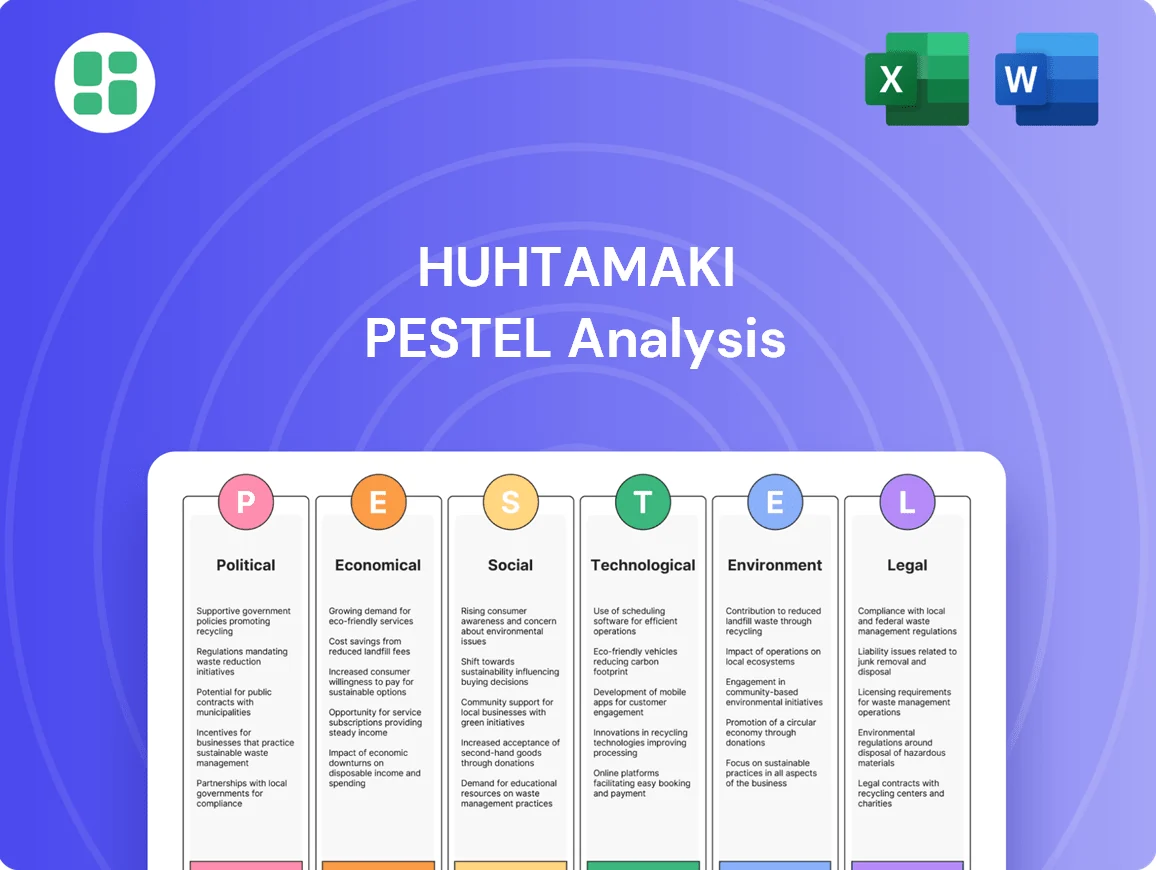
The content and structure shown in the preview is the same document you’ll download after payment. This comprehensive Huhtamaki PESTLE analysis delves into the Political, Economic, Social, Technological, Legal, and Environmental factors impacting the company's operations and strategic decisions.

Product Information
Product Information
Shipping & Returns
Shipping & Returns
Huhtamaki PESTLE Analysis
Huhtamaki PESTLE Analysis
Plan Smarter. Present Sharper. Compete Stronger.
Navigate the complex global landscape impacting Huhtamaki with our comprehensive PESTLE analysis. Understand the political, economic, social, technological, legal, and environmental forces shaping their operations and future growth. This expertly crafted report provides actionable intelligence to inform your strategic decisions and competitive positioning. Download the full version now and gain a critical market advantage.
Political factors
Government Regulations on Packaging Waste
The European Union's Packaging and Packaging Waste Regulation (PPWR) is a major political driver, pushing for greater circularity and higher recycled content in packaging across member states. This legislation sets ambitious, legally binding targets for recyclability and recycling rates, directly impacting companies like Huhtamaki.
Huhtamaki has publicly supported the PPWR, acknowledging its role in driving sustainable packaging innovation. The company's commitment to developing fully recyclable solutions aligns with the EU's environmental policy objectives.
In 2024, the EU continued to finalize the PPWR, with discussions focusing on specific implementation details and targets. For instance, the regulation aims for all packaging to be reusable or recyclable in an economically viable way by 2030.
Extended Producer Responsibility (EPR) Schemes
The U.S. is seeing a surge in Extended Producer Responsibility (EPR) laws for packaging, with states like California, Maine, and Colorado leading the charge. These regulations place the onus on manufacturers, including companies like Huhtamaki, to manage the end-of-life of their products. This shift is projected to significantly impact compliance costs, potentially adding millions annually for large packaging producers, and will require strategic adjustments in material sourcing and consumer engagement around recyclability.
Trade Policies and Geopolitical Stability
Global trade conditions and geopolitical tensions, like the ongoing conflict in the Middle East, directly affect Huhtamaki. These situations can disrupt supply chains, alter consumer spending, and restrict market access, creating significant uncertainties for the company. For instance, the company's 2024 annual report specifically mentioned how these conflicts impact global brands in various regions, highlighting the tangible financial risks involved.
Food Safety and Hygiene Regulations
Huhtamaki, as a global leader in sustainable food packaging solutions, navigates a complex web of food safety and hygiene regulations that differ significantly across jurisdictions. These regulations are paramount, setting rigorous standards for the materials used, manufacturing processes, and the overall integrity of packaging to safeguard consumer health. For instance, the European Union's Regulation (EC) No 1935/2004 on materials and articles intended to come into contact with food sets broad safety principles, while specific national laws like the U.S. Food, Drug, and Cosmetic Act (FD&C Act) provide detailed requirements. Huhtamaki's commitment to innovation is deeply intertwined with meeting these critical safety mandates, ensuring their packaging solutions maintain the highest levels of hygiene for food and beverages. In 2024, the global food packaging market, valued at approximately $290 billion, continues to see regulatory compliance as a key driver, with ongoing updates to chemical migration limits and sustainability reporting requirements impacting material choices and production oversight.
Key aspects of these regulations impacting Huhtamaki include:
- Material Safety: Ensuring all packaging components are free from harmful substances and do not leach chemicals into food, adhering to standards like those set by the FDA for food contact substances.
- Production Hygiene: Implementing strict Good Manufacturing Practices (GMPs) throughout the production chain to prevent contamination, a focus reinforced by increasing audits and certifications in 2024.
- Traceability: Maintaining robust systems for tracking raw materials and finished products, crucial for rapid response to any safety concerns, a capability becoming more critical with evolving supply chain transparency demands.
- Allergen Management: Providing clear and accurate labeling regarding potential allergens, a requirement that has seen increased scrutiny and stricter enforcement globally in recent years.
Government Incentives for Sustainable Practices
Government policies offering incentives, subsidies, or tax breaks for companies adopting sustainable manufacturing processes, renewable energy, or developing eco-friendly materials can significantly influence Huhtamaki's investment strategies. For instance, the EU's Green Deal, aiming for climate neutrality by 2050, includes substantial funding for circular economy initiatives and sustainable packaging research, directly benefiting companies like Huhtamaki investing in these areas. These policies encourage further research and development into recyclable, compostable, and reusable packaging solutions, aligning with market demands and regulatory pressures.
These incentives support Huhtamaki's ambition to be a leader in sustainable packaging by reducing the financial burden of adopting greener technologies. For example, many countries are offering tax credits for investments in renewable energy sources for manufacturing operations, which can lower Huhtamaki's operational costs and improve its environmental footprint. The company's commitment to increasing its use of recycled and renewable materials, as highlighted in its 2023 sustainability report, is directly supported by such governmental financial backing.
- EU Green Deal funding: The European Union's commitment to climate neutrality by 2050 provides significant financial support for sustainable innovation, including packaging.
- Tax credits for renewables: Many nations offer tax credits for adopting renewable energy in manufacturing, directly impacting operational costs for companies like Huhtamaki.
- R&D support: Government grants and subsidies are available for research into biodegradable, compostable, and recyclable packaging materials.
- Circular economy initiatives: Policies promoting the circular economy encourage investment in technologies that facilitate packaging reuse and recycling.
Global Forces Drive Packaging Innovation & Costs
Government policies, particularly in the EU with the Packaging and Packaging Waste Regulation (PPWR), are mandating higher recycled content and recyclability by 2030, directly influencing Huhtamaki's product development. The U.S. is also adopting Extended Producer Responsibility (EPR) laws, shifting end-of-life management costs to manufacturers, which is projected to add millions annually for large packaging firms. Geopolitical tensions, such as conflicts in the Middle East, create supply chain disruptions and market access issues, impacting global brands and their financial performance, as noted in Huhtamaki's 2024 annual report.
Government incentives, like the EU's Green Deal funding for circular economy initiatives, directly support Huhtamaki's investments in sustainable packaging research and development. Tax credits for renewable energy adoption in manufacturing further lower operational costs and improve environmental footprints. These financial supports are crucial for companies like Huhtamaki to meet increasing regulatory demands and market expectations for eco-friendly solutions.
| Policy Area | Impact on Huhtamaki | 2024/2025 Relevance |
| EU PPWR | Mandates recyclability & recycled content targets | Finalizing implementation details, driving innovation in materials |
| US EPR Laws | Increases manufacturer responsibility for end-of-life | Potential for significant annual compliance cost increases for producers |
| Geopolitical Tensions | Supply chain disruption, market access issues | Tangible financial risks impacting global brands and operations |
| Green Deal Funding | Supports R&D in circular economy and sustainable packaging | Reduces financial burden for adopting greener technologies |
What is included in the product
Detailed Word Document
This PESTLE analysis provides a comprehensive examination of the external macro-environmental forces impacting Huhtamaki, detailing how Political, Economic, Social, Technological, Environmental, and Legal factors present both challenges and strategic advantages.
Customizable Excel Spreadsheet
A clear, actionable overview of Huhtamaki's PESTLE factors, enabling swift identification of potential challenges and opportunities to inform strategic decisions and alleviate planning anxieties.
Economic factors
Inflation and Raw Material Costs
Inflationary pressures on key cost components like fiber, plastic resins, labor, and energy pose a notable short-term risk for Huhtamaki. These rising input costs directly impact operational expenses.
Despite a decrease in sales prices in 2024, driven by the pass-through of lower raw material costs, Huhtamaki experienced a negative impact on its adjusted EBIT. This was primarily due to concurrent increases in labor, transportation, and energy expenses, highlighting the challenge of cost management.
Effective management of these fluctuating input costs is paramount for Huhtamaki to sustain and improve its profitability margins in the current economic climate.
Consumer Demand and Purchasing Power
Huhtamaki experienced a challenging first half of 2024, with muted consumer demand and persistent inflation eroding purchasing power in many of its key markets. This combination directly impacted the company's sales volumes.
While the latter half of 2024 indicated a slow but steady recovery, regional and product-specific disparities remained. For instance, the demand for pre-packed food solutions, particularly egg packaging, saw a notable uptick, contrasting with a continued subdued performance in on-the-go packaging segments.
Global Economic Growth and Market Volatility
Huhtamaki's financial health is intrinsically tied to the ebb and flow of the global economy. When the world economy is robust, demand for Huhtamaki's packaging solutions tends to rise, supporting its revenue and profitability. Conversely, economic downturns or financial market instability can introduce significant headwinds, impacting consumer spending and, consequently, the demand for packaged goods.
Despite a generally positive trajectory, with Huhtamaki reporting improved profitability through 2024, the outlook for 2025 suggests a more measured pace. The company anticipates trading conditions to remain relatively stable, indicating a cautious environment rather than a period of rapid expansion. This stability, however, is a positive backdrop for a company focused on strategic growth.
Huhtamaki's commitment to maintaining a strong financial position is a key strategic element. This robust financial footing is not merely about weathering economic storms; it's designed to actively fuel the company's pursuit of profitable growth opportunities. By having ample resources, Huhtamaki is better positioned to invest in new markets, innovative products, and operational enhancements that can drive long-term value creation.
Currency Rate Fluctuations
Currency rate fluctuations present a significant short-term business risk for Huhtamaki due to its widespread operations in 36 countries. These movements can directly impact the company's reported net sales and overall financial performance.
For instance, foreign currency translation adjustments can create headwinds. In the second quarter of 2025, Huhtamaki experienced a negative impact of EUR -34 million on its net sales when compared to the exchange rates from 2024, highlighting the tangible effect of these currency shifts.
- Global Exposure: Huhtamaki's presence in 36 countries exposes it to a variety of currency exchange rate risks.
- Financial Impact: Fluctuations can negatively affect reported net sales and profitability.
- Q2 2025 Data: A EUR -34 million reduction in net sales was observed in Q2 2025 due to currency rate movements compared to 2024 rates.
Investment in Efficiency and Cost Savings
Huhtamaki has been actively pursuing an efficiency program designed to generate substantial cost savings. The company's objective is to achieve EUR 100 million in savings by the year 2025.
By the close of 2024, Huhtamaki had already realized approximately EUR 76 million of these targeted savings, demonstrating a strong commitment to operational improvement and financial discipline. This strategic emphasis on enhancing performance and reducing expenditures is crucial for maintaining and boosting competitiveness, especially when navigating challenging market conditions.
- Targeted Savings: EUR 100 million by 2025.
- Achieved Savings (2024): Approximately EUR 76 million.
- Strategic Importance: Enhances competitiveness and profitability.
Navigating 2024-2025: Economic Headwinds and Stable Outlook
Huhtamaki's financial performance in 2024 and the outlook for 2025 are shaped by a complex interplay of economic factors. While the company saw some recovery in the latter half of 2024, persistent inflation and muted consumer demand in certain segments continued to present challenges. The company anticipates trading conditions to remain relatively stable in 2025, suggesting a cautious economic environment. Currency fluctuations also remain a significant risk, as evidenced by a EUR -34 million impact on net sales in Q2 2025 due to unfavorable currency movements compared to 2024 rates.
| Economic Factor | Impact on Huhtamaki | Data/Observation |
|---|---|---|
| Inflation | Increased operational costs (labor, energy, materials) | Negative impact on adjusted EBIT in 2024 despite lower raw material costs. |
| Consumer Demand | Varied by segment; overall muted in early 2024 | Sales volumes impacted; recovery in pre-packed food, subdued on-the-go packaging. |
| Economic Outlook | Stable but cautious trading conditions expected for 2025 | Company anticipates measured pace rather than rapid expansion. |
| Currency Fluctuations | Risk to reported net sales and financial performance | EUR -34 million negative impact on net sales in Q2 2025 vs. 2024 rates. |
Preview the Actual Deliverable
Huhtamaki PESTLE Analysis
The content and structure shown in the preview is the same document you’ll download after payment. This comprehensive Huhtamaki PESTLE analysis delves into the Political, Economic, Social, Technological, Legal, and Environmental factors impacting the company's operations and strategic decisions.
Original: $10.00
-65%$10.00
$3.50Product Information
Product Information
Shipping & Returns
Shipping & Returns
Description
Plan Smarter. Present Sharper. Compete Stronger.
Navigate the complex global landscape impacting Huhtamaki with our comprehensive PESTLE analysis. Understand the political, economic, social, technological, legal, and environmental forces shaping their operations and future growth. This expertly crafted report provides actionable intelligence to inform your strategic decisions and competitive positioning. Download the full version now and gain a critical market advantage.
Political factors
Government Regulations on Packaging Waste
The European Union's Packaging and Packaging Waste Regulation (PPWR) is a major political driver, pushing for greater circularity and higher recycled content in packaging across member states. This legislation sets ambitious, legally binding targets for recyclability and recycling rates, directly impacting companies like Huhtamaki.
Huhtamaki has publicly supported the PPWR, acknowledging its role in driving sustainable packaging innovation. The company's commitment to developing fully recyclable solutions aligns with the EU's environmental policy objectives.
In 2024, the EU continued to finalize the PPWR, with discussions focusing on specific implementation details and targets. For instance, the regulation aims for all packaging to be reusable or recyclable in an economically viable way by 2030.
Extended Producer Responsibility (EPR) Schemes
The U.S. is seeing a surge in Extended Producer Responsibility (EPR) laws for packaging, with states like California, Maine, and Colorado leading the charge. These regulations place the onus on manufacturers, including companies like Huhtamaki, to manage the end-of-life of their products. This shift is projected to significantly impact compliance costs, potentially adding millions annually for large packaging producers, and will require strategic adjustments in material sourcing and consumer engagement around recyclability.
Trade Policies and Geopolitical Stability
Global trade conditions and geopolitical tensions, like the ongoing conflict in the Middle East, directly affect Huhtamaki. These situations can disrupt supply chains, alter consumer spending, and restrict market access, creating significant uncertainties for the company. For instance, the company's 2024 annual report specifically mentioned how these conflicts impact global brands in various regions, highlighting the tangible financial risks involved.
Food Safety and Hygiene Regulations
Huhtamaki, as a global leader in sustainable food packaging solutions, navigates a complex web of food safety and hygiene regulations that differ significantly across jurisdictions. These regulations are paramount, setting rigorous standards for the materials used, manufacturing processes, and the overall integrity of packaging to safeguard consumer health. For instance, the European Union's Regulation (EC) No 1935/2004 on materials and articles intended to come into contact with food sets broad safety principles, while specific national laws like the U.S. Food, Drug, and Cosmetic Act (FD&C Act) provide detailed requirements. Huhtamaki's commitment to innovation is deeply intertwined with meeting these critical safety mandates, ensuring their packaging solutions maintain the highest levels of hygiene for food and beverages. In 2024, the global food packaging market, valued at approximately $290 billion, continues to see regulatory compliance as a key driver, with ongoing updates to chemical migration limits and sustainability reporting requirements impacting material choices and production oversight.
Key aspects of these regulations impacting Huhtamaki include:
- Material Safety: Ensuring all packaging components are free from harmful substances and do not leach chemicals into food, adhering to standards like those set by the FDA for food contact substances.
- Production Hygiene: Implementing strict Good Manufacturing Practices (GMPs) throughout the production chain to prevent contamination, a focus reinforced by increasing audits and certifications in 2024.
- Traceability: Maintaining robust systems for tracking raw materials and finished products, crucial for rapid response to any safety concerns, a capability becoming more critical with evolving supply chain transparency demands.
- Allergen Management: Providing clear and accurate labeling regarding potential allergens, a requirement that has seen increased scrutiny and stricter enforcement globally in recent years.
Government Incentives for Sustainable Practices
Government policies offering incentives, subsidies, or tax breaks for companies adopting sustainable manufacturing processes, renewable energy, or developing eco-friendly materials can significantly influence Huhtamaki's investment strategies. For instance, the EU's Green Deal, aiming for climate neutrality by 2050, includes substantial funding for circular economy initiatives and sustainable packaging research, directly benefiting companies like Huhtamaki investing in these areas. These policies encourage further research and development into recyclable, compostable, and reusable packaging solutions, aligning with market demands and regulatory pressures.
These incentives support Huhtamaki's ambition to be a leader in sustainable packaging by reducing the financial burden of adopting greener technologies. For example, many countries are offering tax credits for investments in renewable energy sources for manufacturing operations, which can lower Huhtamaki's operational costs and improve its environmental footprint. The company's commitment to increasing its use of recycled and renewable materials, as highlighted in its 2023 sustainability report, is directly supported by such governmental financial backing.
- EU Green Deal funding: The European Union's commitment to climate neutrality by 2050 provides significant financial support for sustainable innovation, including packaging.
- Tax credits for renewables: Many nations offer tax credits for adopting renewable energy in manufacturing, directly impacting operational costs for companies like Huhtamaki.
- R&D support: Government grants and subsidies are available for research into biodegradable, compostable, and recyclable packaging materials.
- Circular economy initiatives: Policies promoting the circular economy encourage investment in technologies that facilitate packaging reuse and recycling.
Global Forces Drive Packaging Innovation & Costs
Government policies, particularly in the EU with the Packaging and Packaging Waste Regulation (PPWR), are mandating higher recycled content and recyclability by 2030, directly influencing Huhtamaki's product development. The U.S. is also adopting Extended Producer Responsibility (EPR) laws, shifting end-of-life management costs to manufacturers, which is projected to add millions annually for large packaging firms. Geopolitical tensions, such as conflicts in the Middle East, create supply chain disruptions and market access issues, impacting global brands and their financial performance, as noted in Huhtamaki's 2024 annual report.
Government incentives, like the EU's Green Deal funding for circular economy initiatives, directly support Huhtamaki's investments in sustainable packaging research and development. Tax credits for renewable energy adoption in manufacturing further lower operational costs and improve environmental footprints. These financial supports are crucial for companies like Huhtamaki to meet increasing regulatory demands and market expectations for eco-friendly solutions.
| Policy Area | Impact on Huhtamaki | 2024/2025 Relevance |
| EU PPWR | Mandates recyclability & recycled content targets | Finalizing implementation details, driving innovation in materials |
| US EPR Laws | Increases manufacturer responsibility for end-of-life | Potential for significant annual compliance cost increases for producers |
| Geopolitical Tensions | Supply chain disruption, market access issues | Tangible financial risks impacting global brands and operations |
| Green Deal Funding | Supports R&D in circular economy and sustainable packaging | Reduces financial burden for adopting greener technologies |
What is included in the product
Detailed Word Document
This PESTLE analysis provides a comprehensive examination of the external macro-environmental forces impacting Huhtamaki, detailing how Political, Economic, Social, Technological, Environmental, and Legal factors present both challenges and strategic advantages.
Customizable Excel Spreadsheet
A clear, actionable overview of Huhtamaki's PESTLE factors, enabling swift identification of potential challenges and opportunities to inform strategic decisions and alleviate planning anxieties.
Economic factors
Inflation and Raw Material Costs
Inflationary pressures on key cost components like fiber, plastic resins, labor, and energy pose a notable short-term risk for Huhtamaki. These rising input costs directly impact operational expenses.
Despite a decrease in sales prices in 2024, driven by the pass-through of lower raw material costs, Huhtamaki experienced a negative impact on its adjusted EBIT. This was primarily due to concurrent increases in labor, transportation, and energy expenses, highlighting the challenge of cost management.
Effective management of these fluctuating input costs is paramount for Huhtamaki to sustain and improve its profitability margins in the current economic climate.
Consumer Demand and Purchasing Power
Huhtamaki experienced a challenging first half of 2024, with muted consumer demand and persistent inflation eroding purchasing power in many of its key markets. This combination directly impacted the company's sales volumes.
While the latter half of 2024 indicated a slow but steady recovery, regional and product-specific disparities remained. For instance, the demand for pre-packed food solutions, particularly egg packaging, saw a notable uptick, contrasting with a continued subdued performance in on-the-go packaging segments.
Global Economic Growth and Market Volatility
Huhtamaki's financial health is intrinsically tied to the ebb and flow of the global economy. When the world economy is robust, demand for Huhtamaki's packaging solutions tends to rise, supporting its revenue and profitability. Conversely, economic downturns or financial market instability can introduce significant headwinds, impacting consumer spending and, consequently, the demand for packaged goods.
Despite a generally positive trajectory, with Huhtamaki reporting improved profitability through 2024, the outlook for 2025 suggests a more measured pace. The company anticipates trading conditions to remain relatively stable, indicating a cautious environment rather than a period of rapid expansion. This stability, however, is a positive backdrop for a company focused on strategic growth.
Huhtamaki's commitment to maintaining a strong financial position is a key strategic element. This robust financial footing is not merely about weathering economic storms; it's designed to actively fuel the company's pursuit of profitable growth opportunities. By having ample resources, Huhtamaki is better positioned to invest in new markets, innovative products, and operational enhancements that can drive long-term value creation.
Currency Rate Fluctuations
Currency rate fluctuations present a significant short-term business risk for Huhtamaki due to its widespread operations in 36 countries. These movements can directly impact the company's reported net sales and overall financial performance.
For instance, foreign currency translation adjustments can create headwinds. In the second quarter of 2025, Huhtamaki experienced a negative impact of EUR -34 million on its net sales when compared to the exchange rates from 2024, highlighting the tangible effect of these currency shifts.
- Global Exposure: Huhtamaki's presence in 36 countries exposes it to a variety of currency exchange rate risks.
- Financial Impact: Fluctuations can negatively affect reported net sales and profitability.
- Q2 2025 Data: A EUR -34 million reduction in net sales was observed in Q2 2025 due to currency rate movements compared to 2024 rates.
Investment in Efficiency and Cost Savings
Huhtamaki has been actively pursuing an efficiency program designed to generate substantial cost savings. The company's objective is to achieve EUR 100 million in savings by the year 2025.
By the close of 2024, Huhtamaki had already realized approximately EUR 76 million of these targeted savings, demonstrating a strong commitment to operational improvement and financial discipline. This strategic emphasis on enhancing performance and reducing expenditures is crucial for maintaining and boosting competitiveness, especially when navigating challenging market conditions.
- Targeted Savings: EUR 100 million by 2025.
- Achieved Savings (2024): Approximately EUR 76 million.
- Strategic Importance: Enhances competitiveness and profitability.
Navigating 2024-2025: Economic Headwinds and Stable Outlook
Huhtamaki's financial performance in 2024 and the outlook for 2025 are shaped by a complex interplay of economic factors. While the company saw some recovery in the latter half of 2024, persistent inflation and muted consumer demand in certain segments continued to present challenges. The company anticipates trading conditions to remain relatively stable in 2025, suggesting a cautious economic environment. Currency fluctuations also remain a significant risk, as evidenced by a EUR -34 million impact on net sales in Q2 2025 due to unfavorable currency movements compared to 2024 rates.
| Economic Factor | Impact on Huhtamaki | Data/Observation |
|---|---|---|
| Inflation | Increased operational costs (labor, energy, materials) | Negative impact on adjusted EBIT in 2024 despite lower raw material costs. |
| Consumer Demand | Varied by segment; overall muted in early 2024 | Sales volumes impacted; recovery in pre-packed food, subdued on-the-go packaging. |
| Economic Outlook | Stable but cautious trading conditions expected for 2025 | Company anticipates measured pace rather than rapid expansion. |
| Currency Fluctuations | Risk to reported net sales and financial performance | EUR -34 million negative impact on net sales in Q2 2025 vs. 2024 rates. |
Preview the Actual Deliverable
Huhtamaki PESTLE Analysis
The content and structure shown in the preview is the same document you’ll download after payment. This comprehensive Huhtamaki PESTLE analysis delves into the Political, Economic, Social, Technological, Legal, and Environmental factors impacting the company's operations and strategic decisions.