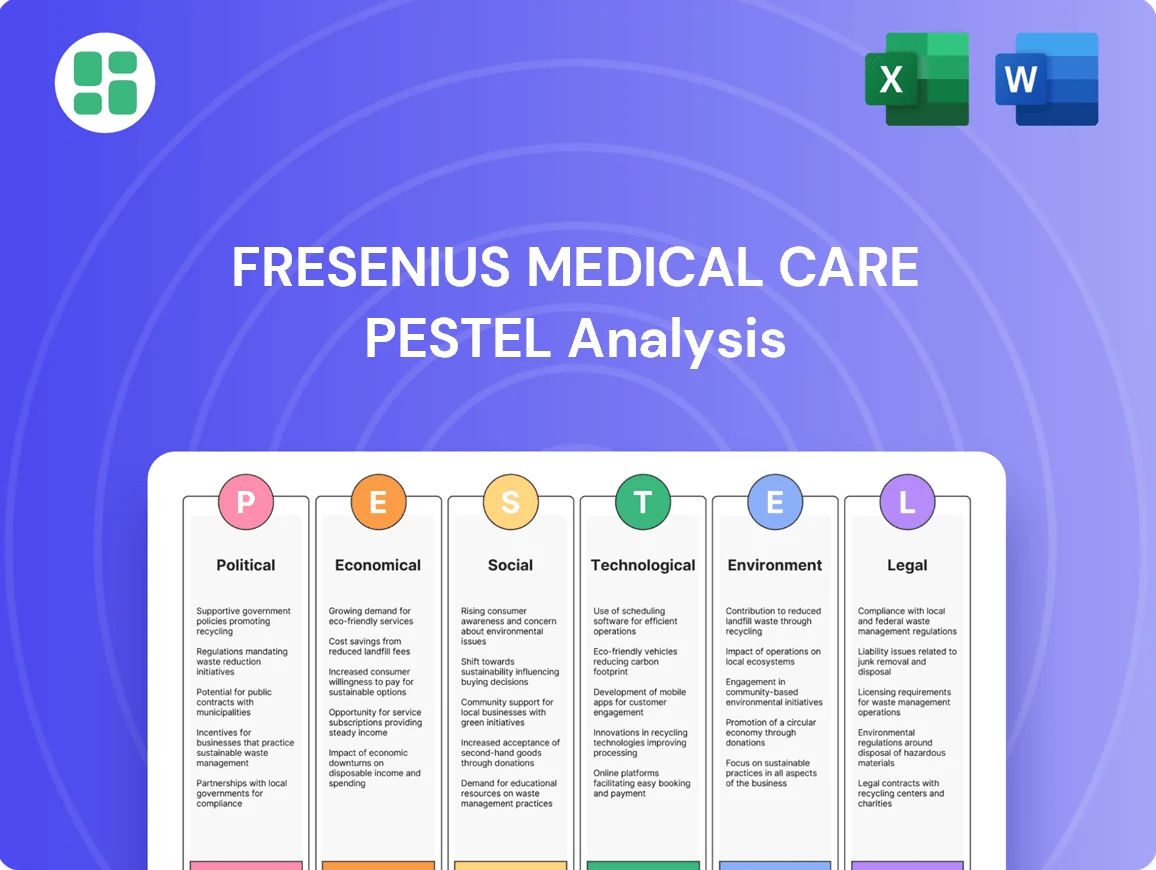
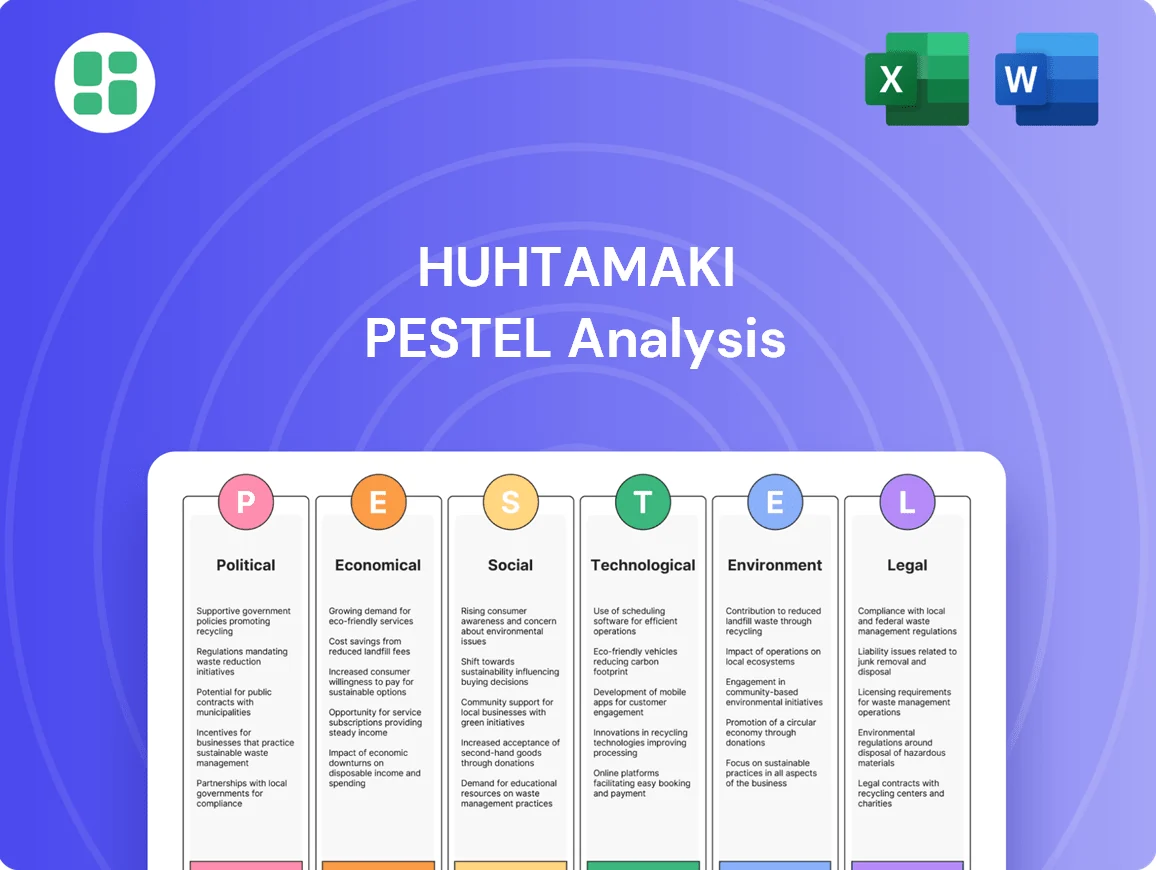
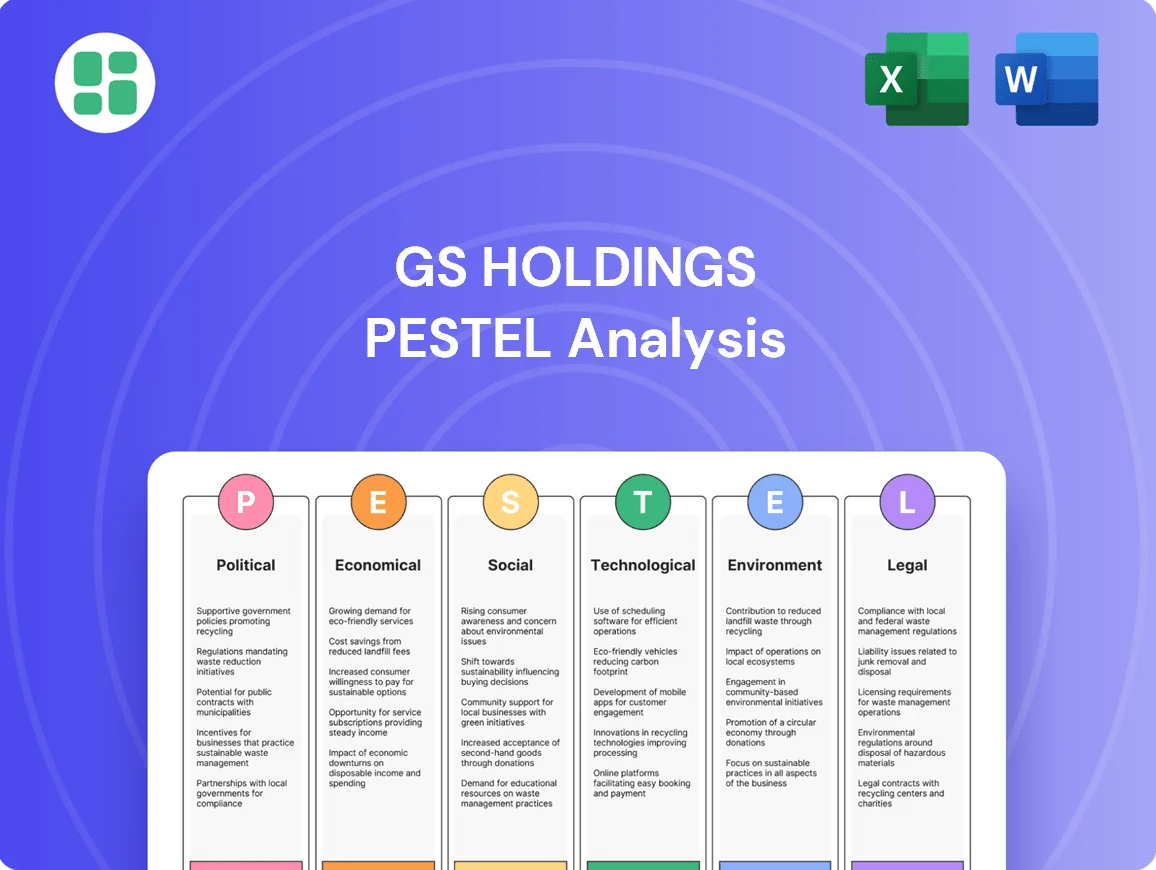
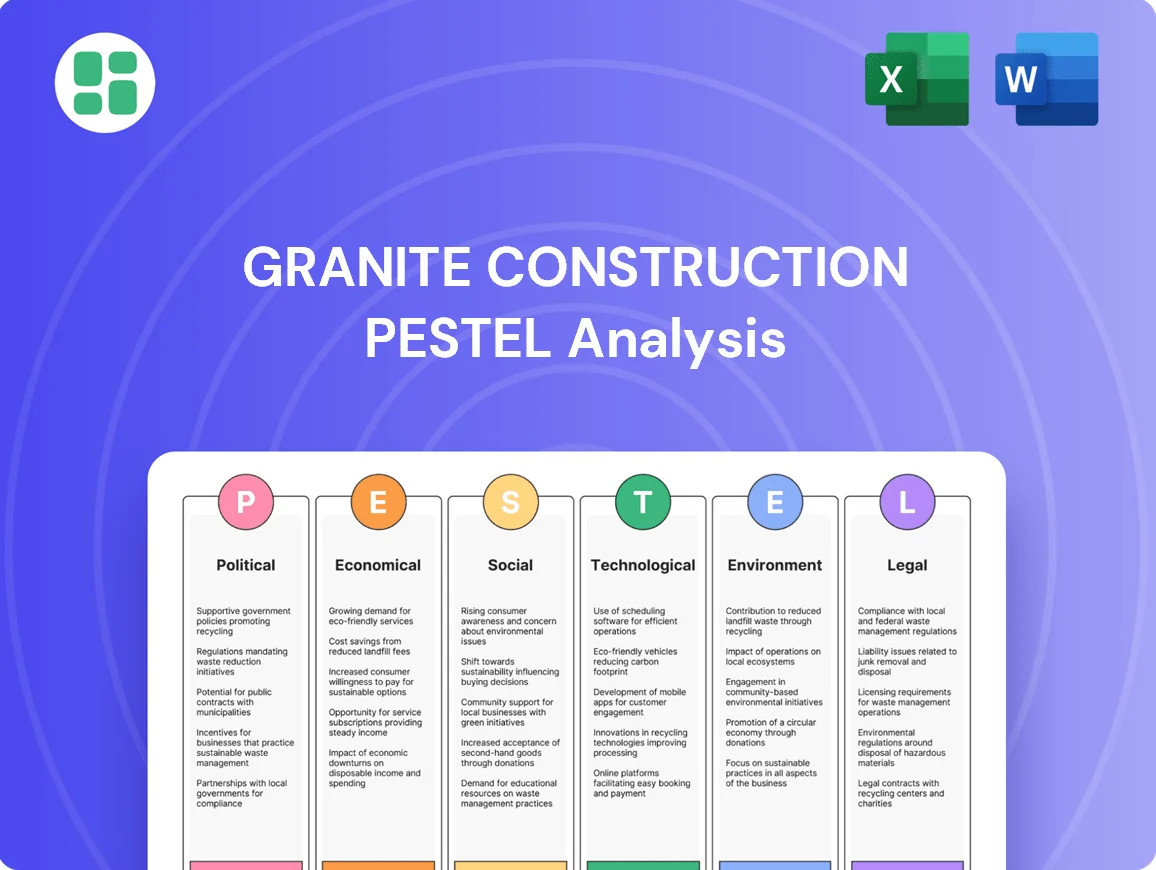
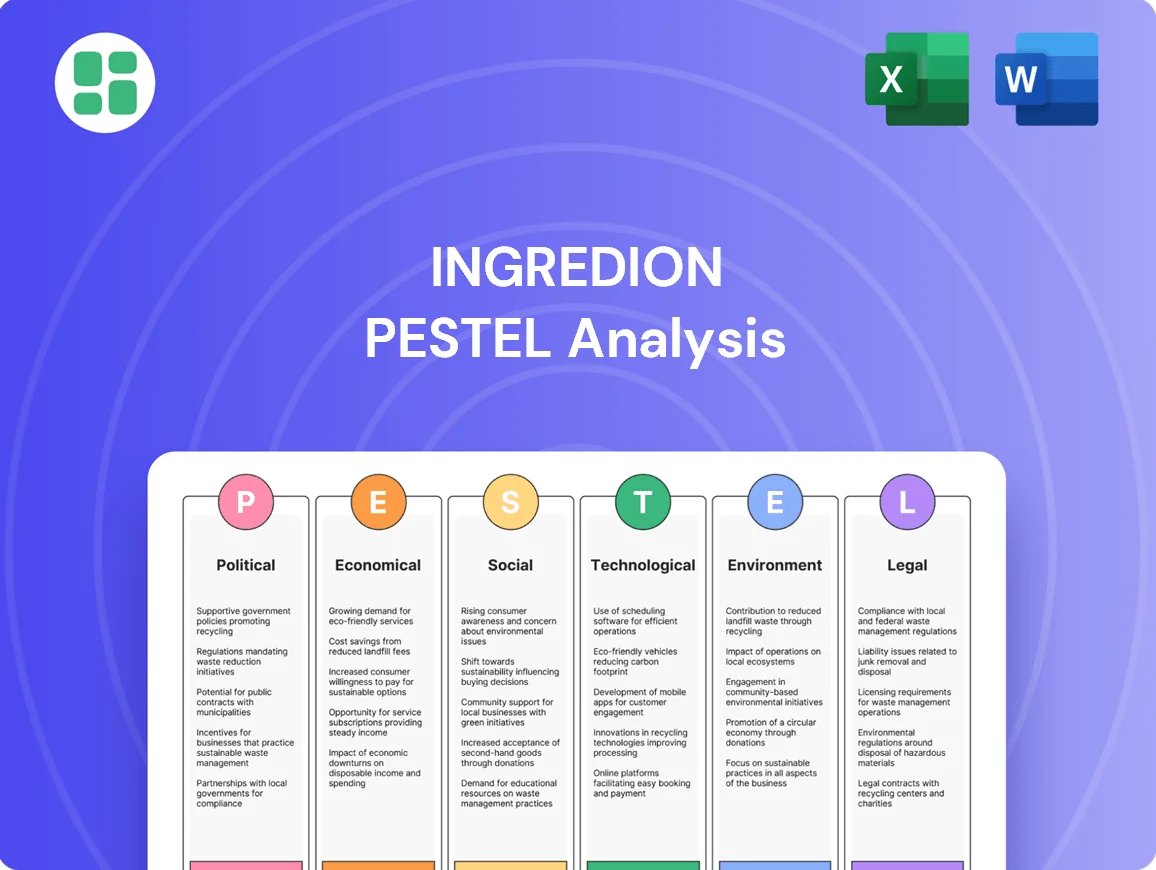
World Fuel Services PESTLE Analysis

Your Competitive Advantage Starts with This Report
Navigate the complex external forces shaping World Fuel Services's future with our comprehensive PESTLE analysis. Understand how political shifts, economic volatility, and evolving social trends present both challenges and opportunities for this global energy leader. Gain the strategic foresight needed to make informed decisions and secure your competitive advantage.
Political factors

Geopolitical Stability and Conflicts
Geopolitical instability, like the ongoing conflicts in Eastern Europe and the Middle East, directly affects global fuel supply chains. These events can disrupt production, reroute shipping, and lead to price volatility, impacting World Fuel Services' ability to secure and deliver fuel reliably.
For a global provider like World Fuel Services, navigating these uncertainties is crucial. The company must manage risks associated with trade disputes and regional tensions that can escalate, potentially leading to sanctions or export restrictions, which in turn affect fuel availability and cost for its diverse customer base.
The indirect effects of political unrest are also significant; for instance, increased insurance premiums for shipping in volatile regions or the need to find alternative sourcing routes add to operational costs, ultimately influencing fuel prices passed on to consumers.
Government Policies and Regulations on Energy
Government policies significantly shape World Fuel Services' operational environment. For instance, changes in fuel taxation, such as potential increases on gasoline and diesel in 2024 or 2025, directly impact the cost of goods and consumer demand, affecting WFS's retail and distribution segments. Energy subsidies, particularly those favoring renewable energy sources, could present both challenges to traditional fuel markets and opportunities for WFS to diversify its offerings and services in the burgeoning green energy sector.
Import and export restrictions on petroleum products and biofuels, which can fluctuate based on geopolitical events and national energy security strategies, directly influence World Fuel Services' global trading and supply chain operations. For example, if a major oil-producing nation imposes new export quotas in late 2024, it could disrupt supply chains and create price volatility that WFS must navigate. The company’s profitability is thus closely tied to the predictability and nature of these cross-border regulations.
National energy independence goals, increasingly prominent in many countries aiming to reduce reliance on foreign energy sources by 2025, can lead to policy shifts favoring domestic production and alternative fuels. This can create opportunities for World Fuel Services to invest in or partner with domestic energy producers or companies developing new energy technologies, while potentially reducing demand for imported fossil fuels in certain markets.

International Trade Agreements and Tariffs
International trade agreements and tariffs significantly impact World Fuel Services' operational costs. For instance, the renegotiation or expiration of agreements like the USMCA can alter duties on fuel components or transportation services, directly affecting procurement expenses. In 2024, ongoing trade tensions, particularly between major economies, led to increased volatility in commodity prices, including oil and refined products, making it harder to predict and manage supply chain costs.
Trade barriers, such as tariffs imposed by countries on imported fuels or related equipment, can disrupt World Fuel Services' global logistics network. These barriers can increase the cost of moving fuel across borders, potentially impacting the company's ability to offer competitive pricing in various regions. For example, a sudden tariff on bunker fuel in a key shipping lane could force rerouting or higher sourcing costs, affecting delivery times and profitability.
Seamless cross-border operations are crucial for World Fuel Services to maintain its extensive global reach and serve diverse customer needs efficiently. In 2025, the company's ability to navigate complex customs regulations and varying trade policies across its operating regions will be a key determinant of its success. Any disruptions to these flows, whether due to new trade restrictions or the absence of favorable agreements, can lead to significant operational challenges and increased overhead.

Decarbonization Policies and Mandates
Governments worldwide are increasingly implementing decarbonization policies, directly impacting fuel suppliers like World Fuel Services. These mandates, including carbon pricing mechanisms and emissions trading schemes, are pushing the industry towards lower-carbon alternatives. For instance, the European Union's Emissions Trading System (EU ETS) continues to evolve, and many nations are setting ambitious targets for sustainable aviation fuel (SAF) blending, with some aiming for 10% SAF by 2030. This regulatory pressure compels World Fuel Services to adapt its strategy and invest in cleaner energy solutions to remain compliant and competitive.
The push for decarbonization significantly influences World Fuel Services' strategic direction and product development. As regulations tighten, the company faces growing pressure to transition its offerings towards lower-carbon fuels and energy solutions. This includes exploring and investing in areas like biofuels, electric vehicle charging infrastructure, and potentially hydrogen. Meeting these evolving regulatory requirements is paramount for maintaining market access and operational viability in the coming years.
Key policy drivers include:
- Carbon Pricing: The expansion of carbon taxes and cap-and-trade systems globally increases the cost of traditional fossil fuels, incentivizing a shift to cleaner options.
- SAF Mandates: Numerous countries and regions are introducing or strengthening mandates for the blending of sustainable aviation fuel into jet fuel supplies. For example, the US has set a goal for 3 billion gallons of SAF by 2030.
- Emissions Standards: Stricter emissions standards for transportation and industrial sectors necessitate the adoption of fuels with lower carbon intensity.
- Renewable Energy Subsidies: Government support for renewable energy sources and technologies can create new market opportunities for companies diversifying their energy portfolios.
Political Stability of Key Sourcing Nations
Political stability in key sourcing nations is a critical consideration for World Fuel Services. Instability in regions like the Middle East or parts of Africa, which are major oil and gas producers, can directly impact supply chains. For instance, geopolitical tensions in the Middle East in late 2023 and early 2024 led to increased oil price volatility, affecting global fuel markets. World Fuel Services actively manages this risk by diversifying its sourcing across various geographical regions, aiming to reduce over-reliance on any single country or political bloc.
The company's strategies often involve building robust relationships with multiple suppliers and exploring alternative energy sources to buffer against potential disruptions. For example, in 2024, there's a continued global push towards diversifying energy portfolios, which World Fuel Services is likely leveraging to mitigate political risks associated with traditional fossil fuel suppliers. This diversification not only addresses political instability but also aligns with evolving market demands for cleaner energy solutions.
Operational risks stemming from political unrest can manifest as contract renegotiations, sudden export bans, or security concerns for assets and personnel. World Fuel Services’ risk mitigation framework includes contingency planning and robust due diligence on the political landscapes of its primary sourcing countries. The company’s ability to navigate these challenges is paramount to maintaining consistent fuel availability and price stability for its clients.
Global Policies and Geopolitics Drive Fuel Market Shifts
Government policies and international relations significantly shape the operational landscape for World Fuel Services. For instance, evolving carbon pricing mechanisms and sustainable aviation fuel (SAF) mandates, with some regions aiming for 10% SAF by 2030, directly impact fuel sourcing and product development, pushing for lower-carbon alternatives.
Geopolitical instability, such as conflicts in Eastern Europe and the Middle East, continues to disrupt global fuel supply chains, leading to price volatility and affecting World Fuel Services' ability to secure and deliver fuel reliably. Trade disputes and regional tensions can escalate into sanctions or export restrictions, impacting fuel availability and cost for its diverse customer base.
National energy independence goals and trade agreements also play a crucial role. Policies favoring domestic production or alternative fuels can create opportunities for diversification, while tariffs and import/export restrictions directly influence operational costs and logistics, as seen with ongoing trade tensions impacting commodity prices in 2024.
Political stability in key sourcing nations remains a critical consideration, with events in regions like the Middle East in late 2023 and early 2024 causing oil price volatility. World Fuel Services mitigates these risks through diversified sourcing and exploring alternative energy sources, aligning with the global push to diversify energy portfolios in 2024.
What is included in the product
 Detailed Word Document
This PESTLE analysis comprehensively examines the external macro-environmental factors impacting World Fuel Services, covering Political, Economic, Social, Technological, Environmental, and Legal influences.
It provides actionable insights and forward-looking perspectives to aid strategic decision-making and identify potential market opportunities and challenges.

 Customizable Excel Spreadsheet
A World Fuel Services PESTLE analysis, presented as a concise, easily digestible summary, alleviates the pain of information overload by providing a clear overview of external factors impacting the business.
This PESTLE analysis acts as a pain point reliever by offering a structured framework to proactively identify and address external risks and opportunities, thereby simplifying strategic planning and decision-making.
Economic factors

Global Economic Growth and Demand for Fuel
The health of the global economy is a primary driver for fuel demand, directly impacting World Fuel Services. During periods of economic expansion, increased industrial activity, trade, and travel lead to higher consumption of aviation, marine, and land-based fuels. For instance, a projected global GDP growth of 2.7% for 2024, according to the IMF in early 2024, suggests a steady demand environment.
Conversely, economic downturns or recessions typically see a contraction in fuel usage as businesses scale back operations and consumer spending decreases. This directly affects World Fuel Services' sales volumes and revenue streams, potentially leading to reduced investment in new infrastructure or services. The correlation between GDP growth and energy consumption is well-established, with energy demand often rising proportionally with economic output.
Fuel Price Volatility and Market Trends
Fluctuations in crude oil and refined product prices directly impact World Fuel Services' (WFS) profitability and require robust risk management. For instance, in early 2024, Brent crude oil prices ranged between $75 and $85 per barrel, showcasing the inherent volatility the company navigates.
WFS employs hedging instruments, such as futures and options contracts, to mitigate price risk for both itself and its customers, offering financial solutions that help stabilize costs amidst market swings. This proactive approach is crucial in managing the uncertainties of the global energy market.
The challenges of volatile energy markets include potential margin compression and increased credit risk, while opportunities lie in providing essential risk management services and benefiting from wider bid-ask spreads during periods of high price dispersion, as seen in the ongoing geopolitical tensions affecting supply chains in 2024.

Interest Rates and Access to Capital
Fluctuations in global interest rates directly impact World Fuel Services' (WFS) cost of doing business. Higher rates mean WFS pays more to finance its extensive inventory of fuels and to offer credit to its customers. For instance, if the Federal Reserve raises its benchmark rate, WFS’s borrowing costs for operational capital could increase significantly, potentially affecting its margins.
The ability of WFS to secure capital for growth initiatives, such as expanding its network or acquiring new businesses, is also tied to prevailing interest rates. In early 2024, with interest rates still elevated compared to the previous decade, WFS might find raising substantial funds for a major acquisition more expensive, impacting its strategic financial planning and potential return on investment.
Ultimately, increased borrowing costs squeeze WFS's overall profitability. If WFS cannot pass these higher financing costs onto its customers, its net income will be reduced, influencing its ability to reinvest in the business or return value to shareholders. This makes interest rate management a critical component of WFS's financial strategy.

Currency Exchange Rate Fluctuations
Currency exchange rate fluctuations present a significant challenge for World Fuel Services, given its extensive global operations. For instance, if the US dollar strengthens against other currencies where World Fuel Services operates, its reported revenues from those regions will translate into fewer dollars. Conversely, a weaker dollar could boost reported earnings. This volatility directly impacts the cost of goods sold, especially for fuel purchased in one currency and sold in another, potentially squeezing profit margins.
In 2024, the persistent strength of the US dollar against major trading currencies like the Euro and British Pound likely presented headwinds for companies with substantial international revenue streams, including World Fuel Services. For example, a 10% appreciation of the USD against the Euro could effectively reduce reported revenue from European sales by that percentage when converted back to USD. This necessitates careful management of foreign currency exposure.
- Impact on Revenue: A stronger USD can decrease the dollar value of revenues earned in foreign currencies, affecting top-line growth.
- Cost of Goods Sold: Fluctuations can increase the cost of imported fuels or decrease the cost of fuels sourced locally in foreign markets, impacting gross margins.
- Profitability: Net income can be significantly altered by currency gains or losses on international transactions and revaluations of foreign assets and liabilities.
- Competitiveness: Exchange rates influence the price competitiveness of World Fuel Services' products and services in different geographical markets.
World Fuel Services likely employs strategies such as hedging through forward contracts and options to mitigate currency risk. These financial instruments allow the company to lock in exchange rates for future transactions, providing greater certainty over revenue and costs. Diversifying its operational footprint and currency exposure also serves as a natural hedge.
Inflationary Pressures and Operating Costs
Inflationary pressures significantly impact World Fuel Services by driving up operating costs. For instance, rising labor wages, increased fuel surcharges for logistics, and higher prices for refined petroleum products, a key raw material, directly affect the company's cost structure. These escalating expenses can compress profit margins, forcing World Fuel Services to re-evaluate its pricing strategies and seek greater operational efficiencies to maintain profitability.
The broader economic environment in 2024 and early 2025 continues to present challenges related to inflation. Persistent supply chain disruptions and geopolitical events have contributed to elevated costs across various sectors. For World Fuel Services, this translates to a more expensive operational landscape, potentially requiring adjustments in how they manage inventory and secure fuel supplies.
- Labor Costs: Wage inflation in the transportation and logistics sectors, impacting driver and operational staff compensation, is a key concern.
- Logistics Expenses: Increased fuel surcharges and higher costs for trucking and shipping services directly add to World Fuel Services' distribution expenses.
- Raw Material Prices: Volatility in crude oil prices and refining costs directly influences the cost of the fuel products World Fuel Services handles.
- Pricing Strategy Adjustments: The company may need to implement more dynamic pricing models to reflect these fluctuating input costs and protect its margins.
Navigating Fuel Markets: Growth, Prices, and Rates
Economic growth is a fundamental driver for World Fuel Services, directly influencing demand for the fuels it supplies across aviation, marine, and land sectors. For example, the International Monetary Fund projected global GDP growth of 2.7% for 2024, indicating a generally stable demand environment for WFS. Conversely, economic contractions, such as those seen during recessions, lead to reduced industrial activity and travel, thereby decreasing fuel consumption and impacting WFS's sales volumes.
Price volatility in crude oil and refined products presents a significant challenge for World Fuel Services, necessitating robust risk management strategies. In early 2024, Brent crude oil prices fluctuated between $75 and $85 per barrel, highlighting the inherent market instability WFS navigates. The company utilizes hedging instruments like futures and options to protect itself and its clients from adverse price movements, a crucial service in the unpredictable energy market.
Interest rate changes directly affect World Fuel Services' cost of capital and financing operations. Elevated interest rates, such as those observed in early 2024, increase borrowing costs for inventory and credit extended to customers, potentially squeezing profit margins. This also impacts WFS's ability to finance strategic growth initiatives like acquisitions, making capital management a critical financial consideration.
Same Document Delivered
World Fuel Services PESTLE Analysis
The preview you see here is the exact World Fuel Services PESTLE Analysis document you’ll receive after purchase—fully formatted and ready to use.
This comprehensive analysis explores the Political, Economic, Social, Technological, Legal, and Environmental factors impacting World Fuel Services, providing actionable insights for strategic planning.
What you’re previewing here is the actual file—fully formatted and professionally structured, offering a detailed breakdown of the market landscape for World Fuel Services.

Product Information
Product Information
Shipping & Returns
Shipping & Returns

World Fuel Services PESTLE Analysis
World Fuel Services PESTLE Analysis
Your Competitive Advantage Starts with This Report
Navigate the complex external forces shaping World Fuel Services's future with our comprehensive PESTLE analysis. Understand how political shifts, economic volatility, and evolving social trends present both challenges and opportunities for this global energy leader. Gain the strategic foresight needed to make informed decisions and secure your competitive advantage.
Political factors
Geopolitical Stability and Conflicts
Geopolitical instability, like the ongoing conflicts in Eastern Europe and the Middle East, directly affects global fuel supply chains. These events can disrupt production, reroute shipping, and lead to price volatility, impacting World Fuel Services' ability to secure and deliver fuel reliably.
For a global provider like World Fuel Services, navigating these uncertainties is crucial. The company must manage risks associated with trade disputes and regional tensions that can escalate, potentially leading to sanctions or export restrictions, which in turn affect fuel availability and cost for its diverse customer base.
The indirect effects of political unrest are also significant; for instance, increased insurance premiums for shipping in volatile regions or the need to find alternative sourcing routes add to operational costs, ultimately influencing fuel prices passed on to consumers.
Government Policies and Regulations on Energy
Government policies significantly shape World Fuel Services' operational environment. For instance, changes in fuel taxation, such as potential increases on gasoline and diesel in 2024 or 2025, directly impact the cost of goods and consumer demand, affecting WFS's retail and distribution segments. Energy subsidies, particularly those favoring renewable energy sources, could present both challenges to traditional fuel markets and opportunities for WFS to diversify its offerings and services in the burgeoning green energy sector.
Import and export restrictions on petroleum products and biofuels, which can fluctuate based on geopolitical events and national energy security strategies, directly influence World Fuel Services' global trading and supply chain operations. For example, if a major oil-producing nation imposes new export quotas in late 2024, it could disrupt supply chains and create price volatility that WFS must navigate. The company’s profitability is thus closely tied to the predictability and nature of these cross-border regulations.
National energy independence goals, increasingly prominent in many countries aiming to reduce reliance on foreign energy sources by 2025, can lead to policy shifts favoring domestic production and alternative fuels. This can create opportunities for World Fuel Services to invest in or partner with domestic energy producers or companies developing new energy technologies, while potentially reducing demand for imported fossil fuels in certain markets.
International Trade Agreements and Tariffs
International trade agreements and tariffs significantly impact World Fuel Services' operational costs. For instance, the renegotiation or expiration of agreements like the USMCA can alter duties on fuel components or transportation services, directly affecting procurement expenses. In 2024, ongoing trade tensions, particularly between major economies, led to increased volatility in commodity prices, including oil and refined products, making it harder to predict and manage supply chain costs.
Trade barriers, such as tariffs imposed by countries on imported fuels or related equipment, can disrupt World Fuel Services' global logistics network. These barriers can increase the cost of moving fuel across borders, potentially impacting the company's ability to offer competitive pricing in various regions. For example, a sudden tariff on bunker fuel in a key shipping lane could force rerouting or higher sourcing costs, affecting delivery times and profitability.
Seamless cross-border operations are crucial for World Fuel Services to maintain its extensive global reach and serve diverse customer needs efficiently. In 2025, the company's ability to navigate complex customs regulations and varying trade policies across its operating regions will be a key determinant of its success. Any disruptions to these flows, whether due to new trade restrictions or the absence of favorable agreements, can lead to significant operational challenges and increased overhead.
Decarbonization Policies and Mandates
Governments worldwide are increasingly implementing decarbonization policies, directly impacting fuel suppliers like World Fuel Services. These mandates, including carbon pricing mechanisms and emissions trading schemes, are pushing the industry towards lower-carbon alternatives. For instance, the European Union's Emissions Trading System (EU ETS) continues to evolve, and many nations are setting ambitious targets for sustainable aviation fuel (SAF) blending, with some aiming for 10% SAF by 2030. This regulatory pressure compels World Fuel Services to adapt its strategy and invest in cleaner energy solutions to remain compliant and competitive.
The push for decarbonization significantly influences World Fuel Services' strategic direction and product development. As regulations tighten, the company faces growing pressure to transition its offerings towards lower-carbon fuels and energy solutions. This includes exploring and investing in areas like biofuels, electric vehicle charging infrastructure, and potentially hydrogen. Meeting these evolving regulatory requirements is paramount for maintaining market access and operational viability in the coming years.
Key policy drivers include:
- Carbon Pricing: The expansion of carbon taxes and cap-and-trade systems globally increases the cost of traditional fossil fuels, incentivizing a shift to cleaner options.
- SAF Mandates: Numerous countries and regions are introducing or strengthening mandates for the blending of sustainable aviation fuel into jet fuel supplies. For example, the US has set a goal for 3 billion gallons of SAF by 2030.
- Emissions Standards: Stricter emissions standards for transportation and industrial sectors necessitate the adoption of fuels with lower carbon intensity.
- Renewable Energy Subsidies: Government support for renewable energy sources and technologies can create new market opportunities for companies diversifying their energy portfolios.
Political Stability of Key Sourcing Nations
Political stability in key sourcing nations is a critical consideration for World Fuel Services. Instability in regions like the Middle East or parts of Africa, which are major oil and gas producers, can directly impact supply chains. For instance, geopolitical tensions in the Middle East in late 2023 and early 2024 led to increased oil price volatility, affecting global fuel markets. World Fuel Services actively manages this risk by diversifying its sourcing across various geographical regions, aiming to reduce over-reliance on any single country or political bloc.
The company's strategies often involve building robust relationships with multiple suppliers and exploring alternative energy sources to buffer against potential disruptions. For example, in 2024, there's a continued global push towards diversifying energy portfolios, which World Fuel Services is likely leveraging to mitigate political risks associated with traditional fossil fuel suppliers. This diversification not only addresses political instability but also aligns with evolving market demands for cleaner energy solutions.
Operational risks stemming from political unrest can manifest as contract renegotiations, sudden export bans, or security concerns for assets and personnel. World Fuel Services’ risk mitigation framework includes contingency planning and robust due diligence on the political landscapes of its primary sourcing countries. The company’s ability to navigate these challenges is paramount to maintaining consistent fuel availability and price stability for its clients.
Global Policies and Geopolitics Drive Fuel Market Shifts
Government policies and international relations significantly shape the operational landscape for World Fuel Services. For instance, evolving carbon pricing mechanisms and sustainable aviation fuel (SAF) mandates, with some regions aiming for 10% SAF by 2030, directly impact fuel sourcing and product development, pushing for lower-carbon alternatives.
Geopolitical instability, such as conflicts in Eastern Europe and the Middle East, continues to disrupt global fuel supply chains, leading to price volatility and affecting World Fuel Services' ability to secure and deliver fuel reliably. Trade disputes and regional tensions can escalate into sanctions or export restrictions, impacting fuel availability and cost for its diverse customer base.
National energy independence goals and trade agreements also play a crucial role. Policies favoring domestic production or alternative fuels can create opportunities for diversification, while tariffs and import/export restrictions directly influence operational costs and logistics, as seen with ongoing trade tensions impacting commodity prices in 2024.
Political stability in key sourcing nations remains a critical consideration, with events in regions like the Middle East in late 2023 and early 2024 causing oil price volatility. World Fuel Services mitigates these risks through diversified sourcing and exploring alternative energy sources, aligning with the global push to diversify energy portfolios in 2024.
What is included in the product
Detailed Word Document
This PESTLE analysis comprehensively examines the external macro-environmental factors impacting World Fuel Services, covering Political, Economic, Social, Technological, Environmental, and Legal influences.
It provides actionable insights and forward-looking perspectives to aid strategic decision-making and identify potential market opportunities and challenges.
Customizable Excel Spreadsheet
A World Fuel Services PESTLE analysis, presented as a concise, easily digestible summary, alleviates the pain of information overload by providing a clear overview of external factors impacting the business.
This PESTLE analysis acts as a pain point reliever by offering a structured framework to proactively identify and address external risks and opportunities, thereby simplifying strategic planning and decision-making.
Economic factors
Global Economic Growth and Demand for Fuel
The health of the global economy is a primary driver for fuel demand, directly impacting World Fuel Services. During periods of economic expansion, increased industrial activity, trade, and travel lead to higher consumption of aviation, marine, and land-based fuels. For instance, a projected global GDP growth of 2.7% for 2024, according to the IMF in early 2024, suggests a steady demand environment.
Conversely, economic downturns or recessions typically see a contraction in fuel usage as businesses scale back operations and consumer spending decreases. This directly affects World Fuel Services' sales volumes and revenue streams, potentially leading to reduced investment in new infrastructure or services. The correlation between GDP growth and energy consumption is well-established, with energy demand often rising proportionally with economic output.
Fuel Price Volatility and Market Trends
Fluctuations in crude oil and refined product prices directly impact World Fuel Services' (WFS) profitability and require robust risk management. For instance, in early 2024, Brent crude oil prices ranged between $75 and $85 per barrel, showcasing the inherent volatility the company navigates.
WFS employs hedging instruments, such as futures and options contracts, to mitigate price risk for both itself and its customers, offering financial solutions that help stabilize costs amidst market swings. This proactive approach is crucial in managing the uncertainties of the global energy market.
The challenges of volatile energy markets include potential margin compression and increased credit risk, while opportunities lie in providing essential risk management services and benefiting from wider bid-ask spreads during periods of high price dispersion, as seen in the ongoing geopolitical tensions affecting supply chains in 2024.
Interest Rates and Access to Capital
Fluctuations in global interest rates directly impact World Fuel Services' (WFS) cost of doing business. Higher rates mean WFS pays more to finance its extensive inventory of fuels and to offer credit to its customers. For instance, if the Federal Reserve raises its benchmark rate, WFS’s borrowing costs for operational capital could increase significantly, potentially affecting its margins.
The ability of WFS to secure capital for growth initiatives, such as expanding its network or acquiring new businesses, is also tied to prevailing interest rates. In early 2024, with interest rates still elevated compared to the previous decade, WFS might find raising substantial funds for a major acquisition more expensive, impacting its strategic financial planning and potential return on investment.
Ultimately, increased borrowing costs squeeze WFS's overall profitability. If WFS cannot pass these higher financing costs onto its customers, its net income will be reduced, influencing its ability to reinvest in the business or return value to shareholders. This makes interest rate management a critical component of WFS's financial strategy.
Currency Exchange Rate Fluctuations
Currency exchange rate fluctuations present a significant challenge for World Fuel Services, given its extensive global operations. For instance, if the US dollar strengthens against other currencies where World Fuel Services operates, its reported revenues from those regions will translate into fewer dollars. Conversely, a weaker dollar could boost reported earnings. This volatility directly impacts the cost of goods sold, especially for fuel purchased in one currency and sold in another, potentially squeezing profit margins.
In 2024, the persistent strength of the US dollar against major trading currencies like the Euro and British Pound likely presented headwinds for companies with substantial international revenue streams, including World Fuel Services. For example, a 10% appreciation of the USD against the Euro could effectively reduce reported revenue from European sales by that percentage when converted back to USD. This necessitates careful management of foreign currency exposure.
- Impact on Revenue: A stronger USD can decrease the dollar value of revenues earned in foreign currencies, affecting top-line growth.
- Cost of Goods Sold: Fluctuations can increase the cost of imported fuels or decrease the cost of fuels sourced locally in foreign markets, impacting gross margins.
- Profitability: Net income can be significantly altered by currency gains or losses on international transactions and revaluations of foreign assets and liabilities.
- Competitiveness: Exchange rates influence the price competitiveness of World Fuel Services' products and services in different geographical markets.
World Fuel Services likely employs strategies such as hedging through forward contracts and options to mitigate currency risk. These financial instruments allow the company to lock in exchange rates for future transactions, providing greater certainty over revenue and costs. Diversifying its operational footprint and currency exposure also serves as a natural hedge.
Inflationary Pressures and Operating Costs
Inflationary pressures significantly impact World Fuel Services by driving up operating costs. For instance, rising labor wages, increased fuel surcharges for logistics, and higher prices for refined petroleum products, a key raw material, directly affect the company's cost structure. These escalating expenses can compress profit margins, forcing World Fuel Services to re-evaluate its pricing strategies and seek greater operational efficiencies to maintain profitability.
The broader economic environment in 2024 and early 2025 continues to present challenges related to inflation. Persistent supply chain disruptions and geopolitical events have contributed to elevated costs across various sectors. For World Fuel Services, this translates to a more expensive operational landscape, potentially requiring adjustments in how they manage inventory and secure fuel supplies.
- Labor Costs: Wage inflation in the transportation and logistics sectors, impacting driver and operational staff compensation, is a key concern.
- Logistics Expenses: Increased fuel surcharges and higher costs for trucking and shipping services directly add to World Fuel Services' distribution expenses.
- Raw Material Prices: Volatility in crude oil prices and refining costs directly influences the cost of the fuel products World Fuel Services handles.
- Pricing Strategy Adjustments: The company may need to implement more dynamic pricing models to reflect these fluctuating input costs and protect its margins.
Navigating Fuel Markets: Growth, Prices, and Rates
Economic growth is a fundamental driver for World Fuel Services, directly influencing demand for the fuels it supplies across aviation, marine, and land sectors. For example, the International Monetary Fund projected global GDP growth of 2.7% for 2024, indicating a generally stable demand environment for WFS. Conversely, economic contractions, such as those seen during recessions, lead to reduced industrial activity and travel, thereby decreasing fuel consumption and impacting WFS's sales volumes.
Price volatility in crude oil and refined products presents a significant challenge for World Fuel Services, necessitating robust risk management strategies. In early 2024, Brent crude oil prices fluctuated between $75 and $85 per barrel, highlighting the inherent market instability WFS navigates. The company utilizes hedging instruments like futures and options to protect itself and its clients from adverse price movements, a crucial service in the unpredictable energy market.
Interest rate changes directly affect World Fuel Services' cost of capital and financing operations. Elevated interest rates, such as those observed in early 2024, increase borrowing costs for inventory and credit extended to customers, potentially squeezing profit margins. This also impacts WFS's ability to finance strategic growth initiatives like acquisitions, making capital management a critical financial consideration.
Same Document Delivered
World Fuel Services PESTLE Analysis
The preview you see here is the exact World Fuel Services PESTLE Analysis document you’ll receive after purchase—fully formatted and ready to use.
This comprehensive analysis explores the Political, Economic, Social, Technological, Legal, and Environmental factors impacting World Fuel Services, providing actionable insights for strategic planning.
What you’re previewing here is the actual file—fully formatted and professionally structured, offering a detailed breakdown of the market landscape for World Fuel Services.
Product Information
Product Information
Shipping & Returns
Shipping & Returns
Description
Your Competitive Advantage Starts with This Report
Navigate the complex external forces shaping World Fuel Services's future with our comprehensive PESTLE analysis. Understand how political shifts, economic volatility, and evolving social trends present both challenges and opportunities for this global energy leader. Gain the strategic foresight needed to make informed decisions and secure your competitive advantage.
Political factors
Geopolitical Stability and Conflicts
Geopolitical instability, like the ongoing conflicts in Eastern Europe and the Middle East, directly affects global fuel supply chains. These events can disrupt production, reroute shipping, and lead to price volatility, impacting World Fuel Services' ability to secure and deliver fuel reliably.
For a global provider like World Fuel Services, navigating these uncertainties is crucial. The company must manage risks associated with trade disputes and regional tensions that can escalate, potentially leading to sanctions or export restrictions, which in turn affect fuel availability and cost for its diverse customer base.
The indirect effects of political unrest are also significant; for instance, increased insurance premiums for shipping in volatile regions or the need to find alternative sourcing routes add to operational costs, ultimately influencing fuel prices passed on to consumers.
Government Policies and Regulations on Energy
Government policies significantly shape World Fuel Services' operational environment. For instance, changes in fuel taxation, such as potential increases on gasoline and diesel in 2024 or 2025, directly impact the cost of goods and consumer demand, affecting WFS's retail and distribution segments. Energy subsidies, particularly those favoring renewable energy sources, could present both challenges to traditional fuel markets and opportunities for WFS to diversify its offerings and services in the burgeoning green energy sector.
Import and export restrictions on petroleum products and biofuels, which can fluctuate based on geopolitical events and national energy security strategies, directly influence World Fuel Services' global trading and supply chain operations. For example, if a major oil-producing nation imposes new export quotas in late 2024, it could disrupt supply chains and create price volatility that WFS must navigate. The company’s profitability is thus closely tied to the predictability and nature of these cross-border regulations.
National energy independence goals, increasingly prominent in many countries aiming to reduce reliance on foreign energy sources by 2025, can lead to policy shifts favoring domestic production and alternative fuels. This can create opportunities for World Fuel Services to invest in or partner with domestic energy producers or companies developing new energy technologies, while potentially reducing demand for imported fossil fuels in certain markets.
International Trade Agreements and Tariffs
International trade agreements and tariffs significantly impact World Fuel Services' operational costs. For instance, the renegotiation or expiration of agreements like the USMCA can alter duties on fuel components or transportation services, directly affecting procurement expenses. In 2024, ongoing trade tensions, particularly between major economies, led to increased volatility in commodity prices, including oil and refined products, making it harder to predict and manage supply chain costs.
Trade barriers, such as tariffs imposed by countries on imported fuels or related equipment, can disrupt World Fuel Services' global logistics network. These barriers can increase the cost of moving fuel across borders, potentially impacting the company's ability to offer competitive pricing in various regions. For example, a sudden tariff on bunker fuel in a key shipping lane could force rerouting or higher sourcing costs, affecting delivery times and profitability.
Seamless cross-border operations are crucial for World Fuel Services to maintain its extensive global reach and serve diverse customer needs efficiently. In 2025, the company's ability to navigate complex customs regulations and varying trade policies across its operating regions will be a key determinant of its success. Any disruptions to these flows, whether due to new trade restrictions or the absence of favorable agreements, can lead to significant operational challenges and increased overhead.
Decarbonization Policies and Mandates
Governments worldwide are increasingly implementing decarbonization policies, directly impacting fuel suppliers like World Fuel Services. These mandates, including carbon pricing mechanisms and emissions trading schemes, are pushing the industry towards lower-carbon alternatives. For instance, the European Union's Emissions Trading System (EU ETS) continues to evolve, and many nations are setting ambitious targets for sustainable aviation fuel (SAF) blending, with some aiming for 10% SAF by 2030. This regulatory pressure compels World Fuel Services to adapt its strategy and invest in cleaner energy solutions to remain compliant and competitive.
The push for decarbonization significantly influences World Fuel Services' strategic direction and product development. As regulations tighten, the company faces growing pressure to transition its offerings towards lower-carbon fuels and energy solutions. This includes exploring and investing in areas like biofuels, electric vehicle charging infrastructure, and potentially hydrogen. Meeting these evolving regulatory requirements is paramount for maintaining market access and operational viability in the coming years.
Key policy drivers include:
- Carbon Pricing: The expansion of carbon taxes and cap-and-trade systems globally increases the cost of traditional fossil fuels, incentivizing a shift to cleaner options.
- SAF Mandates: Numerous countries and regions are introducing or strengthening mandates for the blending of sustainable aviation fuel into jet fuel supplies. For example, the US has set a goal for 3 billion gallons of SAF by 2030.
- Emissions Standards: Stricter emissions standards for transportation and industrial sectors necessitate the adoption of fuels with lower carbon intensity.
- Renewable Energy Subsidies: Government support for renewable energy sources and technologies can create new market opportunities for companies diversifying their energy portfolios.
Political Stability of Key Sourcing Nations
Political stability in key sourcing nations is a critical consideration for World Fuel Services. Instability in regions like the Middle East or parts of Africa, which are major oil and gas producers, can directly impact supply chains. For instance, geopolitical tensions in the Middle East in late 2023 and early 2024 led to increased oil price volatility, affecting global fuel markets. World Fuel Services actively manages this risk by diversifying its sourcing across various geographical regions, aiming to reduce over-reliance on any single country or political bloc.
The company's strategies often involve building robust relationships with multiple suppliers and exploring alternative energy sources to buffer against potential disruptions. For example, in 2024, there's a continued global push towards diversifying energy portfolios, which World Fuel Services is likely leveraging to mitigate political risks associated with traditional fossil fuel suppliers. This diversification not only addresses political instability but also aligns with evolving market demands for cleaner energy solutions.
Operational risks stemming from political unrest can manifest as contract renegotiations, sudden export bans, or security concerns for assets and personnel. World Fuel Services’ risk mitigation framework includes contingency planning and robust due diligence on the political landscapes of its primary sourcing countries. The company’s ability to navigate these challenges is paramount to maintaining consistent fuel availability and price stability for its clients.
Global Policies and Geopolitics Drive Fuel Market Shifts
Government policies and international relations significantly shape the operational landscape for World Fuel Services. For instance, evolving carbon pricing mechanisms and sustainable aviation fuel (SAF) mandates, with some regions aiming for 10% SAF by 2030, directly impact fuel sourcing and product development, pushing for lower-carbon alternatives.
Geopolitical instability, such as conflicts in Eastern Europe and the Middle East, continues to disrupt global fuel supply chains, leading to price volatility and affecting World Fuel Services' ability to secure and deliver fuel reliably. Trade disputes and regional tensions can escalate into sanctions or export restrictions, impacting fuel availability and cost for its diverse customer base.
National energy independence goals and trade agreements also play a crucial role. Policies favoring domestic production or alternative fuels can create opportunities for diversification, while tariffs and import/export restrictions directly influence operational costs and logistics, as seen with ongoing trade tensions impacting commodity prices in 2024.
Political stability in key sourcing nations remains a critical consideration, with events in regions like the Middle East in late 2023 and early 2024 causing oil price volatility. World Fuel Services mitigates these risks through diversified sourcing and exploring alternative energy sources, aligning with the global push to diversify energy portfolios in 2024.
What is included in the product
Detailed Word Document
This PESTLE analysis comprehensively examines the external macro-environmental factors impacting World Fuel Services, covering Political, Economic, Social, Technological, Environmental, and Legal influences.
It provides actionable insights and forward-looking perspectives to aid strategic decision-making and identify potential market opportunities and challenges.
Customizable Excel Spreadsheet
A World Fuel Services PESTLE analysis, presented as a concise, easily digestible summary, alleviates the pain of information overload by providing a clear overview of external factors impacting the business.
This PESTLE analysis acts as a pain point reliever by offering a structured framework to proactively identify and address external risks and opportunities, thereby simplifying strategic planning and decision-making.
Economic factors
Global Economic Growth and Demand for Fuel
The health of the global economy is a primary driver for fuel demand, directly impacting World Fuel Services. During periods of economic expansion, increased industrial activity, trade, and travel lead to higher consumption of aviation, marine, and land-based fuels. For instance, a projected global GDP growth of 2.7% for 2024, according to the IMF in early 2024, suggests a steady demand environment.
Conversely, economic downturns or recessions typically see a contraction in fuel usage as businesses scale back operations and consumer spending decreases. This directly affects World Fuel Services' sales volumes and revenue streams, potentially leading to reduced investment in new infrastructure or services. The correlation between GDP growth and energy consumption is well-established, with energy demand often rising proportionally with economic output.
Fuel Price Volatility and Market Trends
Fluctuations in crude oil and refined product prices directly impact World Fuel Services' (WFS) profitability and require robust risk management. For instance, in early 2024, Brent crude oil prices ranged between $75 and $85 per barrel, showcasing the inherent volatility the company navigates.
WFS employs hedging instruments, such as futures and options contracts, to mitigate price risk for both itself and its customers, offering financial solutions that help stabilize costs amidst market swings. This proactive approach is crucial in managing the uncertainties of the global energy market.
The challenges of volatile energy markets include potential margin compression and increased credit risk, while opportunities lie in providing essential risk management services and benefiting from wider bid-ask spreads during periods of high price dispersion, as seen in the ongoing geopolitical tensions affecting supply chains in 2024.
Interest Rates and Access to Capital
Fluctuations in global interest rates directly impact World Fuel Services' (WFS) cost of doing business. Higher rates mean WFS pays more to finance its extensive inventory of fuels and to offer credit to its customers. For instance, if the Federal Reserve raises its benchmark rate, WFS’s borrowing costs for operational capital could increase significantly, potentially affecting its margins.
The ability of WFS to secure capital for growth initiatives, such as expanding its network or acquiring new businesses, is also tied to prevailing interest rates. In early 2024, with interest rates still elevated compared to the previous decade, WFS might find raising substantial funds for a major acquisition more expensive, impacting its strategic financial planning and potential return on investment.
Ultimately, increased borrowing costs squeeze WFS's overall profitability. If WFS cannot pass these higher financing costs onto its customers, its net income will be reduced, influencing its ability to reinvest in the business or return value to shareholders. This makes interest rate management a critical component of WFS's financial strategy.
Currency Exchange Rate Fluctuations
Currency exchange rate fluctuations present a significant challenge for World Fuel Services, given its extensive global operations. For instance, if the US dollar strengthens against other currencies where World Fuel Services operates, its reported revenues from those regions will translate into fewer dollars. Conversely, a weaker dollar could boost reported earnings. This volatility directly impacts the cost of goods sold, especially for fuel purchased in one currency and sold in another, potentially squeezing profit margins.
In 2024, the persistent strength of the US dollar against major trading currencies like the Euro and British Pound likely presented headwinds for companies with substantial international revenue streams, including World Fuel Services. For example, a 10% appreciation of the USD against the Euro could effectively reduce reported revenue from European sales by that percentage when converted back to USD. This necessitates careful management of foreign currency exposure.
- Impact on Revenue: A stronger USD can decrease the dollar value of revenues earned in foreign currencies, affecting top-line growth.
- Cost of Goods Sold: Fluctuations can increase the cost of imported fuels or decrease the cost of fuels sourced locally in foreign markets, impacting gross margins.
- Profitability: Net income can be significantly altered by currency gains or losses on international transactions and revaluations of foreign assets and liabilities.
- Competitiveness: Exchange rates influence the price competitiveness of World Fuel Services' products and services in different geographical markets.
World Fuel Services likely employs strategies such as hedging through forward contracts and options to mitigate currency risk. These financial instruments allow the company to lock in exchange rates for future transactions, providing greater certainty over revenue and costs. Diversifying its operational footprint and currency exposure also serves as a natural hedge.
Inflationary Pressures and Operating Costs
Inflationary pressures significantly impact World Fuel Services by driving up operating costs. For instance, rising labor wages, increased fuel surcharges for logistics, and higher prices for refined petroleum products, a key raw material, directly affect the company's cost structure. These escalating expenses can compress profit margins, forcing World Fuel Services to re-evaluate its pricing strategies and seek greater operational efficiencies to maintain profitability.
The broader economic environment in 2024 and early 2025 continues to present challenges related to inflation. Persistent supply chain disruptions and geopolitical events have contributed to elevated costs across various sectors. For World Fuel Services, this translates to a more expensive operational landscape, potentially requiring adjustments in how they manage inventory and secure fuel supplies.
- Labor Costs: Wage inflation in the transportation and logistics sectors, impacting driver and operational staff compensation, is a key concern.
- Logistics Expenses: Increased fuel surcharges and higher costs for trucking and shipping services directly add to World Fuel Services' distribution expenses.
- Raw Material Prices: Volatility in crude oil prices and refining costs directly influences the cost of the fuel products World Fuel Services handles.
- Pricing Strategy Adjustments: The company may need to implement more dynamic pricing models to reflect these fluctuating input costs and protect its margins.
Navigating Fuel Markets: Growth, Prices, and Rates
Economic growth is a fundamental driver for World Fuel Services, directly influencing demand for the fuels it supplies across aviation, marine, and land sectors. For example, the International Monetary Fund projected global GDP growth of 2.7% for 2024, indicating a generally stable demand environment for WFS. Conversely, economic contractions, such as those seen during recessions, lead to reduced industrial activity and travel, thereby decreasing fuel consumption and impacting WFS's sales volumes.
Price volatility in crude oil and refined products presents a significant challenge for World Fuel Services, necessitating robust risk management strategies. In early 2024, Brent crude oil prices fluctuated between $75 and $85 per barrel, highlighting the inherent market instability WFS navigates. The company utilizes hedging instruments like futures and options to protect itself and its clients from adverse price movements, a crucial service in the unpredictable energy market.
Interest rate changes directly affect World Fuel Services' cost of capital and financing operations. Elevated interest rates, such as those observed in early 2024, increase borrowing costs for inventory and credit extended to customers, potentially squeezing profit margins. This also impacts WFS's ability to finance strategic growth initiatives like acquisitions, making capital management a critical financial consideration.
Same Document Delivered
World Fuel Services PESTLE Analysis
The preview you see here is the exact World Fuel Services PESTLE Analysis document you’ll receive after purchase—fully formatted and ready to use.
This comprehensive analysis explores the Political, Economic, Social, Technological, Legal, and Environmental factors impacting World Fuel Services, providing actionable insights for strategic planning.
What you’re previewing here is the actual file—fully formatted and professionally structured, offering a detailed breakdown of the market landscape for World Fuel Services.