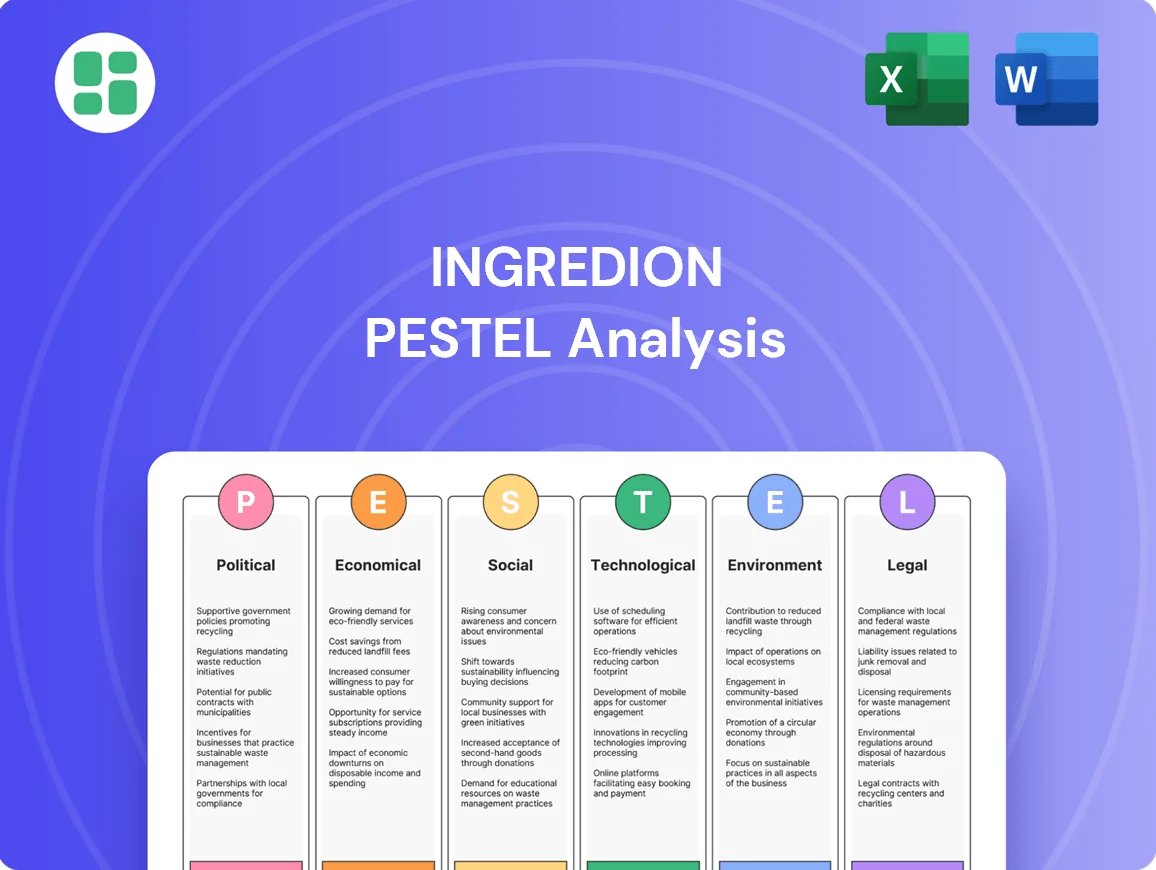
WesBanco PESTLE Analysis

Your Shortcut to Market Insight Starts Here
Navigate the complex external environment impacting WesBanco with our comprehensive PESTLE analysis. Understand the political, economic, social, technological, legal, and environmental factors shaping its strategic landscape. This ready-to-use analysis provides actionable intelligence for investors and planners. Download the full version now to gain a competitive edge.
Political factors

Government Policy and Regulatory Environment
Government policies, especially those concerning banking and consumer protection, significantly shape WesBanco's operational landscape. For instance, the Federal Reserve's interest rate decisions directly affect lending margins, a key component of bank profitability.
Shifts in regulations from bodies like the FDIC and CFPB can alter capital requirements and compliance burdens. In 2024, the banking sector has seen continued focus on cybersecurity, with institutions investing heavily to meet evolving threats, impacting operational costs.
The current political climate might introduce new legislative priorities, potentially easing some existing regulatory pressures while simultaneously creating new compliance areas, such as enhanced data privacy measures following recent data breaches impacting financial institutions.
Trade and Economic Protectionism
Trade and economic protectionism significantly influence WesBanco's operating environment. For instance, the U.S. imposed tariffs on goods from China starting in 2018, impacting supply chains and manufacturing costs for many businesses WesBanco serves. These policies can create uncertainty, potentially dampening business investment and loan demand.
Conversely, government initiatives aimed at bolstering domestic industries, such as those seen in the 2024 manufacturing reshoring trends, could stimulate economic activity. This might translate into increased lending opportunities for WesBanco as businesses expand or modernize their domestic operations.

Political Stability and Geopolitical Risks
WesBanco's operational focus within the United States means domestic political stability is paramount. The 2024 US presidential election cycle, for instance, could introduce policy uncertainty, potentially impacting regulatory environments and economic growth forecasts. While WesBanco isn't directly exposed to international conflict zones, global geopolitical events can still influence financial markets through ripple effects on interest rates and investor sentiment, as seen with past supply chain disruptions stemming from international tensions.

Fiscal and Monetary Policy Changes
Government fiscal policies, including taxation and spending, alongside central bank monetary policies like interest rate adjustments, significantly shape the banking landscape. For WesBanco, shifts in these areas directly impact its net interest margin, the demand for its loans, and the performance of its investment holdings. For instance, the Federal Reserve's monetary policy decisions are paramount.
The Federal Reserve's stance on interest rates is a key driver for banks like WesBanco. As of early 2024, the market anticipates potential rate reductions later in the year, a move that would directly influence WesBanco's profitability. Changes in long-term rates also play a crucial role in shaping the bank's growth outlook.
- Federal Reserve Interest Rate Policy: Anticipated gradual rate reductions in 2024 could compress net interest margins but potentially stimulate loan demand.
- Fiscal Stimulus Measures: Government spending initiatives could boost economic activity, leading to increased deposit growth and loan origination for WesBanco.
- Inflationary Environment: Persistent inflation might necessitate higher interest rates, which could initially benefit net interest margins but also increase the risk of loan defaults.
- Taxation Policies: Changes in corporate tax rates could directly affect WesBanco's bottom line and its ability to reinvest earnings.
Government Support and Intervention
Government support and intervention significantly shape the landscape for regional banks like WesBanco. Measures aimed at ensuring financial stability, particularly in response to economic downturns, can directly influence operational strategies and risk management. For instance, the Federal Reserve's actions during periods of market stress, such as liquidity facilities, provide a crucial backstop that can mitigate systemic risks for institutions.
Policies governing bank mergers and de novo (new bank) formations present both opportunities and challenges. Streamlined regulatory reviews, as seen in potential shifts following recent financial industry discussions, could facilitate WesBanco's pursuit of strategic acquisitions, thereby enabling faster market penetration or diversification. Conversely, stringent capital requirements or limitations on branch expansion can act as constraints on growth.
The regulatory environment, including capital adequacy ratios and stress testing mandates, directly impacts a bank's ability to lend and invest. For example, the Community Reinvestment Act (CRA) encourages lending in underserved communities, which can foster goodwill and business development.
- Government support for regional banks can include access to liquidity facilities during economic stress, as seen in past Federal Reserve programs.
- Regulatory reviews may simplify merger approval processes, potentially benefiting WesBanco's expansion plans.
- Policies like the Community Reinvestment Act encourage lending in specific areas, influencing business strategy.
- Changes in capital requirements directly affect a bank's capacity for lending and investment.
Policy and Regulation: The Bank's 2024 Economic Compass
Government policies, particularly monetary policy set by the Federal Reserve, are critical for WesBanco. Anticipated interest rate adjustments in 2024, with potential cuts, will directly influence the bank's net interest margins and loan demand. Fiscal policies, including government spending and taxation, also play a significant role in economic growth, impacting WesBanco's overall business environment.
Regulatory changes from bodies like the FDIC and OCC continue to shape WesBanco's operations, with a strong emphasis on cybersecurity and consumer protection in 2024. Compliance with evolving standards, such as those related to data privacy and risk management, adds to operational costs but is essential for maintaining trust and stability.
Political stability within the United States is paramount for WesBanco, as domestic policy shifts can create uncertainty. The 2024 election cycle, for example, could lead to changes in regulatory approaches or economic stimulus measures, directly affecting the bank's strategic planning and growth prospects.
| Policy Area | 2024 Impact/Outlook | WesBanco Relevance |
|---|---|---|
| Monetary Policy (Fed Rates) | Anticipated gradual rate cuts in 2024. | Affects net interest margin, loan origination volume. |
| Fiscal Policy (Spending/Taxation) | Government spending initiatives may boost economic activity. | Influences deposit growth and business investment, impacting loan demand. |
| Regulatory Focus (Cybersecurity) | Increased investment required for compliance and threat mitigation. | Directly impacts operational costs and risk management strategies. |
| Political Stability (Elections) | Potential for policy uncertainty impacting economic outlook. | Requires adaptive strategic planning and risk assessment. |
What is included in the product
 Detailed Word Document
This WesBanco PESTLE analysis examines the Political, Economic, Social, Technological, Environmental, and Legal factors influencing its operations, providing a comprehensive overview of the external landscape.

 Customizable Excel Spreadsheet
Provides a concise version that can be dropped into PowerPoints or used in group planning sessions, translating complex PESTLE factors into actionable insights for WesBanco.
Helps support discussions on external risk and market positioning during planning sessions, offering a clear framework to identify and address potential challenges for WesBanco.
Economic factors

Interest Rate Fluctuations
Interest rate fluctuations, a key economic factor, directly impact WesBanco's core business. Changes in rates, influenced by the Federal Reserve and market dynamics, alter the spread WesBanco earns on loans versus the cost of deposits. For instance, if the Federal Reserve raises the federal funds rate, WesBanco's borrowing costs will likely increase, potentially squeezing its net interest margin (NIM).
In 2024, the Federal Reserve maintained a target range for the federal funds rate, with discussions around potential cuts later in the year. This environment creates a dynamic where WesBanco must actively manage its balance sheet to navigate potential margin compression or expansion. For example, if rates fall significantly, the bank might see lower returns on its interest-earning assets, affecting overall profitability.
Economic Growth and Recession Risks
WesBanco's performance is closely tied to the economic pulse of the Midwest and Eastern U.S. In 2024, the U.S. GDP growth is projected to be around 2.2%, a slight slowdown from previous years but indicating continued expansion. This environment generally supports WesBanco's loan portfolio, with expectations of stable credit quality and moderate new business generation.
However, recession risks, though currently subdued, remain a key consideration. Should economic headwinds intensify, leading to a contraction, WesBanco could face increased non-performing loans as borrowers struggle. For instance, a 1% rise in unemployment, a common recessionary indicator, could strain borrower capacity and impact loan performance.
Looking ahead into 2025, economic forecasts anticipate a continued, albeit potentially slower, growth trajectory. This suggests that while the immediate outlook for WesBanco is generally positive, vigilance regarding potential economic downturns and their impact on loan demand and credit risk remains crucial for strategic planning.

Inflation and Purchasing Power
Inflation significantly erodes purchasing power, impacting consumer spending and saving habits. For WesBanco, this means potential shifts in deposit growth as individuals may spend more due to rising prices or save more cautiously. Higher inflation also increases operating costs, from salaries to technology investments, potentially squeezing profit margins.
The Federal Reserve's target inflation rate is 2%, but recent data shows fluctuations. For instance, the Consumer Price Index (CPI) in the U.S. saw a year-over-year increase of 3.4% as of April 2024. Persistent inflation above this target can lead to higher interest rates, which might dampen loan demand as borrowing becomes more expensive for businesses and consumers.
Furthermore, sustained high inflation can pressure WesBanco's asset quality. If businesses and individuals struggle to keep up with rising costs, their ability to service loans may decline, potentially leading to an increase in non-performing loans. A stable inflation environment, conversely, fosters predictability, allowing WesBanco to plan more effectively for future lending and investment strategies.

Unemployment Rates and Labor Market Conditions
Unemployment rates and the overall health of the labor market are critical economic indicators that directly impact WesBanco's operations. When unemployment is low, consumers have more disposable income, leading to increased spending and demand for banking services like loans and mortgages. Businesses also tend to expand and invest more during periods of robust employment, boosting demand for corporate banking solutions. For instance, the U.S. unemployment rate remained historically low through much of 2023 and early 2024, hovering around 3.7%-4.0%, which generally supported strong consumer credit quality and loan growth for financial institutions like WesBanco.
Conversely, a rising unemployment rate can signal economic headwinds, potentially leading to increased loan delinquencies and a slowdown in new lending activity. This can affect WesBanco's profitability through higher provisions for loan losses and reduced interest income. Recent trends suggest a gradual cooling of the labor market, with some sectors experiencing layoffs. This shift necessitates careful monitoring of credit portfolios and a strategic approach to risk management.
Key labor market statistics to consider for WesBanco's analysis include:
- U.S. Unemployment Rate: As of May 2024, the U.S. unemployment rate stood at 4.0%, a slight increase from earlier in the year, indicating a normalizing labor market.
- Job Openings vs. Hires: The ratio of job openings to hires provides insight into labor demand. While still elevated, this ratio has shown signs of decreasing, suggesting a less tight labor market.
- Wage Growth: Moderate wage growth supports consumer spending, but excessively high growth could fuel inflation and prompt tighter monetary policy, impacting borrowing costs. Average hourly earnings growth has shown some moderation in early 2024.
- Labor Force Participation Rate: This metric indicates the proportion of the working-age population that is employed or actively seeking employment. A stable or increasing participation rate is generally positive for economic growth.
Consumer Spending and Debt Levels
Consumer spending is a crucial driver for retail banking, directly influencing demand for loans and credit cards. In 2024, consumer spending showed resilience, with retail sales increasing by an estimated 3.5% year-over-year, according to early Commerce Department data. This robust activity benefits WesBanco by potentially increasing its deposit base and fueling loan origination.
However, household debt levels present a dual-edged sword. While manageable debt can support spending, elevated levels can strain borrowers and impact loan repayment. As of the second quarter of 2024, total household debt in the U.S. reached approximately $17.7 trillion, with credit card debt seeing a notable increase. This trend requires WesBanco to carefully manage its credit risk exposure.
- Consumer Spending Growth: Expected to remain a key economic driver through 2025, supporting demand for WesBanco's retail financial products.
- Household Debt Dynamics: Continued increases in credit card balances may present opportunities for balance transfer products but also elevate default risk for WesBanco.
- Impact on WesBanco: Strong consumer spending bolsters deposit growth and loan demand, while high debt necessitates prudent credit underwriting.
Economic Factors Shaping Banking Operations
Economic factors significantly shape WesBanco's operational landscape, particularly concerning interest rates and inflation. The Federal Reserve's monetary policy, aimed at managing inflation around the 2% target, directly influences WesBanco's net interest margins. For instance, the U.S. CPI showed a 3.4% year-over-year increase as of April 2024, a figure above the target, potentially leading to sustained higher borrowing costs.
The health of the labor market, evidenced by the U.S. unemployment rate which stood at 4.0% in May 2024, is another critical economic determinant. Low unemployment generally supports robust consumer spending and credit quality, benefiting WesBanco through increased loan demand and lower default rates. Conversely, rising unemployment can signal economic contraction, posing risks to loan portfolios.
Consumer spending, a key driver for retail banking, demonstrated resilience in 2024, with retail sales projected to grow around 3.5% year-over-year. This trend supports WesBanco's deposit growth and loan origination efforts. However, the increase in household debt, reaching approximately $17.7 trillion by Q2 2024, necessitates careful credit risk management.
| Economic Factor | 2024 Data/Projection | Impact on WesBanco |
|---|---|---|
| Federal Funds Rate Target | Range maintained, potential cuts later in 2024 | Affects NIM, borrowing costs, and lending rates |
| U.S. GDP Growth Projection | ~2.2% | Supports loan portfolio and new business generation |
| U.S. CPI (YoY) | 3.4% (April 2024) | May lead to higher interest rates, impacting loan demand and operating costs |
| U.S. Unemployment Rate | 4.0% (May 2024) | Low rate supports consumer spending and credit quality; rising rate poses risk |
| Consumer Spending Growth Projection | ~3.5% | Boosts deposit growth and loan origination |
| Total Household Debt | ~$17.7 trillion (Q2 2024) | Elevated levels require prudent credit underwriting |
Preview the Actual Deliverable
WesBanco PESTLE Analysis
The preview shown here is the exact document you’ll receive after purchase—fully formatted and ready to use. This comprehensive WesBanco PESTLE analysis delves into the Political, Economic, Social, Technological, Legal, and Environmental factors impacting the company. It provides actionable insights for strategic planning.

Product Information
Product Information
Shipping & Returns
Shipping & Returns
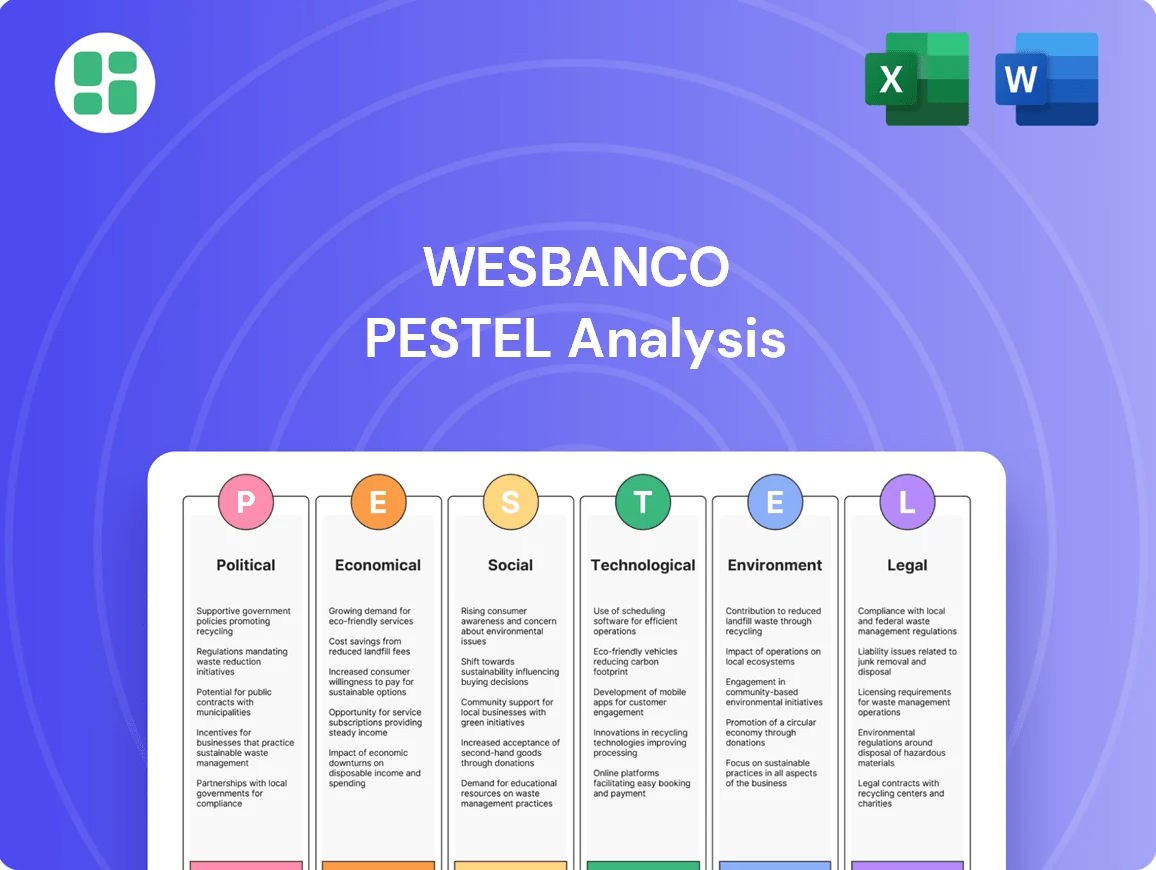
WesBanco PESTLE Analysis
WesBanco PESTLE Analysis
Your Shortcut to Market Insight Starts Here
Navigate the complex external environment impacting WesBanco with our comprehensive PESTLE analysis. Understand the political, economic, social, technological, legal, and environmental factors shaping its strategic landscape. This ready-to-use analysis provides actionable intelligence for investors and planners. Download the full version now to gain a competitive edge.
Political factors
Government Policy and Regulatory Environment
Government policies, especially those concerning banking and consumer protection, significantly shape WesBanco's operational landscape. For instance, the Federal Reserve's interest rate decisions directly affect lending margins, a key component of bank profitability.
Shifts in regulations from bodies like the FDIC and CFPB can alter capital requirements and compliance burdens. In 2024, the banking sector has seen continued focus on cybersecurity, with institutions investing heavily to meet evolving threats, impacting operational costs.
The current political climate might introduce new legislative priorities, potentially easing some existing regulatory pressures while simultaneously creating new compliance areas, such as enhanced data privacy measures following recent data breaches impacting financial institutions.
Trade and Economic Protectionism
Trade and economic protectionism significantly influence WesBanco's operating environment. For instance, the U.S. imposed tariffs on goods from China starting in 2018, impacting supply chains and manufacturing costs for many businesses WesBanco serves. These policies can create uncertainty, potentially dampening business investment and loan demand.
Conversely, government initiatives aimed at bolstering domestic industries, such as those seen in the 2024 manufacturing reshoring trends, could stimulate economic activity. This might translate into increased lending opportunities for WesBanco as businesses expand or modernize their domestic operations.
Political Stability and Geopolitical Risks
WesBanco's operational focus within the United States means domestic political stability is paramount. The 2024 US presidential election cycle, for instance, could introduce policy uncertainty, potentially impacting regulatory environments and economic growth forecasts. While WesBanco isn't directly exposed to international conflict zones, global geopolitical events can still influence financial markets through ripple effects on interest rates and investor sentiment, as seen with past supply chain disruptions stemming from international tensions.
Fiscal and Monetary Policy Changes
Government fiscal policies, including taxation and spending, alongside central bank monetary policies like interest rate adjustments, significantly shape the banking landscape. For WesBanco, shifts in these areas directly impact its net interest margin, the demand for its loans, and the performance of its investment holdings. For instance, the Federal Reserve's monetary policy decisions are paramount.
The Federal Reserve's stance on interest rates is a key driver for banks like WesBanco. As of early 2024, the market anticipates potential rate reductions later in the year, a move that would directly influence WesBanco's profitability. Changes in long-term rates also play a crucial role in shaping the bank's growth outlook.
- Federal Reserve Interest Rate Policy: Anticipated gradual rate reductions in 2024 could compress net interest margins but potentially stimulate loan demand.
- Fiscal Stimulus Measures: Government spending initiatives could boost economic activity, leading to increased deposit growth and loan origination for WesBanco.
- Inflationary Environment: Persistent inflation might necessitate higher interest rates, which could initially benefit net interest margins but also increase the risk of loan defaults.
- Taxation Policies: Changes in corporate tax rates could directly affect WesBanco's bottom line and its ability to reinvest earnings.
Government Support and Intervention
Government support and intervention significantly shape the landscape for regional banks like WesBanco. Measures aimed at ensuring financial stability, particularly in response to economic downturns, can directly influence operational strategies and risk management. For instance, the Federal Reserve's actions during periods of market stress, such as liquidity facilities, provide a crucial backstop that can mitigate systemic risks for institutions.
Policies governing bank mergers and de novo (new bank) formations present both opportunities and challenges. Streamlined regulatory reviews, as seen in potential shifts following recent financial industry discussions, could facilitate WesBanco's pursuit of strategic acquisitions, thereby enabling faster market penetration or diversification. Conversely, stringent capital requirements or limitations on branch expansion can act as constraints on growth.
The regulatory environment, including capital adequacy ratios and stress testing mandates, directly impacts a bank's ability to lend and invest. For example, the Community Reinvestment Act (CRA) encourages lending in underserved communities, which can foster goodwill and business development.
- Government support for regional banks can include access to liquidity facilities during economic stress, as seen in past Federal Reserve programs.
- Regulatory reviews may simplify merger approval processes, potentially benefiting WesBanco's expansion plans.
- Policies like the Community Reinvestment Act encourage lending in specific areas, influencing business strategy.
- Changes in capital requirements directly affect a bank's capacity for lending and investment.
Policy and Regulation: The Bank's 2024 Economic Compass
Government policies, particularly monetary policy set by the Federal Reserve, are critical for WesBanco. Anticipated interest rate adjustments in 2024, with potential cuts, will directly influence the bank's net interest margins and loan demand. Fiscal policies, including government spending and taxation, also play a significant role in economic growth, impacting WesBanco's overall business environment.
Regulatory changes from bodies like the FDIC and OCC continue to shape WesBanco's operations, with a strong emphasis on cybersecurity and consumer protection in 2024. Compliance with evolving standards, such as those related to data privacy and risk management, adds to operational costs but is essential for maintaining trust and stability.
Political stability within the United States is paramount for WesBanco, as domestic policy shifts can create uncertainty. The 2024 election cycle, for example, could lead to changes in regulatory approaches or economic stimulus measures, directly affecting the bank's strategic planning and growth prospects.
| Policy Area | 2024 Impact/Outlook | WesBanco Relevance |
|---|---|---|
| Monetary Policy (Fed Rates) | Anticipated gradual rate cuts in 2024. | Affects net interest margin, loan origination volume. |
| Fiscal Policy (Spending/Taxation) | Government spending initiatives may boost economic activity. | Influences deposit growth and business investment, impacting loan demand. |
| Regulatory Focus (Cybersecurity) | Increased investment required for compliance and threat mitigation. | Directly impacts operational costs and risk management strategies. |
| Political Stability (Elections) | Potential for policy uncertainty impacting economic outlook. | Requires adaptive strategic planning and risk assessment. |
What is included in the product
Detailed Word Document
This WesBanco PESTLE analysis examines the Political, Economic, Social, Technological, Environmental, and Legal factors influencing its operations, providing a comprehensive overview of the external landscape.
Customizable Excel Spreadsheet
Provides a concise version that can be dropped into PowerPoints or used in group planning sessions, translating complex PESTLE factors into actionable insights for WesBanco.
Helps support discussions on external risk and market positioning during planning sessions, offering a clear framework to identify and address potential challenges for WesBanco.
Economic factors
Interest Rate Fluctuations
Interest rate fluctuations, a key economic factor, directly impact WesBanco's core business. Changes in rates, influenced by the Federal Reserve and market dynamics, alter the spread WesBanco earns on loans versus the cost of deposits. For instance, if the Federal Reserve raises the federal funds rate, WesBanco's borrowing costs will likely increase, potentially squeezing its net interest margin (NIM).
In 2024, the Federal Reserve maintained a target range for the federal funds rate, with discussions around potential cuts later in the year. This environment creates a dynamic where WesBanco must actively manage its balance sheet to navigate potential margin compression or expansion. For example, if rates fall significantly, the bank might see lower returns on its interest-earning assets, affecting overall profitability.
Economic Growth and Recession Risks
WesBanco's performance is closely tied to the economic pulse of the Midwest and Eastern U.S. In 2024, the U.S. GDP growth is projected to be around 2.2%, a slight slowdown from previous years but indicating continued expansion. This environment generally supports WesBanco's loan portfolio, with expectations of stable credit quality and moderate new business generation.
However, recession risks, though currently subdued, remain a key consideration. Should economic headwinds intensify, leading to a contraction, WesBanco could face increased non-performing loans as borrowers struggle. For instance, a 1% rise in unemployment, a common recessionary indicator, could strain borrower capacity and impact loan performance.
Looking ahead into 2025, economic forecasts anticipate a continued, albeit potentially slower, growth trajectory. This suggests that while the immediate outlook for WesBanco is generally positive, vigilance regarding potential economic downturns and their impact on loan demand and credit risk remains crucial for strategic planning.
Inflation and Purchasing Power
Inflation significantly erodes purchasing power, impacting consumer spending and saving habits. For WesBanco, this means potential shifts in deposit growth as individuals may spend more due to rising prices or save more cautiously. Higher inflation also increases operating costs, from salaries to technology investments, potentially squeezing profit margins.
The Federal Reserve's target inflation rate is 2%, but recent data shows fluctuations. For instance, the Consumer Price Index (CPI) in the U.S. saw a year-over-year increase of 3.4% as of April 2024. Persistent inflation above this target can lead to higher interest rates, which might dampen loan demand as borrowing becomes more expensive for businesses and consumers.
Furthermore, sustained high inflation can pressure WesBanco's asset quality. If businesses and individuals struggle to keep up with rising costs, their ability to service loans may decline, potentially leading to an increase in non-performing loans. A stable inflation environment, conversely, fosters predictability, allowing WesBanco to plan more effectively for future lending and investment strategies.
Unemployment Rates and Labor Market Conditions
Unemployment rates and the overall health of the labor market are critical economic indicators that directly impact WesBanco's operations. When unemployment is low, consumers have more disposable income, leading to increased spending and demand for banking services like loans and mortgages. Businesses also tend to expand and invest more during periods of robust employment, boosting demand for corporate banking solutions. For instance, the U.S. unemployment rate remained historically low through much of 2023 and early 2024, hovering around 3.7%-4.0%, which generally supported strong consumer credit quality and loan growth for financial institutions like WesBanco.
Conversely, a rising unemployment rate can signal economic headwinds, potentially leading to increased loan delinquencies and a slowdown in new lending activity. This can affect WesBanco's profitability through higher provisions for loan losses and reduced interest income. Recent trends suggest a gradual cooling of the labor market, with some sectors experiencing layoffs. This shift necessitates careful monitoring of credit portfolios and a strategic approach to risk management.
Key labor market statistics to consider for WesBanco's analysis include:
- U.S. Unemployment Rate: As of May 2024, the U.S. unemployment rate stood at 4.0%, a slight increase from earlier in the year, indicating a normalizing labor market.
- Job Openings vs. Hires: The ratio of job openings to hires provides insight into labor demand. While still elevated, this ratio has shown signs of decreasing, suggesting a less tight labor market.
- Wage Growth: Moderate wage growth supports consumer spending, but excessively high growth could fuel inflation and prompt tighter monetary policy, impacting borrowing costs. Average hourly earnings growth has shown some moderation in early 2024.
- Labor Force Participation Rate: This metric indicates the proportion of the working-age population that is employed or actively seeking employment. A stable or increasing participation rate is generally positive for economic growth.
Consumer Spending and Debt Levels
Consumer spending is a crucial driver for retail banking, directly influencing demand for loans and credit cards. In 2024, consumer spending showed resilience, with retail sales increasing by an estimated 3.5% year-over-year, according to early Commerce Department data. This robust activity benefits WesBanco by potentially increasing its deposit base and fueling loan origination.
However, household debt levels present a dual-edged sword. While manageable debt can support spending, elevated levels can strain borrowers and impact loan repayment. As of the second quarter of 2024, total household debt in the U.S. reached approximately $17.7 trillion, with credit card debt seeing a notable increase. This trend requires WesBanco to carefully manage its credit risk exposure.
- Consumer Spending Growth: Expected to remain a key economic driver through 2025, supporting demand for WesBanco's retail financial products.
- Household Debt Dynamics: Continued increases in credit card balances may present opportunities for balance transfer products but also elevate default risk for WesBanco.
- Impact on WesBanco: Strong consumer spending bolsters deposit growth and loan demand, while high debt necessitates prudent credit underwriting.
Economic Factors Shaping Banking Operations
Economic factors significantly shape WesBanco's operational landscape, particularly concerning interest rates and inflation. The Federal Reserve's monetary policy, aimed at managing inflation around the 2% target, directly influences WesBanco's net interest margins. For instance, the U.S. CPI showed a 3.4% year-over-year increase as of April 2024, a figure above the target, potentially leading to sustained higher borrowing costs.
The health of the labor market, evidenced by the U.S. unemployment rate which stood at 4.0% in May 2024, is another critical economic determinant. Low unemployment generally supports robust consumer spending and credit quality, benefiting WesBanco through increased loan demand and lower default rates. Conversely, rising unemployment can signal economic contraction, posing risks to loan portfolios.
Consumer spending, a key driver for retail banking, demonstrated resilience in 2024, with retail sales projected to grow around 3.5% year-over-year. This trend supports WesBanco's deposit growth and loan origination efforts. However, the increase in household debt, reaching approximately $17.7 trillion by Q2 2024, necessitates careful credit risk management.
| Economic Factor | 2024 Data/Projection | Impact on WesBanco |
|---|---|---|
| Federal Funds Rate Target | Range maintained, potential cuts later in 2024 | Affects NIM, borrowing costs, and lending rates |
| U.S. GDP Growth Projection | ~2.2% | Supports loan portfolio and new business generation |
| U.S. CPI (YoY) | 3.4% (April 2024) | May lead to higher interest rates, impacting loan demand and operating costs |
| U.S. Unemployment Rate | 4.0% (May 2024) | Low rate supports consumer spending and credit quality; rising rate poses risk |
| Consumer Spending Growth Projection | ~3.5% | Boosts deposit growth and loan origination |
| Total Household Debt | ~$17.7 trillion (Q2 2024) | Elevated levels require prudent credit underwriting |
Preview the Actual Deliverable
WesBanco PESTLE Analysis
The preview shown here is the exact document you’ll receive after purchase—fully formatted and ready to use. This comprehensive WesBanco PESTLE analysis delves into the Political, Economic, Social, Technological, Legal, and Environmental factors impacting the company. It provides actionable insights for strategic planning.
Product Information
Product Information
Shipping & Returns
Shipping & Returns
Description
Your Shortcut to Market Insight Starts Here
Navigate the complex external environment impacting WesBanco with our comprehensive PESTLE analysis. Understand the political, economic, social, technological, legal, and environmental factors shaping its strategic landscape. This ready-to-use analysis provides actionable intelligence for investors and planners. Download the full version now to gain a competitive edge.
Political factors
Government Policy and Regulatory Environment
Government policies, especially those concerning banking and consumer protection, significantly shape WesBanco's operational landscape. For instance, the Federal Reserve's interest rate decisions directly affect lending margins, a key component of bank profitability.
Shifts in regulations from bodies like the FDIC and CFPB can alter capital requirements and compliance burdens. In 2024, the banking sector has seen continued focus on cybersecurity, with institutions investing heavily to meet evolving threats, impacting operational costs.
The current political climate might introduce new legislative priorities, potentially easing some existing regulatory pressures while simultaneously creating new compliance areas, such as enhanced data privacy measures following recent data breaches impacting financial institutions.
Trade and Economic Protectionism
Trade and economic protectionism significantly influence WesBanco's operating environment. For instance, the U.S. imposed tariffs on goods from China starting in 2018, impacting supply chains and manufacturing costs for many businesses WesBanco serves. These policies can create uncertainty, potentially dampening business investment and loan demand.
Conversely, government initiatives aimed at bolstering domestic industries, such as those seen in the 2024 manufacturing reshoring trends, could stimulate economic activity. This might translate into increased lending opportunities for WesBanco as businesses expand or modernize their domestic operations.
Political Stability and Geopolitical Risks
WesBanco's operational focus within the United States means domestic political stability is paramount. The 2024 US presidential election cycle, for instance, could introduce policy uncertainty, potentially impacting regulatory environments and economic growth forecasts. While WesBanco isn't directly exposed to international conflict zones, global geopolitical events can still influence financial markets through ripple effects on interest rates and investor sentiment, as seen with past supply chain disruptions stemming from international tensions.
Fiscal and Monetary Policy Changes
Government fiscal policies, including taxation and spending, alongside central bank monetary policies like interest rate adjustments, significantly shape the banking landscape. For WesBanco, shifts in these areas directly impact its net interest margin, the demand for its loans, and the performance of its investment holdings. For instance, the Federal Reserve's monetary policy decisions are paramount.
The Federal Reserve's stance on interest rates is a key driver for banks like WesBanco. As of early 2024, the market anticipates potential rate reductions later in the year, a move that would directly influence WesBanco's profitability. Changes in long-term rates also play a crucial role in shaping the bank's growth outlook.
- Federal Reserve Interest Rate Policy: Anticipated gradual rate reductions in 2024 could compress net interest margins but potentially stimulate loan demand.
- Fiscal Stimulus Measures: Government spending initiatives could boost economic activity, leading to increased deposit growth and loan origination for WesBanco.
- Inflationary Environment: Persistent inflation might necessitate higher interest rates, which could initially benefit net interest margins but also increase the risk of loan defaults.
- Taxation Policies: Changes in corporate tax rates could directly affect WesBanco's bottom line and its ability to reinvest earnings.
Government Support and Intervention
Government support and intervention significantly shape the landscape for regional banks like WesBanco. Measures aimed at ensuring financial stability, particularly in response to economic downturns, can directly influence operational strategies and risk management. For instance, the Federal Reserve's actions during periods of market stress, such as liquidity facilities, provide a crucial backstop that can mitigate systemic risks for institutions.
Policies governing bank mergers and de novo (new bank) formations present both opportunities and challenges. Streamlined regulatory reviews, as seen in potential shifts following recent financial industry discussions, could facilitate WesBanco's pursuit of strategic acquisitions, thereby enabling faster market penetration or diversification. Conversely, stringent capital requirements or limitations on branch expansion can act as constraints on growth.
The regulatory environment, including capital adequacy ratios and stress testing mandates, directly impacts a bank's ability to lend and invest. For example, the Community Reinvestment Act (CRA) encourages lending in underserved communities, which can foster goodwill and business development.
- Government support for regional banks can include access to liquidity facilities during economic stress, as seen in past Federal Reserve programs.
- Regulatory reviews may simplify merger approval processes, potentially benefiting WesBanco's expansion plans.
- Policies like the Community Reinvestment Act encourage lending in specific areas, influencing business strategy.
- Changes in capital requirements directly affect a bank's capacity for lending and investment.
Policy and Regulation: The Bank's 2024 Economic Compass
Government policies, particularly monetary policy set by the Federal Reserve, are critical for WesBanco. Anticipated interest rate adjustments in 2024, with potential cuts, will directly influence the bank's net interest margins and loan demand. Fiscal policies, including government spending and taxation, also play a significant role in economic growth, impacting WesBanco's overall business environment.
Regulatory changes from bodies like the FDIC and OCC continue to shape WesBanco's operations, with a strong emphasis on cybersecurity and consumer protection in 2024. Compliance with evolving standards, such as those related to data privacy and risk management, adds to operational costs but is essential for maintaining trust and stability.
Political stability within the United States is paramount for WesBanco, as domestic policy shifts can create uncertainty. The 2024 election cycle, for example, could lead to changes in regulatory approaches or economic stimulus measures, directly affecting the bank's strategic planning and growth prospects.
| Policy Area | 2024 Impact/Outlook | WesBanco Relevance |
|---|---|---|
| Monetary Policy (Fed Rates) | Anticipated gradual rate cuts in 2024. | Affects net interest margin, loan origination volume. |
| Fiscal Policy (Spending/Taxation) | Government spending initiatives may boost economic activity. | Influences deposit growth and business investment, impacting loan demand. |
| Regulatory Focus (Cybersecurity) | Increased investment required for compliance and threat mitigation. | Directly impacts operational costs and risk management strategies. |
| Political Stability (Elections) | Potential for policy uncertainty impacting economic outlook. | Requires adaptive strategic planning and risk assessment. |
What is included in the product
Detailed Word Document
This WesBanco PESTLE analysis examines the Political, Economic, Social, Technological, Environmental, and Legal factors influencing its operations, providing a comprehensive overview of the external landscape.
Customizable Excel Spreadsheet
Provides a concise version that can be dropped into PowerPoints or used in group planning sessions, translating complex PESTLE factors into actionable insights for WesBanco.
Helps support discussions on external risk and market positioning during planning sessions, offering a clear framework to identify and address potential challenges for WesBanco.
Economic factors
Interest Rate Fluctuations
Interest rate fluctuations, a key economic factor, directly impact WesBanco's core business. Changes in rates, influenced by the Federal Reserve and market dynamics, alter the spread WesBanco earns on loans versus the cost of deposits. For instance, if the Federal Reserve raises the federal funds rate, WesBanco's borrowing costs will likely increase, potentially squeezing its net interest margin (NIM).
In 2024, the Federal Reserve maintained a target range for the federal funds rate, with discussions around potential cuts later in the year. This environment creates a dynamic where WesBanco must actively manage its balance sheet to navigate potential margin compression or expansion. For example, if rates fall significantly, the bank might see lower returns on its interest-earning assets, affecting overall profitability.
Economic Growth and Recession Risks
WesBanco's performance is closely tied to the economic pulse of the Midwest and Eastern U.S. In 2024, the U.S. GDP growth is projected to be around 2.2%, a slight slowdown from previous years but indicating continued expansion. This environment generally supports WesBanco's loan portfolio, with expectations of stable credit quality and moderate new business generation.
However, recession risks, though currently subdued, remain a key consideration. Should economic headwinds intensify, leading to a contraction, WesBanco could face increased non-performing loans as borrowers struggle. For instance, a 1% rise in unemployment, a common recessionary indicator, could strain borrower capacity and impact loan performance.
Looking ahead into 2025, economic forecasts anticipate a continued, albeit potentially slower, growth trajectory. This suggests that while the immediate outlook for WesBanco is generally positive, vigilance regarding potential economic downturns and their impact on loan demand and credit risk remains crucial for strategic planning.
Inflation and Purchasing Power
Inflation significantly erodes purchasing power, impacting consumer spending and saving habits. For WesBanco, this means potential shifts in deposit growth as individuals may spend more due to rising prices or save more cautiously. Higher inflation also increases operating costs, from salaries to technology investments, potentially squeezing profit margins.
The Federal Reserve's target inflation rate is 2%, but recent data shows fluctuations. For instance, the Consumer Price Index (CPI) in the U.S. saw a year-over-year increase of 3.4% as of April 2024. Persistent inflation above this target can lead to higher interest rates, which might dampen loan demand as borrowing becomes more expensive for businesses and consumers.
Furthermore, sustained high inflation can pressure WesBanco's asset quality. If businesses and individuals struggle to keep up with rising costs, their ability to service loans may decline, potentially leading to an increase in non-performing loans. A stable inflation environment, conversely, fosters predictability, allowing WesBanco to plan more effectively for future lending and investment strategies.
Unemployment Rates and Labor Market Conditions
Unemployment rates and the overall health of the labor market are critical economic indicators that directly impact WesBanco's operations. When unemployment is low, consumers have more disposable income, leading to increased spending and demand for banking services like loans and mortgages. Businesses also tend to expand and invest more during periods of robust employment, boosting demand for corporate banking solutions. For instance, the U.S. unemployment rate remained historically low through much of 2023 and early 2024, hovering around 3.7%-4.0%, which generally supported strong consumer credit quality and loan growth for financial institutions like WesBanco.
Conversely, a rising unemployment rate can signal economic headwinds, potentially leading to increased loan delinquencies and a slowdown in new lending activity. This can affect WesBanco's profitability through higher provisions for loan losses and reduced interest income. Recent trends suggest a gradual cooling of the labor market, with some sectors experiencing layoffs. This shift necessitates careful monitoring of credit portfolios and a strategic approach to risk management.
Key labor market statistics to consider for WesBanco's analysis include:
- U.S. Unemployment Rate: As of May 2024, the U.S. unemployment rate stood at 4.0%, a slight increase from earlier in the year, indicating a normalizing labor market.
- Job Openings vs. Hires: The ratio of job openings to hires provides insight into labor demand. While still elevated, this ratio has shown signs of decreasing, suggesting a less tight labor market.
- Wage Growth: Moderate wage growth supports consumer spending, but excessively high growth could fuel inflation and prompt tighter monetary policy, impacting borrowing costs. Average hourly earnings growth has shown some moderation in early 2024.
- Labor Force Participation Rate: This metric indicates the proportion of the working-age population that is employed or actively seeking employment. A stable or increasing participation rate is generally positive for economic growth.
Consumer Spending and Debt Levels
Consumer spending is a crucial driver for retail banking, directly influencing demand for loans and credit cards. In 2024, consumer spending showed resilience, with retail sales increasing by an estimated 3.5% year-over-year, according to early Commerce Department data. This robust activity benefits WesBanco by potentially increasing its deposit base and fueling loan origination.
However, household debt levels present a dual-edged sword. While manageable debt can support spending, elevated levels can strain borrowers and impact loan repayment. As of the second quarter of 2024, total household debt in the U.S. reached approximately $17.7 trillion, with credit card debt seeing a notable increase. This trend requires WesBanco to carefully manage its credit risk exposure.
- Consumer Spending Growth: Expected to remain a key economic driver through 2025, supporting demand for WesBanco's retail financial products.
- Household Debt Dynamics: Continued increases in credit card balances may present opportunities for balance transfer products but also elevate default risk for WesBanco.
- Impact on WesBanco: Strong consumer spending bolsters deposit growth and loan demand, while high debt necessitates prudent credit underwriting.
Economic Factors Shaping Banking Operations
Economic factors significantly shape WesBanco's operational landscape, particularly concerning interest rates and inflation. The Federal Reserve's monetary policy, aimed at managing inflation around the 2% target, directly influences WesBanco's net interest margins. For instance, the U.S. CPI showed a 3.4% year-over-year increase as of April 2024, a figure above the target, potentially leading to sustained higher borrowing costs.
The health of the labor market, evidenced by the U.S. unemployment rate which stood at 4.0% in May 2024, is another critical economic determinant. Low unemployment generally supports robust consumer spending and credit quality, benefiting WesBanco through increased loan demand and lower default rates. Conversely, rising unemployment can signal economic contraction, posing risks to loan portfolios.
Consumer spending, a key driver for retail banking, demonstrated resilience in 2024, with retail sales projected to grow around 3.5% year-over-year. This trend supports WesBanco's deposit growth and loan origination efforts. However, the increase in household debt, reaching approximately $17.7 trillion by Q2 2024, necessitates careful credit risk management.
| Economic Factor | 2024 Data/Projection | Impact on WesBanco |
|---|---|---|
| Federal Funds Rate Target | Range maintained, potential cuts later in 2024 | Affects NIM, borrowing costs, and lending rates |
| U.S. GDP Growth Projection | ~2.2% | Supports loan portfolio and new business generation |
| U.S. CPI (YoY) | 3.4% (April 2024) | May lead to higher interest rates, impacting loan demand and operating costs |
| U.S. Unemployment Rate | 4.0% (May 2024) | Low rate supports consumer spending and credit quality; rising rate poses risk |
| Consumer Spending Growth Projection | ~3.5% | Boosts deposit growth and loan origination |
| Total Household Debt | ~$17.7 trillion (Q2 2024) | Elevated levels require prudent credit underwriting |
Preview the Actual Deliverable
WesBanco PESTLE Analysis
The preview shown here is the exact document you’ll receive after purchase—fully formatted and ready to use. This comprehensive WesBanco PESTLE analysis delves into the Political, Economic, Social, Technological, Legal, and Environmental factors impacting the company. It provides actionable insights for strategic planning.