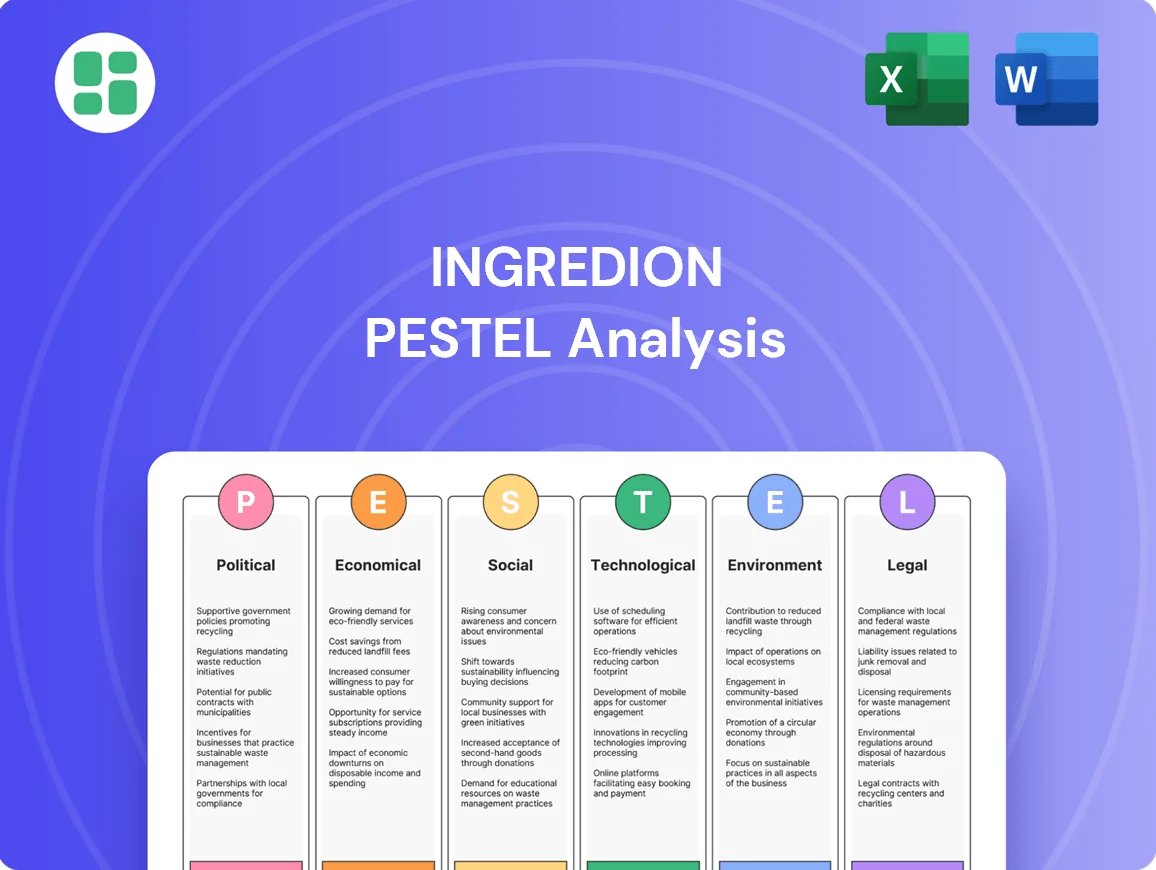
Grupo Televisa PESTLE Analysis

Plan Smarter. Present Sharper. Compete Stronger.
Grupo Televisa operates within a dynamic landscape shaped by political shifts, economic fluctuations, and evolving social trends. Understanding these external forces is crucial for strategic planning and identifying growth opportunities. Our comprehensive PESTLE analysis delves deep into these factors, offering actionable insights.
Gain a competitive edge by leveraging our expert-crafted PESTLE analysis of Grupo Televisa. Discover how political stability, economic growth, technological advancements, environmental concerns, and legal frameworks are impacting its operations and future trajectory. Download the full version now to unlock strategic intelligence and make informed decisions.
Political factors

Government Regulatory Environment
Grupo Televisa navigates a complex regulatory framework in Mexico, primarily shaped by the Federal Telecommunications Institute (IFT). This oversight directly influences its operations and market position.
A key development in June 2024 saw the IFT revoke Grupo Televisa's designation as having substantial market power in restricted television and audio services. This shift offers Televisa greater operational latitude and potentially alters its competitive dynamics.
Despite this change, the IFT continues to enforce restrictions, notably prohibiting Televisa from securing exclusive broadcasting rights for major sporting events like Mexican football league matches, the FIFA World Cup, and the Olympic Games, thereby ensuring broader public access to popular content.
Political Stability and Electoral Cycles
The political landscape in Mexico, especially around electoral cycles, directly impacts advertising revenues, with government spending being a notable component. A new administration, like the one led by President Claudia Sheinbaum since June 2024, often brings evolving regulatory priorities that can significantly shape the media and telecommunications sectors.
These shifts can alter how companies like Grupo Televisa operate and make future investment choices. For instance, changes in media ownership rules or content regulations stemming from a new government's agenda could necessitate strategic adjustments for Televisa's diverse business units.

Spectrum Allocation and Fees
Spectrum allocation and the associated fees are pivotal for Grupo Televisa's telecommunications and broadcasting segments, particularly as 5G deployment accelerates. The cost of spectrum directly impacts the company's ability to invest in and expand its network infrastructure.
High annual spectrum usage rights fees in Mexico have demonstrably hindered 5G rollout, with some telecom companies even returning spectrum licenses due to the financial strain. For instance, in 2023, reports indicated significant fee burdens on operators, impacting their expansion plans.
While Mexico's Federal Telecommunications Institute (IFT) has put forward proposals to reform the spectrum fee structure, these suggestions have faced limited traction with relevant government ministries, leaving the financial challenges for companies like Televisa largely unaddressed as of early 2024.

Government Stance on Competition
Mexico's telecommunications regulator, the IFT, has historically aimed to curb market dominance, a stance that directly impacts companies like Televisa. While the IFT authorized Televisa's consolidation of control over Sky Mexico in June 2024, it stipulated that this move would not significantly alter the market structure. This regulatory decision highlights the ongoing balancing act between fostering competition and approving strategic corporate actions.
The government's broader approach to competition, especially concerning dominant players or state-influenced entities, continues to be a critical variable. Televisa's future strategic moves, including further mergers and acquisitions, will invariably be scrutinized by the IFT and other governmental bodies, making the regulatory environment a key political factor.
- Regulatory Approval: The IFT's June 2024 approval of Televisa's Sky Mexico consolidation, with the caveat of no market structure alteration, sets a precedent for future M&A activity.
- Competition Policy: The government's overarching policy on competition, particularly regarding established or state-backed entities, will shape the landscape for players like Televisa.
- Market Structure Impact: Regulatory bodies will continue to assess how corporate strategies, such as mergers, affect the overall competitive balance in the Mexican telecom sector.
International Relations and Trade Agreements
International relations and trade agreements, especially those involving the United States, significantly shape TelevisaUnivision's operations. These pacts can influence how content is distributed across borders and affect Televisa's cross-border media ventures. For instance, changes in intellectual property rights or content licensing terms under such agreements can directly impact Televisa's international revenue and its strategic approach to content creation and distribution.
Key considerations include:
- USMCA Impact: The United States-Mexico-Canada Agreement (USMCA), which replaced NAFTA, continues to influence trade dynamics and regulatory frameworks relevant to media and content, including intellectual property protections.
- Content Licensing: Favorable trade terms can streamline content licensing across North America, enhancing TelevisaUnivision's ability to monetize its library and distribute programming efficiently.
- Regulatory Alignment: International agreements often push for regulatory alignment in areas like digital media, advertising, and data privacy, which can either facilitate or complicate cross-border media operations for companies like Televisa.
Mexico's Political Climate Reshapes Media Operations
The political environment in Mexico significantly impacts Grupo Televisa's operations, particularly through regulatory bodies like the IFT. The IFT's June 2024 decision to remove Televisa's substantial market power designation in restricted television and audio services offers more operational freedom, though restrictions on exclusive sports broadcasting rights remain. President Claudia Sheinbaum's administration, in power since June 2024, may introduce new regulatory priorities affecting the media sector, influencing Televisa's strategic planning and investment decisions.
What is included in the product
 Detailed Word Document
This PESTLE analysis provides a comprehensive examination of the external macro-environmental factors influencing Grupo Televisa across Political, Economic, Social, Technological, Environmental, and Legal dimensions.
It offers actionable insights for strategic decision-making by identifying potential threats and opportunities arising from these dynamic forces.

 Customizable Excel Spreadsheet
Provides a concise version that can be dropped into PowerPoints or used in group planning sessions, highlighting how Televisa can navigate political shifts and economic downturns to mitigate risks.
Helps support discussions on external risk and market positioning during planning sessions, enabling Televisa to proactively address technological disruptions and changing consumer behaviors.
Economic factors

Mexican Economic Growth and Consumer Spending
Mexico's economic performance is a key driver for Grupo Televisa. In 2023, the Mexican economy expanded by an estimated 3.1%, a solid figure that generally supports consumer spending. This growth translates into more disposable income, which is beneficial for advertising revenues and the uptake of Televisa's subscription services.
Consumer purchasing power is directly linked to economic health. As the economy grows, consumers are more likely to spend on entertainment and communication services, which are core to Televisa's business. For instance, a stronger peso and stable inflation, which remained relatively contained in early 2024, bolster consumer confidence and their ability to afford premium content and broadband packages.
Economic slowdowns, however, pose a risk. A projected moderation in Mexico's GDP growth to around 2.0% for 2024, as anticipated by various economic institutions, could temper advertising spending by businesses. Furthermore, if inflation pressures re-emerge or employment figures weaken, consumers might cut back on discretionary spending, impacting Televisa's subscriber numbers and overall revenue streams.
Advertising Market Trends
The advertising market in Mexico is undergoing a significant transformation, with a pronounced shift towards digital platforms. This trend directly impacts Grupo Televisa's traditional advertising revenue. For instance, while traditional ad revenue has faced headwinds, the digital advertising spend in Mexico was projected to reach approximately USD 3.5 billion in 2024, indicating a substantial reallocation of budgets.
Grupo Televisa's streaming service, ViX, is strategically positioned to capitalize on this digital shift. By offering access to the expansive Hispanic market, ViX is becoming an attractive channel for advertisers seeking to reach this demographic. This pivot is crucial for offsetting declines in traditional media advertising and tapping into new revenue streams.
Political advertising remains a vital, albeit seasonal, component of the advertising landscape. The fourth quarter of 2024, for example, saw a notable increase in political ad spending, a trend that historically benefits broadcasters like Televisa. This segment highlights the continued importance of traditional media, especially during election cycles.

Inflation, Interest Rates, and Exchange Rates
Inflation and interest rates directly influence Televisa's financial health. Higher inflation can increase operational costs for content production and distribution, while rising interest rates make servicing existing debt more expensive and new borrowing costlier, potentially impacting capital expenditures for network upgrades and expansion. For instance, if inflation in Mexico significantly outpaces projections, Televisa's cost of goods and services could rise substantially throughout 2024 and into 2025.
Exchange rate volatility, particularly the Mexican peso against the US dollar, presents a significant challenge. Televisa's revenues, often derived from domestic advertising and subscription services, are reported in pesos. However, a substantial portion of its content acquisition, including international programming and technology investments, is denominated in US dollars. A depreciating peso, as observed in recent periods, directly reduces the purchasing power for these dollar-denominated expenses and can negatively impact the reported value of advertising income when converted to US dollar equivalents for international comparison.

Competition in Telecom and Media Sectors
Grupo Televisa navigates a fiercely competitive terrain in both its telecommunications and media operations. In the telecom sector, Mexico's market is expanding, drawing in more domestic and international contenders, which can impact pricing strategies and customer loyalty.
The media industry is equally dynamic, heavily influenced by the proliferation of streaming services that offer alternative content consumption models. This heightened competition puts pressure on Grupo Televisa to innovate and retain its subscriber base.
For instance, as of late 2024, the Mexican pay-TV market, where Televisa is a major player, continues to see subscriber shifts towards Over-The-Top (OTT) services. Major competitors like AT&T Mexico and Telmex (América Móvil) are also aggressively pursuing market share in broadband and mobile services, directly challenging Televisa's telecommunications arm.
- Telecommunications Competition: América Móvil remains the dominant force in Mexico's telecom market, but competitors like AT&T Mexico and even smaller regional players are increasing their footprint, particularly in mobile and broadband.
- Media Landscape Disruption: The rise of global streaming giants such as Netflix, Disney+, and HBO Max, alongside local content producers, has fragmented the audience and intensified the battle for viewership and advertising revenue.
- Pricing Pressures: Increased competition across both sectors forces companies like Televisa to offer more competitive pricing and bundled services to attract and retain customers, potentially impacting profit margins.
- Subscriber Retention Challenges: With a wider array of choices available to consumers, maintaining subscriber loyalty in both pay-TV and internet services requires continuous investment in content, network quality, and customer service.
Cost Management and Capital Expenditure
Grupo Televisa is prioritizing cost management and operational efficiency to navigate revenue challenges in its legacy businesses. The company has implemented several measures to streamline operations and reduce expenses, demonstrating a commitment to financial prudence.
In line with its cost-saving strategy, Televisa has adjusted its capital expenditure outlook. For 2025, the company has trimmed its capital expenditure guidance, signaling a more conservative approach to investments and a focus on optimizing resource allocation. This move is intended to enhance financial flexibility and support profitability.
These cost-saving initiatives are coupled with a strategic focus on high-value customer segments within its cable and Sky operations. By concentrating on these lucrative areas, Televisa aims to improve revenue quality and strengthen its market position. Furthermore, the company is actively seeking more advantageous terms with its suppliers, a move that directly contributes to better cost management.
- Cost Discipline: Grupo Televisa is implementing rigorous cost discipline across its operations to counteract revenue pressures from traditional segments.
- Capital Expenditure Reduction: The company has revised its capital expenditure guidance downwards for 2025, indicating a focus on efficiency and optimized investment.
- Supplier Negotiations: Efforts are underway to secure more favorable terms with suppliers, a key component of the company's cost management strategy.
- High-End Subscriber Focus: Televisa is prioritizing growth and retention among high-end subscribers in its cable and Sky businesses to bolster revenue streams.
Economic Factors Drive Media Industry Dynamics
Grupo Televisa's financial performance is significantly influenced by macroeconomic trends. Mexico's economy grew by an estimated 3.1% in 2023, supporting consumer spending and advertising revenues. However, a projected slowdown to around 2.0% GDP growth in 2024 could temper advertising investments and consumer discretionary spending.
Inflation and interest rates directly impact Televisa's operational costs and debt servicing. For instance, if inflation in Mexico significantly outpaces projections, the company's costs for content and technology could rise substantially through 2024 and into 2025. Exchange rate volatility, particularly the Mexican peso against the US dollar, also affects purchasing power for dollar-denominated content and technology investments.
The advertising market is shifting towards digital, with Mexico's digital ad spend projected to reach USD 3.5 billion in 2024. Televisa's streaming service, ViX, is positioned to capture this growth by targeting the Hispanic market.
| Economic Factor | 2023 (Est.) | 2024 (Proj.) | Impact on Televisa |
|---|---|---|---|
| Mexico GDP Growth | 3.1% | ~2.0% | Supports/Moderates consumer spending & advertising |
| Digital Ad Spend (Mexico) | N/A | ~$3.5 billion | Shift in advertising revenue streams |
| Inflation (Mexico) | Relatively Contained | Potential Pressure | Increases operational costs, impacts consumer spending |
Same Document Delivered
Grupo Televisa PESTLE Analysis
The preview you see here is the exact Grupo Televisa PESTLE Analysis document you’ll receive after purchase—fully formatted and ready to use. It details the Political, Economic, Social, Technological, Legal, and Environmental factors impacting this leading media company.

Product Information
Product Information
Shipping & Returns
Shipping & Returns

Grupo Televisa PESTLE Analysis
Grupo Televisa PESTLE Analysis
Plan Smarter. Present Sharper. Compete Stronger.
Grupo Televisa operates within a dynamic landscape shaped by political shifts, economic fluctuations, and evolving social trends. Understanding these external forces is crucial for strategic planning and identifying growth opportunities. Our comprehensive PESTLE analysis delves deep into these factors, offering actionable insights.
Gain a competitive edge by leveraging our expert-crafted PESTLE analysis of Grupo Televisa. Discover how political stability, economic growth, technological advancements, environmental concerns, and legal frameworks are impacting its operations and future trajectory. Download the full version now to unlock strategic intelligence and make informed decisions.
Political factors
Government Regulatory Environment
Grupo Televisa navigates a complex regulatory framework in Mexico, primarily shaped by the Federal Telecommunications Institute (IFT). This oversight directly influences its operations and market position.
A key development in June 2024 saw the IFT revoke Grupo Televisa's designation as having substantial market power in restricted television and audio services. This shift offers Televisa greater operational latitude and potentially alters its competitive dynamics.
Despite this change, the IFT continues to enforce restrictions, notably prohibiting Televisa from securing exclusive broadcasting rights for major sporting events like Mexican football league matches, the FIFA World Cup, and the Olympic Games, thereby ensuring broader public access to popular content.
Political Stability and Electoral Cycles
The political landscape in Mexico, especially around electoral cycles, directly impacts advertising revenues, with government spending being a notable component. A new administration, like the one led by President Claudia Sheinbaum since June 2024, often brings evolving regulatory priorities that can significantly shape the media and telecommunications sectors.
These shifts can alter how companies like Grupo Televisa operate and make future investment choices. For instance, changes in media ownership rules or content regulations stemming from a new government's agenda could necessitate strategic adjustments for Televisa's diverse business units.
Spectrum Allocation and Fees
Spectrum allocation and the associated fees are pivotal for Grupo Televisa's telecommunications and broadcasting segments, particularly as 5G deployment accelerates. The cost of spectrum directly impacts the company's ability to invest in and expand its network infrastructure.
High annual spectrum usage rights fees in Mexico have demonstrably hindered 5G rollout, with some telecom companies even returning spectrum licenses due to the financial strain. For instance, in 2023, reports indicated significant fee burdens on operators, impacting their expansion plans.
While Mexico's Federal Telecommunications Institute (IFT) has put forward proposals to reform the spectrum fee structure, these suggestions have faced limited traction with relevant government ministries, leaving the financial challenges for companies like Televisa largely unaddressed as of early 2024.
Government Stance on Competition
Mexico's telecommunications regulator, the IFT, has historically aimed to curb market dominance, a stance that directly impacts companies like Televisa. While the IFT authorized Televisa's consolidation of control over Sky Mexico in June 2024, it stipulated that this move would not significantly alter the market structure. This regulatory decision highlights the ongoing balancing act between fostering competition and approving strategic corporate actions.
The government's broader approach to competition, especially concerning dominant players or state-influenced entities, continues to be a critical variable. Televisa's future strategic moves, including further mergers and acquisitions, will invariably be scrutinized by the IFT and other governmental bodies, making the regulatory environment a key political factor.
- Regulatory Approval: The IFT's June 2024 approval of Televisa's Sky Mexico consolidation, with the caveat of no market structure alteration, sets a precedent for future M&A activity.
- Competition Policy: The government's overarching policy on competition, particularly regarding established or state-backed entities, will shape the landscape for players like Televisa.
- Market Structure Impact: Regulatory bodies will continue to assess how corporate strategies, such as mergers, affect the overall competitive balance in the Mexican telecom sector.
International Relations and Trade Agreements
International relations and trade agreements, especially those involving the United States, significantly shape TelevisaUnivision's operations. These pacts can influence how content is distributed across borders and affect Televisa's cross-border media ventures. For instance, changes in intellectual property rights or content licensing terms under such agreements can directly impact Televisa's international revenue and its strategic approach to content creation and distribution.
Key considerations include:
- USMCA Impact: The United States-Mexico-Canada Agreement (USMCA), which replaced NAFTA, continues to influence trade dynamics and regulatory frameworks relevant to media and content, including intellectual property protections.
- Content Licensing: Favorable trade terms can streamline content licensing across North America, enhancing TelevisaUnivision's ability to monetize its library and distribute programming efficiently.
- Regulatory Alignment: International agreements often push for regulatory alignment in areas like digital media, advertising, and data privacy, which can either facilitate or complicate cross-border media operations for companies like Televisa.
Mexico's Political Climate Reshapes Media Operations
The political environment in Mexico significantly impacts Grupo Televisa's operations, particularly through regulatory bodies like the IFT. The IFT's June 2024 decision to remove Televisa's substantial market power designation in restricted television and audio services offers more operational freedom, though restrictions on exclusive sports broadcasting rights remain. President Claudia Sheinbaum's administration, in power since June 2024, may introduce new regulatory priorities affecting the media sector, influencing Televisa's strategic planning and investment decisions.
What is included in the product
Detailed Word Document
This PESTLE analysis provides a comprehensive examination of the external macro-environmental factors influencing Grupo Televisa across Political, Economic, Social, Technological, Environmental, and Legal dimensions.
It offers actionable insights for strategic decision-making by identifying potential threats and opportunities arising from these dynamic forces.
Customizable Excel Spreadsheet
Provides a concise version that can be dropped into PowerPoints or used in group planning sessions, highlighting how Televisa can navigate political shifts and economic downturns to mitigate risks.
Helps support discussions on external risk and market positioning during planning sessions, enabling Televisa to proactively address technological disruptions and changing consumer behaviors.
Economic factors
Mexican Economic Growth and Consumer Spending
Mexico's economic performance is a key driver for Grupo Televisa. In 2023, the Mexican economy expanded by an estimated 3.1%, a solid figure that generally supports consumer spending. This growth translates into more disposable income, which is beneficial for advertising revenues and the uptake of Televisa's subscription services.
Consumer purchasing power is directly linked to economic health. As the economy grows, consumers are more likely to spend on entertainment and communication services, which are core to Televisa's business. For instance, a stronger peso and stable inflation, which remained relatively contained in early 2024, bolster consumer confidence and their ability to afford premium content and broadband packages.
Economic slowdowns, however, pose a risk. A projected moderation in Mexico's GDP growth to around 2.0% for 2024, as anticipated by various economic institutions, could temper advertising spending by businesses. Furthermore, if inflation pressures re-emerge or employment figures weaken, consumers might cut back on discretionary spending, impacting Televisa's subscriber numbers and overall revenue streams.
Advertising Market Trends
The advertising market in Mexico is undergoing a significant transformation, with a pronounced shift towards digital platforms. This trend directly impacts Grupo Televisa's traditional advertising revenue. For instance, while traditional ad revenue has faced headwinds, the digital advertising spend in Mexico was projected to reach approximately USD 3.5 billion in 2024, indicating a substantial reallocation of budgets.
Grupo Televisa's streaming service, ViX, is strategically positioned to capitalize on this digital shift. By offering access to the expansive Hispanic market, ViX is becoming an attractive channel for advertisers seeking to reach this demographic. This pivot is crucial for offsetting declines in traditional media advertising and tapping into new revenue streams.
Political advertising remains a vital, albeit seasonal, component of the advertising landscape. The fourth quarter of 2024, for example, saw a notable increase in political ad spending, a trend that historically benefits broadcasters like Televisa. This segment highlights the continued importance of traditional media, especially during election cycles.
Inflation, Interest Rates, and Exchange Rates
Inflation and interest rates directly influence Televisa's financial health. Higher inflation can increase operational costs for content production and distribution, while rising interest rates make servicing existing debt more expensive and new borrowing costlier, potentially impacting capital expenditures for network upgrades and expansion. For instance, if inflation in Mexico significantly outpaces projections, Televisa's cost of goods and services could rise substantially throughout 2024 and into 2025.
Exchange rate volatility, particularly the Mexican peso against the US dollar, presents a significant challenge. Televisa's revenues, often derived from domestic advertising and subscription services, are reported in pesos. However, a substantial portion of its content acquisition, including international programming and technology investments, is denominated in US dollars. A depreciating peso, as observed in recent periods, directly reduces the purchasing power for these dollar-denominated expenses and can negatively impact the reported value of advertising income when converted to US dollar equivalents for international comparison.
Competition in Telecom and Media Sectors
Grupo Televisa navigates a fiercely competitive terrain in both its telecommunications and media operations. In the telecom sector, Mexico's market is expanding, drawing in more domestic and international contenders, which can impact pricing strategies and customer loyalty.
The media industry is equally dynamic, heavily influenced by the proliferation of streaming services that offer alternative content consumption models. This heightened competition puts pressure on Grupo Televisa to innovate and retain its subscriber base.
For instance, as of late 2024, the Mexican pay-TV market, where Televisa is a major player, continues to see subscriber shifts towards Over-The-Top (OTT) services. Major competitors like AT&T Mexico and Telmex (América Móvil) are also aggressively pursuing market share in broadband and mobile services, directly challenging Televisa's telecommunications arm.
- Telecommunications Competition: América Móvil remains the dominant force in Mexico's telecom market, but competitors like AT&T Mexico and even smaller regional players are increasing their footprint, particularly in mobile and broadband.
- Media Landscape Disruption: The rise of global streaming giants such as Netflix, Disney+, and HBO Max, alongside local content producers, has fragmented the audience and intensified the battle for viewership and advertising revenue.
- Pricing Pressures: Increased competition across both sectors forces companies like Televisa to offer more competitive pricing and bundled services to attract and retain customers, potentially impacting profit margins.
- Subscriber Retention Challenges: With a wider array of choices available to consumers, maintaining subscriber loyalty in both pay-TV and internet services requires continuous investment in content, network quality, and customer service.
Cost Management and Capital Expenditure
Grupo Televisa is prioritizing cost management and operational efficiency to navigate revenue challenges in its legacy businesses. The company has implemented several measures to streamline operations and reduce expenses, demonstrating a commitment to financial prudence.
In line with its cost-saving strategy, Televisa has adjusted its capital expenditure outlook. For 2025, the company has trimmed its capital expenditure guidance, signaling a more conservative approach to investments and a focus on optimizing resource allocation. This move is intended to enhance financial flexibility and support profitability.
These cost-saving initiatives are coupled with a strategic focus on high-value customer segments within its cable and Sky operations. By concentrating on these lucrative areas, Televisa aims to improve revenue quality and strengthen its market position. Furthermore, the company is actively seeking more advantageous terms with its suppliers, a move that directly contributes to better cost management.
- Cost Discipline: Grupo Televisa is implementing rigorous cost discipline across its operations to counteract revenue pressures from traditional segments.
- Capital Expenditure Reduction: The company has revised its capital expenditure guidance downwards for 2025, indicating a focus on efficiency and optimized investment.
- Supplier Negotiations: Efforts are underway to secure more favorable terms with suppliers, a key component of the company's cost management strategy.
- High-End Subscriber Focus: Televisa is prioritizing growth and retention among high-end subscribers in its cable and Sky businesses to bolster revenue streams.
Economic Factors Drive Media Industry Dynamics
Grupo Televisa's financial performance is significantly influenced by macroeconomic trends. Mexico's economy grew by an estimated 3.1% in 2023, supporting consumer spending and advertising revenues. However, a projected slowdown to around 2.0% GDP growth in 2024 could temper advertising investments and consumer discretionary spending.
Inflation and interest rates directly impact Televisa's operational costs and debt servicing. For instance, if inflation in Mexico significantly outpaces projections, the company's costs for content and technology could rise substantially through 2024 and into 2025. Exchange rate volatility, particularly the Mexican peso against the US dollar, also affects purchasing power for dollar-denominated content and technology investments.
The advertising market is shifting towards digital, with Mexico's digital ad spend projected to reach USD 3.5 billion in 2024. Televisa's streaming service, ViX, is positioned to capture this growth by targeting the Hispanic market.
| Economic Factor | 2023 (Est.) | 2024 (Proj.) | Impact on Televisa |
|---|---|---|---|
| Mexico GDP Growth | 3.1% | ~2.0% | Supports/Moderates consumer spending & advertising |
| Digital Ad Spend (Mexico) | N/A | ~$3.5 billion | Shift in advertising revenue streams |
| Inflation (Mexico) | Relatively Contained | Potential Pressure | Increases operational costs, impacts consumer spending |
Same Document Delivered
Grupo Televisa PESTLE Analysis
The preview you see here is the exact Grupo Televisa PESTLE Analysis document you’ll receive after purchase—fully formatted and ready to use. It details the Political, Economic, Social, Technological, Legal, and Environmental factors impacting this leading media company.
Original: $10.00
-65%$10.00
$3.50Product Information
Product Information
Shipping & Returns
Shipping & Returns
Description
Plan Smarter. Present Sharper. Compete Stronger.
Grupo Televisa operates within a dynamic landscape shaped by political shifts, economic fluctuations, and evolving social trends. Understanding these external forces is crucial for strategic planning and identifying growth opportunities. Our comprehensive PESTLE analysis delves deep into these factors, offering actionable insights.
Gain a competitive edge by leveraging our expert-crafted PESTLE analysis of Grupo Televisa. Discover how political stability, economic growth, technological advancements, environmental concerns, and legal frameworks are impacting its operations and future trajectory. Download the full version now to unlock strategic intelligence and make informed decisions.
Political factors
Government Regulatory Environment
Grupo Televisa navigates a complex regulatory framework in Mexico, primarily shaped by the Federal Telecommunications Institute (IFT). This oversight directly influences its operations and market position.
A key development in June 2024 saw the IFT revoke Grupo Televisa's designation as having substantial market power in restricted television and audio services. This shift offers Televisa greater operational latitude and potentially alters its competitive dynamics.
Despite this change, the IFT continues to enforce restrictions, notably prohibiting Televisa from securing exclusive broadcasting rights for major sporting events like Mexican football league matches, the FIFA World Cup, and the Olympic Games, thereby ensuring broader public access to popular content.
Political Stability and Electoral Cycles
The political landscape in Mexico, especially around electoral cycles, directly impacts advertising revenues, with government spending being a notable component. A new administration, like the one led by President Claudia Sheinbaum since June 2024, often brings evolving regulatory priorities that can significantly shape the media and telecommunications sectors.
These shifts can alter how companies like Grupo Televisa operate and make future investment choices. For instance, changes in media ownership rules or content regulations stemming from a new government's agenda could necessitate strategic adjustments for Televisa's diverse business units.
Spectrum Allocation and Fees
Spectrum allocation and the associated fees are pivotal for Grupo Televisa's telecommunications and broadcasting segments, particularly as 5G deployment accelerates. The cost of spectrum directly impacts the company's ability to invest in and expand its network infrastructure.
High annual spectrum usage rights fees in Mexico have demonstrably hindered 5G rollout, with some telecom companies even returning spectrum licenses due to the financial strain. For instance, in 2023, reports indicated significant fee burdens on operators, impacting their expansion plans.
While Mexico's Federal Telecommunications Institute (IFT) has put forward proposals to reform the spectrum fee structure, these suggestions have faced limited traction with relevant government ministries, leaving the financial challenges for companies like Televisa largely unaddressed as of early 2024.
Government Stance on Competition
Mexico's telecommunications regulator, the IFT, has historically aimed to curb market dominance, a stance that directly impacts companies like Televisa. While the IFT authorized Televisa's consolidation of control over Sky Mexico in June 2024, it stipulated that this move would not significantly alter the market structure. This regulatory decision highlights the ongoing balancing act between fostering competition and approving strategic corporate actions.
The government's broader approach to competition, especially concerning dominant players or state-influenced entities, continues to be a critical variable. Televisa's future strategic moves, including further mergers and acquisitions, will invariably be scrutinized by the IFT and other governmental bodies, making the regulatory environment a key political factor.
- Regulatory Approval: The IFT's June 2024 approval of Televisa's Sky Mexico consolidation, with the caveat of no market structure alteration, sets a precedent for future M&A activity.
- Competition Policy: The government's overarching policy on competition, particularly regarding established or state-backed entities, will shape the landscape for players like Televisa.
- Market Structure Impact: Regulatory bodies will continue to assess how corporate strategies, such as mergers, affect the overall competitive balance in the Mexican telecom sector.
International Relations and Trade Agreements
International relations and trade agreements, especially those involving the United States, significantly shape TelevisaUnivision's operations. These pacts can influence how content is distributed across borders and affect Televisa's cross-border media ventures. For instance, changes in intellectual property rights or content licensing terms under such agreements can directly impact Televisa's international revenue and its strategic approach to content creation and distribution.
Key considerations include:
- USMCA Impact: The United States-Mexico-Canada Agreement (USMCA), which replaced NAFTA, continues to influence trade dynamics and regulatory frameworks relevant to media and content, including intellectual property protections.
- Content Licensing: Favorable trade terms can streamline content licensing across North America, enhancing TelevisaUnivision's ability to monetize its library and distribute programming efficiently.
- Regulatory Alignment: International agreements often push for regulatory alignment in areas like digital media, advertising, and data privacy, which can either facilitate or complicate cross-border media operations for companies like Televisa.
Mexico's Political Climate Reshapes Media Operations
The political environment in Mexico significantly impacts Grupo Televisa's operations, particularly through regulatory bodies like the IFT. The IFT's June 2024 decision to remove Televisa's substantial market power designation in restricted television and audio services offers more operational freedom, though restrictions on exclusive sports broadcasting rights remain. President Claudia Sheinbaum's administration, in power since June 2024, may introduce new regulatory priorities affecting the media sector, influencing Televisa's strategic planning and investment decisions.
What is included in the product
Detailed Word Document
This PESTLE analysis provides a comprehensive examination of the external macro-environmental factors influencing Grupo Televisa across Political, Economic, Social, Technological, Environmental, and Legal dimensions.
It offers actionable insights for strategic decision-making by identifying potential threats and opportunities arising from these dynamic forces.
Customizable Excel Spreadsheet
Provides a concise version that can be dropped into PowerPoints or used in group planning sessions, highlighting how Televisa can navigate political shifts and economic downturns to mitigate risks.
Helps support discussions on external risk and market positioning during planning sessions, enabling Televisa to proactively address technological disruptions and changing consumer behaviors.
Economic factors
Mexican Economic Growth and Consumer Spending
Mexico's economic performance is a key driver for Grupo Televisa. In 2023, the Mexican economy expanded by an estimated 3.1%, a solid figure that generally supports consumer spending. This growth translates into more disposable income, which is beneficial for advertising revenues and the uptake of Televisa's subscription services.
Consumer purchasing power is directly linked to economic health. As the economy grows, consumers are more likely to spend on entertainment and communication services, which are core to Televisa's business. For instance, a stronger peso and stable inflation, which remained relatively contained in early 2024, bolster consumer confidence and their ability to afford premium content and broadband packages.
Economic slowdowns, however, pose a risk. A projected moderation in Mexico's GDP growth to around 2.0% for 2024, as anticipated by various economic institutions, could temper advertising spending by businesses. Furthermore, if inflation pressures re-emerge or employment figures weaken, consumers might cut back on discretionary spending, impacting Televisa's subscriber numbers and overall revenue streams.
Advertising Market Trends
The advertising market in Mexico is undergoing a significant transformation, with a pronounced shift towards digital platforms. This trend directly impacts Grupo Televisa's traditional advertising revenue. For instance, while traditional ad revenue has faced headwinds, the digital advertising spend in Mexico was projected to reach approximately USD 3.5 billion in 2024, indicating a substantial reallocation of budgets.
Grupo Televisa's streaming service, ViX, is strategically positioned to capitalize on this digital shift. By offering access to the expansive Hispanic market, ViX is becoming an attractive channel for advertisers seeking to reach this demographic. This pivot is crucial for offsetting declines in traditional media advertising and tapping into new revenue streams.
Political advertising remains a vital, albeit seasonal, component of the advertising landscape. The fourth quarter of 2024, for example, saw a notable increase in political ad spending, a trend that historically benefits broadcasters like Televisa. This segment highlights the continued importance of traditional media, especially during election cycles.
Inflation, Interest Rates, and Exchange Rates
Inflation and interest rates directly influence Televisa's financial health. Higher inflation can increase operational costs for content production and distribution, while rising interest rates make servicing existing debt more expensive and new borrowing costlier, potentially impacting capital expenditures for network upgrades and expansion. For instance, if inflation in Mexico significantly outpaces projections, Televisa's cost of goods and services could rise substantially throughout 2024 and into 2025.
Exchange rate volatility, particularly the Mexican peso against the US dollar, presents a significant challenge. Televisa's revenues, often derived from domestic advertising and subscription services, are reported in pesos. However, a substantial portion of its content acquisition, including international programming and technology investments, is denominated in US dollars. A depreciating peso, as observed in recent periods, directly reduces the purchasing power for these dollar-denominated expenses and can negatively impact the reported value of advertising income when converted to US dollar equivalents for international comparison.
Competition in Telecom and Media Sectors
Grupo Televisa navigates a fiercely competitive terrain in both its telecommunications and media operations. In the telecom sector, Mexico's market is expanding, drawing in more domestic and international contenders, which can impact pricing strategies and customer loyalty.
The media industry is equally dynamic, heavily influenced by the proliferation of streaming services that offer alternative content consumption models. This heightened competition puts pressure on Grupo Televisa to innovate and retain its subscriber base.
For instance, as of late 2024, the Mexican pay-TV market, where Televisa is a major player, continues to see subscriber shifts towards Over-The-Top (OTT) services. Major competitors like AT&T Mexico and Telmex (América Móvil) are also aggressively pursuing market share in broadband and mobile services, directly challenging Televisa's telecommunications arm.
- Telecommunications Competition: América Móvil remains the dominant force in Mexico's telecom market, but competitors like AT&T Mexico and even smaller regional players are increasing their footprint, particularly in mobile and broadband.
- Media Landscape Disruption: The rise of global streaming giants such as Netflix, Disney+, and HBO Max, alongside local content producers, has fragmented the audience and intensified the battle for viewership and advertising revenue.
- Pricing Pressures: Increased competition across both sectors forces companies like Televisa to offer more competitive pricing and bundled services to attract and retain customers, potentially impacting profit margins.
- Subscriber Retention Challenges: With a wider array of choices available to consumers, maintaining subscriber loyalty in both pay-TV and internet services requires continuous investment in content, network quality, and customer service.
Cost Management and Capital Expenditure
Grupo Televisa is prioritizing cost management and operational efficiency to navigate revenue challenges in its legacy businesses. The company has implemented several measures to streamline operations and reduce expenses, demonstrating a commitment to financial prudence.
In line with its cost-saving strategy, Televisa has adjusted its capital expenditure outlook. For 2025, the company has trimmed its capital expenditure guidance, signaling a more conservative approach to investments and a focus on optimizing resource allocation. This move is intended to enhance financial flexibility and support profitability.
These cost-saving initiatives are coupled with a strategic focus on high-value customer segments within its cable and Sky operations. By concentrating on these lucrative areas, Televisa aims to improve revenue quality and strengthen its market position. Furthermore, the company is actively seeking more advantageous terms with its suppliers, a move that directly contributes to better cost management.
- Cost Discipline: Grupo Televisa is implementing rigorous cost discipline across its operations to counteract revenue pressures from traditional segments.
- Capital Expenditure Reduction: The company has revised its capital expenditure guidance downwards for 2025, indicating a focus on efficiency and optimized investment.
- Supplier Negotiations: Efforts are underway to secure more favorable terms with suppliers, a key component of the company's cost management strategy.
- High-End Subscriber Focus: Televisa is prioritizing growth and retention among high-end subscribers in its cable and Sky businesses to bolster revenue streams.
Economic Factors Drive Media Industry Dynamics
Grupo Televisa's financial performance is significantly influenced by macroeconomic trends. Mexico's economy grew by an estimated 3.1% in 2023, supporting consumer spending and advertising revenues. However, a projected slowdown to around 2.0% GDP growth in 2024 could temper advertising investments and consumer discretionary spending.
Inflation and interest rates directly impact Televisa's operational costs and debt servicing. For instance, if inflation in Mexico significantly outpaces projections, the company's costs for content and technology could rise substantially through 2024 and into 2025. Exchange rate volatility, particularly the Mexican peso against the US dollar, also affects purchasing power for dollar-denominated content and technology investments.
The advertising market is shifting towards digital, with Mexico's digital ad spend projected to reach USD 3.5 billion in 2024. Televisa's streaming service, ViX, is positioned to capture this growth by targeting the Hispanic market.
| Economic Factor | 2023 (Est.) | 2024 (Proj.) | Impact on Televisa |
|---|---|---|---|
| Mexico GDP Growth | 3.1% | ~2.0% | Supports/Moderates consumer spending & advertising |
| Digital Ad Spend (Mexico) | N/A | ~$3.5 billion | Shift in advertising revenue streams |
| Inflation (Mexico) | Relatively Contained | Potential Pressure | Increases operational costs, impacts consumer spending |
Same Document Delivered
Grupo Televisa PESTLE Analysis
The preview you see here is the exact Grupo Televisa PESTLE Analysis document you’ll receive after purchase—fully formatted and ready to use. It details the Political, Economic, Social, Technological, Legal, and Environmental factors impacting this leading media company.