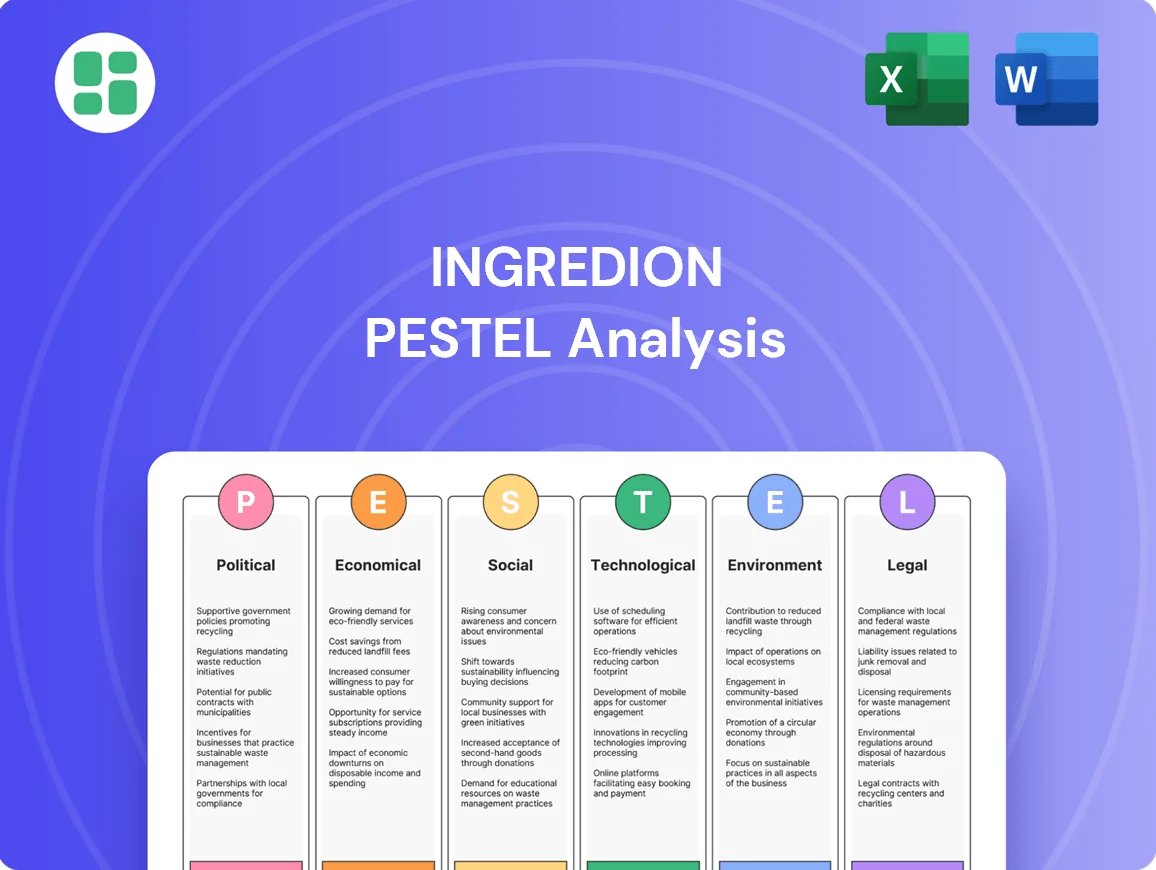
Santander Consumer USA PESTLE Analysis

Your Shortcut to Market Insight Starts Here
Santander Consumer USA operates within a dynamic external environment, influenced by evolving political landscapes, economic fluctuations, and technological advancements. Understanding these forces is crucial for strategic planning and risk mitigation.
Our comprehensive PESTLE analysis dives deep into these critical factors, offering actionable insights tailored for Santander Consumer USA. Gain a competitive edge by leveraging this expert-prepared intelligence to navigate market complexities and identify growth opportunities.
Don't get left behind; download the full PESTLE analysis now to equip yourself with the knowledge needed to make informed decisions and strengthen your market position.
Political factors

Government Regulation of Auto Lending
Government regulation significantly shapes the auto lending sector, with agencies like the Consumer Financial Protection Bureau (CFPB) playing a crucial role. The CFPB's ongoing supervision, as highlighted in their recent reports, focuses on areas like transparent Annual Percentage Rate (APR) marketing, fair repossession processes, and the sale of ancillary products. For Santander Consumer USA, this means a constant need to align its operations with these evolving compliance standards to mitigate risks of fines and litigation.
Trade Policies and Tariffs on Vehicles
New tariffs on imported vehicles and auto parts, such as potential 25% tariffs, significantly impact the automotive industry. These policies increase production costs and new vehicle prices, potentially dampening consumer demand and affecting auto loan origination volumes. Santander Consumer USA might observe shifts in loan portfolios as a result.

Consumer Protection Laws and Enforcement
Ongoing enforcement of consumer protection laws, especially those concerning fair lending and accurate credit reporting, significantly impacts auto finance companies like Santander Consumer USA. The Consumer Financial Protection Bureau (CFPB) remains active in addressing issues such as inaccurate disclosures and misleading credit reporting, compelling lenders to rectify practices and prioritize transparency.
In 2023, the CFPB reported taking actions against numerous entities for violations of consumer financial laws, including those related to auto lending. For instance, the Bureau has focused on ensuring lenders provide clear and accurate loan terms, a critical area for Santander Consumer USA. Failure to comply can result in substantial penalties and reputational damage.
Santander Consumer USA must maintain rigorous internal controls and sophisticated systems to guarantee full adherence to these evolving regulations. This proactive approach is essential for building and preserving consumer trust, thereby mitigating the risk of significant regulatory fines and legal challenges in the competitive auto finance market.

Political Stability and Economic Policy Direction
Political stability and the overarching direction of economic policy are critical for Santander Consumer USA. Shifts in presidential administrations, for instance, can introduce uncertainty, potentially impacting consumer confidence and the broader economic landscape. This uncertainty might cause consumers to postpone significant purchases, such as vehicles, which directly affects the demand for auto loans, a core business for Santander Consumer USA.
Santander Consumer USA's business outlook is closely linked to a stable political environment that promotes predictable economic conditions. For example, in the lead-up to the 2024 US presidential election, any perceived policy shifts could influence consumer spending habits. Historical data from periods of political transition often shows a correlation with reduced consumer credit uptake, as households tend to become more cautious with their finances.
- Impact on Auto Loans: Consumer confidence, often swayed by political stability, directly influences the purchase of vehicles. A 2024 survey indicated that approximately 60% of potential car buyers consider the political climate when making large purchase decisions.
- Economic Policy Direction: Changes in fiscal policy, interest rate strategies, or regulatory frameworks stemming from political shifts can significantly alter the operating environment for lenders like Santander Consumer USA.
- Regulatory Environment: Political considerations can lead to new or revised regulations affecting lending practices, capital requirements, and consumer protection, all of which have a direct bearing on Santander Consumer USA's profitability and operational strategies.
Government Incentives for EV Adoption
Government incentives significantly influence electric vehicle (EV) adoption, directly impacting consumer choices and the demand for EV financing. For instance, the Inflation Reduction Act of 2022 extended and modified federal tax credits for new and used EVs, with credits up to $7,500 for new vehicles and $4,000 for used ones, provided certain income and vehicle price caps are met. These incentives are crucial for Santander Consumer USA as they shape the market for financed EVs.
Fluctuations or uncertainty surrounding these government programs can alter the pace of EV sales and, consequently, the need for tailored financing products. As of early 2024, discussions continue regarding the long-term sustainability and structure of these credits, creating a dynamic environment for auto lenders.
Santander Consumer USA must remain attuned to evolving policy landscapes, including state-level rebates and charging infrastructure investments, to effectively align its financing solutions with the growing sustainable mobility sector.
Political Shifts Drive Auto Lending Landscape
Government regulations remain a significant political factor for Santander Consumer USA, with agencies like the CFPB actively overseeing auto lending practices. The CFPB's focus on transparent APR marketing and fair repossession processes, as detailed in their 2023 enforcement actions, necessitates continuous compliance adjustments by lenders. This regulatory oversight directly impacts operational strategies and risk management for Santander Consumer USA.
Political stability and economic policy direction are paramount. For instance, the lead-up to the 2024 US presidential election introduces potential policy shifts that could influence consumer confidence and credit uptake. Historical data suggests that periods of political uncertainty can correlate with a cautious approach to consumer borrowing, impacting auto loan origination volumes for Santander Consumer USA.
Government incentives for electric vehicles (EVs) play a crucial role in shaping consumer demand. The Inflation Reduction Act of 2022, offering credits up to $7,500 for new EVs, directly influences the market for financed vehicles. Santander Consumer USA must monitor evolving EV incentive programs and state-level rebates to align its financing products with the growing sustainable mobility sector.
| Political Factor | Impact on Santander Consumer USA | Relevant Data/Trend (2023-2025) |
|---|---|---|
| Regulatory Oversight (CFPB) | Ensuring compliance with fair lending, transparent disclosures, and repossession practices. | CFPB reported numerous enforcement actions in 2023 related to consumer financial laws, including auto lending. |
| Political Stability & Economic Policy | Influences consumer confidence, credit uptake, and overall demand for auto loans. | Consumer confidence surveys in late 2023 and early 2024 showed sensitivity to political and economic outlook. |
| Government EV Incentives | Shapes consumer adoption of EVs and the demand for EV financing. | Federal EV tax credits extended through the Inflation Reduction Act continue to be a key driver for EV sales. |
What is included in the product
 Detailed Word Document
This PESTLE analysis provides a comprehensive examination of the external macro-environmental factors impacting Santander Consumer USA, covering Political, Economic, Social, Technological, Environmental, and Legal dimensions.
It offers actionable insights and forward-looking perspectives to aid strategic decision-making and identify potential opportunities and threats.

 Customizable Excel Spreadsheet
A PESTLE analysis for Santander Consumer USA offers a clear, summarized version of external factors, simplifying complex market dynamics for easier referencing during strategic discussions.
Economic factors

Interest Rate Environment
Interest rate fluctuations, heavily influenced by Federal Reserve policy, directly affect borrowing costs for consumers and Santander Consumer USA. As of mid-2025, the Federal Reserve maintained its target federal funds rate, but market anticipation of potential cuts later in the year could lower auto loan rates. This scenario might boost vehicle demand and increase Santander's loan originations.
Conversely, elevated interest rates can dampen consumer spending on vehicles, potentially leading to longer loan terms as buyers seek more manageable monthly payments. This environment challenges Santander by increasing the cost of capital and potentially impacting loan portfolio performance.
Inflation and Consumer Purchasing Power
Inflationary pressures continue to impact vehicle affordability. While average vehicle prices have seen minor dips, they remain high. For instance, the average price for a new car in the US hovered around $47,000 in early 2024, a figure still significantly elevated from pre-pandemic levels.
This persistent inflation directly erodes consumer purchasing power. As the cost of living rises, individuals have less disposable income available for significant purchases like vehicles, even with available financing options. This makes it harder for many to qualify for or comfortably manage auto loans.
Santander Consumer USA needs to carefully consider these economic realities in its lending strategies. Adjusting loan terms, exploring subprime markets with caution, or focusing on more affordable vehicle segments might be necessary to navigate the current economic climate and maintain loan origination volumes.

Unemployment Rates and Creditworthiness
Unemployment rates and the health of the job market are directly tied to how creditworthy consumers are and their capacity to repay loans. When unemployment rises, people have less income, making it harder to meet financial obligations.
Delinquency rates across various lenders have been on the rise throughout 2024, and this trend is expected to persist into 2025, indicating widespread borrower financial strain. For instance, the U.S. unemployment rate hovered around 3.9% in early 2024, a level that, while historically low, has seen some upward pressure as the year progresses, potentially impacting consumer repayment abilities.
Santander Consumer USA must keep a close watch on employment shifts and the financial well-being of consumers to effectively manage its credit risk. This involves understanding how job market fluctuations might translate into increased defaults on auto loans and other credit products.

Automobile Sales Trends (New vs. Used)
Automobile sales are a cornerstone for Santander Consumer USA, directly influencing loan origination and overall portfolio health. Declining new vehicle sales, a trend observed through 2024, can pressure loan volumes, while a surge in used car demand, driven by affordability concerns, presents both opportunities and challenges in financing. For instance, the average price of a used car remained elevated in early 2024, making financing even more critical for consumers.
Santander Consumer USA must navigate these shifting sales dynamics. The increasing reliance on used vehicles, while boosting demand for loans, also necessitates careful risk assessment due to the inherent age and condition of these assets. Adapting financing products to cater to both new and pre-owned segments is therefore essential for maintaining market share and profitability.
Key trends impacting automobile sales include:
- New Vehicle Sales: While showing some recovery in 2024, new vehicle sales continue to be impacted by production constraints and higher MSRPs, affecting Santander's exposure to this segment.
- Used Vehicle Demand: Affordability remains a major driver, pushing consumers towards used cars. This increased demand in 2024 has kept used car prices relatively high, impacting loan principal amounts.
- Financing Adaptation: Santander's ability to offer competitive and flexible financing for both new and used vehicles is paramount to capturing market share and managing portfolio risk.
Overall Economic Growth and Recession Risk
The overall economic health, particularly the risk of a recession, is a critical factor for Santander Consumer USA. A slowdown in Gross Domestic Product (GDP) growth, coupled with declining stock markets and a reduction in household wealth, directly impacts consumer confidence and spending. This can translate into fewer auto sales, a core business for SCUSA.
For instance, the U.S. GDP growth rate, which was around 2.1% in the first quarter of 2024, is projected to moderate. Should economic indicators suggest a recession, consumer demand for new and used vehicles is likely to decrease. This would affect the volume of loans Santander Consumer USA originates.
Santander Consumer USA's ability to manage through economic downturns is paramount. Potential recessionary environments can lead to:
- Increased Loan Delinquencies: As household incomes become strained, borrowers may struggle to meet their auto loan obligations, leading to higher default rates.
- Reduced Loan Demand: Consumers facing economic uncertainty are less likely to finance new vehicle purchases.
- Lower Used Vehicle Values: Economic slowdowns can also depress the value of collateral backing auto loans, increasing potential losses for lenders.
Economic Headwinds Shape Auto Lending Outlook 2024-2025
The economic landscape for Santander Consumer USA in 2024-2025 is shaped by interest rate policies and inflation. The Federal Reserve's stance on interest rates directly influences borrowing costs for auto loans, with potential rate cuts in late 2025 possibly stimulating vehicle demand and Santander's loan originations. However, persistent inflation continues to strain consumer budgets, keeping vehicle prices elevated and reducing disposable income for major purchases.
Unemployment figures and job market stability are critical indicators of consumer creditworthiness. Rising delinquency rates observed through 2024, expected to continue into 2025, signal financial strain among borrowers. While the U.S. unemployment rate was around 3.9% in early 2024, any upward pressure impacts Santander's risk management.
Automobile sales dynamics, particularly the shift towards used vehicles due to affordability, present both opportunities and challenges. Santander must adapt its financing strategies to cater to this trend while carefully assessing the risks associated with older collateral, as used car prices remained high in early 2024.
The overarching economic health, including GDP growth projections and recession risks, significantly affects consumer confidence and spending on vehicles. A projected moderation in U.S. GDP growth from 2.1% in Q1 2024 could lead to reduced loan demand and increased delinquencies for Santander Consumer USA.
| Economic Factor | 2024 Data Point | 2025 Outlook/Trend | Impact on Santander Consumer USA |
|---|---|---|---|
| Federal Funds Rate (Target) | Range of 5.25%-5.50% (as of mid-2024) | Anticipation of potential cuts later in 2025 | Lower borrowing costs could boost loan originations; higher rates increase capital costs. |
| New Vehicle Prices (Average) | ~$47,000 (early 2024) | Slight dips possible, but remains elevated | Higher loan principal amounts, but affordability challenges for consumers. |
| U.S. Unemployment Rate | ~3.9% (early 2024) | Slight upward pressure expected | Increased risk of loan delinquencies and defaults. |
| U.S. GDP Growth Rate | ~2.1% (Q1 2024) | Projected moderation | Reduced consumer spending on vehicles, potentially lower loan volumes. |
Preview the Actual Deliverable
Santander Consumer USA PESTLE Analysis
The preview shown here is the exact document you’ll receive after purchase—fully formatted and ready to use. This comprehensive PESTLE analysis of Santander Consumer USA delves into the Political, Economic, Social, Technological, Legal, and Environmental factors impacting its operations. Understand the critical external forces shaping the company's strategic landscape.

Product Information
Product Information
Shipping & Returns
Shipping & Returns

Santander Consumer USA PESTLE Analysis
Santander Consumer USA PESTLE Analysis
Your Shortcut to Market Insight Starts Here
Santander Consumer USA operates within a dynamic external environment, influenced by evolving political landscapes, economic fluctuations, and technological advancements. Understanding these forces is crucial for strategic planning and risk mitigation.
Our comprehensive PESTLE analysis dives deep into these critical factors, offering actionable insights tailored for Santander Consumer USA. Gain a competitive edge by leveraging this expert-prepared intelligence to navigate market complexities and identify growth opportunities.
Don't get left behind; download the full PESTLE analysis now to equip yourself with the knowledge needed to make informed decisions and strengthen your market position.
Political factors
Government Regulation of Auto Lending
Government regulation significantly shapes the auto lending sector, with agencies like the Consumer Financial Protection Bureau (CFPB) playing a crucial role. The CFPB's ongoing supervision, as highlighted in their recent reports, focuses on areas like transparent Annual Percentage Rate (APR) marketing, fair repossession processes, and the sale of ancillary products. For Santander Consumer USA, this means a constant need to align its operations with these evolving compliance standards to mitigate risks of fines and litigation.
Trade Policies and Tariffs on Vehicles
New tariffs on imported vehicles and auto parts, such as potential 25% tariffs, significantly impact the automotive industry. These policies increase production costs and new vehicle prices, potentially dampening consumer demand and affecting auto loan origination volumes. Santander Consumer USA might observe shifts in loan portfolios as a result.
Consumer Protection Laws and Enforcement
Ongoing enforcement of consumer protection laws, especially those concerning fair lending and accurate credit reporting, significantly impacts auto finance companies like Santander Consumer USA. The Consumer Financial Protection Bureau (CFPB) remains active in addressing issues such as inaccurate disclosures and misleading credit reporting, compelling lenders to rectify practices and prioritize transparency.
In 2023, the CFPB reported taking actions against numerous entities for violations of consumer financial laws, including those related to auto lending. For instance, the Bureau has focused on ensuring lenders provide clear and accurate loan terms, a critical area for Santander Consumer USA. Failure to comply can result in substantial penalties and reputational damage.
Santander Consumer USA must maintain rigorous internal controls and sophisticated systems to guarantee full adherence to these evolving regulations. This proactive approach is essential for building and preserving consumer trust, thereby mitigating the risk of significant regulatory fines and legal challenges in the competitive auto finance market.
Political Stability and Economic Policy Direction
Political stability and the overarching direction of economic policy are critical for Santander Consumer USA. Shifts in presidential administrations, for instance, can introduce uncertainty, potentially impacting consumer confidence and the broader economic landscape. This uncertainty might cause consumers to postpone significant purchases, such as vehicles, which directly affects the demand for auto loans, a core business for Santander Consumer USA.
Santander Consumer USA's business outlook is closely linked to a stable political environment that promotes predictable economic conditions. For example, in the lead-up to the 2024 US presidential election, any perceived policy shifts could influence consumer spending habits. Historical data from periods of political transition often shows a correlation with reduced consumer credit uptake, as households tend to become more cautious with their finances.
- Impact on Auto Loans: Consumer confidence, often swayed by political stability, directly influences the purchase of vehicles. A 2024 survey indicated that approximately 60% of potential car buyers consider the political climate when making large purchase decisions.
- Economic Policy Direction: Changes in fiscal policy, interest rate strategies, or regulatory frameworks stemming from political shifts can significantly alter the operating environment for lenders like Santander Consumer USA.
- Regulatory Environment: Political considerations can lead to new or revised regulations affecting lending practices, capital requirements, and consumer protection, all of which have a direct bearing on Santander Consumer USA's profitability and operational strategies.
Government Incentives for EV Adoption
Government incentives significantly influence electric vehicle (EV) adoption, directly impacting consumer choices and the demand for EV financing. For instance, the Inflation Reduction Act of 2022 extended and modified federal tax credits for new and used EVs, with credits up to $7,500 for new vehicles and $4,000 for used ones, provided certain income and vehicle price caps are met. These incentives are crucial for Santander Consumer USA as they shape the market for financed EVs.
Fluctuations or uncertainty surrounding these government programs can alter the pace of EV sales and, consequently, the need for tailored financing products. As of early 2024, discussions continue regarding the long-term sustainability and structure of these credits, creating a dynamic environment for auto lenders.
Santander Consumer USA must remain attuned to evolving policy landscapes, including state-level rebates and charging infrastructure investments, to effectively align its financing solutions with the growing sustainable mobility sector.
Political Shifts Drive Auto Lending Landscape
Government regulations remain a significant political factor for Santander Consumer USA, with agencies like the CFPB actively overseeing auto lending practices. The CFPB's focus on transparent APR marketing and fair repossession processes, as detailed in their 2023 enforcement actions, necessitates continuous compliance adjustments by lenders. This regulatory oversight directly impacts operational strategies and risk management for Santander Consumer USA.
Political stability and economic policy direction are paramount. For instance, the lead-up to the 2024 US presidential election introduces potential policy shifts that could influence consumer confidence and credit uptake. Historical data suggests that periods of political uncertainty can correlate with a cautious approach to consumer borrowing, impacting auto loan origination volumes for Santander Consumer USA.
Government incentives for electric vehicles (EVs) play a crucial role in shaping consumer demand. The Inflation Reduction Act of 2022, offering credits up to $7,500 for new EVs, directly influences the market for financed vehicles. Santander Consumer USA must monitor evolving EV incentive programs and state-level rebates to align its financing products with the growing sustainable mobility sector.
| Political Factor | Impact on Santander Consumer USA | Relevant Data/Trend (2023-2025) |
|---|---|---|
| Regulatory Oversight (CFPB) | Ensuring compliance with fair lending, transparent disclosures, and repossession practices. | CFPB reported numerous enforcement actions in 2023 related to consumer financial laws, including auto lending. |
| Political Stability & Economic Policy | Influences consumer confidence, credit uptake, and overall demand for auto loans. | Consumer confidence surveys in late 2023 and early 2024 showed sensitivity to political and economic outlook. |
| Government EV Incentives | Shapes consumer adoption of EVs and the demand for EV financing. | Federal EV tax credits extended through the Inflation Reduction Act continue to be a key driver for EV sales. |
What is included in the product
Detailed Word Document
This PESTLE analysis provides a comprehensive examination of the external macro-environmental factors impacting Santander Consumer USA, covering Political, Economic, Social, Technological, Environmental, and Legal dimensions.
It offers actionable insights and forward-looking perspectives to aid strategic decision-making and identify potential opportunities and threats.
Customizable Excel Spreadsheet
A PESTLE analysis for Santander Consumer USA offers a clear, summarized version of external factors, simplifying complex market dynamics for easier referencing during strategic discussions.
Economic factors
Interest Rate Environment
Interest rate fluctuations, heavily influenced by Federal Reserve policy, directly affect borrowing costs for consumers and Santander Consumer USA. As of mid-2025, the Federal Reserve maintained its target federal funds rate, but market anticipation of potential cuts later in the year could lower auto loan rates. This scenario might boost vehicle demand and increase Santander's loan originations.
Conversely, elevated interest rates can dampen consumer spending on vehicles, potentially leading to longer loan terms as buyers seek more manageable monthly payments. This environment challenges Santander by increasing the cost of capital and potentially impacting loan portfolio performance.
Inflation and Consumer Purchasing Power
Inflationary pressures continue to impact vehicle affordability. While average vehicle prices have seen minor dips, they remain high. For instance, the average price for a new car in the US hovered around $47,000 in early 2024, a figure still significantly elevated from pre-pandemic levels.
This persistent inflation directly erodes consumer purchasing power. As the cost of living rises, individuals have less disposable income available for significant purchases like vehicles, even with available financing options. This makes it harder for many to qualify for or comfortably manage auto loans.
Santander Consumer USA needs to carefully consider these economic realities in its lending strategies. Adjusting loan terms, exploring subprime markets with caution, or focusing on more affordable vehicle segments might be necessary to navigate the current economic climate and maintain loan origination volumes.
Unemployment Rates and Creditworthiness
Unemployment rates and the health of the job market are directly tied to how creditworthy consumers are and their capacity to repay loans. When unemployment rises, people have less income, making it harder to meet financial obligations.
Delinquency rates across various lenders have been on the rise throughout 2024, and this trend is expected to persist into 2025, indicating widespread borrower financial strain. For instance, the U.S. unemployment rate hovered around 3.9% in early 2024, a level that, while historically low, has seen some upward pressure as the year progresses, potentially impacting consumer repayment abilities.
Santander Consumer USA must keep a close watch on employment shifts and the financial well-being of consumers to effectively manage its credit risk. This involves understanding how job market fluctuations might translate into increased defaults on auto loans and other credit products.
Automobile Sales Trends (New vs. Used)
Automobile sales are a cornerstone for Santander Consumer USA, directly influencing loan origination and overall portfolio health. Declining new vehicle sales, a trend observed through 2024, can pressure loan volumes, while a surge in used car demand, driven by affordability concerns, presents both opportunities and challenges in financing. For instance, the average price of a used car remained elevated in early 2024, making financing even more critical for consumers.
Santander Consumer USA must navigate these shifting sales dynamics. The increasing reliance on used vehicles, while boosting demand for loans, also necessitates careful risk assessment due to the inherent age and condition of these assets. Adapting financing products to cater to both new and pre-owned segments is therefore essential for maintaining market share and profitability.
Key trends impacting automobile sales include:
- New Vehicle Sales: While showing some recovery in 2024, new vehicle sales continue to be impacted by production constraints and higher MSRPs, affecting Santander's exposure to this segment.
- Used Vehicle Demand: Affordability remains a major driver, pushing consumers towards used cars. This increased demand in 2024 has kept used car prices relatively high, impacting loan principal amounts.
- Financing Adaptation: Santander's ability to offer competitive and flexible financing for both new and used vehicles is paramount to capturing market share and managing portfolio risk.
Overall Economic Growth and Recession Risk
The overall economic health, particularly the risk of a recession, is a critical factor for Santander Consumer USA. A slowdown in Gross Domestic Product (GDP) growth, coupled with declining stock markets and a reduction in household wealth, directly impacts consumer confidence and spending. This can translate into fewer auto sales, a core business for SCUSA.
For instance, the U.S. GDP growth rate, which was around 2.1% in the first quarter of 2024, is projected to moderate. Should economic indicators suggest a recession, consumer demand for new and used vehicles is likely to decrease. This would affect the volume of loans Santander Consumer USA originates.
Santander Consumer USA's ability to manage through economic downturns is paramount. Potential recessionary environments can lead to:
- Increased Loan Delinquencies: As household incomes become strained, borrowers may struggle to meet their auto loan obligations, leading to higher default rates.
- Reduced Loan Demand: Consumers facing economic uncertainty are less likely to finance new vehicle purchases.
- Lower Used Vehicle Values: Economic slowdowns can also depress the value of collateral backing auto loans, increasing potential losses for lenders.
Economic Headwinds Shape Auto Lending Outlook 2024-2025
The economic landscape for Santander Consumer USA in 2024-2025 is shaped by interest rate policies and inflation. The Federal Reserve's stance on interest rates directly influences borrowing costs for auto loans, with potential rate cuts in late 2025 possibly stimulating vehicle demand and Santander's loan originations. However, persistent inflation continues to strain consumer budgets, keeping vehicle prices elevated and reducing disposable income for major purchases.
Unemployment figures and job market stability are critical indicators of consumer creditworthiness. Rising delinquency rates observed through 2024, expected to continue into 2025, signal financial strain among borrowers. While the U.S. unemployment rate was around 3.9% in early 2024, any upward pressure impacts Santander's risk management.
Automobile sales dynamics, particularly the shift towards used vehicles due to affordability, present both opportunities and challenges. Santander must adapt its financing strategies to cater to this trend while carefully assessing the risks associated with older collateral, as used car prices remained high in early 2024.
The overarching economic health, including GDP growth projections and recession risks, significantly affects consumer confidence and spending on vehicles. A projected moderation in U.S. GDP growth from 2.1% in Q1 2024 could lead to reduced loan demand and increased delinquencies for Santander Consumer USA.
| Economic Factor | 2024 Data Point | 2025 Outlook/Trend | Impact on Santander Consumer USA |
|---|---|---|---|
| Federal Funds Rate (Target) | Range of 5.25%-5.50% (as of mid-2024) | Anticipation of potential cuts later in 2025 | Lower borrowing costs could boost loan originations; higher rates increase capital costs. |
| New Vehicle Prices (Average) | ~$47,000 (early 2024) | Slight dips possible, but remains elevated | Higher loan principal amounts, but affordability challenges for consumers. |
| U.S. Unemployment Rate | ~3.9% (early 2024) | Slight upward pressure expected | Increased risk of loan delinquencies and defaults. |
| U.S. GDP Growth Rate | ~2.1% (Q1 2024) | Projected moderation | Reduced consumer spending on vehicles, potentially lower loan volumes. |
Preview the Actual Deliverable
Santander Consumer USA PESTLE Analysis
The preview shown here is the exact document you’ll receive after purchase—fully formatted and ready to use. This comprehensive PESTLE analysis of Santander Consumer USA delves into the Political, Economic, Social, Technological, Legal, and Environmental factors impacting its operations. Understand the critical external forces shaping the company's strategic landscape.
Original: $10.00
-65%$10.00
$3.50Product Information
Product Information
Shipping & Returns
Shipping & Returns
Description
Your Shortcut to Market Insight Starts Here
Santander Consumer USA operates within a dynamic external environment, influenced by evolving political landscapes, economic fluctuations, and technological advancements. Understanding these forces is crucial for strategic planning and risk mitigation.
Our comprehensive PESTLE analysis dives deep into these critical factors, offering actionable insights tailored for Santander Consumer USA. Gain a competitive edge by leveraging this expert-prepared intelligence to navigate market complexities and identify growth opportunities.
Don't get left behind; download the full PESTLE analysis now to equip yourself with the knowledge needed to make informed decisions and strengthen your market position.
Political factors
Government Regulation of Auto Lending
Government regulation significantly shapes the auto lending sector, with agencies like the Consumer Financial Protection Bureau (CFPB) playing a crucial role. The CFPB's ongoing supervision, as highlighted in their recent reports, focuses on areas like transparent Annual Percentage Rate (APR) marketing, fair repossession processes, and the sale of ancillary products. For Santander Consumer USA, this means a constant need to align its operations with these evolving compliance standards to mitigate risks of fines and litigation.
Trade Policies and Tariffs on Vehicles
New tariffs on imported vehicles and auto parts, such as potential 25% tariffs, significantly impact the automotive industry. These policies increase production costs and new vehicle prices, potentially dampening consumer demand and affecting auto loan origination volumes. Santander Consumer USA might observe shifts in loan portfolios as a result.
Consumer Protection Laws and Enforcement
Ongoing enforcement of consumer protection laws, especially those concerning fair lending and accurate credit reporting, significantly impacts auto finance companies like Santander Consumer USA. The Consumer Financial Protection Bureau (CFPB) remains active in addressing issues such as inaccurate disclosures and misleading credit reporting, compelling lenders to rectify practices and prioritize transparency.
In 2023, the CFPB reported taking actions against numerous entities for violations of consumer financial laws, including those related to auto lending. For instance, the Bureau has focused on ensuring lenders provide clear and accurate loan terms, a critical area for Santander Consumer USA. Failure to comply can result in substantial penalties and reputational damage.
Santander Consumer USA must maintain rigorous internal controls and sophisticated systems to guarantee full adherence to these evolving regulations. This proactive approach is essential for building and preserving consumer trust, thereby mitigating the risk of significant regulatory fines and legal challenges in the competitive auto finance market.
Political Stability and Economic Policy Direction
Political stability and the overarching direction of economic policy are critical for Santander Consumer USA. Shifts in presidential administrations, for instance, can introduce uncertainty, potentially impacting consumer confidence and the broader economic landscape. This uncertainty might cause consumers to postpone significant purchases, such as vehicles, which directly affects the demand for auto loans, a core business for Santander Consumer USA.
Santander Consumer USA's business outlook is closely linked to a stable political environment that promotes predictable economic conditions. For example, in the lead-up to the 2024 US presidential election, any perceived policy shifts could influence consumer spending habits. Historical data from periods of political transition often shows a correlation with reduced consumer credit uptake, as households tend to become more cautious with their finances.
- Impact on Auto Loans: Consumer confidence, often swayed by political stability, directly influences the purchase of vehicles. A 2024 survey indicated that approximately 60% of potential car buyers consider the political climate when making large purchase decisions.
- Economic Policy Direction: Changes in fiscal policy, interest rate strategies, or regulatory frameworks stemming from political shifts can significantly alter the operating environment for lenders like Santander Consumer USA.
- Regulatory Environment: Political considerations can lead to new or revised regulations affecting lending practices, capital requirements, and consumer protection, all of which have a direct bearing on Santander Consumer USA's profitability and operational strategies.
Government Incentives for EV Adoption
Government incentives significantly influence electric vehicle (EV) adoption, directly impacting consumer choices and the demand for EV financing. For instance, the Inflation Reduction Act of 2022 extended and modified federal tax credits for new and used EVs, with credits up to $7,500 for new vehicles and $4,000 for used ones, provided certain income and vehicle price caps are met. These incentives are crucial for Santander Consumer USA as they shape the market for financed EVs.
Fluctuations or uncertainty surrounding these government programs can alter the pace of EV sales and, consequently, the need for tailored financing products. As of early 2024, discussions continue regarding the long-term sustainability and structure of these credits, creating a dynamic environment for auto lenders.
Santander Consumer USA must remain attuned to evolving policy landscapes, including state-level rebates and charging infrastructure investments, to effectively align its financing solutions with the growing sustainable mobility sector.
Political Shifts Drive Auto Lending Landscape
Government regulations remain a significant political factor for Santander Consumer USA, with agencies like the CFPB actively overseeing auto lending practices. The CFPB's focus on transparent APR marketing and fair repossession processes, as detailed in their 2023 enforcement actions, necessitates continuous compliance adjustments by lenders. This regulatory oversight directly impacts operational strategies and risk management for Santander Consumer USA.
Political stability and economic policy direction are paramount. For instance, the lead-up to the 2024 US presidential election introduces potential policy shifts that could influence consumer confidence and credit uptake. Historical data suggests that periods of political uncertainty can correlate with a cautious approach to consumer borrowing, impacting auto loan origination volumes for Santander Consumer USA.
Government incentives for electric vehicles (EVs) play a crucial role in shaping consumer demand. The Inflation Reduction Act of 2022, offering credits up to $7,500 for new EVs, directly influences the market for financed vehicles. Santander Consumer USA must monitor evolving EV incentive programs and state-level rebates to align its financing products with the growing sustainable mobility sector.
| Political Factor | Impact on Santander Consumer USA | Relevant Data/Trend (2023-2025) |
|---|---|---|
| Regulatory Oversight (CFPB) | Ensuring compliance with fair lending, transparent disclosures, and repossession practices. | CFPB reported numerous enforcement actions in 2023 related to consumer financial laws, including auto lending. |
| Political Stability & Economic Policy | Influences consumer confidence, credit uptake, and overall demand for auto loans. | Consumer confidence surveys in late 2023 and early 2024 showed sensitivity to political and economic outlook. |
| Government EV Incentives | Shapes consumer adoption of EVs and the demand for EV financing. | Federal EV tax credits extended through the Inflation Reduction Act continue to be a key driver for EV sales. |
What is included in the product
Detailed Word Document
This PESTLE analysis provides a comprehensive examination of the external macro-environmental factors impacting Santander Consumer USA, covering Political, Economic, Social, Technological, Environmental, and Legal dimensions.
It offers actionable insights and forward-looking perspectives to aid strategic decision-making and identify potential opportunities and threats.
Customizable Excel Spreadsheet
A PESTLE analysis for Santander Consumer USA offers a clear, summarized version of external factors, simplifying complex market dynamics for easier referencing during strategic discussions.
Economic factors
Interest Rate Environment
Interest rate fluctuations, heavily influenced by Federal Reserve policy, directly affect borrowing costs for consumers and Santander Consumer USA. As of mid-2025, the Federal Reserve maintained its target federal funds rate, but market anticipation of potential cuts later in the year could lower auto loan rates. This scenario might boost vehicle demand and increase Santander's loan originations.
Conversely, elevated interest rates can dampen consumer spending on vehicles, potentially leading to longer loan terms as buyers seek more manageable monthly payments. This environment challenges Santander by increasing the cost of capital and potentially impacting loan portfolio performance.
Inflation and Consumer Purchasing Power
Inflationary pressures continue to impact vehicle affordability. While average vehicle prices have seen minor dips, they remain high. For instance, the average price for a new car in the US hovered around $47,000 in early 2024, a figure still significantly elevated from pre-pandemic levels.
This persistent inflation directly erodes consumer purchasing power. As the cost of living rises, individuals have less disposable income available for significant purchases like vehicles, even with available financing options. This makes it harder for many to qualify for or comfortably manage auto loans.
Santander Consumer USA needs to carefully consider these economic realities in its lending strategies. Adjusting loan terms, exploring subprime markets with caution, or focusing on more affordable vehicle segments might be necessary to navigate the current economic climate and maintain loan origination volumes.
Unemployment Rates and Creditworthiness
Unemployment rates and the health of the job market are directly tied to how creditworthy consumers are and their capacity to repay loans. When unemployment rises, people have less income, making it harder to meet financial obligations.
Delinquency rates across various lenders have been on the rise throughout 2024, and this trend is expected to persist into 2025, indicating widespread borrower financial strain. For instance, the U.S. unemployment rate hovered around 3.9% in early 2024, a level that, while historically low, has seen some upward pressure as the year progresses, potentially impacting consumer repayment abilities.
Santander Consumer USA must keep a close watch on employment shifts and the financial well-being of consumers to effectively manage its credit risk. This involves understanding how job market fluctuations might translate into increased defaults on auto loans and other credit products.
Automobile Sales Trends (New vs. Used)
Automobile sales are a cornerstone for Santander Consumer USA, directly influencing loan origination and overall portfolio health. Declining new vehicle sales, a trend observed through 2024, can pressure loan volumes, while a surge in used car demand, driven by affordability concerns, presents both opportunities and challenges in financing. For instance, the average price of a used car remained elevated in early 2024, making financing even more critical for consumers.
Santander Consumer USA must navigate these shifting sales dynamics. The increasing reliance on used vehicles, while boosting demand for loans, also necessitates careful risk assessment due to the inherent age and condition of these assets. Adapting financing products to cater to both new and pre-owned segments is therefore essential for maintaining market share and profitability.
Key trends impacting automobile sales include:
- New Vehicle Sales: While showing some recovery in 2024, new vehicle sales continue to be impacted by production constraints and higher MSRPs, affecting Santander's exposure to this segment.
- Used Vehicle Demand: Affordability remains a major driver, pushing consumers towards used cars. This increased demand in 2024 has kept used car prices relatively high, impacting loan principal amounts.
- Financing Adaptation: Santander's ability to offer competitive and flexible financing for both new and used vehicles is paramount to capturing market share and managing portfolio risk.
Overall Economic Growth and Recession Risk
The overall economic health, particularly the risk of a recession, is a critical factor for Santander Consumer USA. A slowdown in Gross Domestic Product (GDP) growth, coupled with declining stock markets and a reduction in household wealth, directly impacts consumer confidence and spending. This can translate into fewer auto sales, a core business for SCUSA.
For instance, the U.S. GDP growth rate, which was around 2.1% in the first quarter of 2024, is projected to moderate. Should economic indicators suggest a recession, consumer demand for new and used vehicles is likely to decrease. This would affect the volume of loans Santander Consumer USA originates.
Santander Consumer USA's ability to manage through economic downturns is paramount. Potential recessionary environments can lead to:
- Increased Loan Delinquencies: As household incomes become strained, borrowers may struggle to meet their auto loan obligations, leading to higher default rates.
- Reduced Loan Demand: Consumers facing economic uncertainty are less likely to finance new vehicle purchases.
- Lower Used Vehicle Values: Economic slowdowns can also depress the value of collateral backing auto loans, increasing potential losses for lenders.
Economic Headwinds Shape Auto Lending Outlook 2024-2025
The economic landscape for Santander Consumer USA in 2024-2025 is shaped by interest rate policies and inflation. The Federal Reserve's stance on interest rates directly influences borrowing costs for auto loans, with potential rate cuts in late 2025 possibly stimulating vehicle demand and Santander's loan originations. However, persistent inflation continues to strain consumer budgets, keeping vehicle prices elevated and reducing disposable income for major purchases.
Unemployment figures and job market stability are critical indicators of consumer creditworthiness. Rising delinquency rates observed through 2024, expected to continue into 2025, signal financial strain among borrowers. While the U.S. unemployment rate was around 3.9% in early 2024, any upward pressure impacts Santander's risk management.
Automobile sales dynamics, particularly the shift towards used vehicles due to affordability, present both opportunities and challenges. Santander must adapt its financing strategies to cater to this trend while carefully assessing the risks associated with older collateral, as used car prices remained high in early 2024.
The overarching economic health, including GDP growth projections and recession risks, significantly affects consumer confidence and spending on vehicles. A projected moderation in U.S. GDP growth from 2.1% in Q1 2024 could lead to reduced loan demand and increased delinquencies for Santander Consumer USA.
| Economic Factor | 2024 Data Point | 2025 Outlook/Trend | Impact on Santander Consumer USA |
|---|---|---|---|
| Federal Funds Rate (Target) | Range of 5.25%-5.50% (as of mid-2024) | Anticipation of potential cuts later in 2025 | Lower borrowing costs could boost loan originations; higher rates increase capital costs. |
| New Vehicle Prices (Average) | ~$47,000 (early 2024) | Slight dips possible, but remains elevated | Higher loan principal amounts, but affordability challenges for consumers. |
| U.S. Unemployment Rate | ~3.9% (early 2024) | Slight upward pressure expected | Increased risk of loan delinquencies and defaults. |
| U.S. GDP Growth Rate | ~2.1% (Q1 2024) | Projected moderation | Reduced consumer spending on vehicles, potentially lower loan volumes. |
Preview the Actual Deliverable
Santander Consumer USA PESTLE Analysis
The preview shown here is the exact document you’ll receive after purchase—fully formatted and ready to use. This comprehensive PESTLE analysis of Santander Consumer USA delves into the Political, Economic, Social, Technological, Legal, and Environmental factors impacting its operations. Understand the critical external forces shaping the company's strategic landscape.