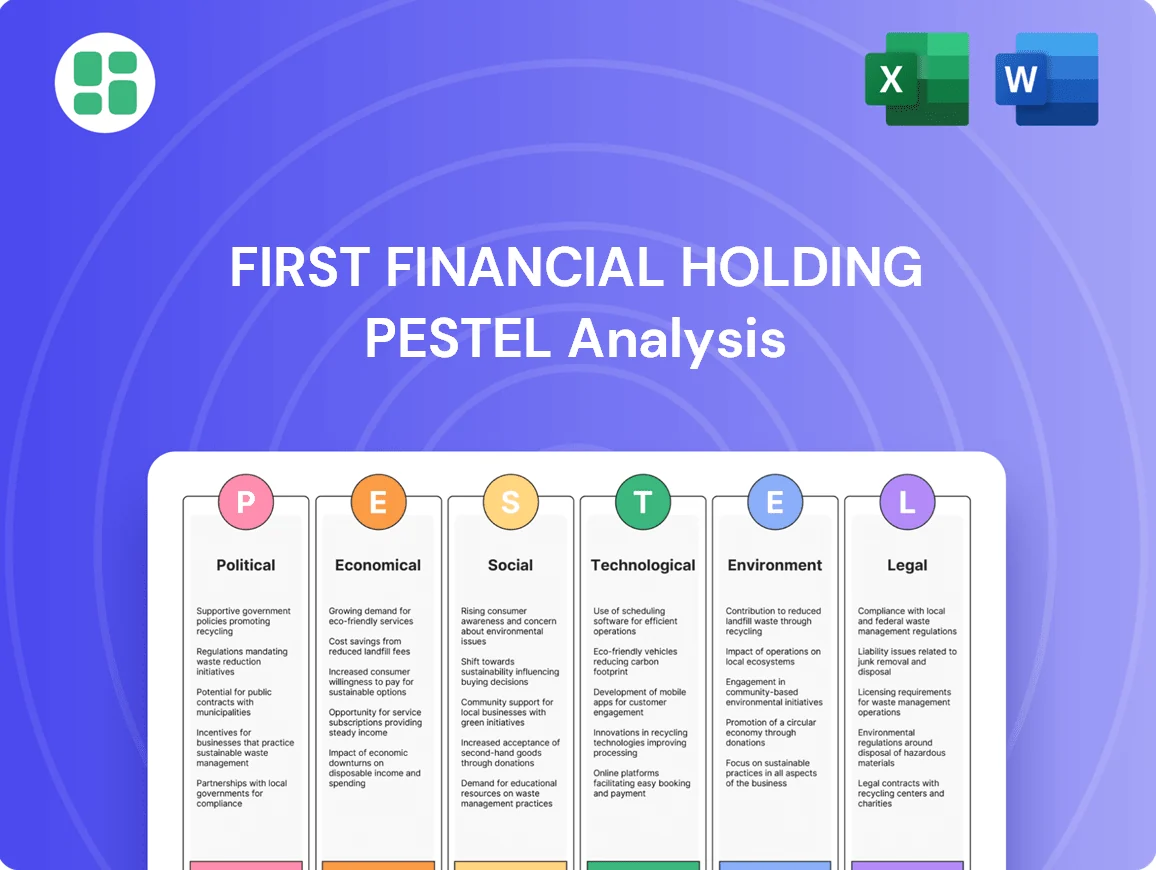
RiseSun Real Estate Development PESTLE Analysis

Your Competitive Advantage Starts with This Report
Uncover the critical political, economic, social, technological, legal, and environmental factors shaping RiseSun Real Estate Development's trajectory. This comprehensive PESTLE analysis provides actionable intelligence to navigate market complexities and identify lucrative opportunities. Don't just react to change—anticipate it. Download the full report now for a strategic advantage.
Political factors

Government Policy Direction
The Chinese government's unwavering focus on stabilizing the real estate market, a key theme in the 2025 Government Work Report, represents a significant policy pivot. This dedication is designed to bolster market confidence and foster sustainable growth in the housing sector.
These government directives directly shape RiseSun Real Estate Development's operational landscape and strategic decision-making processes.
Regulatory Easing and Stimulus Measures
Government initiatives since late 2024 have significantly eased real estate regulations. These include relaxing home purchase restrictions, lowering down payment requirements, and reducing mortgage interest rates, all designed to invigorate the housing market.
These policy shifts are expected to directly benefit developers like RiseSun by boosting buyer affordability and demand. For instance, a potential reduction in the benchmark mortgage rate by 0.25% in early 2025 could translate to substantial savings for new homeowners, thereby stimulating sales volumes.

'White List' Financing Mechanism
The 'white list' financing mechanism, a key political initiative, is crucial for stabilizing the real estate sector. This program aims to ensure developers can secure funds for project completion, thereby preventing defaults and ensuring timely delivery of homes. As of early 2024, this mechanism had already facilitated over 6 trillion yuan in loans, directly impacting companies like RiseSun by providing a more stable financing environment.

Urban Renewal and Land Supply Policies
Government initiatives aimed at revitalizing urban areas, such as redeveloping old villages and renovating aging housing stock, directly influence land availability and development potential. These policies, coupled with efforts to optimize urban spatial planning and manage the supply of new land, are critical for shaping future growth opportunities for real estate developers like RiseSun. For instance, by 2024, many cities are seeing increased focus on brownfield redevelopment, with some regions reporting over 30% of new housing starts coming from previously developed land.
RiseSun's core business, centered on residential and commercial property development, must adapt to these shifting urban planning priorities. The company's strategic alignment with government objectives for urban renewal and efficient land use will be paramount. As of early 2025, national housing targets in several key markets emphasize the renovation and upgrading of existing structures, potentially redirecting investment away from entirely new greenfield developments.
Key considerations for RiseSun include:
- Adapting to Urban Redevelopment Zones: Identifying and capitalizing on opportunities within government-designated urban renewal areas.
- Navigating Land Supply Controls: Understanding and responding to policies that manage the release and allocation of new development land.
- Aligning with Housing Renovation Trends: Integrating strategies for renovating and upgrading older properties into the business model.
- Forecasting Policy Impacts: Continuously monitoring and analyzing urban planning policies to anticipate their effect on future development projects and land values.
Geopolitical and Economic Stability
Broader geopolitical risks and the government's commitment to economic stability significantly shape investor and consumer sentiment in the real estate sector. These factors directly influence confidence in property markets, impacting demand and investment flows. For instance, in 2024, global economic uncertainty, including ongoing supply chain disruptions and inflation concerns, continues to be a key consideration for real estate developers like RiseSun.
While government policies often prioritize stability, external pressures can still present challenges. The overall economic climate, influenced by international trade relations and global growth forecasts, can affect RiseSun's operational performance and profitability. For example, the International Monetary Fund's projections for global growth in 2024, while showing some resilience, still highlight potential headwinds that could indirectly impact real estate investment.
- Geopolitical Stability: Global events and regional conflicts can create uncertainty, affecting international investment in real estate.
- Economic Stability Focus: Government efforts to maintain stable inflation and employment rates are crucial for consumer confidence in property purchases.
- Investor Confidence: A stable political and economic environment is essential for attracting both domestic and foreign direct investment into real estate development.
- External Pressures: Fluctuations in global energy prices or trade disputes can indirectly impact construction costs and consumer purchasing power, affecting demand for new properties.
China's Real Estate: Policy Shifts Drive Stability and Redevelopment
Government policies are central to China's real estate sector, with a strong emphasis on market stabilization and sustainable growth, as highlighted in the 2025 Government Work Report. Recent easing of regulations, including relaxed purchase restrictions and lower mortgage rates, aims to boost buyer affordability and demand, directly benefiting developers like RiseSun. The 'white list' financing mechanism, which had already facilitated over 6 trillion yuan in loans by early 2024, provides crucial funding stability for projects.
Urban redevelopment and renovation initiatives are reshaping land availability and development potential, with many cities focusing on brownfield redevelopment, accounting for over 30% of new housing starts in some regions by 2024. RiseSun must align its strategies with these urban planning priorities, particularly the national trend towards renovating existing structures, which was a key focus in early 2025 housing targets.
Geopolitical stability and economic management are critical for investor and consumer sentiment, influencing demand and investment flows. Global economic uncertainties in 2024, such as supply chain disruptions, continue to be a factor, and the IMF's global growth forecasts for 2024 indicate potential headwinds that could indirectly impact real estate investment.
| Policy Area | Description | Impact on RiseSun | Key Data Point/Example |
|---|---|---|---|
| Market Stabilization | Government efforts to ensure steady housing market growth. | Boosts buyer confidence and sales. | Easing of purchase restrictions and lower mortgage rates (early 2025). |
| Financing Support | Programs ensuring developer access to project funding. | Reduces default risk and ensures project completion. | 'White list' financing mechanism facilitated over 6 trillion yuan in loans (early 2024). |
| Urban Planning | Focus on redevelopment and renovation of existing areas. | Shifts development focus from greenfield to brownfield sites. | Over 30% of new housing starts from brownfield redevelopment in some cities (2024). |
| Economic Climate | Government's role in maintaining economic stability. | Influences consumer purchasing power and investor sentiment. | Global economic uncertainties in 2024 impacting supply chains and inflation. |
What is included in the product
 Detailed Word Document
This PESTLE analysis provides a comprehensive examination of the external macro-environmental factors influencing RiseSun Real Estate Development, covering Political, Economic, Social, Technological, Environmental, and Legal dimensions.
It offers actionable insights and forward-looking perspectives to help RiseSun identify strategic opportunities and mitigate potential threats within its operating landscape.

 Customizable Excel Spreadsheet
The RiseSun Real Estate Development PESTLE Analysis provides a clear, summarized version of external factors, relieving the pain point of information overload during strategic planning meetings.
This analysis, segmented by PESTEL categories, offers a quick interpretation of market dynamics, easing the burden of deciphering complex external influences for stakeholders.
Economic factors

Property Market Downturn and Stabilization
China's property market has been under considerable strain since 2020, with a notable downturn in housing prices and sales continuing into 2024. This persistent downward pressure presents a significant hurdle for real estate developers such as RiseSun.
While some stabilization is being observed in major urban centers, including first and second-tier cities, a widespread recovery across the entire market is unlikely in 2025. For instance, data from January-April 2024 indicated a year-on-year decline in property sales volume, underscoring the ongoing challenges.
Access to Financing and Debt Management
The real estate sector's reliance on debt means that high leverage and developer insolvencies, such as those seen in 2024, directly constrict financing options. This environment makes securing new funding more challenging and costly for all players.
RiseSun's financial health, marked by substantial net income losses and overdue debts as of early 2025, underscores this challenge. The company's active pursuit of debt extensions and asset-for-debt swaps highlights the critical need for effective debt management in navigating these difficult economic conditions.

Consumer Confidence and Purchasing Power
Consumer confidence remains a significant headwind for the housing market, impacting RiseSun Real Estate Development. Weakening sentiment, coupled with a surge in household debt, directly curtails potential buyers' capacity and eagerness to invest in new properties. This dynamic directly translates to lower sales volumes and consequently, reduced revenue streams for the company.
Declining property income growth further exacerbates these challenges. As rental yields and property appreciation slow, the attractiveness of real estate as an investment diminishes, further dampening purchasing power. For RiseSun, this means a more challenging sales environment and a need to adapt strategies to a market where consumers are more cautious with their spending.

Real Estate Investment and Construction Trends
Real estate investment has experienced a significant downturn, leading many developers to focus on finishing current projects rather than initiating new ones. This cautious approach is a direct response to economic uncertainties and shifting market demands.
While construction activity is showing signs of stabilizing in 2025, the number of new projects commencing remains subdued. This trend directly affects the future development pipeline for companies like RiseSun, necessitating strategic planning to navigate the evolving landscape.
- Investment Contraction: National Association of Realtors data indicated a sharp decline in new residential construction starts throughout 2024, a trend expected to moderate but not fully reverse by mid-2025.
- Developer Caution: Many developers are reporting extended timelines for securing financing and permits for new projects, reflecting a risk-averse sentiment in the market.
- Pipeline Impact: The reduced pace of new starts in 2024-2025 will likely lead to a tighter supply of new housing units in subsequent years, potentially influencing pricing and demand.
Regional Market Divergence
The Chinese property market is experiencing significant regional divergence, impacting real estate developers like RiseSun. First-tier cities such as Beijing and Shanghai are demonstrating greater resilience, with some areas showing stabilization and even modest price increases in late 2024. Conversely, many lower-tier cities are grappling with substantial oversupply and persistent price depreciation, creating a challenging environment for sales and new development.
RiseSun's strategic allocation of its property portfolio across these varying city tiers is a critical determinant of its financial performance. A heavy concentration in distressed lower-tier markets could weigh down overall profitability, while a balanced or dominant presence in more stable first-tier cities may offer a buffer against broader market downturns.
- First-tier cities like Shanghai saw average home prices in new developments rise by approximately 1.5% year-on-year by Q3 2024, indicating a degree of market strength.
- Lower-tier cities, in contrast, experienced average price declines of over 3% in the same period, highlighting the depth of their challenges.
- Developer exposure to these bifurcated markets directly influences sales volume, revenue generation, and the valuation of unsold inventory.
China's Property Market: Economic Headwinds Persist for Developers
Economic factors continue to shape the real estate landscape for developers like RiseSun. Persistent weakness in China's property market, marked by declining sales and prices in many regions throughout 2024 and into early 2025, creates a challenging operating environment. Consumer confidence remains subdued, further limiting purchasing power and impacting sales volumes.
The sector's reliance on debt and the prevalence of developer insolvencies in 2024 have tightened financing conditions, making capital acquisition more difficult and costly for all participants. This financial strain is evident in RiseSun's own reported net income losses and overdue debts as of early 2025, necessitating active debt management strategies.
While some stabilization is noted in major urban centers, the overall market recovery is expected to be gradual through 2025, with lower-tier cities continuing to face significant headwinds from oversupply and price depreciation. This regional divergence means that developer performance is highly dependent on their geographical exposure.
| Economic Factor | 2024/2025 Trend | Impact on RiseSun |
|---|---|---|
| Property Market Performance | Downturn in prices and sales, with regional divergence. | Reduced sales volume, revenue pressure, inventory valuation challenges. |
| Consumer Confidence | Subdued sentiment, high household debt. | Lower purchasing power, decreased demand for new properties. |
| Financing Conditions | Tightened due to developer insolvencies and high leverage. | Increased cost and difficulty in securing new funding. |
| Investment Activity | Contraction in new project starts, focus on completing existing ones. | Limited pipeline for future development, strategic planning required. |
Full Version Awaits
RiseSun Real Estate Development PESTLE Analysis
The preview shown here is the exact RiseSun Real Estate Development PESTLE Analysis you’ll receive after purchase—fully formatted and ready to use.
This comprehensive analysis covers Political, Economic, Social, Technological, Legal, and Environmental factors impacting RiseSun. What you see is the complete, professionally structured document, no surprises.
The content and structure shown in this preview is the same RiseSun Real Estate Development PESTLE Analysis document you’ll download after payment, providing actionable insights for your strategic planning.

Product Information
Product Information
Shipping & Returns
Shipping & Returns

RiseSun Real Estate Development PESTLE Analysis
RiseSun Real Estate Development PESTLE Analysis
Your Competitive Advantage Starts with This Report
Uncover the critical political, economic, social, technological, legal, and environmental factors shaping RiseSun Real Estate Development's trajectory. This comprehensive PESTLE analysis provides actionable intelligence to navigate market complexities and identify lucrative opportunities. Don't just react to change—anticipate it. Download the full report now for a strategic advantage.
Political factors
Government Policy Direction
The Chinese government's unwavering focus on stabilizing the real estate market, a key theme in the 2025 Government Work Report, represents a significant policy pivot. This dedication is designed to bolster market confidence and foster sustainable growth in the housing sector.
These government directives directly shape RiseSun Real Estate Development's operational landscape and strategic decision-making processes.
Regulatory Easing and Stimulus Measures
Government initiatives since late 2024 have significantly eased real estate regulations. These include relaxing home purchase restrictions, lowering down payment requirements, and reducing mortgage interest rates, all designed to invigorate the housing market.
These policy shifts are expected to directly benefit developers like RiseSun by boosting buyer affordability and demand. For instance, a potential reduction in the benchmark mortgage rate by 0.25% in early 2025 could translate to substantial savings for new homeowners, thereby stimulating sales volumes.
'White List' Financing Mechanism
The 'white list' financing mechanism, a key political initiative, is crucial for stabilizing the real estate sector. This program aims to ensure developers can secure funds for project completion, thereby preventing defaults and ensuring timely delivery of homes. As of early 2024, this mechanism had already facilitated over 6 trillion yuan in loans, directly impacting companies like RiseSun by providing a more stable financing environment.
Urban Renewal and Land Supply Policies
Government initiatives aimed at revitalizing urban areas, such as redeveloping old villages and renovating aging housing stock, directly influence land availability and development potential. These policies, coupled with efforts to optimize urban spatial planning and manage the supply of new land, are critical for shaping future growth opportunities for real estate developers like RiseSun. For instance, by 2024, many cities are seeing increased focus on brownfield redevelopment, with some regions reporting over 30% of new housing starts coming from previously developed land.
RiseSun's core business, centered on residential and commercial property development, must adapt to these shifting urban planning priorities. The company's strategic alignment with government objectives for urban renewal and efficient land use will be paramount. As of early 2025, national housing targets in several key markets emphasize the renovation and upgrading of existing structures, potentially redirecting investment away from entirely new greenfield developments.
Key considerations for RiseSun include:
- Adapting to Urban Redevelopment Zones: Identifying and capitalizing on opportunities within government-designated urban renewal areas.
- Navigating Land Supply Controls: Understanding and responding to policies that manage the release and allocation of new development land.
- Aligning with Housing Renovation Trends: Integrating strategies for renovating and upgrading older properties into the business model.
- Forecasting Policy Impacts: Continuously monitoring and analyzing urban planning policies to anticipate their effect on future development projects and land values.
Geopolitical and Economic Stability
Broader geopolitical risks and the government's commitment to economic stability significantly shape investor and consumer sentiment in the real estate sector. These factors directly influence confidence in property markets, impacting demand and investment flows. For instance, in 2024, global economic uncertainty, including ongoing supply chain disruptions and inflation concerns, continues to be a key consideration for real estate developers like RiseSun.
While government policies often prioritize stability, external pressures can still present challenges. The overall economic climate, influenced by international trade relations and global growth forecasts, can affect RiseSun's operational performance and profitability. For example, the International Monetary Fund's projections for global growth in 2024, while showing some resilience, still highlight potential headwinds that could indirectly impact real estate investment.
- Geopolitical Stability: Global events and regional conflicts can create uncertainty, affecting international investment in real estate.
- Economic Stability Focus: Government efforts to maintain stable inflation and employment rates are crucial for consumer confidence in property purchases.
- Investor Confidence: A stable political and economic environment is essential for attracting both domestic and foreign direct investment into real estate development.
- External Pressures: Fluctuations in global energy prices or trade disputes can indirectly impact construction costs and consumer purchasing power, affecting demand for new properties.
China's Real Estate: Policy Shifts Drive Stability and Redevelopment
Government policies are central to China's real estate sector, with a strong emphasis on market stabilization and sustainable growth, as highlighted in the 2025 Government Work Report. Recent easing of regulations, including relaxed purchase restrictions and lower mortgage rates, aims to boost buyer affordability and demand, directly benefiting developers like RiseSun. The 'white list' financing mechanism, which had already facilitated over 6 trillion yuan in loans by early 2024, provides crucial funding stability for projects.
Urban redevelopment and renovation initiatives are reshaping land availability and development potential, with many cities focusing on brownfield redevelopment, accounting for over 30% of new housing starts in some regions by 2024. RiseSun must align its strategies with these urban planning priorities, particularly the national trend towards renovating existing structures, which was a key focus in early 2025 housing targets.
Geopolitical stability and economic management are critical for investor and consumer sentiment, influencing demand and investment flows. Global economic uncertainties in 2024, such as supply chain disruptions, continue to be a factor, and the IMF's global growth forecasts for 2024 indicate potential headwinds that could indirectly impact real estate investment.
| Policy Area | Description | Impact on RiseSun | Key Data Point/Example |
|---|---|---|---|
| Market Stabilization | Government efforts to ensure steady housing market growth. | Boosts buyer confidence and sales. | Easing of purchase restrictions and lower mortgage rates (early 2025). |
| Financing Support | Programs ensuring developer access to project funding. | Reduces default risk and ensures project completion. | 'White list' financing mechanism facilitated over 6 trillion yuan in loans (early 2024). |
| Urban Planning | Focus on redevelopment and renovation of existing areas. | Shifts development focus from greenfield to brownfield sites. | Over 30% of new housing starts from brownfield redevelopment in some cities (2024). |
| Economic Climate | Government's role in maintaining economic stability. | Influences consumer purchasing power and investor sentiment. | Global economic uncertainties in 2024 impacting supply chains and inflation. |
What is included in the product
Detailed Word Document
This PESTLE analysis provides a comprehensive examination of the external macro-environmental factors influencing RiseSun Real Estate Development, covering Political, Economic, Social, Technological, Environmental, and Legal dimensions.
It offers actionable insights and forward-looking perspectives to help RiseSun identify strategic opportunities and mitigate potential threats within its operating landscape.
Customizable Excel Spreadsheet
The RiseSun Real Estate Development PESTLE Analysis provides a clear, summarized version of external factors, relieving the pain point of information overload during strategic planning meetings.
This analysis, segmented by PESTEL categories, offers a quick interpretation of market dynamics, easing the burden of deciphering complex external influences for stakeholders.
Economic factors
Property Market Downturn and Stabilization
China's property market has been under considerable strain since 2020, with a notable downturn in housing prices and sales continuing into 2024. This persistent downward pressure presents a significant hurdle for real estate developers such as RiseSun.
While some stabilization is being observed in major urban centers, including first and second-tier cities, a widespread recovery across the entire market is unlikely in 2025. For instance, data from January-April 2024 indicated a year-on-year decline in property sales volume, underscoring the ongoing challenges.
Access to Financing and Debt Management
The real estate sector's reliance on debt means that high leverage and developer insolvencies, such as those seen in 2024, directly constrict financing options. This environment makes securing new funding more challenging and costly for all players.
RiseSun's financial health, marked by substantial net income losses and overdue debts as of early 2025, underscores this challenge. The company's active pursuit of debt extensions and asset-for-debt swaps highlights the critical need for effective debt management in navigating these difficult economic conditions.
Consumer Confidence and Purchasing Power
Consumer confidence remains a significant headwind for the housing market, impacting RiseSun Real Estate Development. Weakening sentiment, coupled with a surge in household debt, directly curtails potential buyers' capacity and eagerness to invest in new properties. This dynamic directly translates to lower sales volumes and consequently, reduced revenue streams for the company.
Declining property income growth further exacerbates these challenges. As rental yields and property appreciation slow, the attractiveness of real estate as an investment diminishes, further dampening purchasing power. For RiseSun, this means a more challenging sales environment and a need to adapt strategies to a market where consumers are more cautious with their spending.
Real Estate Investment and Construction Trends
Real estate investment has experienced a significant downturn, leading many developers to focus on finishing current projects rather than initiating new ones. This cautious approach is a direct response to economic uncertainties and shifting market demands.
While construction activity is showing signs of stabilizing in 2025, the number of new projects commencing remains subdued. This trend directly affects the future development pipeline for companies like RiseSun, necessitating strategic planning to navigate the evolving landscape.
- Investment Contraction: National Association of Realtors data indicated a sharp decline in new residential construction starts throughout 2024, a trend expected to moderate but not fully reverse by mid-2025.
- Developer Caution: Many developers are reporting extended timelines for securing financing and permits for new projects, reflecting a risk-averse sentiment in the market.
- Pipeline Impact: The reduced pace of new starts in 2024-2025 will likely lead to a tighter supply of new housing units in subsequent years, potentially influencing pricing and demand.
Regional Market Divergence
The Chinese property market is experiencing significant regional divergence, impacting real estate developers like RiseSun. First-tier cities such as Beijing and Shanghai are demonstrating greater resilience, with some areas showing stabilization and even modest price increases in late 2024. Conversely, many lower-tier cities are grappling with substantial oversupply and persistent price depreciation, creating a challenging environment for sales and new development.
RiseSun's strategic allocation of its property portfolio across these varying city tiers is a critical determinant of its financial performance. A heavy concentration in distressed lower-tier markets could weigh down overall profitability, while a balanced or dominant presence in more stable first-tier cities may offer a buffer against broader market downturns.
- First-tier cities like Shanghai saw average home prices in new developments rise by approximately 1.5% year-on-year by Q3 2024, indicating a degree of market strength.
- Lower-tier cities, in contrast, experienced average price declines of over 3% in the same period, highlighting the depth of their challenges.
- Developer exposure to these bifurcated markets directly influences sales volume, revenue generation, and the valuation of unsold inventory.
China's Property Market: Economic Headwinds Persist for Developers
Economic factors continue to shape the real estate landscape for developers like RiseSun. Persistent weakness in China's property market, marked by declining sales and prices in many regions throughout 2024 and into early 2025, creates a challenging operating environment. Consumer confidence remains subdued, further limiting purchasing power and impacting sales volumes.
The sector's reliance on debt and the prevalence of developer insolvencies in 2024 have tightened financing conditions, making capital acquisition more difficult and costly for all participants. This financial strain is evident in RiseSun's own reported net income losses and overdue debts as of early 2025, necessitating active debt management strategies.
While some stabilization is noted in major urban centers, the overall market recovery is expected to be gradual through 2025, with lower-tier cities continuing to face significant headwinds from oversupply and price depreciation. This regional divergence means that developer performance is highly dependent on their geographical exposure.
| Economic Factor | 2024/2025 Trend | Impact on RiseSun |
|---|---|---|
| Property Market Performance | Downturn in prices and sales, with regional divergence. | Reduced sales volume, revenue pressure, inventory valuation challenges. |
| Consumer Confidence | Subdued sentiment, high household debt. | Lower purchasing power, decreased demand for new properties. |
| Financing Conditions | Tightened due to developer insolvencies and high leverage. | Increased cost and difficulty in securing new funding. |
| Investment Activity | Contraction in new project starts, focus on completing existing ones. | Limited pipeline for future development, strategic planning required. |
Full Version Awaits
RiseSun Real Estate Development PESTLE Analysis
The preview shown here is the exact RiseSun Real Estate Development PESTLE Analysis you’ll receive after purchase—fully formatted and ready to use.
This comprehensive analysis covers Political, Economic, Social, Technological, Legal, and Environmental factors impacting RiseSun. What you see is the complete, professionally structured document, no surprises.
The content and structure shown in this preview is the same RiseSun Real Estate Development PESTLE Analysis document you’ll download after payment, providing actionable insights for your strategic planning.
Original: $10.00
-65%$10.00
$3.50Product Information
Product Information
Shipping & Returns
Shipping & Returns
Description
Your Competitive Advantage Starts with This Report
Uncover the critical political, economic, social, technological, legal, and environmental factors shaping RiseSun Real Estate Development's trajectory. This comprehensive PESTLE analysis provides actionable intelligence to navigate market complexities and identify lucrative opportunities. Don't just react to change—anticipate it. Download the full report now for a strategic advantage.
Political factors
Government Policy Direction
The Chinese government's unwavering focus on stabilizing the real estate market, a key theme in the 2025 Government Work Report, represents a significant policy pivot. This dedication is designed to bolster market confidence and foster sustainable growth in the housing sector.
These government directives directly shape RiseSun Real Estate Development's operational landscape and strategic decision-making processes.
Regulatory Easing and Stimulus Measures
Government initiatives since late 2024 have significantly eased real estate regulations. These include relaxing home purchase restrictions, lowering down payment requirements, and reducing mortgage interest rates, all designed to invigorate the housing market.
These policy shifts are expected to directly benefit developers like RiseSun by boosting buyer affordability and demand. For instance, a potential reduction in the benchmark mortgage rate by 0.25% in early 2025 could translate to substantial savings for new homeowners, thereby stimulating sales volumes.
'White List' Financing Mechanism
The 'white list' financing mechanism, a key political initiative, is crucial for stabilizing the real estate sector. This program aims to ensure developers can secure funds for project completion, thereby preventing defaults and ensuring timely delivery of homes. As of early 2024, this mechanism had already facilitated over 6 trillion yuan in loans, directly impacting companies like RiseSun by providing a more stable financing environment.
Urban Renewal and Land Supply Policies
Government initiatives aimed at revitalizing urban areas, such as redeveloping old villages and renovating aging housing stock, directly influence land availability and development potential. These policies, coupled with efforts to optimize urban spatial planning and manage the supply of new land, are critical for shaping future growth opportunities for real estate developers like RiseSun. For instance, by 2024, many cities are seeing increased focus on brownfield redevelopment, with some regions reporting over 30% of new housing starts coming from previously developed land.
RiseSun's core business, centered on residential and commercial property development, must adapt to these shifting urban planning priorities. The company's strategic alignment with government objectives for urban renewal and efficient land use will be paramount. As of early 2025, national housing targets in several key markets emphasize the renovation and upgrading of existing structures, potentially redirecting investment away from entirely new greenfield developments.
Key considerations for RiseSun include:
- Adapting to Urban Redevelopment Zones: Identifying and capitalizing on opportunities within government-designated urban renewal areas.
- Navigating Land Supply Controls: Understanding and responding to policies that manage the release and allocation of new development land.
- Aligning with Housing Renovation Trends: Integrating strategies for renovating and upgrading older properties into the business model.
- Forecasting Policy Impacts: Continuously monitoring and analyzing urban planning policies to anticipate their effect on future development projects and land values.
Geopolitical and Economic Stability
Broader geopolitical risks and the government's commitment to economic stability significantly shape investor and consumer sentiment in the real estate sector. These factors directly influence confidence in property markets, impacting demand and investment flows. For instance, in 2024, global economic uncertainty, including ongoing supply chain disruptions and inflation concerns, continues to be a key consideration for real estate developers like RiseSun.
While government policies often prioritize stability, external pressures can still present challenges. The overall economic climate, influenced by international trade relations and global growth forecasts, can affect RiseSun's operational performance and profitability. For example, the International Monetary Fund's projections for global growth in 2024, while showing some resilience, still highlight potential headwinds that could indirectly impact real estate investment.
- Geopolitical Stability: Global events and regional conflicts can create uncertainty, affecting international investment in real estate.
- Economic Stability Focus: Government efforts to maintain stable inflation and employment rates are crucial for consumer confidence in property purchases.
- Investor Confidence: A stable political and economic environment is essential for attracting both domestic and foreign direct investment into real estate development.
- External Pressures: Fluctuations in global energy prices or trade disputes can indirectly impact construction costs and consumer purchasing power, affecting demand for new properties.
China's Real Estate: Policy Shifts Drive Stability and Redevelopment
Government policies are central to China's real estate sector, with a strong emphasis on market stabilization and sustainable growth, as highlighted in the 2025 Government Work Report. Recent easing of regulations, including relaxed purchase restrictions and lower mortgage rates, aims to boost buyer affordability and demand, directly benefiting developers like RiseSun. The 'white list' financing mechanism, which had already facilitated over 6 trillion yuan in loans by early 2024, provides crucial funding stability for projects.
Urban redevelopment and renovation initiatives are reshaping land availability and development potential, with many cities focusing on brownfield redevelopment, accounting for over 30% of new housing starts in some regions by 2024. RiseSun must align its strategies with these urban planning priorities, particularly the national trend towards renovating existing structures, which was a key focus in early 2025 housing targets.
Geopolitical stability and economic management are critical for investor and consumer sentiment, influencing demand and investment flows. Global economic uncertainties in 2024, such as supply chain disruptions, continue to be a factor, and the IMF's global growth forecasts for 2024 indicate potential headwinds that could indirectly impact real estate investment.
| Policy Area | Description | Impact on RiseSun | Key Data Point/Example |
|---|---|---|---|
| Market Stabilization | Government efforts to ensure steady housing market growth. | Boosts buyer confidence and sales. | Easing of purchase restrictions and lower mortgage rates (early 2025). |
| Financing Support | Programs ensuring developer access to project funding. | Reduces default risk and ensures project completion. | 'White list' financing mechanism facilitated over 6 trillion yuan in loans (early 2024). |
| Urban Planning | Focus on redevelopment and renovation of existing areas. | Shifts development focus from greenfield to brownfield sites. | Over 30% of new housing starts from brownfield redevelopment in some cities (2024). |
| Economic Climate | Government's role in maintaining economic stability. | Influences consumer purchasing power and investor sentiment. | Global economic uncertainties in 2024 impacting supply chains and inflation. |
What is included in the product
Detailed Word Document
This PESTLE analysis provides a comprehensive examination of the external macro-environmental factors influencing RiseSun Real Estate Development, covering Political, Economic, Social, Technological, Environmental, and Legal dimensions.
It offers actionable insights and forward-looking perspectives to help RiseSun identify strategic opportunities and mitigate potential threats within its operating landscape.
Customizable Excel Spreadsheet
The RiseSun Real Estate Development PESTLE Analysis provides a clear, summarized version of external factors, relieving the pain point of information overload during strategic planning meetings.
This analysis, segmented by PESTEL categories, offers a quick interpretation of market dynamics, easing the burden of deciphering complex external influences for stakeholders.
Economic factors
Property Market Downturn and Stabilization
China's property market has been under considerable strain since 2020, with a notable downturn in housing prices and sales continuing into 2024. This persistent downward pressure presents a significant hurdle for real estate developers such as RiseSun.
While some stabilization is being observed in major urban centers, including first and second-tier cities, a widespread recovery across the entire market is unlikely in 2025. For instance, data from January-April 2024 indicated a year-on-year decline in property sales volume, underscoring the ongoing challenges.
Access to Financing and Debt Management
The real estate sector's reliance on debt means that high leverage and developer insolvencies, such as those seen in 2024, directly constrict financing options. This environment makes securing new funding more challenging and costly for all players.
RiseSun's financial health, marked by substantial net income losses and overdue debts as of early 2025, underscores this challenge. The company's active pursuit of debt extensions and asset-for-debt swaps highlights the critical need for effective debt management in navigating these difficult economic conditions.
Consumer Confidence and Purchasing Power
Consumer confidence remains a significant headwind for the housing market, impacting RiseSun Real Estate Development. Weakening sentiment, coupled with a surge in household debt, directly curtails potential buyers' capacity and eagerness to invest in new properties. This dynamic directly translates to lower sales volumes and consequently, reduced revenue streams for the company.
Declining property income growth further exacerbates these challenges. As rental yields and property appreciation slow, the attractiveness of real estate as an investment diminishes, further dampening purchasing power. For RiseSun, this means a more challenging sales environment and a need to adapt strategies to a market where consumers are more cautious with their spending.
Real Estate Investment and Construction Trends
Real estate investment has experienced a significant downturn, leading many developers to focus on finishing current projects rather than initiating new ones. This cautious approach is a direct response to economic uncertainties and shifting market demands.
While construction activity is showing signs of stabilizing in 2025, the number of new projects commencing remains subdued. This trend directly affects the future development pipeline for companies like RiseSun, necessitating strategic planning to navigate the evolving landscape.
- Investment Contraction: National Association of Realtors data indicated a sharp decline in new residential construction starts throughout 2024, a trend expected to moderate but not fully reverse by mid-2025.
- Developer Caution: Many developers are reporting extended timelines for securing financing and permits for new projects, reflecting a risk-averse sentiment in the market.
- Pipeline Impact: The reduced pace of new starts in 2024-2025 will likely lead to a tighter supply of new housing units in subsequent years, potentially influencing pricing and demand.
Regional Market Divergence
The Chinese property market is experiencing significant regional divergence, impacting real estate developers like RiseSun. First-tier cities such as Beijing and Shanghai are demonstrating greater resilience, with some areas showing stabilization and even modest price increases in late 2024. Conversely, many lower-tier cities are grappling with substantial oversupply and persistent price depreciation, creating a challenging environment for sales and new development.
RiseSun's strategic allocation of its property portfolio across these varying city tiers is a critical determinant of its financial performance. A heavy concentration in distressed lower-tier markets could weigh down overall profitability, while a balanced or dominant presence in more stable first-tier cities may offer a buffer against broader market downturns.
- First-tier cities like Shanghai saw average home prices in new developments rise by approximately 1.5% year-on-year by Q3 2024, indicating a degree of market strength.
- Lower-tier cities, in contrast, experienced average price declines of over 3% in the same period, highlighting the depth of their challenges.
- Developer exposure to these bifurcated markets directly influences sales volume, revenue generation, and the valuation of unsold inventory.
China's Property Market: Economic Headwinds Persist for Developers
Economic factors continue to shape the real estate landscape for developers like RiseSun. Persistent weakness in China's property market, marked by declining sales and prices in many regions throughout 2024 and into early 2025, creates a challenging operating environment. Consumer confidence remains subdued, further limiting purchasing power and impacting sales volumes.
The sector's reliance on debt and the prevalence of developer insolvencies in 2024 have tightened financing conditions, making capital acquisition more difficult and costly for all participants. This financial strain is evident in RiseSun's own reported net income losses and overdue debts as of early 2025, necessitating active debt management strategies.
While some stabilization is noted in major urban centers, the overall market recovery is expected to be gradual through 2025, with lower-tier cities continuing to face significant headwinds from oversupply and price depreciation. This regional divergence means that developer performance is highly dependent on their geographical exposure.
| Economic Factor | 2024/2025 Trend | Impact on RiseSun |
|---|---|---|
| Property Market Performance | Downturn in prices and sales, with regional divergence. | Reduced sales volume, revenue pressure, inventory valuation challenges. |
| Consumer Confidence | Subdued sentiment, high household debt. | Lower purchasing power, decreased demand for new properties. |
| Financing Conditions | Tightened due to developer insolvencies and high leverage. | Increased cost and difficulty in securing new funding. |
| Investment Activity | Contraction in new project starts, focus on completing existing ones. | Limited pipeline for future development, strategic planning required. |
Full Version Awaits
RiseSun Real Estate Development PESTLE Analysis
The preview shown here is the exact RiseSun Real Estate Development PESTLE Analysis you’ll receive after purchase—fully formatted and ready to use.
This comprehensive analysis covers Political, Economic, Social, Technological, Legal, and Environmental factors impacting RiseSun. What you see is the complete, professionally structured document, no surprises.
The content and structure shown in this preview is the same RiseSun Real Estate Development PESTLE Analysis document you’ll download after payment, providing actionable insights for your strategic planning.