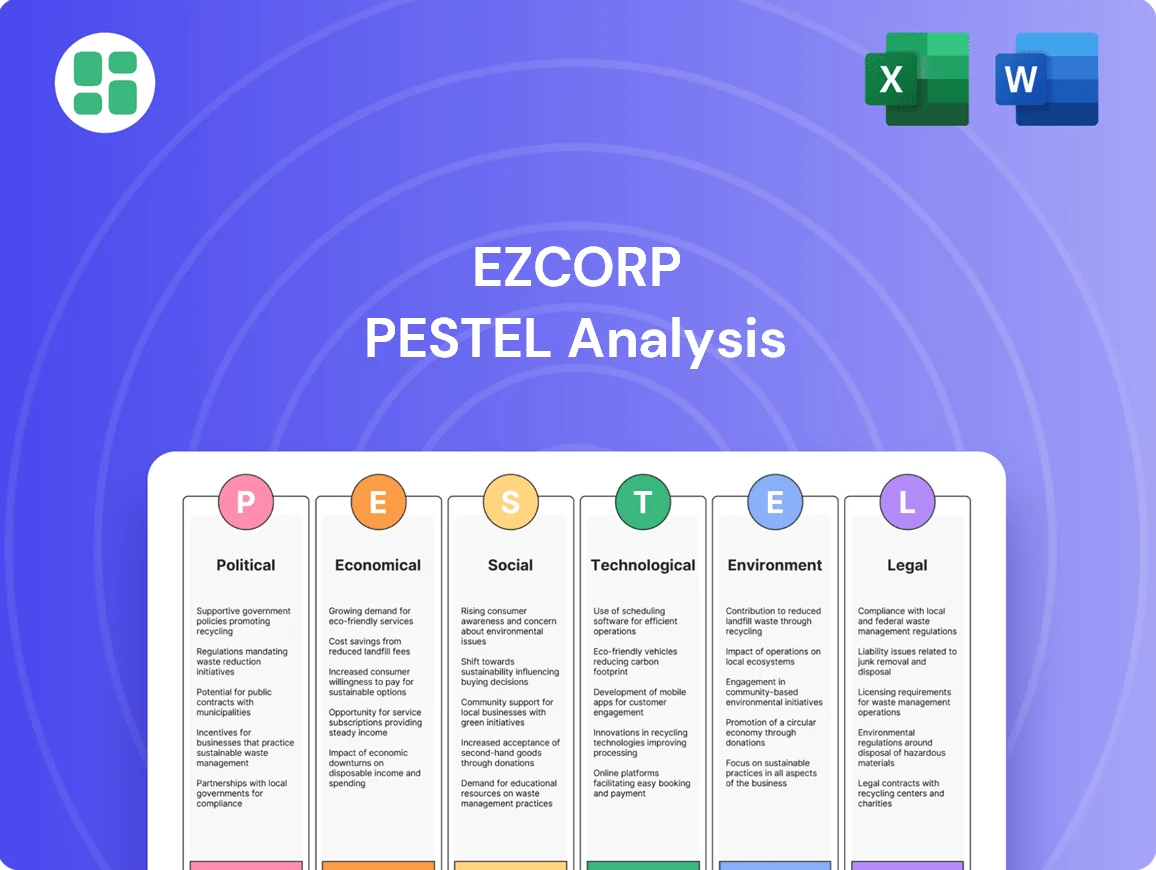
Richards Packaging PESTLE Analysis

Skip the Research. Get the Strategy.
Uncover the intricate web of political, economic, social, technological, legal, and environmental factors shaping Richards Packaging's trajectory. Our meticulously crafted PESTLE analysis provides the strategic foresight you need to navigate this dynamic landscape. Gain a competitive advantage by understanding these critical external forces. Download the full version now for actionable intelligence and informed decision-making.
Political factors

Government Regulations on Packaging Materials
Governments, especially in Canada, are tightening rules on plastic waste and the use of recycled materials. For example, a Federal Plastics Registry is now in place, demanding thorough reporting on plastic resins and products. Proposed regulations also aim to mandate minimum levels of post-consumer recycled (PCR) content in packaging.
Richards Packaging, operating as a distributor, faces the challenge of ensuring all sourced and distributed products meet these changing provincial and federal requirements. This includes staying ahead of upcoming rules like those potentially requiring 30% PCR content in certain plastic packaging by 2026.
Trade Policies and Tariffs
Global and regional trade policies, including potential tariffs, can significantly impact the cost and availability of packaging components and raw materials for Richards Packaging. For instance, changes in trade agreements or the imposition of new tariffs on plastics or paper products could directly increase input costs. Richards Packaging's ability to source efficiently and maintain competitive pricing relies on navigating these international trade landscapes, which are constantly evolving.
Fluctuations in currency exchange rates, such as the US/Cdn dollar, also influence the cost of imported goods, directly affecting profitability. In 2024, the Canadian dollar experienced volatility against the US dollar, impacting companies like Richards Packaging that source materials internationally. For example, a weaker Canadian dollar would make imported raw materials more expensive, potentially squeezing profit margins if these costs cannot be passed on to customers.

Government Support for Sustainable Initiatives
Governments worldwide are increasingly incentivizing sustainable packaging, a trend directly impacting Richards Packaging. For instance, the European Union's Circular Economy Action Plan, updated in 2020, aims to make all packaging reusable or recyclable by 2030, pushing for greater adoption of recycled content. This governmental push encourages investments in materials and technologies that align with circular economy principles, potentially benefiting companies like Richards Packaging that offer such solutions.
These supportive policies, including tax credits and grants for green manufacturing, can significantly influence Richards Packaging's strategic decisions regarding material sourcing and product development. By aligning with governmental priorities, such as reducing plastic waste or increasing the use of post-consumer recycled (PCR) content, the company can unlock new market segments and strengthen its reputation. For example, many North American jurisdictions are implementing Extended Producer Responsibility (EPR) schemes, which place financial responsibility for packaging waste management on producers, thereby increasing demand for easily recyclable or reusable packaging options.

Political Stability in Key Operating Regions
Political stability in North America, especially in Canada and the United States where Richards Packaging Inc. (RPackaging) primarily operates, is fundamental for its consistent business operations and supply chain dependability. Any political uncertainty, like unexpected leadership changes or significant policy shifts, could affect consumer confidence, the rigor of regulatory enforcement, and overall market dynamics. A stable political climate facilitates predictable business planning and investment for RPackaging.
For instance, the 2024 US presidential election cycle, while a period of potential policy debate, has historically seen established democratic processes maintain a degree of continuity for businesses. Similarly, Canadian federal and provincial governments have maintained relatively stable governance structures, though policy adjustments in areas like environmental regulations or trade agreements can occur. RPackaging's reliance on a predictable regulatory and economic landscape means these political factors are closely monitored.
- North American Political Stability: RPackaging's core markets in Canada and the US benefit from established democratic systems, fostering a generally predictable business environment.
- Impact of Uncertainty: Potential shifts in government policy or leadership changes can introduce volatility, affecting consumer sentiment and regulatory frameworks.
- Predictability for Planning: A stable political landscape allows RPackaging to engage in more reliable long-term strategic planning and capital investment decisions.
Antitrust Regulations and Market Consolidation
Antitrust regulations are a significant political factor influencing the packaging sector, particularly concerning market consolidation. These regulations aim to prevent monopolies and ensure a competitive landscape, directly impacting how companies like Richards Packaging can grow through mergers and acquisitions.
Richards Packaging has strategically utilized tuck-under acquisitions to broaden its offerings and expand its geographical footprint, with a notable focus on the healthcare packaging segment. For instance, in 2023, the company completed several acquisitions, though specific financial details related to antitrust reviews are often not publicly disclosed until after regulatory approval. These transactions, valued in the tens of millions of dollars range for individual deals, are subject to rigorous review by competition authorities to prevent undue market concentration.
- Regulatory Scrutiny: Antitrust bodies, such as the U.S. Federal Trade Commission (FTC) and the Canadian Competition Bureau, monitor M&A activity in the packaging industry to safeguard fair competition.
- Impact on Growth: Strict antitrust enforcement can slow or even block acquisitions, forcing companies to adjust their expansion strategies and potentially seek out smaller, less scrutinized targets.
- Healthcare Focus: The increasing consolidation in specialized packaging, like that for healthcare, draws particular attention from regulators concerned about potential price increases or reduced innovation for essential products.
- Market Dynamics: As of early 2024, the packaging industry continues to see consolidation, with regulatory approval remaining a critical hurdle for larger strategic combinations.
Packaging's Shifting Landscape: Regulations and Economic Factors
Government regulations concerning plastic waste and recycled content are a primary political factor for Richards Packaging. For example, Canada's Federal Plastics Registry mandates detailed reporting, and proposed rules may require 30% post-consumer recycled (PCR) content in packaging by 2026.
Trade policies and currency fluctuations also significantly impact operational costs. For instance, volatility in the US/Cdn dollar exchange rate in 2024 directly affected the cost of imported raw materials for companies like Richards Packaging.
Antitrust regulations are crucial, as they scrutinize mergers and acquisitions within the packaging sector. Regulatory bodies like the FTC and Canadian Competition Bureau ensure fair competition, influencing Richards Packaging's strategic growth through acquisitions, particularly in specialized areas like healthcare packaging.
What is included in the product
 Detailed Word Document
This PESTLE analysis examines the Political, Economic, Social, Technological, Environmental, and Legal factors impacting Richards Packaging, providing a comprehensive understanding of its external operating environment.

 Customizable Excel Spreadsheet
Provides a concise version that can be dropped into PowerPoints or used in group planning sessions, offering a clear overview of the external factors impacting Richards Packaging.
Helps support discussions on external risk and market positioning during planning sessions by highlighting key political, economic, social, technological, environmental, and legal influences.
Economic factors

Overall Economic Growth and Consumer Spending
The overall health of the economy and how much consumers are spending are key drivers for Richards Packaging. When the economy is strong, people tend to buy more goods, which means more products need packaging. This directly boosts demand for Richards Packaging's services across sectors like food, beverages, and healthcare.
For instance, a robust economic environment in 2024 would typically translate into higher production volumes for consumer goods, creating a greater need for packaging materials and solutions. Conversely, an economic downturn can dampen consumer spending, leading to lower sales for packaged goods and, consequently, reduced demand for packaging.
We saw this dynamic play out in the food and beverage sector during parts of 2024, where economic headwinds contributed to softer consumer demand, potentially impacting packaging orders. This highlights the sensitivity of the packaging industry to broader economic trends and consumer confidence levels.
Inflation and Raw Material Costs
Inflationary pressures are significantly impacting the cost of key raw materials for Richards Packaging, including plastics, paper, and glass. For instance, the Producer Price Index for plastics and rubber products saw an increase of 4.5% year-over-year in early 2024, directly affecting input costs.
These rising material expenses, coupled with increased transportation and labor costs, present a considerable challenge for Richards Packaging. Managing these escalating operational expenditures while keeping product prices competitive across their broad portfolio is crucial for maintaining healthy profit margins.
The company's ability to effectively pass on these increased costs to customers or to identify and implement more cost-efficient sourcing strategies will be a key determinant of its financial performance throughout 2024 and into 2025.

E-commerce Growth and Demand
The relentless expansion of e-commerce directly fuels demand for packaging. This surge necessitates specialized solutions focused on product safety during transit, ease of use, and brand presentation. For instance, the Canadian e-commerce market saw a significant uplift, with online retail sales reaching approximately $73.0 billion in 2023, a testament to the growing consumer shift to digital purchasing.
Richards Packaging is well-positioned to leverage this economic factor by providing e-commerce-centric packaging. Their offerings, such as durable corrugated boxes and advanced protective materials, are crucial for meeting the rigorous demands of online order fulfillment. The company's ability to supply these vital components aligns perfectly with the increasing volume of goods shipped directly to consumers.

Supply Chain Disruptions and Resilience
Recent global events, including the lingering effects of the COVID-19 pandemic and geopolitical tensions, have underscored the critical need for resilient supply chains. These disruptions have directly impacted the availability and cost of essential packaging materials like paper, plastic resins, and glass, affecting manufacturers and distributors alike. For Richards Packaging, a key player in the packaging distribution sector, this translates to a direct challenge in ensuring consistent product flow and managing price volatility for its diverse client base, particularly small and medium-sized businesses that rely on timely and cost-effective packaging solutions.
To navigate these complexities, Richards Packaging must prioritize the development and implementation of robust supply chain strategies. This involves a multi-faceted approach focused on risk mitigation and operational efficiency. Key initiatives include diversifying its supplier base to reduce reliance on single sources, optimizing logistics networks for greater agility and cost control, and potentially exploring vertical integration or strategic partnerships to secure critical raw materials or manufacturing capabilities.
The financial implications of supply chain disruptions are significant. For instance, the Producer Price Index for packaging materials saw considerable increases in late 2021 and throughout 2022, with some categories experiencing double-digit percentage growth year-over-year. While some of these pressures may have eased by mid-2024, ongoing geopolitical instability and potential climate-related events continue to pose risks. Richards Packaging's ability to manage these costs and maintain product availability will be a crucial determinant of its competitive standing and client retention.
- Supplier Diversification: Reducing dependence on any single supplier or region mitigates the impact of localized disruptions.
- Logistics Optimization: Implementing advanced route planning and inventory management systems can improve delivery times and reduce transportation costs.
- Inventory Management: Strategic stockholding of key materials can buffer against short-term supply shortages, though it requires careful balance to avoid excess carrying costs.
- Technology Adoption: Leveraging digital tools for supply chain visibility and predictive analytics can enhance responsiveness to market changes.
Interest Rates and Investment
Fluctuations in interest rates directly impact Richards Packaging's cost of capital. For instance, if the Bank of Canada's key policy interest rate, which influences prime lending rates, were to increase, Richards Packaging's borrowing costs for new debt or variable-rate loans would rise. This could make funding operational needs, strategic acquisitions, or capital investments more expensive.
Conversely, periods of lower interest rates, such as those seen in the early 2020s, can be advantageous, potentially facilitating expansion and innovation by reducing the burden of debt servicing. The company's financial health, including its capacity to manage existing debt and pursue growth opportunities through acquisitions, is therefore closely tied to the prevailing economic interest rate environment.
- Impact on Borrowing Costs: Higher interest rates increase the cost of debt for operational expansion and capital expenditures.
- Facilitating Growth: Lower rates can make it more attractive to finance new projects and acquisitions.
- Debt Servicing: The company's ability to manage and pay down debt is directly influenced by interest rate levels.
- Investment Decisions: Interest rate trends shape the financial viability of long-term investments and strategic moves.
Economic Factors Shaping Packaging Demand
Economic growth directly influences packaging demand. In 2024, a stable Canadian economy with moderate GDP growth would generally translate to increased consumer spending and, consequently, higher demand for packaged goods. For Richards Packaging, this means more orders across various sectors.
Inflationary pressures, particularly on raw materials like paper and plastics, remained a key economic factor in 2024. For example, the average price of recycled paperboard saw fluctuations, impacting input costs for packaging manufacturers. Richards Packaging's ability to manage these rising costs through efficient sourcing and pricing strategies is critical for profitability.
Interest rate policies by central banks, like the Bank of Canada, directly affect borrowing costs. In 2024, interest rate decisions influenced the cost of capital for Richards Packaging's investments in new equipment or potential acquisitions, impacting their financial flexibility and expansion plans.
The ongoing shift towards e-commerce continues to be a significant economic driver, increasing the need for specialized and robust packaging solutions. In 2023, Canadian e-commerce sales reached approximately $73.0 billion, highlighting the sustained growth in online retail and the corresponding demand for shipping-friendly packaging materials that Richards Packaging provides.
Full Version Awaits
Richards Packaging PESTLE Analysis
The preview shown here is the exact document you’ll receive after purchase—fully formatted and ready to use. This comprehensive PESTLE analysis of Richards Packaging delves into Political, Economic, Social, Technological, Legal, and Environmental factors impacting the company. You'll gain immediate access to this detailed report upon completing your purchase.

Product Information
Product Information
Shipping & Returns
Shipping & Returns
Richards Packaging PESTLE Analysis
Richards Packaging PESTLE Analysis
Skip the Research. Get the Strategy.
Uncover the intricate web of political, economic, social, technological, legal, and environmental factors shaping Richards Packaging's trajectory. Our meticulously crafted PESTLE analysis provides the strategic foresight you need to navigate this dynamic landscape. Gain a competitive advantage by understanding these critical external forces. Download the full version now for actionable intelligence and informed decision-making.
Political factors
Government Regulations on Packaging Materials
Governments, especially in Canada, are tightening rules on plastic waste and the use of recycled materials. For example, a Federal Plastics Registry is now in place, demanding thorough reporting on plastic resins and products. Proposed regulations also aim to mandate minimum levels of post-consumer recycled (PCR) content in packaging.
Richards Packaging, operating as a distributor, faces the challenge of ensuring all sourced and distributed products meet these changing provincial and federal requirements. This includes staying ahead of upcoming rules like those potentially requiring 30% PCR content in certain plastic packaging by 2026.
Trade Policies and Tariffs
Global and regional trade policies, including potential tariffs, can significantly impact the cost and availability of packaging components and raw materials for Richards Packaging. For instance, changes in trade agreements or the imposition of new tariffs on plastics or paper products could directly increase input costs. Richards Packaging's ability to source efficiently and maintain competitive pricing relies on navigating these international trade landscapes, which are constantly evolving.
Fluctuations in currency exchange rates, such as the US/Cdn dollar, also influence the cost of imported goods, directly affecting profitability. In 2024, the Canadian dollar experienced volatility against the US dollar, impacting companies like Richards Packaging that source materials internationally. For example, a weaker Canadian dollar would make imported raw materials more expensive, potentially squeezing profit margins if these costs cannot be passed on to customers.
Government Support for Sustainable Initiatives
Governments worldwide are increasingly incentivizing sustainable packaging, a trend directly impacting Richards Packaging. For instance, the European Union's Circular Economy Action Plan, updated in 2020, aims to make all packaging reusable or recyclable by 2030, pushing for greater adoption of recycled content. This governmental push encourages investments in materials and technologies that align with circular economy principles, potentially benefiting companies like Richards Packaging that offer such solutions.
These supportive policies, including tax credits and grants for green manufacturing, can significantly influence Richards Packaging's strategic decisions regarding material sourcing and product development. By aligning with governmental priorities, such as reducing plastic waste or increasing the use of post-consumer recycled (PCR) content, the company can unlock new market segments and strengthen its reputation. For example, many North American jurisdictions are implementing Extended Producer Responsibility (EPR) schemes, which place financial responsibility for packaging waste management on producers, thereby increasing demand for easily recyclable or reusable packaging options.
Political Stability in Key Operating Regions
Political stability in North America, especially in Canada and the United States where Richards Packaging Inc. (RPackaging) primarily operates, is fundamental for its consistent business operations and supply chain dependability. Any political uncertainty, like unexpected leadership changes or significant policy shifts, could affect consumer confidence, the rigor of regulatory enforcement, and overall market dynamics. A stable political climate facilitates predictable business planning and investment for RPackaging.
For instance, the 2024 US presidential election cycle, while a period of potential policy debate, has historically seen established democratic processes maintain a degree of continuity for businesses. Similarly, Canadian federal and provincial governments have maintained relatively stable governance structures, though policy adjustments in areas like environmental regulations or trade agreements can occur. RPackaging's reliance on a predictable regulatory and economic landscape means these political factors are closely monitored.
- North American Political Stability: RPackaging's core markets in Canada and the US benefit from established democratic systems, fostering a generally predictable business environment.
- Impact of Uncertainty: Potential shifts in government policy or leadership changes can introduce volatility, affecting consumer sentiment and regulatory frameworks.
- Predictability for Planning: A stable political landscape allows RPackaging to engage in more reliable long-term strategic planning and capital investment decisions.
Antitrust Regulations and Market Consolidation
Antitrust regulations are a significant political factor influencing the packaging sector, particularly concerning market consolidation. These regulations aim to prevent monopolies and ensure a competitive landscape, directly impacting how companies like Richards Packaging can grow through mergers and acquisitions.
Richards Packaging has strategically utilized tuck-under acquisitions to broaden its offerings and expand its geographical footprint, with a notable focus on the healthcare packaging segment. For instance, in 2023, the company completed several acquisitions, though specific financial details related to antitrust reviews are often not publicly disclosed until after regulatory approval. These transactions, valued in the tens of millions of dollars range for individual deals, are subject to rigorous review by competition authorities to prevent undue market concentration.
- Regulatory Scrutiny: Antitrust bodies, such as the U.S. Federal Trade Commission (FTC) and the Canadian Competition Bureau, monitor M&A activity in the packaging industry to safeguard fair competition.
- Impact on Growth: Strict antitrust enforcement can slow or even block acquisitions, forcing companies to adjust their expansion strategies and potentially seek out smaller, less scrutinized targets.
- Healthcare Focus: The increasing consolidation in specialized packaging, like that for healthcare, draws particular attention from regulators concerned about potential price increases or reduced innovation for essential products.
- Market Dynamics: As of early 2024, the packaging industry continues to see consolidation, with regulatory approval remaining a critical hurdle for larger strategic combinations.
Packaging's Shifting Landscape: Regulations and Economic Factors
Government regulations concerning plastic waste and recycled content are a primary political factor for Richards Packaging. For example, Canada's Federal Plastics Registry mandates detailed reporting, and proposed rules may require 30% post-consumer recycled (PCR) content in packaging by 2026.
Trade policies and currency fluctuations also significantly impact operational costs. For instance, volatility in the US/Cdn dollar exchange rate in 2024 directly affected the cost of imported raw materials for companies like Richards Packaging.
Antitrust regulations are crucial, as they scrutinize mergers and acquisitions within the packaging sector. Regulatory bodies like the FTC and Canadian Competition Bureau ensure fair competition, influencing Richards Packaging's strategic growth through acquisitions, particularly in specialized areas like healthcare packaging.
What is included in the product
Detailed Word Document
This PESTLE analysis examines the Political, Economic, Social, Technological, Environmental, and Legal factors impacting Richards Packaging, providing a comprehensive understanding of its external operating environment.
Customizable Excel Spreadsheet
Provides a concise version that can be dropped into PowerPoints or used in group planning sessions, offering a clear overview of the external factors impacting Richards Packaging.
Helps support discussions on external risk and market positioning during planning sessions by highlighting key political, economic, social, technological, environmental, and legal influences.
Economic factors
Overall Economic Growth and Consumer Spending
The overall health of the economy and how much consumers are spending are key drivers for Richards Packaging. When the economy is strong, people tend to buy more goods, which means more products need packaging. This directly boosts demand for Richards Packaging's services across sectors like food, beverages, and healthcare.
For instance, a robust economic environment in 2024 would typically translate into higher production volumes for consumer goods, creating a greater need for packaging materials and solutions. Conversely, an economic downturn can dampen consumer spending, leading to lower sales for packaged goods and, consequently, reduced demand for packaging.
We saw this dynamic play out in the food and beverage sector during parts of 2024, where economic headwinds contributed to softer consumer demand, potentially impacting packaging orders. This highlights the sensitivity of the packaging industry to broader economic trends and consumer confidence levels.
Inflation and Raw Material Costs
Inflationary pressures are significantly impacting the cost of key raw materials for Richards Packaging, including plastics, paper, and glass. For instance, the Producer Price Index for plastics and rubber products saw an increase of 4.5% year-over-year in early 2024, directly affecting input costs.
These rising material expenses, coupled with increased transportation and labor costs, present a considerable challenge for Richards Packaging. Managing these escalating operational expenditures while keeping product prices competitive across their broad portfolio is crucial for maintaining healthy profit margins.
The company's ability to effectively pass on these increased costs to customers or to identify and implement more cost-efficient sourcing strategies will be a key determinant of its financial performance throughout 2024 and into 2025.
E-commerce Growth and Demand
The relentless expansion of e-commerce directly fuels demand for packaging. This surge necessitates specialized solutions focused on product safety during transit, ease of use, and brand presentation. For instance, the Canadian e-commerce market saw a significant uplift, with online retail sales reaching approximately $73.0 billion in 2023, a testament to the growing consumer shift to digital purchasing.
Richards Packaging is well-positioned to leverage this economic factor by providing e-commerce-centric packaging. Their offerings, such as durable corrugated boxes and advanced protective materials, are crucial for meeting the rigorous demands of online order fulfillment. The company's ability to supply these vital components aligns perfectly with the increasing volume of goods shipped directly to consumers.
Supply Chain Disruptions and Resilience
Recent global events, including the lingering effects of the COVID-19 pandemic and geopolitical tensions, have underscored the critical need for resilient supply chains. These disruptions have directly impacted the availability and cost of essential packaging materials like paper, plastic resins, and glass, affecting manufacturers and distributors alike. For Richards Packaging, a key player in the packaging distribution sector, this translates to a direct challenge in ensuring consistent product flow and managing price volatility for its diverse client base, particularly small and medium-sized businesses that rely on timely and cost-effective packaging solutions.
To navigate these complexities, Richards Packaging must prioritize the development and implementation of robust supply chain strategies. This involves a multi-faceted approach focused on risk mitigation and operational efficiency. Key initiatives include diversifying its supplier base to reduce reliance on single sources, optimizing logistics networks for greater agility and cost control, and potentially exploring vertical integration or strategic partnerships to secure critical raw materials or manufacturing capabilities.
The financial implications of supply chain disruptions are significant. For instance, the Producer Price Index for packaging materials saw considerable increases in late 2021 and throughout 2022, with some categories experiencing double-digit percentage growth year-over-year. While some of these pressures may have eased by mid-2024, ongoing geopolitical instability and potential climate-related events continue to pose risks. Richards Packaging's ability to manage these costs and maintain product availability will be a crucial determinant of its competitive standing and client retention.
- Supplier Diversification: Reducing dependence on any single supplier or region mitigates the impact of localized disruptions.
- Logistics Optimization: Implementing advanced route planning and inventory management systems can improve delivery times and reduce transportation costs.
- Inventory Management: Strategic stockholding of key materials can buffer against short-term supply shortages, though it requires careful balance to avoid excess carrying costs.
- Technology Adoption: Leveraging digital tools for supply chain visibility and predictive analytics can enhance responsiveness to market changes.
Interest Rates and Investment
Fluctuations in interest rates directly impact Richards Packaging's cost of capital. For instance, if the Bank of Canada's key policy interest rate, which influences prime lending rates, were to increase, Richards Packaging's borrowing costs for new debt or variable-rate loans would rise. This could make funding operational needs, strategic acquisitions, or capital investments more expensive.
Conversely, periods of lower interest rates, such as those seen in the early 2020s, can be advantageous, potentially facilitating expansion and innovation by reducing the burden of debt servicing. The company's financial health, including its capacity to manage existing debt and pursue growth opportunities through acquisitions, is therefore closely tied to the prevailing economic interest rate environment.
- Impact on Borrowing Costs: Higher interest rates increase the cost of debt for operational expansion and capital expenditures.
- Facilitating Growth: Lower rates can make it more attractive to finance new projects and acquisitions.
- Debt Servicing: The company's ability to manage and pay down debt is directly influenced by interest rate levels.
- Investment Decisions: Interest rate trends shape the financial viability of long-term investments and strategic moves.
Economic Factors Shaping Packaging Demand
Economic growth directly influences packaging demand. In 2024, a stable Canadian economy with moderate GDP growth would generally translate to increased consumer spending and, consequently, higher demand for packaged goods. For Richards Packaging, this means more orders across various sectors.
Inflationary pressures, particularly on raw materials like paper and plastics, remained a key economic factor in 2024. For example, the average price of recycled paperboard saw fluctuations, impacting input costs for packaging manufacturers. Richards Packaging's ability to manage these rising costs through efficient sourcing and pricing strategies is critical for profitability.
Interest rate policies by central banks, like the Bank of Canada, directly affect borrowing costs. In 2024, interest rate decisions influenced the cost of capital for Richards Packaging's investments in new equipment or potential acquisitions, impacting their financial flexibility and expansion plans.
The ongoing shift towards e-commerce continues to be a significant economic driver, increasing the need for specialized and robust packaging solutions. In 2023, Canadian e-commerce sales reached approximately $73.0 billion, highlighting the sustained growth in online retail and the corresponding demand for shipping-friendly packaging materials that Richards Packaging provides.
Full Version Awaits
Richards Packaging PESTLE Analysis
The preview shown here is the exact document you’ll receive after purchase—fully formatted and ready to use. This comprehensive PESTLE analysis of Richards Packaging delves into Political, Economic, Social, Technological, Legal, and Environmental factors impacting the company. You'll gain immediate access to this detailed report upon completing your purchase.
Product Information
Product Information
Shipping & Returns
Shipping & Returns
Description
Skip the Research. Get the Strategy.
Uncover the intricate web of political, economic, social, technological, legal, and environmental factors shaping Richards Packaging's trajectory. Our meticulously crafted PESTLE analysis provides the strategic foresight you need to navigate this dynamic landscape. Gain a competitive advantage by understanding these critical external forces. Download the full version now for actionable intelligence and informed decision-making.
Political factors
Government Regulations on Packaging Materials
Governments, especially in Canada, are tightening rules on plastic waste and the use of recycled materials. For example, a Federal Plastics Registry is now in place, demanding thorough reporting on plastic resins and products. Proposed regulations also aim to mandate minimum levels of post-consumer recycled (PCR) content in packaging.
Richards Packaging, operating as a distributor, faces the challenge of ensuring all sourced and distributed products meet these changing provincial and federal requirements. This includes staying ahead of upcoming rules like those potentially requiring 30% PCR content in certain plastic packaging by 2026.
Trade Policies and Tariffs
Global and regional trade policies, including potential tariffs, can significantly impact the cost and availability of packaging components and raw materials for Richards Packaging. For instance, changes in trade agreements or the imposition of new tariffs on plastics or paper products could directly increase input costs. Richards Packaging's ability to source efficiently and maintain competitive pricing relies on navigating these international trade landscapes, which are constantly evolving.
Fluctuations in currency exchange rates, such as the US/Cdn dollar, also influence the cost of imported goods, directly affecting profitability. In 2024, the Canadian dollar experienced volatility against the US dollar, impacting companies like Richards Packaging that source materials internationally. For example, a weaker Canadian dollar would make imported raw materials more expensive, potentially squeezing profit margins if these costs cannot be passed on to customers.
Government Support for Sustainable Initiatives
Governments worldwide are increasingly incentivizing sustainable packaging, a trend directly impacting Richards Packaging. For instance, the European Union's Circular Economy Action Plan, updated in 2020, aims to make all packaging reusable or recyclable by 2030, pushing for greater adoption of recycled content. This governmental push encourages investments in materials and technologies that align with circular economy principles, potentially benefiting companies like Richards Packaging that offer such solutions.
These supportive policies, including tax credits and grants for green manufacturing, can significantly influence Richards Packaging's strategic decisions regarding material sourcing and product development. By aligning with governmental priorities, such as reducing plastic waste or increasing the use of post-consumer recycled (PCR) content, the company can unlock new market segments and strengthen its reputation. For example, many North American jurisdictions are implementing Extended Producer Responsibility (EPR) schemes, which place financial responsibility for packaging waste management on producers, thereby increasing demand for easily recyclable or reusable packaging options.
Political Stability in Key Operating Regions
Political stability in North America, especially in Canada and the United States where Richards Packaging Inc. (RPackaging) primarily operates, is fundamental for its consistent business operations and supply chain dependability. Any political uncertainty, like unexpected leadership changes or significant policy shifts, could affect consumer confidence, the rigor of regulatory enforcement, and overall market dynamics. A stable political climate facilitates predictable business planning and investment for RPackaging.
For instance, the 2024 US presidential election cycle, while a period of potential policy debate, has historically seen established democratic processes maintain a degree of continuity for businesses. Similarly, Canadian federal and provincial governments have maintained relatively stable governance structures, though policy adjustments in areas like environmental regulations or trade agreements can occur. RPackaging's reliance on a predictable regulatory and economic landscape means these political factors are closely monitored.
- North American Political Stability: RPackaging's core markets in Canada and the US benefit from established democratic systems, fostering a generally predictable business environment.
- Impact of Uncertainty: Potential shifts in government policy or leadership changes can introduce volatility, affecting consumer sentiment and regulatory frameworks.
- Predictability for Planning: A stable political landscape allows RPackaging to engage in more reliable long-term strategic planning and capital investment decisions.
Antitrust Regulations and Market Consolidation
Antitrust regulations are a significant political factor influencing the packaging sector, particularly concerning market consolidation. These regulations aim to prevent monopolies and ensure a competitive landscape, directly impacting how companies like Richards Packaging can grow through mergers and acquisitions.
Richards Packaging has strategically utilized tuck-under acquisitions to broaden its offerings and expand its geographical footprint, with a notable focus on the healthcare packaging segment. For instance, in 2023, the company completed several acquisitions, though specific financial details related to antitrust reviews are often not publicly disclosed until after regulatory approval. These transactions, valued in the tens of millions of dollars range for individual deals, are subject to rigorous review by competition authorities to prevent undue market concentration.
- Regulatory Scrutiny: Antitrust bodies, such as the U.S. Federal Trade Commission (FTC) and the Canadian Competition Bureau, monitor M&A activity in the packaging industry to safeguard fair competition.
- Impact on Growth: Strict antitrust enforcement can slow or even block acquisitions, forcing companies to adjust their expansion strategies and potentially seek out smaller, less scrutinized targets.
- Healthcare Focus: The increasing consolidation in specialized packaging, like that for healthcare, draws particular attention from regulators concerned about potential price increases or reduced innovation for essential products.
- Market Dynamics: As of early 2024, the packaging industry continues to see consolidation, with regulatory approval remaining a critical hurdle for larger strategic combinations.
Packaging's Shifting Landscape: Regulations and Economic Factors
Government regulations concerning plastic waste and recycled content are a primary political factor for Richards Packaging. For example, Canada's Federal Plastics Registry mandates detailed reporting, and proposed rules may require 30% post-consumer recycled (PCR) content in packaging by 2026.
Trade policies and currency fluctuations also significantly impact operational costs. For instance, volatility in the US/Cdn dollar exchange rate in 2024 directly affected the cost of imported raw materials for companies like Richards Packaging.
Antitrust regulations are crucial, as they scrutinize mergers and acquisitions within the packaging sector. Regulatory bodies like the FTC and Canadian Competition Bureau ensure fair competition, influencing Richards Packaging's strategic growth through acquisitions, particularly in specialized areas like healthcare packaging.
What is included in the product
Detailed Word Document
This PESTLE analysis examines the Political, Economic, Social, Technological, Environmental, and Legal factors impacting Richards Packaging, providing a comprehensive understanding of its external operating environment.
Customizable Excel Spreadsheet
Provides a concise version that can be dropped into PowerPoints or used in group planning sessions, offering a clear overview of the external factors impacting Richards Packaging.
Helps support discussions on external risk and market positioning during planning sessions by highlighting key political, economic, social, technological, environmental, and legal influences.
Economic factors
Overall Economic Growth and Consumer Spending
The overall health of the economy and how much consumers are spending are key drivers for Richards Packaging. When the economy is strong, people tend to buy more goods, which means more products need packaging. This directly boosts demand for Richards Packaging's services across sectors like food, beverages, and healthcare.
For instance, a robust economic environment in 2024 would typically translate into higher production volumes for consumer goods, creating a greater need for packaging materials and solutions. Conversely, an economic downturn can dampen consumer spending, leading to lower sales for packaged goods and, consequently, reduced demand for packaging.
We saw this dynamic play out in the food and beverage sector during parts of 2024, where economic headwinds contributed to softer consumer demand, potentially impacting packaging orders. This highlights the sensitivity of the packaging industry to broader economic trends and consumer confidence levels.
Inflation and Raw Material Costs
Inflationary pressures are significantly impacting the cost of key raw materials for Richards Packaging, including plastics, paper, and glass. For instance, the Producer Price Index for plastics and rubber products saw an increase of 4.5% year-over-year in early 2024, directly affecting input costs.
These rising material expenses, coupled with increased transportation and labor costs, present a considerable challenge for Richards Packaging. Managing these escalating operational expenditures while keeping product prices competitive across their broad portfolio is crucial for maintaining healthy profit margins.
The company's ability to effectively pass on these increased costs to customers or to identify and implement more cost-efficient sourcing strategies will be a key determinant of its financial performance throughout 2024 and into 2025.
E-commerce Growth and Demand
The relentless expansion of e-commerce directly fuels demand for packaging. This surge necessitates specialized solutions focused on product safety during transit, ease of use, and brand presentation. For instance, the Canadian e-commerce market saw a significant uplift, with online retail sales reaching approximately $73.0 billion in 2023, a testament to the growing consumer shift to digital purchasing.
Richards Packaging is well-positioned to leverage this economic factor by providing e-commerce-centric packaging. Their offerings, such as durable corrugated boxes and advanced protective materials, are crucial for meeting the rigorous demands of online order fulfillment. The company's ability to supply these vital components aligns perfectly with the increasing volume of goods shipped directly to consumers.
Supply Chain Disruptions and Resilience
Recent global events, including the lingering effects of the COVID-19 pandemic and geopolitical tensions, have underscored the critical need for resilient supply chains. These disruptions have directly impacted the availability and cost of essential packaging materials like paper, plastic resins, and glass, affecting manufacturers and distributors alike. For Richards Packaging, a key player in the packaging distribution sector, this translates to a direct challenge in ensuring consistent product flow and managing price volatility for its diverse client base, particularly small and medium-sized businesses that rely on timely and cost-effective packaging solutions.
To navigate these complexities, Richards Packaging must prioritize the development and implementation of robust supply chain strategies. This involves a multi-faceted approach focused on risk mitigation and operational efficiency. Key initiatives include diversifying its supplier base to reduce reliance on single sources, optimizing logistics networks for greater agility and cost control, and potentially exploring vertical integration or strategic partnerships to secure critical raw materials or manufacturing capabilities.
The financial implications of supply chain disruptions are significant. For instance, the Producer Price Index for packaging materials saw considerable increases in late 2021 and throughout 2022, with some categories experiencing double-digit percentage growth year-over-year. While some of these pressures may have eased by mid-2024, ongoing geopolitical instability and potential climate-related events continue to pose risks. Richards Packaging's ability to manage these costs and maintain product availability will be a crucial determinant of its competitive standing and client retention.
- Supplier Diversification: Reducing dependence on any single supplier or region mitigates the impact of localized disruptions.
- Logistics Optimization: Implementing advanced route planning and inventory management systems can improve delivery times and reduce transportation costs.
- Inventory Management: Strategic stockholding of key materials can buffer against short-term supply shortages, though it requires careful balance to avoid excess carrying costs.
- Technology Adoption: Leveraging digital tools for supply chain visibility and predictive analytics can enhance responsiveness to market changes.
Interest Rates and Investment
Fluctuations in interest rates directly impact Richards Packaging's cost of capital. For instance, if the Bank of Canada's key policy interest rate, which influences prime lending rates, were to increase, Richards Packaging's borrowing costs for new debt or variable-rate loans would rise. This could make funding operational needs, strategic acquisitions, or capital investments more expensive.
Conversely, periods of lower interest rates, such as those seen in the early 2020s, can be advantageous, potentially facilitating expansion and innovation by reducing the burden of debt servicing. The company's financial health, including its capacity to manage existing debt and pursue growth opportunities through acquisitions, is therefore closely tied to the prevailing economic interest rate environment.
- Impact on Borrowing Costs: Higher interest rates increase the cost of debt for operational expansion and capital expenditures.
- Facilitating Growth: Lower rates can make it more attractive to finance new projects and acquisitions.
- Debt Servicing: The company's ability to manage and pay down debt is directly influenced by interest rate levels.
- Investment Decisions: Interest rate trends shape the financial viability of long-term investments and strategic moves.
Economic Factors Shaping Packaging Demand
Economic growth directly influences packaging demand. In 2024, a stable Canadian economy with moderate GDP growth would generally translate to increased consumer spending and, consequently, higher demand for packaged goods. For Richards Packaging, this means more orders across various sectors.
Inflationary pressures, particularly on raw materials like paper and plastics, remained a key economic factor in 2024. For example, the average price of recycled paperboard saw fluctuations, impacting input costs for packaging manufacturers. Richards Packaging's ability to manage these rising costs through efficient sourcing and pricing strategies is critical for profitability.
Interest rate policies by central banks, like the Bank of Canada, directly affect borrowing costs. In 2024, interest rate decisions influenced the cost of capital for Richards Packaging's investments in new equipment or potential acquisitions, impacting their financial flexibility and expansion plans.
The ongoing shift towards e-commerce continues to be a significant economic driver, increasing the need for specialized and robust packaging solutions. In 2023, Canadian e-commerce sales reached approximately $73.0 billion, highlighting the sustained growth in online retail and the corresponding demand for shipping-friendly packaging materials that Richards Packaging provides.
Full Version Awaits
Richards Packaging PESTLE Analysis
The preview shown here is the exact document you’ll receive after purchase—fully formatted and ready to use. This comprehensive PESTLE analysis of Richards Packaging delves into Political, Economic, Social, Technological, Legal, and Environmental factors impacting the company. You'll gain immediate access to this detailed report upon completing your purchase.