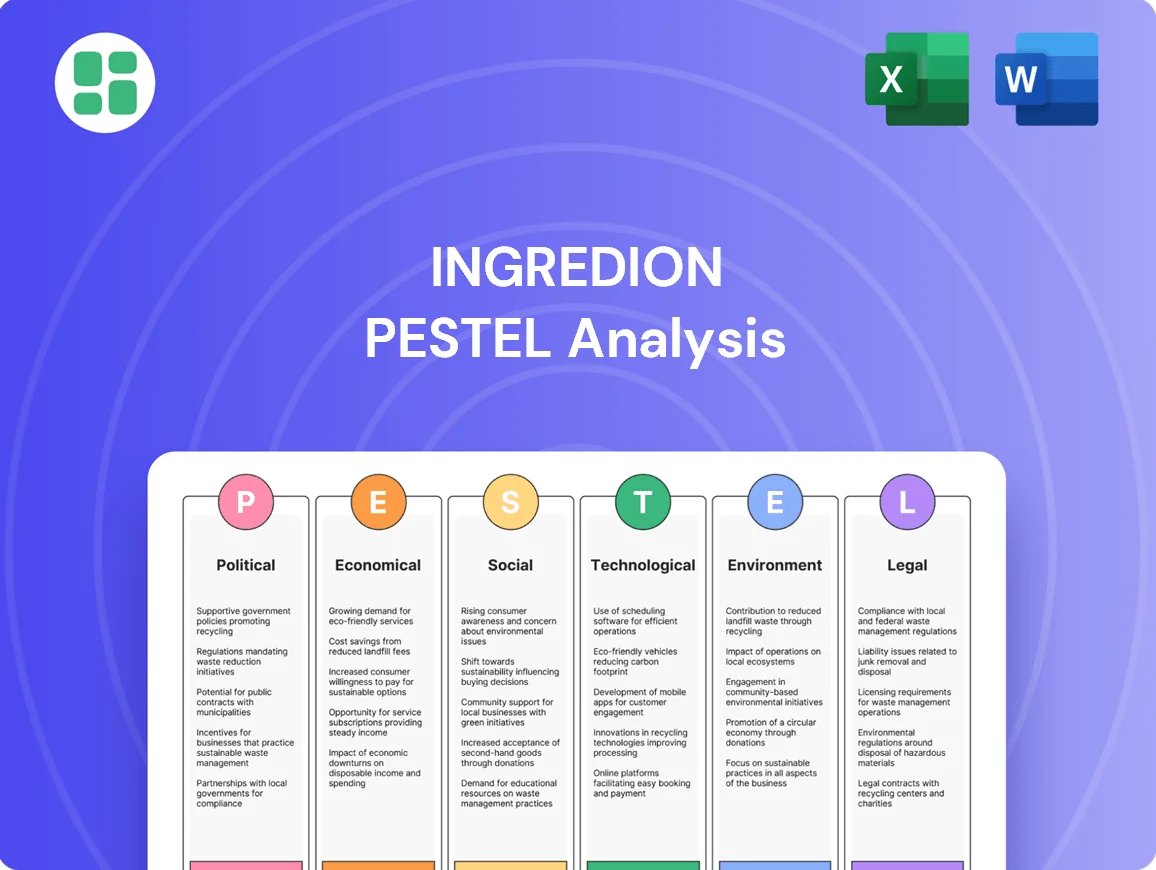
Progressive PESTLE Analysis

Plan Smarter. Present Sharper. Compete Stronger.
Uncover the critical political, economic, social, technological, environmental, and legal factors shaping Progressive's landscape. Our comprehensive PESTLE analysis provides the deep insights you need to anticipate market shifts and make informed strategic decisions. Don't get caught off guard – download the full version now and gain a decisive advantage.
Political factors

Government Regulation and Oversight
Government regulation significantly shapes the insurance landscape, with state-level oversight in the U.S. dictating crucial aspects like Progressive's pricing strategies, product development, and market conduct. Federal agencies also exert influence, particularly in areas of financial stability and emerging threats such as cybersecurity.
Shifts in regulatory focus, exemplified by initiatives from the National Association of Insurance Commissioners (NAIC), directly impact Progressive's operational agility and the associated compliance expenses. For instance, in 2024, the NAIC continued its work on data privacy standards and the regulation of artificial intelligence in insurance, areas that require significant investment in compliance for companies like Progressive.
Political Stability and Consumer Confidence
The overall political stability in the United States directly influences consumer confidence, a key driver for insurance product demand. When the political landscape is perceived as stable, consumers tend to feel more secure about their financial future, leading to increased willingness to spend on services like insurance. For instance, a stable political environment can bolster confidence, potentially translating into higher disposable income allocated to insurance premiums.
Economic policy decisions made by the government significantly impact consumers' disposable income and their propensity to purchase comprehensive insurance coverage. Policies aimed at managing inflation or boosting employment can either increase or decrease the funds available for discretionary spending. For example, if inflation is kept in check and employment remains high, consumers are more likely to afford and prioritize robust insurance plans, directly affecting Progressive's sales volumes.

Lobbying and Industry Influence
Insurance giants, like Progressive, actively engage in lobbying to steer legislation and regulatory frameworks, directly impacting their operational models and bottom lines. These concentrated efforts often target policies concerning capital reserves, consumer safeguarding measures, and the integration of emerging technologies within the insurance sector.
While Progressive itself doesn't directly lobby at the federal level, its associated entities contribute significantly to political campaigns, reflecting a broader industry trend of influencing policy through financial support. For instance, in the 2022 election cycle, the insurance industry's political contributions in the U.S. reached hundreds of millions of dollars, underscoring the substantial financial leverage wielded to shape favorable market conditions.

State-Level Policy Divergence
The decentralized nature of insurance regulation in the United States presents a significant political challenge for national insurers like Progressive. State-level policy divergence means that what is permissible or required in one state might be entirely different in another, creating a complex web of compliance and strategic adaptation.
For instance, Progressive must navigate varying state mandates on topics such as climate risk disclosure, data privacy regulations, and the intricate process of rate approval. This patchwork of rules necessitates a nuanced, region-specific approach to operations and product development.
- State-Specific Regulatory Frameworks: Progressive operates under 50 different state insurance departments, each with its own set of laws and enforcement priorities.
- Climate Risk Disclosure Variations: As of early 2025, a growing number of states are implementing or considering stricter climate risk disclosure requirements for insurers, while others lag behind, impacting how Progressive reports on climate-related exposures.
- Data Privacy Law Differences: The landscape of data privacy laws, such as California's CCPA/CPRA and similar initiatives in other states, creates compliance complexities for managing customer data across different jurisdictions.
Emerging Political Agendas
New political administrations often pivot legislative priorities, impacting sectors like insurance. For instance, a government focused on climate action might introduce stricter regulations on environmental risk disclosure and capital requirements for insurers underwriting climate-sensitive assets. Similarly, a focus on national security could lead to enhanced cybersecurity mandates for handling sensitive customer data, with potential fines for non-compliance. The increasing integration of artificial intelligence (AI) into insurance underwriting and claims processing is also drawing regulatory attention, with governments exploring frameworks for responsible AI deployment and data privacy.
Collaboration between the insurance industry and policymakers is essential to navigate these evolving political landscapes. In 2024, for example, discussions around AI regulation in financial services, including insurance, intensified globally, with bodies like the International Association of Insurance Supervisors (IAIS) actively engaging with industry stakeholders to develop best practices. This dialogue aims to foster innovation while mitigating risks, ensuring that regulatory frameworks are both effective and adaptable to rapid technological change.
- Climate Risk Focus: Governments are increasingly prioritizing climate risk, with potential for new disclosure requirements and capital adequacy rules for insurers exposed to climate-related events.
- Cybersecurity Mandates: Enhanced cybersecurity regulations are expected, particularly concerning the protection of sensitive customer data, with significant penalties for breaches.
- AI Governance: Regulatory bodies are developing frameworks for the ethical and responsible use of AI in insurance, impacting underwriting, claims, and customer interactions.
- Industry-Policy Collaboration: Ongoing dialogue between insurers and policymakers is crucial for shaping future regulations and addressing emerging technological and societal risks.
Regulatory Shifts Shape Insurance: Data Privacy & AI at the Forefront
Governmental actions and policies directly influence Progressive's operational environment, from pricing to product development, with state-level regulations being particularly impactful. The ongoing evolution of regulations concerning data privacy and the use of artificial intelligence in insurance, as seen in 2024 initiatives by bodies like the NAIC, necessitates continuous adaptation and compliance investment.
What is included in the product
 Detailed Word Document
This Progressive PESTLE analysis examines the influence of Political, Economic, Social, Technological, Environmental, and Legal factors on the company's operations and strategy.
It provides actionable insights and forward-looking perspectives to inform strategic decision-making and identify competitive advantages.

 Customizable Excel Spreadsheet
A progressive PESTLE analysis offers a dynamic, forward-looking perspective, transforming potential external threats into actionable opportunities for strategic advantage.
Economic factors

Interest Rate Fluctuations
Interest rate fluctuations significantly impact Progressive's profitability, given its substantial investment portfolio. For instance, the Federal Reserve's monetary policy decisions in 2024 and early 2025 will be critical; if rates remain elevated, Progressive could see increased income from its fixed-income holdings. Conversely, a potential pivot to lower rates in late 2025 might compress yields on new investments, affecting overall earnings.
Inflation and Claims Costs
Inflation significantly pressures Progressive's claims costs. For instance, the U.S. Bureau of Labor Statistics reported that the Consumer Price Index (CPI) for motor vehicle repair and maintenance services saw an increase of 8.5% in the year ending April 2024, directly impacting auto insurance claims. Similarly, construction material costs, vital for property insurance claims, have also experienced elevated inflation.
These rising expenses for vehicle parts, labor, and building materials directly translate into higher payouts for Progressive's claims. Effectively managing these escalating costs is paramount for the company to sustain its underwriting profitability and maintain competitive pricing in the insurance market.

Economic Growth and Consumer Spending
The U.S. economy's trajectory significantly impacts Progressive's performance. A healthy economy, characterized by strong GDP growth and rising consumer confidence, directly fuels demand for insurance. For instance, the U.S. GDP grew at an annualized rate of 1.3% in the first quarter of 2024, signaling a resilient economic environment.
Consumer spending habits are a key driver for insurance sales. When consumers have higher disposable incomes and feel secure about their financial future, they are more likely to purchase new policies and consider additional coverage. In April 2024, U.S. retail sales saw a 0.0% change, indicating stable consumer spending patterns, which bodes well for insurers like Progressive looking to expand their customer base and offer a wider array of products.

Competitive Market Dynamics
The insurance sector is intensely competitive, with many companies battling for customers. This rivalry often forces price reductions, directly impacting Progressive's ability to increase premiums and maintain healthy profits. For instance, in the U.S. auto insurance market, which is Progressive's core business, the top five insurers held approximately 60% of the market share as of late 2024, highlighting the concentrated yet competitive nature of the industry.
Deal-making within the insurance industry has been notably active, reflecting a shifting competitive environment. Companies are actively pursuing mergers and acquisitions to gain size and broaden their offerings. This trend suggests that established players and new entrants alike are seeking strategic advantages to navigate the evolving market, potentially leading to further consolidation and changes in market dynamics for companies like Progressive.
- Intense Rivalry: Numerous insurers compete for market share, leading to price sensitivity among consumers.
- Pricing Pressure: Competition can suppress premium growth and impact profitability for companies like Progressive.
- Industry Consolidation: Increased M&A activity signals a drive for scale and diversification among insurance providers.
- Market Share Dynamics: While competitive, the U.S. auto insurance market shows significant concentration, with major players dominating.
Investment Portfolio Performance
Progressive's investment portfolio performance is a key driver of its financial results. In the first quarter of 2024, the company reported investment income of $1.2 billion, a notable increase from the previous year, reflecting positive market conditions for its holdings.
The strength of Progressive's capital position and its overall net income are directly tied to the returns generated by its fixed-income and equity investments. For instance, during 2023, the company's diversified investment strategy yielded approximately $4.5 billion in net investment income, bolstering its financial stability.
- Strong Q1 2024 Investment Income: Progressive's investment income reached $1.2 billion in the first quarter of 2024.
- 2023 Investment Performance: The company generated around $4.5 billion in net investment income throughout 2023.
- Impact on Capital: Positive investment returns enhance Progressive's capital position and contribute to its net income.
Economic Factors & Insurance Dynamics
Economic factors like interest rates and inflation directly shape Progressive's financial performance. Elevated interest rates in 2024, for example, boosted income from fixed-income investments, while rising inflation in areas like auto repair (up 8.5% year-over-year to April 2024) increased claims costs.
A resilient U.S. economy, evidenced by 1.3% GDP growth in Q1 2024, supports demand for insurance products. Stable consumer spending, with retail sales showing a 0.0% change in April 2024, also indicates a favorable environment for policy sales.
The competitive insurance landscape, with the top five U.S. auto insurers holding 60% of the market share in late 2024, exerts pricing pressure. Active M&A trends further indicate strategic shifts within the industry, influencing market dynamics.
| Economic Factor | Impact on Progressive | Relevant Data (2024/2025) |
|---|---|---|
| Interest Rates | Affects investment income and borrowing costs. | Federal Reserve policy in 2024/2025 is critical; elevated rates boost fixed-income yields. |
| Inflation | Increases claims costs (e.g., auto repair, construction). | CPI for motor vehicle repair services up 8.5% YoY to April 2024. |
| Economic Growth (GDP) | Drives demand for insurance products. | U.S. GDP grew 1.3% annualized in Q1 2024, showing resilience. |
| Consumer Spending | Influences new policy sales and upselling. | U.S. retail sales unchanged (0.0%) in April 2024, indicating stable spending. |
| Market Competition | Leads to pricing pressure and impacts profitability. | Top 5 U.S. auto insurers held ~60% market share in late 2024. |
Same Document Delivered
Progressive PESTLE Analysis
The preview shown here is the exact document you’ll receive after purchase—fully formatted and ready to use for your Progressive PESTLE analysis.
This is a real screenshot of the product you’re buying—delivered exactly as shown, no surprises, allowing you to immediately begin your analysis of the Progressive era.
The content and structure shown in the preview is the same document you’ll download after payment, providing a comprehensive PESTLE framework for your review.

Product Information
Product Information
Shipping & Returns
Shipping & Returns
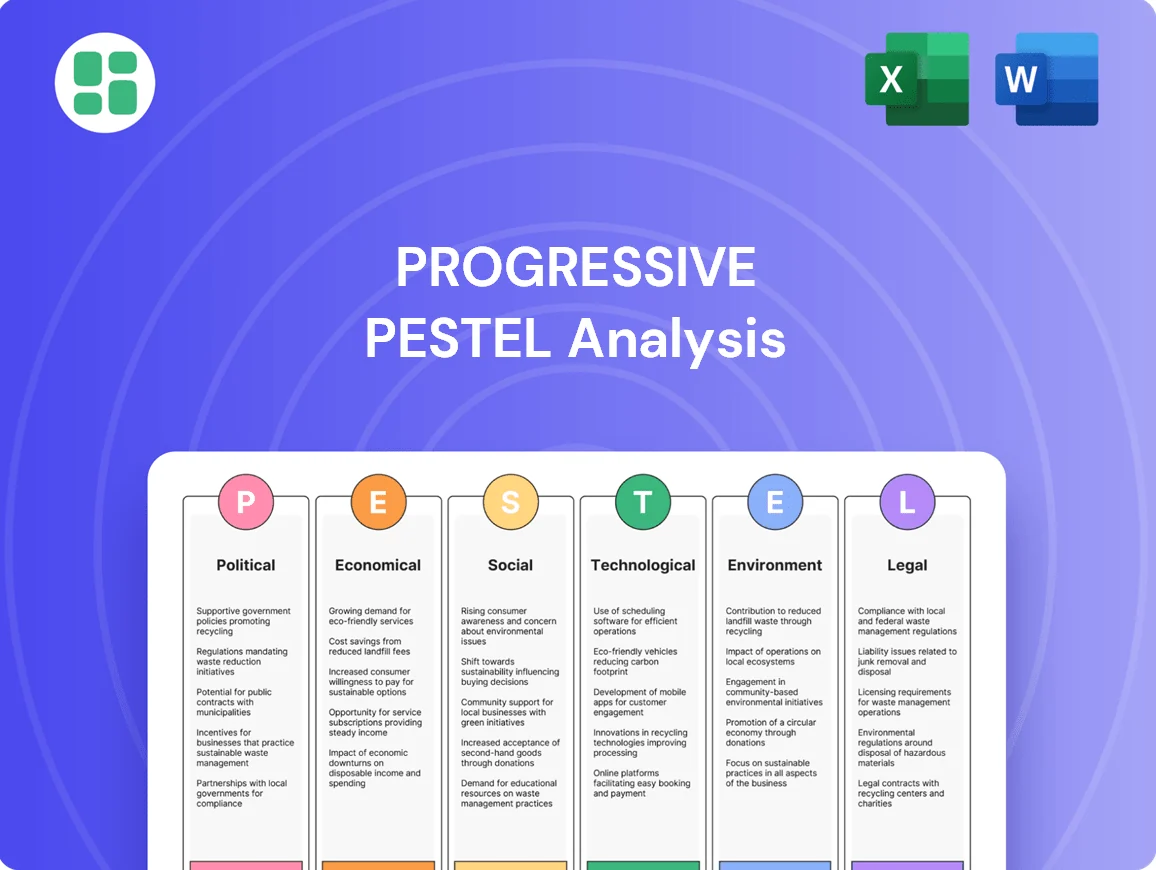
Progressive PESTLE Analysis
Progressive PESTLE Analysis
Plan Smarter. Present Sharper. Compete Stronger.
Uncover the critical political, economic, social, technological, environmental, and legal factors shaping Progressive's landscape. Our comprehensive PESTLE analysis provides the deep insights you need to anticipate market shifts and make informed strategic decisions. Don't get caught off guard – download the full version now and gain a decisive advantage.
Political factors
Government Regulation and Oversight
Government regulation significantly shapes the insurance landscape, with state-level oversight in the U.S. dictating crucial aspects like Progressive's pricing strategies, product development, and market conduct. Federal agencies also exert influence, particularly in areas of financial stability and emerging threats such as cybersecurity.
Shifts in regulatory focus, exemplified by initiatives from the National Association of Insurance Commissioners (NAIC), directly impact Progressive's operational agility and the associated compliance expenses. For instance, in 2024, the NAIC continued its work on data privacy standards and the regulation of artificial intelligence in insurance, areas that require significant investment in compliance for companies like Progressive.
Political Stability and Consumer Confidence
The overall political stability in the United States directly influences consumer confidence, a key driver for insurance product demand. When the political landscape is perceived as stable, consumers tend to feel more secure about their financial future, leading to increased willingness to spend on services like insurance. For instance, a stable political environment can bolster confidence, potentially translating into higher disposable income allocated to insurance premiums.
Economic policy decisions made by the government significantly impact consumers' disposable income and their propensity to purchase comprehensive insurance coverage. Policies aimed at managing inflation or boosting employment can either increase or decrease the funds available for discretionary spending. For example, if inflation is kept in check and employment remains high, consumers are more likely to afford and prioritize robust insurance plans, directly affecting Progressive's sales volumes.
Lobbying and Industry Influence
Insurance giants, like Progressive, actively engage in lobbying to steer legislation and regulatory frameworks, directly impacting their operational models and bottom lines. These concentrated efforts often target policies concerning capital reserves, consumer safeguarding measures, and the integration of emerging technologies within the insurance sector.
While Progressive itself doesn't directly lobby at the federal level, its associated entities contribute significantly to political campaigns, reflecting a broader industry trend of influencing policy through financial support. For instance, in the 2022 election cycle, the insurance industry's political contributions in the U.S. reached hundreds of millions of dollars, underscoring the substantial financial leverage wielded to shape favorable market conditions.
State-Level Policy Divergence
The decentralized nature of insurance regulation in the United States presents a significant political challenge for national insurers like Progressive. State-level policy divergence means that what is permissible or required in one state might be entirely different in another, creating a complex web of compliance and strategic adaptation.
For instance, Progressive must navigate varying state mandates on topics such as climate risk disclosure, data privacy regulations, and the intricate process of rate approval. This patchwork of rules necessitates a nuanced, region-specific approach to operations and product development.
- State-Specific Regulatory Frameworks: Progressive operates under 50 different state insurance departments, each with its own set of laws and enforcement priorities.
- Climate Risk Disclosure Variations: As of early 2025, a growing number of states are implementing or considering stricter climate risk disclosure requirements for insurers, while others lag behind, impacting how Progressive reports on climate-related exposures.
- Data Privacy Law Differences: The landscape of data privacy laws, such as California's CCPA/CPRA and similar initiatives in other states, creates compliance complexities for managing customer data across different jurisdictions.
Emerging Political Agendas
New political administrations often pivot legislative priorities, impacting sectors like insurance. For instance, a government focused on climate action might introduce stricter regulations on environmental risk disclosure and capital requirements for insurers underwriting climate-sensitive assets. Similarly, a focus on national security could lead to enhanced cybersecurity mandates for handling sensitive customer data, with potential fines for non-compliance. The increasing integration of artificial intelligence (AI) into insurance underwriting and claims processing is also drawing regulatory attention, with governments exploring frameworks for responsible AI deployment and data privacy.
Collaboration between the insurance industry and policymakers is essential to navigate these evolving political landscapes. In 2024, for example, discussions around AI regulation in financial services, including insurance, intensified globally, with bodies like the International Association of Insurance Supervisors (IAIS) actively engaging with industry stakeholders to develop best practices. This dialogue aims to foster innovation while mitigating risks, ensuring that regulatory frameworks are both effective and adaptable to rapid technological change.
- Climate Risk Focus: Governments are increasingly prioritizing climate risk, with potential for new disclosure requirements and capital adequacy rules for insurers exposed to climate-related events.
- Cybersecurity Mandates: Enhanced cybersecurity regulations are expected, particularly concerning the protection of sensitive customer data, with significant penalties for breaches.
- AI Governance: Regulatory bodies are developing frameworks for the ethical and responsible use of AI in insurance, impacting underwriting, claims, and customer interactions.
- Industry-Policy Collaboration: Ongoing dialogue between insurers and policymakers is crucial for shaping future regulations and addressing emerging technological and societal risks.
Regulatory Shifts Shape Insurance: Data Privacy & AI at the Forefront
Governmental actions and policies directly influence Progressive's operational environment, from pricing to product development, with state-level regulations being particularly impactful. The ongoing evolution of regulations concerning data privacy and the use of artificial intelligence in insurance, as seen in 2024 initiatives by bodies like the NAIC, necessitates continuous adaptation and compliance investment.
What is included in the product
Detailed Word Document
This Progressive PESTLE analysis examines the influence of Political, Economic, Social, Technological, Environmental, and Legal factors on the company's operations and strategy.
It provides actionable insights and forward-looking perspectives to inform strategic decision-making and identify competitive advantages.
Customizable Excel Spreadsheet
A progressive PESTLE analysis offers a dynamic, forward-looking perspective, transforming potential external threats into actionable opportunities for strategic advantage.
Economic factors
Interest Rate Fluctuations
Interest rate fluctuations significantly impact Progressive's profitability, given its substantial investment portfolio. For instance, the Federal Reserve's monetary policy decisions in 2024 and early 2025 will be critical; if rates remain elevated, Progressive could see increased income from its fixed-income holdings. Conversely, a potential pivot to lower rates in late 2025 might compress yields on new investments, affecting overall earnings.
Inflation and Claims Costs
Inflation significantly pressures Progressive's claims costs. For instance, the U.S. Bureau of Labor Statistics reported that the Consumer Price Index (CPI) for motor vehicle repair and maintenance services saw an increase of 8.5% in the year ending April 2024, directly impacting auto insurance claims. Similarly, construction material costs, vital for property insurance claims, have also experienced elevated inflation.
These rising expenses for vehicle parts, labor, and building materials directly translate into higher payouts for Progressive's claims. Effectively managing these escalating costs is paramount for the company to sustain its underwriting profitability and maintain competitive pricing in the insurance market.
Economic Growth and Consumer Spending
The U.S. economy's trajectory significantly impacts Progressive's performance. A healthy economy, characterized by strong GDP growth and rising consumer confidence, directly fuels demand for insurance. For instance, the U.S. GDP grew at an annualized rate of 1.3% in the first quarter of 2024, signaling a resilient economic environment.
Consumer spending habits are a key driver for insurance sales. When consumers have higher disposable incomes and feel secure about their financial future, they are more likely to purchase new policies and consider additional coverage. In April 2024, U.S. retail sales saw a 0.0% change, indicating stable consumer spending patterns, which bodes well for insurers like Progressive looking to expand their customer base and offer a wider array of products.
Competitive Market Dynamics
The insurance sector is intensely competitive, with many companies battling for customers. This rivalry often forces price reductions, directly impacting Progressive's ability to increase premiums and maintain healthy profits. For instance, in the U.S. auto insurance market, which is Progressive's core business, the top five insurers held approximately 60% of the market share as of late 2024, highlighting the concentrated yet competitive nature of the industry.
Deal-making within the insurance industry has been notably active, reflecting a shifting competitive environment. Companies are actively pursuing mergers and acquisitions to gain size and broaden their offerings. This trend suggests that established players and new entrants alike are seeking strategic advantages to navigate the evolving market, potentially leading to further consolidation and changes in market dynamics for companies like Progressive.
- Intense Rivalry: Numerous insurers compete for market share, leading to price sensitivity among consumers.
- Pricing Pressure: Competition can suppress premium growth and impact profitability for companies like Progressive.
- Industry Consolidation: Increased M&A activity signals a drive for scale and diversification among insurance providers.
- Market Share Dynamics: While competitive, the U.S. auto insurance market shows significant concentration, with major players dominating.
Investment Portfolio Performance
Progressive's investment portfolio performance is a key driver of its financial results. In the first quarter of 2024, the company reported investment income of $1.2 billion, a notable increase from the previous year, reflecting positive market conditions for its holdings.
The strength of Progressive's capital position and its overall net income are directly tied to the returns generated by its fixed-income and equity investments. For instance, during 2023, the company's diversified investment strategy yielded approximately $4.5 billion in net investment income, bolstering its financial stability.
- Strong Q1 2024 Investment Income: Progressive's investment income reached $1.2 billion in the first quarter of 2024.
- 2023 Investment Performance: The company generated around $4.5 billion in net investment income throughout 2023.
- Impact on Capital: Positive investment returns enhance Progressive's capital position and contribute to its net income.
Economic Factors & Insurance Dynamics
Economic factors like interest rates and inflation directly shape Progressive's financial performance. Elevated interest rates in 2024, for example, boosted income from fixed-income investments, while rising inflation in areas like auto repair (up 8.5% year-over-year to April 2024) increased claims costs.
A resilient U.S. economy, evidenced by 1.3% GDP growth in Q1 2024, supports demand for insurance products. Stable consumer spending, with retail sales showing a 0.0% change in April 2024, also indicates a favorable environment for policy sales.
The competitive insurance landscape, with the top five U.S. auto insurers holding 60% of the market share in late 2024, exerts pricing pressure. Active M&A trends further indicate strategic shifts within the industry, influencing market dynamics.
| Economic Factor | Impact on Progressive | Relevant Data (2024/2025) |
|---|---|---|
| Interest Rates | Affects investment income and borrowing costs. | Federal Reserve policy in 2024/2025 is critical; elevated rates boost fixed-income yields. |
| Inflation | Increases claims costs (e.g., auto repair, construction). | CPI for motor vehicle repair services up 8.5% YoY to April 2024. |
| Economic Growth (GDP) | Drives demand for insurance products. | U.S. GDP grew 1.3% annualized in Q1 2024, showing resilience. |
| Consumer Spending | Influences new policy sales and upselling. | U.S. retail sales unchanged (0.0%) in April 2024, indicating stable spending. |
| Market Competition | Leads to pricing pressure and impacts profitability. | Top 5 U.S. auto insurers held ~60% market share in late 2024. |
Same Document Delivered
Progressive PESTLE Analysis
The preview shown here is the exact document you’ll receive after purchase—fully formatted and ready to use for your Progressive PESTLE analysis.
This is a real screenshot of the product you’re buying—delivered exactly as shown, no surprises, allowing you to immediately begin your analysis of the Progressive era.
The content and structure shown in the preview is the same document you’ll download after payment, providing a comprehensive PESTLE framework for your review.
Product Information
Product Information
Shipping & Returns
Shipping & Returns
Description
Plan Smarter. Present Sharper. Compete Stronger.
Uncover the critical political, economic, social, technological, environmental, and legal factors shaping Progressive's landscape. Our comprehensive PESTLE analysis provides the deep insights you need to anticipate market shifts and make informed strategic decisions. Don't get caught off guard – download the full version now and gain a decisive advantage.
Political factors
Government Regulation and Oversight
Government regulation significantly shapes the insurance landscape, with state-level oversight in the U.S. dictating crucial aspects like Progressive's pricing strategies, product development, and market conduct. Federal agencies also exert influence, particularly in areas of financial stability and emerging threats such as cybersecurity.
Shifts in regulatory focus, exemplified by initiatives from the National Association of Insurance Commissioners (NAIC), directly impact Progressive's operational agility and the associated compliance expenses. For instance, in 2024, the NAIC continued its work on data privacy standards and the regulation of artificial intelligence in insurance, areas that require significant investment in compliance for companies like Progressive.
Political Stability and Consumer Confidence
The overall political stability in the United States directly influences consumer confidence, a key driver for insurance product demand. When the political landscape is perceived as stable, consumers tend to feel more secure about their financial future, leading to increased willingness to spend on services like insurance. For instance, a stable political environment can bolster confidence, potentially translating into higher disposable income allocated to insurance premiums.
Economic policy decisions made by the government significantly impact consumers' disposable income and their propensity to purchase comprehensive insurance coverage. Policies aimed at managing inflation or boosting employment can either increase or decrease the funds available for discretionary spending. For example, if inflation is kept in check and employment remains high, consumers are more likely to afford and prioritize robust insurance plans, directly affecting Progressive's sales volumes.
Lobbying and Industry Influence
Insurance giants, like Progressive, actively engage in lobbying to steer legislation and regulatory frameworks, directly impacting their operational models and bottom lines. These concentrated efforts often target policies concerning capital reserves, consumer safeguarding measures, and the integration of emerging technologies within the insurance sector.
While Progressive itself doesn't directly lobby at the federal level, its associated entities contribute significantly to political campaigns, reflecting a broader industry trend of influencing policy through financial support. For instance, in the 2022 election cycle, the insurance industry's political contributions in the U.S. reached hundreds of millions of dollars, underscoring the substantial financial leverage wielded to shape favorable market conditions.
State-Level Policy Divergence
The decentralized nature of insurance regulation in the United States presents a significant political challenge for national insurers like Progressive. State-level policy divergence means that what is permissible or required in one state might be entirely different in another, creating a complex web of compliance and strategic adaptation.
For instance, Progressive must navigate varying state mandates on topics such as climate risk disclosure, data privacy regulations, and the intricate process of rate approval. This patchwork of rules necessitates a nuanced, region-specific approach to operations and product development.
- State-Specific Regulatory Frameworks: Progressive operates under 50 different state insurance departments, each with its own set of laws and enforcement priorities.
- Climate Risk Disclosure Variations: As of early 2025, a growing number of states are implementing or considering stricter climate risk disclosure requirements for insurers, while others lag behind, impacting how Progressive reports on climate-related exposures.
- Data Privacy Law Differences: The landscape of data privacy laws, such as California's CCPA/CPRA and similar initiatives in other states, creates compliance complexities for managing customer data across different jurisdictions.
Emerging Political Agendas
New political administrations often pivot legislative priorities, impacting sectors like insurance. For instance, a government focused on climate action might introduce stricter regulations on environmental risk disclosure and capital requirements for insurers underwriting climate-sensitive assets. Similarly, a focus on national security could lead to enhanced cybersecurity mandates for handling sensitive customer data, with potential fines for non-compliance. The increasing integration of artificial intelligence (AI) into insurance underwriting and claims processing is also drawing regulatory attention, with governments exploring frameworks for responsible AI deployment and data privacy.
Collaboration between the insurance industry and policymakers is essential to navigate these evolving political landscapes. In 2024, for example, discussions around AI regulation in financial services, including insurance, intensified globally, with bodies like the International Association of Insurance Supervisors (IAIS) actively engaging with industry stakeholders to develop best practices. This dialogue aims to foster innovation while mitigating risks, ensuring that regulatory frameworks are both effective and adaptable to rapid technological change.
- Climate Risk Focus: Governments are increasingly prioritizing climate risk, with potential for new disclosure requirements and capital adequacy rules for insurers exposed to climate-related events.
- Cybersecurity Mandates: Enhanced cybersecurity regulations are expected, particularly concerning the protection of sensitive customer data, with significant penalties for breaches.
- AI Governance: Regulatory bodies are developing frameworks for the ethical and responsible use of AI in insurance, impacting underwriting, claims, and customer interactions.
- Industry-Policy Collaboration: Ongoing dialogue between insurers and policymakers is crucial for shaping future regulations and addressing emerging technological and societal risks.
Regulatory Shifts Shape Insurance: Data Privacy & AI at the Forefront
Governmental actions and policies directly influence Progressive's operational environment, from pricing to product development, with state-level regulations being particularly impactful. The ongoing evolution of regulations concerning data privacy and the use of artificial intelligence in insurance, as seen in 2024 initiatives by bodies like the NAIC, necessitates continuous adaptation and compliance investment.
What is included in the product
Detailed Word Document
This Progressive PESTLE analysis examines the influence of Political, Economic, Social, Technological, Environmental, and Legal factors on the company's operations and strategy.
It provides actionable insights and forward-looking perspectives to inform strategic decision-making and identify competitive advantages.
Customizable Excel Spreadsheet
A progressive PESTLE analysis offers a dynamic, forward-looking perspective, transforming potential external threats into actionable opportunities for strategic advantage.
Economic factors
Interest Rate Fluctuations
Interest rate fluctuations significantly impact Progressive's profitability, given its substantial investment portfolio. For instance, the Federal Reserve's monetary policy decisions in 2024 and early 2025 will be critical; if rates remain elevated, Progressive could see increased income from its fixed-income holdings. Conversely, a potential pivot to lower rates in late 2025 might compress yields on new investments, affecting overall earnings.
Inflation and Claims Costs
Inflation significantly pressures Progressive's claims costs. For instance, the U.S. Bureau of Labor Statistics reported that the Consumer Price Index (CPI) for motor vehicle repair and maintenance services saw an increase of 8.5% in the year ending April 2024, directly impacting auto insurance claims. Similarly, construction material costs, vital for property insurance claims, have also experienced elevated inflation.
These rising expenses for vehicle parts, labor, and building materials directly translate into higher payouts for Progressive's claims. Effectively managing these escalating costs is paramount for the company to sustain its underwriting profitability and maintain competitive pricing in the insurance market.
Economic Growth and Consumer Spending
The U.S. economy's trajectory significantly impacts Progressive's performance. A healthy economy, characterized by strong GDP growth and rising consumer confidence, directly fuels demand for insurance. For instance, the U.S. GDP grew at an annualized rate of 1.3% in the first quarter of 2024, signaling a resilient economic environment.
Consumer spending habits are a key driver for insurance sales. When consumers have higher disposable incomes and feel secure about their financial future, they are more likely to purchase new policies and consider additional coverage. In April 2024, U.S. retail sales saw a 0.0% change, indicating stable consumer spending patterns, which bodes well for insurers like Progressive looking to expand their customer base and offer a wider array of products.
Competitive Market Dynamics
The insurance sector is intensely competitive, with many companies battling for customers. This rivalry often forces price reductions, directly impacting Progressive's ability to increase premiums and maintain healthy profits. For instance, in the U.S. auto insurance market, which is Progressive's core business, the top five insurers held approximately 60% of the market share as of late 2024, highlighting the concentrated yet competitive nature of the industry.
Deal-making within the insurance industry has been notably active, reflecting a shifting competitive environment. Companies are actively pursuing mergers and acquisitions to gain size and broaden their offerings. This trend suggests that established players and new entrants alike are seeking strategic advantages to navigate the evolving market, potentially leading to further consolidation and changes in market dynamics for companies like Progressive.
- Intense Rivalry: Numerous insurers compete for market share, leading to price sensitivity among consumers.
- Pricing Pressure: Competition can suppress premium growth and impact profitability for companies like Progressive.
- Industry Consolidation: Increased M&A activity signals a drive for scale and diversification among insurance providers.
- Market Share Dynamics: While competitive, the U.S. auto insurance market shows significant concentration, with major players dominating.
Investment Portfolio Performance
Progressive's investment portfolio performance is a key driver of its financial results. In the first quarter of 2024, the company reported investment income of $1.2 billion, a notable increase from the previous year, reflecting positive market conditions for its holdings.
The strength of Progressive's capital position and its overall net income are directly tied to the returns generated by its fixed-income and equity investments. For instance, during 2023, the company's diversified investment strategy yielded approximately $4.5 billion in net investment income, bolstering its financial stability.
- Strong Q1 2024 Investment Income: Progressive's investment income reached $1.2 billion in the first quarter of 2024.
- 2023 Investment Performance: The company generated around $4.5 billion in net investment income throughout 2023.
- Impact on Capital: Positive investment returns enhance Progressive's capital position and contribute to its net income.
Economic Factors & Insurance Dynamics
Economic factors like interest rates and inflation directly shape Progressive's financial performance. Elevated interest rates in 2024, for example, boosted income from fixed-income investments, while rising inflation in areas like auto repair (up 8.5% year-over-year to April 2024) increased claims costs.
A resilient U.S. economy, evidenced by 1.3% GDP growth in Q1 2024, supports demand for insurance products. Stable consumer spending, with retail sales showing a 0.0% change in April 2024, also indicates a favorable environment for policy sales.
The competitive insurance landscape, with the top five U.S. auto insurers holding 60% of the market share in late 2024, exerts pricing pressure. Active M&A trends further indicate strategic shifts within the industry, influencing market dynamics.
| Economic Factor | Impact on Progressive | Relevant Data (2024/2025) |
|---|---|---|
| Interest Rates | Affects investment income and borrowing costs. | Federal Reserve policy in 2024/2025 is critical; elevated rates boost fixed-income yields. |
| Inflation | Increases claims costs (e.g., auto repair, construction). | CPI for motor vehicle repair services up 8.5% YoY to April 2024. |
| Economic Growth (GDP) | Drives demand for insurance products. | U.S. GDP grew 1.3% annualized in Q1 2024, showing resilience. |
| Consumer Spending | Influences new policy sales and upselling. | U.S. retail sales unchanged (0.0%) in April 2024, indicating stable spending. |
| Market Competition | Leads to pricing pressure and impacts profitability. | Top 5 U.S. auto insurers held ~60% market share in late 2024. |
Same Document Delivered
Progressive PESTLE Analysis
The preview shown here is the exact document you’ll receive after purchase—fully formatted and ready to use for your Progressive PESTLE analysis.
This is a real screenshot of the product you’re buying—delivered exactly as shown, no surprises, allowing you to immediately begin your analysis of the Progressive era.
The content and structure shown in the preview is the same document you’ll download after payment, providing a comprehensive PESTLE framework for your review.