TXNM Energy PESTLE Analysis

Make Smarter Strategic Decisions with a Complete PESTEL View
Navigate the complex external forces shaping TXNM Energy's future with our comprehensive PESTLE analysis. Understand the political, economic, social, technological, legal, and environmental factors that present both challenges and opportunities.
Gain a strategic advantage by leveraging our expert insights into TXNM Energy's operating environment. This analysis is your key to identifying risks and unlocking growth potential.
Don't get left behind – download the full TXNM Energy PESTLE analysis now and equip yourself with the actionable intelligence needed to make informed decisions and secure your competitive edge.
Political factors

Regulatory Framework and Energy Transition Act
The New Mexico Energy Transition Act (ETA), passed in 2019, establishes a robust political roadmap for utilities such as PNM, mandating a 100% carbon-free energy supply by 2045. This landmark law features ambitious renewable energy targets, demanding 40% renewables by 2025, climbing to 50% by 2030, and a significant 80% by 2040.
PNM has proactively announced its intention to surpass these mandates, aiming for a 100% emissions-free energy portfolio by 2040, five years ahead of the state's ultimate deadline. This commitment underscores a strong alignment between the company's strategy and the state's progressive environmental policy, influencing investment and operational decisions.
State Legislative Support for Clean Energy Initiatives
The New Mexico State Legislature is actively backing the state's transition to cleaner energy sources. This legislative momentum is crucial for companies operating within the energy sector in Texas and New Mexico.
A significant development in 2025 was the passage of SB48, which created a substantial $210 million Community Benefit Fund. This fund is specifically earmarked to bolster clean energy projects and initiatives aimed at reducing methane emissions, directly impacting the operational landscape for energy firms.
Further bolstering clean energy adoption, House Bill 252, enacted in 2024, introduced new tax credits. These credits are designed to incentivize a broad range of clean energy technologies, including geothermal systems, heat pumps, electric vehicles, solar market development, energy storage facilities, and advanced energy solutions, offering tangible financial advantages.

Public Regulation Commission Oversight
The New Mexico Public Regulation Commission (NMPRC) is a key player in shaping PNM's future, approving everything from rate adjustments to major infrastructure projects. Their decisions directly influence how PNM invests in and operates its energy grid.
Recent NMPRC actions highlight this influence, with approvals for a substantial $344 million grid modernization initiative and the integration of 450 megawatts of new solar and battery storage capacity. These approvals are crucial for PNM's ability to recover its investments and execute its long-term strategy.

State Economic Diversification Policies
New Mexico's 2024-25 economic development plan, Empower and Collaborate: New Mexico's Economic Path Forward, signals a clear political intent to diversify away from oil and gas dependency. This strategic pivot is designed to foster growth in sectors like modern infrastructure and clean energy, which directly benefits companies like TXNM Energy that are aligning with these state-level priorities. The state's commitment to reducing reliance on traditional energy sources creates a more favorable political climate for renewable energy investments.
The state government is actively using its financial resources to support this economic transformation. A key element of this strategy involves leveraging permanent funds, estimated to be in the tens of billions of dollars, to finance climate technology and renewable energy companies. This financial backing is crucial for scaling up operations and accelerating the adoption of cleaner energy solutions, directly impacting the viability and growth potential of businesses operating within this sector.
This political focus translates into tangible opportunities for TXNM Energy by creating a supportive ecosystem for its transition efforts. The state's emphasis on clean energy aligns with the company's own strategic goals, potentially leading to partnerships and incentives. Furthermore, the investment in modern infrastructure will likely improve the grid's capacity and reliability, essential for integrating and distributing renewable energy effectively.
- State Economic Diversification Strategy: New Mexico's 2024-25 plan prioritizes reducing oil and gas reliance.
- Financial Backing for Renewables: Permanent funds are earmarked for climate tech and renewable energy companies.
- Infrastructure Investment: Focus on modern infrastructure supports clean energy integration.
- Supportive Political Climate: State policies encourage and facilitate renewable energy project development.
Utility Cost Reduction and Affordability Legislation
Political factors significantly shape utility cost reduction and affordability initiatives. Legislation like Texas House Bill 91, enacted in 2025, empowers public utilities to adopt rate structures designed to lower costs for low-income households. This political emphasis on affordability directly impacts PNM's rate design and customer assistance programs, necessitating a careful balance between crucial infrastructure investments and consumer protection measures, alongside social equity considerations.
This legislative push for affordability means utilities must navigate complex policy landscapes. For instance, PNM might need to allocate a portion of its revenue towards specific affordability programs, potentially impacting capital expenditure plans. The ongoing dialogue around energy affordability is a key political driver influencing operational strategies and investment priorities for companies like PNM.
- Legislation Influence: House Bill 91 (2025) enables rate structures for lower-income customers.
- PNM's Response: This legislation affects PNM's rate design and customer assistance programs.
- Balancing Act: Utilities must balance infrastructure needs with consumer protection and social equity.
- Affordability Focus: The political climate prioritizes energy affordability, impacting utility planning.
New Mexico's Clean Energy Drive Accelerates
New Mexico's political landscape strongly favors clean energy, with the 2019 Energy Transition Act setting aggressive renewable targets, including 40% by 2025 and 100% carbon-free by 2045. PNM aims to exceed these mandates, targeting a 100% emissions-free portfolio by 2040. Legislative actions in 2024 and 2025, such as HB 252 offering tax credits for clean energy technologies and SB 48 establishing a $210 million Community Benefit Fund for methane reduction, further reinforce this supportive environment for companies like TXNM Energy.
What is included in the product
 Detailed Word Document
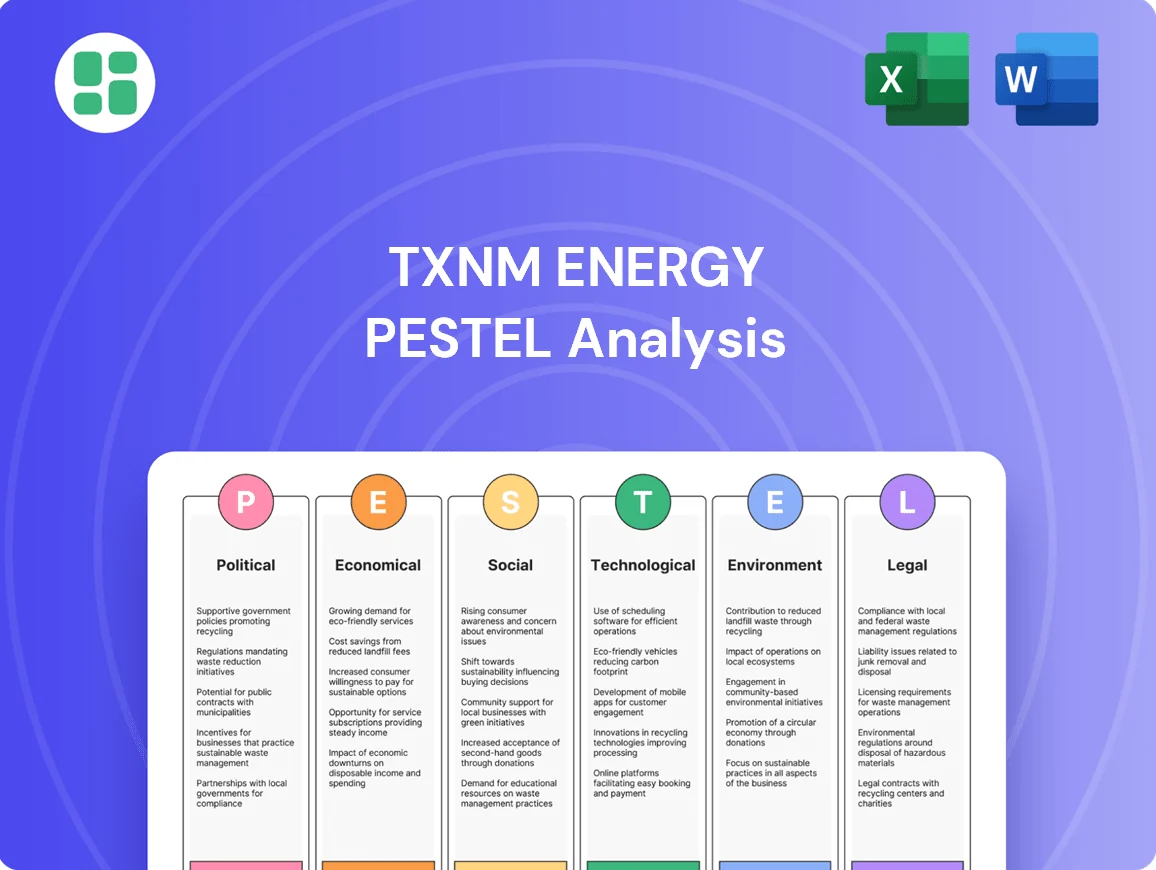
This TXNM Energy PESTLE analysis comprehensively examines the Political, Economic, Social, Technological, Environmental, and Legal forces impacting the company, providing a strategic overview of external influences.
It offers actionable insights for identifying opportunities and mitigating risks, enabling proactive decision-making for TXNM Energy's future growth.

 Customizable Excel Spreadsheet
Provides a concise version that can be dropped into PowerPoints or used in group planning sessions, simplifying complex external factors for TXNM Energy's strategic discussions.
Helps support discussions on external risk and market positioning during planning sessions by clearly outlining the Political, Economic, Social, Technological, Environmental, and Legal influences on TXNM Energy.
Economic factors

Capital Expenditure for Infrastructure and Renewables
PNM's ambitious $6.1 billion capital expenditure plan for 2024-2028 is heavily weighted towards modernizing its infrastructure and integrating renewable energy. This substantial investment signals a strong commitment to grid reliability and the ongoing clean energy transition.
A significant portion of this capital will be directed towards upgrading transmission and distribution systems, essential for accommodating increased renewable generation and ensuring consistent service delivery. This proactive approach is designed to meet the evolving energy needs of customers and regulatory requirements.
The scale of this capital deployment underscores its importance to PNM's long-term financial health and growth trajectory. It positions the company to capitalize on opportunities within the expanding renewable energy sector and to manage the complexities of an aging grid.
Rate Case Outcomes and Revenue Requirements
The financial health of PNM, a key player in the energy sector, is directly tied to the outcomes of rate cases. These cases are crucial as they establish the company's revenue requirements, essentially dictating how much it can earn and recover its investments. This process significantly impacts its ability to fund necessary infrastructure upgrades and maintain operational stability.
In a significant development for 2024, PNM submitted a 2025 Rate Request. The primary objective of this filing was to secure an increase in rates to support substantial ongoing investments in its grid infrastructure. These investments are vital for modernizing the energy network and ensuring reliable service delivery to customers.
A notable achievement in this regulatory process was the reaching of an unopposed stipulation with the New Mexico Public Regulation Commission (NMPRC). This agreement, finalized in 2024, approves a $105.0 million increase in PNM's revenue. This increase is slated for a phased implementation, with the initial portion beginning on July 1, 2025, providing a clear path for revenue recovery.
These rate case adjustments are not merely procedural; they are fundamental to PNM's financial sustainability. The approved revenue increases are essential for the company to maintain its financial stability, enabling it to cover operating costs and, critically, to secure the capital needed for future projects and essential grid enhancements.

Impact of Interest Rate Volatility
The current macroeconomic climate is marked by significant interest rate volatility, presenting a notable financial risk, especially for PNM's Corporate and Other segment. This volatility directly impacts the cost of variable debt, potentially leading to increased interest expenses and reduced overall profitability.
For instance, if PNM carries substantial variable-rate debt, a sustained rise in interest rates could significantly inflate their financing costs. This increased cost of capital directly affects the feasibility and expense of undertaking new capital projects, a critical component for growth in the energy sector.
As of early 2025, the Federal Reserve's benchmark interest rate has remained elevated, with projections indicating a cautious approach to reductions throughout the year, underscoring the continued relevance of this risk. This environment demands robust financial management, including the strategic use of hedging instruments to mitigate the impact of fluctuating interest rates on PNM's balance sheet and future investments.

New Mexico's Economic Growth and Energy Sector Contribution
New Mexico's economy saw significant expansion in 2023, with its energy sector acting as a primary driver. Oil and gas revenues alone contributed a substantial amount to the state's general fund, underscoring the sector's vital role.
This strong performance in the broader energy market creates a stable economic environment for utilities operating within New Mexico, even as the state pursues economic diversification initiatives.
- Oil and Gas Revenue: New Mexico's severance tax collections from oil and gas production reached record highs in fiscal year 2023, exceeding $10 billion.
- Economic Diversification Efforts: The state is investing in sectors like technology and film production to broaden its economic base.
- Utility Stability: The energy sector's robust contribution provides a reliable revenue stream, supporting infrastructure development and consumer services.
Cost of Energy Transition and Customer Affordability
The push for a clean energy future, particularly under New Mexico's Energy Transition Act, places significant financial burdens on utilities like PNM. These costs stem from retiring older fossil fuel plants and building new renewable energy infrastructure. For instance, PNM's proposed investments in solar and wind power, alongside grid modernization, are substantial, with capital expenditure plans often running into hundreds of millions of dollars over several years.
These considerable investments are ultimately passed on to customers through electricity rates. The challenge for PNM and regulators is to balance the imperative of environmental mandates with the need to keep energy affordable for households and businesses. This is a delicate act, especially for lower-income customers who are disproportionately affected by rising utility costs.
To manage this, PNM frequently proposes phased-in rate increases, allowing customers to adjust to higher costs over time rather than facing a sudden, steep jump. These proposals are subject to review by the New Mexico Public Regulation Commission, which considers the overall impact on affordability and the necessity of the investments for meeting state energy goals. For example, in recent rate case filings, PNM has outlined multi-year plans to recover costs associated with new renewable energy projects, aiming to spread the financial impact.
- PNM's capital investment for renewable energy projects and grid upgrades is projected to be in the hundreds of millions of dollars through the mid-2020s.
- The Energy Transition Act mandates a significant shift away from fossil fuels, requiring substantial upfront investment in clean energy technologies.
- Rate cases filed by PNM in 2023 and 2024 have included proposals for phased-in cost recovery to mitigate immediate customer impact from these transition expenses.
- Affordability remains a key concern, with regulatory bodies scrutinizing the utility's plans to ensure that the cost of the energy transition does not unduly burden consumers.
New Mexico's $10B Energy Surge Fuels Economic Stability
New Mexico's economy, particularly its energy sector, showed strong growth in 2023, with oil and gas revenues exceeding $10 billion. This robust performance provides a stable economic backdrop for utilities like PNM, even as the state pursues diversification into areas like technology and film. The energy sector's significant contribution ensures a reliable revenue stream, supporting essential infrastructure development and consumer services.
| Economic Factor | 2023 Data | Impact on PNM |
|---|---|---|
| New Mexico Economic Growth | Energy sector as primary driver, oil and gas revenues exceeded $10 billion | Provides a stable operating environment and supports infrastructure investment. |
| State Diversification Efforts | Investment in technology and film production | Creates a broader economic base, potentially leading to increased energy demand in new sectors. |
| Energy Sector Contribution | Vital role in state's general fund | Ensures reliable revenue streams for state services and infrastructure, indirectly benefiting utilities. |
What You See Is What You Get
TXNM Energy PESTLE Analysis
The preview shown here is the exact TXNM Energy PESTLE Analysis document you’ll receive after purchase—fully formatted and ready to use.
This is a real screenshot of the product you’re buying—delivered exactly as shown, no surprises. You will gain immediate access to this comprehensive analysis upon completing your purchase.
The content and structure shown in the preview is the same document you’ll download after payment, providing a complete understanding of the external factors impacting TXNM Energy.

Product Information
Product Information
Shipping & Returns
Shipping & Returns
TXNM Energy PESTLE Analysis
TXNM Energy PESTLE Analysis
Make Smarter Strategic Decisions with a Complete PESTEL View
Navigate the complex external forces shaping TXNM Energy's future with our comprehensive PESTLE analysis. Understand the political, economic, social, technological, legal, and environmental factors that present both challenges and opportunities.
Gain a strategic advantage by leveraging our expert insights into TXNM Energy's operating environment. This analysis is your key to identifying risks and unlocking growth potential.
Don't get left behind – download the full TXNM Energy PESTLE analysis now and equip yourself with the actionable intelligence needed to make informed decisions and secure your competitive edge.
Political factors
Regulatory Framework and Energy Transition Act
The New Mexico Energy Transition Act (ETA), passed in 2019, establishes a robust political roadmap for utilities such as PNM, mandating a 100% carbon-free energy supply by 2045. This landmark law features ambitious renewable energy targets, demanding 40% renewables by 2025, climbing to 50% by 2030, and a significant 80% by 2040.
PNM has proactively announced its intention to surpass these mandates, aiming for a 100% emissions-free energy portfolio by 2040, five years ahead of the state's ultimate deadline. This commitment underscores a strong alignment between the company's strategy and the state's progressive environmental policy, influencing investment and operational decisions.
State Legislative Support for Clean Energy Initiatives
The New Mexico State Legislature is actively backing the state's transition to cleaner energy sources. This legislative momentum is crucial for companies operating within the energy sector in Texas and New Mexico.
A significant development in 2025 was the passage of SB48, which created a substantial $210 million Community Benefit Fund. This fund is specifically earmarked to bolster clean energy projects and initiatives aimed at reducing methane emissions, directly impacting the operational landscape for energy firms.
Further bolstering clean energy adoption, House Bill 252, enacted in 2024, introduced new tax credits. These credits are designed to incentivize a broad range of clean energy technologies, including geothermal systems, heat pumps, electric vehicles, solar market development, energy storage facilities, and advanced energy solutions, offering tangible financial advantages.
Public Regulation Commission Oversight
The New Mexico Public Regulation Commission (NMPRC) is a key player in shaping PNM's future, approving everything from rate adjustments to major infrastructure projects. Their decisions directly influence how PNM invests in and operates its energy grid.
Recent NMPRC actions highlight this influence, with approvals for a substantial $344 million grid modernization initiative and the integration of 450 megawatts of new solar and battery storage capacity. These approvals are crucial for PNM's ability to recover its investments and execute its long-term strategy.
State Economic Diversification Policies
New Mexico's 2024-25 economic development plan, Empower and Collaborate: New Mexico's Economic Path Forward, signals a clear political intent to diversify away from oil and gas dependency. This strategic pivot is designed to foster growth in sectors like modern infrastructure and clean energy, which directly benefits companies like TXNM Energy that are aligning with these state-level priorities. The state's commitment to reducing reliance on traditional energy sources creates a more favorable political climate for renewable energy investments.
The state government is actively using its financial resources to support this economic transformation. A key element of this strategy involves leveraging permanent funds, estimated to be in the tens of billions of dollars, to finance climate technology and renewable energy companies. This financial backing is crucial for scaling up operations and accelerating the adoption of cleaner energy solutions, directly impacting the viability and growth potential of businesses operating within this sector.
This political focus translates into tangible opportunities for TXNM Energy by creating a supportive ecosystem for its transition efforts. The state's emphasis on clean energy aligns with the company's own strategic goals, potentially leading to partnerships and incentives. Furthermore, the investment in modern infrastructure will likely improve the grid's capacity and reliability, essential for integrating and distributing renewable energy effectively.
- State Economic Diversification Strategy: New Mexico's 2024-25 plan prioritizes reducing oil and gas reliance.
- Financial Backing for Renewables: Permanent funds are earmarked for climate tech and renewable energy companies.
- Infrastructure Investment: Focus on modern infrastructure supports clean energy integration.
- Supportive Political Climate: State policies encourage and facilitate renewable energy project development.
Utility Cost Reduction and Affordability Legislation
Political factors significantly shape utility cost reduction and affordability initiatives. Legislation like Texas House Bill 91, enacted in 2025, empowers public utilities to adopt rate structures designed to lower costs for low-income households. This political emphasis on affordability directly impacts PNM's rate design and customer assistance programs, necessitating a careful balance between crucial infrastructure investments and consumer protection measures, alongside social equity considerations.
This legislative push for affordability means utilities must navigate complex policy landscapes. For instance, PNM might need to allocate a portion of its revenue towards specific affordability programs, potentially impacting capital expenditure plans. The ongoing dialogue around energy affordability is a key political driver influencing operational strategies and investment priorities for companies like PNM.
- Legislation Influence: House Bill 91 (2025) enables rate structures for lower-income customers.
- PNM's Response: This legislation affects PNM's rate design and customer assistance programs.
- Balancing Act: Utilities must balance infrastructure needs with consumer protection and social equity.
- Affordability Focus: The political climate prioritizes energy affordability, impacting utility planning.
New Mexico's Clean Energy Drive Accelerates
New Mexico's political landscape strongly favors clean energy, with the 2019 Energy Transition Act setting aggressive renewable targets, including 40% by 2025 and 100% carbon-free by 2045. PNM aims to exceed these mandates, targeting a 100% emissions-free portfolio by 2040. Legislative actions in 2024 and 2025, such as HB 252 offering tax credits for clean energy technologies and SB 48 establishing a $210 million Community Benefit Fund for methane reduction, further reinforce this supportive environment for companies like TXNM Energy.
What is included in the product
Detailed Word Document
This TXNM Energy PESTLE analysis comprehensively examines the Political, Economic, Social, Technological, Environmental, and Legal forces impacting the company, providing a strategic overview of external influences.
It offers actionable insights for identifying opportunities and mitigating risks, enabling proactive decision-making for TXNM Energy's future growth.
Customizable Excel Spreadsheet
Provides a concise version that can be dropped into PowerPoints or used in group planning sessions, simplifying complex external factors for TXNM Energy's strategic discussions.
Helps support discussions on external risk and market positioning during planning sessions by clearly outlining the Political, Economic, Social, Technological, Environmental, and Legal influences on TXNM Energy.
Economic factors
Capital Expenditure for Infrastructure and Renewables
PNM's ambitious $6.1 billion capital expenditure plan for 2024-2028 is heavily weighted towards modernizing its infrastructure and integrating renewable energy. This substantial investment signals a strong commitment to grid reliability and the ongoing clean energy transition.
A significant portion of this capital will be directed towards upgrading transmission and distribution systems, essential for accommodating increased renewable generation and ensuring consistent service delivery. This proactive approach is designed to meet the evolving energy needs of customers and regulatory requirements.
The scale of this capital deployment underscores its importance to PNM's long-term financial health and growth trajectory. It positions the company to capitalize on opportunities within the expanding renewable energy sector and to manage the complexities of an aging grid.
Rate Case Outcomes and Revenue Requirements
The financial health of PNM, a key player in the energy sector, is directly tied to the outcomes of rate cases. These cases are crucial as they establish the company's revenue requirements, essentially dictating how much it can earn and recover its investments. This process significantly impacts its ability to fund necessary infrastructure upgrades and maintain operational stability.
In a significant development for 2024, PNM submitted a 2025 Rate Request. The primary objective of this filing was to secure an increase in rates to support substantial ongoing investments in its grid infrastructure. These investments are vital for modernizing the energy network and ensuring reliable service delivery to customers.
A notable achievement in this regulatory process was the reaching of an unopposed stipulation with the New Mexico Public Regulation Commission (NMPRC). This agreement, finalized in 2024, approves a $105.0 million increase in PNM's revenue. This increase is slated for a phased implementation, with the initial portion beginning on July 1, 2025, providing a clear path for revenue recovery.
These rate case adjustments are not merely procedural; they are fundamental to PNM's financial sustainability. The approved revenue increases are essential for the company to maintain its financial stability, enabling it to cover operating costs and, critically, to secure the capital needed for future projects and essential grid enhancements.
Impact of Interest Rate Volatility
The current macroeconomic climate is marked by significant interest rate volatility, presenting a notable financial risk, especially for PNM's Corporate and Other segment. This volatility directly impacts the cost of variable debt, potentially leading to increased interest expenses and reduced overall profitability.
For instance, if PNM carries substantial variable-rate debt, a sustained rise in interest rates could significantly inflate their financing costs. This increased cost of capital directly affects the feasibility and expense of undertaking new capital projects, a critical component for growth in the energy sector.
As of early 2025, the Federal Reserve's benchmark interest rate has remained elevated, with projections indicating a cautious approach to reductions throughout the year, underscoring the continued relevance of this risk. This environment demands robust financial management, including the strategic use of hedging instruments to mitigate the impact of fluctuating interest rates on PNM's balance sheet and future investments.
New Mexico's Economic Growth and Energy Sector Contribution
New Mexico's economy saw significant expansion in 2023, with its energy sector acting as a primary driver. Oil and gas revenues alone contributed a substantial amount to the state's general fund, underscoring the sector's vital role.
This strong performance in the broader energy market creates a stable economic environment for utilities operating within New Mexico, even as the state pursues economic diversification initiatives.
- Oil and Gas Revenue: New Mexico's severance tax collections from oil and gas production reached record highs in fiscal year 2023, exceeding $10 billion.
- Economic Diversification Efforts: The state is investing in sectors like technology and film production to broaden its economic base.
- Utility Stability: The energy sector's robust contribution provides a reliable revenue stream, supporting infrastructure development and consumer services.
Cost of Energy Transition and Customer Affordability
The push for a clean energy future, particularly under New Mexico's Energy Transition Act, places significant financial burdens on utilities like PNM. These costs stem from retiring older fossil fuel plants and building new renewable energy infrastructure. For instance, PNM's proposed investments in solar and wind power, alongside grid modernization, are substantial, with capital expenditure plans often running into hundreds of millions of dollars over several years.
These considerable investments are ultimately passed on to customers through electricity rates. The challenge for PNM and regulators is to balance the imperative of environmental mandates with the need to keep energy affordable for households and businesses. This is a delicate act, especially for lower-income customers who are disproportionately affected by rising utility costs.
To manage this, PNM frequently proposes phased-in rate increases, allowing customers to adjust to higher costs over time rather than facing a sudden, steep jump. These proposals are subject to review by the New Mexico Public Regulation Commission, which considers the overall impact on affordability and the necessity of the investments for meeting state energy goals. For example, in recent rate case filings, PNM has outlined multi-year plans to recover costs associated with new renewable energy projects, aiming to spread the financial impact.
- PNM's capital investment for renewable energy projects and grid upgrades is projected to be in the hundreds of millions of dollars through the mid-2020s.
- The Energy Transition Act mandates a significant shift away from fossil fuels, requiring substantial upfront investment in clean energy technologies.
- Rate cases filed by PNM in 2023 and 2024 have included proposals for phased-in cost recovery to mitigate immediate customer impact from these transition expenses.
- Affordability remains a key concern, with regulatory bodies scrutinizing the utility's plans to ensure that the cost of the energy transition does not unduly burden consumers.
New Mexico's $10B Energy Surge Fuels Economic Stability
New Mexico's economy, particularly its energy sector, showed strong growth in 2023, with oil and gas revenues exceeding $10 billion. This robust performance provides a stable economic backdrop for utilities like PNM, even as the state pursues diversification into areas like technology and film. The energy sector's significant contribution ensures a reliable revenue stream, supporting essential infrastructure development and consumer services.
| Economic Factor | 2023 Data | Impact on PNM |
|---|---|---|
| New Mexico Economic Growth | Energy sector as primary driver, oil and gas revenues exceeded $10 billion | Provides a stable operating environment and supports infrastructure investment. |
| State Diversification Efforts | Investment in technology and film production | Creates a broader economic base, potentially leading to increased energy demand in new sectors. |
| Energy Sector Contribution | Vital role in state's general fund | Ensures reliable revenue streams for state services and infrastructure, indirectly benefiting utilities. |
What You See Is What You Get
TXNM Energy PESTLE Analysis
The preview shown here is the exact TXNM Energy PESTLE Analysis document you’ll receive after purchase—fully formatted and ready to use.
This is a real screenshot of the product you’re buying—delivered exactly as shown, no surprises. You will gain immediate access to this comprehensive analysis upon completing your purchase.
The content and structure shown in the preview is the same document you’ll download after payment, providing a complete understanding of the external factors impacting TXNM Energy.
Product Information
Product Information
Shipping & Returns
Shipping & Returns
Description
Make Smarter Strategic Decisions with a Complete PESTEL View
Navigate the complex external forces shaping TXNM Energy's future with our comprehensive PESTLE analysis. Understand the political, economic, social, technological, legal, and environmental factors that present both challenges and opportunities.
Gain a strategic advantage by leveraging our expert insights into TXNM Energy's operating environment. This analysis is your key to identifying risks and unlocking growth potential.
Don't get left behind – download the full TXNM Energy PESTLE analysis now and equip yourself with the actionable intelligence needed to make informed decisions and secure your competitive edge.
Political factors
Regulatory Framework and Energy Transition Act
The New Mexico Energy Transition Act (ETA), passed in 2019, establishes a robust political roadmap for utilities such as PNM, mandating a 100% carbon-free energy supply by 2045. This landmark law features ambitious renewable energy targets, demanding 40% renewables by 2025, climbing to 50% by 2030, and a significant 80% by 2040.
PNM has proactively announced its intention to surpass these mandates, aiming for a 100% emissions-free energy portfolio by 2040, five years ahead of the state's ultimate deadline. This commitment underscores a strong alignment between the company's strategy and the state's progressive environmental policy, influencing investment and operational decisions.
State Legislative Support for Clean Energy Initiatives
The New Mexico State Legislature is actively backing the state's transition to cleaner energy sources. This legislative momentum is crucial for companies operating within the energy sector in Texas and New Mexico.
A significant development in 2025 was the passage of SB48, which created a substantial $210 million Community Benefit Fund. This fund is specifically earmarked to bolster clean energy projects and initiatives aimed at reducing methane emissions, directly impacting the operational landscape for energy firms.
Further bolstering clean energy adoption, House Bill 252, enacted in 2024, introduced new tax credits. These credits are designed to incentivize a broad range of clean energy technologies, including geothermal systems, heat pumps, electric vehicles, solar market development, energy storage facilities, and advanced energy solutions, offering tangible financial advantages.
Public Regulation Commission Oversight
The New Mexico Public Regulation Commission (NMPRC) is a key player in shaping PNM's future, approving everything from rate adjustments to major infrastructure projects. Their decisions directly influence how PNM invests in and operates its energy grid.
Recent NMPRC actions highlight this influence, with approvals for a substantial $344 million grid modernization initiative and the integration of 450 megawatts of new solar and battery storage capacity. These approvals are crucial for PNM's ability to recover its investments and execute its long-term strategy.
State Economic Diversification Policies
New Mexico's 2024-25 economic development plan, Empower and Collaborate: New Mexico's Economic Path Forward, signals a clear political intent to diversify away from oil and gas dependency. This strategic pivot is designed to foster growth in sectors like modern infrastructure and clean energy, which directly benefits companies like TXNM Energy that are aligning with these state-level priorities. The state's commitment to reducing reliance on traditional energy sources creates a more favorable political climate for renewable energy investments.
The state government is actively using its financial resources to support this economic transformation. A key element of this strategy involves leveraging permanent funds, estimated to be in the tens of billions of dollars, to finance climate technology and renewable energy companies. This financial backing is crucial for scaling up operations and accelerating the adoption of cleaner energy solutions, directly impacting the viability and growth potential of businesses operating within this sector.
This political focus translates into tangible opportunities for TXNM Energy by creating a supportive ecosystem for its transition efforts. The state's emphasis on clean energy aligns with the company's own strategic goals, potentially leading to partnerships and incentives. Furthermore, the investment in modern infrastructure will likely improve the grid's capacity and reliability, essential for integrating and distributing renewable energy effectively.
- State Economic Diversification Strategy: New Mexico's 2024-25 plan prioritizes reducing oil and gas reliance.
- Financial Backing for Renewables: Permanent funds are earmarked for climate tech and renewable energy companies.
- Infrastructure Investment: Focus on modern infrastructure supports clean energy integration.
- Supportive Political Climate: State policies encourage and facilitate renewable energy project development.
Utility Cost Reduction and Affordability Legislation
Political factors significantly shape utility cost reduction and affordability initiatives. Legislation like Texas House Bill 91, enacted in 2025, empowers public utilities to adopt rate structures designed to lower costs for low-income households. This political emphasis on affordability directly impacts PNM's rate design and customer assistance programs, necessitating a careful balance between crucial infrastructure investments and consumer protection measures, alongside social equity considerations.
This legislative push for affordability means utilities must navigate complex policy landscapes. For instance, PNM might need to allocate a portion of its revenue towards specific affordability programs, potentially impacting capital expenditure plans. The ongoing dialogue around energy affordability is a key political driver influencing operational strategies and investment priorities for companies like PNM.
- Legislation Influence: House Bill 91 (2025) enables rate structures for lower-income customers.
- PNM's Response: This legislation affects PNM's rate design and customer assistance programs.
- Balancing Act: Utilities must balance infrastructure needs with consumer protection and social equity.
- Affordability Focus: The political climate prioritizes energy affordability, impacting utility planning.
New Mexico's Clean Energy Drive Accelerates
New Mexico's political landscape strongly favors clean energy, with the 2019 Energy Transition Act setting aggressive renewable targets, including 40% by 2025 and 100% carbon-free by 2045. PNM aims to exceed these mandates, targeting a 100% emissions-free portfolio by 2040. Legislative actions in 2024 and 2025, such as HB 252 offering tax credits for clean energy technologies and SB 48 establishing a $210 million Community Benefit Fund for methane reduction, further reinforce this supportive environment for companies like TXNM Energy.
What is included in the product
Detailed Word Document
This TXNM Energy PESTLE analysis comprehensively examines the Political, Economic, Social, Technological, Environmental, and Legal forces impacting the company, providing a strategic overview of external influences.
It offers actionable insights for identifying opportunities and mitigating risks, enabling proactive decision-making for TXNM Energy's future growth.
Customizable Excel Spreadsheet
Provides a concise version that can be dropped into PowerPoints or used in group planning sessions, simplifying complex external factors for TXNM Energy's strategic discussions.
Helps support discussions on external risk and market positioning during planning sessions by clearly outlining the Political, Economic, Social, Technological, Environmental, and Legal influences on TXNM Energy.
Economic factors
Capital Expenditure for Infrastructure and Renewables
PNM's ambitious $6.1 billion capital expenditure plan for 2024-2028 is heavily weighted towards modernizing its infrastructure and integrating renewable energy. This substantial investment signals a strong commitment to grid reliability and the ongoing clean energy transition.
A significant portion of this capital will be directed towards upgrading transmission and distribution systems, essential for accommodating increased renewable generation and ensuring consistent service delivery. This proactive approach is designed to meet the evolving energy needs of customers and regulatory requirements.
The scale of this capital deployment underscores its importance to PNM's long-term financial health and growth trajectory. It positions the company to capitalize on opportunities within the expanding renewable energy sector and to manage the complexities of an aging grid.
Rate Case Outcomes and Revenue Requirements
The financial health of PNM, a key player in the energy sector, is directly tied to the outcomes of rate cases. These cases are crucial as they establish the company's revenue requirements, essentially dictating how much it can earn and recover its investments. This process significantly impacts its ability to fund necessary infrastructure upgrades and maintain operational stability.
In a significant development for 2024, PNM submitted a 2025 Rate Request. The primary objective of this filing was to secure an increase in rates to support substantial ongoing investments in its grid infrastructure. These investments are vital for modernizing the energy network and ensuring reliable service delivery to customers.
A notable achievement in this regulatory process was the reaching of an unopposed stipulation with the New Mexico Public Regulation Commission (NMPRC). This agreement, finalized in 2024, approves a $105.0 million increase in PNM's revenue. This increase is slated for a phased implementation, with the initial portion beginning on July 1, 2025, providing a clear path for revenue recovery.
These rate case adjustments are not merely procedural; they are fundamental to PNM's financial sustainability. The approved revenue increases are essential for the company to maintain its financial stability, enabling it to cover operating costs and, critically, to secure the capital needed for future projects and essential grid enhancements.
Impact of Interest Rate Volatility
The current macroeconomic climate is marked by significant interest rate volatility, presenting a notable financial risk, especially for PNM's Corporate and Other segment. This volatility directly impacts the cost of variable debt, potentially leading to increased interest expenses and reduced overall profitability.
For instance, if PNM carries substantial variable-rate debt, a sustained rise in interest rates could significantly inflate their financing costs. This increased cost of capital directly affects the feasibility and expense of undertaking new capital projects, a critical component for growth in the energy sector.
As of early 2025, the Federal Reserve's benchmark interest rate has remained elevated, with projections indicating a cautious approach to reductions throughout the year, underscoring the continued relevance of this risk. This environment demands robust financial management, including the strategic use of hedging instruments to mitigate the impact of fluctuating interest rates on PNM's balance sheet and future investments.
New Mexico's Economic Growth and Energy Sector Contribution
New Mexico's economy saw significant expansion in 2023, with its energy sector acting as a primary driver. Oil and gas revenues alone contributed a substantial amount to the state's general fund, underscoring the sector's vital role.
This strong performance in the broader energy market creates a stable economic environment for utilities operating within New Mexico, even as the state pursues economic diversification initiatives.
- Oil and Gas Revenue: New Mexico's severance tax collections from oil and gas production reached record highs in fiscal year 2023, exceeding $10 billion.
- Economic Diversification Efforts: The state is investing in sectors like technology and film production to broaden its economic base.
- Utility Stability: The energy sector's robust contribution provides a reliable revenue stream, supporting infrastructure development and consumer services.
Cost of Energy Transition and Customer Affordability
The push for a clean energy future, particularly under New Mexico's Energy Transition Act, places significant financial burdens on utilities like PNM. These costs stem from retiring older fossil fuel plants and building new renewable energy infrastructure. For instance, PNM's proposed investments in solar and wind power, alongside grid modernization, are substantial, with capital expenditure plans often running into hundreds of millions of dollars over several years.
These considerable investments are ultimately passed on to customers through electricity rates. The challenge for PNM and regulators is to balance the imperative of environmental mandates with the need to keep energy affordable for households and businesses. This is a delicate act, especially for lower-income customers who are disproportionately affected by rising utility costs.
To manage this, PNM frequently proposes phased-in rate increases, allowing customers to adjust to higher costs over time rather than facing a sudden, steep jump. These proposals are subject to review by the New Mexico Public Regulation Commission, which considers the overall impact on affordability and the necessity of the investments for meeting state energy goals. For example, in recent rate case filings, PNM has outlined multi-year plans to recover costs associated with new renewable energy projects, aiming to spread the financial impact.
- PNM's capital investment for renewable energy projects and grid upgrades is projected to be in the hundreds of millions of dollars through the mid-2020s.
- The Energy Transition Act mandates a significant shift away from fossil fuels, requiring substantial upfront investment in clean energy technologies.
- Rate cases filed by PNM in 2023 and 2024 have included proposals for phased-in cost recovery to mitigate immediate customer impact from these transition expenses.
- Affordability remains a key concern, with regulatory bodies scrutinizing the utility's plans to ensure that the cost of the energy transition does not unduly burden consumers.
New Mexico's $10B Energy Surge Fuels Economic Stability
New Mexico's economy, particularly its energy sector, showed strong growth in 2023, with oil and gas revenues exceeding $10 billion. This robust performance provides a stable economic backdrop for utilities like PNM, even as the state pursues diversification into areas like technology and film. The energy sector's significant contribution ensures a reliable revenue stream, supporting essential infrastructure development and consumer services.
| Economic Factor | 2023 Data | Impact on PNM |
|---|---|---|
| New Mexico Economic Growth | Energy sector as primary driver, oil and gas revenues exceeded $10 billion | Provides a stable operating environment and supports infrastructure investment. |
| State Diversification Efforts | Investment in technology and film production | Creates a broader economic base, potentially leading to increased energy demand in new sectors. |
| Energy Sector Contribution | Vital role in state's general fund | Ensures reliable revenue streams for state services and infrastructure, indirectly benefiting utilities. |
What You See Is What You Get
TXNM Energy PESTLE Analysis
The preview shown here is the exact TXNM Energy PESTLE Analysis document you’ll receive after purchase—fully formatted and ready to use.
This is a real screenshot of the product you’re buying—delivered exactly as shown, no surprises. You will gain immediate access to this comprehensive analysis upon completing your purchase.
The content and structure shown in the preview is the same document you’ll download after payment, providing a complete understanding of the external factors impacting TXNM Energy.