Pangaea Logistics PESTLE Analysis

Your Competitive Advantage Starts with This Report
Navigate the dynamic global shipping landscape with our PESTLE analysis of Pangaea Logistics. Understand how political shifts, economic fluctuations, and technological advancements are shaping their operations and future growth. Equip yourself with critical insights to anticipate challenges and capitalize on opportunities. Download the full PESTLE analysis now for actionable intelligence.
Political factors

Geopolitical Stability and Trade Relations
Global political stability directly influences trade routes and cargo volumes, a critical factor for Pangaea Logistics. For instance, ongoing geopolitical tensions in regions like the Red Sea in early 2024 led to significant rerouting of vessels, increasing transit times and operational costs for many shipping companies, including those involved in dry bulk transport.
Shifts in international trade agreements also play a crucial role. The renegotiation or imposition of tariffs can alter demand for dry bulk commodities, impacting Pangaea's chartering activities. As of late 2024, discussions around potential trade barriers between major economies could create uncertainty in commodity flows, affecting the predictable movement of goods like iron ore and coal that Pangaea often transports.
Government Regulations and Subsidies
Government regulations heavily influence maritime transport, impacting companies like Pangaea Logistics. Policies on port access, cabotage laws, and potential subsidies for national fleets directly shape operational costs and the competitive environment. For instance, during 2024, several nations continued to review or implement stricter cabotage rules, aiming to bolster domestic shipping industries, which could increase operating expenses for international carriers.

International Sanctions and Embargoes
International sanctions and trade embargoes pose a significant hurdle for Pangaea Logistics. For instance, sanctions imposed on Russia following the 2022 invasion of Ukraine directly impacted global shipping, including routes Pangaea might utilize. Compliance with these evolving regulations is paramount, as violations can lead to substantial fines and reputational damage, limiting operational flexibility.

Maritime Security and Piracy
The persistent threat of piracy and other maritime security issues in key shipping routes directly impacts Pangaea Logistics, requiring enhanced security protocols and escalating insurance premiums. For instance, the International Maritime Bureau (IMB) reported 121 incidents of piracy and armed robbery against ships globally in the first half of 2024, a slight decrease from the 124 incidents in the same period of 2023, but the risk remains significant in areas like the Gulf of Guinea and parts of Southeast Asia.
Political instability in various coastal nations can amplify these maritime risks. This instability can lead to unpredictable operational disruptions, increased costs associated with security escorts or rerouting, and critical safety considerations for both Pangaea's personnel and the valuable cargo they transport. The economic impact of these security challenges is substantial, with estimates suggesting that global maritime piracy costs billions of dollars annually in ransom payments, security measures, and lost revenue.
- Increased Security Costs: Piracy necessitates investment in armed guards, vessel hardening, and advanced surveillance systems, directly raising operational expenses for Pangaea.
- Higher Insurance Premiums: Insurers factor in piracy risks, leading to more expensive war risk and kidnap and ransom insurance policies for vessels operating in high-risk zones.
- Potential for Cargo and Vessel Seizures: Political instability can result in arbitrary detentions or seizures of assets, creating significant financial and logistical burdens.
- Disruption to Supply Chains: Security incidents can cause delays and rerouting, impacting delivery schedules and potentially damaging customer relationships.
Trade Protectionism and Tariffs
The increasing prevalence of trade protectionism, marked by the imposition of new tariffs and non-tariff barriers on dry bulk commodities, poses a significant challenge to global trade volumes. This trend directly impacts the demand for shipping services, potentially driving down freight rates and consequently affecting Pangaea Logistics' profitability.
For instance, the International Monetary Fund (IMF) has noted a rise in trade restrictions globally. In 2023, the number of trade-restrictive measures implemented by G20 economies increased by 15% compared to the previous year, impacting key dry bulk trade routes.
- Rising Protectionism: A global increase in tariffs and non-tariff barriers on commodities like iron ore and coal.
- Impact on Demand: Reduced international trade volumes directly translate to lower demand for dry bulk shipping services.
- Freight Rate Pressure: Decreased demand leads to downward pressure on freight rates, impacting Pangaea Logistics' revenue.
Geopolitical Shifts Reshape Global Shipping Dynamics
Political stability and international relations significantly shape global trade, directly impacting Pangaea Logistics' operational landscape. Geopolitical tensions, such as those observed in early 2024 affecting the Red Sea, necessitate costly rerouting and extend transit times for vital dry bulk cargo. The International Maritime Organization (IMO) continues to monitor and address security concerns, with piracy incidents, though slightly down in early 2024 compared to 2023, still posing a threat in key maritime zones, leading to increased security and insurance costs for shipping operators.
Trade policies and protectionist measures are also critical political factors. The IMF's observations of a 15% rise in trade-restrictive measures by G20 economies in 2023 highlight a trend that can dampen demand for commodities like iron ore and coal, thereby pressuring freight rates for companies like Pangaea. Furthermore, evolving national regulations, including stricter cabotage laws implemented by various countries throughout 2024, can increase operational expenses for international carriers by limiting market access.
| Political Factor | Impact on Pangaea Logistics | Supporting Data/Trend (2023-2024) |
| Geopolitical Tensions | Disruption of trade routes, increased transit times, higher operational costs | Red Sea rerouting in early 2024 |
| Trade Protectionism | Reduced commodity demand, downward pressure on freight rates | 15% increase in G20 trade-restrictive measures in 2023 (IMF) |
| Maritime Security (Piracy) | Increased security and insurance costs, potential for delays | 121 global incidents in H1 2024 vs. 124 in H1 2023 (IMB) |
| National Regulations (Cabotage) | Increased operating expenses, limited market access | Review/implementation of stricter cabotage rules by multiple nations in 2024 |
What is included in the product
 Detailed Word Document
This PESTLE analysis examines the external macro-environmental factors influencing Pangaea Logistics across Political, Economic, Social, Technological, Environmental, and Legal dimensions, providing a comprehensive overview of potential threats and opportunities.

 Customizable Excel Spreadsheet
A concise Pangaea Logistics PESTLE analysis that highlights key external factors impacting the industry, serving as a pain point reliever by offering clear insights for strategic decision-making and risk mitigation.
Economic factors

Global Economic Growth and Commodity Demand
The health of the global economy is a primary driver for Pangaea Logistics' dry bulk shipping business. When major economies expand, there's a natural uptick in demand for commodities like iron ore for steel production and coal for energy, both crucial for Pangaea. For instance, in 2024, projections from organizations like the IMF indicated continued, albeit varied, global economic growth, which directly translates to higher shipping volumes for essential raw materials.
Fluctuations in Fuel Prices
Fluctuations in fuel prices significantly impact Pangaea Logistics, as bunker fuel constitutes a substantial portion of their operating expenses. For instance, in early 2024, global oil prices saw considerable swings, with Brent crude trading in a range that directly affects shipping costs.
When fuel costs rise sharply, Pangaea's profit margins can be squeezed unless they can pass these increases on to customers through fuel surcharges or mitigate them via operational efficiencies. The company's ability to manage these costs, perhaps through optimized routing and slower steaming, is crucial for maintaining profitability in a volatile market.

Freight Rate Volatility
The dry bulk shipping market, where Pangaea Logistics operates, is inherently volatile. Freight rates can swing significantly due to imbalances between the number of ships available and the amount of cargo needing transport. This volatility directly impacts Pangaea's earnings, as securing good charter rates and keeping its ships busy are crucial for profitability.
For instance, in early 2024, the Baltic Dry Index, a key indicator of dry bulk shipping costs, experienced fluctuations. While it saw an upward trend in the first quarter, driven by increased demand for certain commodities, it faced downward pressure later in the year due to growing vessel supply and some seasonal demand softening. Pangaea's financial performance in 2024 and projections for 2025 will heavily depend on navigating these rate swings.

Inflation and Interest Rates
High inflation directly impacts Pangaea Logistics' operational expenses. For instance, the US Consumer Price Index (CPI) saw a significant increase, reaching 3.4% year-over-year in April 2024, signaling rising costs for everything from fuel to labor. This surge in general price levels translates to higher expenditures for crew wages, essential maintenance parts, and increasingly costly port fees globally.
Concurrently, the economic landscape of rising interest rates presents a considerable challenge for capital-intensive businesses like Pangaea. The Federal Reserve's benchmark interest rate has remained elevated, impacting borrowing costs. This means financing new vessel acquisitions or refinancing existing debt becomes more expensive, potentially slowing down fleet expansion or modernization plans.
- Inflationary pressures on operational costs: Rising wages, maintenance, and port fees due to inflation.
- Impact of interest rates on financing: Increased cost of capital for vessel acquisition and debt servicing.
- Potential effect on capital expenditure: Higher borrowing costs may lead to revised investment decisions for fleet expansion.
- Global economic indicators: US CPI at 3.4% (April 2024) and sustained elevated interest rates highlight these economic pressures.
Currency Exchange Rate Movements
Pangaea Logistics, as a global shipping company, navigates a complex financial landscape shaped by currency exchange rate movements. Transactions are conducted in numerous currencies, exposing the company to the inherent volatility of foreign exchange markets.
Significant fluctuations in these rates can directly impact Pangaea's reported financial results. When earnings generated in foreign currencies are translated back into its primary reporting currency, adverse movements can diminish their value, affecting revenues and profitability. Conversely, favorable movements can boost reported earnings.
For instance, a strengthening US dollar against currencies where Pangaea operates could lead to lower reported revenues when those earnings are repatriated. Conversely, a weakening dollar could inflate them. This dynamic is crucial for understanding the company's true operational performance beyond the physical movement of goods.
- Impact on Revenue: Fluctuations directly alter the reported value of foreign-denominated revenue streams.
- Cost Volatility: Expenses incurred in foreign currencies are also subject to these exchange rate shifts, affecting cost of goods sold and operating expenses.
- Financial Performance: The net effect of currency translation can significantly influence net income and earnings per share.
- Strategic Hedging: Companies like Pangaea often employ hedging strategies to mitigate currency risks, though these can also incur costs.
Navigating Dry Bulk's Economic Currents: Growth, Fuel, and Rates
Global economic growth remains a key driver for Pangaea Logistics, with projections for 2025 suggesting continued expansion, albeit with regional variations. Demand for dry bulk commodities like iron ore and coal, essential for industrial activity, is directly tied to this growth. For example, the IMF's outlook for 2025 anticipates a global GDP growth rate that supports increased seaborne trade volumes.
Fuel costs are a significant operational expense, and their volatility directly impacts Pangaea's profitability. In 2024, oil prices experienced notable swings, influencing bunker fuel costs. For instance, Brent crude prices fluctuated, with average prices in the first half of 2024 hovering around the $80-$90 per barrel range, directly affecting shipping expenses.
Freight rate volatility in the dry bulk sector is a constant factor for Pangaea. Imbalances in supply and demand for shipping capacity cause significant swings in charter rates. The Baltic Dry Index, a benchmark for dry bulk shipping costs, demonstrated this volatility throughout 2024, with periods of strong demand for certain cargoes boosting rates, followed by softer periods due to increased vessel availability.
| Economic Factor | 2024 Data/Trend | 2025 Outlook/Impact |
|---|---|---|
| Global GDP Growth | IMF projected 3.2% for 2024 | Projected 3.2% for 2025, supporting trade volumes |
| Fuel Prices (Brent Crude) | Averaged ~$83/barrel in H1 2024 | Expected to remain volatile, impacting operating costs |
| Baltic Dry Index (BDI) | Fluctuated significantly in 2024 | Continued volatility expected, influencing freight rates |
Preview the Actual Deliverable
Pangaea Logistics PESTLE Analysis
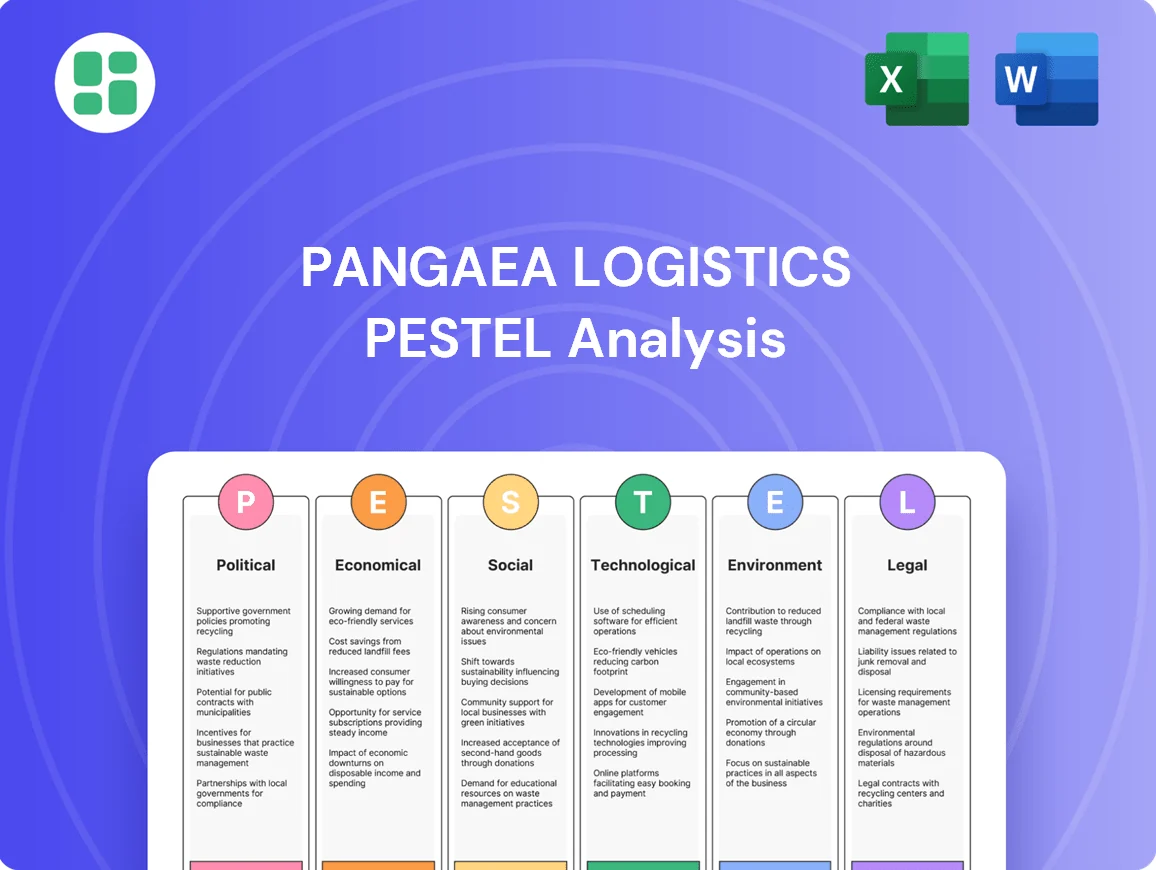
The preview shown here is the exact document you’ll receive after purchase—fully formatted and ready to use. This comprehensive Pangaea Logistics PESTLE analysis delves into the Political, Economic, Social, Technological, Legal, and Environmental factors impacting the company's operations and strategic direction.
This is a real screenshot of the product you’re buying—delivered exactly as shown, no surprises. You'll gain immediate access to a detailed examination of the external forces shaping Pangaea Logistics' business landscape, enabling informed decision-making.
The content and structure shown in the preview is the same document you’ll download after payment. This PESTLE analysis provides actionable insights into market trends, competitive pressures, and regulatory changes relevant to Pangaea Logistics.

Product Information
Product Information
Shipping & Returns
Shipping & Returns
Pangaea Logistics PESTLE Analysis
Pangaea Logistics PESTLE Analysis
Your Competitive Advantage Starts with This Report
Navigate the dynamic global shipping landscape with our PESTLE analysis of Pangaea Logistics. Understand how political shifts, economic fluctuations, and technological advancements are shaping their operations and future growth. Equip yourself with critical insights to anticipate challenges and capitalize on opportunities. Download the full PESTLE analysis now for actionable intelligence.
Political factors
Geopolitical Stability and Trade Relations
Global political stability directly influences trade routes and cargo volumes, a critical factor for Pangaea Logistics. For instance, ongoing geopolitical tensions in regions like the Red Sea in early 2024 led to significant rerouting of vessels, increasing transit times and operational costs for many shipping companies, including those involved in dry bulk transport.
Shifts in international trade agreements also play a crucial role. The renegotiation or imposition of tariffs can alter demand for dry bulk commodities, impacting Pangaea's chartering activities. As of late 2024, discussions around potential trade barriers between major economies could create uncertainty in commodity flows, affecting the predictable movement of goods like iron ore and coal that Pangaea often transports.
Government Regulations and Subsidies
Government regulations heavily influence maritime transport, impacting companies like Pangaea Logistics. Policies on port access, cabotage laws, and potential subsidies for national fleets directly shape operational costs and the competitive environment. For instance, during 2024, several nations continued to review or implement stricter cabotage rules, aiming to bolster domestic shipping industries, which could increase operating expenses for international carriers.
International Sanctions and Embargoes
International sanctions and trade embargoes pose a significant hurdle for Pangaea Logistics. For instance, sanctions imposed on Russia following the 2022 invasion of Ukraine directly impacted global shipping, including routes Pangaea might utilize. Compliance with these evolving regulations is paramount, as violations can lead to substantial fines and reputational damage, limiting operational flexibility.
Maritime Security and Piracy
The persistent threat of piracy and other maritime security issues in key shipping routes directly impacts Pangaea Logistics, requiring enhanced security protocols and escalating insurance premiums. For instance, the International Maritime Bureau (IMB) reported 121 incidents of piracy and armed robbery against ships globally in the first half of 2024, a slight decrease from the 124 incidents in the same period of 2023, but the risk remains significant in areas like the Gulf of Guinea and parts of Southeast Asia.
Political instability in various coastal nations can amplify these maritime risks. This instability can lead to unpredictable operational disruptions, increased costs associated with security escorts or rerouting, and critical safety considerations for both Pangaea's personnel and the valuable cargo they transport. The economic impact of these security challenges is substantial, with estimates suggesting that global maritime piracy costs billions of dollars annually in ransom payments, security measures, and lost revenue.
- Increased Security Costs: Piracy necessitates investment in armed guards, vessel hardening, and advanced surveillance systems, directly raising operational expenses for Pangaea.
- Higher Insurance Premiums: Insurers factor in piracy risks, leading to more expensive war risk and kidnap and ransom insurance policies for vessels operating in high-risk zones.
- Potential for Cargo and Vessel Seizures: Political instability can result in arbitrary detentions or seizures of assets, creating significant financial and logistical burdens.
- Disruption to Supply Chains: Security incidents can cause delays and rerouting, impacting delivery schedules and potentially damaging customer relationships.
Trade Protectionism and Tariffs
The increasing prevalence of trade protectionism, marked by the imposition of new tariffs and non-tariff barriers on dry bulk commodities, poses a significant challenge to global trade volumes. This trend directly impacts the demand for shipping services, potentially driving down freight rates and consequently affecting Pangaea Logistics' profitability.
For instance, the International Monetary Fund (IMF) has noted a rise in trade restrictions globally. In 2023, the number of trade-restrictive measures implemented by G20 economies increased by 15% compared to the previous year, impacting key dry bulk trade routes.
- Rising Protectionism: A global increase in tariffs and non-tariff barriers on commodities like iron ore and coal.
- Impact on Demand: Reduced international trade volumes directly translate to lower demand for dry bulk shipping services.
- Freight Rate Pressure: Decreased demand leads to downward pressure on freight rates, impacting Pangaea Logistics' revenue.
Geopolitical Shifts Reshape Global Shipping Dynamics
Political stability and international relations significantly shape global trade, directly impacting Pangaea Logistics' operational landscape. Geopolitical tensions, such as those observed in early 2024 affecting the Red Sea, necessitate costly rerouting and extend transit times for vital dry bulk cargo. The International Maritime Organization (IMO) continues to monitor and address security concerns, with piracy incidents, though slightly down in early 2024 compared to 2023, still posing a threat in key maritime zones, leading to increased security and insurance costs for shipping operators.
Trade policies and protectionist measures are also critical political factors. The IMF's observations of a 15% rise in trade-restrictive measures by G20 economies in 2023 highlight a trend that can dampen demand for commodities like iron ore and coal, thereby pressuring freight rates for companies like Pangaea. Furthermore, evolving national regulations, including stricter cabotage laws implemented by various countries throughout 2024, can increase operational expenses for international carriers by limiting market access.
| Political Factor | Impact on Pangaea Logistics | Supporting Data/Trend (2023-2024) |
| Geopolitical Tensions | Disruption of trade routes, increased transit times, higher operational costs | Red Sea rerouting in early 2024 |
| Trade Protectionism | Reduced commodity demand, downward pressure on freight rates | 15% increase in G20 trade-restrictive measures in 2023 (IMF) |
| Maritime Security (Piracy) | Increased security and insurance costs, potential for delays | 121 global incidents in H1 2024 vs. 124 in H1 2023 (IMB) |
| National Regulations (Cabotage) | Increased operating expenses, limited market access | Review/implementation of stricter cabotage rules by multiple nations in 2024 |
What is included in the product
Detailed Word Document
This PESTLE analysis examines the external macro-environmental factors influencing Pangaea Logistics across Political, Economic, Social, Technological, Environmental, and Legal dimensions, providing a comprehensive overview of potential threats and opportunities.
Customizable Excel Spreadsheet
A concise Pangaea Logistics PESTLE analysis that highlights key external factors impacting the industry, serving as a pain point reliever by offering clear insights for strategic decision-making and risk mitigation.
Economic factors
Global Economic Growth and Commodity Demand
The health of the global economy is a primary driver for Pangaea Logistics' dry bulk shipping business. When major economies expand, there's a natural uptick in demand for commodities like iron ore for steel production and coal for energy, both crucial for Pangaea. For instance, in 2024, projections from organizations like the IMF indicated continued, albeit varied, global economic growth, which directly translates to higher shipping volumes for essential raw materials.
Fluctuations in Fuel Prices
Fluctuations in fuel prices significantly impact Pangaea Logistics, as bunker fuel constitutes a substantial portion of their operating expenses. For instance, in early 2024, global oil prices saw considerable swings, with Brent crude trading in a range that directly affects shipping costs.
When fuel costs rise sharply, Pangaea's profit margins can be squeezed unless they can pass these increases on to customers through fuel surcharges or mitigate them via operational efficiencies. The company's ability to manage these costs, perhaps through optimized routing and slower steaming, is crucial for maintaining profitability in a volatile market.
Freight Rate Volatility
The dry bulk shipping market, where Pangaea Logistics operates, is inherently volatile. Freight rates can swing significantly due to imbalances between the number of ships available and the amount of cargo needing transport. This volatility directly impacts Pangaea's earnings, as securing good charter rates and keeping its ships busy are crucial for profitability.
For instance, in early 2024, the Baltic Dry Index, a key indicator of dry bulk shipping costs, experienced fluctuations. While it saw an upward trend in the first quarter, driven by increased demand for certain commodities, it faced downward pressure later in the year due to growing vessel supply and some seasonal demand softening. Pangaea's financial performance in 2024 and projections for 2025 will heavily depend on navigating these rate swings.
Inflation and Interest Rates
High inflation directly impacts Pangaea Logistics' operational expenses. For instance, the US Consumer Price Index (CPI) saw a significant increase, reaching 3.4% year-over-year in April 2024, signaling rising costs for everything from fuel to labor. This surge in general price levels translates to higher expenditures for crew wages, essential maintenance parts, and increasingly costly port fees globally.
Concurrently, the economic landscape of rising interest rates presents a considerable challenge for capital-intensive businesses like Pangaea. The Federal Reserve's benchmark interest rate has remained elevated, impacting borrowing costs. This means financing new vessel acquisitions or refinancing existing debt becomes more expensive, potentially slowing down fleet expansion or modernization plans.
- Inflationary pressures on operational costs: Rising wages, maintenance, and port fees due to inflation.
- Impact of interest rates on financing: Increased cost of capital for vessel acquisition and debt servicing.
- Potential effect on capital expenditure: Higher borrowing costs may lead to revised investment decisions for fleet expansion.
- Global economic indicators: US CPI at 3.4% (April 2024) and sustained elevated interest rates highlight these economic pressures.
Currency Exchange Rate Movements
Pangaea Logistics, as a global shipping company, navigates a complex financial landscape shaped by currency exchange rate movements. Transactions are conducted in numerous currencies, exposing the company to the inherent volatility of foreign exchange markets.
Significant fluctuations in these rates can directly impact Pangaea's reported financial results. When earnings generated in foreign currencies are translated back into its primary reporting currency, adverse movements can diminish their value, affecting revenues and profitability. Conversely, favorable movements can boost reported earnings.
For instance, a strengthening US dollar against currencies where Pangaea operates could lead to lower reported revenues when those earnings are repatriated. Conversely, a weakening dollar could inflate them. This dynamic is crucial for understanding the company's true operational performance beyond the physical movement of goods.
- Impact on Revenue: Fluctuations directly alter the reported value of foreign-denominated revenue streams.
- Cost Volatility: Expenses incurred in foreign currencies are also subject to these exchange rate shifts, affecting cost of goods sold and operating expenses.
- Financial Performance: The net effect of currency translation can significantly influence net income and earnings per share.
- Strategic Hedging: Companies like Pangaea often employ hedging strategies to mitigate currency risks, though these can also incur costs.
Navigating Dry Bulk's Economic Currents: Growth, Fuel, and Rates
Global economic growth remains a key driver for Pangaea Logistics, with projections for 2025 suggesting continued expansion, albeit with regional variations. Demand for dry bulk commodities like iron ore and coal, essential for industrial activity, is directly tied to this growth. For example, the IMF's outlook for 2025 anticipates a global GDP growth rate that supports increased seaborne trade volumes.
Fuel costs are a significant operational expense, and their volatility directly impacts Pangaea's profitability. In 2024, oil prices experienced notable swings, influencing bunker fuel costs. For instance, Brent crude prices fluctuated, with average prices in the first half of 2024 hovering around the $80-$90 per barrel range, directly affecting shipping expenses.
Freight rate volatility in the dry bulk sector is a constant factor for Pangaea. Imbalances in supply and demand for shipping capacity cause significant swings in charter rates. The Baltic Dry Index, a benchmark for dry bulk shipping costs, demonstrated this volatility throughout 2024, with periods of strong demand for certain cargoes boosting rates, followed by softer periods due to increased vessel availability.
| Economic Factor | 2024 Data/Trend | 2025 Outlook/Impact |
|---|---|---|
| Global GDP Growth | IMF projected 3.2% for 2024 | Projected 3.2% for 2025, supporting trade volumes |
| Fuel Prices (Brent Crude) | Averaged ~$83/barrel in H1 2024 | Expected to remain volatile, impacting operating costs |
| Baltic Dry Index (BDI) | Fluctuated significantly in 2024 | Continued volatility expected, influencing freight rates |
Preview the Actual Deliverable
Pangaea Logistics PESTLE Analysis
The preview shown here is the exact document you’ll receive after purchase—fully formatted and ready to use. This comprehensive Pangaea Logistics PESTLE analysis delves into the Political, Economic, Social, Technological, Legal, and Environmental factors impacting the company's operations and strategic direction.
This is a real screenshot of the product you’re buying—delivered exactly as shown, no surprises. You'll gain immediate access to a detailed examination of the external forces shaping Pangaea Logistics' business landscape, enabling informed decision-making.
The content and structure shown in the preview is the same document you’ll download after payment. This PESTLE analysis provides actionable insights into market trends, competitive pressures, and regulatory changes relevant to Pangaea Logistics.
Product Information
Product Information
Shipping & Returns
Shipping & Returns
Description
Your Competitive Advantage Starts with This Report
Navigate the dynamic global shipping landscape with our PESTLE analysis of Pangaea Logistics. Understand how political shifts, economic fluctuations, and technological advancements are shaping their operations and future growth. Equip yourself with critical insights to anticipate challenges and capitalize on opportunities. Download the full PESTLE analysis now for actionable intelligence.
Political factors
Geopolitical Stability and Trade Relations
Global political stability directly influences trade routes and cargo volumes, a critical factor for Pangaea Logistics. For instance, ongoing geopolitical tensions in regions like the Red Sea in early 2024 led to significant rerouting of vessels, increasing transit times and operational costs for many shipping companies, including those involved in dry bulk transport.
Shifts in international trade agreements also play a crucial role. The renegotiation or imposition of tariffs can alter demand for dry bulk commodities, impacting Pangaea's chartering activities. As of late 2024, discussions around potential trade barriers between major economies could create uncertainty in commodity flows, affecting the predictable movement of goods like iron ore and coal that Pangaea often transports.
Government Regulations and Subsidies
Government regulations heavily influence maritime transport, impacting companies like Pangaea Logistics. Policies on port access, cabotage laws, and potential subsidies for national fleets directly shape operational costs and the competitive environment. For instance, during 2024, several nations continued to review or implement stricter cabotage rules, aiming to bolster domestic shipping industries, which could increase operating expenses for international carriers.
International Sanctions and Embargoes
International sanctions and trade embargoes pose a significant hurdle for Pangaea Logistics. For instance, sanctions imposed on Russia following the 2022 invasion of Ukraine directly impacted global shipping, including routes Pangaea might utilize. Compliance with these evolving regulations is paramount, as violations can lead to substantial fines and reputational damage, limiting operational flexibility.
Maritime Security and Piracy
The persistent threat of piracy and other maritime security issues in key shipping routes directly impacts Pangaea Logistics, requiring enhanced security protocols and escalating insurance premiums. For instance, the International Maritime Bureau (IMB) reported 121 incidents of piracy and armed robbery against ships globally in the first half of 2024, a slight decrease from the 124 incidents in the same period of 2023, but the risk remains significant in areas like the Gulf of Guinea and parts of Southeast Asia.
Political instability in various coastal nations can amplify these maritime risks. This instability can lead to unpredictable operational disruptions, increased costs associated with security escorts or rerouting, and critical safety considerations for both Pangaea's personnel and the valuable cargo they transport. The economic impact of these security challenges is substantial, with estimates suggesting that global maritime piracy costs billions of dollars annually in ransom payments, security measures, and lost revenue.
- Increased Security Costs: Piracy necessitates investment in armed guards, vessel hardening, and advanced surveillance systems, directly raising operational expenses for Pangaea.
- Higher Insurance Premiums: Insurers factor in piracy risks, leading to more expensive war risk and kidnap and ransom insurance policies for vessels operating in high-risk zones.
- Potential for Cargo and Vessel Seizures: Political instability can result in arbitrary detentions or seizures of assets, creating significant financial and logistical burdens.
- Disruption to Supply Chains: Security incidents can cause delays and rerouting, impacting delivery schedules and potentially damaging customer relationships.
Trade Protectionism and Tariffs
The increasing prevalence of trade protectionism, marked by the imposition of new tariffs and non-tariff barriers on dry bulk commodities, poses a significant challenge to global trade volumes. This trend directly impacts the demand for shipping services, potentially driving down freight rates and consequently affecting Pangaea Logistics' profitability.
For instance, the International Monetary Fund (IMF) has noted a rise in trade restrictions globally. In 2023, the number of trade-restrictive measures implemented by G20 economies increased by 15% compared to the previous year, impacting key dry bulk trade routes.
- Rising Protectionism: A global increase in tariffs and non-tariff barriers on commodities like iron ore and coal.
- Impact on Demand: Reduced international trade volumes directly translate to lower demand for dry bulk shipping services.
- Freight Rate Pressure: Decreased demand leads to downward pressure on freight rates, impacting Pangaea Logistics' revenue.
Geopolitical Shifts Reshape Global Shipping Dynamics
Political stability and international relations significantly shape global trade, directly impacting Pangaea Logistics' operational landscape. Geopolitical tensions, such as those observed in early 2024 affecting the Red Sea, necessitate costly rerouting and extend transit times for vital dry bulk cargo. The International Maritime Organization (IMO) continues to monitor and address security concerns, with piracy incidents, though slightly down in early 2024 compared to 2023, still posing a threat in key maritime zones, leading to increased security and insurance costs for shipping operators.
Trade policies and protectionist measures are also critical political factors. The IMF's observations of a 15% rise in trade-restrictive measures by G20 economies in 2023 highlight a trend that can dampen demand for commodities like iron ore and coal, thereby pressuring freight rates for companies like Pangaea. Furthermore, evolving national regulations, including stricter cabotage laws implemented by various countries throughout 2024, can increase operational expenses for international carriers by limiting market access.
| Political Factor | Impact on Pangaea Logistics | Supporting Data/Trend (2023-2024) |
| Geopolitical Tensions | Disruption of trade routes, increased transit times, higher operational costs | Red Sea rerouting in early 2024 |
| Trade Protectionism | Reduced commodity demand, downward pressure on freight rates | 15% increase in G20 trade-restrictive measures in 2023 (IMF) |
| Maritime Security (Piracy) | Increased security and insurance costs, potential for delays | 121 global incidents in H1 2024 vs. 124 in H1 2023 (IMB) |
| National Regulations (Cabotage) | Increased operating expenses, limited market access | Review/implementation of stricter cabotage rules by multiple nations in 2024 |
What is included in the product
Detailed Word Document
This PESTLE analysis examines the external macro-environmental factors influencing Pangaea Logistics across Political, Economic, Social, Technological, Environmental, and Legal dimensions, providing a comprehensive overview of potential threats and opportunities.
Customizable Excel Spreadsheet
A concise Pangaea Logistics PESTLE analysis that highlights key external factors impacting the industry, serving as a pain point reliever by offering clear insights for strategic decision-making and risk mitigation.
Economic factors
Global Economic Growth and Commodity Demand
The health of the global economy is a primary driver for Pangaea Logistics' dry bulk shipping business. When major economies expand, there's a natural uptick in demand for commodities like iron ore for steel production and coal for energy, both crucial for Pangaea. For instance, in 2024, projections from organizations like the IMF indicated continued, albeit varied, global economic growth, which directly translates to higher shipping volumes for essential raw materials.
Fluctuations in Fuel Prices
Fluctuations in fuel prices significantly impact Pangaea Logistics, as bunker fuel constitutes a substantial portion of their operating expenses. For instance, in early 2024, global oil prices saw considerable swings, with Brent crude trading in a range that directly affects shipping costs.
When fuel costs rise sharply, Pangaea's profit margins can be squeezed unless they can pass these increases on to customers through fuel surcharges or mitigate them via operational efficiencies. The company's ability to manage these costs, perhaps through optimized routing and slower steaming, is crucial for maintaining profitability in a volatile market.
Freight Rate Volatility
The dry bulk shipping market, where Pangaea Logistics operates, is inherently volatile. Freight rates can swing significantly due to imbalances between the number of ships available and the amount of cargo needing transport. This volatility directly impacts Pangaea's earnings, as securing good charter rates and keeping its ships busy are crucial for profitability.
For instance, in early 2024, the Baltic Dry Index, a key indicator of dry bulk shipping costs, experienced fluctuations. While it saw an upward trend in the first quarter, driven by increased demand for certain commodities, it faced downward pressure later in the year due to growing vessel supply and some seasonal demand softening. Pangaea's financial performance in 2024 and projections for 2025 will heavily depend on navigating these rate swings.
Inflation and Interest Rates
High inflation directly impacts Pangaea Logistics' operational expenses. For instance, the US Consumer Price Index (CPI) saw a significant increase, reaching 3.4% year-over-year in April 2024, signaling rising costs for everything from fuel to labor. This surge in general price levels translates to higher expenditures for crew wages, essential maintenance parts, and increasingly costly port fees globally.
Concurrently, the economic landscape of rising interest rates presents a considerable challenge for capital-intensive businesses like Pangaea. The Federal Reserve's benchmark interest rate has remained elevated, impacting borrowing costs. This means financing new vessel acquisitions or refinancing existing debt becomes more expensive, potentially slowing down fleet expansion or modernization plans.
- Inflationary pressures on operational costs: Rising wages, maintenance, and port fees due to inflation.
- Impact of interest rates on financing: Increased cost of capital for vessel acquisition and debt servicing.
- Potential effect on capital expenditure: Higher borrowing costs may lead to revised investment decisions for fleet expansion.
- Global economic indicators: US CPI at 3.4% (April 2024) and sustained elevated interest rates highlight these economic pressures.
Currency Exchange Rate Movements
Pangaea Logistics, as a global shipping company, navigates a complex financial landscape shaped by currency exchange rate movements. Transactions are conducted in numerous currencies, exposing the company to the inherent volatility of foreign exchange markets.
Significant fluctuations in these rates can directly impact Pangaea's reported financial results. When earnings generated in foreign currencies are translated back into its primary reporting currency, adverse movements can diminish their value, affecting revenues and profitability. Conversely, favorable movements can boost reported earnings.
For instance, a strengthening US dollar against currencies where Pangaea operates could lead to lower reported revenues when those earnings are repatriated. Conversely, a weakening dollar could inflate them. This dynamic is crucial for understanding the company's true operational performance beyond the physical movement of goods.
- Impact on Revenue: Fluctuations directly alter the reported value of foreign-denominated revenue streams.
- Cost Volatility: Expenses incurred in foreign currencies are also subject to these exchange rate shifts, affecting cost of goods sold and operating expenses.
- Financial Performance: The net effect of currency translation can significantly influence net income and earnings per share.
- Strategic Hedging: Companies like Pangaea often employ hedging strategies to mitigate currency risks, though these can also incur costs.
Navigating Dry Bulk's Economic Currents: Growth, Fuel, and Rates
Global economic growth remains a key driver for Pangaea Logistics, with projections for 2025 suggesting continued expansion, albeit with regional variations. Demand for dry bulk commodities like iron ore and coal, essential for industrial activity, is directly tied to this growth. For example, the IMF's outlook for 2025 anticipates a global GDP growth rate that supports increased seaborne trade volumes.
Fuel costs are a significant operational expense, and their volatility directly impacts Pangaea's profitability. In 2024, oil prices experienced notable swings, influencing bunker fuel costs. For instance, Brent crude prices fluctuated, with average prices in the first half of 2024 hovering around the $80-$90 per barrel range, directly affecting shipping expenses.
Freight rate volatility in the dry bulk sector is a constant factor for Pangaea. Imbalances in supply and demand for shipping capacity cause significant swings in charter rates. The Baltic Dry Index, a benchmark for dry bulk shipping costs, demonstrated this volatility throughout 2024, with periods of strong demand for certain cargoes boosting rates, followed by softer periods due to increased vessel availability.
| Economic Factor | 2024 Data/Trend | 2025 Outlook/Impact |
|---|---|---|
| Global GDP Growth | IMF projected 3.2% for 2024 | Projected 3.2% for 2025, supporting trade volumes |
| Fuel Prices (Brent Crude) | Averaged ~$83/barrel in H1 2024 | Expected to remain volatile, impacting operating costs |
| Baltic Dry Index (BDI) | Fluctuated significantly in 2024 | Continued volatility expected, influencing freight rates |
Preview the Actual Deliverable
Pangaea Logistics PESTLE Analysis
The preview shown here is the exact document you’ll receive after purchase—fully formatted and ready to use. This comprehensive Pangaea Logistics PESTLE analysis delves into the Political, Economic, Social, Technological, Legal, and Environmental factors impacting the company's operations and strategic direction.
This is a real screenshot of the product you’re buying—delivered exactly as shown, no surprises. You'll gain immediate access to a detailed examination of the external forces shaping Pangaea Logistics' business landscape, enabling informed decision-making.
The content and structure shown in the preview is the same document you’ll download after payment. This PESTLE analysis provides actionable insights into market trends, competitive pressures, and regulatory changes relevant to Pangaea Logistics.