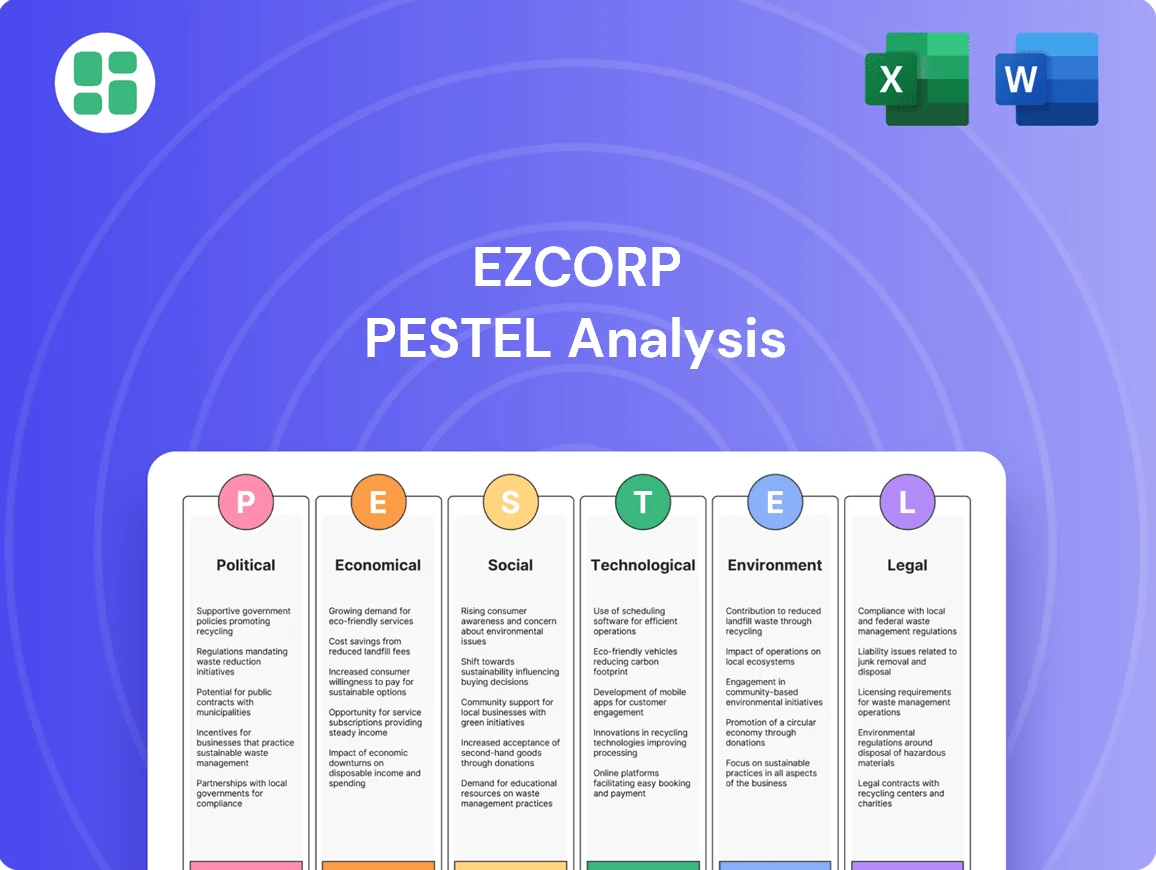
NICE PESTLE Analysis

Plan Smarter. Present Sharper. Compete Stronger.
Unlock the forces shaping NICE's future with our comprehensive PESTLE analysis. Understand how political, economic, social, technological, legal, and environmental factors create both opportunities and threats for the company. Equip yourself with critical market intelligence to refine your strategies and gain a competitive advantage. Download the full PESTLE analysis now for actionable insights.
Political factors

Government Financial Sector Policies
The South Korean government, via the Financial Services Commission (FSC), is actively guiding its financial sector. Recent policy shifts aim to boost competitiveness, such as updating network separation rules to enable financial firms to use generative AI and expand cloud-based applications. These moves directly influence how companies like NICE Holdings operate and innovate.
Regulatory Sandbox Programs
South Korea's commitment to fostering fintech innovation is evident through its regulatory sandbox programs. These initiatives provide a controlled environment for companies to test novel financial services, temporarily exempting them from certain regulations. This approach significantly lowers entry barriers and encourages the adoption of technology-driven financial solutions.
As of May 2025, over 520 services have received designation as innovative financial services under this framework. This demonstrates a robust pipeline of new fintech offerings being explored and validated. Such a supportive ecosystem is crucial for accelerating the development and deployment of cutting-edge financial technology, directly benefiting companies like NICE Holdings.

Data Protection and Privacy Legislation
Data protection and privacy legislation, like South Korea's Personal Information Protection Act (PIPA), significantly impacts companies such as NICE Holdings, which manage extensive personal and credit data. Amendments in 2024 and 2025 are strengthening individual data control, including rights to data portability, and clarifying how these laws apply to overseas entities. Navigating these evolving privacy regulations is essential for NICE Holdings to maintain trust and compliance in its credit information and risk management operations.

Anti-Monopoly and Competition Policies
Government oversight on market concentration and fair competition within the financial services sector, including credit ratings and fintech, directly impacts NICE Holdings' strategic maneuvers like mergers and acquisitions. These policies aim to prevent monopolies and ensure a level playing field, potentially influencing NICE's market share and its ability to forge strategic partnerships. For instance, the Financial Services Commission (FSC) in South Korea, a key market for NICE, actively works to enhance fairness, which could lead to stricter scrutiny of dominant players.
These anti-monopoly and competition policies are crucial for maintaining a dynamic financial ecosystem. They encourage innovation and prevent undue market power from stifling smaller competitors or consumer choice. While specific recent actions impacting NICE Holdings directly regarding these policies aren't widely published, the general regulatory environment underscores the importance of adherence to fair competition principles.
- Regulatory Focus: Governments worldwide, including South Korea's FSC, are increasingly focused on preventing excessive market concentration in financial services.
- Impact on M&A: Anti-monopoly reviews can significantly influence the feasibility and structure of mergers and acquisitions for companies like NICE Holdings.
- Fairness in Markets: Policies promoting fairness can create opportunities for new entrants and encourage existing players to compete on service quality and innovation.
Geopolitical Stability and Trade Relations
South Korea's economic landscape is significantly shaped by geopolitical stability and international trade dynamics, which in turn can ripple through its financial sector. For example, the imposition of tariffs, such as those previously seen from the United States, can negatively impact corporate earnings and the overall economic climate, potentially increasing credit risk and dampening investor confidence. This external volatility could directly influence the demand for NICE Holdings' core services in financial analysis and credit risk management, as businesses navigate an increasingly uncertain global trade environment.
The ongoing geopolitical tensions in Northeast Asia, particularly concerning North Korea, continue to be a persistent factor influencing South Korea's economic outlook. While direct military conflict remains a low-probability event, the mere presence of this tension creates a backdrop of uncertainty that can affect foreign investment and business expansion plans. For NICE Holdings, this translates to a need for robust risk assessment capabilities, as companies may seek more thorough evaluations of their exposure to geopolitical shocks.
Trade relations are a critical determinant of South Korea's export-driven economy. Shifts in trade policies or disputes between major trading partners, such as the US and China, can have a tangible impact on South Korean businesses. For instance, a slowdown in global demand due to trade friction could lead to reduced corporate revenues, potentially increasing the default rates that NICE Holdings' credit risk services are designed to mitigate. The company's ability to accurately forecast and manage these trade-related risks will be crucial for its performance.
- Trade Dependency: South Korea's exports accounted for approximately 39.4% of its GDP in 2023, highlighting its vulnerability to global trade fluctuations.
- US-China Trade Tensions: Ongoing trade disputes between the US and China can disrupt supply chains and reduce demand for South Korean manufactured goods.
- Geopolitical Risk Premium: Investors often factor in a geopolitical risk premium when assessing South Korean assets, which can influence capital flows and the cost of borrowing.
- Impact on Financial Services: Increased economic uncertainty due to trade barriers or geopolitical events can lead to higher demand for credit assessment and financial advisory services.
Korea's Fintech: Innovation, Data Laws, and Market Dynamics
South Korea's government actively supports fintech innovation through regulatory sandboxes, with over 520 services designated as innovative as of May 2025. Data protection laws, like the strengthened Personal Information Protection Act (PIPA) with 2024/2025 amendments, require careful navigation for companies handling sensitive data. Furthermore, policies promoting fair competition and preventing market concentration influence strategic decisions, including mergers and acquisitions, for firms in the financial sector. These political factors collectively shape the operational landscape for companies like NICE Holdings.
What is included in the product
 Detailed Word Document
The NICE PESTLE Analysis provides a comprehensive examination of the external macro-environmental factors influencing NICE across Political, Economic, Social, Technological, Environmental, and Legal dimensions.
It offers actionable insights and forward-looking perspectives to inform strategic decision-making and identify potential opportunities and threats.

 Customizable Excel Spreadsheet
The NICE PESTLE Analysis offers a structured framework to identify and understand external factors, alleviating the pain of uncertainty and enabling proactive strategic decision-making.
Economic factors

South Korean Economic Growth and Stability
South Korea's economic health is a key driver for financial services. In 2024, growth was bolstered by a strong export performance. Projections for 2025 indicate a slight moderation in overall growth, as export momentum potentially eases, though domestic demand is expected to see a rebound.
This anticipated slowdown in export-driven growth could temper the demand for credit and investment opportunities. For a company like NICE Holdings, a more moderate economic expansion might influence the volume and risk profiles of its credit information and risk assessment services.
Interest Rate Fluctuations and Credit Demand
The Bank of Korea's monetary policy, particularly its benchmark interest rate decisions, directly shapes credit demand and the profitability landscape for financial institutions. South Korea has implemented interest rate reductions to bolster economic activity, with expectations pointing towards additional cuts in 2025.
These lower interest rates are poised to encourage borrowing and investment, which could translate into increased demand for NICE Holdings' credit information and financial technology services. However, this environment also presents challenges, potentially affecting the quality of loans held by banks.
For instance, if the Bank of Korea maintains its accommodative stance, as suggested by potential 2025 cuts, it could lead to a more robust market for credit assessment tools. This scenario might see the average interest rate on new household loans in South Korea, which hovered around 4.5% in early 2024, decline further, stimulating consumer spending and business expansion.

Household Debt Levels and Credit Risk
South Korea's persistent high household debt, a significant economic factor, directly influences the financial services sector. As of the first quarter of 2024, household debt reached approximately 2,277.3 trillion Korean won, underscoring its persistent nature.
This elevated debt burden has led to a noticeable increase in at-risk loans within the banking industry, posing challenges for credit risk management. For instance, the ratio of non-performing loans in Korean banks saw a slight uptick in late 2023, highlighting the growing credit risk.
Consequently, there's a heightened demand for sophisticated credit risk management and investment analysis tools, precisely the areas where NICE Holdings excels. This rising credit risk environment directly translates into greater market opportunities for companies like NICE, which offer essential analytical solutions to navigate these complexities.

Capital Market Performance and Investment Trends
South Korea's capital markets showed resilience, with the KOSPI index experiencing a notable rebound in early 2025, climbing over 10% from its late 2024 lows. This recovery, however, is tempered by ongoing global economic uncertainties and anticipated shifts in monetary policy. Regulatory reforms, including proposed changes to capital gains tax structures for foreign investors, are expected to significantly influence market dynamics throughout 2025.
These evolving market conditions present a mixed landscape for NICE Holdings' asset management and investment analysis divisions. While the rebound offers potential for asset growth, the persistent volatility and upcoming regulatory adjustments necessitate agile strategies. For instance, the Bank of Korea's cautious stance on interest rate cuts in early 2025, maintaining the benchmark rate at 3.50%, contributes to a cautious investment environment.
- KOSPI Index Performance: Rebounded over 10% in early 2025.
- Bank of Korea Policy Rate: Maintained at 3.50% as of early 2025, indicating a cautious monetary stance.
- Regulatory Impact: Anticipated changes to capital gains tax and other regulations are poised to reshape market participation.
- Investment Trends: Shift towards defensive sectors and quality growth stocks observed amidst ongoing global economic headwinds.
Digital Payment Market Growth
The digital payment market in South Korea is expanding rapidly, with projections indicating it could reach around USD 4.79 billion by 2030. This substantial growth is fueled by widespread smartphone adoption and proactive government initiatives promoting digital transformation across the economy.
This upward trend in digital payments directly supports NICE Holdings' financial technology solutions. Specifically, their offerings in digital payment processing and transaction management are well-positioned to capitalize on this expanding market, suggesting a robust demand for their fintech services.
- Projected Market Size: South Korea's digital payment market is expected to reach approximately USD 4.79 billion by 2030.
- Key Growth Drivers: High smartphone penetration and government support for digital transformation are primary catalysts.
- NICE Holdings' Advantage: The growth benefits NICE Holdings' fintech solutions, particularly in digital payments and transaction processing.
- Market Opportunity: The trend signifies a strong and growing market for NICE's fintech offerings in South Korea.
South Korea's Economy: Navigating Debt, Rate Cuts, and Credit Risk
South Korea's economic trajectory in 2024 was characterized by robust export performance, which is expected to moderate slightly in 2025. While domestic demand is anticipated to rebound, this shift could influence the scale and risk of credit information services. The Bank of Korea's monetary policy, with potential rate cuts in 2025, aims to stimulate borrowing, benefiting sectors like NICE Holdings' credit assessment tools. However, high household debt, standing at approximately 2,277.3 trillion Korean won in Q1 2024, presents ongoing credit risk challenges, increasing demand for sophisticated risk management solutions.
| Economic Indicator | Value/Status (as of early 2025) | Implication for NICE Holdings |
| GDP Growth Projection (2025) | Slight moderation from 2024 | Potential impact on credit volume and investment opportunities |
| Bank of Korea Policy Rate | Expected cuts in 2025 | Stimulates borrowing, increasing demand for credit assessment |
| Household Debt | ~2,277.3 trillion KRW (Q1 2024) | Elevated credit risk, increasing demand for risk management tools |
| KOSPI Index | Rebounded >10% (early 2025) | Offers opportunities but tempered by volatility |
Preview the Actual Deliverable
NICE PESTLE Analysis
The preview shown here is the exact document you’ll receive after purchase—fully formatted and ready to use. This comprehensive NICE PESTLE Analysis breaks down the Political, Economic, Social, Technological, Legal, and Environmental factors impacting your business. You'll gain actionable insights to inform your strategic decisions.

Product Information
Product Information
Shipping & Returns
Shipping & Returns
NICE PESTLE Analysis
NICE PESTLE Analysis
Plan Smarter. Present Sharper. Compete Stronger.
Unlock the forces shaping NICE's future with our comprehensive PESTLE analysis. Understand how political, economic, social, technological, legal, and environmental factors create both opportunities and threats for the company. Equip yourself with critical market intelligence to refine your strategies and gain a competitive advantage. Download the full PESTLE analysis now for actionable insights.
Political factors
Government Financial Sector Policies
The South Korean government, via the Financial Services Commission (FSC), is actively guiding its financial sector. Recent policy shifts aim to boost competitiveness, such as updating network separation rules to enable financial firms to use generative AI and expand cloud-based applications. These moves directly influence how companies like NICE Holdings operate and innovate.
Regulatory Sandbox Programs
South Korea's commitment to fostering fintech innovation is evident through its regulatory sandbox programs. These initiatives provide a controlled environment for companies to test novel financial services, temporarily exempting them from certain regulations. This approach significantly lowers entry barriers and encourages the adoption of technology-driven financial solutions.
As of May 2025, over 520 services have received designation as innovative financial services under this framework. This demonstrates a robust pipeline of new fintech offerings being explored and validated. Such a supportive ecosystem is crucial for accelerating the development and deployment of cutting-edge financial technology, directly benefiting companies like NICE Holdings.
Data Protection and Privacy Legislation
Data protection and privacy legislation, like South Korea's Personal Information Protection Act (PIPA), significantly impacts companies such as NICE Holdings, which manage extensive personal and credit data. Amendments in 2024 and 2025 are strengthening individual data control, including rights to data portability, and clarifying how these laws apply to overseas entities. Navigating these evolving privacy regulations is essential for NICE Holdings to maintain trust and compliance in its credit information and risk management operations.
Anti-Monopoly and Competition Policies
Government oversight on market concentration and fair competition within the financial services sector, including credit ratings and fintech, directly impacts NICE Holdings' strategic maneuvers like mergers and acquisitions. These policies aim to prevent monopolies and ensure a level playing field, potentially influencing NICE's market share and its ability to forge strategic partnerships. For instance, the Financial Services Commission (FSC) in South Korea, a key market for NICE, actively works to enhance fairness, which could lead to stricter scrutiny of dominant players.
These anti-monopoly and competition policies are crucial for maintaining a dynamic financial ecosystem. They encourage innovation and prevent undue market power from stifling smaller competitors or consumer choice. While specific recent actions impacting NICE Holdings directly regarding these policies aren't widely published, the general regulatory environment underscores the importance of adherence to fair competition principles.
- Regulatory Focus: Governments worldwide, including South Korea's FSC, are increasingly focused on preventing excessive market concentration in financial services.
- Impact on M&A: Anti-monopoly reviews can significantly influence the feasibility and structure of mergers and acquisitions for companies like NICE Holdings.
- Fairness in Markets: Policies promoting fairness can create opportunities for new entrants and encourage existing players to compete on service quality and innovation.
Geopolitical Stability and Trade Relations
South Korea's economic landscape is significantly shaped by geopolitical stability and international trade dynamics, which in turn can ripple through its financial sector. For example, the imposition of tariffs, such as those previously seen from the United States, can negatively impact corporate earnings and the overall economic climate, potentially increasing credit risk and dampening investor confidence. This external volatility could directly influence the demand for NICE Holdings' core services in financial analysis and credit risk management, as businesses navigate an increasingly uncertain global trade environment.
The ongoing geopolitical tensions in Northeast Asia, particularly concerning North Korea, continue to be a persistent factor influencing South Korea's economic outlook. While direct military conflict remains a low-probability event, the mere presence of this tension creates a backdrop of uncertainty that can affect foreign investment and business expansion plans. For NICE Holdings, this translates to a need for robust risk assessment capabilities, as companies may seek more thorough evaluations of their exposure to geopolitical shocks.
Trade relations are a critical determinant of South Korea's export-driven economy. Shifts in trade policies or disputes between major trading partners, such as the US and China, can have a tangible impact on South Korean businesses. For instance, a slowdown in global demand due to trade friction could lead to reduced corporate revenues, potentially increasing the default rates that NICE Holdings' credit risk services are designed to mitigate. The company's ability to accurately forecast and manage these trade-related risks will be crucial for its performance.
- Trade Dependency: South Korea's exports accounted for approximately 39.4% of its GDP in 2023, highlighting its vulnerability to global trade fluctuations.
- US-China Trade Tensions: Ongoing trade disputes between the US and China can disrupt supply chains and reduce demand for South Korean manufactured goods.
- Geopolitical Risk Premium: Investors often factor in a geopolitical risk premium when assessing South Korean assets, which can influence capital flows and the cost of borrowing.
- Impact on Financial Services: Increased economic uncertainty due to trade barriers or geopolitical events can lead to higher demand for credit assessment and financial advisory services.
Korea's Fintech: Innovation, Data Laws, and Market Dynamics
South Korea's government actively supports fintech innovation through regulatory sandboxes, with over 520 services designated as innovative as of May 2025. Data protection laws, like the strengthened Personal Information Protection Act (PIPA) with 2024/2025 amendments, require careful navigation for companies handling sensitive data. Furthermore, policies promoting fair competition and preventing market concentration influence strategic decisions, including mergers and acquisitions, for firms in the financial sector. These political factors collectively shape the operational landscape for companies like NICE Holdings.
What is included in the product
Detailed Word Document
The NICE PESTLE Analysis provides a comprehensive examination of the external macro-environmental factors influencing NICE across Political, Economic, Social, Technological, Environmental, and Legal dimensions.
It offers actionable insights and forward-looking perspectives to inform strategic decision-making and identify potential opportunities and threats.
Customizable Excel Spreadsheet
The NICE PESTLE Analysis offers a structured framework to identify and understand external factors, alleviating the pain of uncertainty and enabling proactive strategic decision-making.
Economic factors
South Korean Economic Growth and Stability
South Korea's economic health is a key driver for financial services. In 2024, growth was bolstered by a strong export performance. Projections for 2025 indicate a slight moderation in overall growth, as export momentum potentially eases, though domestic demand is expected to see a rebound.
This anticipated slowdown in export-driven growth could temper the demand for credit and investment opportunities. For a company like NICE Holdings, a more moderate economic expansion might influence the volume and risk profiles of its credit information and risk assessment services.
Interest Rate Fluctuations and Credit Demand
The Bank of Korea's monetary policy, particularly its benchmark interest rate decisions, directly shapes credit demand and the profitability landscape for financial institutions. South Korea has implemented interest rate reductions to bolster economic activity, with expectations pointing towards additional cuts in 2025.
These lower interest rates are poised to encourage borrowing and investment, which could translate into increased demand for NICE Holdings' credit information and financial technology services. However, this environment also presents challenges, potentially affecting the quality of loans held by banks.
For instance, if the Bank of Korea maintains its accommodative stance, as suggested by potential 2025 cuts, it could lead to a more robust market for credit assessment tools. This scenario might see the average interest rate on new household loans in South Korea, which hovered around 4.5% in early 2024, decline further, stimulating consumer spending and business expansion.
Household Debt Levels and Credit Risk
South Korea's persistent high household debt, a significant economic factor, directly influences the financial services sector. As of the first quarter of 2024, household debt reached approximately 2,277.3 trillion Korean won, underscoring its persistent nature.
This elevated debt burden has led to a noticeable increase in at-risk loans within the banking industry, posing challenges for credit risk management. For instance, the ratio of non-performing loans in Korean banks saw a slight uptick in late 2023, highlighting the growing credit risk.
Consequently, there's a heightened demand for sophisticated credit risk management and investment analysis tools, precisely the areas where NICE Holdings excels. This rising credit risk environment directly translates into greater market opportunities for companies like NICE, which offer essential analytical solutions to navigate these complexities.
Capital Market Performance and Investment Trends
South Korea's capital markets showed resilience, with the KOSPI index experiencing a notable rebound in early 2025, climbing over 10% from its late 2024 lows. This recovery, however, is tempered by ongoing global economic uncertainties and anticipated shifts in monetary policy. Regulatory reforms, including proposed changes to capital gains tax structures for foreign investors, are expected to significantly influence market dynamics throughout 2025.
These evolving market conditions present a mixed landscape for NICE Holdings' asset management and investment analysis divisions. While the rebound offers potential for asset growth, the persistent volatility and upcoming regulatory adjustments necessitate agile strategies. For instance, the Bank of Korea's cautious stance on interest rate cuts in early 2025, maintaining the benchmark rate at 3.50%, contributes to a cautious investment environment.
- KOSPI Index Performance: Rebounded over 10% in early 2025.
- Bank of Korea Policy Rate: Maintained at 3.50% as of early 2025, indicating a cautious monetary stance.
- Regulatory Impact: Anticipated changes to capital gains tax and other regulations are poised to reshape market participation.
- Investment Trends: Shift towards defensive sectors and quality growth stocks observed amidst ongoing global economic headwinds.
Digital Payment Market Growth
The digital payment market in South Korea is expanding rapidly, with projections indicating it could reach around USD 4.79 billion by 2030. This substantial growth is fueled by widespread smartphone adoption and proactive government initiatives promoting digital transformation across the economy.
This upward trend in digital payments directly supports NICE Holdings' financial technology solutions. Specifically, their offerings in digital payment processing and transaction management are well-positioned to capitalize on this expanding market, suggesting a robust demand for their fintech services.
- Projected Market Size: South Korea's digital payment market is expected to reach approximately USD 4.79 billion by 2030.
- Key Growth Drivers: High smartphone penetration and government support for digital transformation are primary catalysts.
- NICE Holdings' Advantage: The growth benefits NICE Holdings' fintech solutions, particularly in digital payments and transaction processing.
- Market Opportunity: The trend signifies a strong and growing market for NICE's fintech offerings in South Korea.
South Korea's Economy: Navigating Debt, Rate Cuts, and Credit Risk
South Korea's economic trajectory in 2024 was characterized by robust export performance, which is expected to moderate slightly in 2025. While domestic demand is anticipated to rebound, this shift could influence the scale and risk of credit information services. The Bank of Korea's monetary policy, with potential rate cuts in 2025, aims to stimulate borrowing, benefiting sectors like NICE Holdings' credit assessment tools. However, high household debt, standing at approximately 2,277.3 trillion Korean won in Q1 2024, presents ongoing credit risk challenges, increasing demand for sophisticated risk management solutions.
| Economic Indicator | Value/Status (as of early 2025) | Implication for NICE Holdings |
| GDP Growth Projection (2025) | Slight moderation from 2024 | Potential impact on credit volume and investment opportunities |
| Bank of Korea Policy Rate | Expected cuts in 2025 | Stimulates borrowing, increasing demand for credit assessment |
| Household Debt | ~2,277.3 trillion KRW (Q1 2024) | Elevated credit risk, increasing demand for risk management tools |
| KOSPI Index | Rebounded >10% (early 2025) | Offers opportunities but tempered by volatility |
Preview the Actual Deliverable
NICE PESTLE Analysis
The preview shown here is the exact document you’ll receive after purchase—fully formatted and ready to use. This comprehensive NICE PESTLE Analysis breaks down the Political, Economic, Social, Technological, Legal, and Environmental factors impacting your business. You'll gain actionable insights to inform your strategic decisions.
Product Information
Product Information
Shipping & Returns
Shipping & Returns
Description
Plan Smarter. Present Sharper. Compete Stronger.
Unlock the forces shaping NICE's future with our comprehensive PESTLE analysis. Understand how political, economic, social, technological, legal, and environmental factors create both opportunities and threats for the company. Equip yourself with critical market intelligence to refine your strategies and gain a competitive advantage. Download the full PESTLE analysis now for actionable insights.
Political factors
Government Financial Sector Policies
The South Korean government, via the Financial Services Commission (FSC), is actively guiding its financial sector. Recent policy shifts aim to boost competitiveness, such as updating network separation rules to enable financial firms to use generative AI and expand cloud-based applications. These moves directly influence how companies like NICE Holdings operate and innovate.
Regulatory Sandbox Programs
South Korea's commitment to fostering fintech innovation is evident through its regulatory sandbox programs. These initiatives provide a controlled environment for companies to test novel financial services, temporarily exempting them from certain regulations. This approach significantly lowers entry barriers and encourages the adoption of technology-driven financial solutions.
As of May 2025, over 520 services have received designation as innovative financial services under this framework. This demonstrates a robust pipeline of new fintech offerings being explored and validated. Such a supportive ecosystem is crucial for accelerating the development and deployment of cutting-edge financial technology, directly benefiting companies like NICE Holdings.
Data Protection and Privacy Legislation
Data protection and privacy legislation, like South Korea's Personal Information Protection Act (PIPA), significantly impacts companies such as NICE Holdings, which manage extensive personal and credit data. Amendments in 2024 and 2025 are strengthening individual data control, including rights to data portability, and clarifying how these laws apply to overseas entities. Navigating these evolving privacy regulations is essential for NICE Holdings to maintain trust and compliance in its credit information and risk management operations.
Anti-Monopoly and Competition Policies
Government oversight on market concentration and fair competition within the financial services sector, including credit ratings and fintech, directly impacts NICE Holdings' strategic maneuvers like mergers and acquisitions. These policies aim to prevent monopolies and ensure a level playing field, potentially influencing NICE's market share and its ability to forge strategic partnerships. For instance, the Financial Services Commission (FSC) in South Korea, a key market for NICE, actively works to enhance fairness, which could lead to stricter scrutiny of dominant players.
These anti-monopoly and competition policies are crucial for maintaining a dynamic financial ecosystem. They encourage innovation and prevent undue market power from stifling smaller competitors or consumer choice. While specific recent actions impacting NICE Holdings directly regarding these policies aren't widely published, the general regulatory environment underscores the importance of adherence to fair competition principles.
- Regulatory Focus: Governments worldwide, including South Korea's FSC, are increasingly focused on preventing excessive market concentration in financial services.
- Impact on M&A: Anti-monopoly reviews can significantly influence the feasibility and structure of mergers and acquisitions for companies like NICE Holdings.
- Fairness in Markets: Policies promoting fairness can create opportunities for new entrants and encourage existing players to compete on service quality and innovation.
Geopolitical Stability and Trade Relations
South Korea's economic landscape is significantly shaped by geopolitical stability and international trade dynamics, which in turn can ripple through its financial sector. For example, the imposition of tariffs, such as those previously seen from the United States, can negatively impact corporate earnings and the overall economic climate, potentially increasing credit risk and dampening investor confidence. This external volatility could directly influence the demand for NICE Holdings' core services in financial analysis and credit risk management, as businesses navigate an increasingly uncertain global trade environment.
The ongoing geopolitical tensions in Northeast Asia, particularly concerning North Korea, continue to be a persistent factor influencing South Korea's economic outlook. While direct military conflict remains a low-probability event, the mere presence of this tension creates a backdrop of uncertainty that can affect foreign investment and business expansion plans. For NICE Holdings, this translates to a need for robust risk assessment capabilities, as companies may seek more thorough evaluations of their exposure to geopolitical shocks.
Trade relations are a critical determinant of South Korea's export-driven economy. Shifts in trade policies or disputes between major trading partners, such as the US and China, can have a tangible impact on South Korean businesses. For instance, a slowdown in global demand due to trade friction could lead to reduced corporate revenues, potentially increasing the default rates that NICE Holdings' credit risk services are designed to mitigate. The company's ability to accurately forecast and manage these trade-related risks will be crucial for its performance.
- Trade Dependency: South Korea's exports accounted for approximately 39.4% of its GDP in 2023, highlighting its vulnerability to global trade fluctuations.
- US-China Trade Tensions: Ongoing trade disputes between the US and China can disrupt supply chains and reduce demand for South Korean manufactured goods.
- Geopolitical Risk Premium: Investors often factor in a geopolitical risk premium when assessing South Korean assets, which can influence capital flows and the cost of borrowing.
- Impact on Financial Services: Increased economic uncertainty due to trade barriers or geopolitical events can lead to higher demand for credit assessment and financial advisory services.
Korea's Fintech: Innovation, Data Laws, and Market Dynamics
South Korea's government actively supports fintech innovation through regulatory sandboxes, with over 520 services designated as innovative as of May 2025. Data protection laws, like the strengthened Personal Information Protection Act (PIPA) with 2024/2025 amendments, require careful navigation for companies handling sensitive data. Furthermore, policies promoting fair competition and preventing market concentration influence strategic decisions, including mergers and acquisitions, for firms in the financial sector. These political factors collectively shape the operational landscape for companies like NICE Holdings.
What is included in the product
Detailed Word Document
The NICE PESTLE Analysis provides a comprehensive examination of the external macro-environmental factors influencing NICE across Political, Economic, Social, Technological, Environmental, and Legal dimensions.
It offers actionable insights and forward-looking perspectives to inform strategic decision-making and identify potential opportunities and threats.
Customizable Excel Spreadsheet
The NICE PESTLE Analysis offers a structured framework to identify and understand external factors, alleviating the pain of uncertainty and enabling proactive strategic decision-making.
Economic factors
South Korean Economic Growth and Stability
South Korea's economic health is a key driver for financial services. In 2024, growth was bolstered by a strong export performance. Projections for 2025 indicate a slight moderation in overall growth, as export momentum potentially eases, though domestic demand is expected to see a rebound.
This anticipated slowdown in export-driven growth could temper the demand for credit and investment opportunities. For a company like NICE Holdings, a more moderate economic expansion might influence the volume and risk profiles of its credit information and risk assessment services.
Interest Rate Fluctuations and Credit Demand
The Bank of Korea's monetary policy, particularly its benchmark interest rate decisions, directly shapes credit demand and the profitability landscape for financial institutions. South Korea has implemented interest rate reductions to bolster economic activity, with expectations pointing towards additional cuts in 2025.
These lower interest rates are poised to encourage borrowing and investment, which could translate into increased demand for NICE Holdings' credit information and financial technology services. However, this environment also presents challenges, potentially affecting the quality of loans held by banks.
For instance, if the Bank of Korea maintains its accommodative stance, as suggested by potential 2025 cuts, it could lead to a more robust market for credit assessment tools. This scenario might see the average interest rate on new household loans in South Korea, which hovered around 4.5% in early 2024, decline further, stimulating consumer spending and business expansion.
Household Debt Levels and Credit Risk
South Korea's persistent high household debt, a significant economic factor, directly influences the financial services sector. As of the first quarter of 2024, household debt reached approximately 2,277.3 trillion Korean won, underscoring its persistent nature.
This elevated debt burden has led to a noticeable increase in at-risk loans within the banking industry, posing challenges for credit risk management. For instance, the ratio of non-performing loans in Korean banks saw a slight uptick in late 2023, highlighting the growing credit risk.
Consequently, there's a heightened demand for sophisticated credit risk management and investment analysis tools, precisely the areas where NICE Holdings excels. This rising credit risk environment directly translates into greater market opportunities for companies like NICE, which offer essential analytical solutions to navigate these complexities.
Capital Market Performance and Investment Trends
South Korea's capital markets showed resilience, with the KOSPI index experiencing a notable rebound in early 2025, climbing over 10% from its late 2024 lows. This recovery, however, is tempered by ongoing global economic uncertainties and anticipated shifts in monetary policy. Regulatory reforms, including proposed changes to capital gains tax structures for foreign investors, are expected to significantly influence market dynamics throughout 2025.
These evolving market conditions present a mixed landscape for NICE Holdings' asset management and investment analysis divisions. While the rebound offers potential for asset growth, the persistent volatility and upcoming regulatory adjustments necessitate agile strategies. For instance, the Bank of Korea's cautious stance on interest rate cuts in early 2025, maintaining the benchmark rate at 3.50%, contributes to a cautious investment environment.
- KOSPI Index Performance: Rebounded over 10% in early 2025.
- Bank of Korea Policy Rate: Maintained at 3.50% as of early 2025, indicating a cautious monetary stance.
- Regulatory Impact: Anticipated changes to capital gains tax and other regulations are poised to reshape market participation.
- Investment Trends: Shift towards defensive sectors and quality growth stocks observed amidst ongoing global economic headwinds.
Digital Payment Market Growth
The digital payment market in South Korea is expanding rapidly, with projections indicating it could reach around USD 4.79 billion by 2030. This substantial growth is fueled by widespread smartphone adoption and proactive government initiatives promoting digital transformation across the economy.
This upward trend in digital payments directly supports NICE Holdings' financial technology solutions. Specifically, their offerings in digital payment processing and transaction management are well-positioned to capitalize on this expanding market, suggesting a robust demand for their fintech services.
- Projected Market Size: South Korea's digital payment market is expected to reach approximately USD 4.79 billion by 2030.
- Key Growth Drivers: High smartphone penetration and government support for digital transformation are primary catalysts.
- NICE Holdings' Advantage: The growth benefits NICE Holdings' fintech solutions, particularly in digital payments and transaction processing.
- Market Opportunity: The trend signifies a strong and growing market for NICE's fintech offerings in South Korea.
South Korea's Economy: Navigating Debt, Rate Cuts, and Credit Risk
South Korea's economic trajectory in 2024 was characterized by robust export performance, which is expected to moderate slightly in 2025. While domestic demand is anticipated to rebound, this shift could influence the scale and risk of credit information services. The Bank of Korea's monetary policy, with potential rate cuts in 2025, aims to stimulate borrowing, benefiting sectors like NICE Holdings' credit assessment tools. However, high household debt, standing at approximately 2,277.3 trillion Korean won in Q1 2024, presents ongoing credit risk challenges, increasing demand for sophisticated risk management solutions.
| Economic Indicator | Value/Status (as of early 2025) | Implication for NICE Holdings |
| GDP Growth Projection (2025) | Slight moderation from 2024 | Potential impact on credit volume and investment opportunities |
| Bank of Korea Policy Rate | Expected cuts in 2025 | Stimulates borrowing, increasing demand for credit assessment |
| Household Debt | ~2,277.3 trillion KRW (Q1 2024) | Elevated credit risk, increasing demand for risk management tools |
| KOSPI Index | Rebounded >10% (early 2025) | Offers opportunities but tempered by volatility |
Preview the Actual Deliverable
NICE PESTLE Analysis
The preview shown here is the exact document you’ll receive after purchase—fully formatted and ready to use. This comprehensive NICE PESTLE Analysis breaks down the Political, Economic, Social, Technological, Legal, and Environmental factors impacting your business. You'll gain actionable insights to inform your strategic decisions.