New Store Europe AS PESTLE Analysis

Your Competitive Advantage Starts with This Report
Navigate the complex European market with our comprehensive PESTLE analysis of New Store Europe AS. Understand the political shifts, economic volatilities, and technological advancements that will shape its future. This expert-crafted report provides actionable intelligence to inform your strategic decisions. Download the full version now and gain a critical competitive edge.
Political factors

Government Stability and Retail Policy Changes
Political stability across Europe is a crucial element for New Store Europe AS, influencing decisions on expanding or upgrading retail spaces. For instance, the Eurozone's economic sentiment, a key indicator of political stability and consumer confidence, saw a slight improvement in early 2024 but remained cautious. This general stability encourages investment in new store developments.
Shifts in government regulations, like potential changes to VAT rates on construction materials or new incentives for sustainable retail practices, directly impact the cost and viability of shopfitting projects. In 2024, some EU countries introduced new green building standards, which could increase refurbishment costs but also create opportunities for specialized services.
New Store Europe AS needs to closely track these evolving political landscapes and policy adjustments. For example, a proposed increase in corporate tax in Germany, a significant market for retail expansion, could temper investment appetite, while subsidies for urban regeneration in France might spur new project opportunities.
Trade Agreements and Tariffs
International trade agreements and tariffs directly impact New Store Europe AS's cost structure, particularly for imported materials. For instance, the EU's Common External Tariff can affect the price of goods sourced from outside the bloc, influencing procurement decisions.
Post-Brexit, the UK's trade relationship with the EU has introduced new complexities. In 2024, the UK government continued to review its trade policies, potentially altering tariff rates on various goods, which could affect New Store Europe AS's supply chain costs if sourcing from or through the UK.
Fluctuations in global trade relations, such as ongoing trade disputes or the implementation of new tariffs by major economies, can create supply chain volatility. For example, a tariff imposed on a key component used in retail goods could necessitate price adjustments or a search for alternative suppliers, impacting New Store Europe AS's pricing and profitability.

Building Codes and Planning Regulations
New Store Europe AS must navigate a complex web of national and local building codes, zoning laws, and planning regulations across its European markets. For instance, in Germany, DIN standards dictate many construction requirements, while France's Plan Local d'Urbanisme (PLU) governs land use and building density. Failure to comply can lead to significant project delays and fines, impacting the company's ability to launch new stores efficiently.
Any evolution in these regulations, such as stricter energy efficiency mandates like those being phased in under the EU's Energy Performance of Buildings Directive (EPBD) by 2025, will directly influence design specifications and material sourcing for New Store Europe AS. The company's investment in robust internal compliance teams and adaptable construction strategies is crucial to mitigate risks associated with these evolving political landscapes and ensure timely store openings.

Political Stability in Target European Markets
New Store Europe AS must closely monitor the political stability of its target European markets. For instance, the ongoing conflict in Eastern Europe continues to create uncertainty, impacting investor sentiment and potentially delaying expansion plans. A stable political landscape is crucial for fostering the confidence needed for significant retail investment and shopfitting projects.
Geopolitical tensions can directly affect consumer spending and business operations. For example, in 2023, the World Bank reported that geopolitical risks contributed to a slowdown in global economic growth, a trend that could disproportionately affect retail sectors reliant on stable consumer demand.
- Political Stability: Countries with stable governments and predictable policy environments are more attractive for retail investment.
- Geopolitical Risks: Events like regional conflicts or trade disputes can disrupt supply chains and dampen consumer confidence, negatively impacting the retail sector.
- Regulatory Environment: Changes in regulations, taxation, or labor laws can significantly influence operational costs and business viability.
- Government Support: Policies that encourage retail development, such as investment incentives or infrastructure improvements, can be beneficial.
Government Incentives for Sustainable Building
Governments throughout Europe are actively promoting sustainable construction through various financial mechanisms. For instance, Germany's KfW (Kreditanstalt für Wiederaufbau) offers low-interest loans and grants for energy-efficient new builds and renovations, with programs like the "Effizienzhaus" standard providing significant financial advantages. Similarly, France has implemented the "MaPrimeRénov'" scheme, a renovation bonus that encourages eco-friendly upgrades, directly benefiting businesses investing in sustainable materials and practices.
New Store Europe AS can capitalize on these political tailwinds by focusing its shopfitting services on green building solutions. This strategic alignment with national and EU sustainability targets, such as the European Green Deal, positions the company favorably. By offering expertise in eco-friendly materials and energy-efficient designs, New Store Europe AS can tap into a growing market segment actively supported by public funding and preferential policies.
- Germany's KfW program offers attractive financing for energy-efficient buildings, encouraging sustainable construction.
- France's MaPrimeRénov' scheme provides financial incentives for building renovations that improve energy performance.
- The European Green Deal sets ambitious sustainability goals, creating a favorable environment for eco-friendly businesses.
- Specializing in green shopfitting allows New Store Europe AS to leverage these government incentives for a competitive advantage.
Europe's Political Climate Shapes Retail Expansion
Political stability across Europe is a cornerstone for New Store Europe AS's expansion plans, with countries exhibiting stable governance generally attracting more retail investment. For example, the Eurozone's economic sentiment, a proxy for political stability, showed resilience in early 2024, fostering a cautious optimism for new store developments.
Government regulations, including VAT adjustments and incentives for green building, directly influence shopfitting costs. In 2024, new EU green building standards were introduced, potentially increasing refurbishment expenses but also opening avenues for specialized eco-friendly services.
New Store Europe AS must monitor policy shifts, such as potential corporate tax hikes in Germany or urban regeneration subsidies in France, as these can significantly impact investment decisions and project viability.
International trade agreements and tariffs affect the cost of imported materials, with the EU's Common External Tariff influencing procurement strategies. Post-Brexit, UK trade policy reviews in 2024 could alter tariffs, impacting New Store Europe AS's supply chain costs if sourcing through the UK.
| Country | Political Stability Index (2024 Estimate) | Impact on Retail Investment | Key Regulatory Factor |
|---|---|---|---|
| Germany | High | Favorable for expansion | Energy efficiency standards |
| France | High | Positive for development | Urban planning regulations |
| Eastern Europe (General) | Moderate to Low (regionally dependent) | Cautious approach advised | Geopolitical risk impact |
What is included in the product
 Detailed Word Document
This PESTLE analysis provides a comprehensive examination of the external macro-environmental factors influencing New Store Europe AS, covering Political, Economic, Social, Technological, Environmental, and Legal dimensions.
It offers actionable insights for strategic decision-making by identifying key opportunities and threats within the European market.

 Customizable Excel Spreadsheet
A concise PESTLE analysis for New Store Europe AS that highlights key external factors, transforming potential market uncertainties into actionable insights for strategic planning.
Economic factors

Consumer Spending Trends and Retail Sector Growth
Consumer spending is the engine of the retail sector. In 2024, global retail sales are projected to reach $29.06 trillion, a testament to ongoing consumer demand. This robust spending directly influences the need for new store openings and renovations, impacting companies like New Store Europe AS.
Economic downturns, however, pose a significant risk. If disposable incomes shrink, consumers tend to cut back on discretionary purchases, leading to lower retail sales. This can translate into reduced investment in retail spaces, potentially slowing down demand for fit-out services.
Conversely, periods of economic expansion fuel consumer confidence and spending power. For instance, if interest rates remain stable or decline in 2025, it could further boost consumer spending, creating a more favorable environment for retail expansion and, consequently, for businesses involved in store development.
Inflation and Material Costs
Rising inflation in 2024 and projected into 2025 continues to exert pressure on New Store Europe AS. Consumer Price Index (CPI) figures in key European markets like Germany and France have shown persistent inflation, impacting the cost of essential materials for shopfitting. For instance, lumber prices, a critical component, saw significant fluctuations throughout 2024, with some reports indicating a 15-20% increase year-over-year for certain grades by late 2024, directly affecting project budgets.
The volatility of commodity prices, particularly for metals and plastics used in store construction and fixtures, necessitates robust cost management. In 2024, the price of steel, a common material, experienced a notable surge, contributing to higher overall project expenses for retailers. This volatility requires New Store Europe AS to implement flexible pricing strategies and explore alternative material sourcing to mitigate risks and maintain profitability.
Careful monitoring of these inflationary pressures is paramount for accurate financial forecasting. The European Central Bank's inflation targets and forecasts for 2025 will be crucial indicators for New Store Europe AS's financial planning. Understanding these trends allows for better budgeting and more realistic profit margin projections for upcoming store development projects.

Interest Rates and Access to Credit
Interest rates across the Eurozone remained a key consideration in 2024, with the European Central Bank (ECB) holding its key interest rates steady for much of the year after a series of hikes. For instance, the main refinancing operations rate was maintained at 4.50% through the latter half of 2024, impacting borrowing costs for businesses like New Store Europe AS.
This stability, following earlier increases, meant that securing financing for new store developments or renovations continued to carry a higher price tag compared to previous years. Businesses needing to finance shopfitting or inventory expansion would face elevated interest expenses, potentially dampening investment appetite.
The availability and cost of credit are crucial for retail expansion. If credit becomes tighter or more expensive due to sustained higher interest rates, New Store Europe AS's clients might postpone or scale back their investment plans, directly affecting demand for the company's services.

Economic Recession or Growth in European Markets
The economic trajectory of the European Union and its individual member states significantly influences sectors like retail and construction, which are core to New Store Europe AS's operations. A downturn, for instance, often prompts retailers to rein in spending on new store openings and renovations. Conversely, robust economic expansion fuels investment in physical retail spaces, driving demand for store development and modernization services.
Recent economic indicators highlight this sensitivity. For the Eurozone, preliminary estimates for Q1 2024 indicated a slight growth of 0.3% compared to the previous quarter, a modest rebound but still reflecting a cautious economic environment. For instance, Germany, a key market, experienced a contraction of 0.2% in its GDP in 2023. This slowdown directly affects retailer confidence and their willingness to undertake new store projects.
- Eurozone GDP Growth: Preliminary estimates for Q1 2024 showed a 0.3% growth quarter-on-quarter.
- German Economic Performance: Germany's GDP contracted by 0.2% in 2023, impacting investment sentiment.
- Retail Sector Investment: Retailers' capital expenditure on store expansion and upgrades is closely tied to consumer spending confidence, which remained subdued in many European markets through early 2024.
Exchange Rate Fluctuations
For New Store Europe AS, navigating the European market means contending with fluctuating exchange rates, a critical economic factor. These shifts directly influence the cost of sourcing materials internationally and the attractiveness of bids submitted in various currencies.
A robust Euro, for instance, can lower the expense of imported components, a significant advantage for a retailer. However, this same strength can make the company's services or products appear pricier to customers outside the Eurozone, potentially impacting sales volume and overall profitability across different markets.
- Eurozone Inflation: As of May 2024, Eurozone annual inflation was 2.4%, down from 2.8% in April, indicating a moderating but still present cost pressure that can interact with exchange rate effects.
- ECB Policy: The European Central Bank's monetary policy decisions, including potential interest rate adjustments throughout 2024 and 2025, will continue to shape the Euro's value against other major currencies.
- Global Economic Trends: Broader global economic performance and geopolitical events in 2024 and 2025 will also contribute to exchange rate volatility, affecting New Store Europe AS's international trade and investment decisions.
Economic Factors Influence Retail Store Development
Economic stability directly impacts retailer confidence and investment in new store development. In 2024, while global retail sales were projected to reach $29.06 trillion, regional economic performance varied, with some markets like Germany experiencing slight contractions. This economic sensitivity means that shifts in consumer spending power, influenced by inflation and interest rates, significantly affect demand for New Store Europe AS's services.
Inflationary pressures, particularly on materials like lumber and steel, continued to challenge project budgets in 2024, with some material costs rising by up to 20% year-over-year. The European Central Bank's monetary policy, including interest rates maintained around 4.50% through late 2024, also influences borrowing costs for retailers undertaking expansion. Navigating fluctuating exchange rates adds another layer of complexity, impacting the cost of international sourcing and the competitiveness of bids.
| Economic Factor | 2024/2025 Data/Trend | Impact on New Store Europe AS |
|---|---|---|
| Global Retail Sales Projection | $29.06 trillion (2024) | Indicates overall market demand for retail spaces. |
| Eurozone GDP Growth | 0.3% Q1 2024 (preliminary) | Reflects cautious economic sentiment, potentially delaying store investments. |
| German GDP Performance | -0.2% (2023) | Highlights regional economic weakness affecting retailer confidence. |
| Inflation (Eurozone CPI) | 2.4% (May 2024) | Increases material and operational costs for fit-out projects. |
| Key Material Cost (e.g., Lumber) | Up to 20% YoY increase (late 2024) | Directly impacts project budgets and profitability. |
| ECB Key Interest Rate | 4.50% (late 2024) | Affects borrowing costs for clients, influencing their investment capacity. |
| Exchange Rate Volatility | Influenced by ECB policy and global trends | Impacts international sourcing costs and bid competitiveness. |
Full Version Awaits
New Store Europe AS PESTLE Analysis
The preview shown here is the exact document you’ll receive after purchase—fully formatted and ready to use. This comprehensive PESTLE analysis for New Store Europe AS provides a detailed examination of the Political, Economic, Social, Technological, Legal, and Environmental factors impacting the company's operations and strategic decisions in the European market.

Product Information
Product Information
Shipping & Returns
Shipping & Returns
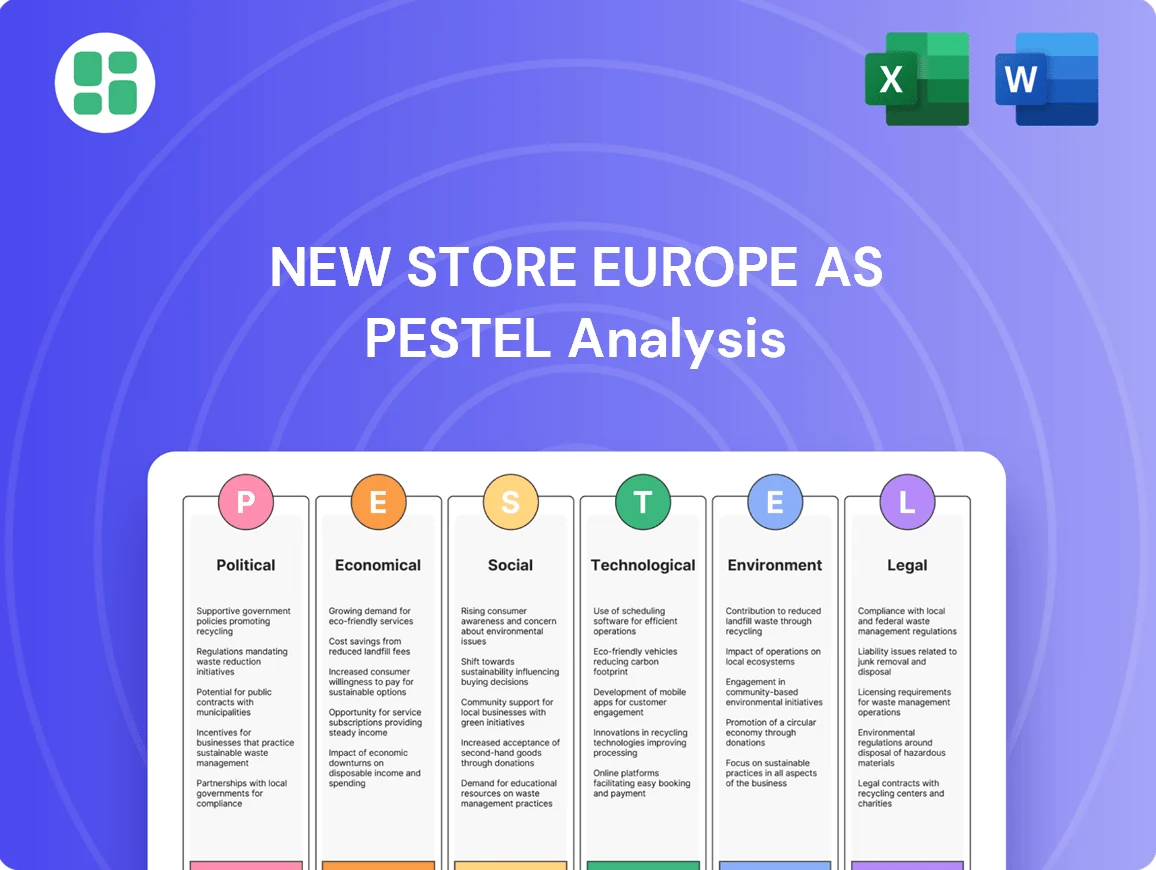
New Store Europe AS PESTLE Analysis
New Store Europe AS PESTLE Analysis
Your Competitive Advantage Starts with This Report
Navigate the complex European market with our comprehensive PESTLE analysis of New Store Europe AS. Understand the political shifts, economic volatilities, and technological advancements that will shape its future. This expert-crafted report provides actionable intelligence to inform your strategic decisions. Download the full version now and gain a critical competitive edge.
Political factors
Government Stability and Retail Policy Changes
Political stability across Europe is a crucial element for New Store Europe AS, influencing decisions on expanding or upgrading retail spaces. For instance, the Eurozone's economic sentiment, a key indicator of political stability and consumer confidence, saw a slight improvement in early 2024 but remained cautious. This general stability encourages investment in new store developments.
Shifts in government regulations, like potential changes to VAT rates on construction materials or new incentives for sustainable retail practices, directly impact the cost and viability of shopfitting projects. In 2024, some EU countries introduced new green building standards, which could increase refurbishment costs but also create opportunities for specialized services.
New Store Europe AS needs to closely track these evolving political landscapes and policy adjustments. For example, a proposed increase in corporate tax in Germany, a significant market for retail expansion, could temper investment appetite, while subsidies for urban regeneration in France might spur new project opportunities.
Trade Agreements and Tariffs
International trade agreements and tariffs directly impact New Store Europe AS's cost structure, particularly for imported materials. For instance, the EU's Common External Tariff can affect the price of goods sourced from outside the bloc, influencing procurement decisions.
Post-Brexit, the UK's trade relationship with the EU has introduced new complexities. In 2024, the UK government continued to review its trade policies, potentially altering tariff rates on various goods, which could affect New Store Europe AS's supply chain costs if sourcing from or through the UK.
Fluctuations in global trade relations, such as ongoing trade disputes or the implementation of new tariffs by major economies, can create supply chain volatility. For example, a tariff imposed on a key component used in retail goods could necessitate price adjustments or a search for alternative suppliers, impacting New Store Europe AS's pricing and profitability.
Building Codes and Planning Regulations
New Store Europe AS must navigate a complex web of national and local building codes, zoning laws, and planning regulations across its European markets. For instance, in Germany, DIN standards dictate many construction requirements, while France's Plan Local d'Urbanisme (PLU) governs land use and building density. Failure to comply can lead to significant project delays and fines, impacting the company's ability to launch new stores efficiently.
Any evolution in these regulations, such as stricter energy efficiency mandates like those being phased in under the EU's Energy Performance of Buildings Directive (EPBD) by 2025, will directly influence design specifications and material sourcing for New Store Europe AS. The company's investment in robust internal compliance teams and adaptable construction strategies is crucial to mitigate risks associated with these evolving political landscapes and ensure timely store openings.
Political Stability in Target European Markets
New Store Europe AS must closely monitor the political stability of its target European markets. For instance, the ongoing conflict in Eastern Europe continues to create uncertainty, impacting investor sentiment and potentially delaying expansion plans. A stable political landscape is crucial for fostering the confidence needed for significant retail investment and shopfitting projects.
Geopolitical tensions can directly affect consumer spending and business operations. For example, in 2023, the World Bank reported that geopolitical risks contributed to a slowdown in global economic growth, a trend that could disproportionately affect retail sectors reliant on stable consumer demand.
- Political Stability: Countries with stable governments and predictable policy environments are more attractive for retail investment.
- Geopolitical Risks: Events like regional conflicts or trade disputes can disrupt supply chains and dampen consumer confidence, negatively impacting the retail sector.
- Regulatory Environment: Changes in regulations, taxation, or labor laws can significantly influence operational costs and business viability.
- Government Support: Policies that encourage retail development, such as investment incentives or infrastructure improvements, can be beneficial.
Government Incentives for Sustainable Building
Governments throughout Europe are actively promoting sustainable construction through various financial mechanisms. For instance, Germany's KfW (Kreditanstalt für Wiederaufbau) offers low-interest loans and grants for energy-efficient new builds and renovations, with programs like the "Effizienzhaus" standard providing significant financial advantages. Similarly, France has implemented the "MaPrimeRénov'" scheme, a renovation bonus that encourages eco-friendly upgrades, directly benefiting businesses investing in sustainable materials and practices.
New Store Europe AS can capitalize on these political tailwinds by focusing its shopfitting services on green building solutions. This strategic alignment with national and EU sustainability targets, such as the European Green Deal, positions the company favorably. By offering expertise in eco-friendly materials and energy-efficient designs, New Store Europe AS can tap into a growing market segment actively supported by public funding and preferential policies.
- Germany's KfW program offers attractive financing for energy-efficient buildings, encouraging sustainable construction.
- France's MaPrimeRénov' scheme provides financial incentives for building renovations that improve energy performance.
- The European Green Deal sets ambitious sustainability goals, creating a favorable environment for eco-friendly businesses.
- Specializing in green shopfitting allows New Store Europe AS to leverage these government incentives for a competitive advantage.
Europe's Political Climate Shapes Retail Expansion
Political stability across Europe is a cornerstone for New Store Europe AS's expansion plans, with countries exhibiting stable governance generally attracting more retail investment. For example, the Eurozone's economic sentiment, a proxy for political stability, showed resilience in early 2024, fostering a cautious optimism for new store developments.
Government regulations, including VAT adjustments and incentives for green building, directly influence shopfitting costs. In 2024, new EU green building standards were introduced, potentially increasing refurbishment expenses but also opening avenues for specialized eco-friendly services.
New Store Europe AS must monitor policy shifts, such as potential corporate tax hikes in Germany or urban regeneration subsidies in France, as these can significantly impact investment decisions and project viability.
International trade agreements and tariffs affect the cost of imported materials, with the EU's Common External Tariff influencing procurement strategies. Post-Brexit, UK trade policy reviews in 2024 could alter tariffs, impacting New Store Europe AS's supply chain costs if sourcing through the UK.
| Country | Political Stability Index (2024 Estimate) | Impact on Retail Investment | Key Regulatory Factor |
|---|---|---|---|
| Germany | High | Favorable for expansion | Energy efficiency standards |
| France | High | Positive for development | Urban planning regulations |
| Eastern Europe (General) | Moderate to Low (regionally dependent) | Cautious approach advised | Geopolitical risk impact |
What is included in the product
Detailed Word Document
This PESTLE analysis provides a comprehensive examination of the external macro-environmental factors influencing New Store Europe AS, covering Political, Economic, Social, Technological, Environmental, and Legal dimensions.
It offers actionable insights for strategic decision-making by identifying key opportunities and threats within the European market.
Customizable Excel Spreadsheet
A concise PESTLE analysis for New Store Europe AS that highlights key external factors, transforming potential market uncertainties into actionable insights for strategic planning.
Economic factors
Consumer Spending Trends and Retail Sector Growth
Consumer spending is the engine of the retail sector. In 2024, global retail sales are projected to reach $29.06 trillion, a testament to ongoing consumer demand. This robust spending directly influences the need for new store openings and renovations, impacting companies like New Store Europe AS.
Economic downturns, however, pose a significant risk. If disposable incomes shrink, consumers tend to cut back on discretionary purchases, leading to lower retail sales. This can translate into reduced investment in retail spaces, potentially slowing down demand for fit-out services.
Conversely, periods of economic expansion fuel consumer confidence and spending power. For instance, if interest rates remain stable or decline in 2025, it could further boost consumer spending, creating a more favorable environment for retail expansion and, consequently, for businesses involved in store development.
Inflation and Material Costs
Rising inflation in 2024 and projected into 2025 continues to exert pressure on New Store Europe AS. Consumer Price Index (CPI) figures in key European markets like Germany and France have shown persistent inflation, impacting the cost of essential materials for shopfitting. For instance, lumber prices, a critical component, saw significant fluctuations throughout 2024, with some reports indicating a 15-20% increase year-over-year for certain grades by late 2024, directly affecting project budgets.
The volatility of commodity prices, particularly for metals and plastics used in store construction and fixtures, necessitates robust cost management. In 2024, the price of steel, a common material, experienced a notable surge, contributing to higher overall project expenses for retailers. This volatility requires New Store Europe AS to implement flexible pricing strategies and explore alternative material sourcing to mitigate risks and maintain profitability.
Careful monitoring of these inflationary pressures is paramount for accurate financial forecasting. The European Central Bank's inflation targets and forecasts for 2025 will be crucial indicators for New Store Europe AS's financial planning. Understanding these trends allows for better budgeting and more realistic profit margin projections for upcoming store development projects.
Interest Rates and Access to Credit
Interest rates across the Eurozone remained a key consideration in 2024, with the European Central Bank (ECB) holding its key interest rates steady for much of the year after a series of hikes. For instance, the main refinancing operations rate was maintained at 4.50% through the latter half of 2024, impacting borrowing costs for businesses like New Store Europe AS.
This stability, following earlier increases, meant that securing financing for new store developments or renovations continued to carry a higher price tag compared to previous years. Businesses needing to finance shopfitting or inventory expansion would face elevated interest expenses, potentially dampening investment appetite.
The availability and cost of credit are crucial for retail expansion. If credit becomes tighter or more expensive due to sustained higher interest rates, New Store Europe AS's clients might postpone or scale back their investment plans, directly affecting demand for the company's services.
Economic Recession or Growth in European Markets
The economic trajectory of the European Union and its individual member states significantly influences sectors like retail and construction, which are core to New Store Europe AS's operations. A downturn, for instance, often prompts retailers to rein in spending on new store openings and renovations. Conversely, robust economic expansion fuels investment in physical retail spaces, driving demand for store development and modernization services.
Recent economic indicators highlight this sensitivity. For the Eurozone, preliminary estimates for Q1 2024 indicated a slight growth of 0.3% compared to the previous quarter, a modest rebound but still reflecting a cautious economic environment. For instance, Germany, a key market, experienced a contraction of 0.2% in its GDP in 2023. This slowdown directly affects retailer confidence and their willingness to undertake new store projects.
- Eurozone GDP Growth: Preliminary estimates for Q1 2024 showed a 0.3% growth quarter-on-quarter.
- German Economic Performance: Germany's GDP contracted by 0.2% in 2023, impacting investment sentiment.
- Retail Sector Investment: Retailers' capital expenditure on store expansion and upgrades is closely tied to consumer spending confidence, which remained subdued in many European markets through early 2024.
Exchange Rate Fluctuations
For New Store Europe AS, navigating the European market means contending with fluctuating exchange rates, a critical economic factor. These shifts directly influence the cost of sourcing materials internationally and the attractiveness of bids submitted in various currencies.
A robust Euro, for instance, can lower the expense of imported components, a significant advantage for a retailer. However, this same strength can make the company's services or products appear pricier to customers outside the Eurozone, potentially impacting sales volume and overall profitability across different markets.
- Eurozone Inflation: As of May 2024, Eurozone annual inflation was 2.4%, down from 2.8% in April, indicating a moderating but still present cost pressure that can interact with exchange rate effects.
- ECB Policy: The European Central Bank's monetary policy decisions, including potential interest rate adjustments throughout 2024 and 2025, will continue to shape the Euro's value against other major currencies.
- Global Economic Trends: Broader global economic performance and geopolitical events in 2024 and 2025 will also contribute to exchange rate volatility, affecting New Store Europe AS's international trade and investment decisions.
Economic Factors Influence Retail Store Development
Economic stability directly impacts retailer confidence and investment in new store development. In 2024, while global retail sales were projected to reach $29.06 trillion, regional economic performance varied, with some markets like Germany experiencing slight contractions. This economic sensitivity means that shifts in consumer spending power, influenced by inflation and interest rates, significantly affect demand for New Store Europe AS's services.
Inflationary pressures, particularly on materials like lumber and steel, continued to challenge project budgets in 2024, with some material costs rising by up to 20% year-over-year. The European Central Bank's monetary policy, including interest rates maintained around 4.50% through late 2024, also influences borrowing costs for retailers undertaking expansion. Navigating fluctuating exchange rates adds another layer of complexity, impacting the cost of international sourcing and the competitiveness of bids.
| Economic Factor | 2024/2025 Data/Trend | Impact on New Store Europe AS |
|---|---|---|
| Global Retail Sales Projection | $29.06 trillion (2024) | Indicates overall market demand for retail spaces. |
| Eurozone GDP Growth | 0.3% Q1 2024 (preliminary) | Reflects cautious economic sentiment, potentially delaying store investments. |
| German GDP Performance | -0.2% (2023) | Highlights regional economic weakness affecting retailer confidence. |
| Inflation (Eurozone CPI) | 2.4% (May 2024) | Increases material and operational costs for fit-out projects. |
| Key Material Cost (e.g., Lumber) | Up to 20% YoY increase (late 2024) | Directly impacts project budgets and profitability. |
| ECB Key Interest Rate | 4.50% (late 2024) | Affects borrowing costs for clients, influencing their investment capacity. |
| Exchange Rate Volatility | Influenced by ECB policy and global trends | Impacts international sourcing costs and bid competitiveness. |
Full Version Awaits
New Store Europe AS PESTLE Analysis
The preview shown here is the exact document you’ll receive after purchase—fully formatted and ready to use. This comprehensive PESTLE analysis for New Store Europe AS provides a detailed examination of the Political, Economic, Social, Technological, Legal, and Environmental factors impacting the company's operations and strategic decisions in the European market.
Original: $10.00
-65%$10.00
$3.50Product Information
Product Information
Shipping & Returns
Shipping & Returns
Description
Your Competitive Advantage Starts with This Report
Navigate the complex European market with our comprehensive PESTLE analysis of New Store Europe AS. Understand the political shifts, economic volatilities, and technological advancements that will shape its future. This expert-crafted report provides actionable intelligence to inform your strategic decisions. Download the full version now and gain a critical competitive edge.
Political factors
Government Stability and Retail Policy Changes
Political stability across Europe is a crucial element for New Store Europe AS, influencing decisions on expanding or upgrading retail spaces. For instance, the Eurozone's economic sentiment, a key indicator of political stability and consumer confidence, saw a slight improvement in early 2024 but remained cautious. This general stability encourages investment in new store developments.
Shifts in government regulations, like potential changes to VAT rates on construction materials or new incentives for sustainable retail practices, directly impact the cost and viability of shopfitting projects. In 2024, some EU countries introduced new green building standards, which could increase refurbishment costs but also create opportunities for specialized services.
New Store Europe AS needs to closely track these evolving political landscapes and policy adjustments. For example, a proposed increase in corporate tax in Germany, a significant market for retail expansion, could temper investment appetite, while subsidies for urban regeneration in France might spur new project opportunities.
Trade Agreements and Tariffs
International trade agreements and tariffs directly impact New Store Europe AS's cost structure, particularly for imported materials. For instance, the EU's Common External Tariff can affect the price of goods sourced from outside the bloc, influencing procurement decisions.
Post-Brexit, the UK's trade relationship with the EU has introduced new complexities. In 2024, the UK government continued to review its trade policies, potentially altering tariff rates on various goods, which could affect New Store Europe AS's supply chain costs if sourcing from or through the UK.
Fluctuations in global trade relations, such as ongoing trade disputes or the implementation of new tariffs by major economies, can create supply chain volatility. For example, a tariff imposed on a key component used in retail goods could necessitate price adjustments or a search for alternative suppliers, impacting New Store Europe AS's pricing and profitability.
Building Codes and Planning Regulations
New Store Europe AS must navigate a complex web of national and local building codes, zoning laws, and planning regulations across its European markets. For instance, in Germany, DIN standards dictate many construction requirements, while France's Plan Local d'Urbanisme (PLU) governs land use and building density. Failure to comply can lead to significant project delays and fines, impacting the company's ability to launch new stores efficiently.
Any evolution in these regulations, such as stricter energy efficiency mandates like those being phased in under the EU's Energy Performance of Buildings Directive (EPBD) by 2025, will directly influence design specifications and material sourcing for New Store Europe AS. The company's investment in robust internal compliance teams and adaptable construction strategies is crucial to mitigate risks associated with these evolving political landscapes and ensure timely store openings.
Political Stability in Target European Markets
New Store Europe AS must closely monitor the political stability of its target European markets. For instance, the ongoing conflict in Eastern Europe continues to create uncertainty, impacting investor sentiment and potentially delaying expansion plans. A stable political landscape is crucial for fostering the confidence needed for significant retail investment and shopfitting projects.
Geopolitical tensions can directly affect consumer spending and business operations. For example, in 2023, the World Bank reported that geopolitical risks contributed to a slowdown in global economic growth, a trend that could disproportionately affect retail sectors reliant on stable consumer demand.
- Political Stability: Countries with stable governments and predictable policy environments are more attractive for retail investment.
- Geopolitical Risks: Events like regional conflicts or trade disputes can disrupt supply chains and dampen consumer confidence, negatively impacting the retail sector.
- Regulatory Environment: Changes in regulations, taxation, or labor laws can significantly influence operational costs and business viability.
- Government Support: Policies that encourage retail development, such as investment incentives or infrastructure improvements, can be beneficial.
Government Incentives for Sustainable Building
Governments throughout Europe are actively promoting sustainable construction through various financial mechanisms. For instance, Germany's KfW (Kreditanstalt für Wiederaufbau) offers low-interest loans and grants for energy-efficient new builds and renovations, with programs like the "Effizienzhaus" standard providing significant financial advantages. Similarly, France has implemented the "MaPrimeRénov'" scheme, a renovation bonus that encourages eco-friendly upgrades, directly benefiting businesses investing in sustainable materials and practices.
New Store Europe AS can capitalize on these political tailwinds by focusing its shopfitting services on green building solutions. This strategic alignment with national and EU sustainability targets, such as the European Green Deal, positions the company favorably. By offering expertise in eco-friendly materials and energy-efficient designs, New Store Europe AS can tap into a growing market segment actively supported by public funding and preferential policies.
- Germany's KfW program offers attractive financing for energy-efficient buildings, encouraging sustainable construction.
- France's MaPrimeRénov' scheme provides financial incentives for building renovations that improve energy performance.
- The European Green Deal sets ambitious sustainability goals, creating a favorable environment for eco-friendly businesses.
- Specializing in green shopfitting allows New Store Europe AS to leverage these government incentives for a competitive advantage.
Europe's Political Climate Shapes Retail Expansion
Political stability across Europe is a cornerstone for New Store Europe AS's expansion plans, with countries exhibiting stable governance generally attracting more retail investment. For example, the Eurozone's economic sentiment, a proxy for political stability, showed resilience in early 2024, fostering a cautious optimism for new store developments.
Government regulations, including VAT adjustments and incentives for green building, directly influence shopfitting costs. In 2024, new EU green building standards were introduced, potentially increasing refurbishment expenses but also opening avenues for specialized eco-friendly services.
New Store Europe AS must monitor policy shifts, such as potential corporate tax hikes in Germany or urban regeneration subsidies in France, as these can significantly impact investment decisions and project viability.
International trade agreements and tariffs affect the cost of imported materials, with the EU's Common External Tariff influencing procurement strategies. Post-Brexit, UK trade policy reviews in 2024 could alter tariffs, impacting New Store Europe AS's supply chain costs if sourcing through the UK.
| Country | Political Stability Index (2024 Estimate) | Impact on Retail Investment | Key Regulatory Factor |
|---|---|---|---|
| Germany | High | Favorable for expansion | Energy efficiency standards |
| France | High | Positive for development | Urban planning regulations |
| Eastern Europe (General) | Moderate to Low (regionally dependent) | Cautious approach advised | Geopolitical risk impact |
What is included in the product
Detailed Word Document
This PESTLE analysis provides a comprehensive examination of the external macro-environmental factors influencing New Store Europe AS, covering Political, Economic, Social, Technological, Environmental, and Legal dimensions.
It offers actionable insights for strategic decision-making by identifying key opportunities and threats within the European market.
Customizable Excel Spreadsheet
A concise PESTLE analysis for New Store Europe AS that highlights key external factors, transforming potential market uncertainties into actionable insights for strategic planning.
Economic factors
Consumer Spending Trends and Retail Sector Growth
Consumer spending is the engine of the retail sector. In 2024, global retail sales are projected to reach $29.06 trillion, a testament to ongoing consumer demand. This robust spending directly influences the need for new store openings and renovations, impacting companies like New Store Europe AS.
Economic downturns, however, pose a significant risk. If disposable incomes shrink, consumers tend to cut back on discretionary purchases, leading to lower retail sales. This can translate into reduced investment in retail spaces, potentially slowing down demand for fit-out services.
Conversely, periods of economic expansion fuel consumer confidence and spending power. For instance, if interest rates remain stable or decline in 2025, it could further boost consumer spending, creating a more favorable environment for retail expansion and, consequently, for businesses involved in store development.
Inflation and Material Costs
Rising inflation in 2024 and projected into 2025 continues to exert pressure on New Store Europe AS. Consumer Price Index (CPI) figures in key European markets like Germany and France have shown persistent inflation, impacting the cost of essential materials for shopfitting. For instance, lumber prices, a critical component, saw significant fluctuations throughout 2024, with some reports indicating a 15-20% increase year-over-year for certain grades by late 2024, directly affecting project budgets.
The volatility of commodity prices, particularly for metals and plastics used in store construction and fixtures, necessitates robust cost management. In 2024, the price of steel, a common material, experienced a notable surge, contributing to higher overall project expenses for retailers. This volatility requires New Store Europe AS to implement flexible pricing strategies and explore alternative material sourcing to mitigate risks and maintain profitability.
Careful monitoring of these inflationary pressures is paramount for accurate financial forecasting. The European Central Bank's inflation targets and forecasts for 2025 will be crucial indicators for New Store Europe AS's financial planning. Understanding these trends allows for better budgeting and more realistic profit margin projections for upcoming store development projects.
Interest Rates and Access to Credit
Interest rates across the Eurozone remained a key consideration in 2024, with the European Central Bank (ECB) holding its key interest rates steady for much of the year after a series of hikes. For instance, the main refinancing operations rate was maintained at 4.50% through the latter half of 2024, impacting borrowing costs for businesses like New Store Europe AS.
This stability, following earlier increases, meant that securing financing for new store developments or renovations continued to carry a higher price tag compared to previous years. Businesses needing to finance shopfitting or inventory expansion would face elevated interest expenses, potentially dampening investment appetite.
The availability and cost of credit are crucial for retail expansion. If credit becomes tighter or more expensive due to sustained higher interest rates, New Store Europe AS's clients might postpone or scale back their investment plans, directly affecting demand for the company's services.
Economic Recession or Growth in European Markets
The economic trajectory of the European Union and its individual member states significantly influences sectors like retail and construction, which are core to New Store Europe AS's operations. A downturn, for instance, often prompts retailers to rein in spending on new store openings and renovations. Conversely, robust economic expansion fuels investment in physical retail spaces, driving demand for store development and modernization services.
Recent economic indicators highlight this sensitivity. For the Eurozone, preliminary estimates for Q1 2024 indicated a slight growth of 0.3% compared to the previous quarter, a modest rebound but still reflecting a cautious economic environment. For instance, Germany, a key market, experienced a contraction of 0.2% in its GDP in 2023. This slowdown directly affects retailer confidence and their willingness to undertake new store projects.
- Eurozone GDP Growth: Preliminary estimates for Q1 2024 showed a 0.3% growth quarter-on-quarter.
- German Economic Performance: Germany's GDP contracted by 0.2% in 2023, impacting investment sentiment.
- Retail Sector Investment: Retailers' capital expenditure on store expansion and upgrades is closely tied to consumer spending confidence, which remained subdued in many European markets through early 2024.
Exchange Rate Fluctuations
For New Store Europe AS, navigating the European market means contending with fluctuating exchange rates, a critical economic factor. These shifts directly influence the cost of sourcing materials internationally and the attractiveness of bids submitted in various currencies.
A robust Euro, for instance, can lower the expense of imported components, a significant advantage for a retailer. However, this same strength can make the company's services or products appear pricier to customers outside the Eurozone, potentially impacting sales volume and overall profitability across different markets.
- Eurozone Inflation: As of May 2024, Eurozone annual inflation was 2.4%, down from 2.8% in April, indicating a moderating but still present cost pressure that can interact with exchange rate effects.
- ECB Policy: The European Central Bank's monetary policy decisions, including potential interest rate adjustments throughout 2024 and 2025, will continue to shape the Euro's value against other major currencies.
- Global Economic Trends: Broader global economic performance and geopolitical events in 2024 and 2025 will also contribute to exchange rate volatility, affecting New Store Europe AS's international trade and investment decisions.
Economic Factors Influence Retail Store Development
Economic stability directly impacts retailer confidence and investment in new store development. In 2024, while global retail sales were projected to reach $29.06 trillion, regional economic performance varied, with some markets like Germany experiencing slight contractions. This economic sensitivity means that shifts in consumer spending power, influenced by inflation and interest rates, significantly affect demand for New Store Europe AS's services.
Inflationary pressures, particularly on materials like lumber and steel, continued to challenge project budgets in 2024, with some material costs rising by up to 20% year-over-year. The European Central Bank's monetary policy, including interest rates maintained around 4.50% through late 2024, also influences borrowing costs for retailers undertaking expansion. Navigating fluctuating exchange rates adds another layer of complexity, impacting the cost of international sourcing and the competitiveness of bids.
| Economic Factor | 2024/2025 Data/Trend | Impact on New Store Europe AS |
|---|---|---|
| Global Retail Sales Projection | $29.06 trillion (2024) | Indicates overall market demand for retail spaces. |
| Eurozone GDP Growth | 0.3% Q1 2024 (preliminary) | Reflects cautious economic sentiment, potentially delaying store investments. |
| German GDP Performance | -0.2% (2023) | Highlights regional economic weakness affecting retailer confidence. |
| Inflation (Eurozone CPI) | 2.4% (May 2024) | Increases material and operational costs for fit-out projects. |
| Key Material Cost (e.g., Lumber) | Up to 20% YoY increase (late 2024) | Directly impacts project budgets and profitability. |
| ECB Key Interest Rate | 4.50% (late 2024) | Affects borrowing costs for clients, influencing their investment capacity. |
| Exchange Rate Volatility | Influenced by ECB policy and global trends | Impacts international sourcing costs and bid competitiveness. |
Full Version Awaits
New Store Europe AS PESTLE Analysis
The preview shown here is the exact document you’ll receive after purchase—fully formatted and ready to use. This comprehensive PESTLE analysis for New Store Europe AS provides a detailed examination of the Political, Economic, Social, Technological, Legal, and Environmental factors impacting the company's operations and strategic decisions in the European market.