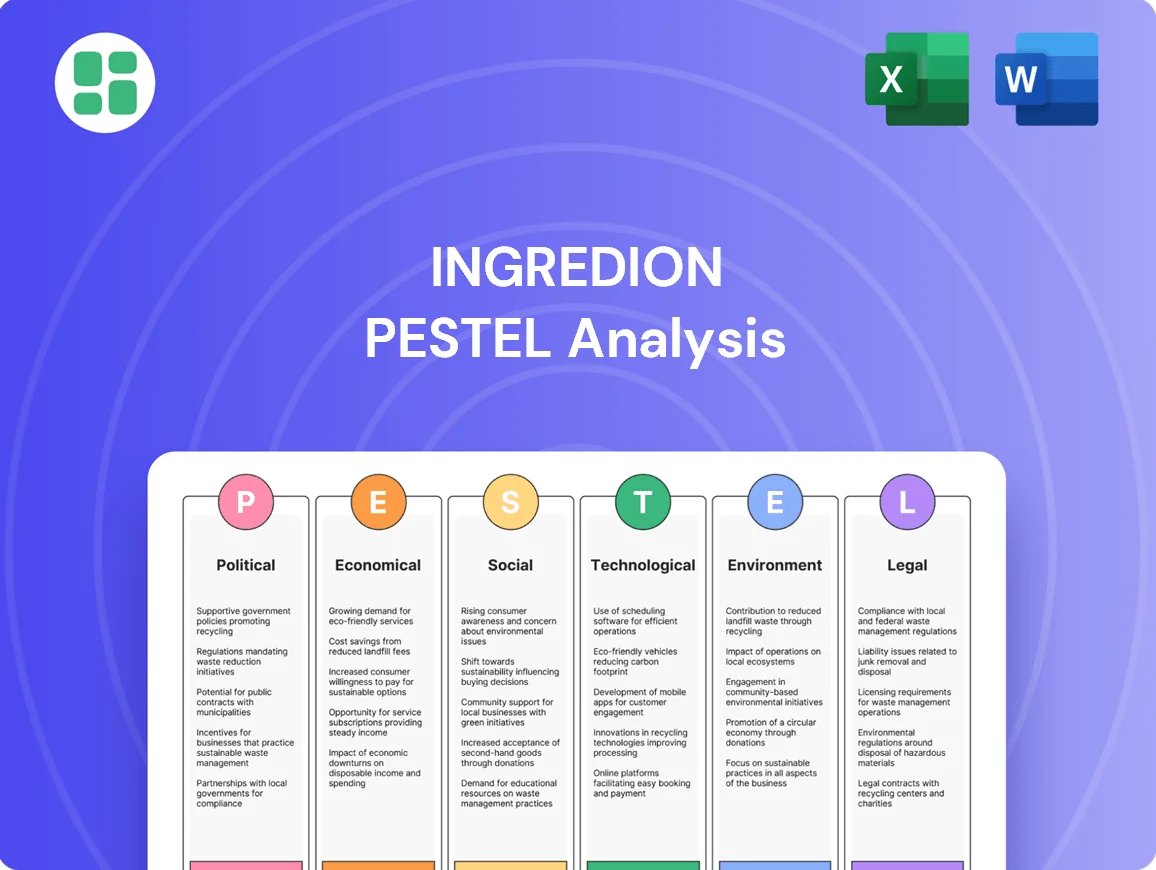
MiTAC PESTLE Analysis

Plan Smarter. Present Sharper. Compete Stronger.
Unlock the critical external factors shaping MiTAC's trajectory with our comprehensive PESTLE analysis. Understand how political shifts, economic fluctuations, and technological advancements are influencing the company's operations and market position. Equip yourself with actionable intelligence to refine your strategy and identify potential opportunities or threats.
Political factors

Geopolitical Tensions and Trade Policies
MiTAC Holdings Corp.'s global operations are significantly influenced by geopolitical tensions, especially concerning international trade and technology supply chains. For example, the ongoing US-China trade friction, which saw tariffs imposed on various goods throughout 2023 and into 2024, directly impacts component costs and market access for companies like MiTAC that rely on global sourcing and sales.
Trade policies, including tariffs and export controls enacted by major economic blocs, can materially affect MiTAC's profitability. Disruptions stemming from regional conflicts, such as those in Eastern Europe, can further complicate the flow of goods, necessitating strategic adjustments in manufacturing and distribution networks, as seen with the need for supply chain diversification efforts in 2024.
Government Support and Industrial Policies
Government initiatives like Taiwan's digital transformation plans and global efforts to boost AI and cloud computing infrastructure directly benefit MiTAC. These policies often include R&D subsidies and tax incentives for high-tech manufacturing, which can enhance MiTAC's competitive edge in server and data center solutions. For example, the Taiwanese government's commitment to developing a robust AI ecosystem, announced in 2024, aims to foster innovation in areas where MiTAC operates.

Political Stability in Key Operating Regions
Political stability in regions where MiTAC operates, such as Taiwan and China, is paramount. Taiwan's stable democratic system generally supports consistent economic policies, fostering a predictable environment for MiTAC's R&D and headquarters. Conversely, geopolitical tensions in the broader East Asian region can introduce volatility, impacting supply chains and market access.
In China, where MiTAC has manufacturing presence, the government's economic policies and regulatory landscape directly affect operational costs and market growth. While China's economic growth has historically been robust, policy shifts, trade relations, and regional stability remain key considerations for MiTAC's long-term investment strategies.

Cybersecurity Regulations and National Security Concerns
Governments worldwide are tightening cybersecurity regulations, driven by national security concerns, particularly regarding critical infrastructure. For MiTAC, this means navigating a complex web of evolving frameworks and data sovereignty mandates across different operating regions. Failure to comply can lead to significant penalties and erode client trust, especially with government and enterprise sectors. For instance, the US Cybersecurity and Infrastructure Security Agency (CISA) continues to update its directives, impacting technology supply chains and data handling practices for companies like MiTAC.
MiTAC's adherence to these increasingly stringent cybersecurity standards is paramount. This includes understanding and implementing measures related to data localization and cross-border data transfer, which are becoming more common. By proactively addressing these requirements, MiTAC can mitigate risks and maintain its competitive edge in a market where security assurance is a key differentiator. The global cybersecurity market was projected to reach over $300 billion in 2024, highlighting the significant financial implications of regulatory compliance.
- Increased Scrutiny: Governments are intensifying their review of technology providers, especially those supplying critical infrastructure, due to national security implications.
- Evolving Compliance: MiTAC must continuously adapt to new cybersecurity regulations and data sovereignty requirements in every jurisdiction it operates.
- Risk Mitigation: Strict adherence to these regulations is crucial for avoiding financial penalties and safeguarding MiTAC's reputation and client relationships.
- Market Opportunities: Demonstrating robust compliance can open doors to government contracts and partnerships where security is a non-negotiable factor.
Intellectual Property Protection
MiTAC's reliance on innovation means that the strength of intellectual property (IP) protection is a critical political factor. Countries with robust IP laws and effective enforcement are essential for safeguarding MiTAC's substantial investments in research and development for its servers, storage, and embedded solutions. Weak IP protection can directly undermine its competitive edge through counterfeiting and unauthorized use of patented technologies.
The global landscape of IP enforcement varies significantly. For instance, in 2024, reports indicated that while some developed nations maintain high standards for IP protection, emerging markets often present challenges in enforcing these rights. This disparity impacts MiTAC's strategy for market entry and technology deployment.
- Global IP Enforcement Trends: Monitoring international treaties and bilateral agreements that govern IP rights is crucial for MiTAC's global operations.
- R&D Investment Protection: MiTAC's commitment to developing proprietary server and storage technologies necessitates strong legal recourse against infringement.
- Counterfeiting Risks: The threat of counterfeit products entering the market, particularly in regions with lax IP enforcement, poses a direct financial and reputational risk.
Policy, Trade, & IP: MiTAC's Operational Environment
Political stability and government support significantly shape MiTAC's operational environment. Policies promoting digital infrastructure and AI development, such as Taiwan's 2024 initiatives, directly benefit MiTAC's server and data center solutions by potentially increasing demand and offering R&D incentives.
Geopolitical tensions and trade policies, including US-China trade friction and export controls, continue to impact MiTAC's global supply chains and market access, necessitating ongoing strategic adjustments to mitigate risks and ensure component sourcing stability.
Increasingly stringent global cybersecurity regulations and data sovereignty mandates require MiTAC to invest in compliance, which is crucial for avoiding penalties and maintaining trust, especially in the government and enterprise sectors where security is paramount.
The strength of intellectual property (IP) protection in various operating regions directly affects MiTAC's ability to safeguard its R&D investments in server and storage technologies, with disparities in IP enforcement posing risks of counterfeiting and unauthorized use.
What is included in the product
 Detailed Word Document
This MiTAC PESTLE analysis offers a comprehensive examination of the external macro-environmental factors impacting the company across Political, Economic, Social, Technological, Environmental, and Legal dimensions.

 Customizable Excel Spreadsheet
A clear, actionable summary of MiTAC's PESTLE factors, enabling swift identification of external opportunities and threats for proactive strategy development.
Economic factors

Global Economic Growth and Recession Risks
Global economic growth is projected to be moderate in 2024, with the IMF forecasting 3.2% expansion, a slight uptick from 2023. However, risks of recession remain, particularly in key markets like Europe, which could dampen demand for MiTAC's enterprise IT solutions and consumer electronics. A slowdown in major economies directly impacts corporate IT budgets and consumer discretionary spending, potentially affecting MiTAC's sales volumes and profitability.
In 2025, while global growth is expected to continue, albeit at a similar pace, geopolitical uncertainties and inflationary pressures could still pose challenges. For instance, persistent inflation might lead central banks to maintain higher interest rates, increasing borrowing costs for businesses and consumers, which indirectly affects investment in new technologies and product purchases. MiTAC's performance is thus closely tied to the stability and expansion of these global economic trends.
Inflation and Interest Rate Fluctuations
Rising inflation poses a significant challenge for MiTAC, potentially increasing the cost of essential raw materials, components, and labor. For instance, global inflation rates remained elevated through much of 2023 and early 2024, with many economies experiencing consumer price index (CPI) increases above central bank targets. This directly impacts MiTAC's manufacturing expenses, squeezing profit margins if these costs cannot be passed on to customers.
Furthermore, fluctuating interest rates directly affect MiTAC's financial strategy and its customers' purchasing power. Central banks in major economies, like the US Federal Reserve and the European Central Bank, have maintained higher interest rates to combat inflation, making borrowing more expensive. This can deter MiTAC from undertaking large capital expenditures and also make it harder for its clients to finance investments in new IT infrastructure, potentially dampening demand for MiTAC's products and services.

Currency Exchange Rate Volatility
MiTAC Holdings Corp., operating globally, faces significant risks from currency exchange rate volatility. For instance, a strengthening US Dollar against other major currencies could make MiTAC's products priced in USD more expensive for international buyers, potentially dampening sales volume in key markets.
Conversely, a weaker local currency for MiTAC's manufacturing bases, such as Taiwan, could increase the cost of imported raw materials and components, squeezing profit margins even if sales revenue remains stable in local currency terms. This dynamic directly impacts the company's cost of goods sold and overall profitability.
In 2024, major currency pairs like EUR/USD and USD/JPY experienced notable fluctuations. For example, the Euro saw periods of weakness against the Dollar, impacting European sales for US-based companies, and similar trends affected other regions, highlighting the need for robust hedging strategies to mitigate these financial exposures.

Supply Chain Costs and Disruptions
MiTAC's reliance on a global network of suppliers makes supply chain costs and disruptions a significant economic factor. The increasing cost of logistics, driven by factors like rising fuel prices and labor shortages, directly impacts MiTAC's operational expenses. For instance, the Drewry World Container Index saw a significant surge in late 2023 and early 2024, reflecting persistent shipping cost pressures.
Disruptions, whether from geopolitical tensions or environmental events, can severely hinder MiTAC's ability to produce and deliver products. The semiconductor shortage, which extended well into 2024, demonstrated how a single component's scarcity can halt production lines across various industries, including electronics manufacturing where MiTAC operates.
To counter these risks, MiTAC must prioritize efficient supply chain management and strategic diversification. This includes building stronger relationships with a wider range of suppliers and exploring regional sourcing options to reduce lead times and mitigate the impact of localized disruptions. The ongoing efforts by many tech companies in 2024 to diversify their manufacturing bases away from single regions underscore this trend.
- Rising Logistics Costs: Global shipping rates, while fluctuating, generally remained elevated in early 2024 compared to pre-pandemic levels, impacting MiTAC's procurement expenses.
- Component Scarcity: The lingering effects of the global chip shortage continued to pose a challenge for electronics manufacturers like MiTAC throughout 2024, affecting production schedules.
- Geopolitical Instability: Trade disputes and regional conflicts in 2024 continued to create uncertainty and potential for supply chain interruptions for companies with international operations.
- Diversification Imperative: Companies like MiTAC are increasingly investing in supply chain resilience by exploring alternative suppliers and manufacturing locations to mitigate risks.
Market Competition and Pricing Pressures
The technology solutions sector where MiTAC operates is intensely competitive, featuring a multitude of global companies all striving to capture market share. This crowded landscape directly translates into significant pricing pressures, especially for MiTAC in the more commoditized segments like servers and storage. For instance, in 2024, the average selling price for entry-level servers saw a decline of approximately 5-7% year-over-year due to intense competition from both established vendors and emerging players. This dynamic can notably compress profit margins.
To navigate these challenges, MiTAC must artfully balance offering competitive pricing with the crucial need to maintain profitability. This necessitates a persistent focus on innovation to differentiate its offerings, alongside rigorous cost optimization strategies across its operations. By continuously refining its product portfolio and exploring niche markets or value-added services, MiTAC can better mitigate the impact of widespread pricing pressures and secure sustainable growth.
- Intense Competition: The global technology solutions market is characterized by a high number of players, leading to aggressive market share battles.
- Pricing Pressures: MiTAC experiences significant downward pressure on prices, particularly in commodity server and storage categories, impacting profitability.
- Margin Compression: In 2024, the average selling price for entry-level servers reportedly decreased by 5-7% due to fierce competition.
- Strategic Imperatives: Continuous innovation, cost management, and product differentiation are essential for MiTAC to maintain profitability amidst competitive pricing.
Navigating Economic Headwinds and Supply Chain Risks in Tech
Global economic growth is projected for moderate expansion in 2024 and 2025, though risks of recession persist in key markets, potentially impacting MiTAC's sales. Inflationary pressures and higher interest rates, maintained by central banks to combat rising prices, could increase borrowing costs and dampen demand for technology investments. Currency exchange rate volatility also presents a risk, affecting the cost of raw materials and the competitiveness of MiTAC's products in international markets.
Supply chain costs and disruptions remain significant economic factors for MiTAC. Rising logistics expenses, driven by fuel prices and labor shortages, along with component scarcity like the ongoing semiconductor shortage into 2024, directly impact operational costs and production capabilities. Geopolitical instability further exacerbates these supply chain risks, necessitating diversification and resilience strategies.
The technology solutions sector is highly competitive, leading to pricing pressures that can compress MiTAC's profit margins, especially in commoditized segments. For instance, entry-level server prices saw a 5-7% year-over-year decline in 2024. MiTAC must therefore prioritize innovation, cost optimization, and product differentiation to maintain profitability and secure growth amidst these market dynamics.
| Economic Factor | 2024 Projection/Trend | Impact on MiTAC | Mitigation Strategies |
|---|---|---|---|
| Global GDP Growth | Moderate (IMF: 3.2% in 2024) | Potential dampening of demand, affecting sales volumes. | Focus on diversified markets, value-added services. |
| Inflation | Elevated in many economies | Increased raw material, component, and labor costs; squeezed profit margins. | Cost optimization, efficient procurement, strategic pricing. |
| Interest Rates | Higher, maintained by central banks | Increased borrowing costs for MiTAC and clients, potentially reducing investment. | Prudent financial management, exploring diverse funding options. |
| Currency Exchange Rates | Volatile | Impacts cost of imported materials and product pricing competitiveness. | Hedging strategies, regional sourcing. |
| Logistics Costs | Elevated | Increased operational expenses, affecting cost of goods sold. | Supply chain optimization, exploring alternative logistics providers. |
| Component Availability | Lingering shortages (e.g., semiconductors) | Production delays and increased component costs. | Supplier diversification, strategic inventory management. |
| Market Competition | Intense | Pricing pressures, particularly in commoditized segments. | Continuous innovation, product differentiation, focus on niche markets. |
Preview Before You Purchase
MiTAC PESTLE Analysis
The preview shown here is the exact document you’ll receive after purchase—fully formatted and ready to use. This comprehensive MiTAC PESTLE analysis delves into the Political, Economic, Social, Technological, Legal, and Environmental factors impacting the company. It provides a detailed understanding of the external forces shaping MiTAC's strategic landscape.

Product Information
Product Information
Shipping & Returns
Shipping & Returns

MiTAC PESTLE Analysis
MiTAC PESTLE Analysis
Plan Smarter. Present Sharper. Compete Stronger.
Unlock the critical external factors shaping MiTAC's trajectory with our comprehensive PESTLE analysis. Understand how political shifts, economic fluctuations, and technological advancements are influencing the company's operations and market position. Equip yourself with actionable intelligence to refine your strategy and identify potential opportunities or threats.
Political factors
Geopolitical Tensions and Trade Policies
MiTAC Holdings Corp.'s global operations are significantly influenced by geopolitical tensions, especially concerning international trade and technology supply chains. For example, the ongoing US-China trade friction, which saw tariffs imposed on various goods throughout 2023 and into 2024, directly impacts component costs and market access for companies like MiTAC that rely on global sourcing and sales.
Trade policies, including tariffs and export controls enacted by major economic blocs, can materially affect MiTAC's profitability. Disruptions stemming from regional conflicts, such as those in Eastern Europe, can further complicate the flow of goods, necessitating strategic adjustments in manufacturing and distribution networks, as seen with the need for supply chain diversification efforts in 2024.
Government Support and Industrial Policies
Government initiatives like Taiwan's digital transformation plans and global efforts to boost AI and cloud computing infrastructure directly benefit MiTAC. These policies often include R&D subsidies and tax incentives for high-tech manufacturing, which can enhance MiTAC's competitive edge in server and data center solutions. For example, the Taiwanese government's commitment to developing a robust AI ecosystem, announced in 2024, aims to foster innovation in areas where MiTAC operates.
Political Stability in Key Operating Regions
Political stability in regions where MiTAC operates, such as Taiwan and China, is paramount. Taiwan's stable democratic system generally supports consistent economic policies, fostering a predictable environment for MiTAC's R&D and headquarters. Conversely, geopolitical tensions in the broader East Asian region can introduce volatility, impacting supply chains and market access.
In China, where MiTAC has manufacturing presence, the government's economic policies and regulatory landscape directly affect operational costs and market growth. While China's economic growth has historically been robust, policy shifts, trade relations, and regional stability remain key considerations for MiTAC's long-term investment strategies.
Cybersecurity Regulations and National Security Concerns
Governments worldwide are tightening cybersecurity regulations, driven by national security concerns, particularly regarding critical infrastructure. For MiTAC, this means navigating a complex web of evolving frameworks and data sovereignty mandates across different operating regions. Failure to comply can lead to significant penalties and erode client trust, especially with government and enterprise sectors. For instance, the US Cybersecurity and Infrastructure Security Agency (CISA) continues to update its directives, impacting technology supply chains and data handling practices for companies like MiTAC.
MiTAC's adherence to these increasingly stringent cybersecurity standards is paramount. This includes understanding and implementing measures related to data localization and cross-border data transfer, which are becoming more common. By proactively addressing these requirements, MiTAC can mitigate risks and maintain its competitive edge in a market where security assurance is a key differentiator. The global cybersecurity market was projected to reach over $300 billion in 2024, highlighting the significant financial implications of regulatory compliance.
- Increased Scrutiny: Governments are intensifying their review of technology providers, especially those supplying critical infrastructure, due to national security implications.
- Evolving Compliance: MiTAC must continuously adapt to new cybersecurity regulations and data sovereignty requirements in every jurisdiction it operates.
- Risk Mitigation: Strict adherence to these regulations is crucial for avoiding financial penalties and safeguarding MiTAC's reputation and client relationships.
- Market Opportunities: Demonstrating robust compliance can open doors to government contracts and partnerships where security is a non-negotiable factor.
Intellectual Property Protection
MiTAC's reliance on innovation means that the strength of intellectual property (IP) protection is a critical political factor. Countries with robust IP laws and effective enforcement are essential for safeguarding MiTAC's substantial investments in research and development for its servers, storage, and embedded solutions. Weak IP protection can directly undermine its competitive edge through counterfeiting and unauthorized use of patented technologies.
The global landscape of IP enforcement varies significantly. For instance, in 2024, reports indicated that while some developed nations maintain high standards for IP protection, emerging markets often present challenges in enforcing these rights. This disparity impacts MiTAC's strategy for market entry and technology deployment.
- Global IP Enforcement Trends: Monitoring international treaties and bilateral agreements that govern IP rights is crucial for MiTAC's global operations.
- R&D Investment Protection: MiTAC's commitment to developing proprietary server and storage technologies necessitates strong legal recourse against infringement.
- Counterfeiting Risks: The threat of counterfeit products entering the market, particularly in regions with lax IP enforcement, poses a direct financial and reputational risk.
Policy, Trade, & IP: MiTAC's Operational Environment
Political stability and government support significantly shape MiTAC's operational environment. Policies promoting digital infrastructure and AI development, such as Taiwan's 2024 initiatives, directly benefit MiTAC's server and data center solutions by potentially increasing demand and offering R&D incentives.
Geopolitical tensions and trade policies, including US-China trade friction and export controls, continue to impact MiTAC's global supply chains and market access, necessitating ongoing strategic adjustments to mitigate risks and ensure component sourcing stability.
Increasingly stringent global cybersecurity regulations and data sovereignty mandates require MiTAC to invest in compliance, which is crucial for avoiding penalties and maintaining trust, especially in the government and enterprise sectors where security is paramount.
The strength of intellectual property (IP) protection in various operating regions directly affects MiTAC's ability to safeguard its R&D investments in server and storage technologies, with disparities in IP enforcement posing risks of counterfeiting and unauthorized use.
What is included in the product
Detailed Word Document
This MiTAC PESTLE analysis offers a comprehensive examination of the external macro-environmental factors impacting the company across Political, Economic, Social, Technological, Environmental, and Legal dimensions.
Customizable Excel Spreadsheet
A clear, actionable summary of MiTAC's PESTLE factors, enabling swift identification of external opportunities and threats for proactive strategy development.
Economic factors
Global Economic Growth and Recession Risks
Global economic growth is projected to be moderate in 2024, with the IMF forecasting 3.2% expansion, a slight uptick from 2023. However, risks of recession remain, particularly in key markets like Europe, which could dampen demand for MiTAC's enterprise IT solutions and consumer electronics. A slowdown in major economies directly impacts corporate IT budgets and consumer discretionary spending, potentially affecting MiTAC's sales volumes and profitability.
In 2025, while global growth is expected to continue, albeit at a similar pace, geopolitical uncertainties and inflationary pressures could still pose challenges. For instance, persistent inflation might lead central banks to maintain higher interest rates, increasing borrowing costs for businesses and consumers, which indirectly affects investment in new technologies and product purchases. MiTAC's performance is thus closely tied to the stability and expansion of these global economic trends.
Inflation and Interest Rate Fluctuations
Rising inflation poses a significant challenge for MiTAC, potentially increasing the cost of essential raw materials, components, and labor. For instance, global inflation rates remained elevated through much of 2023 and early 2024, with many economies experiencing consumer price index (CPI) increases above central bank targets. This directly impacts MiTAC's manufacturing expenses, squeezing profit margins if these costs cannot be passed on to customers.
Furthermore, fluctuating interest rates directly affect MiTAC's financial strategy and its customers' purchasing power. Central banks in major economies, like the US Federal Reserve and the European Central Bank, have maintained higher interest rates to combat inflation, making borrowing more expensive. This can deter MiTAC from undertaking large capital expenditures and also make it harder for its clients to finance investments in new IT infrastructure, potentially dampening demand for MiTAC's products and services.
Currency Exchange Rate Volatility
MiTAC Holdings Corp., operating globally, faces significant risks from currency exchange rate volatility. For instance, a strengthening US Dollar against other major currencies could make MiTAC's products priced in USD more expensive for international buyers, potentially dampening sales volume in key markets.
Conversely, a weaker local currency for MiTAC's manufacturing bases, such as Taiwan, could increase the cost of imported raw materials and components, squeezing profit margins even if sales revenue remains stable in local currency terms. This dynamic directly impacts the company's cost of goods sold and overall profitability.
In 2024, major currency pairs like EUR/USD and USD/JPY experienced notable fluctuations. For example, the Euro saw periods of weakness against the Dollar, impacting European sales for US-based companies, and similar trends affected other regions, highlighting the need for robust hedging strategies to mitigate these financial exposures.
Supply Chain Costs and Disruptions
MiTAC's reliance on a global network of suppliers makes supply chain costs and disruptions a significant economic factor. The increasing cost of logistics, driven by factors like rising fuel prices and labor shortages, directly impacts MiTAC's operational expenses. For instance, the Drewry World Container Index saw a significant surge in late 2023 and early 2024, reflecting persistent shipping cost pressures.
Disruptions, whether from geopolitical tensions or environmental events, can severely hinder MiTAC's ability to produce and deliver products. The semiconductor shortage, which extended well into 2024, demonstrated how a single component's scarcity can halt production lines across various industries, including electronics manufacturing where MiTAC operates.
To counter these risks, MiTAC must prioritize efficient supply chain management and strategic diversification. This includes building stronger relationships with a wider range of suppliers and exploring regional sourcing options to reduce lead times and mitigate the impact of localized disruptions. The ongoing efforts by many tech companies in 2024 to diversify their manufacturing bases away from single regions underscore this trend.
- Rising Logistics Costs: Global shipping rates, while fluctuating, generally remained elevated in early 2024 compared to pre-pandemic levels, impacting MiTAC's procurement expenses.
- Component Scarcity: The lingering effects of the global chip shortage continued to pose a challenge for electronics manufacturers like MiTAC throughout 2024, affecting production schedules.
- Geopolitical Instability: Trade disputes and regional conflicts in 2024 continued to create uncertainty and potential for supply chain interruptions for companies with international operations.
- Diversification Imperative: Companies like MiTAC are increasingly investing in supply chain resilience by exploring alternative suppliers and manufacturing locations to mitigate risks.
Market Competition and Pricing Pressures
The technology solutions sector where MiTAC operates is intensely competitive, featuring a multitude of global companies all striving to capture market share. This crowded landscape directly translates into significant pricing pressures, especially for MiTAC in the more commoditized segments like servers and storage. For instance, in 2024, the average selling price for entry-level servers saw a decline of approximately 5-7% year-over-year due to intense competition from both established vendors and emerging players. This dynamic can notably compress profit margins.
To navigate these challenges, MiTAC must artfully balance offering competitive pricing with the crucial need to maintain profitability. This necessitates a persistent focus on innovation to differentiate its offerings, alongside rigorous cost optimization strategies across its operations. By continuously refining its product portfolio and exploring niche markets or value-added services, MiTAC can better mitigate the impact of widespread pricing pressures and secure sustainable growth.
- Intense Competition: The global technology solutions market is characterized by a high number of players, leading to aggressive market share battles.
- Pricing Pressures: MiTAC experiences significant downward pressure on prices, particularly in commodity server and storage categories, impacting profitability.
- Margin Compression: In 2024, the average selling price for entry-level servers reportedly decreased by 5-7% due to fierce competition.
- Strategic Imperatives: Continuous innovation, cost management, and product differentiation are essential for MiTAC to maintain profitability amidst competitive pricing.
Navigating Economic Headwinds and Supply Chain Risks in Tech
Global economic growth is projected for moderate expansion in 2024 and 2025, though risks of recession persist in key markets, potentially impacting MiTAC's sales. Inflationary pressures and higher interest rates, maintained by central banks to combat rising prices, could increase borrowing costs and dampen demand for technology investments. Currency exchange rate volatility also presents a risk, affecting the cost of raw materials and the competitiveness of MiTAC's products in international markets.
Supply chain costs and disruptions remain significant economic factors for MiTAC. Rising logistics expenses, driven by fuel prices and labor shortages, along with component scarcity like the ongoing semiconductor shortage into 2024, directly impact operational costs and production capabilities. Geopolitical instability further exacerbates these supply chain risks, necessitating diversification and resilience strategies.
The technology solutions sector is highly competitive, leading to pricing pressures that can compress MiTAC's profit margins, especially in commoditized segments. For instance, entry-level server prices saw a 5-7% year-over-year decline in 2024. MiTAC must therefore prioritize innovation, cost optimization, and product differentiation to maintain profitability and secure growth amidst these market dynamics.
| Economic Factor | 2024 Projection/Trend | Impact on MiTAC | Mitigation Strategies |
|---|---|---|---|
| Global GDP Growth | Moderate (IMF: 3.2% in 2024) | Potential dampening of demand, affecting sales volumes. | Focus on diversified markets, value-added services. |
| Inflation | Elevated in many economies | Increased raw material, component, and labor costs; squeezed profit margins. | Cost optimization, efficient procurement, strategic pricing. |
| Interest Rates | Higher, maintained by central banks | Increased borrowing costs for MiTAC and clients, potentially reducing investment. | Prudent financial management, exploring diverse funding options. |
| Currency Exchange Rates | Volatile | Impacts cost of imported materials and product pricing competitiveness. | Hedging strategies, regional sourcing. |
| Logistics Costs | Elevated | Increased operational expenses, affecting cost of goods sold. | Supply chain optimization, exploring alternative logistics providers. |
| Component Availability | Lingering shortages (e.g., semiconductors) | Production delays and increased component costs. | Supplier diversification, strategic inventory management. |
| Market Competition | Intense | Pricing pressures, particularly in commoditized segments. | Continuous innovation, product differentiation, focus on niche markets. |
Preview Before You Purchase
MiTAC PESTLE Analysis
The preview shown here is the exact document you’ll receive after purchase—fully formatted and ready to use. This comprehensive MiTAC PESTLE analysis delves into the Political, Economic, Social, Technological, Legal, and Environmental factors impacting the company. It provides a detailed understanding of the external forces shaping MiTAC's strategic landscape.
Original: $10.00
-65%$10.00
$3.50Product Information
Product Information
Shipping & Returns
Shipping & Returns
Description
Plan Smarter. Present Sharper. Compete Stronger.
Unlock the critical external factors shaping MiTAC's trajectory with our comprehensive PESTLE analysis. Understand how political shifts, economic fluctuations, and technological advancements are influencing the company's operations and market position. Equip yourself with actionable intelligence to refine your strategy and identify potential opportunities or threats.
Political factors
Geopolitical Tensions and Trade Policies
MiTAC Holdings Corp.'s global operations are significantly influenced by geopolitical tensions, especially concerning international trade and technology supply chains. For example, the ongoing US-China trade friction, which saw tariffs imposed on various goods throughout 2023 and into 2024, directly impacts component costs and market access for companies like MiTAC that rely on global sourcing and sales.
Trade policies, including tariffs and export controls enacted by major economic blocs, can materially affect MiTAC's profitability. Disruptions stemming from regional conflicts, such as those in Eastern Europe, can further complicate the flow of goods, necessitating strategic adjustments in manufacturing and distribution networks, as seen with the need for supply chain diversification efforts in 2024.
Government Support and Industrial Policies
Government initiatives like Taiwan's digital transformation plans and global efforts to boost AI and cloud computing infrastructure directly benefit MiTAC. These policies often include R&D subsidies and tax incentives for high-tech manufacturing, which can enhance MiTAC's competitive edge in server and data center solutions. For example, the Taiwanese government's commitment to developing a robust AI ecosystem, announced in 2024, aims to foster innovation in areas where MiTAC operates.
Political Stability in Key Operating Regions
Political stability in regions where MiTAC operates, such as Taiwan and China, is paramount. Taiwan's stable democratic system generally supports consistent economic policies, fostering a predictable environment for MiTAC's R&D and headquarters. Conversely, geopolitical tensions in the broader East Asian region can introduce volatility, impacting supply chains and market access.
In China, where MiTAC has manufacturing presence, the government's economic policies and regulatory landscape directly affect operational costs and market growth. While China's economic growth has historically been robust, policy shifts, trade relations, and regional stability remain key considerations for MiTAC's long-term investment strategies.
Cybersecurity Regulations and National Security Concerns
Governments worldwide are tightening cybersecurity regulations, driven by national security concerns, particularly regarding critical infrastructure. For MiTAC, this means navigating a complex web of evolving frameworks and data sovereignty mandates across different operating regions. Failure to comply can lead to significant penalties and erode client trust, especially with government and enterprise sectors. For instance, the US Cybersecurity and Infrastructure Security Agency (CISA) continues to update its directives, impacting technology supply chains and data handling practices for companies like MiTAC.
MiTAC's adherence to these increasingly stringent cybersecurity standards is paramount. This includes understanding and implementing measures related to data localization and cross-border data transfer, which are becoming more common. By proactively addressing these requirements, MiTAC can mitigate risks and maintain its competitive edge in a market where security assurance is a key differentiator. The global cybersecurity market was projected to reach over $300 billion in 2024, highlighting the significant financial implications of regulatory compliance.
- Increased Scrutiny: Governments are intensifying their review of technology providers, especially those supplying critical infrastructure, due to national security implications.
- Evolving Compliance: MiTAC must continuously adapt to new cybersecurity regulations and data sovereignty requirements in every jurisdiction it operates.
- Risk Mitigation: Strict adherence to these regulations is crucial for avoiding financial penalties and safeguarding MiTAC's reputation and client relationships.
- Market Opportunities: Demonstrating robust compliance can open doors to government contracts and partnerships where security is a non-negotiable factor.
Intellectual Property Protection
MiTAC's reliance on innovation means that the strength of intellectual property (IP) protection is a critical political factor. Countries with robust IP laws and effective enforcement are essential for safeguarding MiTAC's substantial investments in research and development for its servers, storage, and embedded solutions. Weak IP protection can directly undermine its competitive edge through counterfeiting and unauthorized use of patented technologies.
The global landscape of IP enforcement varies significantly. For instance, in 2024, reports indicated that while some developed nations maintain high standards for IP protection, emerging markets often present challenges in enforcing these rights. This disparity impacts MiTAC's strategy for market entry and technology deployment.
- Global IP Enforcement Trends: Monitoring international treaties and bilateral agreements that govern IP rights is crucial for MiTAC's global operations.
- R&D Investment Protection: MiTAC's commitment to developing proprietary server and storage technologies necessitates strong legal recourse against infringement.
- Counterfeiting Risks: The threat of counterfeit products entering the market, particularly in regions with lax IP enforcement, poses a direct financial and reputational risk.
Policy, Trade, & IP: MiTAC's Operational Environment
Political stability and government support significantly shape MiTAC's operational environment. Policies promoting digital infrastructure and AI development, such as Taiwan's 2024 initiatives, directly benefit MiTAC's server and data center solutions by potentially increasing demand and offering R&D incentives.
Geopolitical tensions and trade policies, including US-China trade friction and export controls, continue to impact MiTAC's global supply chains and market access, necessitating ongoing strategic adjustments to mitigate risks and ensure component sourcing stability.
Increasingly stringent global cybersecurity regulations and data sovereignty mandates require MiTAC to invest in compliance, which is crucial for avoiding penalties and maintaining trust, especially in the government and enterprise sectors where security is paramount.
The strength of intellectual property (IP) protection in various operating regions directly affects MiTAC's ability to safeguard its R&D investments in server and storage technologies, with disparities in IP enforcement posing risks of counterfeiting and unauthorized use.
What is included in the product
Detailed Word Document
This MiTAC PESTLE analysis offers a comprehensive examination of the external macro-environmental factors impacting the company across Political, Economic, Social, Technological, Environmental, and Legal dimensions.
Customizable Excel Spreadsheet
A clear, actionable summary of MiTAC's PESTLE factors, enabling swift identification of external opportunities and threats for proactive strategy development.
Economic factors
Global Economic Growth and Recession Risks
Global economic growth is projected to be moderate in 2024, with the IMF forecasting 3.2% expansion, a slight uptick from 2023. However, risks of recession remain, particularly in key markets like Europe, which could dampen demand for MiTAC's enterprise IT solutions and consumer electronics. A slowdown in major economies directly impacts corporate IT budgets and consumer discretionary spending, potentially affecting MiTAC's sales volumes and profitability.
In 2025, while global growth is expected to continue, albeit at a similar pace, geopolitical uncertainties and inflationary pressures could still pose challenges. For instance, persistent inflation might lead central banks to maintain higher interest rates, increasing borrowing costs for businesses and consumers, which indirectly affects investment in new technologies and product purchases. MiTAC's performance is thus closely tied to the stability and expansion of these global economic trends.
Inflation and Interest Rate Fluctuations
Rising inflation poses a significant challenge for MiTAC, potentially increasing the cost of essential raw materials, components, and labor. For instance, global inflation rates remained elevated through much of 2023 and early 2024, with many economies experiencing consumer price index (CPI) increases above central bank targets. This directly impacts MiTAC's manufacturing expenses, squeezing profit margins if these costs cannot be passed on to customers.
Furthermore, fluctuating interest rates directly affect MiTAC's financial strategy and its customers' purchasing power. Central banks in major economies, like the US Federal Reserve and the European Central Bank, have maintained higher interest rates to combat inflation, making borrowing more expensive. This can deter MiTAC from undertaking large capital expenditures and also make it harder for its clients to finance investments in new IT infrastructure, potentially dampening demand for MiTAC's products and services.
Currency Exchange Rate Volatility
MiTAC Holdings Corp., operating globally, faces significant risks from currency exchange rate volatility. For instance, a strengthening US Dollar against other major currencies could make MiTAC's products priced in USD more expensive for international buyers, potentially dampening sales volume in key markets.
Conversely, a weaker local currency for MiTAC's manufacturing bases, such as Taiwan, could increase the cost of imported raw materials and components, squeezing profit margins even if sales revenue remains stable in local currency terms. This dynamic directly impacts the company's cost of goods sold and overall profitability.
In 2024, major currency pairs like EUR/USD and USD/JPY experienced notable fluctuations. For example, the Euro saw periods of weakness against the Dollar, impacting European sales for US-based companies, and similar trends affected other regions, highlighting the need for robust hedging strategies to mitigate these financial exposures.
Supply Chain Costs and Disruptions
MiTAC's reliance on a global network of suppliers makes supply chain costs and disruptions a significant economic factor. The increasing cost of logistics, driven by factors like rising fuel prices and labor shortages, directly impacts MiTAC's operational expenses. For instance, the Drewry World Container Index saw a significant surge in late 2023 and early 2024, reflecting persistent shipping cost pressures.
Disruptions, whether from geopolitical tensions or environmental events, can severely hinder MiTAC's ability to produce and deliver products. The semiconductor shortage, which extended well into 2024, demonstrated how a single component's scarcity can halt production lines across various industries, including electronics manufacturing where MiTAC operates.
To counter these risks, MiTAC must prioritize efficient supply chain management and strategic diversification. This includes building stronger relationships with a wider range of suppliers and exploring regional sourcing options to reduce lead times and mitigate the impact of localized disruptions. The ongoing efforts by many tech companies in 2024 to diversify their manufacturing bases away from single regions underscore this trend.
- Rising Logistics Costs: Global shipping rates, while fluctuating, generally remained elevated in early 2024 compared to pre-pandemic levels, impacting MiTAC's procurement expenses.
- Component Scarcity: The lingering effects of the global chip shortage continued to pose a challenge for electronics manufacturers like MiTAC throughout 2024, affecting production schedules.
- Geopolitical Instability: Trade disputes and regional conflicts in 2024 continued to create uncertainty and potential for supply chain interruptions for companies with international operations.
- Diversification Imperative: Companies like MiTAC are increasingly investing in supply chain resilience by exploring alternative suppliers and manufacturing locations to mitigate risks.
Market Competition and Pricing Pressures
The technology solutions sector where MiTAC operates is intensely competitive, featuring a multitude of global companies all striving to capture market share. This crowded landscape directly translates into significant pricing pressures, especially for MiTAC in the more commoditized segments like servers and storage. For instance, in 2024, the average selling price for entry-level servers saw a decline of approximately 5-7% year-over-year due to intense competition from both established vendors and emerging players. This dynamic can notably compress profit margins.
To navigate these challenges, MiTAC must artfully balance offering competitive pricing with the crucial need to maintain profitability. This necessitates a persistent focus on innovation to differentiate its offerings, alongside rigorous cost optimization strategies across its operations. By continuously refining its product portfolio and exploring niche markets or value-added services, MiTAC can better mitigate the impact of widespread pricing pressures and secure sustainable growth.
- Intense Competition: The global technology solutions market is characterized by a high number of players, leading to aggressive market share battles.
- Pricing Pressures: MiTAC experiences significant downward pressure on prices, particularly in commodity server and storage categories, impacting profitability.
- Margin Compression: In 2024, the average selling price for entry-level servers reportedly decreased by 5-7% due to fierce competition.
- Strategic Imperatives: Continuous innovation, cost management, and product differentiation are essential for MiTAC to maintain profitability amidst competitive pricing.
Navigating Economic Headwinds and Supply Chain Risks in Tech
Global economic growth is projected for moderate expansion in 2024 and 2025, though risks of recession persist in key markets, potentially impacting MiTAC's sales. Inflationary pressures and higher interest rates, maintained by central banks to combat rising prices, could increase borrowing costs and dampen demand for technology investments. Currency exchange rate volatility also presents a risk, affecting the cost of raw materials and the competitiveness of MiTAC's products in international markets.
Supply chain costs and disruptions remain significant economic factors for MiTAC. Rising logistics expenses, driven by fuel prices and labor shortages, along with component scarcity like the ongoing semiconductor shortage into 2024, directly impact operational costs and production capabilities. Geopolitical instability further exacerbates these supply chain risks, necessitating diversification and resilience strategies.
The technology solutions sector is highly competitive, leading to pricing pressures that can compress MiTAC's profit margins, especially in commoditized segments. For instance, entry-level server prices saw a 5-7% year-over-year decline in 2024. MiTAC must therefore prioritize innovation, cost optimization, and product differentiation to maintain profitability and secure growth amidst these market dynamics.
| Economic Factor | 2024 Projection/Trend | Impact on MiTAC | Mitigation Strategies |
|---|---|---|---|
| Global GDP Growth | Moderate (IMF: 3.2% in 2024) | Potential dampening of demand, affecting sales volumes. | Focus on diversified markets, value-added services. |
| Inflation | Elevated in many economies | Increased raw material, component, and labor costs; squeezed profit margins. | Cost optimization, efficient procurement, strategic pricing. |
| Interest Rates | Higher, maintained by central banks | Increased borrowing costs for MiTAC and clients, potentially reducing investment. | Prudent financial management, exploring diverse funding options. |
| Currency Exchange Rates | Volatile | Impacts cost of imported materials and product pricing competitiveness. | Hedging strategies, regional sourcing. |
| Logistics Costs | Elevated | Increased operational expenses, affecting cost of goods sold. | Supply chain optimization, exploring alternative logistics providers. |
| Component Availability | Lingering shortages (e.g., semiconductors) | Production delays and increased component costs. | Supplier diversification, strategic inventory management. |
| Market Competition | Intense | Pricing pressures, particularly in commoditized segments. | Continuous innovation, product differentiation, focus on niche markets. |
Preview Before You Purchase
MiTAC PESTLE Analysis
The preview shown here is the exact document you’ll receive after purchase—fully formatted and ready to use. This comprehensive MiTAC PESTLE analysis delves into the Political, Economic, Social, Technological, Legal, and Environmental factors impacting the company. It provides a detailed understanding of the external forces shaping MiTAC's strategic landscape.