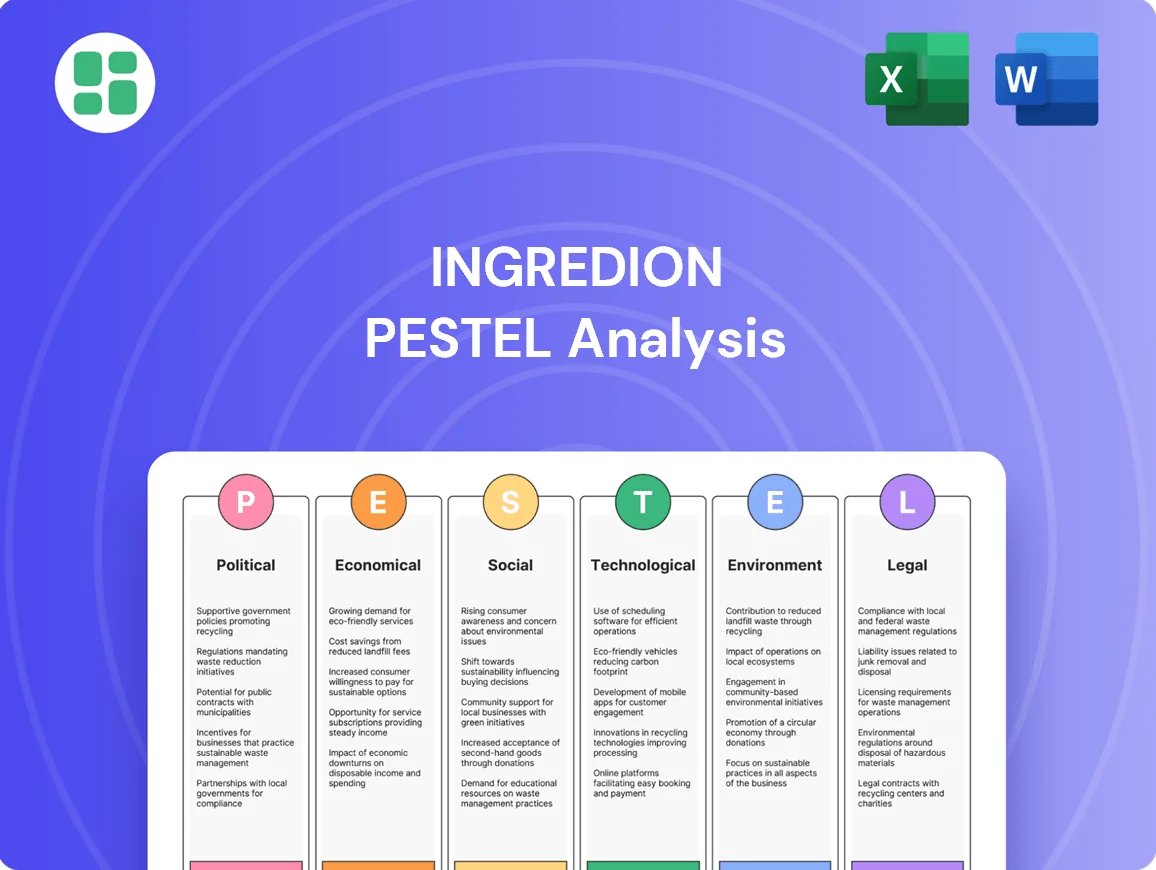
Jinxin Fertility PESTLE Analysis

Skip the Research. Get the Strategy.
Unlock the strategic roadmap for Jinxin Fertility by understanding the intricate web of political, economic, social, technological, legal, and environmental factors influencing its trajectory. Our comprehensive PESTLE analysis dives deep into these external forces, providing you with the critical intelligence needed to anticipate market shifts and capitalize on opportunities. Don't be left in the dark – gain the foresight to navigate the competitive landscape with confidence. Download the full PESTLE analysis now and empower your decision-making.
Political factors

Government Policies on Fertility and Childbirth
Chinese government initiatives are actively promoting childbirth, with measures like subsidies and enhanced medical insurance for fertility treatments such as IVF. For instance, in 2023, several provinces rolled out policies offering financial incentives for second and third children, aiming to boost the national birth rate, which stood at 6.39 births per 1,000 people in 2023. This directly influences Jinxin Fertility's market by increasing potential patient numbers.
These supportive policies are designed to encourage family growth, thereby creating a more favorable demand environment for Jinxin Fertility's specialized medical services. The expansion of medical insurance coverage to include more assisted reproductive technologies is a significant factor, making these treatments more accessible and affordable for a broader population.
However, the fertility sector is sensitive to shifts in government priorities. Any unexpected changes in policy, such as a reduction in subsidies or altered regulations for ART, could pose a considerable risk, potentially impacting Jinxin Fertility's growth trajectory and operational strategy.
Healthcare Regulation and Licensing
The regulatory landscape for fertility services significantly shapes Jinxin Fertility's operations. In China, the National Health Commission is actively encouraging the growth of IVF facilities, a policy that could benefit Jinxin's expansion. However, stringent licensing, quality control mandates, and ethical standards set by health authorities in both China and the US are critical. For instance, China's ongoing efforts to standardize ART services, with a focus on safety and efficacy, directly impact clinic approvals and service scope.

Cross-Border Healthcare Policies
Cross-border healthcare policies significantly shape Jinxin Fertility's global strategy. For instance, the United States, a key market for Jinxin, has specific regulations regarding international patient access to fertility services. In 2024, global medical tourism, a sector Jinxin operates within, was projected to reach $100 billion, with fertility treatments being a major driver. Changes in visa requirements or medical travel advisories, such as those that might arise from geopolitical shifts or public health concerns, could directly affect the influx of patients from China and other Asian countries to Jinxin's US facilities, impacting revenue projections.

Government Support for Private Healthcare
Government attitudes towards private healthcare, particularly fertility services, significantly shape Jinxin Fertility's operational landscape. Recent policy shifts in China, such as the 2023 announcement encouraging the development of private medical institutions, signal a potentially more accommodating environment for companies like Jinxin. This support can translate into easier market access and greater operational flexibility.
However, the political climate is dynamic. A move towards increased state oversight or a reduction in incentives for private healthcare providers could present headwinds for Jinxin Fertility's expansion plans. For instance, while the National Health Commission has been promoting a tiered healthcare system that includes private entities, future policy adjustments could alter the balance of state and private sector involvement.
Key considerations for Jinxin Fertility include:
- Government encouragement of private hospital development: This can foster market entry and growth opportunities.
- Potential for increased state control: Future policy changes could restrict operational freedom or market access.
- Regulatory shifts impacting fertility services: Specific policies related to assisted reproductive technologies will directly affect Jinxin's core business.
Political Stability and Geopolitical Tensions
Political stability in China and the United States directly impacts Jinxin Fertility. Escalating geopolitical tensions, such as trade disputes or broader international conflicts, can disrupt supply chains for critical medical equipment and consumables necessary for fertility treatments. For instance, a significant disruption in the import of specialized laboratory equipment from the US to China could directly hinder Jinxin's operational capacity.
Furthermore, these geopolitical factors can significantly sway investor confidence. A volatile political climate often leads to reduced investment in healthcare sectors, potentially affecting Jinxin Fertility's access to capital for expansion or research and development. This uncertainty can also dampen the overall economic outlook, impacting patients' disposable income and their ability or willingness to afford expensive fertility services.
- China's Political Stability: As of mid-2025, China maintains a high degree of internal political stability under the current leadership, which generally supports long-term economic planning and investment in sectors like healthcare.
- US Political Climate: The US political landscape in 2024-2025 is characterized by an upcoming presidential election, which can introduce policy uncertainties affecting international trade and investment flows.
- Geopolitical Tensions: Ongoing US-China trade relations and broader global security concerns continue to pose potential risks to supply chain integrity and international business operations, including those of Jinxin Fertility.
- Economic Impact: Global economic growth forecasts for 2025, influenced by political stability, will indirectly affect patient affordability for fertility treatments, a key market driver for Jinxin.
Policies & Stability Shape Fertility Service Growth
Government policies in China are actively encouraging childbirth and supporting fertility services, with initiatives like subsidies and expanded medical insurance for treatments such as IVF. For example, in 2023, various provinces introduced financial incentives for families with multiple children, aiming to boost the birth rate, which was 6.39 births per 1,000 people that year. This supportive policy environment directly benefits Jinxin Fertility by increasing potential patient numbers and making treatments more accessible.
The regulatory framework for fertility services significantly influences Jinxin Fertility's operations, with China's National Health Commission encouraging IVF facility growth. However, stringent licensing, quality control, and ethical standards in both China and the US are critical, impacting clinic approvals and service scope. For instance, China's focus on standardizing ART services for safety and efficacy directly affects Jinxin's operational parameters.
Political stability in key markets like China and the US is crucial for Jinxin Fertility. Geopolitical tensions can disrupt supply chains for essential medical equipment and affect investor confidence. For instance, trade disputes could impact the import of specialized laboratory equipment, hindering Jinxin's operational capacity and access to capital.
| Factor | 2023/2024 Data Point | Impact on Jinxin Fertility |
| Government Childbirth Support (China) | Birth rate: 6.39 per 1,000 people (2023) | Increased demand for fertility services |
| Medical Insurance Coverage | Expansion of coverage for ART | Enhanced affordability and accessibility for patients |
| Regulatory Environment | Focus on ART standardization and safety (China) | Impacts clinic approvals and service offerings |
| Global Medical Tourism | Projected to reach $100 billion (2024) | Opportunities for international patient influx |
| Geopolitical Tensions | US-China trade relations | Potential supply chain disruptions and investment uncertainty |
What is included in the product
 Detailed Word Document
This PESTLE analysis provides a comprehensive examination of the external forces impacting Jinxin Fertility, covering political stability, economic growth, social trends, technological advancements, environmental concerns, and legal frameworks.
It offers actionable insights for strategic decision-making, identifying potential challenges and avenues for growth within the fertility sector.

 Customizable Excel Spreadsheet
The Jinxin Fertility PESTLE Analysis offers a clear and actionable framework, simplifying complex external factors to identify and mitigate potential risks, thereby reducing uncertainty and boosting strategic confidence.
Economic factors

Disposable Income and Healthcare Expenditure
China's rising disposable income is a significant tailwind for Jinxin Fertility. In 2023, per capita disposable income in China reached approximately $6,700 USD, a 6.3% increase year-on-year, fueling consumer willingness to spend on advanced healthcare, including fertility treatments. This economic uplift directly translates to a larger addressable market for Jinxin's assisted reproductive technology (ART) services.
Economic growth in both China and the United States, where Jinxin also operates, directly impacts consumer spending on non-essential healthcare services. As economies expand, individuals and couples feel more financially secure to invest in high-cost procedures like IVF. For example, the US economy experienced a GDP growth of 2.5% in 2023, supporting discretionary spending on medical services.
A strong economic climate generally correlates with increased demand for elective medical services, including fertility treatments. When people have more disposable income and economic stability, they are more likely to pursue ART procedures, viewing them as a valuable investment in their future family. This trend is particularly evident in emerging economies with growing middle classes.
Insurance Coverage and Subsidies for ART
The landscape of insurance coverage and government subsidies for Assisted Reproductive Technology (ART) is a critical economic factor for Jinxin Fertility. In China, the inclusion of ART services in public medical insurance schemes across several provinces, starting with pilot programs and expanding, has demonstrably reduced out-of-pocket costs for many patients, thereby broadening market access. This policy shift is a significant driver of demand for fertility treatments.
In the United States, while coverage varies, there's a growing trend towards expanding access. For instance, the Federal Employees Health Benefits (FEHB) program's inclusion of ART benefits for federal workers, effective from 2023, represents a substantial boost to potential patient numbers. This expansion, alongside state-level mandates for private insurers to cover fertility treatments, directly impacts affordability and can increase patient uptake of Jinxin Fertility's services.

Cost of Fertility Treatments and Affordability
The substantial cost of In Vitro Fertilization (IVF) and other assisted reproductive technologies (ART) presents a significant hurdle for many individuals seeking fertility services. For instance, a single IVF cycle in the United States can range from $12,000 to $30,000, not including medication costs, which can add another $3,000 to $5,000.
Jinxin Fertility's approach to pricing, alongside competitive market dynamics and the availability of financial solutions like loans or payment plans, directly impacts its patient numbers and overall earnings. In 2024, the average cost of an IVF cycle remained a key consideration for patients, with many exploring financing options to manage expenses.
Economic downturns or persistent inflation can intensify these affordability issues. Should economic conditions worsen, leading to reduced disposable income, it could negatively affect Jinxin Fertility's revenue and profitability as more potential patients delay or forgo treatment due to financial constraints.

Market Size and Growth of Fertility Industry
The fertility services market in China is experiencing substantial growth, with projections indicating a compound annual growth rate (CAGR) of approximately 15% through 2028, reaching an estimated value of over $10 billion. This expansion is fueled by a combination of policy shifts, such as the relaxation of birth policies, and a growing societal acceptance of assisted reproductive technologies (ART). Similarly, the U.S. ART market is also on a robust growth trajectory, with an estimated market size of around $4.5 billion in 2024, expected to grow at a CAGR of roughly 8% over the next five years.
These expanding market sizes in key regions like China and the U.S. present significant economic opportunities for Jinxin Fertility. The increasing demand for fertility treatments, driven by factors such as delayed childbearing and rising infertility rates, creates a fertile ground for Jinxin Fertility to enhance its service offerings and capture a larger market share.
- China's IVF market is forecast to grow at a CAGR of approximately 15% through 2028.
- The U.S. ART market was valued at approximately $4.5 billion in 2024.
- The U.S. ART market is projected to expand at a CAGR of around 8% in the coming years.
- Growing demand and policy support are key drivers for market expansion in both regions.
Currency Exchange Rates and Investment Climate
For Jinxin Fertility, operating across China and the US means currency exchange rate fluctuations are a significant factor. For instance, if the US dollar strengthens against the Chinese Yuan, revenue earned in Yuan would translate to fewer dollars, potentially impacting reported profits. This dynamic was evident in early 2024, with the Yuan experiencing some volatility against major currencies, necessitating careful financial hedging strategies.
The broader investment climate, encompassing interest rates and the availability of capital, directly shapes Jinxin Fertility's strategic growth. Higher interest rates can increase the cost of borrowing for expansion projects or acquisitions, while a robust investment climate, characterized by accessible and affordable capital, empowers companies to pursue ambitious plans. For example, in 2024, global central banks maintained varying stances on interest rates, influencing the cost of capital for international businesses like Jinxin.
- Currency Impact: Fluctuations between the USD and CNY can affect Jinxin Fertility's translated revenues and overall profitability.
- Investment Climate: Interest rates and capital availability influence Jinxin's capacity for funding expansion, acquisitions, and R&D.
- 2024 Trends: Global interest rate adjustments and currency market volatility in 2024 presented both challenges and opportunities for international firms.
- Strategic Funding: A positive investment climate is crucial for Jinxin to secure funding for its long-term strategic objectives.
Economic Currents Shape Global Fertility Market Growth
Economic growth directly fuels demand for Jinxin Fertility's services, as increased disposable income allows individuals to invest in costly fertility treatments. China's per capita disposable income saw a 6.3% rise in 2023, reaching approximately $6,700 USD, while the US economy grew by 2.5% in the same year, supporting discretionary healthcare spending.
Affordability remains a key economic consideration, with IVF cycles in the US costing between $12,000-$30,000 plus medication. Jinxin's pricing strategies and the availability of financing options are crucial for patient access. Economic downturns or inflation could negatively impact patient numbers by reducing affordability.
The fertility services market is expanding significantly, with China's IVF market projected for a 15% CAGR through 2028 and the U.S. ART market valued at $4.5 billion in 2024, growing at an 8% CAGR. This growth presents substantial opportunities for Jinxin Fertility.
Currency fluctuations and the investment climate also impact Jinxin. For instance, a stronger US dollar against the Chinese Yuan can reduce translated profits. Interest rates and capital availability in 2024 influenced Jinxin's ability to fund expansion and R&D.
| Economic Factor | 2023/2024 Data Point | Impact on Jinxin Fertility |
|---|---|---|
| China Disposable Income | ~$6,700 USD (6.3% YoY growth in 2023) | Increases consumer spending on fertility services. |
| US GDP Growth | 2.5% in 2023 | Supports discretionary spending on ART. |
| US IVF Cycle Cost | $12,000 - $30,000 (excl. meds) | Highlights affordability challenges and need for financing. |
| China IVF Market CAGR | ~15% (through 2028) | Indicates significant market expansion opportunity. |
| US ART Market Value | ~$4.5 billion (2024) | Represents a large and growing market. |
| US ART Market CAGR | ~8% (next 5 years) | Suggests continued growth in demand. |
| Currency Exchange | CNY volatility vs. USD in early 2024 | Affects translated revenue and profitability. |
| Investment Climate | Varying global interest rates in 2024 | Influences cost of capital for expansion. |
Preview Before You Purchase
Jinxin Fertility PESTLE Analysis
The preview shown here is the exact document you’ll receive after purchase—fully formatted and ready to use, offering a comprehensive PESTLE analysis of Jinxin Fertility.
This is a real screenshot of the product you’re buying—delivered exactly as shown, no surprises, detailing the Political, Economic, Social, Technological, Legal, and Environmental factors impacting Jinxin Fertility.
The content and structure shown in the preview is the same document you’ll download after payment, providing actionable insights into the market landscape for Jinxin Fertility.

Product Information
Product Information
Shipping & Returns
Shipping & Returns

Jinxin Fertility PESTLE Analysis
Jinxin Fertility PESTLE Analysis
Skip the Research. Get the Strategy.
Unlock the strategic roadmap for Jinxin Fertility by understanding the intricate web of political, economic, social, technological, legal, and environmental factors influencing its trajectory. Our comprehensive PESTLE analysis dives deep into these external forces, providing you with the critical intelligence needed to anticipate market shifts and capitalize on opportunities. Don't be left in the dark – gain the foresight to navigate the competitive landscape with confidence. Download the full PESTLE analysis now and empower your decision-making.
Political factors
Government Policies on Fertility and Childbirth
Chinese government initiatives are actively promoting childbirth, with measures like subsidies and enhanced medical insurance for fertility treatments such as IVF. For instance, in 2023, several provinces rolled out policies offering financial incentives for second and third children, aiming to boost the national birth rate, which stood at 6.39 births per 1,000 people in 2023. This directly influences Jinxin Fertility's market by increasing potential patient numbers.
These supportive policies are designed to encourage family growth, thereby creating a more favorable demand environment for Jinxin Fertility's specialized medical services. The expansion of medical insurance coverage to include more assisted reproductive technologies is a significant factor, making these treatments more accessible and affordable for a broader population.
However, the fertility sector is sensitive to shifts in government priorities. Any unexpected changes in policy, such as a reduction in subsidies or altered regulations for ART, could pose a considerable risk, potentially impacting Jinxin Fertility's growth trajectory and operational strategy.
Healthcare Regulation and Licensing
The regulatory landscape for fertility services significantly shapes Jinxin Fertility's operations. In China, the National Health Commission is actively encouraging the growth of IVF facilities, a policy that could benefit Jinxin's expansion. However, stringent licensing, quality control mandates, and ethical standards set by health authorities in both China and the US are critical. For instance, China's ongoing efforts to standardize ART services, with a focus on safety and efficacy, directly impact clinic approvals and service scope.
Cross-Border Healthcare Policies
Cross-border healthcare policies significantly shape Jinxin Fertility's global strategy. For instance, the United States, a key market for Jinxin, has specific regulations regarding international patient access to fertility services. In 2024, global medical tourism, a sector Jinxin operates within, was projected to reach $100 billion, with fertility treatments being a major driver. Changes in visa requirements or medical travel advisories, such as those that might arise from geopolitical shifts or public health concerns, could directly affect the influx of patients from China and other Asian countries to Jinxin's US facilities, impacting revenue projections.
Government Support for Private Healthcare
Government attitudes towards private healthcare, particularly fertility services, significantly shape Jinxin Fertility's operational landscape. Recent policy shifts in China, such as the 2023 announcement encouraging the development of private medical institutions, signal a potentially more accommodating environment for companies like Jinxin. This support can translate into easier market access and greater operational flexibility.
However, the political climate is dynamic. A move towards increased state oversight or a reduction in incentives for private healthcare providers could present headwinds for Jinxin Fertility's expansion plans. For instance, while the National Health Commission has been promoting a tiered healthcare system that includes private entities, future policy adjustments could alter the balance of state and private sector involvement.
Key considerations for Jinxin Fertility include:
- Government encouragement of private hospital development: This can foster market entry and growth opportunities.
- Potential for increased state control: Future policy changes could restrict operational freedom or market access.
- Regulatory shifts impacting fertility services: Specific policies related to assisted reproductive technologies will directly affect Jinxin's core business.
Political Stability and Geopolitical Tensions
Political stability in China and the United States directly impacts Jinxin Fertility. Escalating geopolitical tensions, such as trade disputes or broader international conflicts, can disrupt supply chains for critical medical equipment and consumables necessary for fertility treatments. For instance, a significant disruption in the import of specialized laboratory equipment from the US to China could directly hinder Jinxin's operational capacity.
Furthermore, these geopolitical factors can significantly sway investor confidence. A volatile political climate often leads to reduced investment in healthcare sectors, potentially affecting Jinxin Fertility's access to capital for expansion or research and development. This uncertainty can also dampen the overall economic outlook, impacting patients' disposable income and their ability or willingness to afford expensive fertility services.
- China's Political Stability: As of mid-2025, China maintains a high degree of internal political stability under the current leadership, which generally supports long-term economic planning and investment in sectors like healthcare.
- US Political Climate: The US political landscape in 2024-2025 is characterized by an upcoming presidential election, which can introduce policy uncertainties affecting international trade and investment flows.
- Geopolitical Tensions: Ongoing US-China trade relations and broader global security concerns continue to pose potential risks to supply chain integrity and international business operations, including those of Jinxin Fertility.
- Economic Impact: Global economic growth forecasts for 2025, influenced by political stability, will indirectly affect patient affordability for fertility treatments, a key market driver for Jinxin.
Policies & Stability Shape Fertility Service Growth
Government policies in China are actively encouraging childbirth and supporting fertility services, with initiatives like subsidies and expanded medical insurance for treatments such as IVF. For example, in 2023, various provinces introduced financial incentives for families with multiple children, aiming to boost the birth rate, which was 6.39 births per 1,000 people that year. This supportive policy environment directly benefits Jinxin Fertility by increasing potential patient numbers and making treatments more accessible.
The regulatory framework for fertility services significantly influences Jinxin Fertility's operations, with China's National Health Commission encouraging IVF facility growth. However, stringent licensing, quality control, and ethical standards in both China and the US are critical, impacting clinic approvals and service scope. For instance, China's focus on standardizing ART services for safety and efficacy directly affects Jinxin's operational parameters.
Political stability in key markets like China and the US is crucial for Jinxin Fertility. Geopolitical tensions can disrupt supply chains for essential medical equipment and affect investor confidence. For instance, trade disputes could impact the import of specialized laboratory equipment, hindering Jinxin's operational capacity and access to capital.
| Factor | 2023/2024 Data Point | Impact on Jinxin Fertility |
| Government Childbirth Support (China) | Birth rate: 6.39 per 1,000 people (2023) | Increased demand for fertility services |
| Medical Insurance Coverage | Expansion of coverage for ART | Enhanced affordability and accessibility for patients |
| Regulatory Environment | Focus on ART standardization and safety (China) | Impacts clinic approvals and service offerings |
| Global Medical Tourism | Projected to reach $100 billion (2024) | Opportunities for international patient influx |
| Geopolitical Tensions | US-China trade relations | Potential supply chain disruptions and investment uncertainty |
What is included in the product
Detailed Word Document
This PESTLE analysis provides a comprehensive examination of the external forces impacting Jinxin Fertility, covering political stability, economic growth, social trends, technological advancements, environmental concerns, and legal frameworks.
It offers actionable insights for strategic decision-making, identifying potential challenges and avenues for growth within the fertility sector.
Customizable Excel Spreadsheet
The Jinxin Fertility PESTLE Analysis offers a clear and actionable framework, simplifying complex external factors to identify and mitigate potential risks, thereby reducing uncertainty and boosting strategic confidence.
Economic factors
Disposable Income and Healthcare Expenditure
China's rising disposable income is a significant tailwind for Jinxin Fertility. In 2023, per capita disposable income in China reached approximately $6,700 USD, a 6.3% increase year-on-year, fueling consumer willingness to spend on advanced healthcare, including fertility treatments. This economic uplift directly translates to a larger addressable market for Jinxin's assisted reproductive technology (ART) services.
Economic growth in both China and the United States, where Jinxin also operates, directly impacts consumer spending on non-essential healthcare services. As economies expand, individuals and couples feel more financially secure to invest in high-cost procedures like IVF. For example, the US economy experienced a GDP growth of 2.5% in 2023, supporting discretionary spending on medical services.
A strong economic climate generally correlates with increased demand for elective medical services, including fertility treatments. When people have more disposable income and economic stability, they are more likely to pursue ART procedures, viewing them as a valuable investment in their future family. This trend is particularly evident in emerging economies with growing middle classes.
Insurance Coverage and Subsidies for ART
The landscape of insurance coverage and government subsidies for Assisted Reproductive Technology (ART) is a critical economic factor for Jinxin Fertility. In China, the inclusion of ART services in public medical insurance schemes across several provinces, starting with pilot programs and expanding, has demonstrably reduced out-of-pocket costs for many patients, thereby broadening market access. This policy shift is a significant driver of demand for fertility treatments.
In the United States, while coverage varies, there's a growing trend towards expanding access. For instance, the Federal Employees Health Benefits (FEHB) program's inclusion of ART benefits for federal workers, effective from 2023, represents a substantial boost to potential patient numbers. This expansion, alongside state-level mandates for private insurers to cover fertility treatments, directly impacts affordability and can increase patient uptake of Jinxin Fertility's services.
Cost of Fertility Treatments and Affordability
The substantial cost of In Vitro Fertilization (IVF) and other assisted reproductive technologies (ART) presents a significant hurdle for many individuals seeking fertility services. For instance, a single IVF cycle in the United States can range from $12,000 to $30,000, not including medication costs, which can add another $3,000 to $5,000.
Jinxin Fertility's approach to pricing, alongside competitive market dynamics and the availability of financial solutions like loans or payment plans, directly impacts its patient numbers and overall earnings. In 2024, the average cost of an IVF cycle remained a key consideration for patients, with many exploring financing options to manage expenses.
Economic downturns or persistent inflation can intensify these affordability issues. Should economic conditions worsen, leading to reduced disposable income, it could negatively affect Jinxin Fertility's revenue and profitability as more potential patients delay or forgo treatment due to financial constraints.
Market Size and Growth of Fertility Industry
The fertility services market in China is experiencing substantial growth, with projections indicating a compound annual growth rate (CAGR) of approximately 15% through 2028, reaching an estimated value of over $10 billion. This expansion is fueled by a combination of policy shifts, such as the relaxation of birth policies, and a growing societal acceptance of assisted reproductive technologies (ART). Similarly, the U.S. ART market is also on a robust growth trajectory, with an estimated market size of around $4.5 billion in 2024, expected to grow at a CAGR of roughly 8% over the next five years.
These expanding market sizes in key regions like China and the U.S. present significant economic opportunities for Jinxin Fertility. The increasing demand for fertility treatments, driven by factors such as delayed childbearing and rising infertility rates, creates a fertile ground for Jinxin Fertility to enhance its service offerings and capture a larger market share.
- China's IVF market is forecast to grow at a CAGR of approximately 15% through 2028.
- The U.S. ART market was valued at approximately $4.5 billion in 2024.
- The U.S. ART market is projected to expand at a CAGR of around 8% in the coming years.
- Growing demand and policy support are key drivers for market expansion in both regions.
Currency Exchange Rates and Investment Climate
For Jinxin Fertility, operating across China and the US means currency exchange rate fluctuations are a significant factor. For instance, if the US dollar strengthens against the Chinese Yuan, revenue earned in Yuan would translate to fewer dollars, potentially impacting reported profits. This dynamic was evident in early 2024, with the Yuan experiencing some volatility against major currencies, necessitating careful financial hedging strategies.
The broader investment climate, encompassing interest rates and the availability of capital, directly shapes Jinxin Fertility's strategic growth. Higher interest rates can increase the cost of borrowing for expansion projects or acquisitions, while a robust investment climate, characterized by accessible and affordable capital, empowers companies to pursue ambitious plans. For example, in 2024, global central banks maintained varying stances on interest rates, influencing the cost of capital for international businesses like Jinxin.
- Currency Impact: Fluctuations between the USD and CNY can affect Jinxin Fertility's translated revenues and overall profitability.
- Investment Climate: Interest rates and capital availability influence Jinxin's capacity for funding expansion, acquisitions, and R&D.
- 2024 Trends: Global interest rate adjustments and currency market volatility in 2024 presented both challenges and opportunities for international firms.
- Strategic Funding: A positive investment climate is crucial for Jinxin to secure funding for its long-term strategic objectives.
Economic Currents Shape Global Fertility Market Growth
Economic growth directly fuels demand for Jinxin Fertility's services, as increased disposable income allows individuals to invest in costly fertility treatments. China's per capita disposable income saw a 6.3% rise in 2023, reaching approximately $6,700 USD, while the US economy grew by 2.5% in the same year, supporting discretionary healthcare spending.
Affordability remains a key economic consideration, with IVF cycles in the US costing between $12,000-$30,000 plus medication. Jinxin's pricing strategies and the availability of financing options are crucial for patient access. Economic downturns or inflation could negatively impact patient numbers by reducing affordability.
The fertility services market is expanding significantly, with China's IVF market projected for a 15% CAGR through 2028 and the U.S. ART market valued at $4.5 billion in 2024, growing at an 8% CAGR. This growth presents substantial opportunities for Jinxin Fertility.
Currency fluctuations and the investment climate also impact Jinxin. For instance, a stronger US dollar against the Chinese Yuan can reduce translated profits. Interest rates and capital availability in 2024 influenced Jinxin's ability to fund expansion and R&D.
| Economic Factor | 2023/2024 Data Point | Impact on Jinxin Fertility |
|---|---|---|
| China Disposable Income | ~$6,700 USD (6.3% YoY growth in 2023) | Increases consumer spending on fertility services. |
| US GDP Growth | 2.5% in 2023 | Supports discretionary spending on ART. |
| US IVF Cycle Cost | $12,000 - $30,000 (excl. meds) | Highlights affordability challenges and need for financing. |
| China IVF Market CAGR | ~15% (through 2028) | Indicates significant market expansion opportunity. |
| US ART Market Value | ~$4.5 billion (2024) | Represents a large and growing market. |
| US ART Market CAGR | ~8% (next 5 years) | Suggests continued growth in demand. |
| Currency Exchange | CNY volatility vs. USD in early 2024 | Affects translated revenue and profitability. |
| Investment Climate | Varying global interest rates in 2024 | Influences cost of capital for expansion. |
Preview Before You Purchase
Jinxin Fertility PESTLE Analysis
The preview shown here is the exact document you’ll receive after purchase—fully formatted and ready to use, offering a comprehensive PESTLE analysis of Jinxin Fertility.
This is a real screenshot of the product you’re buying—delivered exactly as shown, no surprises, detailing the Political, Economic, Social, Technological, Legal, and Environmental factors impacting Jinxin Fertility.
The content and structure shown in the preview is the same document you’ll download after payment, providing actionable insights into the market landscape for Jinxin Fertility.
Original: $10.00
-65%$10.00
$3.50Product Information
Product Information
Shipping & Returns
Shipping & Returns
Description
Skip the Research. Get the Strategy.
Unlock the strategic roadmap for Jinxin Fertility by understanding the intricate web of political, economic, social, technological, legal, and environmental factors influencing its trajectory. Our comprehensive PESTLE analysis dives deep into these external forces, providing you with the critical intelligence needed to anticipate market shifts and capitalize on opportunities. Don't be left in the dark – gain the foresight to navigate the competitive landscape with confidence. Download the full PESTLE analysis now and empower your decision-making.
Political factors
Government Policies on Fertility and Childbirth
Chinese government initiatives are actively promoting childbirth, with measures like subsidies and enhanced medical insurance for fertility treatments such as IVF. For instance, in 2023, several provinces rolled out policies offering financial incentives for second and third children, aiming to boost the national birth rate, which stood at 6.39 births per 1,000 people in 2023. This directly influences Jinxin Fertility's market by increasing potential patient numbers.
These supportive policies are designed to encourage family growth, thereby creating a more favorable demand environment for Jinxin Fertility's specialized medical services. The expansion of medical insurance coverage to include more assisted reproductive technologies is a significant factor, making these treatments more accessible and affordable for a broader population.
However, the fertility sector is sensitive to shifts in government priorities. Any unexpected changes in policy, such as a reduction in subsidies or altered regulations for ART, could pose a considerable risk, potentially impacting Jinxin Fertility's growth trajectory and operational strategy.
Healthcare Regulation and Licensing
The regulatory landscape for fertility services significantly shapes Jinxin Fertility's operations. In China, the National Health Commission is actively encouraging the growth of IVF facilities, a policy that could benefit Jinxin's expansion. However, stringent licensing, quality control mandates, and ethical standards set by health authorities in both China and the US are critical. For instance, China's ongoing efforts to standardize ART services, with a focus on safety and efficacy, directly impact clinic approvals and service scope.
Cross-Border Healthcare Policies
Cross-border healthcare policies significantly shape Jinxin Fertility's global strategy. For instance, the United States, a key market for Jinxin, has specific regulations regarding international patient access to fertility services. In 2024, global medical tourism, a sector Jinxin operates within, was projected to reach $100 billion, with fertility treatments being a major driver. Changes in visa requirements or medical travel advisories, such as those that might arise from geopolitical shifts or public health concerns, could directly affect the influx of patients from China and other Asian countries to Jinxin's US facilities, impacting revenue projections.
Government Support for Private Healthcare
Government attitudes towards private healthcare, particularly fertility services, significantly shape Jinxin Fertility's operational landscape. Recent policy shifts in China, such as the 2023 announcement encouraging the development of private medical institutions, signal a potentially more accommodating environment for companies like Jinxin. This support can translate into easier market access and greater operational flexibility.
However, the political climate is dynamic. A move towards increased state oversight or a reduction in incentives for private healthcare providers could present headwinds for Jinxin Fertility's expansion plans. For instance, while the National Health Commission has been promoting a tiered healthcare system that includes private entities, future policy adjustments could alter the balance of state and private sector involvement.
Key considerations for Jinxin Fertility include:
- Government encouragement of private hospital development: This can foster market entry and growth opportunities.
- Potential for increased state control: Future policy changes could restrict operational freedom or market access.
- Regulatory shifts impacting fertility services: Specific policies related to assisted reproductive technologies will directly affect Jinxin's core business.
Political Stability and Geopolitical Tensions
Political stability in China and the United States directly impacts Jinxin Fertility. Escalating geopolitical tensions, such as trade disputes or broader international conflicts, can disrupt supply chains for critical medical equipment and consumables necessary for fertility treatments. For instance, a significant disruption in the import of specialized laboratory equipment from the US to China could directly hinder Jinxin's operational capacity.
Furthermore, these geopolitical factors can significantly sway investor confidence. A volatile political climate often leads to reduced investment in healthcare sectors, potentially affecting Jinxin Fertility's access to capital for expansion or research and development. This uncertainty can also dampen the overall economic outlook, impacting patients' disposable income and their ability or willingness to afford expensive fertility services.
- China's Political Stability: As of mid-2025, China maintains a high degree of internal political stability under the current leadership, which generally supports long-term economic planning and investment in sectors like healthcare.
- US Political Climate: The US political landscape in 2024-2025 is characterized by an upcoming presidential election, which can introduce policy uncertainties affecting international trade and investment flows.
- Geopolitical Tensions: Ongoing US-China trade relations and broader global security concerns continue to pose potential risks to supply chain integrity and international business operations, including those of Jinxin Fertility.
- Economic Impact: Global economic growth forecasts for 2025, influenced by political stability, will indirectly affect patient affordability for fertility treatments, a key market driver for Jinxin.
Policies & Stability Shape Fertility Service Growth
Government policies in China are actively encouraging childbirth and supporting fertility services, with initiatives like subsidies and expanded medical insurance for treatments such as IVF. For example, in 2023, various provinces introduced financial incentives for families with multiple children, aiming to boost the birth rate, which was 6.39 births per 1,000 people that year. This supportive policy environment directly benefits Jinxin Fertility by increasing potential patient numbers and making treatments more accessible.
The regulatory framework for fertility services significantly influences Jinxin Fertility's operations, with China's National Health Commission encouraging IVF facility growth. However, stringent licensing, quality control, and ethical standards in both China and the US are critical, impacting clinic approvals and service scope. For instance, China's focus on standardizing ART services for safety and efficacy directly affects Jinxin's operational parameters.
Political stability in key markets like China and the US is crucial for Jinxin Fertility. Geopolitical tensions can disrupt supply chains for essential medical equipment and affect investor confidence. For instance, trade disputes could impact the import of specialized laboratory equipment, hindering Jinxin's operational capacity and access to capital.
| Factor | 2023/2024 Data Point | Impact on Jinxin Fertility |
| Government Childbirth Support (China) | Birth rate: 6.39 per 1,000 people (2023) | Increased demand for fertility services |
| Medical Insurance Coverage | Expansion of coverage for ART | Enhanced affordability and accessibility for patients |
| Regulatory Environment | Focus on ART standardization and safety (China) | Impacts clinic approvals and service offerings |
| Global Medical Tourism | Projected to reach $100 billion (2024) | Opportunities for international patient influx |
| Geopolitical Tensions | US-China trade relations | Potential supply chain disruptions and investment uncertainty |
What is included in the product
Detailed Word Document
This PESTLE analysis provides a comprehensive examination of the external forces impacting Jinxin Fertility, covering political stability, economic growth, social trends, technological advancements, environmental concerns, and legal frameworks.
It offers actionable insights for strategic decision-making, identifying potential challenges and avenues for growth within the fertility sector.
Customizable Excel Spreadsheet
The Jinxin Fertility PESTLE Analysis offers a clear and actionable framework, simplifying complex external factors to identify and mitigate potential risks, thereby reducing uncertainty and boosting strategic confidence.
Economic factors
Disposable Income and Healthcare Expenditure
China's rising disposable income is a significant tailwind for Jinxin Fertility. In 2023, per capita disposable income in China reached approximately $6,700 USD, a 6.3% increase year-on-year, fueling consumer willingness to spend on advanced healthcare, including fertility treatments. This economic uplift directly translates to a larger addressable market for Jinxin's assisted reproductive technology (ART) services.
Economic growth in both China and the United States, where Jinxin also operates, directly impacts consumer spending on non-essential healthcare services. As economies expand, individuals and couples feel more financially secure to invest in high-cost procedures like IVF. For example, the US economy experienced a GDP growth of 2.5% in 2023, supporting discretionary spending on medical services.
A strong economic climate generally correlates with increased demand for elective medical services, including fertility treatments. When people have more disposable income and economic stability, they are more likely to pursue ART procedures, viewing them as a valuable investment in their future family. This trend is particularly evident in emerging economies with growing middle classes.
Insurance Coverage and Subsidies for ART
The landscape of insurance coverage and government subsidies for Assisted Reproductive Technology (ART) is a critical economic factor for Jinxin Fertility. In China, the inclusion of ART services in public medical insurance schemes across several provinces, starting with pilot programs and expanding, has demonstrably reduced out-of-pocket costs for many patients, thereby broadening market access. This policy shift is a significant driver of demand for fertility treatments.
In the United States, while coverage varies, there's a growing trend towards expanding access. For instance, the Federal Employees Health Benefits (FEHB) program's inclusion of ART benefits for federal workers, effective from 2023, represents a substantial boost to potential patient numbers. This expansion, alongside state-level mandates for private insurers to cover fertility treatments, directly impacts affordability and can increase patient uptake of Jinxin Fertility's services.
Cost of Fertility Treatments and Affordability
The substantial cost of In Vitro Fertilization (IVF) and other assisted reproductive technologies (ART) presents a significant hurdle for many individuals seeking fertility services. For instance, a single IVF cycle in the United States can range from $12,000 to $30,000, not including medication costs, which can add another $3,000 to $5,000.
Jinxin Fertility's approach to pricing, alongside competitive market dynamics and the availability of financial solutions like loans or payment plans, directly impacts its patient numbers and overall earnings. In 2024, the average cost of an IVF cycle remained a key consideration for patients, with many exploring financing options to manage expenses.
Economic downturns or persistent inflation can intensify these affordability issues. Should economic conditions worsen, leading to reduced disposable income, it could negatively affect Jinxin Fertility's revenue and profitability as more potential patients delay or forgo treatment due to financial constraints.
Market Size and Growth of Fertility Industry
The fertility services market in China is experiencing substantial growth, with projections indicating a compound annual growth rate (CAGR) of approximately 15% through 2028, reaching an estimated value of over $10 billion. This expansion is fueled by a combination of policy shifts, such as the relaxation of birth policies, and a growing societal acceptance of assisted reproductive technologies (ART). Similarly, the U.S. ART market is also on a robust growth trajectory, with an estimated market size of around $4.5 billion in 2024, expected to grow at a CAGR of roughly 8% over the next five years.
These expanding market sizes in key regions like China and the U.S. present significant economic opportunities for Jinxin Fertility. The increasing demand for fertility treatments, driven by factors such as delayed childbearing and rising infertility rates, creates a fertile ground for Jinxin Fertility to enhance its service offerings and capture a larger market share.
- China's IVF market is forecast to grow at a CAGR of approximately 15% through 2028.
- The U.S. ART market was valued at approximately $4.5 billion in 2024.
- The U.S. ART market is projected to expand at a CAGR of around 8% in the coming years.
- Growing demand and policy support are key drivers for market expansion in both regions.
Currency Exchange Rates and Investment Climate
For Jinxin Fertility, operating across China and the US means currency exchange rate fluctuations are a significant factor. For instance, if the US dollar strengthens against the Chinese Yuan, revenue earned in Yuan would translate to fewer dollars, potentially impacting reported profits. This dynamic was evident in early 2024, with the Yuan experiencing some volatility against major currencies, necessitating careful financial hedging strategies.
The broader investment climate, encompassing interest rates and the availability of capital, directly shapes Jinxin Fertility's strategic growth. Higher interest rates can increase the cost of borrowing for expansion projects or acquisitions, while a robust investment climate, characterized by accessible and affordable capital, empowers companies to pursue ambitious plans. For example, in 2024, global central banks maintained varying stances on interest rates, influencing the cost of capital for international businesses like Jinxin.
- Currency Impact: Fluctuations between the USD and CNY can affect Jinxin Fertility's translated revenues and overall profitability.
- Investment Climate: Interest rates and capital availability influence Jinxin's capacity for funding expansion, acquisitions, and R&D.
- 2024 Trends: Global interest rate adjustments and currency market volatility in 2024 presented both challenges and opportunities for international firms.
- Strategic Funding: A positive investment climate is crucial for Jinxin to secure funding for its long-term strategic objectives.
Economic Currents Shape Global Fertility Market Growth
Economic growth directly fuels demand for Jinxin Fertility's services, as increased disposable income allows individuals to invest in costly fertility treatments. China's per capita disposable income saw a 6.3% rise in 2023, reaching approximately $6,700 USD, while the US economy grew by 2.5% in the same year, supporting discretionary healthcare spending.
Affordability remains a key economic consideration, with IVF cycles in the US costing between $12,000-$30,000 plus medication. Jinxin's pricing strategies and the availability of financing options are crucial for patient access. Economic downturns or inflation could negatively impact patient numbers by reducing affordability.
The fertility services market is expanding significantly, with China's IVF market projected for a 15% CAGR through 2028 and the U.S. ART market valued at $4.5 billion in 2024, growing at an 8% CAGR. This growth presents substantial opportunities for Jinxin Fertility.
Currency fluctuations and the investment climate also impact Jinxin. For instance, a stronger US dollar against the Chinese Yuan can reduce translated profits. Interest rates and capital availability in 2024 influenced Jinxin's ability to fund expansion and R&D.
| Economic Factor | 2023/2024 Data Point | Impact on Jinxin Fertility |
|---|---|---|
| China Disposable Income | ~$6,700 USD (6.3% YoY growth in 2023) | Increases consumer spending on fertility services. |
| US GDP Growth | 2.5% in 2023 | Supports discretionary spending on ART. |
| US IVF Cycle Cost | $12,000 - $30,000 (excl. meds) | Highlights affordability challenges and need for financing. |
| China IVF Market CAGR | ~15% (through 2028) | Indicates significant market expansion opportunity. |
| US ART Market Value | ~$4.5 billion (2024) | Represents a large and growing market. |
| US ART Market CAGR | ~8% (next 5 years) | Suggests continued growth in demand. |
| Currency Exchange | CNY volatility vs. USD in early 2024 | Affects translated revenue and profitability. |
| Investment Climate | Varying global interest rates in 2024 | Influences cost of capital for expansion. |
Preview Before You Purchase
Jinxin Fertility PESTLE Analysis
The preview shown here is the exact document you’ll receive after purchase—fully formatted and ready to use, offering a comprehensive PESTLE analysis of Jinxin Fertility.
This is a real screenshot of the product you’re buying—delivered exactly as shown, no surprises, detailing the Political, Economic, Social, Technological, Legal, and Environmental factors impacting Jinxin Fertility.
The content and structure shown in the preview is the same document you’ll download after payment, providing actionable insights into the market landscape for Jinxin Fertility.