IWG PESTLE Analysis

Skip the Research. Get the Strategy.
Navigate the dynamic landscape impacting IWG with our comprehensive PESTLE analysis. Understand the political, economic, social, technological, legal, and environmental forces shaping the flexible workspace industry. Equip yourself with actionable intelligence to anticipate challenges and seize opportunities. Purchase the full analysis now and gain a critical competitive advantage.
Political factors

Government support for flexible work models
Governments worldwide are increasingly championing flexible work, acknowledging its potential to boost productivity and employee well-being. This trend translates into supportive policies, such as tax incentives for companies embracing hybrid models. For instance, the UK government’s ‘right to request flexible working’ legislation, extended in 2024 to all employees from day one, signals a strong political endorsement of these arrangements, directly benefiting flexible workspace providers like IWG.
Geopolitical stability and trade agreements
Global geopolitical stability significantly impacts business confidence and investment decisions, directly affecting the demand for flexible office solutions like those offered by IWG. For instance, the ongoing geopolitical tensions in Eastern Europe and the Middle East in 2024 have led some multinational corporations to reassess their expansion plans, potentially slowing the growth in demand for new office spaces in affected regions.
Trade agreements and evolving international relations also play a crucial role. The continuation or renegotiation of trade pacts, such as potential updates to agreements involving the UK and EU post-Brexit, can influence cross-border business operations. This, in turn, affects companies' needs for a global office footprint, a key area where IWG's network provides strategic advantages.
Conversely, protectionist policies or increased trade barriers could deter international expansion, leading to reduced demand for global office networks. Conversely, favorable trade agreements or a period of heightened geopolitical stability could encourage multinational companies to expand their presence, thereby increasing the market for flexible workspace providers like IWG in 2025.

Local urban planning and zoning regulations
Local urban planning and zoning regulations directly influence IWG's ability to open new flexible workspaces. For instance, in 2024, cities like London continued to grapple with balancing commercial development with residential needs, potentially leading to stricter zoning for office spaces. Delays in obtaining building permits, a common issue in many metropolitan areas, can add significant costs and time to IWG's expansion strategies.
Conversely, forward-thinking urban development policies can be a boon for IWG. In 2025, several European cities are expected to further promote mixed-use developments, integrating residential, commercial, and retail spaces. Such initiatives could create prime locations for IWG's flexible office solutions, aligning with broader urban revitalization efforts and potentially reducing initial setup costs.

Taxation policies for commercial real estate
Taxation policies directly influence IWG's bottom line. For instance, changes in corporate tax rates, like the potential for adjustments in the UK's corporation tax, which stood at 25% from April 2023, can alter IWG's net profit. Property taxes, a significant operational cost, also play a crucial role; fluctuations in these levies in key markets such as the US or Germany can impact IWG's profitability.
Favorable tax treatments, such as enhanced capital allowances or specific incentives for flexible workspace development, could significantly boost IWG's financial performance and encourage further expansion. Conversely, an increase in property-related taxes or the introduction of new levies on commercial real estate could force IWG to reconsider pricing strategies or delay investments in new locations, potentially affecting its growth trajectory.
Key considerations for IWG regarding taxation include:
- Corporate Tax Rates: Monitoring changes in corporate tax legislation across IWG's operating countries, such as the UK's 25% rate or the US federal rate of 21%, is vital for profit forecasting.
- Property Taxes: Understanding and anticipating variations in property tax burdens in major markets like London, New York, or Berlin directly impacts operational expenditure.
- Real Estate Incentives: Evaluating the impact of government incentives for commercial property investment or development, which can reduce acquisition costs and enhance returns.
- Depreciation Rules: Changes in depreciation allowances for commercial property assets can affect taxable income and IWG's cash flow.
Government stimulus and support for SMEs
Government stimulus and support for SMEs can directly impact IWG's growth. For instance, in 2024, many governments continued to offer tax breaks and grants specifically aimed at helping small businesses recover and expand. This financial relief can free up capital for SMEs, making them more likely to invest in flexible workspace solutions like those offered by IWG.
These initiatives are crucial because SMEs represent a significant portion of IWG's clientele. When governments bolster SME resilience through programs, it translates to a stronger potential customer base for IWG. For example, a UK government report in early 2025 highlighted that SME-focused support schemes had contributed to a 5% increase in business formation, a key demographic for workspace providers.
- Increased SME Demand: Government financial aid for SMEs often leads to greater spending on operational necessities, including office space.
- Agility and Cost Savings: SMEs, bolstered by support, are still focused on cost-efficiency, making IWG's flexible models attractive.
- Economic Recovery Boost: Stimulus packages designed to aid small businesses indirectly support the flexible workspace sector by fostering a healthier overall economy.
External Forces Shaping Flexible Workspaces
Political stability and government support for flexible work arrangements are key drivers for IWG. Policies like the UK's extension of the right to request flexible working from day one in 2024 directly benefit the sector.
Geopolitical events in 2024, such as tensions in Eastern Europe, have prompted some corporations to reconsider expansion, potentially slowing demand for new office spaces in affected regions.
Urban planning and zoning regulations, like those in London in 2024, can impact IWG's ability to establish new locations, with mixed-use development policies in European cities by 2025 offering potential opportunities.
Taxation policies, including corporate tax rates (e.g., UK's 25% from April 2023) and property taxes in major markets, directly influence IWG's profitability and expansion plans.
| Factor | 2024/2025 Impact | Example/Data |
|---|---|---|
| Flexible Work Policies | Increased adoption and demand | UK's 'right to request flexible working' extended to all employees from day one (2024) |
| Geopolitical Stability | Influences business confidence and investment | Tensions in Eastern Europe (2024) led some MNCs to reassess expansion |
| Urban Planning | Affects site acquisition and development | London's balancing commercial/residential needs (2024); European cities promoting mixed-use (2025) |
| Taxation | Impacts profitability and operational costs | UK Corporate Tax: 25% (from April 2023); US Federal Tax: 21% |
What is included in the product
 Detailed Word Document
This comprehensive PESTLE analysis examines the external macro-environmental factors influencing the IWG, providing a strategic framework for understanding its operating landscape.

 Customizable Excel Spreadsheet
The IWG PESTLE Analysis provides a clear, summarized version of the full analysis for easy referencing during meetings or presentations, alleviating the pain of sifting through extensive data.
Economic factors

Global economic growth and recession risks
Global economic growth is a significant factor for IWG, as expanding businesses typically increase their demand for office space. Conversely, economic slowdowns can prompt companies to seek cost-effective, flexible solutions, which IWG provides. The International Monetary Fund (IMF) projected global growth to moderate to 3.2% in 2024, down from 3.5% in 2023, signaling a potentially cautious environment for business expansion.
Recession risks remain a key consideration. A significant economic downturn could lead to reduced corporate spending on real estate, potentially increasing demand for IWG's flexible offerings as companies look to cut costs and avoid long-term lease commitments. For instance, if major economies enter a recession, IWG's occupancy rates and pricing power could be tested, but its flexible model might also prove resilient.
Inflation and interest rate fluctuations
Rising inflation presents a direct challenge to IWG's operational efficiency. For instance, the UK saw inflation reach 8.7% in the year to April 2024, a figure that directly translates to increased costs for utilities, cleaning services, and general maintenance across IWG's global network of workspaces. This necessitates careful cost management to prevent a squeeze on profit margins.
Interest rate volatility significantly influences IWG's financial strategy. As of mid-2024, central banks globally, including the Bank of England and the US Federal Reserve, have maintained higher interest rates to combat inflation. This raises the cost of capital for IWG's property acquisitions and development projects, impacting the overall expense of expanding its flexible workspace portfolio. Higher borrowing costs can also affect IWG's debt servicing obligations.
While elevated interest rates can make traditional, long-term office leases less attractive for businesses, potentially boosting demand for flexible solutions like those offered by IWG, it's a double-edged sword. Businesses might also face tighter budgets, leading to reduced spending on office services, even flexible ones. This economic climate requires IWG to balance the appeal of its offerings against the broader economic pressures on potential clients.

Commercial real estate market dynamics
Commercial real estate trends significantly shape IWG's operational costs and expansion opportunities. For instance, in early 2024, major global cities experienced fluctuating vacancy rates, with some, like New York City, seeing office vacancy rates hover around 18-20%, potentially offering IWG more leverage in lease negotiations for new workspace locations. Conversely, areas with strong economic growth and increasing demand for office space, such as parts of Asia, might see rental yields rise, impacting IWG's cost of securing prime locations.

Cost of living and wage inflation
Rising costs of living and wage inflation directly impact IWG's operational expenses, notably increasing labor costs for their workspace management staff. For instance, in the UK, average weekly earnings saw a 5.9% increase in the year to March 2024, a significant factor for businesses like IWG. This also affects potential clients, particularly small and medium-sized enterprises (SMEs), by impacting their budgets for flexible office solutions and potentially reducing demand if affordability becomes a major concern.
IWG must carefully balance these escalating costs with the need to offer competitive pricing to attract and retain its diverse client base. Maintaining attractive service packages while absorbing increased operational expenditures is crucial for sustained growth in the flexible workspace market.
- Wage inflation: In the UK, average weekly earnings grew by 5.9% in the year to March 2024, directly impacting IWG's staffing costs.
- Cost of living: Higher living costs can reduce disposable income for potential SME clients, influencing their spending on office services.
- Pricing strategy: IWG needs to adapt its pricing to remain competitive amidst rising operational expenses and client budget constraints.
Access to capital and investment
IWG's growth hinges on its ability to secure capital for expanding its flexible workspace network and upgrading existing locations with new technologies. Factors like market liquidity, investor sentiment, and the general availability of financing directly impact this capacity. For instance, in early 2024, the commercial real estate sector saw fluctuating interest rates, which can influence the cost of borrowing for companies like IWG.
A strong investment climate is crucial for IWG to pursue ambitious expansion strategies and solidify its position as a market leader. The availability of debt and equity financing directly correlates with the pace at which IWG can enter new markets or enhance its property portfolio. By mid-2024, many real estate investment trusts (REITs) were reporting cautious but steady inflows, indicating a potential for capital availability, though often with stricter lending criteria.
- Capital Availability: IWG's expansion plans are directly tied to its access to funding.
- Investor Confidence: High investor confidence can translate into easier access to capital markets.
- Financing Costs: Interest rates and loan terms significantly affect the cost of capital for IWG's investments.
- Market Liquidity: The ease with which capital can be raised or deployed influences strategic execution.
Economic Shifts Shape Flexible Workspace Demand
Global economic growth influences demand for flexible office space, with projections indicating a moderation in growth for 2024. Recession risks could boost demand for cost-effective solutions, while rising inflation directly increases IWG's operational costs, necessitating careful expense management. Interest rate volatility impacts IWG's capital costs for expansion and debt servicing, with central banks maintaining higher rates in mid-2024 to combat inflation.
Commercial real estate trends, such as fluctuating vacancy rates in major cities like New York (around 18-20% in early 2024), affect IWG's lease negotiations and expansion costs. Rising living costs and wage inflation, exemplified by a 5.9% increase in UK average weekly earnings to March 2024, directly increase IWG's labor expenses and can impact client affordability.
| Economic Factor | Impact on IWG | Supporting Data (2024/2025) |
| Global Economic Growth | Influences demand for office space; slowdowns may increase demand for flexible solutions. | IMF projected global growth to moderate to 3.2% in 2024. |
| Inflation | Increases operational costs (utilities, maintenance). | UK inflation reached 8.7% in the year to April 2024. |
| Interest Rates | Raises cost of capital for expansion and property development. | Central banks maintained higher rates through mid-2024. |
| Commercial Real Estate Trends | Affects lease negotiation leverage and cost of securing locations. | NYC office vacancy rates around 18-20% in early 2024. |
| Wage Inflation | Increases labor costs for workspace management staff. | UK average weekly earnings grew 5.9% in the year to March 2024. |
What You See Is What You Get
IWG PESTLE Analysis
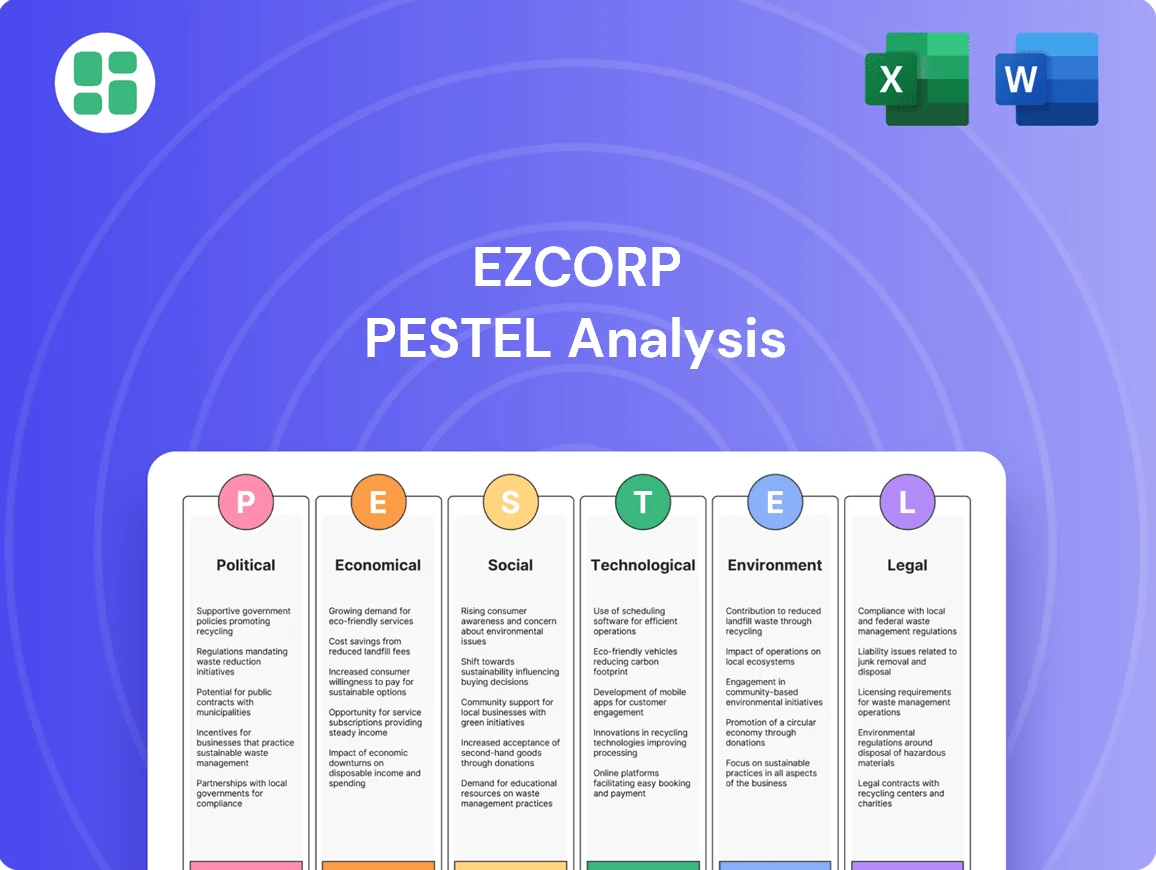
The preview shown here is the exact document you’ll receive after purchase—fully formatted and ready to use. This comprehensive IWG PESTLE analysis includes all sections as displayed, ensuring you get the complete, professional report you expect.

Product Information
Product Information
Shipping & Returns
Shipping & Returns

IWG PESTLE Analysis
IWG PESTLE Analysis
Skip the Research. Get the Strategy.
Navigate the dynamic landscape impacting IWG with our comprehensive PESTLE analysis. Understand the political, economic, social, technological, legal, and environmental forces shaping the flexible workspace industry. Equip yourself with actionable intelligence to anticipate challenges and seize opportunities. Purchase the full analysis now and gain a critical competitive advantage.
Political factors
Government support for flexible work models
Governments worldwide are increasingly championing flexible work, acknowledging its potential to boost productivity and employee well-being. This trend translates into supportive policies, such as tax incentives for companies embracing hybrid models. For instance, the UK government’s ‘right to request flexible working’ legislation, extended in 2024 to all employees from day one, signals a strong political endorsement of these arrangements, directly benefiting flexible workspace providers like IWG.
Geopolitical stability and trade agreements
Global geopolitical stability significantly impacts business confidence and investment decisions, directly affecting the demand for flexible office solutions like those offered by IWG. For instance, the ongoing geopolitical tensions in Eastern Europe and the Middle East in 2024 have led some multinational corporations to reassess their expansion plans, potentially slowing the growth in demand for new office spaces in affected regions.
Trade agreements and evolving international relations also play a crucial role. The continuation or renegotiation of trade pacts, such as potential updates to agreements involving the UK and EU post-Brexit, can influence cross-border business operations. This, in turn, affects companies' needs for a global office footprint, a key area where IWG's network provides strategic advantages.
Conversely, protectionist policies or increased trade barriers could deter international expansion, leading to reduced demand for global office networks. Conversely, favorable trade agreements or a period of heightened geopolitical stability could encourage multinational companies to expand their presence, thereby increasing the market for flexible workspace providers like IWG in 2025.
Local urban planning and zoning regulations
Local urban planning and zoning regulations directly influence IWG's ability to open new flexible workspaces. For instance, in 2024, cities like London continued to grapple with balancing commercial development with residential needs, potentially leading to stricter zoning for office spaces. Delays in obtaining building permits, a common issue in many metropolitan areas, can add significant costs and time to IWG's expansion strategies.
Conversely, forward-thinking urban development policies can be a boon for IWG. In 2025, several European cities are expected to further promote mixed-use developments, integrating residential, commercial, and retail spaces. Such initiatives could create prime locations for IWG's flexible office solutions, aligning with broader urban revitalization efforts and potentially reducing initial setup costs.
Taxation policies for commercial real estate
Taxation policies directly influence IWG's bottom line. For instance, changes in corporate tax rates, like the potential for adjustments in the UK's corporation tax, which stood at 25% from April 2023, can alter IWG's net profit. Property taxes, a significant operational cost, also play a crucial role; fluctuations in these levies in key markets such as the US or Germany can impact IWG's profitability.
Favorable tax treatments, such as enhanced capital allowances or specific incentives for flexible workspace development, could significantly boost IWG's financial performance and encourage further expansion. Conversely, an increase in property-related taxes or the introduction of new levies on commercial real estate could force IWG to reconsider pricing strategies or delay investments in new locations, potentially affecting its growth trajectory.
Key considerations for IWG regarding taxation include:
- Corporate Tax Rates: Monitoring changes in corporate tax legislation across IWG's operating countries, such as the UK's 25% rate or the US federal rate of 21%, is vital for profit forecasting.
- Property Taxes: Understanding and anticipating variations in property tax burdens in major markets like London, New York, or Berlin directly impacts operational expenditure.
- Real Estate Incentives: Evaluating the impact of government incentives for commercial property investment or development, which can reduce acquisition costs and enhance returns.
- Depreciation Rules: Changes in depreciation allowances for commercial property assets can affect taxable income and IWG's cash flow.
Government stimulus and support for SMEs
Government stimulus and support for SMEs can directly impact IWG's growth. For instance, in 2024, many governments continued to offer tax breaks and grants specifically aimed at helping small businesses recover and expand. This financial relief can free up capital for SMEs, making them more likely to invest in flexible workspace solutions like those offered by IWG.
These initiatives are crucial because SMEs represent a significant portion of IWG's clientele. When governments bolster SME resilience through programs, it translates to a stronger potential customer base for IWG. For example, a UK government report in early 2025 highlighted that SME-focused support schemes had contributed to a 5% increase in business formation, a key demographic for workspace providers.
- Increased SME Demand: Government financial aid for SMEs often leads to greater spending on operational necessities, including office space.
- Agility and Cost Savings: SMEs, bolstered by support, are still focused on cost-efficiency, making IWG's flexible models attractive.
- Economic Recovery Boost: Stimulus packages designed to aid small businesses indirectly support the flexible workspace sector by fostering a healthier overall economy.
External Forces Shaping Flexible Workspaces
Political stability and government support for flexible work arrangements are key drivers for IWG. Policies like the UK's extension of the right to request flexible working from day one in 2024 directly benefit the sector.
Geopolitical events in 2024, such as tensions in Eastern Europe, have prompted some corporations to reconsider expansion, potentially slowing demand for new office spaces in affected regions.
Urban planning and zoning regulations, like those in London in 2024, can impact IWG's ability to establish new locations, with mixed-use development policies in European cities by 2025 offering potential opportunities.
Taxation policies, including corporate tax rates (e.g., UK's 25% from April 2023) and property taxes in major markets, directly influence IWG's profitability and expansion plans.
| Factor | 2024/2025 Impact | Example/Data |
|---|---|---|
| Flexible Work Policies | Increased adoption and demand | UK's 'right to request flexible working' extended to all employees from day one (2024) |
| Geopolitical Stability | Influences business confidence and investment | Tensions in Eastern Europe (2024) led some MNCs to reassess expansion |
| Urban Planning | Affects site acquisition and development | London's balancing commercial/residential needs (2024); European cities promoting mixed-use (2025) |
| Taxation | Impacts profitability and operational costs | UK Corporate Tax: 25% (from April 2023); US Federal Tax: 21% |
What is included in the product
Detailed Word Document
This comprehensive PESTLE analysis examines the external macro-environmental factors influencing the IWG, providing a strategic framework for understanding its operating landscape.
Customizable Excel Spreadsheet
The IWG PESTLE Analysis provides a clear, summarized version of the full analysis for easy referencing during meetings or presentations, alleviating the pain of sifting through extensive data.
Economic factors
Global economic growth and recession risks
Global economic growth is a significant factor for IWG, as expanding businesses typically increase their demand for office space. Conversely, economic slowdowns can prompt companies to seek cost-effective, flexible solutions, which IWG provides. The International Monetary Fund (IMF) projected global growth to moderate to 3.2% in 2024, down from 3.5% in 2023, signaling a potentially cautious environment for business expansion.
Recession risks remain a key consideration. A significant economic downturn could lead to reduced corporate spending on real estate, potentially increasing demand for IWG's flexible offerings as companies look to cut costs and avoid long-term lease commitments. For instance, if major economies enter a recession, IWG's occupancy rates and pricing power could be tested, but its flexible model might also prove resilient.
Inflation and interest rate fluctuations
Rising inflation presents a direct challenge to IWG's operational efficiency. For instance, the UK saw inflation reach 8.7% in the year to April 2024, a figure that directly translates to increased costs for utilities, cleaning services, and general maintenance across IWG's global network of workspaces. This necessitates careful cost management to prevent a squeeze on profit margins.
Interest rate volatility significantly influences IWG's financial strategy. As of mid-2024, central banks globally, including the Bank of England and the US Federal Reserve, have maintained higher interest rates to combat inflation. This raises the cost of capital for IWG's property acquisitions and development projects, impacting the overall expense of expanding its flexible workspace portfolio. Higher borrowing costs can also affect IWG's debt servicing obligations.
While elevated interest rates can make traditional, long-term office leases less attractive for businesses, potentially boosting demand for flexible solutions like those offered by IWG, it's a double-edged sword. Businesses might also face tighter budgets, leading to reduced spending on office services, even flexible ones. This economic climate requires IWG to balance the appeal of its offerings against the broader economic pressures on potential clients.
Commercial real estate market dynamics
Commercial real estate trends significantly shape IWG's operational costs and expansion opportunities. For instance, in early 2024, major global cities experienced fluctuating vacancy rates, with some, like New York City, seeing office vacancy rates hover around 18-20%, potentially offering IWG more leverage in lease negotiations for new workspace locations. Conversely, areas with strong economic growth and increasing demand for office space, such as parts of Asia, might see rental yields rise, impacting IWG's cost of securing prime locations.
Cost of living and wage inflation
Rising costs of living and wage inflation directly impact IWG's operational expenses, notably increasing labor costs for their workspace management staff. For instance, in the UK, average weekly earnings saw a 5.9% increase in the year to March 2024, a significant factor for businesses like IWG. This also affects potential clients, particularly small and medium-sized enterprises (SMEs), by impacting their budgets for flexible office solutions and potentially reducing demand if affordability becomes a major concern.
IWG must carefully balance these escalating costs with the need to offer competitive pricing to attract and retain its diverse client base. Maintaining attractive service packages while absorbing increased operational expenditures is crucial for sustained growth in the flexible workspace market.
- Wage inflation: In the UK, average weekly earnings grew by 5.9% in the year to March 2024, directly impacting IWG's staffing costs.
- Cost of living: Higher living costs can reduce disposable income for potential SME clients, influencing their spending on office services.
- Pricing strategy: IWG needs to adapt its pricing to remain competitive amidst rising operational expenses and client budget constraints.
Access to capital and investment
IWG's growth hinges on its ability to secure capital for expanding its flexible workspace network and upgrading existing locations with new technologies. Factors like market liquidity, investor sentiment, and the general availability of financing directly impact this capacity. For instance, in early 2024, the commercial real estate sector saw fluctuating interest rates, which can influence the cost of borrowing for companies like IWG.
A strong investment climate is crucial for IWG to pursue ambitious expansion strategies and solidify its position as a market leader. The availability of debt and equity financing directly correlates with the pace at which IWG can enter new markets or enhance its property portfolio. By mid-2024, many real estate investment trusts (REITs) were reporting cautious but steady inflows, indicating a potential for capital availability, though often with stricter lending criteria.
- Capital Availability: IWG's expansion plans are directly tied to its access to funding.
- Investor Confidence: High investor confidence can translate into easier access to capital markets.
- Financing Costs: Interest rates and loan terms significantly affect the cost of capital for IWG's investments.
- Market Liquidity: The ease with which capital can be raised or deployed influences strategic execution.
Economic Shifts Shape Flexible Workspace Demand
Global economic growth influences demand for flexible office space, with projections indicating a moderation in growth for 2024. Recession risks could boost demand for cost-effective solutions, while rising inflation directly increases IWG's operational costs, necessitating careful expense management. Interest rate volatility impacts IWG's capital costs for expansion and debt servicing, with central banks maintaining higher rates in mid-2024 to combat inflation.
Commercial real estate trends, such as fluctuating vacancy rates in major cities like New York (around 18-20% in early 2024), affect IWG's lease negotiations and expansion costs. Rising living costs and wage inflation, exemplified by a 5.9% increase in UK average weekly earnings to March 2024, directly increase IWG's labor expenses and can impact client affordability.
| Economic Factor | Impact on IWG | Supporting Data (2024/2025) |
| Global Economic Growth | Influences demand for office space; slowdowns may increase demand for flexible solutions. | IMF projected global growth to moderate to 3.2% in 2024. |
| Inflation | Increases operational costs (utilities, maintenance). | UK inflation reached 8.7% in the year to April 2024. |
| Interest Rates | Raises cost of capital for expansion and property development. | Central banks maintained higher rates through mid-2024. |
| Commercial Real Estate Trends | Affects lease negotiation leverage and cost of securing locations. | NYC office vacancy rates around 18-20% in early 2024. |
| Wage Inflation | Increases labor costs for workspace management staff. | UK average weekly earnings grew 5.9% in the year to March 2024. |
What You See Is What You Get
IWG PESTLE Analysis
The preview shown here is the exact document you’ll receive after purchase—fully formatted and ready to use. This comprehensive IWG PESTLE analysis includes all sections as displayed, ensuring you get the complete, professional report you expect.
Original: $10.00
-65%$10.00
$3.50Product Information
Product Information
Shipping & Returns
Shipping & Returns
Description
Skip the Research. Get the Strategy.
Navigate the dynamic landscape impacting IWG with our comprehensive PESTLE analysis. Understand the political, economic, social, technological, legal, and environmental forces shaping the flexible workspace industry. Equip yourself with actionable intelligence to anticipate challenges and seize opportunities. Purchase the full analysis now and gain a critical competitive advantage.
Political factors
Government support for flexible work models
Governments worldwide are increasingly championing flexible work, acknowledging its potential to boost productivity and employee well-being. This trend translates into supportive policies, such as tax incentives for companies embracing hybrid models. For instance, the UK government’s ‘right to request flexible working’ legislation, extended in 2024 to all employees from day one, signals a strong political endorsement of these arrangements, directly benefiting flexible workspace providers like IWG.
Geopolitical stability and trade agreements
Global geopolitical stability significantly impacts business confidence and investment decisions, directly affecting the demand for flexible office solutions like those offered by IWG. For instance, the ongoing geopolitical tensions in Eastern Europe and the Middle East in 2024 have led some multinational corporations to reassess their expansion plans, potentially slowing the growth in demand for new office spaces in affected regions.
Trade agreements and evolving international relations also play a crucial role. The continuation or renegotiation of trade pacts, such as potential updates to agreements involving the UK and EU post-Brexit, can influence cross-border business operations. This, in turn, affects companies' needs for a global office footprint, a key area where IWG's network provides strategic advantages.
Conversely, protectionist policies or increased trade barriers could deter international expansion, leading to reduced demand for global office networks. Conversely, favorable trade agreements or a period of heightened geopolitical stability could encourage multinational companies to expand their presence, thereby increasing the market for flexible workspace providers like IWG in 2025.
Local urban planning and zoning regulations
Local urban planning and zoning regulations directly influence IWG's ability to open new flexible workspaces. For instance, in 2024, cities like London continued to grapple with balancing commercial development with residential needs, potentially leading to stricter zoning for office spaces. Delays in obtaining building permits, a common issue in many metropolitan areas, can add significant costs and time to IWG's expansion strategies.
Conversely, forward-thinking urban development policies can be a boon for IWG. In 2025, several European cities are expected to further promote mixed-use developments, integrating residential, commercial, and retail spaces. Such initiatives could create prime locations for IWG's flexible office solutions, aligning with broader urban revitalization efforts and potentially reducing initial setup costs.
Taxation policies for commercial real estate
Taxation policies directly influence IWG's bottom line. For instance, changes in corporate tax rates, like the potential for adjustments in the UK's corporation tax, which stood at 25% from April 2023, can alter IWG's net profit. Property taxes, a significant operational cost, also play a crucial role; fluctuations in these levies in key markets such as the US or Germany can impact IWG's profitability.
Favorable tax treatments, such as enhanced capital allowances or specific incentives for flexible workspace development, could significantly boost IWG's financial performance and encourage further expansion. Conversely, an increase in property-related taxes or the introduction of new levies on commercial real estate could force IWG to reconsider pricing strategies or delay investments in new locations, potentially affecting its growth trajectory.
Key considerations for IWG regarding taxation include:
- Corporate Tax Rates: Monitoring changes in corporate tax legislation across IWG's operating countries, such as the UK's 25% rate or the US federal rate of 21%, is vital for profit forecasting.
- Property Taxes: Understanding and anticipating variations in property tax burdens in major markets like London, New York, or Berlin directly impacts operational expenditure.
- Real Estate Incentives: Evaluating the impact of government incentives for commercial property investment or development, which can reduce acquisition costs and enhance returns.
- Depreciation Rules: Changes in depreciation allowances for commercial property assets can affect taxable income and IWG's cash flow.
Government stimulus and support for SMEs
Government stimulus and support for SMEs can directly impact IWG's growth. For instance, in 2024, many governments continued to offer tax breaks and grants specifically aimed at helping small businesses recover and expand. This financial relief can free up capital for SMEs, making them more likely to invest in flexible workspace solutions like those offered by IWG.
These initiatives are crucial because SMEs represent a significant portion of IWG's clientele. When governments bolster SME resilience through programs, it translates to a stronger potential customer base for IWG. For example, a UK government report in early 2025 highlighted that SME-focused support schemes had contributed to a 5% increase in business formation, a key demographic for workspace providers.
- Increased SME Demand: Government financial aid for SMEs often leads to greater spending on operational necessities, including office space.
- Agility and Cost Savings: SMEs, bolstered by support, are still focused on cost-efficiency, making IWG's flexible models attractive.
- Economic Recovery Boost: Stimulus packages designed to aid small businesses indirectly support the flexible workspace sector by fostering a healthier overall economy.
External Forces Shaping Flexible Workspaces
Political stability and government support for flexible work arrangements are key drivers for IWG. Policies like the UK's extension of the right to request flexible working from day one in 2024 directly benefit the sector.
Geopolitical events in 2024, such as tensions in Eastern Europe, have prompted some corporations to reconsider expansion, potentially slowing demand for new office spaces in affected regions.
Urban planning and zoning regulations, like those in London in 2024, can impact IWG's ability to establish new locations, with mixed-use development policies in European cities by 2025 offering potential opportunities.
Taxation policies, including corporate tax rates (e.g., UK's 25% from April 2023) and property taxes in major markets, directly influence IWG's profitability and expansion plans.
| Factor | 2024/2025 Impact | Example/Data |
|---|---|---|
| Flexible Work Policies | Increased adoption and demand | UK's 'right to request flexible working' extended to all employees from day one (2024) |
| Geopolitical Stability | Influences business confidence and investment | Tensions in Eastern Europe (2024) led some MNCs to reassess expansion |
| Urban Planning | Affects site acquisition and development | London's balancing commercial/residential needs (2024); European cities promoting mixed-use (2025) |
| Taxation | Impacts profitability and operational costs | UK Corporate Tax: 25% (from April 2023); US Federal Tax: 21% |
What is included in the product
Detailed Word Document
This comprehensive PESTLE analysis examines the external macro-environmental factors influencing the IWG, providing a strategic framework for understanding its operating landscape.
Customizable Excel Spreadsheet
The IWG PESTLE Analysis provides a clear, summarized version of the full analysis for easy referencing during meetings or presentations, alleviating the pain of sifting through extensive data.
Economic factors
Global economic growth and recession risks
Global economic growth is a significant factor for IWG, as expanding businesses typically increase their demand for office space. Conversely, economic slowdowns can prompt companies to seek cost-effective, flexible solutions, which IWG provides. The International Monetary Fund (IMF) projected global growth to moderate to 3.2% in 2024, down from 3.5% in 2023, signaling a potentially cautious environment for business expansion.
Recession risks remain a key consideration. A significant economic downturn could lead to reduced corporate spending on real estate, potentially increasing demand for IWG's flexible offerings as companies look to cut costs and avoid long-term lease commitments. For instance, if major economies enter a recession, IWG's occupancy rates and pricing power could be tested, but its flexible model might also prove resilient.
Inflation and interest rate fluctuations
Rising inflation presents a direct challenge to IWG's operational efficiency. For instance, the UK saw inflation reach 8.7% in the year to April 2024, a figure that directly translates to increased costs for utilities, cleaning services, and general maintenance across IWG's global network of workspaces. This necessitates careful cost management to prevent a squeeze on profit margins.
Interest rate volatility significantly influences IWG's financial strategy. As of mid-2024, central banks globally, including the Bank of England and the US Federal Reserve, have maintained higher interest rates to combat inflation. This raises the cost of capital for IWG's property acquisitions and development projects, impacting the overall expense of expanding its flexible workspace portfolio. Higher borrowing costs can also affect IWG's debt servicing obligations.
While elevated interest rates can make traditional, long-term office leases less attractive for businesses, potentially boosting demand for flexible solutions like those offered by IWG, it's a double-edged sword. Businesses might also face tighter budgets, leading to reduced spending on office services, even flexible ones. This economic climate requires IWG to balance the appeal of its offerings against the broader economic pressures on potential clients.
Commercial real estate market dynamics
Commercial real estate trends significantly shape IWG's operational costs and expansion opportunities. For instance, in early 2024, major global cities experienced fluctuating vacancy rates, with some, like New York City, seeing office vacancy rates hover around 18-20%, potentially offering IWG more leverage in lease negotiations for new workspace locations. Conversely, areas with strong economic growth and increasing demand for office space, such as parts of Asia, might see rental yields rise, impacting IWG's cost of securing prime locations.
Cost of living and wage inflation
Rising costs of living and wage inflation directly impact IWG's operational expenses, notably increasing labor costs for their workspace management staff. For instance, in the UK, average weekly earnings saw a 5.9% increase in the year to March 2024, a significant factor for businesses like IWG. This also affects potential clients, particularly small and medium-sized enterprises (SMEs), by impacting their budgets for flexible office solutions and potentially reducing demand if affordability becomes a major concern.
IWG must carefully balance these escalating costs with the need to offer competitive pricing to attract and retain its diverse client base. Maintaining attractive service packages while absorbing increased operational expenditures is crucial for sustained growth in the flexible workspace market.
- Wage inflation: In the UK, average weekly earnings grew by 5.9% in the year to March 2024, directly impacting IWG's staffing costs.
- Cost of living: Higher living costs can reduce disposable income for potential SME clients, influencing their spending on office services.
- Pricing strategy: IWG needs to adapt its pricing to remain competitive amidst rising operational expenses and client budget constraints.
Access to capital and investment
IWG's growth hinges on its ability to secure capital for expanding its flexible workspace network and upgrading existing locations with new technologies. Factors like market liquidity, investor sentiment, and the general availability of financing directly impact this capacity. For instance, in early 2024, the commercial real estate sector saw fluctuating interest rates, which can influence the cost of borrowing for companies like IWG.
A strong investment climate is crucial for IWG to pursue ambitious expansion strategies and solidify its position as a market leader. The availability of debt and equity financing directly correlates with the pace at which IWG can enter new markets or enhance its property portfolio. By mid-2024, many real estate investment trusts (REITs) were reporting cautious but steady inflows, indicating a potential for capital availability, though often with stricter lending criteria.
- Capital Availability: IWG's expansion plans are directly tied to its access to funding.
- Investor Confidence: High investor confidence can translate into easier access to capital markets.
- Financing Costs: Interest rates and loan terms significantly affect the cost of capital for IWG's investments.
- Market Liquidity: The ease with which capital can be raised or deployed influences strategic execution.
Economic Shifts Shape Flexible Workspace Demand
Global economic growth influences demand for flexible office space, with projections indicating a moderation in growth for 2024. Recession risks could boost demand for cost-effective solutions, while rising inflation directly increases IWG's operational costs, necessitating careful expense management. Interest rate volatility impacts IWG's capital costs for expansion and debt servicing, with central banks maintaining higher rates in mid-2024 to combat inflation.
Commercial real estate trends, such as fluctuating vacancy rates in major cities like New York (around 18-20% in early 2024), affect IWG's lease negotiations and expansion costs. Rising living costs and wage inflation, exemplified by a 5.9% increase in UK average weekly earnings to March 2024, directly increase IWG's labor expenses and can impact client affordability.
| Economic Factor | Impact on IWG | Supporting Data (2024/2025) |
| Global Economic Growth | Influences demand for office space; slowdowns may increase demand for flexible solutions. | IMF projected global growth to moderate to 3.2% in 2024. |
| Inflation | Increases operational costs (utilities, maintenance). | UK inflation reached 8.7% in the year to April 2024. |
| Interest Rates | Raises cost of capital for expansion and property development. | Central banks maintained higher rates through mid-2024. |
| Commercial Real Estate Trends | Affects lease negotiation leverage and cost of securing locations. | NYC office vacancy rates around 18-20% in early 2024. |
| Wage Inflation | Increases labor costs for workspace management staff. | UK average weekly earnings grew 5.9% in the year to March 2024. |
What You See Is What You Get
IWG PESTLE Analysis
The preview shown here is the exact document you’ll receive after purchase—fully formatted and ready to use. This comprehensive IWG PESTLE analysis includes all sections as displayed, ensuring you get the complete, professional report you expect.