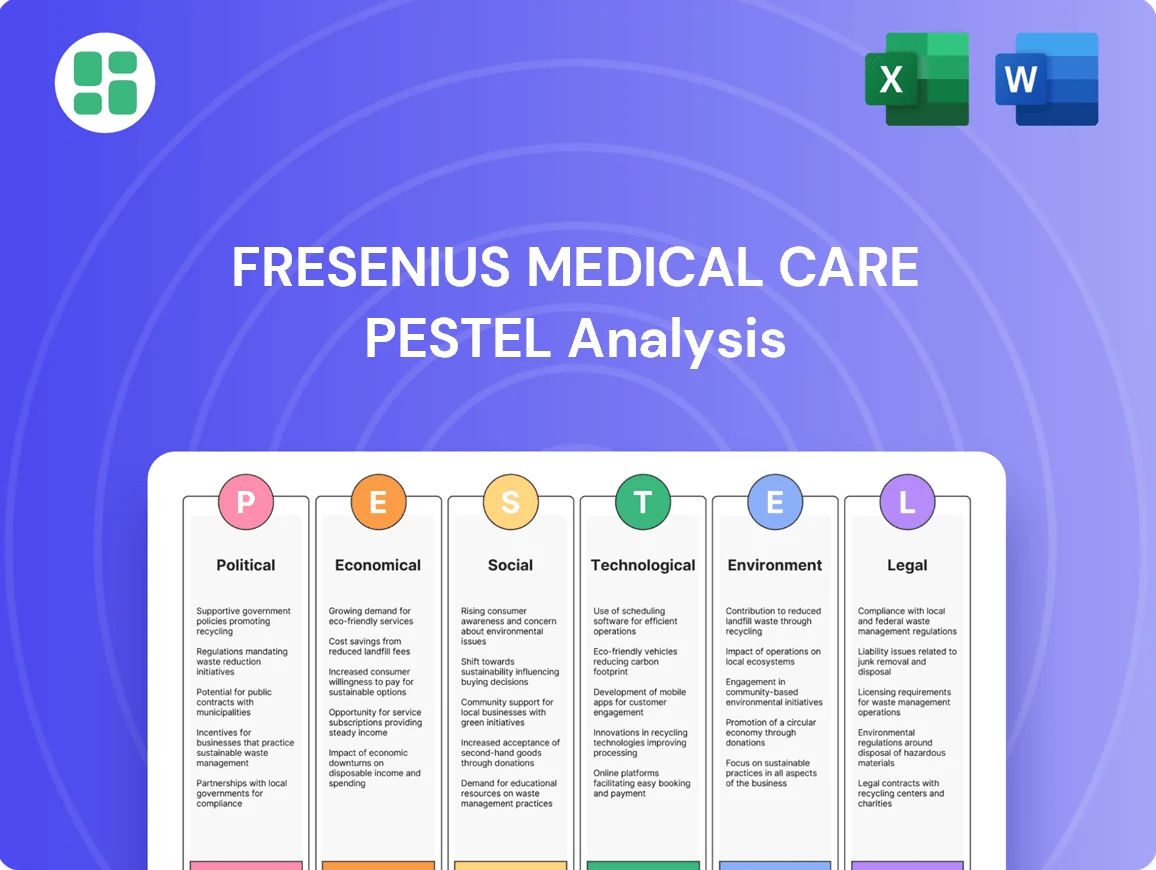
Fresenius PESTLE Analysis

Skip the Research. Get the Strategy.
Navigate the complex global landscape affecting Fresenius with our comprehensive PESTLE analysis. Understand the political, economic, social, technological, legal, and environmental forces shaping its operations and future growth. Gain a critical advantage by anticipating market shifts and identifying opportunities.
Unlock actionable intelligence to inform your strategy. Our PESTLE analysis provides deep insights into the external factors impacting Fresenius, empowering you to make informed decisions. Download the full report now and gain the clarity needed to stay ahead.
Political factors

Government Healthcare Spending and Reimbursement Policies
Government healthcare spending and reimbursement policies are huge drivers for companies like Fresenius. These policies directly shape how much revenue Fresenius can expect, especially in areas like dialysis and hospital services. For instance, in 2024, many countries are grappling with rising healthcare costs, which could lead to tighter budgets or shifts in how services are paid for.
Changes in reimbursement rates for dialysis treatments or hospital stays can have a significant impact on Fresenius's bottom line. If governments decide to pay less for these services, it directly affects profitability. Conversely, policy shifts favoring value-based care, where providers are reimbursed for patient outcomes rather than just services rendered, could create new opportunities or require strategic adjustments for Fresenius Medical Care and Fresenius Helios.
Political decisions about public health funding and insurance coverage are absolutely critical for Fresenius's financial future. For example, a government expanding insurance coverage could boost demand for Fresenius's services, while a reduction in coverage could have the opposite effect. Keeping a close eye on these political trends is essential for forecasting the company's performance.
Regulatory Changes and Compliance Burden
The healthcare industry, Fresenius's core market, is characterized by a dynamic and often stringent regulatory environment. Constant updates to medical device approvals, pharmaceutical regulations, and healthcare operational standards create a significant compliance burden. For instance, the EU Medical Device Regulation (MDR) has mandated extensive data collection and conformity assessments, impacting product development timelines and costs for companies like Fresenius.
Stricter regulations, such as those concerning drug pricing controls in various nations or the increasing focus on data privacy for patient information, necessitate substantial investments. Fresenius must allocate resources to research and development, robust quality control systems, and dedicated legal and compliance teams to ensure adherence. This ongoing need for adaptation and investment is a critical political factor.
Navigating the diverse and often conflicting regulatory landscapes across the numerous countries where Fresenius operates presents a complex, ongoing challenge. For example, differing reimbursement policies and approval processes for dialysis equipment or biosimil drugs in markets like the United States versus Germany require tailored strategies and significant resources to manage effectively.

Political Stability and Geopolitical Risks
Political stability is a cornerstone for Fresenius's global operations, directly influencing its capacity to maintain consistent business activities, safeguard its supply chains, and guarantee uninterrupted patient access to vital healthcare services. Regions experiencing political upheaval can pose significant challenges to Fresenius's established infrastructure and service delivery models.
Geopolitical tensions and escalating trade disputes present tangible risks to Fresenius. For instance, disruptions in the flow of critical medical supplies and equipment, such as those experienced during recent global supply chain reconfigurations, can directly impact Fresenius Kabi's production schedules and the service continuity offered by Fresenius Medical Care and Helios hospitals.
Given Fresenius's extensive international footprint, a proactive approach to assessing and mitigating risks stemming from evolving global political landscapes is imperative. This involves continuous monitoring of international relations and potential trade policy shifts that could affect market access or operational costs.

Public Health Initiatives and Prevention Strategies
Government-led public health initiatives focusing on disease prevention and early detection significantly shape the market for healthcare providers like Fresenius. For instance, increased government investment in preventative screenings, such as those for kidney disease or cardiovascular issues, directly boosts demand for Fresenius's diagnostic services and dialysis treatments. In 2024, many nations continued to prioritize chronic disease management, with public health budgets reflecting this trend. This focus can lead to higher patient volumes for Fresenius's core services.
While a healthier population might seem to reduce the need for certain treatments, it also opens doors for Fresenius in emerging areas. The push towards preventative care creates opportunities for the company to develop and market new technologies in diagnostics, home-based care solutions, and personalized health management. For example, the global market for preventative healthcare technologies was projected to reach over $100 billion by 2025, a segment Fresenius is well-positioned to tap into.
- Increased Screening Programs: Government campaigns promoting early detection of conditions like diabetes and hypertension, which are risk factors for kidney disease, can lead to a rise in diagnosed patients requiring Fresenius's dialysis services.
- Focus on Chronic Disease Management: Public health strategies emphasizing the management of chronic conditions directly benefit Fresenius by ensuring a steady patient base for its ongoing treatment offerings.
- Investment in Preventative Technologies: As governments allocate funds to public health, Fresenius can explore partnerships or internal development of diagnostic tools and digital health platforms that support preventative care.
- Evolving Healthcare Priorities: Fresenius must remain agile, aligning its service portfolio and strategic investments with shifting public health priorities to maintain its competitive edge and relevance in the evolving healthcare landscape.
Healthcare System Reforms and Privatization Trends
Governments globally continue to grapple with healthcare system efficiency and access, leading to ongoing reforms. In 2024 and looking into 2025, many nations are exploring or implementing models that involve greater private sector participation, including public-private partnerships (PPPs) and outright privatization of certain services. This trend presents significant opportunities for companies like Fresenius, which operates in both hospital management (Helios) and healthcare services (Vamed), by potentially expanding their service offerings and market reach.
However, these reforms are not uniform and can also pose challenges. A shift towards increased state control or nationalization of healthcare assets in certain regions could restrict private operators. For instance, while some European countries are fostering PPPs, others might reinforce public healthcare structures. Fresenius must remain agile, closely monitoring these evolving healthcare delivery models to capitalize on growth avenues and mitigate potential operational hurdles stemming from diverse governmental approaches.
- Healthcare spending as a percentage of GDP is projected to rise in many developed economies through 2025, driven by aging populations and technological advancements, potentially increasing demand for private healthcare services.
- The global healthcare PPP market is expected to see steady growth, with an estimated value of over $100 billion by 2026, offering a fertile ground for companies like Fresenius Vamed.
- Regulatory changes in key markets, such as Germany and the United States, continue to shape the landscape for hospital operators and service providers, impacting revenue streams and operational flexibility.
Policy & Geopolitics: Shaping Healthcare's Evolving Landscape
Government policies on healthcare spending and reimbursement are pivotal for Fresenius. In 2024, many nations are re-evaluating healthcare budgets, which could impact Fresenius's revenue streams, particularly for dialysis and hospital services. Shifts towards value-based care models are also influencing how companies like Fresenius Medical Care are compensated, requiring strategic adaptation.
Regulatory frameworks for medical devices and pharmaceuticals are constantly evolving, creating compliance challenges for Fresenius. For example, the EU's Medical Device Regulation (MDR) has increased data requirements and conformity assessments. This necessitates ongoing investment in R&D, quality control, and legal teams to ensure adherence across diverse global markets.
Political stability is crucial for Fresenius's global operations, affecting supply chains and patient access to essential services. Geopolitical tensions and trade disputes can disrupt the flow of medical supplies, impacting Fresenius Kabi's production and Fresenius Medical Care's service continuity. Continuous monitoring of international relations is therefore vital.
Public health initiatives, such as increased screening for chronic diseases like kidney disease, directly benefit Fresenius by expanding its patient base. Many governments in 2024 continued to prioritize chronic disease management, with healthcare spending reflecting this trend. This focus can boost demand for Fresenius's diagnostic and treatment services.
What is included in the product
 Detailed Word Document
This Fresenius PESTLE analysis examines the impact of political, economic, social, technological, environmental, and legal factors on the company's operations and strategy.

 Customizable Excel Spreadsheet
A concise, actionable summary of Fresenius's PESTLE factors, designed to quickly identify and address potential market disruptions and strategic opportunities during critical planning phases.
Economic factors

Global Economic Growth and Healthcare Spending
Global economic growth is a significant driver for healthcare spending. In 2024, the International Monetary Fund projects global growth at 3.2%, a rate that, while steady, can influence how much governments and individuals allocate to healthcare. Stronger growth typically encourages greater investment in healthcare infrastructure and services, which directly benefits companies like Fresenius across its dialysis, hospital, and medical technology divisions.
Conversely, economic slowdowns pose challenges. If major economies experience recessions, public healthcare budgets may shrink, and private insurance coverage could be reduced. This directly impacts Fresenius's revenue potential, as fewer patients might be able to afford or access the company's services and products during such periods.
Inflationary Pressures and Cost Management
Rising inflation, especially in energy, raw materials, and labor, is a significant challenge for Fresenius, impacting operational expenses across its global operations. For instance, in 2023, the company noted that higher procurement costs for raw materials and energy, alongside increased personnel expenses, were key drivers of cost pressures.
To counter these inflationary headwinds, Fresenius is actively employing efficiency programs, strategic sourcing for materials, and careful pricing adjustments to protect its profit margins. The company has stated its commitment to ongoing savings initiatives aimed at boosting productivity and mitigating the impact of escalating costs.

Currency Fluctuations and Exchange Rate Volatility
As a global healthcare giant, Fresenius faces significant exposure to currency fluctuations. For instance, in 2024, the Euro's performance against major currencies like the US Dollar and the British Pound directly impacts how Fresenius's international sales and costs are reported in its financial statements. This volatility can sway reported profits and alter the price competitiveness of its medical devices and services across different regions.
The exchange rate volatility experienced in late 2024 and early 2025, with the Euro seeing notable movements against the Yen and Swiss Franc, presents a clear challenge. Such shifts can create unpredictable swings in Fresenius's reported earnings, making it harder for investors to gauge the company's underlying operational performance and potentially affecting its market share in countries with strengthening local currencies.
To navigate these risks, Fresenius actively employs currency hedging strategies. These financial instruments, such as forward contracts and currency options, are crucial tools to lock in exchange rates for future transactions, thereby stabilizing its financial results and protecting its profitability from adverse currency movements throughout 2024 and into 2025.

Interest Rate Environment and Financing Costs
The prevailing interest rate environment significantly shapes Fresenius's financial strategy, directly affecting its cost of capital. As of mid-2024, major central banks like the Federal Reserve and the European Central Bank have maintained relatively elevated interest rates to combat inflation, a trend expected to persist into 2025, albeit with potential for gradual easing. This means Fresenius likely faces higher borrowing costs for new investments and refinancing existing debt. For instance, a 1% increase in interest rates on a substantial debt portfolio could add tens of millions to annual interest expenses.
Higher financing costs can dampen the attractiveness of capital-intensive projects, such as building new manufacturing facilities or acquiring smaller biotech firms, which are crucial for Fresenius's growth strategy. This environment necessitates a sharper focus on financial discipline and efficient capital allocation. The company's leverage ratio, a key indicator of its financial health, becomes even more critical; a higher debt-to-equity ratio in a rising rate environment amplifies financial risk.
- Increased Borrowing Costs: Fresenius's financing expenses are directly impacted by global interest rate fluctuations. For example, if Fresenius needs to raise €1 billion in debt, a 0.5% increase in interest rates would translate to an additional €5 million in annual interest payments.
- Impact on Investment Feasibility: Higher interest rates can reduce the net present value of future cash flows from expansion projects, potentially making them less viable. This requires more rigorous hurdle rates for new investments.
- Leverage Management: Maintaining a healthy leverage ratio is paramount. Fresenius's ability to service its debt obligations becomes more challenging as interest expenses rise, emphasizing the need for strong cash flow generation and prudent debt management.
- 2024-2025 Outlook: While interest rates are expected to remain elevated through much of 2024 and into 2025, a gradual decline is anticipated. However, the exact pace and magnitude of these changes will depend on inflation trends and central bank policy decisions, creating ongoing uncertainty for Fresenius's long-term financing plans.
Insurance and Reimbursement Model Evolution
The healthcare landscape is rapidly shifting, with insurance and reimbursement models evolving significantly. Fresenius, a major player in healthcare services and products, must navigate this transformation. A key trend is the move from fee-for-service to value-based care, where providers are compensated based on patient outcomes and quality rather than the sheer volume of services rendered. This necessitates a strategic adaptation of Fresenius's offerings to align with these new payment structures.
For Fresenius Medical Care and Fresenius Helios, this evolution means a heightened focus on demonstrating superior clinical results and cost-efficiency. The shift towards bundled payments, for example, consolidates payment for a course of treatment into a single fee. This encourages integrated care and penalizes inefficiencies. For instance, in the US, Medicare's shift towards bundled payments for kidney transplants aims to improve outcomes and reduce costs, directly impacting dialysis providers like Fresenius.
- Value-Based Care Growth: The global value-based healthcare market was projected to reach over $30 billion by 2023, indicating a strong trend away from traditional fee-for-service models.
- Bundled Payment Initiatives: Many countries are implementing or expanding bundled payment programs for chronic conditions, including renal disease, directly affecting reimbursement for dialysis services.
- Quality Metrics Emphasis: Reimbursement is increasingly tied to specific quality metrics, such as patient satisfaction scores, readmission rates, and clinical outcome improvements, requiring Fresenius to invest in data analytics and care coordination.
- Cost Containment Pressures: Payers are exerting greater pressure to control healthcare spending, pushing companies like Fresenius to innovate in service delivery and product development to offer more cost-effective solutions without compromising quality.
Healthcare Economics: Growth, Costs, & Value-Based Care
Economic growth directly influences healthcare expenditure, with the IMF projecting global growth at 3.2% for 2024, a steady rate that supports healthcare investment. However, economic downturns and rising inflation, particularly in energy and raw materials, present significant cost pressures for Fresenius, impacting its operational expenses and profit margins. The company is actively pursuing efficiency programs and strategic sourcing to mitigate these challenges.
Currency fluctuations and interest rate environments are critical economic factors for Fresenius. As of mid-2024, elevated interest rates persist, increasing borrowing costs for capital-intensive projects. The company employs currency hedging strategies to stabilize financial results amidst exchange rate volatility. For example, a 0.5% increase in interest rates on €1 billion in debt would add €5 million annually to interest payments, highlighting the need for prudent debt management and strong cash flow.
The shift towards value-based care and bundled payments significantly impacts reimbursement models in healthcare. Fresenius must adapt its services to demonstrate superior clinical outcomes and cost-efficiency, as payers increasingly tie compensation to quality metrics. The global value-based healthcare market's growth, projected to exceed $30 billion by 2023, underscores this trend, requiring Fresenius to invest in data analytics and care coordination.
Preview Before You Purchase
Fresenius PESTLE Analysis
The preview shown here is the exact document you’ll receive after purchase—fully formatted and ready to use. This comprehensive Fresenius PESTLE analysis delves into Political, Economic, Social, Technological, Legal, and Environmental factors impacting the company. It provides actionable insights for strategic decision-making.

Product Information
Product Information
Shipping & Returns
Shipping & Returns

Fresenius PESTLE Analysis
Fresenius PESTLE Analysis
Skip the Research. Get the Strategy.
Navigate the complex global landscape affecting Fresenius with our comprehensive PESTLE analysis. Understand the political, economic, social, technological, legal, and environmental forces shaping its operations and future growth. Gain a critical advantage by anticipating market shifts and identifying opportunities.
Unlock actionable intelligence to inform your strategy. Our PESTLE analysis provides deep insights into the external factors impacting Fresenius, empowering you to make informed decisions. Download the full report now and gain the clarity needed to stay ahead.
Political factors
Government Healthcare Spending and Reimbursement Policies
Government healthcare spending and reimbursement policies are huge drivers for companies like Fresenius. These policies directly shape how much revenue Fresenius can expect, especially in areas like dialysis and hospital services. For instance, in 2024, many countries are grappling with rising healthcare costs, which could lead to tighter budgets or shifts in how services are paid for.
Changes in reimbursement rates for dialysis treatments or hospital stays can have a significant impact on Fresenius's bottom line. If governments decide to pay less for these services, it directly affects profitability. Conversely, policy shifts favoring value-based care, where providers are reimbursed for patient outcomes rather than just services rendered, could create new opportunities or require strategic adjustments for Fresenius Medical Care and Fresenius Helios.
Political decisions about public health funding and insurance coverage are absolutely critical for Fresenius's financial future. For example, a government expanding insurance coverage could boost demand for Fresenius's services, while a reduction in coverage could have the opposite effect. Keeping a close eye on these political trends is essential for forecasting the company's performance.
Regulatory Changes and Compliance Burden
The healthcare industry, Fresenius's core market, is characterized by a dynamic and often stringent regulatory environment. Constant updates to medical device approvals, pharmaceutical regulations, and healthcare operational standards create a significant compliance burden. For instance, the EU Medical Device Regulation (MDR) has mandated extensive data collection and conformity assessments, impacting product development timelines and costs for companies like Fresenius.
Stricter regulations, such as those concerning drug pricing controls in various nations or the increasing focus on data privacy for patient information, necessitate substantial investments. Fresenius must allocate resources to research and development, robust quality control systems, and dedicated legal and compliance teams to ensure adherence. This ongoing need for adaptation and investment is a critical political factor.
Navigating the diverse and often conflicting regulatory landscapes across the numerous countries where Fresenius operates presents a complex, ongoing challenge. For example, differing reimbursement policies and approval processes for dialysis equipment or biosimil drugs in markets like the United States versus Germany require tailored strategies and significant resources to manage effectively.
Political Stability and Geopolitical Risks
Political stability is a cornerstone for Fresenius's global operations, directly influencing its capacity to maintain consistent business activities, safeguard its supply chains, and guarantee uninterrupted patient access to vital healthcare services. Regions experiencing political upheaval can pose significant challenges to Fresenius's established infrastructure and service delivery models.
Geopolitical tensions and escalating trade disputes present tangible risks to Fresenius. For instance, disruptions in the flow of critical medical supplies and equipment, such as those experienced during recent global supply chain reconfigurations, can directly impact Fresenius Kabi's production schedules and the service continuity offered by Fresenius Medical Care and Helios hospitals.
Given Fresenius's extensive international footprint, a proactive approach to assessing and mitigating risks stemming from evolving global political landscapes is imperative. This involves continuous monitoring of international relations and potential trade policy shifts that could affect market access or operational costs.
Public Health Initiatives and Prevention Strategies
Government-led public health initiatives focusing on disease prevention and early detection significantly shape the market for healthcare providers like Fresenius. For instance, increased government investment in preventative screenings, such as those for kidney disease or cardiovascular issues, directly boosts demand for Fresenius's diagnostic services and dialysis treatments. In 2024, many nations continued to prioritize chronic disease management, with public health budgets reflecting this trend. This focus can lead to higher patient volumes for Fresenius's core services.
While a healthier population might seem to reduce the need for certain treatments, it also opens doors for Fresenius in emerging areas. The push towards preventative care creates opportunities for the company to develop and market new technologies in diagnostics, home-based care solutions, and personalized health management. For example, the global market for preventative healthcare technologies was projected to reach over $100 billion by 2025, a segment Fresenius is well-positioned to tap into.
- Increased Screening Programs: Government campaigns promoting early detection of conditions like diabetes and hypertension, which are risk factors for kidney disease, can lead to a rise in diagnosed patients requiring Fresenius's dialysis services.
- Focus on Chronic Disease Management: Public health strategies emphasizing the management of chronic conditions directly benefit Fresenius by ensuring a steady patient base for its ongoing treatment offerings.
- Investment in Preventative Technologies: As governments allocate funds to public health, Fresenius can explore partnerships or internal development of diagnostic tools and digital health platforms that support preventative care.
- Evolving Healthcare Priorities: Fresenius must remain agile, aligning its service portfolio and strategic investments with shifting public health priorities to maintain its competitive edge and relevance in the evolving healthcare landscape.
Healthcare System Reforms and Privatization Trends
Governments globally continue to grapple with healthcare system efficiency and access, leading to ongoing reforms. In 2024 and looking into 2025, many nations are exploring or implementing models that involve greater private sector participation, including public-private partnerships (PPPs) and outright privatization of certain services. This trend presents significant opportunities for companies like Fresenius, which operates in both hospital management (Helios) and healthcare services (Vamed), by potentially expanding their service offerings and market reach.
However, these reforms are not uniform and can also pose challenges. A shift towards increased state control or nationalization of healthcare assets in certain regions could restrict private operators. For instance, while some European countries are fostering PPPs, others might reinforce public healthcare structures. Fresenius must remain agile, closely monitoring these evolving healthcare delivery models to capitalize on growth avenues and mitigate potential operational hurdles stemming from diverse governmental approaches.
- Healthcare spending as a percentage of GDP is projected to rise in many developed economies through 2025, driven by aging populations and technological advancements, potentially increasing demand for private healthcare services.
- The global healthcare PPP market is expected to see steady growth, with an estimated value of over $100 billion by 2026, offering a fertile ground for companies like Fresenius Vamed.
- Regulatory changes in key markets, such as Germany and the United States, continue to shape the landscape for hospital operators and service providers, impacting revenue streams and operational flexibility.
Policy & Geopolitics: Shaping Healthcare's Evolving Landscape
Government policies on healthcare spending and reimbursement are pivotal for Fresenius. In 2024, many nations are re-evaluating healthcare budgets, which could impact Fresenius's revenue streams, particularly for dialysis and hospital services. Shifts towards value-based care models are also influencing how companies like Fresenius Medical Care are compensated, requiring strategic adaptation.
Regulatory frameworks for medical devices and pharmaceuticals are constantly evolving, creating compliance challenges for Fresenius. For example, the EU's Medical Device Regulation (MDR) has increased data requirements and conformity assessments. This necessitates ongoing investment in R&D, quality control, and legal teams to ensure adherence across diverse global markets.
Political stability is crucial for Fresenius's global operations, affecting supply chains and patient access to essential services. Geopolitical tensions and trade disputes can disrupt the flow of medical supplies, impacting Fresenius Kabi's production and Fresenius Medical Care's service continuity. Continuous monitoring of international relations is therefore vital.
Public health initiatives, such as increased screening for chronic diseases like kidney disease, directly benefit Fresenius by expanding its patient base. Many governments in 2024 continued to prioritize chronic disease management, with healthcare spending reflecting this trend. This focus can boost demand for Fresenius's diagnostic and treatment services.
What is included in the product
Detailed Word Document
This Fresenius PESTLE analysis examines the impact of political, economic, social, technological, environmental, and legal factors on the company's operations and strategy.
Customizable Excel Spreadsheet
A concise, actionable summary of Fresenius's PESTLE factors, designed to quickly identify and address potential market disruptions and strategic opportunities during critical planning phases.
Economic factors
Global Economic Growth and Healthcare Spending
Global economic growth is a significant driver for healthcare spending. In 2024, the International Monetary Fund projects global growth at 3.2%, a rate that, while steady, can influence how much governments and individuals allocate to healthcare. Stronger growth typically encourages greater investment in healthcare infrastructure and services, which directly benefits companies like Fresenius across its dialysis, hospital, and medical technology divisions.
Conversely, economic slowdowns pose challenges. If major economies experience recessions, public healthcare budgets may shrink, and private insurance coverage could be reduced. This directly impacts Fresenius's revenue potential, as fewer patients might be able to afford or access the company's services and products during such periods.
Inflationary Pressures and Cost Management
Rising inflation, especially in energy, raw materials, and labor, is a significant challenge for Fresenius, impacting operational expenses across its global operations. For instance, in 2023, the company noted that higher procurement costs for raw materials and energy, alongside increased personnel expenses, were key drivers of cost pressures.
To counter these inflationary headwinds, Fresenius is actively employing efficiency programs, strategic sourcing for materials, and careful pricing adjustments to protect its profit margins. The company has stated its commitment to ongoing savings initiatives aimed at boosting productivity and mitigating the impact of escalating costs.
Currency Fluctuations and Exchange Rate Volatility
As a global healthcare giant, Fresenius faces significant exposure to currency fluctuations. For instance, in 2024, the Euro's performance against major currencies like the US Dollar and the British Pound directly impacts how Fresenius's international sales and costs are reported in its financial statements. This volatility can sway reported profits and alter the price competitiveness of its medical devices and services across different regions.
The exchange rate volatility experienced in late 2024 and early 2025, with the Euro seeing notable movements against the Yen and Swiss Franc, presents a clear challenge. Such shifts can create unpredictable swings in Fresenius's reported earnings, making it harder for investors to gauge the company's underlying operational performance and potentially affecting its market share in countries with strengthening local currencies.
To navigate these risks, Fresenius actively employs currency hedging strategies. These financial instruments, such as forward contracts and currency options, are crucial tools to lock in exchange rates for future transactions, thereby stabilizing its financial results and protecting its profitability from adverse currency movements throughout 2024 and into 2025.
Interest Rate Environment and Financing Costs
The prevailing interest rate environment significantly shapes Fresenius's financial strategy, directly affecting its cost of capital. As of mid-2024, major central banks like the Federal Reserve and the European Central Bank have maintained relatively elevated interest rates to combat inflation, a trend expected to persist into 2025, albeit with potential for gradual easing. This means Fresenius likely faces higher borrowing costs for new investments and refinancing existing debt. For instance, a 1% increase in interest rates on a substantial debt portfolio could add tens of millions to annual interest expenses.
Higher financing costs can dampen the attractiveness of capital-intensive projects, such as building new manufacturing facilities or acquiring smaller biotech firms, which are crucial for Fresenius's growth strategy. This environment necessitates a sharper focus on financial discipline and efficient capital allocation. The company's leverage ratio, a key indicator of its financial health, becomes even more critical; a higher debt-to-equity ratio in a rising rate environment amplifies financial risk.
- Increased Borrowing Costs: Fresenius's financing expenses are directly impacted by global interest rate fluctuations. For example, if Fresenius needs to raise €1 billion in debt, a 0.5% increase in interest rates would translate to an additional €5 million in annual interest payments.
- Impact on Investment Feasibility: Higher interest rates can reduce the net present value of future cash flows from expansion projects, potentially making them less viable. This requires more rigorous hurdle rates for new investments.
- Leverage Management: Maintaining a healthy leverage ratio is paramount. Fresenius's ability to service its debt obligations becomes more challenging as interest expenses rise, emphasizing the need for strong cash flow generation and prudent debt management.
- 2024-2025 Outlook: While interest rates are expected to remain elevated through much of 2024 and into 2025, a gradual decline is anticipated. However, the exact pace and magnitude of these changes will depend on inflation trends and central bank policy decisions, creating ongoing uncertainty for Fresenius's long-term financing plans.
Insurance and Reimbursement Model Evolution
The healthcare landscape is rapidly shifting, with insurance and reimbursement models evolving significantly. Fresenius, a major player in healthcare services and products, must navigate this transformation. A key trend is the move from fee-for-service to value-based care, where providers are compensated based on patient outcomes and quality rather than the sheer volume of services rendered. This necessitates a strategic adaptation of Fresenius's offerings to align with these new payment structures.
For Fresenius Medical Care and Fresenius Helios, this evolution means a heightened focus on demonstrating superior clinical results and cost-efficiency. The shift towards bundled payments, for example, consolidates payment for a course of treatment into a single fee. This encourages integrated care and penalizes inefficiencies. For instance, in the US, Medicare's shift towards bundled payments for kidney transplants aims to improve outcomes and reduce costs, directly impacting dialysis providers like Fresenius.
- Value-Based Care Growth: The global value-based healthcare market was projected to reach over $30 billion by 2023, indicating a strong trend away from traditional fee-for-service models.
- Bundled Payment Initiatives: Many countries are implementing or expanding bundled payment programs for chronic conditions, including renal disease, directly affecting reimbursement for dialysis services.
- Quality Metrics Emphasis: Reimbursement is increasingly tied to specific quality metrics, such as patient satisfaction scores, readmission rates, and clinical outcome improvements, requiring Fresenius to invest in data analytics and care coordination.
- Cost Containment Pressures: Payers are exerting greater pressure to control healthcare spending, pushing companies like Fresenius to innovate in service delivery and product development to offer more cost-effective solutions without compromising quality.
Healthcare Economics: Growth, Costs, & Value-Based Care
Economic growth directly influences healthcare expenditure, with the IMF projecting global growth at 3.2% for 2024, a steady rate that supports healthcare investment. However, economic downturns and rising inflation, particularly in energy and raw materials, present significant cost pressures for Fresenius, impacting its operational expenses and profit margins. The company is actively pursuing efficiency programs and strategic sourcing to mitigate these challenges.
Currency fluctuations and interest rate environments are critical economic factors for Fresenius. As of mid-2024, elevated interest rates persist, increasing borrowing costs for capital-intensive projects. The company employs currency hedging strategies to stabilize financial results amidst exchange rate volatility. For example, a 0.5% increase in interest rates on €1 billion in debt would add €5 million annually to interest payments, highlighting the need for prudent debt management and strong cash flow.
The shift towards value-based care and bundled payments significantly impacts reimbursement models in healthcare. Fresenius must adapt its services to demonstrate superior clinical outcomes and cost-efficiency, as payers increasingly tie compensation to quality metrics. The global value-based healthcare market's growth, projected to exceed $30 billion by 2023, underscores this trend, requiring Fresenius to invest in data analytics and care coordination.
Preview Before You Purchase
Fresenius PESTLE Analysis
The preview shown here is the exact document you’ll receive after purchase—fully formatted and ready to use. This comprehensive Fresenius PESTLE analysis delves into Political, Economic, Social, Technological, Legal, and Environmental factors impacting the company. It provides actionable insights for strategic decision-making.
Product Information
Product Information
Shipping & Returns
Shipping & Returns
Description
Skip the Research. Get the Strategy.
Navigate the complex global landscape affecting Fresenius with our comprehensive PESTLE analysis. Understand the political, economic, social, technological, legal, and environmental forces shaping its operations and future growth. Gain a critical advantage by anticipating market shifts and identifying opportunities.
Unlock actionable intelligence to inform your strategy. Our PESTLE analysis provides deep insights into the external factors impacting Fresenius, empowering you to make informed decisions. Download the full report now and gain the clarity needed to stay ahead.
Political factors
Government Healthcare Spending and Reimbursement Policies
Government healthcare spending and reimbursement policies are huge drivers for companies like Fresenius. These policies directly shape how much revenue Fresenius can expect, especially in areas like dialysis and hospital services. For instance, in 2024, many countries are grappling with rising healthcare costs, which could lead to tighter budgets or shifts in how services are paid for.
Changes in reimbursement rates for dialysis treatments or hospital stays can have a significant impact on Fresenius's bottom line. If governments decide to pay less for these services, it directly affects profitability. Conversely, policy shifts favoring value-based care, where providers are reimbursed for patient outcomes rather than just services rendered, could create new opportunities or require strategic adjustments for Fresenius Medical Care and Fresenius Helios.
Political decisions about public health funding and insurance coverage are absolutely critical for Fresenius's financial future. For example, a government expanding insurance coverage could boost demand for Fresenius's services, while a reduction in coverage could have the opposite effect. Keeping a close eye on these political trends is essential for forecasting the company's performance.
Regulatory Changes and Compliance Burden
The healthcare industry, Fresenius's core market, is characterized by a dynamic and often stringent regulatory environment. Constant updates to medical device approvals, pharmaceutical regulations, and healthcare operational standards create a significant compliance burden. For instance, the EU Medical Device Regulation (MDR) has mandated extensive data collection and conformity assessments, impacting product development timelines and costs for companies like Fresenius.
Stricter regulations, such as those concerning drug pricing controls in various nations or the increasing focus on data privacy for patient information, necessitate substantial investments. Fresenius must allocate resources to research and development, robust quality control systems, and dedicated legal and compliance teams to ensure adherence. This ongoing need for adaptation and investment is a critical political factor.
Navigating the diverse and often conflicting regulatory landscapes across the numerous countries where Fresenius operates presents a complex, ongoing challenge. For example, differing reimbursement policies and approval processes for dialysis equipment or biosimil drugs in markets like the United States versus Germany require tailored strategies and significant resources to manage effectively.
Political Stability and Geopolitical Risks
Political stability is a cornerstone for Fresenius's global operations, directly influencing its capacity to maintain consistent business activities, safeguard its supply chains, and guarantee uninterrupted patient access to vital healthcare services. Regions experiencing political upheaval can pose significant challenges to Fresenius's established infrastructure and service delivery models.
Geopolitical tensions and escalating trade disputes present tangible risks to Fresenius. For instance, disruptions in the flow of critical medical supplies and equipment, such as those experienced during recent global supply chain reconfigurations, can directly impact Fresenius Kabi's production schedules and the service continuity offered by Fresenius Medical Care and Helios hospitals.
Given Fresenius's extensive international footprint, a proactive approach to assessing and mitigating risks stemming from evolving global political landscapes is imperative. This involves continuous monitoring of international relations and potential trade policy shifts that could affect market access or operational costs.
Public Health Initiatives and Prevention Strategies
Government-led public health initiatives focusing on disease prevention and early detection significantly shape the market for healthcare providers like Fresenius. For instance, increased government investment in preventative screenings, such as those for kidney disease or cardiovascular issues, directly boosts demand for Fresenius's diagnostic services and dialysis treatments. In 2024, many nations continued to prioritize chronic disease management, with public health budgets reflecting this trend. This focus can lead to higher patient volumes for Fresenius's core services.
While a healthier population might seem to reduce the need for certain treatments, it also opens doors for Fresenius in emerging areas. The push towards preventative care creates opportunities for the company to develop and market new technologies in diagnostics, home-based care solutions, and personalized health management. For example, the global market for preventative healthcare technologies was projected to reach over $100 billion by 2025, a segment Fresenius is well-positioned to tap into.
- Increased Screening Programs: Government campaigns promoting early detection of conditions like diabetes and hypertension, which are risk factors for kidney disease, can lead to a rise in diagnosed patients requiring Fresenius's dialysis services.
- Focus on Chronic Disease Management: Public health strategies emphasizing the management of chronic conditions directly benefit Fresenius by ensuring a steady patient base for its ongoing treatment offerings.
- Investment in Preventative Technologies: As governments allocate funds to public health, Fresenius can explore partnerships or internal development of diagnostic tools and digital health platforms that support preventative care.
- Evolving Healthcare Priorities: Fresenius must remain agile, aligning its service portfolio and strategic investments with shifting public health priorities to maintain its competitive edge and relevance in the evolving healthcare landscape.
Healthcare System Reforms and Privatization Trends
Governments globally continue to grapple with healthcare system efficiency and access, leading to ongoing reforms. In 2024 and looking into 2025, many nations are exploring or implementing models that involve greater private sector participation, including public-private partnerships (PPPs) and outright privatization of certain services. This trend presents significant opportunities for companies like Fresenius, which operates in both hospital management (Helios) and healthcare services (Vamed), by potentially expanding their service offerings and market reach.
However, these reforms are not uniform and can also pose challenges. A shift towards increased state control or nationalization of healthcare assets in certain regions could restrict private operators. For instance, while some European countries are fostering PPPs, others might reinforce public healthcare structures. Fresenius must remain agile, closely monitoring these evolving healthcare delivery models to capitalize on growth avenues and mitigate potential operational hurdles stemming from diverse governmental approaches.
- Healthcare spending as a percentage of GDP is projected to rise in many developed economies through 2025, driven by aging populations and technological advancements, potentially increasing demand for private healthcare services.
- The global healthcare PPP market is expected to see steady growth, with an estimated value of over $100 billion by 2026, offering a fertile ground for companies like Fresenius Vamed.
- Regulatory changes in key markets, such as Germany and the United States, continue to shape the landscape for hospital operators and service providers, impacting revenue streams and operational flexibility.
Policy & Geopolitics: Shaping Healthcare's Evolving Landscape
Government policies on healthcare spending and reimbursement are pivotal for Fresenius. In 2024, many nations are re-evaluating healthcare budgets, which could impact Fresenius's revenue streams, particularly for dialysis and hospital services. Shifts towards value-based care models are also influencing how companies like Fresenius Medical Care are compensated, requiring strategic adaptation.
Regulatory frameworks for medical devices and pharmaceuticals are constantly evolving, creating compliance challenges for Fresenius. For example, the EU's Medical Device Regulation (MDR) has increased data requirements and conformity assessments. This necessitates ongoing investment in R&D, quality control, and legal teams to ensure adherence across diverse global markets.
Political stability is crucial for Fresenius's global operations, affecting supply chains and patient access to essential services. Geopolitical tensions and trade disputes can disrupt the flow of medical supplies, impacting Fresenius Kabi's production and Fresenius Medical Care's service continuity. Continuous monitoring of international relations is therefore vital.
Public health initiatives, such as increased screening for chronic diseases like kidney disease, directly benefit Fresenius by expanding its patient base. Many governments in 2024 continued to prioritize chronic disease management, with healthcare spending reflecting this trend. This focus can boost demand for Fresenius's diagnostic and treatment services.
What is included in the product
Detailed Word Document
This Fresenius PESTLE analysis examines the impact of political, economic, social, technological, environmental, and legal factors on the company's operations and strategy.
Customizable Excel Spreadsheet
A concise, actionable summary of Fresenius's PESTLE factors, designed to quickly identify and address potential market disruptions and strategic opportunities during critical planning phases.
Economic factors
Global Economic Growth and Healthcare Spending
Global economic growth is a significant driver for healthcare spending. In 2024, the International Monetary Fund projects global growth at 3.2%, a rate that, while steady, can influence how much governments and individuals allocate to healthcare. Stronger growth typically encourages greater investment in healthcare infrastructure and services, which directly benefits companies like Fresenius across its dialysis, hospital, and medical technology divisions.
Conversely, economic slowdowns pose challenges. If major economies experience recessions, public healthcare budgets may shrink, and private insurance coverage could be reduced. This directly impacts Fresenius's revenue potential, as fewer patients might be able to afford or access the company's services and products during such periods.
Inflationary Pressures and Cost Management
Rising inflation, especially in energy, raw materials, and labor, is a significant challenge for Fresenius, impacting operational expenses across its global operations. For instance, in 2023, the company noted that higher procurement costs for raw materials and energy, alongside increased personnel expenses, were key drivers of cost pressures.
To counter these inflationary headwinds, Fresenius is actively employing efficiency programs, strategic sourcing for materials, and careful pricing adjustments to protect its profit margins. The company has stated its commitment to ongoing savings initiatives aimed at boosting productivity and mitigating the impact of escalating costs.
Currency Fluctuations and Exchange Rate Volatility
As a global healthcare giant, Fresenius faces significant exposure to currency fluctuations. For instance, in 2024, the Euro's performance against major currencies like the US Dollar and the British Pound directly impacts how Fresenius's international sales and costs are reported in its financial statements. This volatility can sway reported profits and alter the price competitiveness of its medical devices and services across different regions.
The exchange rate volatility experienced in late 2024 and early 2025, with the Euro seeing notable movements against the Yen and Swiss Franc, presents a clear challenge. Such shifts can create unpredictable swings in Fresenius's reported earnings, making it harder for investors to gauge the company's underlying operational performance and potentially affecting its market share in countries with strengthening local currencies.
To navigate these risks, Fresenius actively employs currency hedging strategies. These financial instruments, such as forward contracts and currency options, are crucial tools to lock in exchange rates for future transactions, thereby stabilizing its financial results and protecting its profitability from adverse currency movements throughout 2024 and into 2025.
Interest Rate Environment and Financing Costs
The prevailing interest rate environment significantly shapes Fresenius's financial strategy, directly affecting its cost of capital. As of mid-2024, major central banks like the Federal Reserve and the European Central Bank have maintained relatively elevated interest rates to combat inflation, a trend expected to persist into 2025, albeit with potential for gradual easing. This means Fresenius likely faces higher borrowing costs for new investments and refinancing existing debt. For instance, a 1% increase in interest rates on a substantial debt portfolio could add tens of millions to annual interest expenses.
Higher financing costs can dampen the attractiveness of capital-intensive projects, such as building new manufacturing facilities or acquiring smaller biotech firms, which are crucial for Fresenius's growth strategy. This environment necessitates a sharper focus on financial discipline and efficient capital allocation. The company's leverage ratio, a key indicator of its financial health, becomes even more critical; a higher debt-to-equity ratio in a rising rate environment amplifies financial risk.
- Increased Borrowing Costs: Fresenius's financing expenses are directly impacted by global interest rate fluctuations. For example, if Fresenius needs to raise €1 billion in debt, a 0.5% increase in interest rates would translate to an additional €5 million in annual interest payments.
- Impact on Investment Feasibility: Higher interest rates can reduce the net present value of future cash flows from expansion projects, potentially making them less viable. This requires more rigorous hurdle rates for new investments.
- Leverage Management: Maintaining a healthy leverage ratio is paramount. Fresenius's ability to service its debt obligations becomes more challenging as interest expenses rise, emphasizing the need for strong cash flow generation and prudent debt management.
- 2024-2025 Outlook: While interest rates are expected to remain elevated through much of 2024 and into 2025, a gradual decline is anticipated. However, the exact pace and magnitude of these changes will depend on inflation trends and central bank policy decisions, creating ongoing uncertainty for Fresenius's long-term financing plans.
Insurance and Reimbursement Model Evolution
The healthcare landscape is rapidly shifting, with insurance and reimbursement models evolving significantly. Fresenius, a major player in healthcare services and products, must navigate this transformation. A key trend is the move from fee-for-service to value-based care, where providers are compensated based on patient outcomes and quality rather than the sheer volume of services rendered. This necessitates a strategic adaptation of Fresenius's offerings to align with these new payment structures.
For Fresenius Medical Care and Fresenius Helios, this evolution means a heightened focus on demonstrating superior clinical results and cost-efficiency. The shift towards bundled payments, for example, consolidates payment for a course of treatment into a single fee. This encourages integrated care and penalizes inefficiencies. For instance, in the US, Medicare's shift towards bundled payments for kidney transplants aims to improve outcomes and reduce costs, directly impacting dialysis providers like Fresenius.
- Value-Based Care Growth: The global value-based healthcare market was projected to reach over $30 billion by 2023, indicating a strong trend away from traditional fee-for-service models.
- Bundled Payment Initiatives: Many countries are implementing or expanding bundled payment programs for chronic conditions, including renal disease, directly affecting reimbursement for dialysis services.
- Quality Metrics Emphasis: Reimbursement is increasingly tied to specific quality metrics, such as patient satisfaction scores, readmission rates, and clinical outcome improvements, requiring Fresenius to invest in data analytics and care coordination.
- Cost Containment Pressures: Payers are exerting greater pressure to control healthcare spending, pushing companies like Fresenius to innovate in service delivery and product development to offer more cost-effective solutions without compromising quality.
Healthcare Economics: Growth, Costs, & Value-Based Care
Economic growth directly influences healthcare expenditure, with the IMF projecting global growth at 3.2% for 2024, a steady rate that supports healthcare investment. However, economic downturns and rising inflation, particularly in energy and raw materials, present significant cost pressures for Fresenius, impacting its operational expenses and profit margins. The company is actively pursuing efficiency programs and strategic sourcing to mitigate these challenges.
Currency fluctuations and interest rate environments are critical economic factors for Fresenius. As of mid-2024, elevated interest rates persist, increasing borrowing costs for capital-intensive projects. The company employs currency hedging strategies to stabilize financial results amidst exchange rate volatility. For example, a 0.5% increase in interest rates on €1 billion in debt would add €5 million annually to interest payments, highlighting the need for prudent debt management and strong cash flow.
The shift towards value-based care and bundled payments significantly impacts reimbursement models in healthcare. Fresenius must adapt its services to demonstrate superior clinical outcomes and cost-efficiency, as payers increasingly tie compensation to quality metrics. The global value-based healthcare market's growth, projected to exceed $30 billion by 2023, underscores this trend, requiring Fresenius to invest in data analytics and care coordination.
Preview Before You Purchase
Fresenius PESTLE Analysis
The preview shown here is the exact document you’ll receive after purchase—fully formatted and ready to use. This comprehensive Fresenius PESTLE analysis delves into Political, Economic, Social, Technological, Legal, and Environmental factors impacting the company. It provides actionable insights for strategic decision-making.