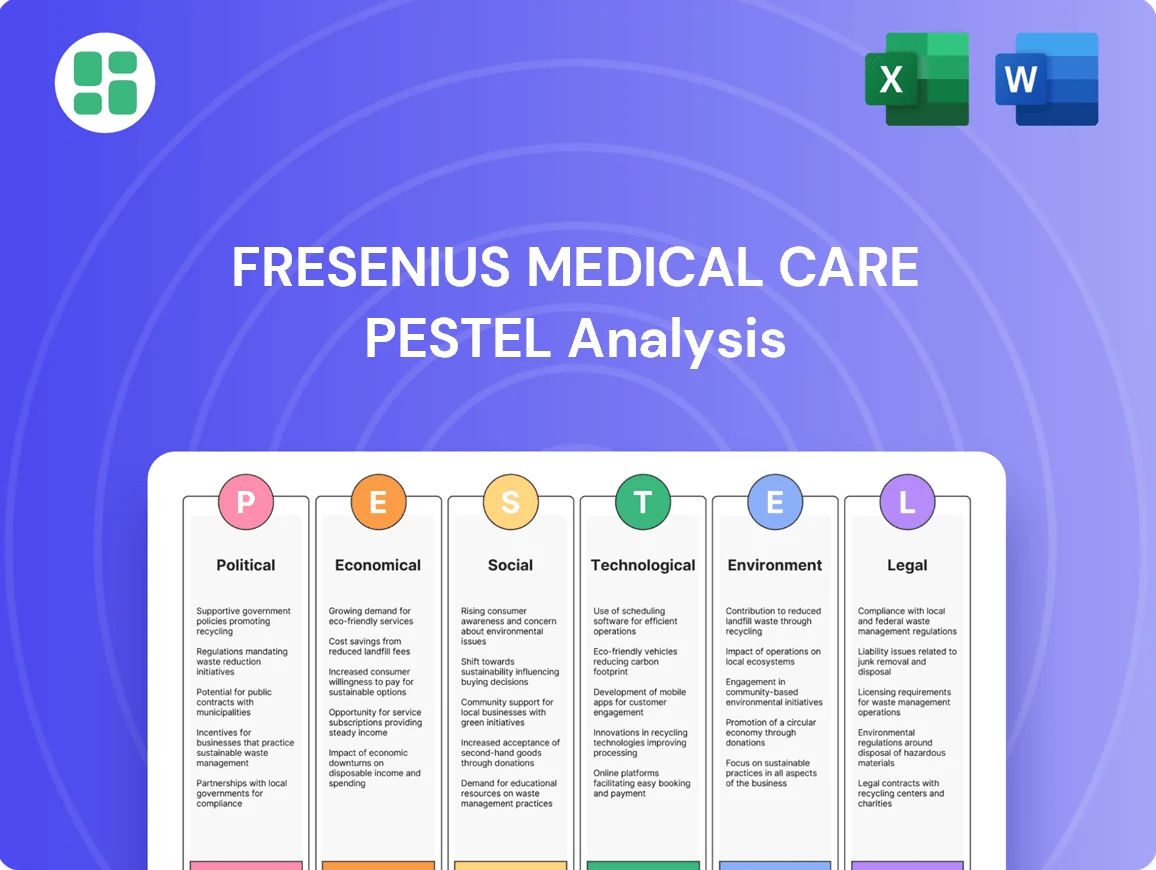
Fast Retailing PESTLE Analysis

Your Shortcut to Market Insight Starts Here
Uncover the political, economic, social, technological, legal, and environmental forces shaping Fast Retailing's global strategy. Understand how evolving consumer behaviors and international regulations present both challenges and opportunities for the UNIQLO parent company. Download the full PESTLE analysis now to gain a competitive edge and make informed strategic decisions.
Political factors

Geopolitical Tensions and Trade Policies
Fast Retailing's global footprint exposes it to significant geopolitical risks. For instance, ongoing trade friction between the United States and China, major markets for Fast Retailing, could lead to increased tariffs on apparel imports, directly impacting sourcing costs and consumer prices for brands like Uniqlo. In 2024, the apparel industry continued to navigate complex trade landscapes, with many companies reporting higher logistics expenses due to these tensions.
Shifting trade policies and geopolitical instability can disrupt Fast Retailing's intricate global supply chains. A sudden imposition of import restrictions or sanctions in a key sourcing country could halt production or necessitate costly rerouting of materials, affecting product availability and profitability. The company's reliance on diverse manufacturing bases means it must remain agile to adapt to these evolving international relations.
Labor Regulations and Compliance
Fast Retailing operates across many nations, each with its own unique labor laws. This includes varying minimum wage requirements, rules on working hours and conditions, and the right to form unions. For instance, in 2024, countries like Japan saw adjustments to minimum wages, with some prefectures increasing them, impacting Fast Retailing's operational costs.
Compliance with these diverse regulations is vital. Failure to do so can lead to significant fines, damage to the company's public image, and even strikes or other labor actions that disrupt operations. For example, in 2023, several global apparel companies faced scrutiny and potential penalties for labor law violations in their manufacturing countries.
Maintaining ethical labor standards throughout its vast supply chain, particularly in manufacturing centers, presents an ongoing political and operational hurdle. This involves ensuring fair wages, safe working environments, and preventing child labor, which is a key focus for international organizations and consumers alike.

Government Support and Retail Policies
Government support for retail, including potential subsidies for sustainable practices or tax incentives for job creation, can significantly boost Fast Retailing's operational efficiency and expansion. For instance, in 2024, several Asian nations announced targeted programs to revitalize domestic retail sectors, potentially offering benefits for companies like Fast Retailing that invest in local employment and eco-friendly initiatives. Conversely, stringent zoning laws or complex permitting processes in certain markets can create hurdles for new store openings or operational adjustments.

Consumer Protection and Product Safety Laws
Consumer protection and product safety laws are critical for Fast Retailing. Regulatory bodies globally mandate strict standards for apparel, covering everything from textile content and chemical usage to flammability and accurate labeling. For instance, the EU's REACH (Registration, Evaluation, Authorisation and Restriction of Chemicals) regulation impacts the chemicals used in textiles sold within its member states, requiring rigorous compliance from retailers like Fast Retailing.
Failure to adhere to these diverse regulations across its operating markets can result in significant consequences. These include costly product recalls, substantial fines, and, perhaps most damagingly, a severe erosion of consumer trust. In 2023, several major apparel brands faced scrutiny and financial penalties for non-compliance with chemical restrictions in their products, highlighting the financial and reputational risks involved.
- Global Regulatory Landscape: Fast Retailing must navigate a complex web of consumer protection laws, including those related to textile composition, chemical safety (e.g., REACH in the EU), and product labeling in each country of operation.
- Impact of Non-Compliance: Violations can lead to expensive product recalls, government-imposed fines, and substantial damage to brand reputation, directly affecting sales and market share.
- Consumer Trust as a Key Asset: Maintaining high product safety standards is paramount for preserving consumer confidence, which is a vital intangible asset for any apparel retailer.
Political Stability in Key Markets
The political stability of Fast Retailing's core markets, including Japan, China, and the United States, significantly impacts consumer sentiment and overall economic health. For instance, Japan, Fast Retailing's home market, has maintained a relatively stable political environment, fostering consistent consumer spending. Conversely, geopolitical tensions or unexpected policy changes in regions like China could introduce volatility.
Political uncertainty can trigger economic slowdowns, leading to decreased consumer spending on discretionary items like apparel, which directly affects Fast Retailing's sales performance. The company must actively monitor and mitigate risks stemming from political shifts to safeguard its operations and pursue expansion opportunities.
- Japan's political stability provides a bedrock for consistent domestic demand for Fast Retailing brands.
- China's evolving political landscape presents both opportunities for growth and potential risks due to policy shifts.
- US political dynamics can influence trade relations and consumer confidence, impacting Fast Retailing's significant presence there.
- Fast Retailing's 2023 fiscal year saw strong performance, with revenue reaching ¥2.77 trillion, underscoring the importance of stable operating environments in its key markets.
Policy & Politics: Influencing Retail's Bottom Line
Government policies on trade and tariffs directly influence Fast Retailing's sourcing costs and pricing strategies, particularly impacting its operations in major markets like the US and China. In 2024, ongoing trade discussions continued to shape the global apparel industry, with companies monitoring potential shifts in import duties.
Labor laws and regulations, including minimum wage adjustments and working condition mandates, vary significantly across Fast Retailing's operating countries, affecting its operational expenses. For example, in 2024, several Asian nations implemented new labor standards that required adaptation from global retailers.
Political stability in key markets like Japan, China, and the US is crucial for consumer confidence and spending, directly impacting Fast Retailing's sales. Japan's stable political climate, for instance, supports consistent domestic demand, while shifts in other regions can introduce volatility.
Government incentives for sustainable practices or job creation can offer operational benefits, while stringent zoning laws can present challenges for expansion. In 2024, several governments introduced programs to support domestic retail, potentially benefiting companies investing locally.
What is included in the product
 Detailed Word Document
This PESTLE analysis meticulously examines the Political, Economic, Social, Technological, Environmental, and Legal forces impacting Fast Retailing's global operations.
It provides actionable insights into how these macro-environmental shifts can be leveraged for strategic advantage and risk mitigation.

 Customizable Excel Spreadsheet
Provides a concise PESTLE analysis of Fast Retailing, allowing for quick identification of external factors impacting strategy, thus relieving the pain point of information overload during strategic planning.
Economic factors

Global Inflation and Cost Pressures
Elevated global inflation, with headline rates in major economies like the US and Eurozone hovering around 3-4% in early 2024, directly impacts Fast Retailing's cost base. This translates to higher expenses for raw materials such as cotton and synthetic fibers, as well as increased manufacturing and shipping costs, potentially squeezing profit margins.
The persistent cost pressures necessitate strategic pricing adjustments by Fast Retailing; for instance, Uniqlo's ability to maintain its value proposition is tested when input costs rise significantly. A careful balance is required to pass on some costs without alienating price-sensitive consumers, especially as inflation can reduce disposable income, impacting demand for discretionary items like apparel.
Currency Exchange Rate Fluctuations
Currency exchange rate fluctuations significantly impact Fast Retailing, a global player headquartered in Japan. As of early 2024, the Japanese Yen's performance against major currencies like the US Dollar, Euro, and Chinese Yuan directly affects the company's financial health. For instance, a weaker Yen can increase the cost of imported goods for its domestic market, potentially squeezing profit margins on items sourced internationally.
Conversely, a stronger Yen can diminish the reported value of Fast Retailing's international sales when those earnings are repatriated. In 2023, the Yen experienced considerable volatility, at times trading around 150 to the US Dollar, which presented ongoing challenges for companies like Fast Retailing with substantial overseas operations and sourcing. Effectively managing these currency risks through robust hedging strategies is therefore paramount for maintaining financial stability and ensuring consistent profitability across its global brands, including UNIQLO.

Consumer Spending and Disposable Income
Consumer spending is a major driver for Fast Retailing. In 2024, global economic conditions are mixed, with some regions experiencing growth while others face inflationary pressures that can erode disposable income. For instance, while the US economy showed resilience in early 2024, persistent inflation has impacted household budgets, potentially leading consumers to prioritize essential goods over fashion items.
Fast Retailing's strategy of offering affordable, quality clothing, particularly through its UNIQLO brand, provides a degree of resilience during economic slowdowns. However, significant drops in disposable income across major markets like Japan or China, where the company has a strong presence, would still negatively affect sales. For example, if consumer confidence dips significantly in Japan due to economic uncertainty, discretionary spending on apparel could contract, impacting Fast Retailing's top line.

Raw Material and Energy Price Volatility
Raw material and energy price volatility presents a significant economic challenge for Fast Retailing. Fluctuations in the cost of cotton, polyester, and other essential fibers, coupled with rising energy prices impacting manufacturing and logistics, directly affect production expenses. For instance, cotton prices experienced considerable swings throughout 2023 and into early 2024, driven by weather patterns and global trade tensions, impacting the cost base for apparel production.
This unpredictability in commodity prices necessitates proactive risk management. Fast Retailing must implement sophisticated procurement strategies, potentially including forward contracts or hedging, to stabilize input costs. Diversifying the sourcing of raw materials across different geographical regions can also build resilience against localized supply disruptions and price shocks.
- Cotton Price Trends: Spot cotton prices saw significant volatility, with futures contracts for delivery in mid-2024 trading in a range influenced by crop yields and demand from major textile-producing nations.
- Energy Cost Impact: Global energy prices, particularly for oil and natural gas, remained a key factor in transportation and manufacturing costs throughout 2023 and early 2024, impacting the final price of goods.
- Procurement Strategy: Companies like Fast Retailing are increasingly exploring long-term supplier agreements and exploring alternative, more sustainable materials to mitigate raw material cost fluctuations.
- Geopolitical Influence: Trade policies and geopolitical events in key cotton-producing regions or energy-exporting countries can rapidly alter the economic landscape for raw material sourcing.
Labor Costs and Supply Chain Economics
Rising labor costs in key Asian manufacturing countries like Vietnam and Bangladesh are a significant economic factor for Fast Retailing. For instance, Vietnam's minimum wage saw an average increase of around 6% in 2024, impacting production expenses for apparel giants. This necessitates careful cost management, potentially through strategic sourcing shifts or efficiency gains.
Fast Retailing must navigate the economic pressure of increasing wages in its traditional manufacturing bases. This could involve absorbing some of the increased costs, which impacts profit margins, or passing them on to consumers, risking reduced demand. Finding a balance is key to maintaining competitiveness in the global apparel market.
To counter these rising labor expenses, optimizing supply chain efficiency and investing in automation are critical. By streamlining logistics and implementing advanced manufacturing technologies, Fast Retailing can mitigate the impact of higher wages. This approach helps maintain competitive pricing and ensures consistent product quality for its brands like UNIQLO.
- Vietnam's average minimum wage increase in 2024: ~6%
- Impact on apparel production costs in Asia
- Strategic importance of supply chain optimization
- Role of automation in labor cost management
Retail Navigates Global Economic Headwinds and Rising Costs
Global economic slowdown fears and persistent inflation continue to shape consumer spending patterns. While some economies showed resilience in early 2024, the impact of higher interest rates and elevated prices on disposable income remains a key concern for apparel retailers like Fast Retailing. This economic backdrop directly influences demand for discretionary items, making value proposition crucial.
Currency fluctuations, particularly the Japanese Yen's performance against major global currencies, significantly impact Fast Retailing's international earnings and sourcing costs. As of mid-2024, the Yen has shown some recovery, but its volatility throughout 2023 and early 2024, trading as low as 150 to the US Dollar, highlights the ongoing need for robust currency risk management strategies.
Rising raw material and energy costs remain a persistent challenge. Cotton prices, for example, have experienced significant volatility due to weather and trade dynamics, impacting production expenses. Similarly, energy prices directly affect manufacturing and logistics, necessitating proactive procurement and efficiency measures.
Labor cost increases in key Asian manufacturing hubs, such as Vietnam's average 6% minimum wage hike in 2024, add further pressure. Fast Retailing must balance absorbing these costs, passing them on, or investing in automation and supply chain optimization to maintain competitiveness.
| Economic Factor | Data Point (Early-Mid 2024) | Impact on Fast Retailing |
|---|---|---|
| Global Inflation (Major Economies) | Approx. 3-4% | Increased cost of goods, potential pressure on consumer spending |
| Japanese Yen (vs. USD) | Volatile, with periods around 150 JPY/USD in 2023-2024 | Affects import costs and overseas earnings repatriation |
| Cotton Prices | Volatile, influenced by crop yields and trade | Directly impacts raw material costs for apparel |
| Vietnam Minimum Wage Increase | Approx. 6% average in 2024 | Increases manufacturing costs in key production regions |
Same Document Delivered
Fast Retailing PESTLE Analysis
The preview shown here is the exact document you’ll receive after purchase—fully formatted and ready to use. This comprehensive Fast Retailing PESTLE analysis delves into the Political, Economic, Social, Technological, Legal, and Environmental factors impacting the global apparel giant. Understand the key drivers and challenges shaping Fast Retailing's strategic landscape.

Product Information
Product Information
Shipping & Returns
Shipping & Returns

Fast Retailing PESTLE Analysis
Fast Retailing PESTLE Analysis
Your Shortcut to Market Insight Starts Here
Uncover the political, economic, social, technological, legal, and environmental forces shaping Fast Retailing's global strategy. Understand how evolving consumer behaviors and international regulations present both challenges and opportunities for the UNIQLO parent company. Download the full PESTLE analysis now to gain a competitive edge and make informed strategic decisions.
Political factors
Geopolitical Tensions and Trade Policies
Fast Retailing's global footprint exposes it to significant geopolitical risks. For instance, ongoing trade friction between the United States and China, major markets for Fast Retailing, could lead to increased tariffs on apparel imports, directly impacting sourcing costs and consumer prices for brands like Uniqlo. In 2024, the apparel industry continued to navigate complex trade landscapes, with many companies reporting higher logistics expenses due to these tensions.
Shifting trade policies and geopolitical instability can disrupt Fast Retailing's intricate global supply chains. A sudden imposition of import restrictions or sanctions in a key sourcing country could halt production or necessitate costly rerouting of materials, affecting product availability and profitability. The company's reliance on diverse manufacturing bases means it must remain agile to adapt to these evolving international relations.
Labor Regulations and Compliance
Fast Retailing operates across many nations, each with its own unique labor laws. This includes varying minimum wage requirements, rules on working hours and conditions, and the right to form unions. For instance, in 2024, countries like Japan saw adjustments to minimum wages, with some prefectures increasing them, impacting Fast Retailing's operational costs.
Compliance with these diverse regulations is vital. Failure to do so can lead to significant fines, damage to the company's public image, and even strikes or other labor actions that disrupt operations. For example, in 2023, several global apparel companies faced scrutiny and potential penalties for labor law violations in their manufacturing countries.
Maintaining ethical labor standards throughout its vast supply chain, particularly in manufacturing centers, presents an ongoing political and operational hurdle. This involves ensuring fair wages, safe working environments, and preventing child labor, which is a key focus for international organizations and consumers alike.
Government Support and Retail Policies
Government support for retail, including potential subsidies for sustainable practices or tax incentives for job creation, can significantly boost Fast Retailing's operational efficiency and expansion. For instance, in 2024, several Asian nations announced targeted programs to revitalize domestic retail sectors, potentially offering benefits for companies like Fast Retailing that invest in local employment and eco-friendly initiatives. Conversely, stringent zoning laws or complex permitting processes in certain markets can create hurdles for new store openings or operational adjustments.
Consumer Protection and Product Safety Laws
Consumer protection and product safety laws are critical for Fast Retailing. Regulatory bodies globally mandate strict standards for apparel, covering everything from textile content and chemical usage to flammability and accurate labeling. For instance, the EU's REACH (Registration, Evaluation, Authorisation and Restriction of Chemicals) regulation impacts the chemicals used in textiles sold within its member states, requiring rigorous compliance from retailers like Fast Retailing.
Failure to adhere to these diverse regulations across its operating markets can result in significant consequences. These include costly product recalls, substantial fines, and, perhaps most damagingly, a severe erosion of consumer trust. In 2023, several major apparel brands faced scrutiny and financial penalties for non-compliance with chemical restrictions in their products, highlighting the financial and reputational risks involved.
- Global Regulatory Landscape: Fast Retailing must navigate a complex web of consumer protection laws, including those related to textile composition, chemical safety (e.g., REACH in the EU), and product labeling in each country of operation.
- Impact of Non-Compliance: Violations can lead to expensive product recalls, government-imposed fines, and substantial damage to brand reputation, directly affecting sales and market share.
- Consumer Trust as a Key Asset: Maintaining high product safety standards is paramount for preserving consumer confidence, which is a vital intangible asset for any apparel retailer.
Political Stability in Key Markets
The political stability of Fast Retailing's core markets, including Japan, China, and the United States, significantly impacts consumer sentiment and overall economic health. For instance, Japan, Fast Retailing's home market, has maintained a relatively stable political environment, fostering consistent consumer spending. Conversely, geopolitical tensions or unexpected policy changes in regions like China could introduce volatility.
Political uncertainty can trigger economic slowdowns, leading to decreased consumer spending on discretionary items like apparel, which directly affects Fast Retailing's sales performance. The company must actively monitor and mitigate risks stemming from political shifts to safeguard its operations and pursue expansion opportunities.
- Japan's political stability provides a bedrock for consistent domestic demand for Fast Retailing brands.
- China's evolving political landscape presents both opportunities for growth and potential risks due to policy shifts.
- US political dynamics can influence trade relations and consumer confidence, impacting Fast Retailing's significant presence there.
- Fast Retailing's 2023 fiscal year saw strong performance, with revenue reaching ¥2.77 trillion, underscoring the importance of stable operating environments in its key markets.
Policy & Politics: Influencing Retail's Bottom Line
Government policies on trade and tariffs directly influence Fast Retailing's sourcing costs and pricing strategies, particularly impacting its operations in major markets like the US and China. In 2024, ongoing trade discussions continued to shape the global apparel industry, with companies monitoring potential shifts in import duties.
Labor laws and regulations, including minimum wage adjustments and working condition mandates, vary significantly across Fast Retailing's operating countries, affecting its operational expenses. For example, in 2024, several Asian nations implemented new labor standards that required adaptation from global retailers.
Political stability in key markets like Japan, China, and the US is crucial for consumer confidence and spending, directly impacting Fast Retailing's sales. Japan's stable political climate, for instance, supports consistent domestic demand, while shifts in other regions can introduce volatility.
Government incentives for sustainable practices or job creation can offer operational benefits, while stringent zoning laws can present challenges for expansion. In 2024, several governments introduced programs to support domestic retail, potentially benefiting companies investing locally.
What is included in the product
Detailed Word Document
This PESTLE analysis meticulously examines the Political, Economic, Social, Technological, Environmental, and Legal forces impacting Fast Retailing's global operations.
It provides actionable insights into how these macro-environmental shifts can be leveraged for strategic advantage and risk mitigation.
Customizable Excel Spreadsheet
Provides a concise PESTLE analysis of Fast Retailing, allowing for quick identification of external factors impacting strategy, thus relieving the pain point of information overload during strategic planning.
Economic factors
Global Inflation and Cost Pressures
Elevated global inflation, with headline rates in major economies like the US and Eurozone hovering around 3-4% in early 2024, directly impacts Fast Retailing's cost base. This translates to higher expenses for raw materials such as cotton and synthetic fibers, as well as increased manufacturing and shipping costs, potentially squeezing profit margins.
The persistent cost pressures necessitate strategic pricing adjustments by Fast Retailing; for instance, Uniqlo's ability to maintain its value proposition is tested when input costs rise significantly. A careful balance is required to pass on some costs without alienating price-sensitive consumers, especially as inflation can reduce disposable income, impacting demand for discretionary items like apparel.
Currency Exchange Rate Fluctuations
Currency exchange rate fluctuations significantly impact Fast Retailing, a global player headquartered in Japan. As of early 2024, the Japanese Yen's performance against major currencies like the US Dollar, Euro, and Chinese Yuan directly affects the company's financial health. For instance, a weaker Yen can increase the cost of imported goods for its domestic market, potentially squeezing profit margins on items sourced internationally.
Conversely, a stronger Yen can diminish the reported value of Fast Retailing's international sales when those earnings are repatriated. In 2023, the Yen experienced considerable volatility, at times trading around 150 to the US Dollar, which presented ongoing challenges for companies like Fast Retailing with substantial overseas operations and sourcing. Effectively managing these currency risks through robust hedging strategies is therefore paramount for maintaining financial stability and ensuring consistent profitability across its global brands, including UNIQLO.
Consumer Spending and Disposable Income
Consumer spending is a major driver for Fast Retailing. In 2024, global economic conditions are mixed, with some regions experiencing growth while others face inflationary pressures that can erode disposable income. For instance, while the US economy showed resilience in early 2024, persistent inflation has impacted household budgets, potentially leading consumers to prioritize essential goods over fashion items.
Fast Retailing's strategy of offering affordable, quality clothing, particularly through its UNIQLO brand, provides a degree of resilience during economic slowdowns. However, significant drops in disposable income across major markets like Japan or China, where the company has a strong presence, would still negatively affect sales. For example, if consumer confidence dips significantly in Japan due to economic uncertainty, discretionary spending on apparel could contract, impacting Fast Retailing's top line.
Raw Material and Energy Price Volatility
Raw material and energy price volatility presents a significant economic challenge for Fast Retailing. Fluctuations in the cost of cotton, polyester, and other essential fibers, coupled with rising energy prices impacting manufacturing and logistics, directly affect production expenses. For instance, cotton prices experienced considerable swings throughout 2023 and into early 2024, driven by weather patterns and global trade tensions, impacting the cost base for apparel production.
This unpredictability in commodity prices necessitates proactive risk management. Fast Retailing must implement sophisticated procurement strategies, potentially including forward contracts or hedging, to stabilize input costs. Diversifying the sourcing of raw materials across different geographical regions can also build resilience against localized supply disruptions and price shocks.
- Cotton Price Trends: Spot cotton prices saw significant volatility, with futures contracts for delivery in mid-2024 trading in a range influenced by crop yields and demand from major textile-producing nations.
- Energy Cost Impact: Global energy prices, particularly for oil and natural gas, remained a key factor in transportation and manufacturing costs throughout 2023 and early 2024, impacting the final price of goods.
- Procurement Strategy: Companies like Fast Retailing are increasingly exploring long-term supplier agreements and exploring alternative, more sustainable materials to mitigate raw material cost fluctuations.
- Geopolitical Influence: Trade policies and geopolitical events in key cotton-producing regions or energy-exporting countries can rapidly alter the economic landscape for raw material sourcing.
Labor Costs and Supply Chain Economics
Rising labor costs in key Asian manufacturing countries like Vietnam and Bangladesh are a significant economic factor for Fast Retailing. For instance, Vietnam's minimum wage saw an average increase of around 6% in 2024, impacting production expenses for apparel giants. This necessitates careful cost management, potentially through strategic sourcing shifts or efficiency gains.
Fast Retailing must navigate the economic pressure of increasing wages in its traditional manufacturing bases. This could involve absorbing some of the increased costs, which impacts profit margins, or passing them on to consumers, risking reduced demand. Finding a balance is key to maintaining competitiveness in the global apparel market.
To counter these rising labor expenses, optimizing supply chain efficiency and investing in automation are critical. By streamlining logistics and implementing advanced manufacturing technologies, Fast Retailing can mitigate the impact of higher wages. This approach helps maintain competitive pricing and ensures consistent product quality for its brands like UNIQLO.
- Vietnam's average minimum wage increase in 2024: ~6%
- Impact on apparel production costs in Asia
- Strategic importance of supply chain optimization
- Role of automation in labor cost management
Retail Navigates Global Economic Headwinds and Rising Costs
Global economic slowdown fears and persistent inflation continue to shape consumer spending patterns. While some economies showed resilience in early 2024, the impact of higher interest rates and elevated prices on disposable income remains a key concern for apparel retailers like Fast Retailing. This economic backdrop directly influences demand for discretionary items, making value proposition crucial.
Currency fluctuations, particularly the Japanese Yen's performance against major global currencies, significantly impact Fast Retailing's international earnings and sourcing costs. As of mid-2024, the Yen has shown some recovery, but its volatility throughout 2023 and early 2024, trading as low as 150 to the US Dollar, highlights the ongoing need for robust currency risk management strategies.
Rising raw material and energy costs remain a persistent challenge. Cotton prices, for example, have experienced significant volatility due to weather and trade dynamics, impacting production expenses. Similarly, energy prices directly affect manufacturing and logistics, necessitating proactive procurement and efficiency measures.
Labor cost increases in key Asian manufacturing hubs, such as Vietnam's average 6% minimum wage hike in 2024, add further pressure. Fast Retailing must balance absorbing these costs, passing them on, or investing in automation and supply chain optimization to maintain competitiveness.
| Economic Factor | Data Point (Early-Mid 2024) | Impact on Fast Retailing |
|---|---|---|
| Global Inflation (Major Economies) | Approx. 3-4% | Increased cost of goods, potential pressure on consumer spending |
| Japanese Yen (vs. USD) | Volatile, with periods around 150 JPY/USD in 2023-2024 | Affects import costs and overseas earnings repatriation |
| Cotton Prices | Volatile, influenced by crop yields and trade | Directly impacts raw material costs for apparel |
| Vietnam Minimum Wage Increase | Approx. 6% average in 2024 | Increases manufacturing costs in key production regions |
Same Document Delivered
Fast Retailing PESTLE Analysis
The preview shown here is the exact document you’ll receive after purchase—fully formatted and ready to use. This comprehensive Fast Retailing PESTLE analysis delves into the Political, Economic, Social, Technological, Legal, and Environmental factors impacting the global apparel giant. Understand the key drivers and challenges shaping Fast Retailing's strategic landscape.
Original: $10.00
-65%$10.00
$3.50Product Information
Product Information
Shipping & Returns
Shipping & Returns
Description
Your Shortcut to Market Insight Starts Here
Uncover the political, economic, social, technological, legal, and environmental forces shaping Fast Retailing's global strategy. Understand how evolving consumer behaviors and international regulations present both challenges and opportunities for the UNIQLO parent company. Download the full PESTLE analysis now to gain a competitive edge and make informed strategic decisions.
Political factors
Geopolitical Tensions and Trade Policies
Fast Retailing's global footprint exposes it to significant geopolitical risks. For instance, ongoing trade friction between the United States and China, major markets for Fast Retailing, could lead to increased tariffs on apparel imports, directly impacting sourcing costs and consumer prices for brands like Uniqlo. In 2024, the apparel industry continued to navigate complex trade landscapes, with many companies reporting higher logistics expenses due to these tensions.
Shifting trade policies and geopolitical instability can disrupt Fast Retailing's intricate global supply chains. A sudden imposition of import restrictions or sanctions in a key sourcing country could halt production or necessitate costly rerouting of materials, affecting product availability and profitability. The company's reliance on diverse manufacturing bases means it must remain agile to adapt to these evolving international relations.
Labor Regulations and Compliance
Fast Retailing operates across many nations, each with its own unique labor laws. This includes varying minimum wage requirements, rules on working hours and conditions, and the right to form unions. For instance, in 2024, countries like Japan saw adjustments to minimum wages, with some prefectures increasing them, impacting Fast Retailing's operational costs.
Compliance with these diverse regulations is vital. Failure to do so can lead to significant fines, damage to the company's public image, and even strikes or other labor actions that disrupt operations. For example, in 2023, several global apparel companies faced scrutiny and potential penalties for labor law violations in their manufacturing countries.
Maintaining ethical labor standards throughout its vast supply chain, particularly in manufacturing centers, presents an ongoing political and operational hurdle. This involves ensuring fair wages, safe working environments, and preventing child labor, which is a key focus for international organizations and consumers alike.
Government Support and Retail Policies
Government support for retail, including potential subsidies for sustainable practices or tax incentives for job creation, can significantly boost Fast Retailing's operational efficiency and expansion. For instance, in 2024, several Asian nations announced targeted programs to revitalize domestic retail sectors, potentially offering benefits for companies like Fast Retailing that invest in local employment and eco-friendly initiatives. Conversely, stringent zoning laws or complex permitting processes in certain markets can create hurdles for new store openings or operational adjustments.
Consumer Protection and Product Safety Laws
Consumer protection and product safety laws are critical for Fast Retailing. Regulatory bodies globally mandate strict standards for apparel, covering everything from textile content and chemical usage to flammability and accurate labeling. For instance, the EU's REACH (Registration, Evaluation, Authorisation and Restriction of Chemicals) regulation impacts the chemicals used in textiles sold within its member states, requiring rigorous compliance from retailers like Fast Retailing.
Failure to adhere to these diverse regulations across its operating markets can result in significant consequences. These include costly product recalls, substantial fines, and, perhaps most damagingly, a severe erosion of consumer trust. In 2023, several major apparel brands faced scrutiny and financial penalties for non-compliance with chemical restrictions in their products, highlighting the financial and reputational risks involved.
- Global Regulatory Landscape: Fast Retailing must navigate a complex web of consumer protection laws, including those related to textile composition, chemical safety (e.g., REACH in the EU), and product labeling in each country of operation.
- Impact of Non-Compliance: Violations can lead to expensive product recalls, government-imposed fines, and substantial damage to brand reputation, directly affecting sales and market share.
- Consumer Trust as a Key Asset: Maintaining high product safety standards is paramount for preserving consumer confidence, which is a vital intangible asset for any apparel retailer.
Political Stability in Key Markets
The political stability of Fast Retailing's core markets, including Japan, China, and the United States, significantly impacts consumer sentiment and overall economic health. For instance, Japan, Fast Retailing's home market, has maintained a relatively stable political environment, fostering consistent consumer spending. Conversely, geopolitical tensions or unexpected policy changes in regions like China could introduce volatility.
Political uncertainty can trigger economic slowdowns, leading to decreased consumer spending on discretionary items like apparel, which directly affects Fast Retailing's sales performance. The company must actively monitor and mitigate risks stemming from political shifts to safeguard its operations and pursue expansion opportunities.
- Japan's political stability provides a bedrock for consistent domestic demand for Fast Retailing brands.
- China's evolving political landscape presents both opportunities for growth and potential risks due to policy shifts.
- US political dynamics can influence trade relations and consumer confidence, impacting Fast Retailing's significant presence there.
- Fast Retailing's 2023 fiscal year saw strong performance, with revenue reaching ¥2.77 trillion, underscoring the importance of stable operating environments in its key markets.
Policy & Politics: Influencing Retail's Bottom Line
Government policies on trade and tariffs directly influence Fast Retailing's sourcing costs and pricing strategies, particularly impacting its operations in major markets like the US and China. In 2024, ongoing trade discussions continued to shape the global apparel industry, with companies monitoring potential shifts in import duties.
Labor laws and regulations, including minimum wage adjustments and working condition mandates, vary significantly across Fast Retailing's operating countries, affecting its operational expenses. For example, in 2024, several Asian nations implemented new labor standards that required adaptation from global retailers.
Political stability in key markets like Japan, China, and the US is crucial for consumer confidence and spending, directly impacting Fast Retailing's sales. Japan's stable political climate, for instance, supports consistent domestic demand, while shifts in other regions can introduce volatility.
Government incentives for sustainable practices or job creation can offer operational benefits, while stringent zoning laws can present challenges for expansion. In 2024, several governments introduced programs to support domestic retail, potentially benefiting companies investing locally.
What is included in the product
Detailed Word Document
This PESTLE analysis meticulously examines the Political, Economic, Social, Technological, Environmental, and Legal forces impacting Fast Retailing's global operations.
It provides actionable insights into how these macro-environmental shifts can be leveraged for strategic advantage and risk mitigation.
Customizable Excel Spreadsheet
Provides a concise PESTLE analysis of Fast Retailing, allowing for quick identification of external factors impacting strategy, thus relieving the pain point of information overload during strategic planning.
Economic factors
Global Inflation and Cost Pressures
Elevated global inflation, with headline rates in major economies like the US and Eurozone hovering around 3-4% in early 2024, directly impacts Fast Retailing's cost base. This translates to higher expenses for raw materials such as cotton and synthetic fibers, as well as increased manufacturing and shipping costs, potentially squeezing profit margins.
The persistent cost pressures necessitate strategic pricing adjustments by Fast Retailing; for instance, Uniqlo's ability to maintain its value proposition is tested when input costs rise significantly. A careful balance is required to pass on some costs without alienating price-sensitive consumers, especially as inflation can reduce disposable income, impacting demand for discretionary items like apparel.
Currency Exchange Rate Fluctuations
Currency exchange rate fluctuations significantly impact Fast Retailing, a global player headquartered in Japan. As of early 2024, the Japanese Yen's performance against major currencies like the US Dollar, Euro, and Chinese Yuan directly affects the company's financial health. For instance, a weaker Yen can increase the cost of imported goods for its domestic market, potentially squeezing profit margins on items sourced internationally.
Conversely, a stronger Yen can diminish the reported value of Fast Retailing's international sales when those earnings are repatriated. In 2023, the Yen experienced considerable volatility, at times trading around 150 to the US Dollar, which presented ongoing challenges for companies like Fast Retailing with substantial overseas operations and sourcing. Effectively managing these currency risks through robust hedging strategies is therefore paramount for maintaining financial stability and ensuring consistent profitability across its global brands, including UNIQLO.
Consumer Spending and Disposable Income
Consumer spending is a major driver for Fast Retailing. In 2024, global economic conditions are mixed, with some regions experiencing growth while others face inflationary pressures that can erode disposable income. For instance, while the US economy showed resilience in early 2024, persistent inflation has impacted household budgets, potentially leading consumers to prioritize essential goods over fashion items.
Fast Retailing's strategy of offering affordable, quality clothing, particularly through its UNIQLO brand, provides a degree of resilience during economic slowdowns. However, significant drops in disposable income across major markets like Japan or China, where the company has a strong presence, would still negatively affect sales. For example, if consumer confidence dips significantly in Japan due to economic uncertainty, discretionary spending on apparel could contract, impacting Fast Retailing's top line.
Raw Material and Energy Price Volatility
Raw material and energy price volatility presents a significant economic challenge for Fast Retailing. Fluctuations in the cost of cotton, polyester, and other essential fibers, coupled with rising energy prices impacting manufacturing and logistics, directly affect production expenses. For instance, cotton prices experienced considerable swings throughout 2023 and into early 2024, driven by weather patterns and global trade tensions, impacting the cost base for apparel production.
This unpredictability in commodity prices necessitates proactive risk management. Fast Retailing must implement sophisticated procurement strategies, potentially including forward contracts or hedging, to stabilize input costs. Diversifying the sourcing of raw materials across different geographical regions can also build resilience against localized supply disruptions and price shocks.
- Cotton Price Trends: Spot cotton prices saw significant volatility, with futures contracts for delivery in mid-2024 trading in a range influenced by crop yields and demand from major textile-producing nations.
- Energy Cost Impact: Global energy prices, particularly for oil and natural gas, remained a key factor in transportation and manufacturing costs throughout 2023 and early 2024, impacting the final price of goods.
- Procurement Strategy: Companies like Fast Retailing are increasingly exploring long-term supplier agreements and exploring alternative, more sustainable materials to mitigate raw material cost fluctuations.
- Geopolitical Influence: Trade policies and geopolitical events in key cotton-producing regions or energy-exporting countries can rapidly alter the economic landscape for raw material sourcing.
Labor Costs and Supply Chain Economics
Rising labor costs in key Asian manufacturing countries like Vietnam and Bangladesh are a significant economic factor for Fast Retailing. For instance, Vietnam's minimum wage saw an average increase of around 6% in 2024, impacting production expenses for apparel giants. This necessitates careful cost management, potentially through strategic sourcing shifts or efficiency gains.
Fast Retailing must navigate the economic pressure of increasing wages in its traditional manufacturing bases. This could involve absorbing some of the increased costs, which impacts profit margins, or passing them on to consumers, risking reduced demand. Finding a balance is key to maintaining competitiveness in the global apparel market.
To counter these rising labor expenses, optimizing supply chain efficiency and investing in automation are critical. By streamlining logistics and implementing advanced manufacturing technologies, Fast Retailing can mitigate the impact of higher wages. This approach helps maintain competitive pricing and ensures consistent product quality for its brands like UNIQLO.
- Vietnam's average minimum wage increase in 2024: ~6%
- Impact on apparel production costs in Asia
- Strategic importance of supply chain optimization
- Role of automation in labor cost management
Retail Navigates Global Economic Headwinds and Rising Costs
Global economic slowdown fears and persistent inflation continue to shape consumer spending patterns. While some economies showed resilience in early 2024, the impact of higher interest rates and elevated prices on disposable income remains a key concern for apparel retailers like Fast Retailing. This economic backdrop directly influences demand for discretionary items, making value proposition crucial.
Currency fluctuations, particularly the Japanese Yen's performance against major global currencies, significantly impact Fast Retailing's international earnings and sourcing costs. As of mid-2024, the Yen has shown some recovery, but its volatility throughout 2023 and early 2024, trading as low as 150 to the US Dollar, highlights the ongoing need for robust currency risk management strategies.
Rising raw material and energy costs remain a persistent challenge. Cotton prices, for example, have experienced significant volatility due to weather and trade dynamics, impacting production expenses. Similarly, energy prices directly affect manufacturing and logistics, necessitating proactive procurement and efficiency measures.
Labor cost increases in key Asian manufacturing hubs, such as Vietnam's average 6% minimum wage hike in 2024, add further pressure. Fast Retailing must balance absorbing these costs, passing them on, or investing in automation and supply chain optimization to maintain competitiveness.
| Economic Factor | Data Point (Early-Mid 2024) | Impact on Fast Retailing |
|---|---|---|
| Global Inflation (Major Economies) | Approx. 3-4% | Increased cost of goods, potential pressure on consumer spending |
| Japanese Yen (vs. USD) | Volatile, with periods around 150 JPY/USD in 2023-2024 | Affects import costs and overseas earnings repatriation |
| Cotton Prices | Volatile, influenced by crop yields and trade | Directly impacts raw material costs for apparel |
| Vietnam Minimum Wage Increase | Approx. 6% average in 2024 | Increases manufacturing costs in key production regions |
Same Document Delivered
Fast Retailing PESTLE Analysis
The preview shown here is the exact document you’ll receive after purchase—fully formatted and ready to use. This comprehensive Fast Retailing PESTLE analysis delves into the Political, Economic, Social, Technological, Legal, and Environmental factors impacting the global apparel giant. Understand the key drivers and challenges shaping Fast Retailing's strategic landscape.