Eutelsat Group PESTLE Analysis

Plan Smarter. Present Sharper. Compete Stronger.
Navigating the complex satellite communications landscape requires a deep understanding of external forces. Our PESTLE analysis of Eutelsat Group meticulously unpacks the political, economic, social, technological, legal, and environmental factors shaping its trajectory. Discover how evolving regulations, global economic shifts, and rapid technological advancements present both challenges and opportunities for Eutelsat.
Gain a critical edge by understanding the full spectrum of influences on Eutelsat Group. This comprehensive PESTLE analysis is your key to unlocking actionable intelligence for strategic planning and competitive advantage. Don't miss out on the insights that can redefine your market approach—download the complete report now.
Political factors

Government Support and Strategic Partnerships
Eutelsat Group's strategic positioning is significantly bolstered by government backing and key partnerships, particularly from its major shareholders, the French State and the UK government. This governmental support is instrumental in enabling Eutelsat to undertake ambitious, large-scale ventures.
A prime example is Eutelsat's central role in the European Union's IRIS² program, a critical initiative to establish a sovereign European Low Earth Orbit (LEO) constellation. This collaboration underscores how government alignment provides financial stability and strategic direction for Eutelsat’s expansion into new satellite technologies and services.
Regulatory Frameworks and Approvals
Eutelsat Group operates within a complex web of global regulations, requiring constant navigation of diverse legal frameworks for its satellite services and recent integrations like OneWeb. Securing necessary clearances across multiple jurisdictions is paramount for its operations.
Regulatory bodies, such as the UK's Ofcom, significantly influence Eutelsat's business by managing crucial spectrum allocations and fostering competitive market conditions. These decisions directly impact Eutelsat's capacity to launch and operate its satellite constellations worldwide.

Geopolitical Stability and Sovereignty Concerns
Geopolitical stability is a significant factor for Eutelsat. Nations increasingly prioritize sovereign space capabilities, aiming to reduce reliance on non-European satellite systems. This trend directly influences Eutelsat's strategic decisions and partnership opportunities.
Eutelsat's involvement in the IRIS² program exemplifies Europe's commitment to developing independent space infrastructure. This initiative aims to enhance secure connectivity and autonomous space operations for the European Union.
However, geopolitical tensions can pose risks. For instance, sanctions imposed on countries like Russia can impact revenue streams from those specific regions, as seen in past financial reporting.

International Space Policy and Cooperation
Eutelsat Group navigates a complex web of international space policies, increasingly emphasizing collaboration to tackle issues like orbital debris. The company's involvement in initiatives such as the European Space Agency's (ESA) Space Safety Programme and its participation in the Net Zero Space campaign underscore a proactive stance in promoting sustainable space operations. These efforts are crucial as global discussions around space traffic management and responsible satellite deployment intensify, directly influencing Eutelsat's ability to operate and expand its services.
International agreements on spectrum allocation and orbital slot coordination are fundamental to Eutelsat's business model, impacting its satellite network planning and service delivery. For instance, the International Telecommunication Union (ITU) plays a vital role in managing global radio-frequency spectrum, ensuring fair access and preventing interference for satellite operators. Eutelsat's adherence to these regulations and its engagement in ongoing dialogues are essential for maintaining its competitive edge and ensuring the reliability of its connectivity solutions across its global footprint.
- Space Debris Mitigation: Eutelsat is committed to reducing space debris, aligning with international efforts to ensure the long-term sustainability of the space environment.
- Spectrum Coordination: The company actively participates in ITU-led processes for frequency coordination, vital for preventing interference and securing orbital resources for its satellite fleet.
- Space Traffic Management: Eutelsat contributes to discussions and initiatives aimed at establishing effective space traffic management systems, crucial for safe and efficient satellite operations.
Government and Defense Contracts
Eutelsat's engagement with government and defense sectors represents a substantial revenue stream. The company provides vital communication infrastructure, including its Low Earth Orbit (LEO) network, to support diplomatic efforts and critical operations globally. This reliance on government contracts means that changes in public spending or national security priorities can directly impact Eutelsat's contract stability.
In 2023, Eutelsat reported that its government and defense segment contributed a significant portion of its revenue, with a notable increase in demand for LEO-enabled solutions from non-US governmental bodies. For instance, the company secured several multi-year agreements in late 2023 and early 2024 to provide secure satellite communications for international defense initiatives.
- Government Contracts: Eutelsat's revenue is significantly tied to contracts with government and defense entities, providing essential communication services.
- LEO Network Deployment: The company's LEO network is crucial for supporting diplomatic missions and various essential operations worldwide.
- Non-US Government Growth: There's an observed increase in demand for LEO-enabled solutions from governments outside the United States.
- Risk of Spending Shifts: Eutelsat's business is susceptible to fluctuations in governmental priorities and potential spending cuts, which could affect contract renewals.
Government Support Powers European Satellite Sovereignty
Governmental support and strategic alignment with national interests are crucial for Eutelsat. The company's role in the EU's IRIS² program highlights how government backing enables large-scale ventures and provides financial stability. This focus on sovereign capabilities is driven by a global trend to reduce reliance on non-European satellite systems, influencing Eutelsat's partnerships and strategic decisions.
What is included in the product
 Detailed Word Document
The Eutelsat Group PESTLE analysis dissects the influence of Political, Economic, Social, Technological, Environmental, and Legal factors on its operations and strategic positioning.
This comprehensive evaluation provides actionable insights for navigating the complex global landscape and identifying strategic advantages.

 Customizable Excel Spreadsheet
A PESTLE analysis for Eutelsat Group serves as a pain point reliever by offering a structured framework to anticipate and navigate complex external factors, thereby reducing uncertainty and enabling proactive strategic adjustments.
Economic factors

Market Shift from Video to Connectivity
Eutelsat Group is navigating a major market transition, moving away from its legacy Video business. This segment's revenue has seen a continued downturn, reflecting broader industry trends.
In contrast, the Connectivity segment is experiencing substantial growth, largely fueled by the integration of OneWeb's Low Earth Orbit (LEO) satellite technology. This is a key driver for the company's future.
This strategic pivot requires significant capital allocation towards advanced technologies and adapting business models to capture opportunities in burgeoning markets like mobile and fixed broadband connectivity.
Capital Expenditure and Financing Needs
Eutelsat's ambitious expansion plans, including its Low Earth Orbit (LEO) constellation and next-generation satellites, demand significant capital expenditure. For fiscal year 2023-2024, Eutelsat adjusted its capex forecast downwards to €550 million, but substantial investments are still earmarked for future projects like the IRIS² program.
To fund these endeavors and bolster its financial health, Eutelsat is executing a capital increase targeting €300 million. This move is designed to reduce the company's leverage and provide crucial financial flexibility for its strategic growth initiatives.

Intense Market Competition
The satellite internet market is experiencing fierce competition, notably with the expansion of mega-constellations like SpaceX's Starlink. This intense rivalry pressures established players like Eutelsat to innovate and adapt rapidly.
Eutelsat's strategy, post-merger with OneWeb, focuses on leveraging its combined geostationary (GEO) and low-Earth orbit (LEO) capabilities. This multi-orbit approach targets high-value sectors such as enterprise, aviation, maritime, and government, aiming to offer differentiated services.
The competitive environment necessitates aggressive pricing strategies and a commitment to ongoing technological advancements. For instance, Eutelsat's investment in LEO capabilities alongside its GEO fleet underscores the need to remain competitive against new entrants and evolving customer demands in 2024 and beyond.

Revenue Performance and Profitability
Eutelsat Group's revenue performance for fiscal year 2024-25 shows resilience, with operating vertical revenues remaining stable. This stability is largely thanks to robust growth in connectivity services, which effectively counterbalances the ongoing decline in its traditional video broadcasting segment.
Despite revenue stability, the adjusted EBITDA margin is projected to experience a slight dip. This is primarily attributed to increased operating expenses stemming from the integration of OneWeb and persistent market pressures that are impacting profitability. Eutelsat is targeting a medium-term improvement in its EBITDA margin, aiming for growth in the mid-to-high-single-digit range.
- Stable Operating Vertical Revenues: Fiscal year 2024-25 results indicate steady revenue streams, bolstered by strong connectivity growth.
- Video Decline Offset: Gains in connectivity services are successfully mitigating the downturn observed in the video services sector.
- EBITDA Margin Pressure: Expectation of a slight decrease in adjusted EBITDA margin due to OneWeb consolidation costs and market headwinds.
- Medium-Term Outlook: Company strategy focuses on achieving mid-to-high-single-digit EBITDA margin improvements over the next few years.
Global Economic Trends and Currency Fluctuations
Broader global economic conditions, including inflation and interest rates, significantly influence Eutelsat's financial health. For instance, the Eurozone experienced an inflation rate of 2.4% in April 2024, a slight decrease from previous months, impacting operational costs and potentially customer spending power. Eutelsat's diverse international operations expose it to currency volatility; while some favorable exchange rate movements were observed in early 2024, ongoing fluctuations remain a key consideration.
Economic downturns can dampen demand for satellite services, especially those tied to discretionary spending. As of mid-2024, global growth forecasts suggest moderate expansion, but risks of recession in certain regions persist, which could impact Eutelsat's revenue streams, particularly from sectors sensitive to economic cycles.
- Inflationary pressures: Persistent inflation in key operating regions can increase Eutelsat's operational expenses.
- Interest rate sensitivity: Rising interest rates can affect the cost of capital and investment decisions for Eutelsat and its clients.
- Currency exchange rate impact: Fluctuations in currencies like the Euro against other major currencies can alter reported revenues and profits.
- Economic slowdown risks: A global or regional economic downturn could reduce demand for satellite bandwidth and services.
Global Economy's Grip on Satellite Operations
Global economic conditions directly impact Eutelsat's financial performance. Inflation, such as the 2.4% rate in the Eurozone in April 2024, increases operational costs. Fluctuating exchange rates also present a challenge, as seen with early 2024 currency movements. Potential economic slowdowns in various regions could reduce demand for satellite services, particularly from economically sensitive sectors.
| Economic Factor | Impact on Eutelsat | Relevant Data (as of mid-2024) |
|---|---|---|
| Inflation | Increased operational expenses | Eurozone inflation: 2.4% (April 2024) |
| Exchange Rates | Currency volatility affects reported revenue and profit | Mixed favorable movements observed in early 2024 |
| Economic Growth/Downturn | Demand for services can decrease in slowdowns | Moderate global growth forecasts with regional recession risks |
Full Version Awaits
Eutelsat Group PESTLE Analysis
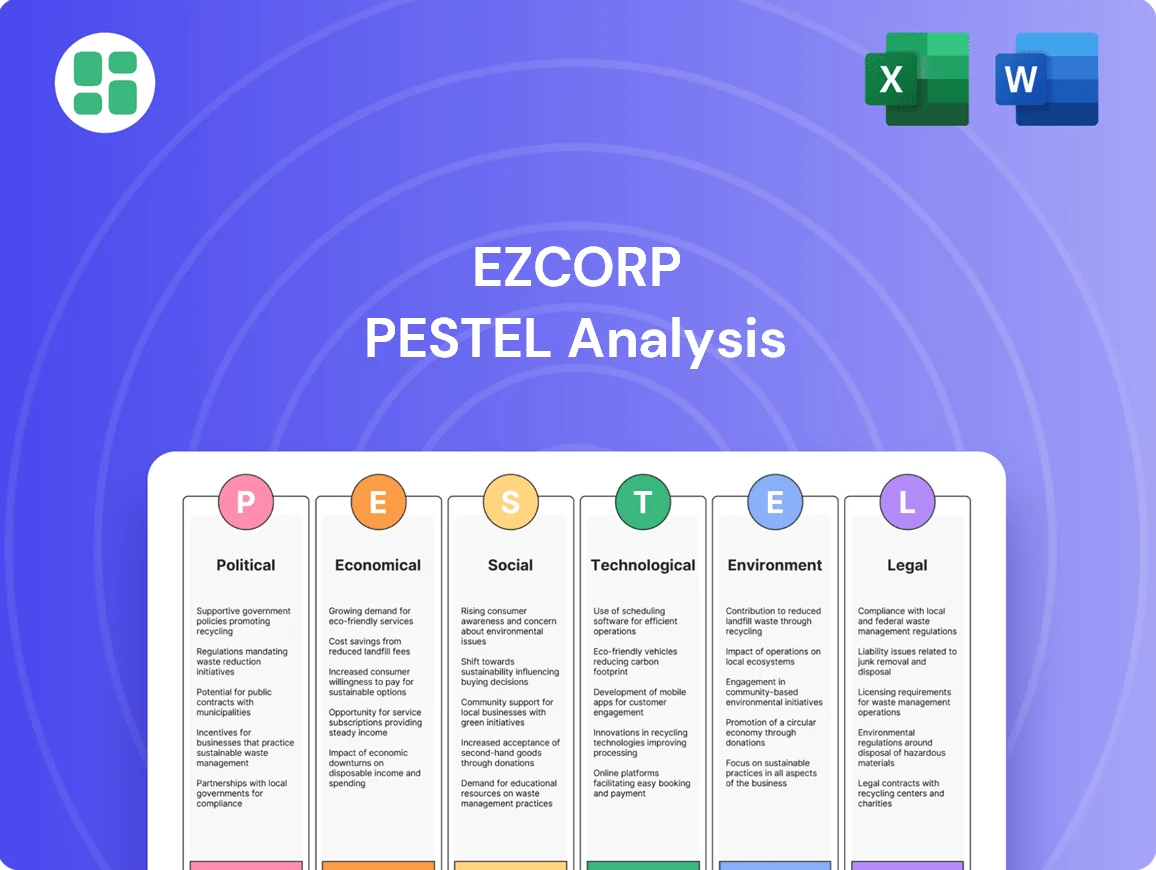
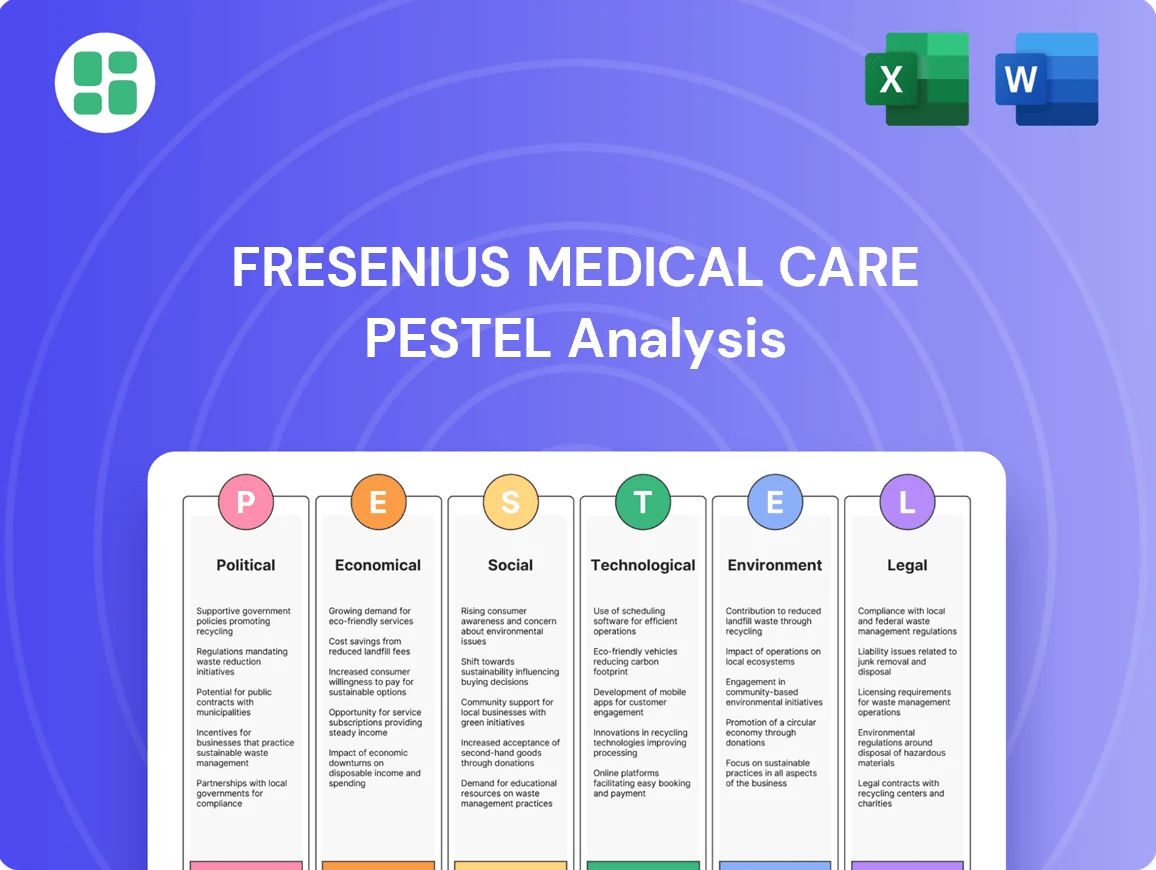
The preview shown here is the exact document you’ll receive after purchase—fully formatted and ready to use, offering a comprehensive PESTLE analysis of the Eutelsat Group. This detailed report covers the Political, Economic, Social, Technological, Legal, and Environmental factors impacting Eutelsat's operations and strategic positioning. You can trust that the insights and structure you see now are precisely what you'll be working with.

Product Information
Product Information
Shipping & Returns
Shipping & Returns

Eutelsat Group PESTLE Analysis
Eutelsat Group PESTLE Analysis
Plan Smarter. Present Sharper. Compete Stronger.
Navigating the complex satellite communications landscape requires a deep understanding of external forces. Our PESTLE analysis of Eutelsat Group meticulously unpacks the political, economic, social, technological, legal, and environmental factors shaping its trajectory. Discover how evolving regulations, global economic shifts, and rapid technological advancements present both challenges and opportunities for Eutelsat.
Gain a critical edge by understanding the full spectrum of influences on Eutelsat Group. This comprehensive PESTLE analysis is your key to unlocking actionable intelligence for strategic planning and competitive advantage. Don't miss out on the insights that can redefine your market approach—download the complete report now.
Political factors
Government Support and Strategic Partnerships
Eutelsat Group's strategic positioning is significantly bolstered by government backing and key partnerships, particularly from its major shareholders, the French State and the UK government. This governmental support is instrumental in enabling Eutelsat to undertake ambitious, large-scale ventures.
A prime example is Eutelsat's central role in the European Union's IRIS² program, a critical initiative to establish a sovereign European Low Earth Orbit (LEO) constellation. This collaboration underscores how government alignment provides financial stability and strategic direction for Eutelsat’s expansion into new satellite technologies and services.
Regulatory Frameworks and Approvals
Eutelsat Group operates within a complex web of global regulations, requiring constant navigation of diverse legal frameworks for its satellite services and recent integrations like OneWeb. Securing necessary clearances across multiple jurisdictions is paramount for its operations.
Regulatory bodies, such as the UK's Ofcom, significantly influence Eutelsat's business by managing crucial spectrum allocations and fostering competitive market conditions. These decisions directly impact Eutelsat's capacity to launch and operate its satellite constellations worldwide.
Geopolitical Stability and Sovereignty Concerns
Geopolitical stability is a significant factor for Eutelsat. Nations increasingly prioritize sovereign space capabilities, aiming to reduce reliance on non-European satellite systems. This trend directly influences Eutelsat's strategic decisions and partnership opportunities.
Eutelsat's involvement in the IRIS² program exemplifies Europe's commitment to developing independent space infrastructure. This initiative aims to enhance secure connectivity and autonomous space operations for the European Union.
However, geopolitical tensions can pose risks. For instance, sanctions imposed on countries like Russia can impact revenue streams from those specific regions, as seen in past financial reporting.
International Space Policy and Cooperation
Eutelsat Group navigates a complex web of international space policies, increasingly emphasizing collaboration to tackle issues like orbital debris. The company's involvement in initiatives such as the European Space Agency's (ESA) Space Safety Programme and its participation in the Net Zero Space campaign underscore a proactive stance in promoting sustainable space operations. These efforts are crucial as global discussions around space traffic management and responsible satellite deployment intensify, directly influencing Eutelsat's ability to operate and expand its services.
International agreements on spectrum allocation and orbital slot coordination are fundamental to Eutelsat's business model, impacting its satellite network planning and service delivery. For instance, the International Telecommunication Union (ITU) plays a vital role in managing global radio-frequency spectrum, ensuring fair access and preventing interference for satellite operators. Eutelsat's adherence to these regulations and its engagement in ongoing dialogues are essential for maintaining its competitive edge and ensuring the reliability of its connectivity solutions across its global footprint.
- Space Debris Mitigation: Eutelsat is committed to reducing space debris, aligning with international efforts to ensure the long-term sustainability of the space environment.
- Spectrum Coordination: The company actively participates in ITU-led processes for frequency coordination, vital for preventing interference and securing orbital resources for its satellite fleet.
- Space Traffic Management: Eutelsat contributes to discussions and initiatives aimed at establishing effective space traffic management systems, crucial for safe and efficient satellite operations.
Government and Defense Contracts
Eutelsat's engagement with government and defense sectors represents a substantial revenue stream. The company provides vital communication infrastructure, including its Low Earth Orbit (LEO) network, to support diplomatic efforts and critical operations globally. This reliance on government contracts means that changes in public spending or national security priorities can directly impact Eutelsat's contract stability.
In 2023, Eutelsat reported that its government and defense segment contributed a significant portion of its revenue, with a notable increase in demand for LEO-enabled solutions from non-US governmental bodies. For instance, the company secured several multi-year agreements in late 2023 and early 2024 to provide secure satellite communications for international defense initiatives.
- Government Contracts: Eutelsat's revenue is significantly tied to contracts with government and defense entities, providing essential communication services.
- LEO Network Deployment: The company's LEO network is crucial for supporting diplomatic missions and various essential operations worldwide.
- Non-US Government Growth: There's an observed increase in demand for LEO-enabled solutions from governments outside the United States.
- Risk of Spending Shifts: Eutelsat's business is susceptible to fluctuations in governmental priorities and potential spending cuts, which could affect contract renewals.
Government Support Powers European Satellite Sovereignty
Governmental support and strategic alignment with national interests are crucial for Eutelsat. The company's role in the EU's IRIS² program highlights how government backing enables large-scale ventures and provides financial stability. This focus on sovereign capabilities is driven by a global trend to reduce reliance on non-European satellite systems, influencing Eutelsat's partnerships and strategic decisions.
What is included in the product
Detailed Word Document
The Eutelsat Group PESTLE analysis dissects the influence of Political, Economic, Social, Technological, Environmental, and Legal factors on its operations and strategic positioning.
This comprehensive evaluation provides actionable insights for navigating the complex global landscape and identifying strategic advantages.
Customizable Excel Spreadsheet
A PESTLE analysis for Eutelsat Group serves as a pain point reliever by offering a structured framework to anticipate and navigate complex external factors, thereby reducing uncertainty and enabling proactive strategic adjustments.
Economic factors
Market Shift from Video to Connectivity
Eutelsat Group is navigating a major market transition, moving away from its legacy Video business. This segment's revenue has seen a continued downturn, reflecting broader industry trends.
In contrast, the Connectivity segment is experiencing substantial growth, largely fueled by the integration of OneWeb's Low Earth Orbit (LEO) satellite technology. This is a key driver for the company's future.
This strategic pivot requires significant capital allocation towards advanced technologies and adapting business models to capture opportunities in burgeoning markets like mobile and fixed broadband connectivity.
Capital Expenditure and Financing Needs
Eutelsat's ambitious expansion plans, including its Low Earth Orbit (LEO) constellation and next-generation satellites, demand significant capital expenditure. For fiscal year 2023-2024, Eutelsat adjusted its capex forecast downwards to €550 million, but substantial investments are still earmarked for future projects like the IRIS² program.
To fund these endeavors and bolster its financial health, Eutelsat is executing a capital increase targeting €300 million. This move is designed to reduce the company's leverage and provide crucial financial flexibility for its strategic growth initiatives.
Intense Market Competition
The satellite internet market is experiencing fierce competition, notably with the expansion of mega-constellations like SpaceX's Starlink. This intense rivalry pressures established players like Eutelsat to innovate and adapt rapidly.
Eutelsat's strategy, post-merger with OneWeb, focuses on leveraging its combined geostationary (GEO) and low-Earth orbit (LEO) capabilities. This multi-orbit approach targets high-value sectors such as enterprise, aviation, maritime, and government, aiming to offer differentiated services.
The competitive environment necessitates aggressive pricing strategies and a commitment to ongoing technological advancements. For instance, Eutelsat's investment in LEO capabilities alongside its GEO fleet underscores the need to remain competitive against new entrants and evolving customer demands in 2024 and beyond.
Revenue Performance and Profitability
Eutelsat Group's revenue performance for fiscal year 2024-25 shows resilience, with operating vertical revenues remaining stable. This stability is largely thanks to robust growth in connectivity services, which effectively counterbalances the ongoing decline in its traditional video broadcasting segment.
Despite revenue stability, the adjusted EBITDA margin is projected to experience a slight dip. This is primarily attributed to increased operating expenses stemming from the integration of OneWeb and persistent market pressures that are impacting profitability. Eutelsat is targeting a medium-term improvement in its EBITDA margin, aiming for growth in the mid-to-high-single-digit range.
- Stable Operating Vertical Revenues: Fiscal year 2024-25 results indicate steady revenue streams, bolstered by strong connectivity growth.
- Video Decline Offset: Gains in connectivity services are successfully mitigating the downturn observed in the video services sector.
- EBITDA Margin Pressure: Expectation of a slight decrease in adjusted EBITDA margin due to OneWeb consolidation costs and market headwinds.
- Medium-Term Outlook: Company strategy focuses on achieving mid-to-high-single-digit EBITDA margin improvements over the next few years.
Global Economic Trends and Currency Fluctuations
Broader global economic conditions, including inflation and interest rates, significantly influence Eutelsat's financial health. For instance, the Eurozone experienced an inflation rate of 2.4% in April 2024, a slight decrease from previous months, impacting operational costs and potentially customer spending power. Eutelsat's diverse international operations expose it to currency volatility; while some favorable exchange rate movements were observed in early 2024, ongoing fluctuations remain a key consideration.
Economic downturns can dampen demand for satellite services, especially those tied to discretionary spending. As of mid-2024, global growth forecasts suggest moderate expansion, but risks of recession in certain regions persist, which could impact Eutelsat's revenue streams, particularly from sectors sensitive to economic cycles.
- Inflationary pressures: Persistent inflation in key operating regions can increase Eutelsat's operational expenses.
- Interest rate sensitivity: Rising interest rates can affect the cost of capital and investment decisions for Eutelsat and its clients.
- Currency exchange rate impact: Fluctuations in currencies like the Euro against other major currencies can alter reported revenues and profits.
- Economic slowdown risks: A global or regional economic downturn could reduce demand for satellite bandwidth and services.
Global Economy's Grip on Satellite Operations
Global economic conditions directly impact Eutelsat's financial performance. Inflation, such as the 2.4% rate in the Eurozone in April 2024, increases operational costs. Fluctuating exchange rates also present a challenge, as seen with early 2024 currency movements. Potential economic slowdowns in various regions could reduce demand for satellite services, particularly from economically sensitive sectors.
| Economic Factor | Impact on Eutelsat | Relevant Data (as of mid-2024) |
|---|---|---|
| Inflation | Increased operational expenses | Eurozone inflation: 2.4% (April 2024) |
| Exchange Rates | Currency volatility affects reported revenue and profit | Mixed favorable movements observed in early 2024 |
| Economic Growth/Downturn | Demand for services can decrease in slowdowns | Moderate global growth forecasts with regional recession risks |
Full Version Awaits
Eutelsat Group PESTLE Analysis
The preview shown here is the exact document you’ll receive after purchase—fully formatted and ready to use, offering a comprehensive PESTLE analysis of the Eutelsat Group. This detailed report covers the Political, Economic, Social, Technological, Legal, and Environmental factors impacting Eutelsat's operations and strategic positioning. You can trust that the insights and structure you see now are precisely what you'll be working with.
Product Information
Product Information
Shipping & Returns
Shipping & Returns
Description
Plan Smarter. Present Sharper. Compete Stronger.
Navigating the complex satellite communications landscape requires a deep understanding of external forces. Our PESTLE analysis of Eutelsat Group meticulously unpacks the political, economic, social, technological, legal, and environmental factors shaping its trajectory. Discover how evolving regulations, global economic shifts, and rapid technological advancements present both challenges and opportunities for Eutelsat.
Gain a critical edge by understanding the full spectrum of influences on Eutelsat Group. This comprehensive PESTLE analysis is your key to unlocking actionable intelligence for strategic planning and competitive advantage. Don't miss out on the insights that can redefine your market approach—download the complete report now.
Political factors
Government Support and Strategic Partnerships
Eutelsat Group's strategic positioning is significantly bolstered by government backing and key partnerships, particularly from its major shareholders, the French State and the UK government. This governmental support is instrumental in enabling Eutelsat to undertake ambitious, large-scale ventures.
A prime example is Eutelsat's central role in the European Union's IRIS² program, a critical initiative to establish a sovereign European Low Earth Orbit (LEO) constellation. This collaboration underscores how government alignment provides financial stability and strategic direction for Eutelsat’s expansion into new satellite technologies and services.
Regulatory Frameworks and Approvals
Eutelsat Group operates within a complex web of global regulations, requiring constant navigation of diverse legal frameworks for its satellite services and recent integrations like OneWeb. Securing necessary clearances across multiple jurisdictions is paramount for its operations.
Regulatory bodies, such as the UK's Ofcom, significantly influence Eutelsat's business by managing crucial spectrum allocations and fostering competitive market conditions. These decisions directly impact Eutelsat's capacity to launch and operate its satellite constellations worldwide.
Geopolitical Stability and Sovereignty Concerns
Geopolitical stability is a significant factor for Eutelsat. Nations increasingly prioritize sovereign space capabilities, aiming to reduce reliance on non-European satellite systems. This trend directly influences Eutelsat's strategic decisions and partnership opportunities.
Eutelsat's involvement in the IRIS² program exemplifies Europe's commitment to developing independent space infrastructure. This initiative aims to enhance secure connectivity and autonomous space operations for the European Union.
However, geopolitical tensions can pose risks. For instance, sanctions imposed on countries like Russia can impact revenue streams from those specific regions, as seen in past financial reporting.
International Space Policy and Cooperation
Eutelsat Group navigates a complex web of international space policies, increasingly emphasizing collaboration to tackle issues like orbital debris. The company's involvement in initiatives such as the European Space Agency's (ESA) Space Safety Programme and its participation in the Net Zero Space campaign underscore a proactive stance in promoting sustainable space operations. These efforts are crucial as global discussions around space traffic management and responsible satellite deployment intensify, directly influencing Eutelsat's ability to operate and expand its services.
International agreements on spectrum allocation and orbital slot coordination are fundamental to Eutelsat's business model, impacting its satellite network planning and service delivery. For instance, the International Telecommunication Union (ITU) plays a vital role in managing global radio-frequency spectrum, ensuring fair access and preventing interference for satellite operators. Eutelsat's adherence to these regulations and its engagement in ongoing dialogues are essential for maintaining its competitive edge and ensuring the reliability of its connectivity solutions across its global footprint.
- Space Debris Mitigation: Eutelsat is committed to reducing space debris, aligning with international efforts to ensure the long-term sustainability of the space environment.
- Spectrum Coordination: The company actively participates in ITU-led processes for frequency coordination, vital for preventing interference and securing orbital resources for its satellite fleet.
- Space Traffic Management: Eutelsat contributes to discussions and initiatives aimed at establishing effective space traffic management systems, crucial for safe and efficient satellite operations.
Government and Defense Contracts
Eutelsat's engagement with government and defense sectors represents a substantial revenue stream. The company provides vital communication infrastructure, including its Low Earth Orbit (LEO) network, to support diplomatic efforts and critical operations globally. This reliance on government contracts means that changes in public spending or national security priorities can directly impact Eutelsat's contract stability.
In 2023, Eutelsat reported that its government and defense segment contributed a significant portion of its revenue, with a notable increase in demand for LEO-enabled solutions from non-US governmental bodies. For instance, the company secured several multi-year agreements in late 2023 and early 2024 to provide secure satellite communications for international defense initiatives.
- Government Contracts: Eutelsat's revenue is significantly tied to contracts with government and defense entities, providing essential communication services.
- LEO Network Deployment: The company's LEO network is crucial for supporting diplomatic missions and various essential operations worldwide.
- Non-US Government Growth: There's an observed increase in demand for LEO-enabled solutions from governments outside the United States.
- Risk of Spending Shifts: Eutelsat's business is susceptible to fluctuations in governmental priorities and potential spending cuts, which could affect contract renewals.
Government Support Powers European Satellite Sovereignty
Governmental support and strategic alignment with national interests are crucial for Eutelsat. The company's role in the EU's IRIS² program highlights how government backing enables large-scale ventures and provides financial stability. This focus on sovereign capabilities is driven by a global trend to reduce reliance on non-European satellite systems, influencing Eutelsat's partnerships and strategic decisions.
What is included in the product
Detailed Word Document
The Eutelsat Group PESTLE analysis dissects the influence of Political, Economic, Social, Technological, Environmental, and Legal factors on its operations and strategic positioning.
This comprehensive evaluation provides actionable insights for navigating the complex global landscape and identifying strategic advantages.
Customizable Excel Spreadsheet
A PESTLE analysis for Eutelsat Group serves as a pain point reliever by offering a structured framework to anticipate and navigate complex external factors, thereby reducing uncertainty and enabling proactive strategic adjustments.
Economic factors
Market Shift from Video to Connectivity
Eutelsat Group is navigating a major market transition, moving away from its legacy Video business. This segment's revenue has seen a continued downturn, reflecting broader industry trends.
In contrast, the Connectivity segment is experiencing substantial growth, largely fueled by the integration of OneWeb's Low Earth Orbit (LEO) satellite technology. This is a key driver for the company's future.
This strategic pivot requires significant capital allocation towards advanced technologies and adapting business models to capture opportunities in burgeoning markets like mobile and fixed broadband connectivity.
Capital Expenditure and Financing Needs
Eutelsat's ambitious expansion plans, including its Low Earth Orbit (LEO) constellation and next-generation satellites, demand significant capital expenditure. For fiscal year 2023-2024, Eutelsat adjusted its capex forecast downwards to €550 million, but substantial investments are still earmarked for future projects like the IRIS² program.
To fund these endeavors and bolster its financial health, Eutelsat is executing a capital increase targeting €300 million. This move is designed to reduce the company's leverage and provide crucial financial flexibility for its strategic growth initiatives.
Intense Market Competition
The satellite internet market is experiencing fierce competition, notably with the expansion of mega-constellations like SpaceX's Starlink. This intense rivalry pressures established players like Eutelsat to innovate and adapt rapidly.
Eutelsat's strategy, post-merger with OneWeb, focuses on leveraging its combined geostationary (GEO) and low-Earth orbit (LEO) capabilities. This multi-orbit approach targets high-value sectors such as enterprise, aviation, maritime, and government, aiming to offer differentiated services.
The competitive environment necessitates aggressive pricing strategies and a commitment to ongoing technological advancements. For instance, Eutelsat's investment in LEO capabilities alongside its GEO fleet underscores the need to remain competitive against new entrants and evolving customer demands in 2024 and beyond.
Revenue Performance and Profitability
Eutelsat Group's revenue performance for fiscal year 2024-25 shows resilience, with operating vertical revenues remaining stable. This stability is largely thanks to robust growth in connectivity services, which effectively counterbalances the ongoing decline in its traditional video broadcasting segment.
Despite revenue stability, the adjusted EBITDA margin is projected to experience a slight dip. This is primarily attributed to increased operating expenses stemming from the integration of OneWeb and persistent market pressures that are impacting profitability. Eutelsat is targeting a medium-term improvement in its EBITDA margin, aiming for growth in the mid-to-high-single-digit range.
- Stable Operating Vertical Revenues: Fiscal year 2024-25 results indicate steady revenue streams, bolstered by strong connectivity growth.
- Video Decline Offset: Gains in connectivity services are successfully mitigating the downturn observed in the video services sector.
- EBITDA Margin Pressure: Expectation of a slight decrease in adjusted EBITDA margin due to OneWeb consolidation costs and market headwinds.
- Medium-Term Outlook: Company strategy focuses on achieving mid-to-high-single-digit EBITDA margin improvements over the next few years.
Global Economic Trends and Currency Fluctuations
Broader global economic conditions, including inflation and interest rates, significantly influence Eutelsat's financial health. For instance, the Eurozone experienced an inflation rate of 2.4% in April 2024, a slight decrease from previous months, impacting operational costs and potentially customer spending power. Eutelsat's diverse international operations expose it to currency volatility; while some favorable exchange rate movements were observed in early 2024, ongoing fluctuations remain a key consideration.
Economic downturns can dampen demand for satellite services, especially those tied to discretionary spending. As of mid-2024, global growth forecasts suggest moderate expansion, but risks of recession in certain regions persist, which could impact Eutelsat's revenue streams, particularly from sectors sensitive to economic cycles.
- Inflationary pressures: Persistent inflation in key operating regions can increase Eutelsat's operational expenses.
- Interest rate sensitivity: Rising interest rates can affect the cost of capital and investment decisions for Eutelsat and its clients.
- Currency exchange rate impact: Fluctuations in currencies like the Euro against other major currencies can alter reported revenues and profits.
- Economic slowdown risks: A global or regional economic downturn could reduce demand for satellite bandwidth and services.
Global Economy's Grip on Satellite Operations
Global economic conditions directly impact Eutelsat's financial performance. Inflation, such as the 2.4% rate in the Eurozone in April 2024, increases operational costs. Fluctuating exchange rates also present a challenge, as seen with early 2024 currency movements. Potential economic slowdowns in various regions could reduce demand for satellite services, particularly from economically sensitive sectors.
| Economic Factor | Impact on Eutelsat | Relevant Data (as of mid-2024) |
|---|---|---|
| Inflation | Increased operational expenses | Eurozone inflation: 2.4% (April 2024) |
| Exchange Rates | Currency volatility affects reported revenue and profit | Mixed favorable movements observed in early 2024 |
| Economic Growth/Downturn | Demand for services can decrease in slowdowns | Moderate global growth forecasts with regional recession risks |
Full Version Awaits
Eutelsat Group PESTLE Analysis
The preview shown here is the exact document you’ll receive after purchase—fully formatted and ready to use, offering a comprehensive PESTLE analysis of the Eutelsat Group. This detailed report covers the Political, Economic, Social, Technological, Legal, and Environmental factors impacting Eutelsat's operations and strategic positioning. You can trust that the insights and structure you see now are precisely what you'll be working with.