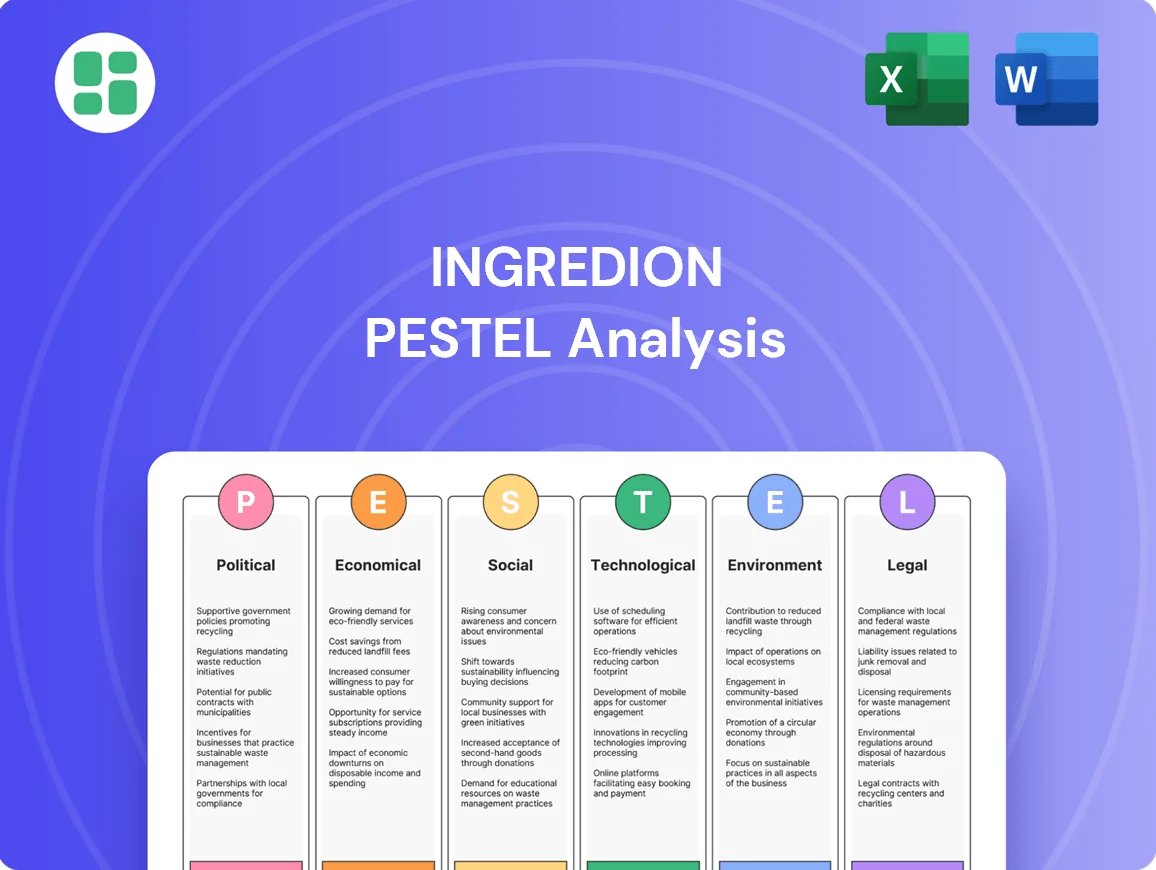
EnBW Energie Baden-Wurttemberg PESTLE Analysis

Plan Smarter. Present Sharper. Compete Stronger.
Navigate the complex external forces shaping EnBW Energie Baden-Württemberg's future with our comprehensive PESTLE analysis. Understand how political shifts, economic volatility, social trends, technological advancements, environmental regulations, and legal frameworks create both challenges and opportunities for this energy giant. Gain the strategic foresight needed to make informed decisions and stay ahead of the curve.
Unlock actionable intelligence with our expertly crafted PESTLE analysis for EnBW Energie Baden-Württemberg. This detailed report dives deep into the critical external factors impacting the company's operations and growth potential. Equip yourself with the insights to anticipate market shifts and refine your own strategic planning. Download the full version now for immediate access to invaluable market intelligence.
Political factors

Government Energy Policy
The German government's Energiewende, or energy transition, is a cornerstone of EnBW's strategy, driving significant investment in renewables like wind and solar. This policy mandates a shift away from fossil fuels, directly shaping EnBW's asset management and future operational planning.
Political shifts, such as adjustments to the coal phase-out timeline or revised renewable energy targets, have a direct impact on EnBW's investment decisions and the overall profitability of its green energy ventures. Government incentives and subsidies play a vital role in ensuring the financial feasibility of these new renewable energy projects, with Germany aiming for 80% renewable electricity by 2030.
Regulatory Frameworks
The regulatory landscape in Germany and the EU significantly shapes EnBW's financial performance and strategic direction. Authorities like the Bundesnetzagentur (BNetzA) and the European Commission dictate rules for grid operation, energy market structures, and electricity pricing, directly impacting EnBW's revenue. For instance, the German government's Renewable Energy Sources Act (EEG) and its subsequent amendments influence the profitability of renewable energy projects, a key growth area for EnBW.
Critical to EnBW's distribution network business are policies governing grid expansion and the integration of decentralized renewable energy sources. In 2024, Germany continued its push for grid modernization, with significant investment planned to accommodate the growing share of renewables. EnBW’s ability to adapt to these evolving requirements, such as new unbundling rules or adjustments to network charges, necessitates continuous recalibration of its operational and financial strategies to maintain competitiveness and compliance.

Geopolitical Stability and Energy Security
Geopolitical instability, such as the ongoing conflict in Eastern Europe, continues to be a significant concern for energy security. This instability directly impacts energy supply chains and price volatility, affecting EnBW's procurement costs for fossil fuels and the overall economic viability of its operations. For instance, in 2023, European natural gas prices, while lower than their 2022 peaks, remained elevated compared to pre-crisis levels, influencing operational expenses.
Germany's commitment to energy transition and diversification, with a strong focus on domestic renewable energy sources, directly supports EnBW's strategic expansion in this area. The German government's targets for renewable energy expansion, aiming for a significant increase in wind and solar power capacity by 2030, create a favorable regulatory environment for EnBW's investments in green energy projects.
Political decisions regarding international energy alliances and infrastructure projects, such as the development of new LNG terminals or cross-border grid connections, are crucial. These decisions can influence the availability and cost of energy imports and exports, impacting EnBW's market access and competitive positioning within the European energy landscape.

Subsidies and Incentives for Renewables
Government support through subsidies and incentives remains a critical driver for EnBW's renewable energy business. The German government, for instance, has consistently provided feed-in tariffs and investment grants to bolster renewable energy deployment. For example, in 2023, Germany's Renewable Energy Sources Act (EEG) continued to offer market premiums and feed-in tariffs for solar and wind power, ensuring a stable revenue stream for projects.
These financial mechanisms directly influence the profitability and attractiveness of EnBW's investments in wind farms and solar parks. A shift towards reduced subsidies or a change in their structure, perhaps favoring auctions over fixed tariffs, could alter the return on investment calculations for future projects. Policy stability is therefore paramount for EnBW's long-term strategic planning in the green energy sector.
The evolution of these support schemes is closely watched by industry players. For instance, the trend in Germany has been towards competitive auctions for larger renewable projects, which can drive down costs but also introduce greater price volatility. EnBW's ability to adapt to these evolving incentive structures, such as securing successful bids in recent offshore wind auctions, is key to maintaining its growth trajectory.
- Feed-in Tariffs: Continued availability of feed-in tariffs or similar revenue support mechanisms directly impacts EnBW's profitability from renewable assets.
- Investment Incentives: Tax credits, grants, and accelerated depreciation for green energy projects enhance the financial viability of EnBW's capital expenditures.
- Policy Stability: Predictable and consistent government policy regarding renewable energy support is crucial for EnBW's long-term investment planning and risk management.
- Auction Mechanisms: EnBW's success in securing contracts through competitive auctions, like those for offshore wind, demonstrates its ability to operate within evolving incentive frameworks.
Public and Political Pressure
Growing public and political demand for decarbonization is a significant driver for EnBW. This pressure compels the company to accelerate its shift from traditional power generation to renewable energy sources and new energy services. For instance, Germany's commitment to achieving 80% renewable electricity by 2030, as outlined in the Renewable Energy Sources Act (EEG), directly impacts EnBW's strategic planning and investment in wind and solar projects.
The ongoing political conversation about climate change and environmental protection directly shapes public opinion and can result in more stringent regulations or a surge in demand for environmentally friendly products. EnBW's proactive engagement in communicating its sustainability efforts and aligning its business strategies with evolving societal expectations is crucial for maintaining positive political relationships and public trust.
- Decarbonization Mandate: Germany aims for 80% renewable electricity by 2030, a key political driver for EnBW's renewable investments.
- Public Perception: Climate discourse influences consumer choices, pushing companies like EnBW towards greener offerings.
- Regulatory Environment: Stricter environmental laws, often a response to political pressure, necessitate adaptation in EnBW's operational and investment strategies.
- Corporate Social Responsibility: EnBW's public image is increasingly tied to its perceived commitment to sustainability and climate action.
Political Factors Driving Energy Company's Green Transition
Political factors significantly influence EnBW's strategic direction, particularly through Germany's commitment to the Energiewende, aiming for 80% renewable electricity by 2030. This transition necessitates substantial investment in wind and solar, directly shaping EnBW's asset management and operational planning.
Government incentives, such as feed-in tariffs and investment grants, remain critical for the financial viability of EnBW's renewable projects. For instance, Germany's Renewable Energy Sources Act (EEG) continued to provide market premiums and feed-in tariffs in 2023, ensuring stable revenue streams for solar and wind power, a key growth area for EnBW.
The regulatory framework, managed by bodies like the Bundesnetzagentur, dictates grid operations, market structures, and pricing, directly impacting EnBW's revenue. Policies on grid expansion and integrating decentralized renewables are vital, with Germany planning significant grid modernization investments in 2024 to accommodate increased renewable capacity.
Geopolitical events, such as the conflict in Eastern Europe, affect energy security and price volatility, impacting EnBW's fossil fuel procurement costs. In 2023, European natural gas prices, though down from 2022 peaks, remained elevated, influencing operational expenses for companies like EnBW.
| Political Factor | Impact on EnBW | Relevant Data/Target |
| Energiewende (Energy Transition) | Drives investment in renewables, shapes asset strategy | Germany aims for 80% renewable electricity by 2030 |
| Government Incentives (EEG) | Ensures financial viability of green projects | Market premiums and feed-in tariffs provided in 2023 |
| Regulatory Framework (BNetzA) | Dictates grid operations, pricing, and market structure | Significant grid modernization investment planned for 2024 |
| Geopolitical Instability | Impacts energy security and operational costs | Elevated European natural gas prices in 2023 |
What is included in the product
 Detailed Word Document
This PESTLE analysis examines the external macro-environmental factors influencing EnBW Energie Baden-Württemberg across Political, Economic, Social, Technological, Environmental, and Legal dimensions.
It provides a comprehensive overview of the opportunities and challenges shaping the company's strategic landscape.

 Customizable Excel Spreadsheet
A concise PESTLE analysis for EnBW acts as a pain point reliever by offering clear, actionable insights into external factors, streamlining strategic decision-making and mitigating potential risks.
Economic factors

Energy Market Prices
Fluctuations in wholesale electricity, gas, and carbon prices significantly influence EnBW's profitability, particularly for its conventional generation assets and energy trading operations. For instance, the average German wholesale electricity price for baseload power in 2024 has seen considerable movement, influenced by factors like renewable energy output and gas prices.
High volatility in energy markets, stemming from supply-demand imbalances, geopolitical tensions, or severe weather events, presents both potential gains and substantial risks to EnBW's financial results. The European Union Emissions Trading System (EU ETS) carbon price, a key factor for fossil fuel generation, experienced a notable average of around €65 per tonne in early 2024, impacting operational costs.
EnBW employs sophisticated hedging strategies and maintains a diversified energy portfolio, encompassing renewables, grid operations, and customer solutions, to cushion the impact of this price volatility. This diversification is crucial as the company navigates the evolving energy landscape, aiming to balance the financial performance of its various business segments.
Inflation and Interest Rates
Rising inflation in Germany, with the Harmonised Index of Consumer Prices (HICP) at 2.8% in April 2024, directly impacts EnBW's operational expenses. Increased costs for materials like copper for grid expansion and labor can pressure profit margins if these are not fully recoverable through energy tariffs.
The European Central Bank's (ECB) monetary policy, which has seen interest rates at 4.50% as of May 2024, raises EnBW's cost of capital. Financing large renewable projects, such as offshore wind farms, becomes more expensive, potentially slowing down investment in critical energy transition infrastructure.

Economic Growth and Industrial Demand
Germany's economic growth is a key driver for EnBW. In 2023, the German economy experienced a slight contraction of 0.3%, impacting industrial output. However, forecasts for 2024 suggest a modest recovery, with projections around 0.2% to 0.5% GDP growth, which should translate into increased industrial energy demand for EnBW.
The broader European Union's economic performance also directly influences EnBW's industrial and commercial customer base. A stronger EU economy generally means higher manufacturing activity and, consequently, greater energy consumption. For instance, if industrial production in key EU markets rises by a projected 1.5% in 2024, EnBW could see a corresponding uptick in its energy sales volumes.
Conversely, economic slowdowns, like the challenges faced in late 2023, can dampen energy demand and put downward pressure on prices. This was evident when industrial energy prices saw volatility due to reduced manufacturing activity across the continent, impacting EnBW's revenue streams during those periods.

Investment Climate and Capital Availability
The investment climate significantly impacts EnBW's capacity to finance its extensive renewable energy and grid modernization initiatives. Investor confidence, a key driver of capital availability, directly influences EnBW's ability to secure necessary funding. For instance, in 2024, the global renewable energy sector saw substantial investment, with projections indicating continued growth, although interest rate environments remain a consideration for capital-intensive projects.
Access to favorable financing, such as green bonds and project finance, is paramount for EnBW's infrastructure development. The company's robust financial performance and commitment to sustainability are critical in attracting these specialized funding sources. EnBW's successful issuance of green bonds in recent years, often oversubscribed, highlights strong market appetite for its sustainable projects.
Market perceptions of EnBW's creditworthiness and its strong sustainability profile directly affect its cost of capital. A higher credit rating and a positive ESG (Environmental, Social, and Governance) reputation can lead to lower borrowing costs, making its ambitious expansion plans more financially viable. For example, EnBW's credit ratings from agencies like Moody's and S&P, which have remained solid, are vital for securing competitive financing terms.
- Investor Confidence: Global investor confidence in the energy transition remains high, supporting capital flow into renewable projects.
- Capital Availability: Despite some macroeconomic headwinds, significant capital is available for green infrastructure, including from institutional investors and specialized funds.
- Financing Terms: EnBW leverages green bonds and project finance, benefiting from competitive terms due to its strong credit and sustainability ratings.
- Cost of Capital: A strong credit rating and a favorable ESG profile help EnBW minimize its cost of capital for large-scale investments.
Carbon Pricing and Emissions Trading
The European Union Emissions Trading System (EU ETS) is a cornerstone of the bloc's climate policy, directly influencing EnBW's operational expenses for its fossil fuel power generation. As of early 2024, carbon prices within the EU ETS have been trading in the range of €60-€90 per tonne of CO2, a significant figure that directly adds to the cost of emitting greenhouse gases.
These evolving carbon pricing mechanisms are a powerful incentive for EnBW to accelerate its strategic shift towards lower-carbon generation. The rising cost of carbon allowances compels the company to invest more heavily in renewable energy sources and cleaner technologies to mitigate its exposure to these expenses.
EnBW's financial planning must therefore incorporate the management of its carbon allowance portfolio and the fluctuating costs associated with emissions. This includes strategic decisions on acquiring allowances, optimizing the emissions intensity of its existing fleet, and factoring these costs into the economic viability of future investments in new power generation capacity.
- EU ETS Carbon Price Range (Early 2024): €60-€90 per tonne of CO2.
- Impact on Fossil Fuels: Directly increases operational costs for EnBW's coal and gas power plants.
- Strategic Incentive: Drives investment in renewables and lower-emission technologies.
- Financial Planning: Necessitates active management of carbon allowances and emission cost forecasting.
Economic Factors Shaping EnBW's Performance
Economic factors significantly shape EnBW's performance, with energy market volatility being a primary concern. Fluctuations in wholesale electricity and gas prices, driven by supply, demand, and geopolitical events, directly impact profitability. For instance, German wholesale electricity prices for baseload power in early 2024 have shown considerable movement, influenced by renewable energy generation levels and natural gas costs.
The cost of carbon emissions under the EU Emissions Trading System (EU ETS) is another critical economic variable. With average prices around €65 per tonne in early 2024, this directly increases operational expenses for EnBW's fossil fuel power plants, incentivizing a faster transition to renewables.
Inflation and interest rates also play a crucial role. German inflation stood at 2.8% in April 2024, raising operational costs for materials and labor. The European Central Bank's interest rate of 4.50% as of May 2024 increases EnBW's cost of capital, making large renewable project financing more expensive.
Economic growth in Germany and the wider EU directly affects energy demand. While Germany experienced a slight contraction in 2023, modest growth is projected for 2024, potentially boosting industrial energy consumption. A stronger EU economy generally translates to higher manufacturing activity and increased energy sales for EnBW.
| Economic Factor | Key Data Point (Early/Mid-2024) | Impact on EnBW |
|---|---|---|
| Wholesale Electricity Prices (Germany) | Volatile, influenced by renewables and gas prices | Affects profitability of conventional generation and trading |
| EU ETS Carbon Price | Approx. €60-€90 per tonne CO2 | Increases operational costs for fossil fuel generation; drives renewable investment |
| German Inflation (HICP) | 2.8% (April 2024) | Raises operational expenses (materials, labor) |
| ECB Interest Rate | 4.50% (May 2024) | Increases cost of capital for new projects |
| German GDP Growth (Projected 2024) | 0.2% - 0.5% | Potential increase in industrial energy demand |
Same Document Delivered
EnBW Energie Baden-Wurttemberg PESTLE Analysis
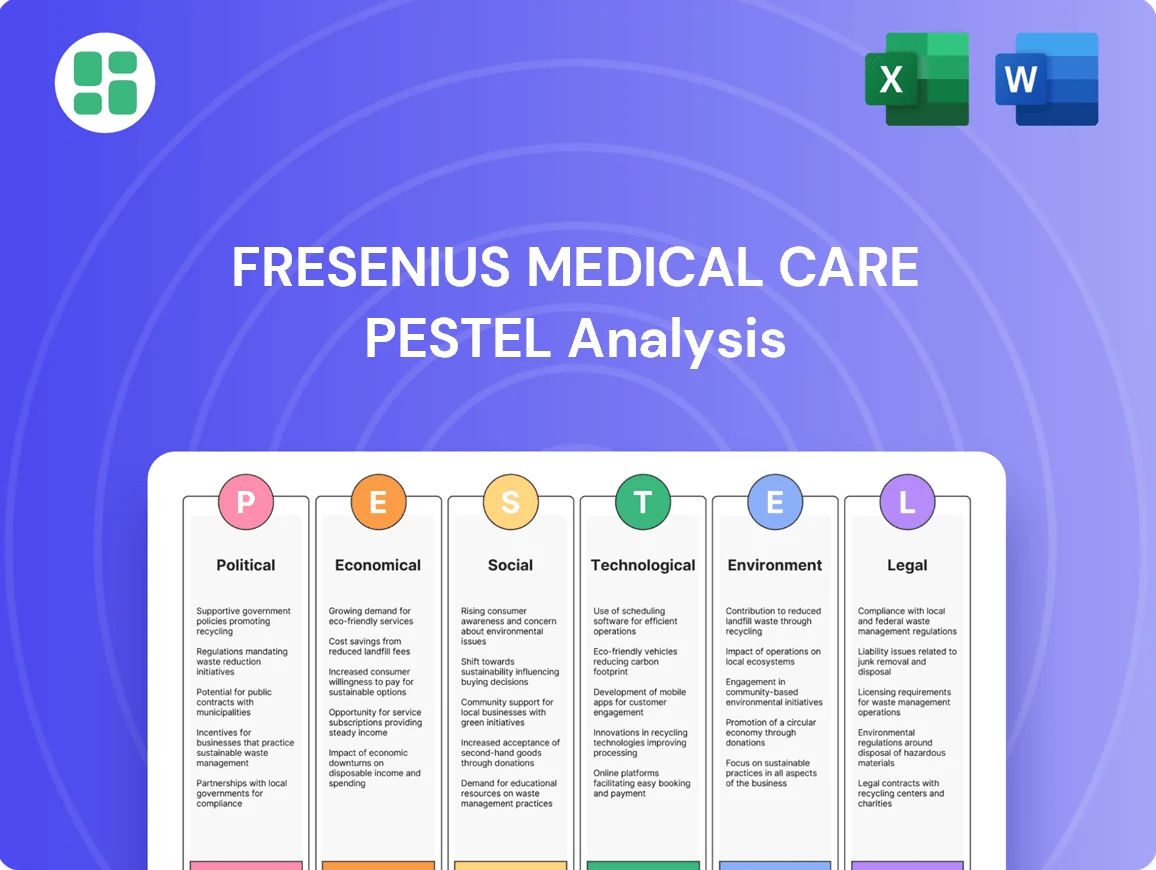
The preview shown here is the exact document you’ll receive after purchase—fully formatted and ready to use, offering a comprehensive PESTLE analysis of EnBW Energie Baden-Württemberg. This detailed report covers Political, Economic, Social, Technological, Legal, and Environmental factors impacting the company's operations and strategic planning. You'll gain immediate access to this insightful analysis upon completing your purchase.

Product Information
Product Information
Shipping & Returns
Shipping & Returns
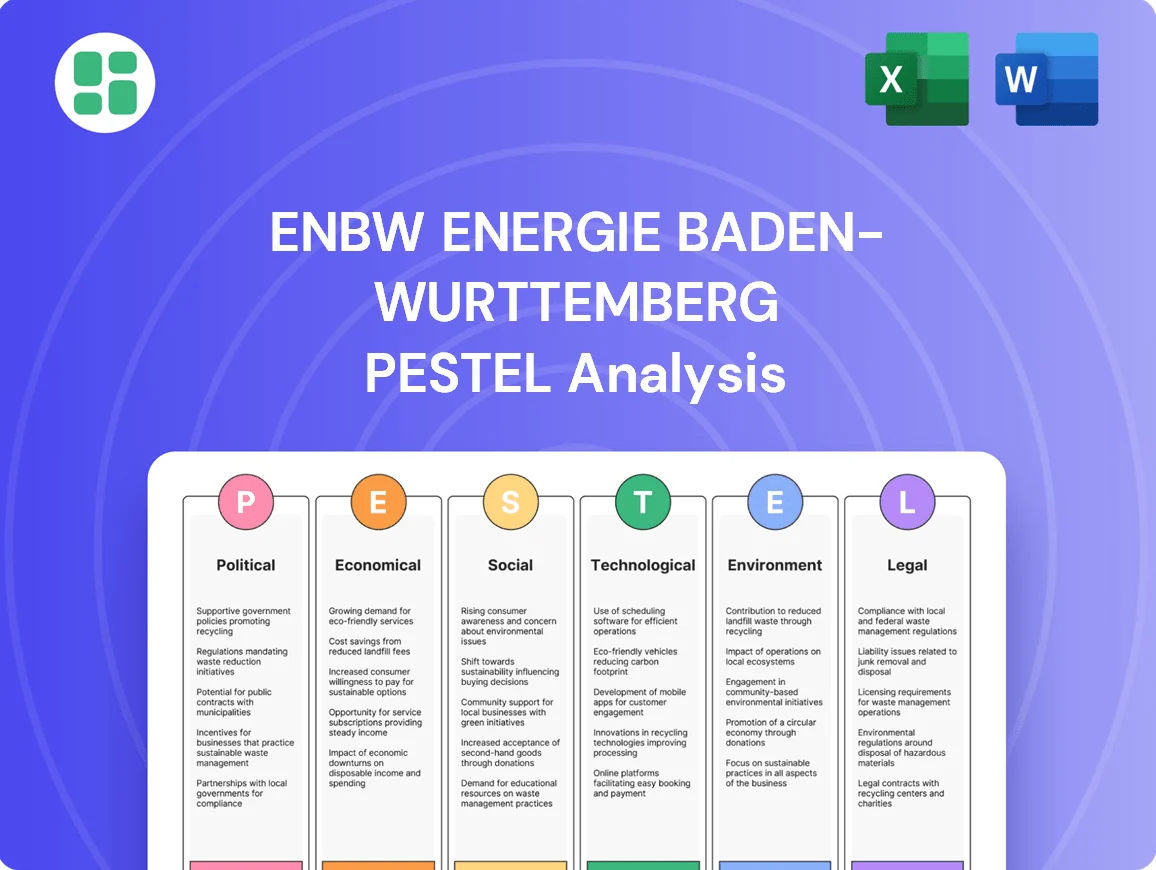
EnBW Energie Baden-Wurttemberg PESTLE Analysis
EnBW Energie Baden-Wurttemberg PESTLE Analysis
Plan Smarter. Present Sharper. Compete Stronger.
Navigate the complex external forces shaping EnBW Energie Baden-Württemberg's future with our comprehensive PESTLE analysis. Understand how political shifts, economic volatility, social trends, technological advancements, environmental regulations, and legal frameworks create both challenges and opportunities for this energy giant. Gain the strategic foresight needed to make informed decisions and stay ahead of the curve.
Unlock actionable intelligence with our expertly crafted PESTLE analysis for EnBW Energie Baden-Württemberg. This detailed report dives deep into the critical external factors impacting the company's operations and growth potential. Equip yourself with the insights to anticipate market shifts and refine your own strategic planning. Download the full version now for immediate access to invaluable market intelligence.
Political factors
Government Energy Policy
The German government's Energiewende, or energy transition, is a cornerstone of EnBW's strategy, driving significant investment in renewables like wind and solar. This policy mandates a shift away from fossil fuels, directly shaping EnBW's asset management and future operational planning.
Political shifts, such as adjustments to the coal phase-out timeline or revised renewable energy targets, have a direct impact on EnBW's investment decisions and the overall profitability of its green energy ventures. Government incentives and subsidies play a vital role in ensuring the financial feasibility of these new renewable energy projects, with Germany aiming for 80% renewable electricity by 2030.
Regulatory Frameworks
The regulatory landscape in Germany and the EU significantly shapes EnBW's financial performance and strategic direction. Authorities like the Bundesnetzagentur (BNetzA) and the European Commission dictate rules for grid operation, energy market structures, and electricity pricing, directly impacting EnBW's revenue. For instance, the German government's Renewable Energy Sources Act (EEG) and its subsequent amendments influence the profitability of renewable energy projects, a key growth area for EnBW.
Critical to EnBW's distribution network business are policies governing grid expansion and the integration of decentralized renewable energy sources. In 2024, Germany continued its push for grid modernization, with significant investment planned to accommodate the growing share of renewables. EnBW’s ability to adapt to these evolving requirements, such as new unbundling rules or adjustments to network charges, necessitates continuous recalibration of its operational and financial strategies to maintain competitiveness and compliance.
Geopolitical Stability and Energy Security
Geopolitical instability, such as the ongoing conflict in Eastern Europe, continues to be a significant concern for energy security. This instability directly impacts energy supply chains and price volatility, affecting EnBW's procurement costs for fossil fuels and the overall economic viability of its operations. For instance, in 2023, European natural gas prices, while lower than their 2022 peaks, remained elevated compared to pre-crisis levels, influencing operational expenses.
Germany's commitment to energy transition and diversification, with a strong focus on domestic renewable energy sources, directly supports EnBW's strategic expansion in this area. The German government's targets for renewable energy expansion, aiming for a significant increase in wind and solar power capacity by 2030, create a favorable regulatory environment for EnBW's investments in green energy projects.
Political decisions regarding international energy alliances and infrastructure projects, such as the development of new LNG terminals or cross-border grid connections, are crucial. These decisions can influence the availability and cost of energy imports and exports, impacting EnBW's market access and competitive positioning within the European energy landscape.
Subsidies and Incentives for Renewables
Government support through subsidies and incentives remains a critical driver for EnBW's renewable energy business. The German government, for instance, has consistently provided feed-in tariffs and investment grants to bolster renewable energy deployment. For example, in 2023, Germany's Renewable Energy Sources Act (EEG) continued to offer market premiums and feed-in tariffs for solar and wind power, ensuring a stable revenue stream for projects.
These financial mechanisms directly influence the profitability and attractiveness of EnBW's investments in wind farms and solar parks. A shift towards reduced subsidies or a change in their structure, perhaps favoring auctions over fixed tariffs, could alter the return on investment calculations for future projects. Policy stability is therefore paramount for EnBW's long-term strategic planning in the green energy sector.
The evolution of these support schemes is closely watched by industry players. For instance, the trend in Germany has been towards competitive auctions for larger renewable projects, which can drive down costs but also introduce greater price volatility. EnBW's ability to adapt to these evolving incentive structures, such as securing successful bids in recent offshore wind auctions, is key to maintaining its growth trajectory.
- Feed-in Tariffs: Continued availability of feed-in tariffs or similar revenue support mechanisms directly impacts EnBW's profitability from renewable assets.
- Investment Incentives: Tax credits, grants, and accelerated depreciation for green energy projects enhance the financial viability of EnBW's capital expenditures.
- Policy Stability: Predictable and consistent government policy regarding renewable energy support is crucial for EnBW's long-term investment planning and risk management.
- Auction Mechanisms: EnBW's success in securing contracts through competitive auctions, like those for offshore wind, demonstrates its ability to operate within evolving incentive frameworks.
Public and Political Pressure
Growing public and political demand for decarbonization is a significant driver for EnBW. This pressure compels the company to accelerate its shift from traditional power generation to renewable energy sources and new energy services. For instance, Germany's commitment to achieving 80% renewable electricity by 2030, as outlined in the Renewable Energy Sources Act (EEG), directly impacts EnBW's strategic planning and investment in wind and solar projects.
The ongoing political conversation about climate change and environmental protection directly shapes public opinion and can result in more stringent regulations or a surge in demand for environmentally friendly products. EnBW's proactive engagement in communicating its sustainability efforts and aligning its business strategies with evolving societal expectations is crucial for maintaining positive political relationships and public trust.
- Decarbonization Mandate: Germany aims for 80% renewable electricity by 2030, a key political driver for EnBW's renewable investments.
- Public Perception: Climate discourse influences consumer choices, pushing companies like EnBW towards greener offerings.
- Regulatory Environment: Stricter environmental laws, often a response to political pressure, necessitate adaptation in EnBW's operational and investment strategies.
- Corporate Social Responsibility: EnBW's public image is increasingly tied to its perceived commitment to sustainability and climate action.
Political Factors Driving Energy Company's Green Transition
Political factors significantly influence EnBW's strategic direction, particularly through Germany's commitment to the Energiewende, aiming for 80% renewable electricity by 2030. This transition necessitates substantial investment in wind and solar, directly shaping EnBW's asset management and operational planning.
Government incentives, such as feed-in tariffs and investment grants, remain critical for the financial viability of EnBW's renewable projects. For instance, Germany's Renewable Energy Sources Act (EEG) continued to provide market premiums and feed-in tariffs in 2023, ensuring stable revenue streams for solar and wind power, a key growth area for EnBW.
The regulatory framework, managed by bodies like the Bundesnetzagentur, dictates grid operations, market structures, and pricing, directly impacting EnBW's revenue. Policies on grid expansion and integrating decentralized renewables are vital, with Germany planning significant grid modernization investments in 2024 to accommodate increased renewable capacity.
Geopolitical events, such as the conflict in Eastern Europe, affect energy security and price volatility, impacting EnBW's fossil fuel procurement costs. In 2023, European natural gas prices, though down from 2022 peaks, remained elevated, influencing operational expenses for companies like EnBW.
| Political Factor | Impact on EnBW | Relevant Data/Target |
| Energiewende (Energy Transition) | Drives investment in renewables, shapes asset strategy | Germany aims for 80% renewable electricity by 2030 |
| Government Incentives (EEG) | Ensures financial viability of green projects | Market premiums and feed-in tariffs provided in 2023 |
| Regulatory Framework (BNetzA) | Dictates grid operations, pricing, and market structure | Significant grid modernization investment planned for 2024 |
| Geopolitical Instability | Impacts energy security and operational costs | Elevated European natural gas prices in 2023 |
What is included in the product
Detailed Word Document
This PESTLE analysis examines the external macro-environmental factors influencing EnBW Energie Baden-Württemberg across Political, Economic, Social, Technological, Environmental, and Legal dimensions.
It provides a comprehensive overview of the opportunities and challenges shaping the company's strategic landscape.
Customizable Excel Spreadsheet
A concise PESTLE analysis for EnBW acts as a pain point reliever by offering clear, actionable insights into external factors, streamlining strategic decision-making and mitigating potential risks.
Economic factors
Energy Market Prices
Fluctuations in wholesale electricity, gas, and carbon prices significantly influence EnBW's profitability, particularly for its conventional generation assets and energy trading operations. For instance, the average German wholesale electricity price for baseload power in 2024 has seen considerable movement, influenced by factors like renewable energy output and gas prices.
High volatility in energy markets, stemming from supply-demand imbalances, geopolitical tensions, or severe weather events, presents both potential gains and substantial risks to EnBW's financial results. The European Union Emissions Trading System (EU ETS) carbon price, a key factor for fossil fuel generation, experienced a notable average of around €65 per tonne in early 2024, impacting operational costs.
EnBW employs sophisticated hedging strategies and maintains a diversified energy portfolio, encompassing renewables, grid operations, and customer solutions, to cushion the impact of this price volatility. This diversification is crucial as the company navigates the evolving energy landscape, aiming to balance the financial performance of its various business segments.
Inflation and Interest Rates
Rising inflation in Germany, with the Harmonised Index of Consumer Prices (HICP) at 2.8% in April 2024, directly impacts EnBW's operational expenses. Increased costs for materials like copper for grid expansion and labor can pressure profit margins if these are not fully recoverable through energy tariffs.
The European Central Bank's (ECB) monetary policy, which has seen interest rates at 4.50% as of May 2024, raises EnBW's cost of capital. Financing large renewable projects, such as offshore wind farms, becomes more expensive, potentially slowing down investment in critical energy transition infrastructure.
Economic Growth and Industrial Demand
Germany's economic growth is a key driver for EnBW. In 2023, the German economy experienced a slight contraction of 0.3%, impacting industrial output. However, forecasts for 2024 suggest a modest recovery, with projections around 0.2% to 0.5% GDP growth, which should translate into increased industrial energy demand for EnBW.
The broader European Union's economic performance also directly influences EnBW's industrial and commercial customer base. A stronger EU economy generally means higher manufacturing activity and, consequently, greater energy consumption. For instance, if industrial production in key EU markets rises by a projected 1.5% in 2024, EnBW could see a corresponding uptick in its energy sales volumes.
Conversely, economic slowdowns, like the challenges faced in late 2023, can dampen energy demand and put downward pressure on prices. This was evident when industrial energy prices saw volatility due to reduced manufacturing activity across the continent, impacting EnBW's revenue streams during those periods.
Investment Climate and Capital Availability
The investment climate significantly impacts EnBW's capacity to finance its extensive renewable energy and grid modernization initiatives. Investor confidence, a key driver of capital availability, directly influences EnBW's ability to secure necessary funding. For instance, in 2024, the global renewable energy sector saw substantial investment, with projections indicating continued growth, although interest rate environments remain a consideration for capital-intensive projects.
Access to favorable financing, such as green bonds and project finance, is paramount for EnBW's infrastructure development. The company's robust financial performance and commitment to sustainability are critical in attracting these specialized funding sources. EnBW's successful issuance of green bonds in recent years, often oversubscribed, highlights strong market appetite for its sustainable projects.
Market perceptions of EnBW's creditworthiness and its strong sustainability profile directly affect its cost of capital. A higher credit rating and a positive ESG (Environmental, Social, and Governance) reputation can lead to lower borrowing costs, making its ambitious expansion plans more financially viable. For example, EnBW's credit ratings from agencies like Moody's and S&P, which have remained solid, are vital for securing competitive financing terms.
- Investor Confidence: Global investor confidence in the energy transition remains high, supporting capital flow into renewable projects.
- Capital Availability: Despite some macroeconomic headwinds, significant capital is available for green infrastructure, including from institutional investors and specialized funds.
- Financing Terms: EnBW leverages green bonds and project finance, benefiting from competitive terms due to its strong credit and sustainability ratings.
- Cost of Capital: A strong credit rating and a favorable ESG profile help EnBW minimize its cost of capital for large-scale investments.
Carbon Pricing and Emissions Trading
The European Union Emissions Trading System (EU ETS) is a cornerstone of the bloc's climate policy, directly influencing EnBW's operational expenses for its fossil fuel power generation. As of early 2024, carbon prices within the EU ETS have been trading in the range of €60-€90 per tonne of CO2, a significant figure that directly adds to the cost of emitting greenhouse gases.
These evolving carbon pricing mechanisms are a powerful incentive for EnBW to accelerate its strategic shift towards lower-carbon generation. The rising cost of carbon allowances compels the company to invest more heavily in renewable energy sources and cleaner technologies to mitigate its exposure to these expenses.
EnBW's financial planning must therefore incorporate the management of its carbon allowance portfolio and the fluctuating costs associated with emissions. This includes strategic decisions on acquiring allowances, optimizing the emissions intensity of its existing fleet, and factoring these costs into the economic viability of future investments in new power generation capacity.
- EU ETS Carbon Price Range (Early 2024): €60-€90 per tonne of CO2.
- Impact on Fossil Fuels: Directly increases operational costs for EnBW's coal and gas power plants.
- Strategic Incentive: Drives investment in renewables and lower-emission technologies.
- Financial Planning: Necessitates active management of carbon allowances and emission cost forecasting.
Economic Factors Shaping EnBW's Performance
Economic factors significantly shape EnBW's performance, with energy market volatility being a primary concern. Fluctuations in wholesale electricity and gas prices, driven by supply, demand, and geopolitical events, directly impact profitability. For instance, German wholesale electricity prices for baseload power in early 2024 have shown considerable movement, influenced by renewable energy generation levels and natural gas costs.
The cost of carbon emissions under the EU Emissions Trading System (EU ETS) is another critical economic variable. With average prices around €65 per tonne in early 2024, this directly increases operational expenses for EnBW's fossil fuel power plants, incentivizing a faster transition to renewables.
Inflation and interest rates also play a crucial role. German inflation stood at 2.8% in April 2024, raising operational costs for materials and labor. The European Central Bank's interest rate of 4.50% as of May 2024 increases EnBW's cost of capital, making large renewable project financing more expensive.
Economic growth in Germany and the wider EU directly affects energy demand. While Germany experienced a slight contraction in 2023, modest growth is projected for 2024, potentially boosting industrial energy consumption. A stronger EU economy generally translates to higher manufacturing activity and increased energy sales for EnBW.
| Economic Factor | Key Data Point (Early/Mid-2024) | Impact on EnBW |
|---|---|---|
| Wholesale Electricity Prices (Germany) | Volatile, influenced by renewables and gas prices | Affects profitability of conventional generation and trading |
| EU ETS Carbon Price | Approx. €60-€90 per tonne CO2 | Increases operational costs for fossil fuel generation; drives renewable investment |
| German Inflation (HICP) | 2.8% (April 2024) | Raises operational expenses (materials, labor) |
| ECB Interest Rate | 4.50% (May 2024) | Increases cost of capital for new projects |
| German GDP Growth (Projected 2024) | 0.2% - 0.5% | Potential increase in industrial energy demand |
Same Document Delivered
EnBW Energie Baden-Wurttemberg PESTLE Analysis
The preview shown here is the exact document you’ll receive after purchase—fully formatted and ready to use, offering a comprehensive PESTLE analysis of EnBW Energie Baden-Württemberg. This detailed report covers Political, Economic, Social, Technological, Legal, and Environmental factors impacting the company's operations and strategic planning. You'll gain immediate access to this insightful analysis upon completing your purchase.
Product Information
Product Information
Shipping & Returns
Shipping & Returns
Description
Plan Smarter. Present Sharper. Compete Stronger.
Navigate the complex external forces shaping EnBW Energie Baden-Württemberg's future with our comprehensive PESTLE analysis. Understand how political shifts, economic volatility, social trends, technological advancements, environmental regulations, and legal frameworks create both challenges and opportunities for this energy giant. Gain the strategic foresight needed to make informed decisions and stay ahead of the curve.
Unlock actionable intelligence with our expertly crafted PESTLE analysis for EnBW Energie Baden-Württemberg. This detailed report dives deep into the critical external factors impacting the company's operations and growth potential. Equip yourself with the insights to anticipate market shifts and refine your own strategic planning. Download the full version now for immediate access to invaluable market intelligence.
Political factors
Government Energy Policy
The German government's Energiewende, or energy transition, is a cornerstone of EnBW's strategy, driving significant investment in renewables like wind and solar. This policy mandates a shift away from fossil fuels, directly shaping EnBW's asset management and future operational planning.
Political shifts, such as adjustments to the coal phase-out timeline or revised renewable energy targets, have a direct impact on EnBW's investment decisions and the overall profitability of its green energy ventures. Government incentives and subsidies play a vital role in ensuring the financial feasibility of these new renewable energy projects, with Germany aiming for 80% renewable electricity by 2030.
Regulatory Frameworks
The regulatory landscape in Germany and the EU significantly shapes EnBW's financial performance and strategic direction. Authorities like the Bundesnetzagentur (BNetzA) and the European Commission dictate rules for grid operation, energy market structures, and electricity pricing, directly impacting EnBW's revenue. For instance, the German government's Renewable Energy Sources Act (EEG) and its subsequent amendments influence the profitability of renewable energy projects, a key growth area for EnBW.
Critical to EnBW's distribution network business are policies governing grid expansion and the integration of decentralized renewable energy sources. In 2024, Germany continued its push for grid modernization, with significant investment planned to accommodate the growing share of renewables. EnBW’s ability to adapt to these evolving requirements, such as new unbundling rules or adjustments to network charges, necessitates continuous recalibration of its operational and financial strategies to maintain competitiveness and compliance.
Geopolitical Stability and Energy Security
Geopolitical instability, such as the ongoing conflict in Eastern Europe, continues to be a significant concern for energy security. This instability directly impacts energy supply chains and price volatility, affecting EnBW's procurement costs for fossil fuels and the overall economic viability of its operations. For instance, in 2023, European natural gas prices, while lower than their 2022 peaks, remained elevated compared to pre-crisis levels, influencing operational expenses.
Germany's commitment to energy transition and diversification, with a strong focus on domestic renewable energy sources, directly supports EnBW's strategic expansion in this area. The German government's targets for renewable energy expansion, aiming for a significant increase in wind and solar power capacity by 2030, create a favorable regulatory environment for EnBW's investments in green energy projects.
Political decisions regarding international energy alliances and infrastructure projects, such as the development of new LNG terminals or cross-border grid connections, are crucial. These decisions can influence the availability and cost of energy imports and exports, impacting EnBW's market access and competitive positioning within the European energy landscape.
Subsidies and Incentives for Renewables
Government support through subsidies and incentives remains a critical driver for EnBW's renewable energy business. The German government, for instance, has consistently provided feed-in tariffs and investment grants to bolster renewable energy deployment. For example, in 2023, Germany's Renewable Energy Sources Act (EEG) continued to offer market premiums and feed-in tariffs for solar and wind power, ensuring a stable revenue stream for projects.
These financial mechanisms directly influence the profitability and attractiveness of EnBW's investments in wind farms and solar parks. A shift towards reduced subsidies or a change in their structure, perhaps favoring auctions over fixed tariffs, could alter the return on investment calculations for future projects. Policy stability is therefore paramount for EnBW's long-term strategic planning in the green energy sector.
The evolution of these support schemes is closely watched by industry players. For instance, the trend in Germany has been towards competitive auctions for larger renewable projects, which can drive down costs but also introduce greater price volatility. EnBW's ability to adapt to these evolving incentive structures, such as securing successful bids in recent offshore wind auctions, is key to maintaining its growth trajectory.
- Feed-in Tariffs: Continued availability of feed-in tariffs or similar revenue support mechanisms directly impacts EnBW's profitability from renewable assets.
- Investment Incentives: Tax credits, grants, and accelerated depreciation for green energy projects enhance the financial viability of EnBW's capital expenditures.
- Policy Stability: Predictable and consistent government policy regarding renewable energy support is crucial for EnBW's long-term investment planning and risk management.
- Auction Mechanisms: EnBW's success in securing contracts through competitive auctions, like those for offshore wind, demonstrates its ability to operate within evolving incentive frameworks.
Public and Political Pressure
Growing public and political demand for decarbonization is a significant driver for EnBW. This pressure compels the company to accelerate its shift from traditional power generation to renewable energy sources and new energy services. For instance, Germany's commitment to achieving 80% renewable electricity by 2030, as outlined in the Renewable Energy Sources Act (EEG), directly impacts EnBW's strategic planning and investment in wind and solar projects.
The ongoing political conversation about climate change and environmental protection directly shapes public opinion and can result in more stringent regulations or a surge in demand for environmentally friendly products. EnBW's proactive engagement in communicating its sustainability efforts and aligning its business strategies with evolving societal expectations is crucial for maintaining positive political relationships and public trust.
- Decarbonization Mandate: Germany aims for 80% renewable electricity by 2030, a key political driver for EnBW's renewable investments.
- Public Perception: Climate discourse influences consumer choices, pushing companies like EnBW towards greener offerings.
- Regulatory Environment: Stricter environmental laws, often a response to political pressure, necessitate adaptation in EnBW's operational and investment strategies.
- Corporate Social Responsibility: EnBW's public image is increasingly tied to its perceived commitment to sustainability and climate action.
Political Factors Driving Energy Company's Green Transition
Political factors significantly influence EnBW's strategic direction, particularly through Germany's commitment to the Energiewende, aiming for 80% renewable electricity by 2030. This transition necessitates substantial investment in wind and solar, directly shaping EnBW's asset management and operational planning.
Government incentives, such as feed-in tariffs and investment grants, remain critical for the financial viability of EnBW's renewable projects. For instance, Germany's Renewable Energy Sources Act (EEG) continued to provide market premiums and feed-in tariffs in 2023, ensuring stable revenue streams for solar and wind power, a key growth area for EnBW.
The regulatory framework, managed by bodies like the Bundesnetzagentur, dictates grid operations, market structures, and pricing, directly impacting EnBW's revenue. Policies on grid expansion and integrating decentralized renewables are vital, with Germany planning significant grid modernization investments in 2024 to accommodate increased renewable capacity.
Geopolitical events, such as the conflict in Eastern Europe, affect energy security and price volatility, impacting EnBW's fossil fuel procurement costs. In 2023, European natural gas prices, though down from 2022 peaks, remained elevated, influencing operational expenses for companies like EnBW.
| Political Factor | Impact on EnBW | Relevant Data/Target |
| Energiewende (Energy Transition) | Drives investment in renewables, shapes asset strategy | Germany aims for 80% renewable electricity by 2030 |
| Government Incentives (EEG) | Ensures financial viability of green projects | Market premiums and feed-in tariffs provided in 2023 |
| Regulatory Framework (BNetzA) | Dictates grid operations, pricing, and market structure | Significant grid modernization investment planned for 2024 |
| Geopolitical Instability | Impacts energy security and operational costs | Elevated European natural gas prices in 2023 |
What is included in the product
Detailed Word Document
This PESTLE analysis examines the external macro-environmental factors influencing EnBW Energie Baden-Württemberg across Political, Economic, Social, Technological, Environmental, and Legal dimensions.
It provides a comprehensive overview of the opportunities and challenges shaping the company's strategic landscape.
Customizable Excel Spreadsheet
A concise PESTLE analysis for EnBW acts as a pain point reliever by offering clear, actionable insights into external factors, streamlining strategic decision-making and mitigating potential risks.
Economic factors
Energy Market Prices
Fluctuations in wholesale electricity, gas, and carbon prices significantly influence EnBW's profitability, particularly for its conventional generation assets and energy trading operations. For instance, the average German wholesale electricity price for baseload power in 2024 has seen considerable movement, influenced by factors like renewable energy output and gas prices.
High volatility in energy markets, stemming from supply-demand imbalances, geopolitical tensions, or severe weather events, presents both potential gains and substantial risks to EnBW's financial results. The European Union Emissions Trading System (EU ETS) carbon price, a key factor for fossil fuel generation, experienced a notable average of around €65 per tonne in early 2024, impacting operational costs.
EnBW employs sophisticated hedging strategies and maintains a diversified energy portfolio, encompassing renewables, grid operations, and customer solutions, to cushion the impact of this price volatility. This diversification is crucial as the company navigates the evolving energy landscape, aiming to balance the financial performance of its various business segments.
Inflation and Interest Rates
Rising inflation in Germany, with the Harmonised Index of Consumer Prices (HICP) at 2.8% in April 2024, directly impacts EnBW's operational expenses. Increased costs for materials like copper for grid expansion and labor can pressure profit margins if these are not fully recoverable through energy tariffs.
The European Central Bank's (ECB) monetary policy, which has seen interest rates at 4.50% as of May 2024, raises EnBW's cost of capital. Financing large renewable projects, such as offshore wind farms, becomes more expensive, potentially slowing down investment in critical energy transition infrastructure.
Economic Growth and Industrial Demand
Germany's economic growth is a key driver for EnBW. In 2023, the German economy experienced a slight contraction of 0.3%, impacting industrial output. However, forecasts for 2024 suggest a modest recovery, with projections around 0.2% to 0.5% GDP growth, which should translate into increased industrial energy demand for EnBW.
The broader European Union's economic performance also directly influences EnBW's industrial and commercial customer base. A stronger EU economy generally means higher manufacturing activity and, consequently, greater energy consumption. For instance, if industrial production in key EU markets rises by a projected 1.5% in 2024, EnBW could see a corresponding uptick in its energy sales volumes.
Conversely, economic slowdowns, like the challenges faced in late 2023, can dampen energy demand and put downward pressure on prices. This was evident when industrial energy prices saw volatility due to reduced manufacturing activity across the continent, impacting EnBW's revenue streams during those periods.
Investment Climate and Capital Availability
The investment climate significantly impacts EnBW's capacity to finance its extensive renewable energy and grid modernization initiatives. Investor confidence, a key driver of capital availability, directly influences EnBW's ability to secure necessary funding. For instance, in 2024, the global renewable energy sector saw substantial investment, with projections indicating continued growth, although interest rate environments remain a consideration for capital-intensive projects.
Access to favorable financing, such as green bonds and project finance, is paramount for EnBW's infrastructure development. The company's robust financial performance and commitment to sustainability are critical in attracting these specialized funding sources. EnBW's successful issuance of green bonds in recent years, often oversubscribed, highlights strong market appetite for its sustainable projects.
Market perceptions of EnBW's creditworthiness and its strong sustainability profile directly affect its cost of capital. A higher credit rating and a positive ESG (Environmental, Social, and Governance) reputation can lead to lower borrowing costs, making its ambitious expansion plans more financially viable. For example, EnBW's credit ratings from agencies like Moody's and S&P, which have remained solid, are vital for securing competitive financing terms.
- Investor Confidence: Global investor confidence in the energy transition remains high, supporting capital flow into renewable projects.
- Capital Availability: Despite some macroeconomic headwinds, significant capital is available for green infrastructure, including from institutional investors and specialized funds.
- Financing Terms: EnBW leverages green bonds and project finance, benefiting from competitive terms due to its strong credit and sustainability ratings.
- Cost of Capital: A strong credit rating and a favorable ESG profile help EnBW minimize its cost of capital for large-scale investments.
Carbon Pricing and Emissions Trading
The European Union Emissions Trading System (EU ETS) is a cornerstone of the bloc's climate policy, directly influencing EnBW's operational expenses for its fossil fuel power generation. As of early 2024, carbon prices within the EU ETS have been trading in the range of €60-€90 per tonne of CO2, a significant figure that directly adds to the cost of emitting greenhouse gases.
These evolving carbon pricing mechanisms are a powerful incentive for EnBW to accelerate its strategic shift towards lower-carbon generation. The rising cost of carbon allowances compels the company to invest more heavily in renewable energy sources and cleaner technologies to mitigate its exposure to these expenses.
EnBW's financial planning must therefore incorporate the management of its carbon allowance portfolio and the fluctuating costs associated with emissions. This includes strategic decisions on acquiring allowances, optimizing the emissions intensity of its existing fleet, and factoring these costs into the economic viability of future investments in new power generation capacity.
- EU ETS Carbon Price Range (Early 2024): €60-€90 per tonne of CO2.
- Impact on Fossil Fuels: Directly increases operational costs for EnBW's coal and gas power plants.
- Strategic Incentive: Drives investment in renewables and lower-emission technologies.
- Financial Planning: Necessitates active management of carbon allowances and emission cost forecasting.
Economic Factors Shaping EnBW's Performance
Economic factors significantly shape EnBW's performance, with energy market volatility being a primary concern. Fluctuations in wholesale electricity and gas prices, driven by supply, demand, and geopolitical events, directly impact profitability. For instance, German wholesale electricity prices for baseload power in early 2024 have shown considerable movement, influenced by renewable energy generation levels and natural gas costs.
The cost of carbon emissions under the EU Emissions Trading System (EU ETS) is another critical economic variable. With average prices around €65 per tonne in early 2024, this directly increases operational expenses for EnBW's fossil fuel power plants, incentivizing a faster transition to renewables.
Inflation and interest rates also play a crucial role. German inflation stood at 2.8% in April 2024, raising operational costs for materials and labor. The European Central Bank's interest rate of 4.50% as of May 2024 increases EnBW's cost of capital, making large renewable project financing more expensive.
Economic growth in Germany and the wider EU directly affects energy demand. While Germany experienced a slight contraction in 2023, modest growth is projected for 2024, potentially boosting industrial energy consumption. A stronger EU economy generally translates to higher manufacturing activity and increased energy sales for EnBW.
| Economic Factor | Key Data Point (Early/Mid-2024) | Impact on EnBW |
|---|---|---|
| Wholesale Electricity Prices (Germany) | Volatile, influenced by renewables and gas prices | Affects profitability of conventional generation and trading |
| EU ETS Carbon Price | Approx. €60-€90 per tonne CO2 | Increases operational costs for fossil fuel generation; drives renewable investment |
| German Inflation (HICP) | 2.8% (April 2024) | Raises operational expenses (materials, labor) |
| ECB Interest Rate | 4.50% (May 2024) | Increases cost of capital for new projects |
| German GDP Growth (Projected 2024) | 0.2% - 0.5% | Potential increase in industrial energy demand |
Same Document Delivered
EnBW Energie Baden-Wurttemberg PESTLE Analysis
The preview shown here is the exact document you’ll receive after purchase—fully formatted and ready to use, offering a comprehensive PESTLE analysis of EnBW Energie Baden-Württemberg. This detailed report covers Political, Economic, Social, Technological, Legal, and Environmental factors impacting the company's operations and strategic planning. You'll gain immediate access to this insightful analysis upon completing your purchase.