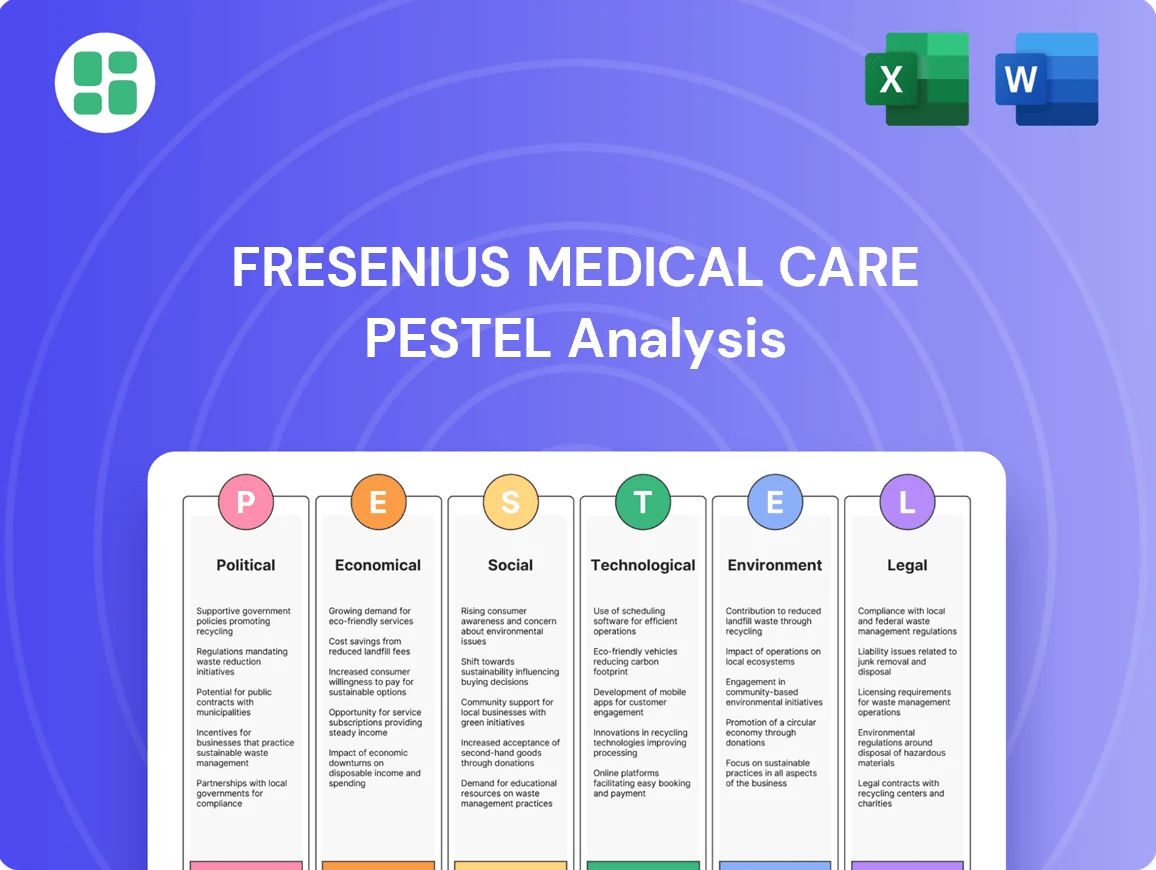
Descours & Cebaud SA PESTLE Analysis

Your Shortcut to Market Insight Starts Here
Navigate the complex external forces impacting Descours & Cebaud SA with our comprehensive PESTEL Analysis. Understand how political stability, economic fluctuations, and technological advancements are shaping its operational landscape. This ready-to-use report provides critical insights for strategic planning and competitive advantage. Unlock the full potential of your market understanding—download the complete PESTEL Analysis now.
Political factors

Government Spending and Public Works
Government spending constraints in France are impacting infrastructure and public works construction, with an estimated fall in 2024 and a muted recovery expected in 2025. This directly affects Descours & Cabaud's public sector client base, which relies on consistent government investment for projects.
The French government's commitment to fiscal consolidation could lead to reduced budgets for large-scale infrastructure projects. For instance, the 2024 budget outlined a cautious approach to public spending, potentially impacting the volume of new tenders available for construction materials suppliers.
The focus on tighter fiscal policy, coupled with potential political uncertainty surrounding upcoming elections, could further dampen confidence and project pipelines. This environment necessitates that Descours & Cabaud closely monitor evolving government fiscal policies and their direct impact on public sector demand.
Industrial Policy and Strategic Investments
The French government's France 2030 Plan, launched in October 2021 with an initial €30 billion allocation, is a significant industrial policy initiative. This plan targets investments in ten key areas, including digital technology and decarbonization, aiming to foster innovation and competitiveness. For Descours & Cabaud, this translates into potential opportunities as the plan is expected to stimulate demand for advanced materials and sustainable solutions within the construction and industrial sectors.

Trade Policy and Geopolitical Stability
Descours & Cabaud's extensive operations across Europe and North America are particularly sensitive to evolving trade policies and geopolitical shifts. Ongoing global trade tensions, such as those impacting steel and aluminum, can directly affect the cost of materials and the ease of cross-border transactions. For instance, the European Union's response to US trade measures in 2023 involved retaliatory tariffs on certain goods, creating a complex environment for businesses reliant on international supply chains.
The company must actively manage risks associated with potential tariffs, import/export restrictions, and disruptions to the flow of goods. In 2024, continued geopolitical instability in regions like Eastern Europe and the Middle East could further strain supply chains, impacting lead times and overall operational costs. This necessitates a proactive approach to sourcing and logistics to ensure business continuity.
To mitigate these challenges, Descours & Cabaud is likely focusing on diversifying its supplier networks and exploring nearshoring opportunities. By reducing reliance on single geographic sources and bringing production closer to its primary markets, the company can build greater resilience against external shocks. This strategic shift is crucial for maintaining competitive pricing and reliable product availability in an increasingly unpredictable global landscape.

European Union Directives and Harmonization
The evolving landscape of European Union directives, particularly the Corporate Sustainability Reporting Directive (CSRD), presents significant implications for Descours & Cabaud, starting in 2025. This directive mandates more rigorous and standardized reporting on environmental, social, and governance (ESG) performance, requiring companies to establish sophisticated internal data management and verification processes. Operating effectively across the EU hinges on adherence to these overarching regulatory frameworks.
The CSRD, effective for large companies from January 1, 2024, with phased implementation for others, emphasizes a double materiality perspective, meaning companies must report on how sustainability issues affect them and how their activities impact society and the environment. This necessitates a comprehensive review of Descours & Cabaud's supply chain and operational impacts. For instance, the directive requires detailed disclosures on climate-related risks and opportunities, aligning with the Task Force on Climate-related Financial Disclosures (TCFD) recommendations.
- Increased Reporting Burden: The CSRD expands the scope of sustainability reporting, requiring detailed data on a wide range of ESG factors, impacting Descours & Cabaud's compliance efforts from 2025.
- Harmonized Standards: The directive promotes the adoption of European Sustainability Reporting Standards (ESRS), ensuring greater comparability and transparency across the EU market.
- Supply Chain Scrutiny: Descours & Cabaud will need to gather sustainability data from its entire value chain, as the CSRD extends reporting requirements to upstream and downstream activities.
- Digitalization of Reporting: The CSRD mandates the digital tagging of reported sustainability information, requiring investment in technology to ensure compliance and accessibility.
Regulatory Environment for Business Operations
The regulatory landscape in France significantly shapes Descours & Cabaud's operational framework, with recent adjustments to commercial negotiation laws and labor codes directly impacting expenses and contractual agreements. For example, new mandates regarding the communication of General Terms and Conditions (GTCs) for commercial negotiations necessitate swift adaptation to maintain compliance and foster efficient business relationships.
These regulatory shifts can lead to increased administrative burdens and potential legal complexities. For instance, a key change in 2024 mandated earlier notification periods for GTC updates, requiring businesses like Descours & Cabaud to refine their internal processes to meet these deadlines, potentially affecting negotiation timelines and the cost of compliance.
- Impact on Commercial Negotiations: Revised deadlines for GTC communication directly influence the pace and cost of commercial negotiations.
- Labor Code Adaptations: Changes to labor laws can affect hiring practices, employee benefits, and overall human resource management costs for the company.
- Compliance Costs: Adhering to evolving French regulations requires ongoing investment in legal counsel and updated operational procedures.
France: Economic Headwinds, ESG Mandates, & Regulatory Shifts
Government spending constraints in France are impacting infrastructure and public works construction, with an estimated fall in 2024 and a muted recovery expected in 2025, directly affecting Descours & Cabaud's public sector client base. The French government's France 2030 Plan, with an initial €30 billion allocation, aims to stimulate demand for advanced materials and sustainable solutions within the construction and industrial sectors.
The evolving landscape of European Union directives, particularly the Corporate Sustainability Reporting Directive (CSRD), mandates more rigorous ESG reporting starting in 2025. The CSRD requires detailed disclosures on climate-related risks and opportunities, aligning with TCFD recommendations.
Regulatory shifts in France, such as new mandates regarding the communication of General Terms and Conditions (GTCs) for commercial negotiations, necessitate swift adaptation to maintain compliance and foster efficient business relationships. Changes to labor laws can also affect hiring practices and employee benefits.
What is included in the product
 Detailed Word Document
This PESTLE analysis examines the external macro-environmental factors influencing Descours & Cebaud SA, covering Political, Economic, Social, Technological, Environmental, and Legal dimensions to identify strategic opportunities and threats.

 Customizable Excel Spreadsheet
Provides a concise version of the Descours & Cebaud SA PESTLE Analysis that can be dropped into PowerPoints or used in group planning sessions to quickly address external challenges.
Economic factors

Construction Market Downturn in France
The French construction sector is navigating a challenging period, marked by a significant downturn. In 2024, the number of new construction projects and approvals for residential building permits saw a substantial decrease. This slowdown is largely attributed to persistent unfavorable economic conditions, including elevated inflation and rising interest rates, which directly affect demand for building materials and equipment.
This economic climate poses a direct challenge for Descours & Cabaud's Prolians brand, a key distributor in the construction materials segment. The impact is evident as fewer projects translate into reduced sales volumes for the company. Projections for 2025 suggest only a modest recovery, with some analysts anticipating a continued contraction in the sector's overall output.
Industrial Investment and Steel Price Volatility
Descours & Cabaud's 2024 financial performance saw a revenue dip, significantly influenced by reduced industrial investments and a downward trend in steel prices. This economic climate directly impacts the demand for the industrial supplies and raw materials that companies like Dexis, a subsidiary of Descours & Cabaud, rely on.
The broader European industrial sector navigated a difficult 2024, with industrial production expected to contract. However, projections for 2025 indicate a slight rebound, suggesting a potential easing of these pressures in the near future, which could benefit companies like Descours & Cabaud.

Inflation and Interest Rate Impact
Persistent inflation and rising interest rates have created a challenging financing landscape, impacting both consumer and corporate confidence and consequently hindering investment. This economic climate directly elevates operational costs for Descours & Cabaud and its clientele, potentially leading to decreased demand for their professional supplies and equipment.
For instance, in early 2024, inflation in key European markets remained above central bank targets, with the ECB holding its key interest rate at 4.5% through much of the year. While a gradual decline in interest rates is anticipated for 2025, with market forecasts suggesting a potential reduction to around 3.5% by year-end, a substantial rebound in market activity is not expected until 2026.

Overall Revenue Performance and Resilience
Descours & Cabaud showcased notable resilience in 2024, achieving €4.7 billion in revenue. This performance, while a slight dip from €4.9 billion in 2023, reflects a strong capacity to navigate a challenging economic landscape.
The company's strategic external acquisitions across Europe and North America played a crucial role in bolstering its revenue performance. These moves, coupled with initiatives to diversify its customer base, underscore a proactive approach to market adaptation.
The ability to maintain a robust financial standing amidst market contraction is a testament to Descours & Cabaud's adaptive business model and strategic foresight.
- 2024 Revenue: €4.7 billion
- 2023 Revenue: €4.9 billion
- Key Growth Drivers: Strategic external acquisitions in Europe and North America
- Customer Base: Efforts to broaden and diversify
Labor Costs and Employment Trends
Labor cost growth in France has been a notable factor, with averages around 3.1% in the first half of 2024, even as inflation begins to ease. This sustained increase in wages presents a significant challenge for companies like Descours & Cabaud. Effective management of these rising labor expenses is crucial for maintaining profitability and staying competitive in the market.
Descours & Cabaud, as a substantial employer, faces the dual challenge of controlling labor costs while also navigating potential labor shortages in specific geographic areas. This dynamic requires strategic workforce planning and compensation strategies to ensure operational continuity and talent acquisition.
- Labor Cost Growth: Averaging approximately 3.1% in France during the first half of 2024.
- Inflationary Impact: While inflation is decelerating, its residual effects continue to influence wage demands.
- Competitive Pressure: Rising labor costs can impact pricing strategies and overall market competitiveness.
- Talent Acquisition: Addressing potential labor shortages necessitates competitive compensation and attractive employment conditions.
French Construction Downturn: Economic Headwinds & Sector Resilience
The French construction sector's downturn in 2024, marked by reduced project approvals and demand, directly impacts Descours & Cabaud's Prolians brand. Persistent inflation and elevated interest rates, with the ECB rate at 4.5% in early 2024, continue to dampen consumer and corporate confidence, increasing operational costs and potentially lowering demand for building materials and equipment.
While the broader European industrial sector saw a contraction in 2024, a slight rebound is anticipated for 2025. Descours & Cabaud reported €4.7 billion in revenue for 2024, a slight decrease from €4.9 billion in 2023, demonstrating resilience through strategic acquisitions in Europe and North America.
| Metric | 2023 | 2024 (Est.) |
| Descours & Cabaud Revenue (€ billion) | 4.9 | 4.7 |
| French Construction Permits (YoY Change) | Declined | Declined |
| ECB Key Interest Rate (Early Year) | 4.5% | 4.5% |
What You See Is What You Get
Descours & Cebaud SA PESTLE Analysis
The preview shown here is the exact document you’ll receive after purchase—fully formatted and ready to use. This comprehensive PESTLE analysis for Descours & Cebaud SA delves into Political, Economic, Social, Technological, Legal, and Environmental factors impacting the company. You'll gain immediate access to actionable insights upon purchase.

Product Information
Product Information
Shipping & Returns
Shipping & Returns

Descours & Cebaud SA PESTLE Analysis
Descours & Cebaud SA PESTLE Analysis
Your Shortcut to Market Insight Starts Here
Navigate the complex external forces impacting Descours & Cebaud SA with our comprehensive PESTEL Analysis. Understand how political stability, economic fluctuations, and technological advancements are shaping its operational landscape. This ready-to-use report provides critical insights for strategic planning and competitive advantage. Unlock the full potential of your market understanding—download the complete PESTEL Analysis now.
Political factors
Government Spending and Public Works
Government spending constraints in France are impacting infrastructure and public works construction, with an estimated fall in 2024 and a muted recovery expected in 2025. This directly affects Descours & Cabaud's public sector client base, which relies on consistent government investment for projects.
The French government's commitment to fiscal consolidation could lead to reduced budgets for large-scale infrastructure projects. For instance, the 2024 budget outlined a cautious approach to public spending, potentially impacting the volume of new tenders available for construction materials suppliers.
The focus on tighter fiscal policy, coupled with potential political uncertainty surrounding upcoming elections, could further dampen confidence and project pipelines. This environment necessitates that Descours & Cabaud closely monitor evolving government fiscal policies and their direct impact on public sector demand.
Industrial Policy and Strategic Investments
The French government's France 2030 Plan, launched in October 2021 with an initial €30 billion allocation, is a significant industrial policy initiative. This plan targets investments in ten key areas, including digital technology and decarbonization, aiming to foster innovation and competitiveness. For Descours & Cabaud, this translates into potential opportunities as the plan is expected to stimulate demand for advanced materials and sustainable solutions within the construction and industrial sectors.
Trade Policy and Geopolitical Stability
Descours & Cabaud's extensive operations across Europe and North America are particularly sensitive to evolving trade policies and geopolitical shifts. Ongoing global trade tensions, such as those impacting steel and aluminum, can directly affect the cost of materials and the ease of cross-border transactions. For instance, the European Union's response to US trade measures in 2023 involved retaliatory tariffs on certain goods, creating a complex environment for businesses reliant on international supply chains.
The company must actively manage risks associated with potential tariffs, import/export restrictions, and disruptions to the flow of goods. In 2024, continued geopolitical instability in regions like Eastern Europe and the Middle East could further strain supply chains, impacting lead times and overall operational costs. This necessitates a proactive approach to sourcing and logistics to ensure business continuity.
To mitigate these challenges, Descours & Cabaud is likely focusing on diversifying its supplier networks and exploring nearshoring opportunities. By reducing reliance on single geographic sources and bringing production closer to its primary markets, the company can build greater resilience against external shocks. This strategic shift is crucial for maintaining competitive pricing and reliable product availability in an increasingly unpredictable global landscape.
European Union Directives and Harmonization
The evolving landscape of European Union directives, particularly the Corporate Sustainability Reporting Directive (CSRD), presents significant implications for Descours & Cabaud, starting in 2025. This directive mandates more rigorous and standardized reporting on environmental, social, and governance (ESG) performance, requiring companies to establish sophisticated internal data management and verification processes. Operating effectively across the EU hinges on adherence to these overarching regulatory frameworks.
The CSRD, effective for large companies from January 1, 2024, with phased implementation for others, emphasizes a double materiality perspective, meaning companies must report on how sustainability issues affect them and how their activities impact society and the environment. This necessitates a comprehensive review of Descours & Cabaud's supply chain and operational impacts. For instance, the directive requires detailed disclosures on climate-related risks and opportunities, aligning with the Task Force on Climate-related Financial Disclosures (TCFD) recommendations.
- Increased Reporting Burden: The CSRD expands the scope of sustainability reporting, requiring detailed data on a wide range of ESG factors, impacting Descours & Cabaud's compliance efforts from 2025.
- Harmonized Standards: The directive promotes the adoption of European Sustainability Reporting Standards (ESRS), ensuring greater comparability and transparency across the EU market.
- Supply Chain Scrutiny: Descours & Cabaud will need to gather sustainability data from its entire value chain, as the CSRD extends reporting requirements to upstream and downstream activities.
- Digitalization of Reporting: The CSRD mandates the digital tagging of reported sustainability information, requiring investment in technology to ensure compliance and accessibility.
Regulatory Environment for Business Operations
The regulatory landscape in France significantly shapes Descours & Cabaud's operational framework, with recent adjustments to commercial negotiation laws and labor codes directly impacting expenses and contractual agreements. For example, new mandates regarding the communication of General Terms and Conditions (GTCs) for commercial negotiations necessitate swift adaptation to maintain compliance and foster efficient business relationships.
These regulatory shifts can lead to increased administrative burdens and potential legal complexities. For instance, a key change in 2024 mandated earlier notification periods for GTC updates, requiring businesses like Descours & Cabaud to refine their internal processes to meet these deadlines, potentially affecting negotiation timelines and the cost of compliance.
- Impact on Commercial Negotiations: Revised deadlines for GTC communication directly influence the pace and cost of commercial negotiations.
- Labor Code Adaptations: Changes to labor laws can affect hiring practices, employee benefits, and overall human resource management costs for the company.
- Compliance Costs: Adhering to evolving French regulations requires ongoing investment in legal counsel and updated operational procedures.
France: Economic Headwinds, ESG Mandates, & Regulatory Shifts
Government spending constraints in France are impacting infrastructure and public works construction, with an estimated fall in 2024 and a muted recovery expected in 2025, directly affecting Descours & Cabaud's public sector client base. The French government's France 2030 Plan, with an initial €30 billion allocation, aims to stimulate demand for advanced materials and sustainable solutions within the construction and industrial sectors.
The evolving landscape of European Union directives, particularly the Corporate Sustainability Reporting Directive (CSRD), mandates more rigorous ESG reporting starting in 2025. The CSRD requires detailed disclosures on climate-related risks and opportunities, aligning with TCFD recommendations.
Regulatory shifts in France, such as new mandates regarding the communication of General Terms and Conditions (GTCs) for commercial negotiations, necessitate swift adaptation to maintain compliance and foster efficient business relationships. Changes to labor laws can also affect hiring practices and employee benefits.
What is included in the product
Detailed Word Document
This PESTLE analysis examines the external macro-environmental factors influencing Descours & Cebaud SA, covering Political, Economic, Social, Technological, Environmental, and Legal dimensions to identify strategic opportunities and threats.
Customizable Excel Spreadsheet
Provides a concise version of the Descours & Cebaud SA PESTLE Analysis that can be dropped into PowerPoints or used in group planning sessions to quickly address external challenges.
Economic factors
Construction Market Downturn in France
The French construction sector is navigating a challenging period, marked by a significant downturn. In 2024, the number of new construction projects and approvals for residential building permits saw a substantial decrease. This slowdown is largely attributed to persistent unfavorable economic conditions, including elevated inflation and rising interest rates, which directly affect demand for building materials and equipment.
This economic climate poses a direct challenge for Descours & Cabaud's Prolians brand, a key distributor in the construction materials segment. The impact is evident as fewer projects translate into reduced sales volumes for the company. Projections for 2025 suggest only a modest recovery, with some analysts anticipating a continued contraction in the sector's overall output.
Industrial Investment and Steel Price Volatility
Descours & Cabaud's 2024 financial performance saw a revenue dip, significantly influenced by reduced industrial investments and a downward trend in steel prices. This economic climate directly impacts the demand for the industrial supplies and raw materials that companies like Dexis, a subsidiary of Descours & Cabaud, rely on.
The broader European industrial sector navigated a difficult 2024, with industrial production expected to contract. However, projections for 2025 indicate a slight rebound, suggesting a potential easing of these pressures in the near future, which could benefit companies like Descours & Cabaud.
Inflation and Interest Rate Impact
Persistent inflation and rising interest rates have created a challenging financing landscape, impacting both consumer and corporate confidence and consequently hindering investment. This economic climate directly elevates operational costs for Descours & Cabaud and its clientele, potentially leading to decreased demand for their professional supplies and equipment.
For instance, in early 2024, inflation in key European markets remained above central bank targets, with the ECB holding its key interest rate at 4.5% through much of the year. While a gradual decline in interest rates is anticipated for 2025, with market forecasts suggesting a potential reduction to around 3.5% by year-end, a substantial rebound in market activity is not expected until 2026.
Overall Revenue Performance and Resilience
Descours & Cabaud showcased notable resilience in 2024, achieving €4.7 billion in revenue. This performance, while a slight dip from €4.9 billion in 2023, reflects a strong capacity to navigate a challenging economic landscape.
The company's strategic external acquisitions across Europe and North America played a crucial role in bolstering its revenue performance. These moves, coupled with initiatives to diversify its customer base, underscore a proactive approach to market adaptation.
The ability to maintain a robust financial standing amidst market contraction is a testament to Descours & Cabaud's adaptive business model and strategic foresight.
- 2024 Revenue: €4.7 billion
- 2023 Revenue: €4.9 billion
- Key Growth Drivers: Strategic external acquisitions in Europe and North America
- Customer Base: Efforts to broaden and diversify
Labor Costs and Employment Trends
Labor cost growth in France has been a notable factor, with averages around 3.1% in the first half of 2024, even as inflation begins to ease. This sustained increase in wages presents a significant challenge for companies like Descours & Cabaud. Effective management of these rising labor expenses is crucial for maintaining profitability and staying competitive in the market.
Descours & Cabaud, as a substantial employer, faces the dual challenge of controlling labor costs while also navigating potential labor shortages in specific geographic areas. This dynamic requires strategic workforce planning and compensation strategies to ensure operational continuity and talent acquisition.
- Labor Cost Growth: Averaging approximately 3.1% in France during the first half of 2024.
- Inflationary Impact: While inflation is decelerating, its residual effects continue to influence wage demands.
- Competitive Pressure: Rising labor costs can impact pricing strategies and overall market competitiveness.
- Talent Acquisition: Addressing potential labor shortages necessitates competitive compensation and attractive employment conditions.
French Construction Downturn: Economic Headwinds & Sector Resilience
The French construction sector's downturn in 2024, marked by reduced project approvals and demand, directly impacts Descours & Cabaud's Prolians brand. Persistent inflation and elevated interest rates, with the ECB rate at 4.5% in early 2024, continue to dampen consumer and corporate confidence, increasing operational costs and potentially lowering demand for building materials and equipment.
While the broader European industrial sector saw a contraction in 2024, a slight rebound is anticipated for 2025. Descours & Cabaud reported €4.7 billion in revenue for 2024, a slight decrease from €4.9 billion in 2023, demonstrating resilience through strategic acquisitions in Europe and North America.
| Metric | 2023 | 2024 (Est.) |
| Descours & Cabaud Revenue (€ billion) | 4.9 | 4.7 |
| French Construction Permits (YoY Change) | Declined | Declined |
| ECB Key Interest Rate (Early Year) | 4.5% | 4.5% |
What You See Is What You Get
Descours & Cebaud SA PESTLE Analysis
The preview shown here is the exact document you’ll receive after purchase—fully formatted and ready to use. This comprehensive PESTLE analysis for Descours & Cebaud SA delves into Political, Economic, Social, Technological, Legal, and Environmental factors impacting the company. You'll gain immediate access to actionable insights upon purchase.
Original: $10.00
-65%$10.00
$3.50Product Information
Product Information
Shipping & Returns
Shipping & Returns
Description
Your Shortcut to Market Insight Starts Here
Navigate the complex external forces impacting Descours & Cebaud SA with our comprehensive PESTEL Analysis. Understand how political stability, economic fluctuations, and technological advancements are shaping its operational landscape. This ready-to-use report provides critical insights for strategic planning and competitive advantage. Unlock the full potential of your market understanding—download the complete PESTEL Analysis now.
Political factors
Government Spending and Public Works
Government spending constraints in France are impacting infrastructure and public works construction, with an estimated fall in 2024 and a muted recovery expected in 2025. This directly affects Descours & Cabaud's public sector client base, which relies on consistent government investment for projects.
The French government's commitment to fiscal consolidation could lead to reduced budgets for large-scale infrastructure projects. For instance, the 2024 budget outlined a cautious approach to public spending, potentially impacting the volume of new tenders available for construction materials suppliers.
The focus on tighter fiscal policy, coupled with potential political uncertainty surrounding upcoming elections, could further dampen confidence and project pipelines. This environment necessitates that Descours & Cabaud closely monitor evolving government fiscal policies and their direct impact on public sector demand.
Industrial Policy and Strategic Investments
The French government's France 2030 Plan, launched in October 2021 with an initial €30 billion allocation, is a significant industrial policy initiative. This plan targets investments in ten key areas, including digital technology and decarbonization, aiming to foster innovation and competitiveness. For Descours & Cabaud, this translates into potential opportunities as the plan is expected to stimulate demand for advanced materials and sustainable solutions within the construction and industrial sectors.
Trade Policy and Geopolitical Stability
Descours & Cabaud's extensive operations across Europe and North America are particularly sensitive to evolving trade policies and geopolitical shifts. Ongoing global trade tensions, such as those impacting steel and aluminum, can directly affect the cost of materials and the ease of cross-border transactions. For instance, the European Union's response to US trade measures in 2023 involved retaliatory tariffs on certain goods, creating a complex environment for businesses reliant on international supply chains.
The company must actively manage risks associated with potential tariffs, import/export restrictions, and disruptions to the flow of goods. In 2024, continued geopolitical instability in regions like Eastern Europe and the Middle East could further strain supply chains, impacting lead times and overall operational costs. This necessitates a proactive approach to sourcing and logistics to ensure business continuity.
To mitigate these challenges, Descours & Cabaud is likely focusing on diversifying its supplier networks and exploring nearshoring opportunities. By reducing reliance on single geographic sources and bringing production closer to its primary markets, the company can build greater resilience against external shocks. This strategic shift is crucial for maintaining competitive pricing and reliable product availability in an increasingly unpredictable global landscape.
European Union Directives and Harmonization
The evolving landscape of European Union directives, particularly the Corporate Sustainability Reporting Directive (CSRD), presents significant implications for Descours & Cabaud, starting in 2025. This directive mandates more rigorous and standardized reporting on environmental, social, and governance (ESG) performance, requiring companies to establish sophisticated internal data management and verification processes. Operating effectively across the EU hinges on adherence to these overarching regulatory frameworks.
The CSRD, effective for large companies from January 1, 2024, with phased implementation for others, emphasizes a double materiality perspective, meaning companies must report on how sustainability issues affect them and how their activities impact society and the environment. This necessitates a comprehensive review of Descours & Cabaud's supply chain and operational impacts. For instance, the directive requires detailed disclosures on climate-related risks and opportunities, aligning with the Task Force on Climate-related Financial Disclosures (TCFD) recommendations.
- Increased Reporting Burden: The CSRD expands the scope of sustainability reporting, requiring detailed data on a wide range of ESG factors, impacting Descours & Cabaud's compliance efforts from 2025.
- Harmonized Standards: The directive promotes the adoption of European Sustainability Reporting Standards (ESRS), ensuring greater comparability and transparency across the EU market.
- Supply Chain Scrutiny: Descours & Cabaud will need to gather sustainability data from its entire value chain, as the CSRD extends reporting requirements to upstream and downstream activities.
- Digitalization of Reporting: The CSRD mandates the digital tagging of reported sustainability information, requiring investment in technology to ensure compliance and accessibility.
Regulatory Environment for Business Operations
The regulatory landscape in France significantly shapes Descours & Cabaud's operational framework, with recent adjustments to commercial negotiation laws and labor codes directly impacting expenses and contractual agreements. For example, new mandates regarding the communication of General Terms and Conditions (GTCs) for commercial negotiations necessitate swift adaptation to maintain compliance and foster efficient business relationships.
These regulatory shifts can lead to increased administrative burdens and potential legal complexities. For instance, a key change in 2024 mandated earlier notification periods for GTC updates, requiring businesses like Descours & Cabaud to refine their internal processes to meet these deadlines, potentially affecting negotiation timelines and the cost of compliance.
- Impact on Commercial Negotiations: Revised deadlines for GTC communication directly influence the pace and cost of commercial negotiations.
- Labor Code Adaptations: Changes to labor laws can affect hiring practices, employee benefits, and overall human resource management costs for the company.
- Compliance Costs: Adhering to evolving French regulations requires ongoing investment in legal counsel and updated operational procedures.
France: Economic Headwinds, ESG Mandates, & Regulatory Shifts
Government spending constraints in France are impacting infrastructure and public works construction, with an estimated fall in 2024 and a muted recovery expected in 2025, directly affecting Descours & Cabaud's public sector client base. The French government's France 2030 Plan, with an initial €30 billion allocation, aims to stimulate demand for advanced materials and sustainable solutions within the construction and industrial sectors.
The evolving landscape of European Union directives, particularly the Corporate Sustainability Reporting Directive (CSRD), mandates more rigorous ESG reporting starting in 2025. The CSRD requires detailed disclosures on climate-related risks and opportunities, aligning with TCFD recommendations.
Regulatory shifts in France, such as new mandates regarding the communication of General Terms and Conditions (GTCs) for commercial negotiations, necessitate swift adaptation to maintain compliance and foster efficient business relationships. Changes to labor laws can also affect hiring practices and employee benefits.
What is included in the product
Detailed Word Document
This PESTLE analysis examines the external macro-environmental factors influencing Descours & Cebaud SA, covering Political, Economic, Social, Technological, Environmental, and Legal dimensions to identify strategic opportunities and threats.
Customizable Excel Spreadsheet
Provides a concise version of the Descours & Cebaud SA PESTLE Analysis that can be dropped into PowerPoints or used in group planning sessions to quickly address external challenges.
Economic factors
Construction Market Downturn in France
The French construction sector is navigating a challenging period, marked by a significant downturn. In 2024, the number of new construction projects and approvals for residential building permits saw a substantial decrease. This slowdown is largely attributed to persistent unfavorable economic conditions, including elevated inflation and rising interest rates, which directly affect demand for building materials and equipment.
This economic climate poses a direct challenge for Descours & Cabaud's Prolians brand, a key distributor in the construction materials segment. The impact is evident as fewer projects translate into reduced sales volumes for the company. Projections for 2025 suggest only a modest recovery, with some analysts anticipating a continued contraction in the sector's overall output.
Industrial Investment and Steel Price Volatility
Descours & Cabaud's 2024 financial performance saw a revenue dip, significantly influenced by reduced industrial investments and a downward trend in steel prices. This economic climate directly impacts the demand for the industrial supplies and raw materials that companies like Dexis, a subsidiary of Descours & Cabaud, rely on.
The broader European industrial sector navigated a difficult 2024, with industrial production expected to contract. However, projections for 2025 indicate a slight rebound, suggesting a potential easing of these pressures in the near future, which could benefit companies like Descours & Cabaud.
Inflation and Interest Rate Impact
Persistent inflation and rising interest rates have created a challenging financing landscape, impacting both consumer and corporate confidence and consequently hindering investment. This economic climate directly elevates operational costs for Descours & Cabaud and its clientele, potentially leading to decreased demand for their professional supplies and equipment.
For instance, in early 2024, inflation in key European markets remained above central bank targets, with the ECB holding its key interest rate at 4.5% through much of the year. While a gradual decline in interest rates is anticipated for 2025, with market forecasts suggesting a potential reduction to around 3.5% by year-end, a substantial rebound in market activity is not expected until 2026.
Overall Revenue Performance and Resilience
Descours & Cabaud showcased notable resilience in 2024, achieving €4.7 billion in revenue. This performance, while a slight dip from €4.9 billion in 2023, reflects a strong capacity to navigate a challenging economic landscape.
The company's strategic external acquisitions across Europe and North America played a crucial role in bolstering its revenue performance. These moves, coupled with initiatives to diversify its customer base, underscore a proactive approach to market adaptation.
The ability to maintain a robust financial standing amidst market contraction is a testament to Descours & Cabaud's adaptive business model and strategic foresight.
- 2024 Revenue: €4.7 billion
- 2023 Revenue: €4.9 billion
- Key Growth Drivers: Strategic external acquisitions in Europe and North America
- Customer Base: Efforts to broaden and diversify
Labor Costs and Employment Trends
Labor cost growth in France has been a notable factor, with averages around 3.1% in the first half of 2024, even as inflation begins to ease. This sustained increase in wages presents a significant challenge for companies like Descours & Cabaud. Effective management of these rising labor expenses is crucial for maintaining profitability and staying competitive in the market.
Descours & Cabaud, as a substantial employer, faces the dual challenge of controlling labor costs while also navigating potential labor shortages in specific geographic areas. This dynamic requires strategic workforce planning and compensation strategies to ensure operational continuity and talent acquisition.
- Labor Cost Growth: Averaging approximately 3.1% in France during the first half of 2024.
- Inflationary Impact: While inflation is decelerating, its residual effects continue to influence wage demands.
- Competitive Pressure: Rising labor costs can impact pricing strategies and overall market competitiveness.
- Talent Acquisition: Addressing potential labor shortages necessitates competitive compensation and attractive employment conditions.
French Construction Downturn: Economic Headwinds & Sector Resilience
The French construction sector's downturn in 2024, marked by reduced project approvals and demand, directly impacts Descours & Cabaud's Prolians brand. Persistent inflation and elevated interest rates, with the ECB rate at 4.5% in early 2024, continue to dampen consumer and corporate confidence, increasing operational costs and potentially lowering demand for building materials and equipment.
While the broader European industrial sector saw a contraction in 2024, a slight rebound is anticipated for 2025. Descours & Cabaud reported €4.7 billion in revenue for 2024, a slight decrease from €4.9 billion in 2023, demonstrating resilience through strategic acquisitions in Europe and North America.
| Metric | 2023 | 2024 (Est.) |
| Descours & Cabaud Revenue (€ billion) | 4.9 | 4.7 |
| French Construction Permits (YoY Change) | Declined | Declined |
| ECB Key Interest Rate (Early Year) | 4.5% | 4.5% |
What You See Is What You Get
Descours & Cebaud SA PESTLE Analysis
The preview shown here is the exact document you’ll receive after purchase—fully formatted and ready to use. This comprehensive PESTLE analysis for Descours & Cebaud SA delves into Political, Economic, Social, Technological, Legal, and Environmental factors impacting the company. You'll gain immediate access to actionable insights upon purchase.